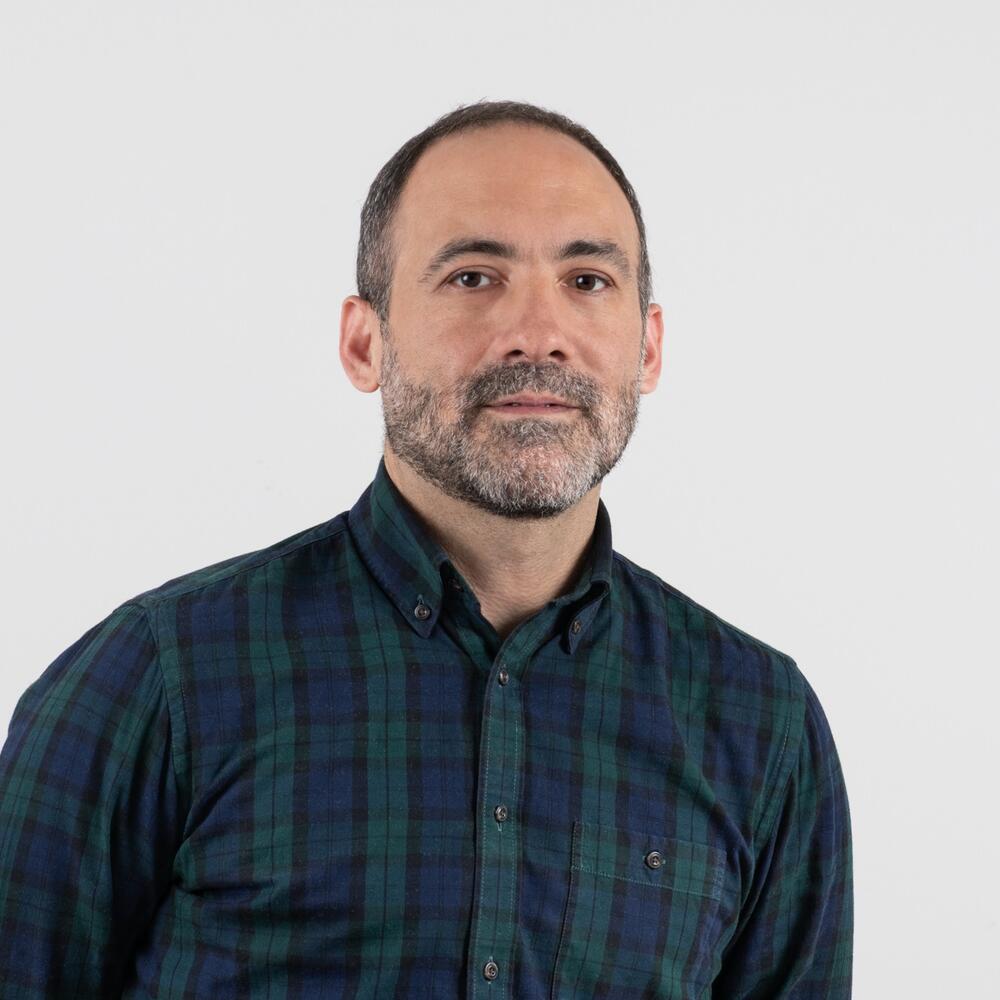
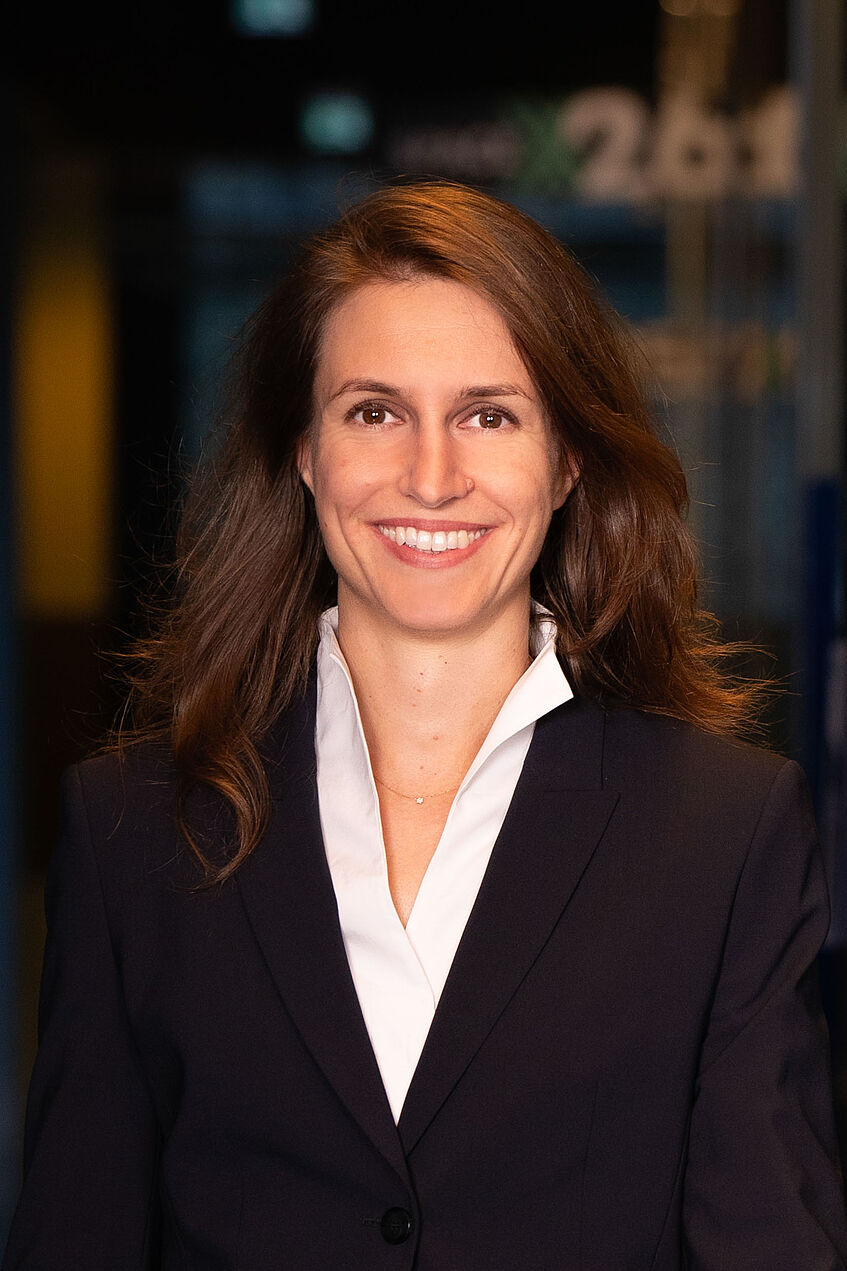
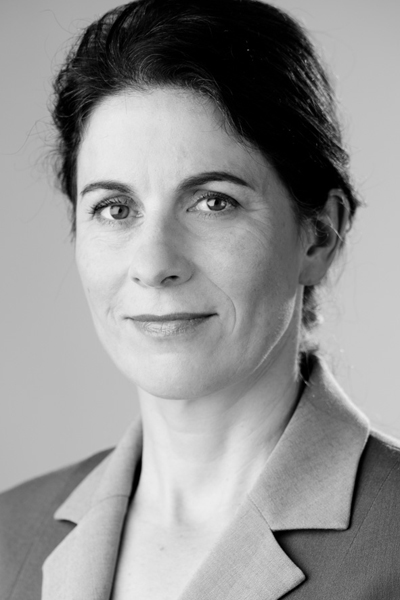
Robert Sablatnig is an Associate Professor and Head of the Institute for Visual Computing and Human-Centered Technology at TU Wien (Vienna University of Technology). His roles include leading the Computer Vision research unit and serving on the Faculty Council. His research focuses on 3D Vision, Computer Vision applications in Cultural Heritage preservation, and Machine Learning. He holds a doctoral degree and has extensive expertise in image processing, object recognition, and multispectral imaging. Key research interests include 3D reconstruction, range finding, stereovision, robot vision, and applications in industry and cultural heritage. He leads projects funded by the Austrian Science Fund (FWF), EU, and industry partners, such as the 'Etruscan Mirrors in Austria' and 'Visual History of the Holocaust' initiatives. Sablatnig has authored over 200 publications, with recent work emphasizing synthetic data generation for handwritten text detection and deep learning for cultural heritage analysis. His lab develops tools for document enhancement, bomb crater detection in historical aerial imagery, and forensic footwear impression retrieval. He collaborates internationally on initiatives like the Time Machine Project to digitize global cultural heritage.
Paolo Poccetti is a Professor of Comparative Philology at the University of Rome Tor Vergata and an Associate Professor of Ancient Italian Languages at the University of Naples L'Orientale. His research focuses on Greek, fragmentarily attested languages of ancient Italy, comparative philology, and Latin. He has held these positions since 1990. Poccetti is a member of several prestigious academic societies, including the Societa Italiana di Glottologia and the Société des Etudes Latines. His work includes extensive publications on ancient languages and epigraphy, with a particular emphasis on the linguistic and cultural aspects of ancient Italian populations. His recent publications explore topics such as the structure of ancient poetic texts, language contact, and the analysis of inscriptions from various regions in Italy. He has also contributed to international conferences and edited volumes on onomastics and ancient language studies.
Dino Rossegger is a mathematician working at the Institute of Discrete Mathematics at Technische Universität Wien. He serves as Principal Investigator for the international project "Structural Complexity Measures for Foundational Theories" funded by the Austrian Science Fund. Previously, he completed a Marie Skłodowska Curie fellowship called ACOSE (Algorithmic Complexity of Structural Equivalence Relations) which involved a two-year research phase at UC Berkeley under Antonio Montalbán's supervision followed by a return phase at TU Wien under Ekaterina Fokina's supervision. His research focuses on computability theory and its interactions with descriptive set theory and model theory. Rossegger investigates fundamental questions about the algorithmic complexity of mathematical structures, particularly examining degrees of categoricity, bi-embeddability spectra, and the relationship between computational and descriptive complexity measures. His work often bridges the gap between pure computability theory and broader mathematical contexts, as evidenced by his publications on linear orderings, models of arithmetic, and equivalence relations. Rossegger's publication record shows consistent output in top-tier logic journals including the Journal of Symbolic Logic, Proceedings of the American Mathematical Society, and Journal of Mathematical Logic. His recent work demonstrates growing influence in the field of computable structure theory, with particular attention to the interplay between Turing degrees and structural complexity measures. The pattern of his publications reveals a deepening exploration of how computational constraints affect the classification of mathematical structures. Marie Skłodowska Curie Global Fellowship recipient Principal Investigator for Austrian Science Fund project Extensive publication record in mathematical logic journals Rossegger has taught courses at multiple institutions including Technische Universität Wien, University of California Berkeley, and University of Waterloo. His teaching spans advanced mathematical logic topics, recursion theory, and calculus for honors mathematics students. He has developed comprehensive course materials including detailed notes for computability theory and mathematical logic courses. At TU Wien, he has also taught exercise sessions for first-year mathematics courses for computer scientists. His involvement in the local research seminar at TU Wien and organization of the "Computable Structure Theory and Interactions" conference demonstrates his active engagement with the research community.
Lisandro Abadie is a Universitätsprofessor (Professor) of Voice (Baroque) at the Department of Early Music, Mozarteum University Salzburg. He specializes in Baroque opera and historical performance practice, combining a distinguished singing career with scholarly research. Born in Buenos Aires, he trained at the Schola Cantorum Basiliensis and Lucerne School of Music, receiving the Edwin Fischer Memorial Prize (2006). His roles include Monteverdi's 'L'Orfeo', Charpentier's 'Médée', and Handel's operas, collaborating with renowned ensembles like Les Arts Florissants. Abadie's research focuses on vocal technique history, manuscript analysis, and performance practices. He teaches at the Schola Cantorum Basiliensis and Mozarteum University, conducting masterclasses worldwide. Notable publications include translations of Caccini's writings and studies on vibrato in early music. Upcoming performances include Charpentier's 'Médée' at Paris' Opéra and Madrid's Teatro Real (2024). Education: Schola Cantorum Basiliensis, Lucerne School of Music Key Collaborations: William Christie, Les Arts Florissants, Collegium 1704 Research: Historical vocal techniques, Ullmann's opera manuscripts Teaching: Advanced Vocal Ensemble Studies program, Venice Madrigal Weeks His 60+ recordings span from Monteverdi to Viktor Ullmann, emphasizing period-informed performances. Current projects include a book on historical vibrato practices and stage productions of Baroque masterpieces.
Gudrun Fritz-Schmied holds the position of Associate Professor and serves as the Deputy Chair of the Works Council for Academic University Staff at Alpen-Adria-Universität Klagenfurt. She is affiliated with the Institute of Financial Management within the Department of Finance and Accounting , located in the Main Building's South Wing West at Space S.2.03. Consultation hours are by appointment. Research Interests focus on accounting methodologies (IFRS, UGB), auditing practices, tax accounting and theory, and broader economic implications. Her work aligns with ÖSTAT subject classifications in these domains. No scientific awards or grants are explicitly listed in the provided text. She has no documented advisees or published articles in the given data. Labs or teams are not mentioned, though her role at the Institute of Financial Management suggests involvement in institutional academic governance and financial management research.
Elisabeth Brameshuber is a Professor of Law and Deputy Chairwoman at the Institute for Labor and Social Law within the University of Vienna's Faculty of Law . Her research focuses on labor law modernization in the digital age, EU social legislation, and sustainable employment practices. She leads the DIGILARE project (EU-funded), examining digitalization's impact on industrial relations, and chairs the Austrian section of the European Institute of Social Security (EISS) . Her academic contributions include editorships of key texts like Collective Bargaining and the Gig Economy (2024) and Austrian Labor Law (4th ed., 2024). Recent publications address platform work regulation, minimum wage directives, and telework legal frameworks. She actively participates in EU policy dialogues, giving keynote lectures at events such as the XXII International Conference in Commemoration of Professor Marco Biagi (2024) and the ISLSSL World Congress in Rome (2024). Brameshuber's work bridges legal scholarship and practice through collaborative projects with social partners and policymakers. She co-directs the COGENS project (2019–2024), analyzing collective bargaining in non-standard work arrangements. Her advocacy for equitable labor standards extends to volunteer work classifications, cross-border telework rights, and sustainable employment practices.
Eva Cancik-Kirschbaum is Professor for Languages and History of the Ancient Near East at Freie Universität Berlin's Department of History and Cultural Studies, where she has held the Chair since 2003. She serves as co-speaker of both the DFG Centre for Advanced Study in the Humanities 2615 "Rethinking Oriental Despotism" and the Einstein Centre "Chronoi." Previously, she was a Senior Research Associate at the Hermann von Helmholtz Centre for Cultural Techniques at Humboldt Universität Berlin (2001-2003) and Directeur d'Études invitée at École Pratique des Hautes Études, Université la Sorbonne (2001/2002). Her educational background includes: Ph.D. in Assyriology / Ancient Near Eastern Studies, Eberhard Karls-Universität Tübingen (1994) Habilitation in Assyriology / Ancient Near Eastern Studies, Freie Universität Berlin (2002) M.A. in Assyriology and Classical Archaeology, Eberhard Karls-Universität Tübingen (1987-1990) Studies at Tübingen, Rome and Berlin (1984-1989) Cancik-Kirschbaum's research focuses on the languages and history of Ancient Near Eastern Civilizations including Sumer, Akkad, Assyria, and Babylonia, with particular expertise in cuneiform texts from the 2nd and 1st millennia BCE. Her work examines economic, social and political history of Ancient Mesopotamia, perception of time in early societies, history of cultural techniques, and the tradition and transformation of Ancient Near Eastern civilizations. She has made significant contributions to understanding administrative practices, governance structures, and knowledge systems in ancient Mesopotamia. Her extensive publication record reveals consistent scholarly engagement with Mesopotamian writing systems, administrative documentation, temporal organization, and political structures. Recent work shows increasing focus on epistemic infrastructures, knowledge transfer across cultures, and the materiality of textual practices in ancient societies. Her scholarship demonstrates interdisciplinary approaches combining philology, archaeology, and theoretical frameworks from knowledge history. Among her notable recognitions: Member of the Berlin Brandenburg Academy of Sciences (2013) Professeur Invitée at the Collège de France (2019/2020 and 2003/04) Senior Fellow, Martin Buber Society, Hebrew University Jerusalem (2013-2014) Award for Excellent Supervision from Dahlem Research School (2012) Corresponding member of the German Archaeological Institute (2010) Ordinary Member, Academy of Europe (2019) As an educator and mentor, she has received recognition for her supervision, including the Award for Excellent Supervision from Dahlem Research School. Her leadership extends to major collaborative research initiatives including the DFG Centre for Advanced Study in the Humanities 2615 and the Einstein Centre Chronoi. Her work bridges traditional Assyriological methods with contemporary theoretical approaches to knowledge production and cultural transmission. She actively participates in interdisciplinary research teams focused on ancient knowledge systems, water management in historical contexts, and textile production technologies. Her current projects emphasize the intersection of material culture, writing practices, and political organization in the ancient Near East, particularly through her co-leadership of research groups examining "Oriental Despotism" and temporal frameworks in historical contexts.
Cornelia Ferner serves as a Lecturer in the Department of Information Technologies and Digitalisation at Salzburg University of Applied Sciences, based at Campus Urstein. Her office is located in room Urstein-430, and she can be reached via email at cornelia.ferner@fh-salzburg.ac.at or by telephone at +43-50-2211-1329. Education: Bachelor of Science (BSc) Her research expertise lies at the intersection of artificial intelligence and real-world applications, with primary focus areas including machine learning (particularly deep learning and generative models), natural language processing (topic modeling, sentiment analysis), and data science methodologies. She applies these techniques to energy systems analysis, social media mining for refugee movement tracking, and process optimization in business contexts, demonstrating strong interdisciplinary capabilities across technical and societal domains. Analysis of her publication trends (2017-2022) reveals consistent methodological innovation in neural networks and probabilistic modeling, applied to energy data (smart grids, tariff structures) and social dynamics (event detection, refugee movements). Her work bridges theoretical AI advancements with practical European industry challenges, particularly in digital transformation of energy markets and social media analytics. No scientific awards were mentioned in available sources. Information regarding graduate student supervision or specific research funding was not documented in current materials, though her multi-case studies indicate collaborative industry engagement. Her publications suggest involvement in cross-institutional energy sector projects and social impact research initiatives. Details about laboratory facilities or dedicated research teams were not available in provided documentation.
Gabriele Scharrer-Liska is a researcher at the Vienna Institute for Archaeological Science, affiliated with the University of Vienna. Her work focuses on medieval and early medieval archaeology, with a particular emphasis on settlement patterns, bioarchaeology, geoarchaeology, and material culture. Research areas: Medieval archaeology, settlement analysis, climate change indicators, cultural heritage Contact: gabriele.scharrer@univie.ac.at Her recent publications highlight interdisciplinary approaches to understanding deserted medieval villages, Avar-period cemeteries, and post-medieval Swiss settlements. Key themes include funerary practices, paleoenvironmental reconstruction, and cultural transitions in Central Europe. Notable projects include the 'DeVill' digitization initiative and studies of the Frohsdorf cemetery. She contributes to academic discourse through collaborative research and archaeological theory, though no specific awards or grants are mentioned in the provided texts.
Michael Dittenbach is a researcher at TU Wien's Institute of Software Technology and Interactive Systems (E188). He contributes to interdisciplinary work combining machine learning, computer vision, and tourism informatics. His career spans over 15 years of publications in semantic web technologies, data analytics, and 3D virtual environments. Current research focuses on computer vision applications for cultural heritage, tourism recommender systems, and self-organizing map visualization Key projects include Media Square, SOIRE, and Web 3D environments Collaborates extensively with Helmut Berger, Andreas Rauber, and Robert Sablatnig His recent work (2022) explores computer vision techniques for digital library preservation, while earlier studies (2005-2015) focused on tourism informatics, data analytics frameworks, and semantic web applications. Publications demonstrate a consistent trajectory toward integrating machine learning with user-centric digital systems. As part of TU Wien's research infrastructure, he contributes to technical reports, conference proceedings, and multimedia system development without explicit mentions of scientific awards in available records.
Univ.-Prof. Dr. Günther Specht is a faculty member in the Department of Computer Science at Universität Innsbruck. His research focuses on machine learning, data mining, and their applications in recommendation systems, music information retrieval, and authorship attribution. He has contributed to projects such as HPT4Rec (a hyperparameter optimization framework for recommenders) and Cloudgene (a cloud computing tool for biomedical pipelines). His work spans database systems, text analysis, and social media analytics. Notable tools include HaploGrep 2 (for mitochondrial DNA analysis) and StyleExplorer (for textual style visualization). Key research areas include: (1) Developing algorithms for music popularity prediction and playlist analysis; (2) Enhancing authorship attribution techniques using grammar profiling and syntax tree analysis; (3) Designing efficient database index structures like Height Optimized Tries; and (4) Investigating ethical aspects of recommendation systems and plagiarism detection. Publications from 2020-2024 highlight advancements in cross-domain text classification, social media behavior analysis, and automated music genre recognition. His work bridges traditional statistical methods with modern machine learning, emphasizing practical applications in both academic and industry contexts.
Lisa Posch, a Research Fellow at the Institute of Human-Centred Computing at Graz University of Technology, focuses on digital thinking pedagogy, crowdsourcing mechanics, and social media analytics. Her work bridges computational methods with sociotechnical systems. Education: Dipl.-Ing. (Master of Science), Dr.techn. (Doctorate in Technical Sciences), BSc Her research spans Human-Centered Computing , Natural Language Processing , and Digital Humanities , with publications on crowdworker motivation, social media monitoring, and metadata modeling. She has contributed to advancements in probabilistic ontology mapping and multilingual topic modeling. Her recent publications (2013-2023) demonstrate expertise in social media analytics , digital labor dynamics , and semantic data systems . She actively engages in educational initiatives through the Teaching Digital Thinking Project (TDT).
Ilse Schwarzinger is a Senior Scientist and currently serves as Vice Rector for Human Resources, Organization and Digitalization at the University of Natural Resources and Life Sciences, Vienna (BOKU). She is affiliated with the Institute of Hydrobiology and Aquatic Ecosystem Management within the Department of Ecosystem Management, Climate and Biodiversity. Her academic career spans decades of research and teaching in freshwater ecology, bioassessment, and biomonitoring, with a strong emphasis on benthic invertebrates as indicators of ecological status. Education: Diploma in Hydrobiology (1994) Doctoral Degree (2002) Her research interests include freshwater ecosystem assessment, the implementation of the European Water Framework Directive (WFD), ecological status classification, and the development of bioassessment tools such as ECOPROF. She has led numerous national and international research projects focused on river monitoring, particularly in the Danube Basin and transboundary contexts like the Hindu Kush-Himalayan and Mekong regions. The 15 most recent publications reflect a consistent focus on benthic invertebrates as bioindicators, ecological assessment methodologies, and the challenges of implementing environmental directives in diverse river systems. Her work spans applied field studies, software development for ecological assessment, and policy-relevant reporting, particularly in support of sustainable hydropower planning and transboundary water management. Scientific Awards: No awards listed in the provided text. Ilse Schwarzinger has supervised at least one doctoral thesis and has contributed to academic service as a reviewer for journals such as Hydrobiologia and Environmental Monitoring and Assessment . She also served as secretary of SIL Austria (Societas Internationalis Limnologie Austria) from 2012 to 2017. She has led multiple research projects funded by federal ministries, the European Commission, and international organizations, often focusing on capacity building and sustainable water resource management. She is actively involved in laboratory and field-based research through the Institute of Hydrobiology and Aquatic Ecosystem Management, contributing to long-term monitoring programs and the development of standardized assessment protocols for freshwater ecosystems.
Stefan Strohmeier is an Assistant Professor in Soil Physics and Soil Erosion at the Institute of Soil Physics and Rural Water Management (SoPhy), Department für Agrarwissenschaften, University of Natural Resources and Life Sciences, Vienna (BOKU). He has held prior academic positions as a University Assistant at BOKU, a Specially Appointed Assistant Professor at Tottori University, Japan, and as a Scientist and Associate Researcher at the International Center for Agricultural Research in the Dry Areas (ICARDA), where he focused on dryland ecosystem restoration and catchment modeling. His research interests include soil erosion, surface runoff, sustainable land management, hydrological modeling (e.g., SWAT), and the impacts of land use and climate change in arid and semi-arid regions. He has conducted extensive fieldwork in Ethiopia and other dry regions, evaluating conservation practices such as stone bunds, tillage systems, and cover crops. His work integrates experimental data with modeling to assess long-term environmental impacts. The 15 most recent publications highlight a strong focus on erosion dynamics, rainfall clustering, sustainable land management, and dust storm mitigation. Key themes include the effectiveness of conservation structures, impacts of agricultural practices on soil health, and integrated water management in water-scarce regions. His research spans both temperate (Austria) and arid (Middle East, Ethiopia) environments, demonstrating a global perspective. Scientific Awards: No awards listed in the provided text. Stefan Strohmeier actively contributes to scientific discourse through lectures at major international conferences such as the EGU General Assembly and Tropentag. He has advised on rainwater harvesting strategies and sustainable land management, particularly in the context of climate resilience and desertification control. He has also been involved in knowledge transfer initiatives, including public lectures and webinars with organizations like the FAO and UNCCD. His work is supported by institutional affiliations with BOKU, ICARDA, and Tottori University, reflecting a collaborative, interdisciplinary approach to environmental challenges. Labs and Research Teams: Institute of Soil Physics and Rural Water Management (SoPhy), BOKU Restoration Initiative on Dryland Ecosystems (RIDE), ICARDA Surface Hydrology and Catchment Modeling group, Tottori University
Gerhard Widmer is a Full Professor at the Institute of Computational Perception within the Faculty of Engineering and Natural Sciences at Johannes Kepler University Linz (JKU). He leads research at the LIT Artificial Intelligence Lab and serves as principal investigator for major projects including the FWF-funded Cluster of Excellence "Bilateral Artificial Intelligence" (2024-2029) and the EU project "Whither Music?" (2022-2026), focusing on AI applications in music cognition and performance analysis. His research spans Music Information Retrieval (MIR) with emphasis on computational modeling of musical expressivity, audio processing, and machine learning applications. Key areas include sound event detection, music transcription, language-based audio retrieval, and modeling of expressive musical performances using deep learning techniques. His work bridges artificial intelligence with musicology to develop systems capable of understanding and generating human-like musical expressions. Analysis of recent publications (2024-2025) reveals a strong trend toward diffusion models for audio generation/manipulation, robustness studies in music emotion recognition, and efficient architectures for sound event detection. There is significant focus on multimodal approaches integrating audio with textual descriptions, knowledge distillation for model compression, and real-time processing solutions for symbolic music analysis and score following. No specific scientific awards are documented in the provided materials. Professor Widmer has supervised 8 research works and manages multiple funded projects: Cluster of Excellence "Bilateral Artificial Intelligence" (FWF, 2024-2029): Investigating human-AI collaborative intelligence "Whither Music?" (EU, 2022-2026): Exploring AI's impact on musical creativity CoMIRVA: Developing music information retrieval visualization tools Sony-CSL project (2021-2024): Industry collaboration on music cognition He directs the Institute of Computational Perception at JKU and is central to the LIT Artificial Intelligence Lab, maintaining active collaborations with the International Society for Music Information Retrieval (ISMIR) community through conferences, shared datasets, and open-source tools like Partitura for symbolic music processing.