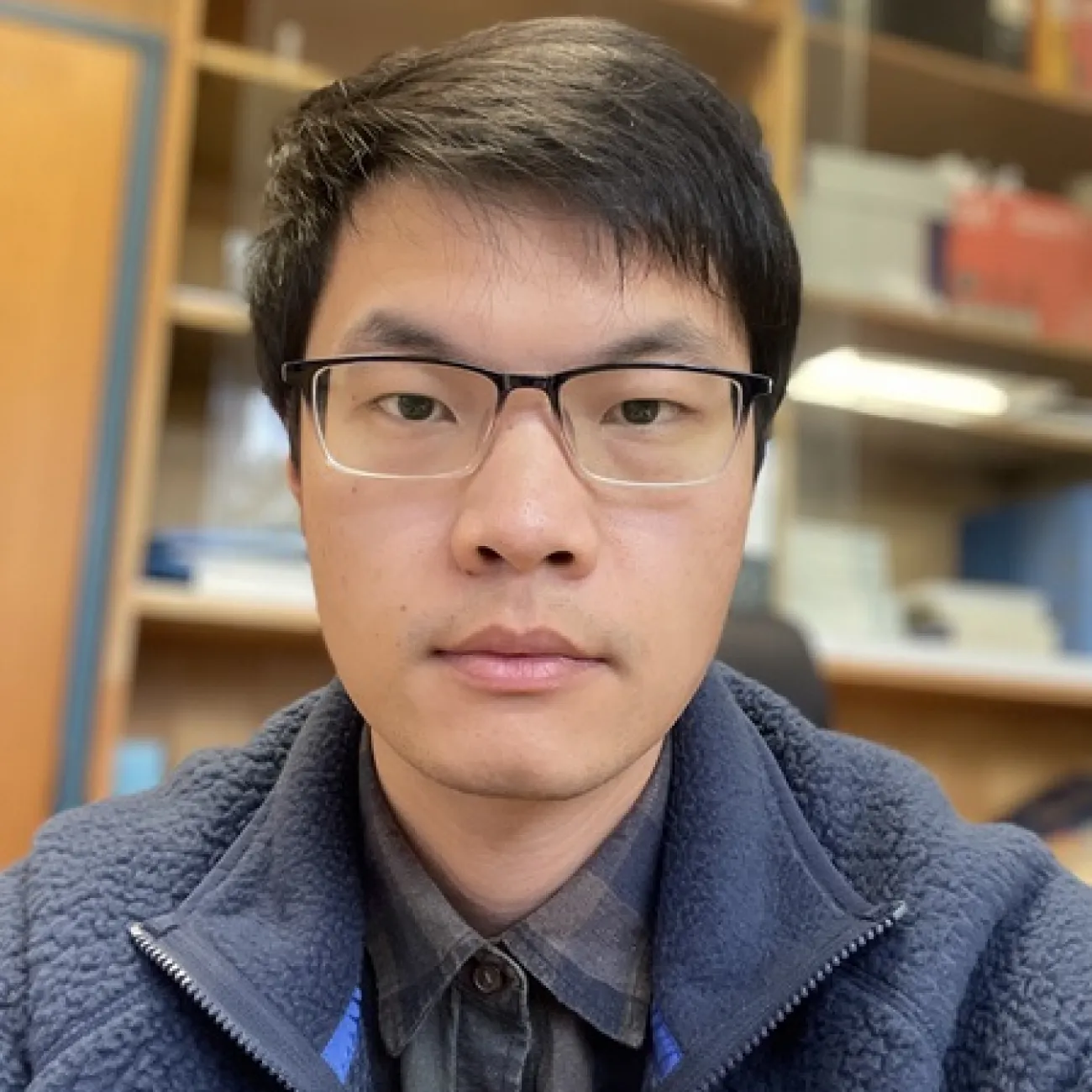
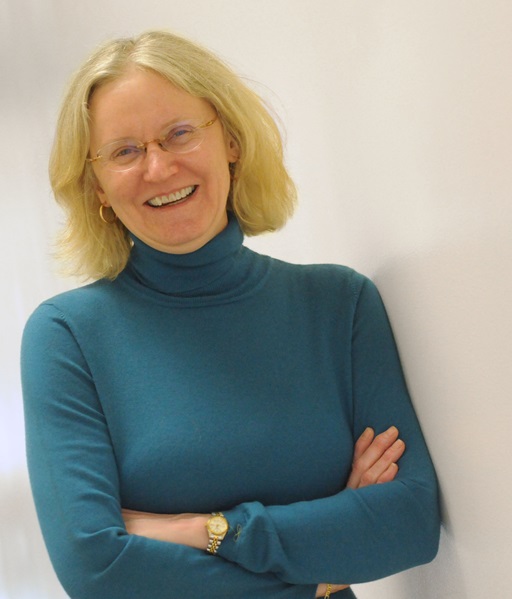
Leonard Wesley is an Associate Professor in the Department of Computer Science at the College Of Science, San Jose State University. His research spans interdisciplinary domains at the intersection of Bioinformatics , Computational Biology , and Machine Learning , with specific applications in Pharmaceutical Drug Discovery , Genomic Data Analysis , and Autonomous Robotics . Education: Ph.D. in Computer Science, University of Massachusetts M.S. in Computer Science, University of Massachusetts B.A. in Physics and Math, Northeastern University Research Interests include Approximate Reasoning (probabilistic, evidential, and fuzzy logic), Agent-Oriented Systems , and Sensor Fusion . His work applies these methodologies to Drug Portfolio Management , Protein Structure Scoring , and Medical Diagnostics . Publication Trends show a consistent focus on Computational Biology , Robotics , and Uncertainty Quantification over four decades. Early work in Computer Vision evolved into modern applications in Pharmaceutical Analytics and AI in Aerospace . Key Projects include SVM-based drug affinity prediction, evidence-driven decision support systems for biopharma, and real-time agent development frameworks like ROADS. He has contributed to CFD code control and Mobile Network Congestion solutions. Collaborations with institutions like NASA, Los Alamos National Laboratory, and international conferences (WMSCI, ICINCO, AIAA) highlight his cross-disciplinary impact. His teaching includes Artificial Intelligence and Bioinformatics courses.
Jinghui Cheng is an Associate Professor at the Department of Computer Engineering and Software Engineering at Polytechnique Montréal . He holds a PhD in Computer Science from DePaul University (2017), preceded by an MSE and BSE from Xi’an Jiaotong University, China. His research uniquely bridges Human-Computer Interaction (HCI) with Software Engineering , focusing on technologies that support domain experts with specialized information needs. Awards : Canada Research Chair Tier 2 in User Experience Design of Data-Driven Systems His recent work examines playful AI interactions (e.g., ChatGPT), designer-developer collaboration , and privacy motivation in UI/UX. He actively supervises PhD and Master’s students in the HCD Lab , with over 20 completed theses. Collaborations span institutions like the École Polytechnique and partnerships with researchers such as Jin L. C. Guo and Bram Adams . Cheng’s 15 most recent publications (2023-2025) reflect trends in AI-assisted design , usability in open-source communities , and ethical technology development . His grants include the AUDACE grant (2020) co-led with Dr. Gabrielle Pagé, focusing on healthcare applications.
Christina Delimitrou is an Assistant Professor in the Electrical and Computer Engineering Department at Cornell University, where she leads the SAIL research group and is a member of the Computer Systems Laboratory (CSL). She holds the John and Norma Balen Sesquicentennial Faculty Fellowship and will join MIT EECS and CSAIL as a professor starting September 2022. Dr. Delimitrou earned her Ph.D. and M.S. in Electrical Engineering from Stanford University, working with Christos Kozyrakis, and completed her undergraduate studies at the National Technical University of Athens. Her research focuses on computer architecture and systems, particularly on improving resource efficiency in large-scale datacenters through QoS-aware scheduling, resource management techniques, efficient server architectures, distributed performance debugging, and cloud security. Her publication record demonstrates consistent high-impact research in datacenter systems, with recurring themes in microservices architecture, machine learning for systems, and QoS-aware resource management. Her work bridges theoretical computer architecture with practical cloud computing challenges, resulting in multiple IEEE Micro TopPicks awards and best paper recognitions at major architecture conferences. Dr. Delimitrou has received numerous prestigious awards including: Sloan Research Fellowship in Computer Science NSF CAREER Award Microsoft Research Faculty Fellowship Intel Rising Star Award 2020 IEEE TCCA Young Computer Architect Award Multiple Google Faculty Research Awards Facebook Faculty Research Award Cornell Excellence in Research and Teaching Awards She actively mentors PhD, MS, and undergraduate students in the SAIL research group, focusing on cloud computing and computer architecture. Her research has been supported by significant grants from NSF, Google, Microsoft, Facebook, and Intel. She teaches ECE5710: Datacenter Computing at Cornell, exploring hardware, systems software, and distributed systems technology in modern datacenters. The SAIL research group develops innovative solutions for cloud infrastructure challenges, spanning from hardware acceleration to machine learning-driven resource management, with strong emphasis on practical implementation and real-world impact.
Ambra Ferrari is a Research Fellow at the Interdepartmental Center for Mind/Brain Sciences (CIMEC) within the University of Trento. Her work focuses on cognitive development, multisensory perception, and neuroimaging techniques. She teaches courses such as Cognitive neuroscience of infant development and contributes to the Cognitive Neuroscience program in the Department of Psychology and Cognitive Sciences. Her research integrates methodologies from neuroscience and psychology to study infant cognition, social development, and sensory integration. She develops computational tools like the WTools MATLAB toolbox for analyzing infant neural data. Ferrari's work bridges developmental psychology, psycholinguistics, and sensory neuroscience, emphasizing how prior expectations guide perception during communication. In teaching, she employs journal clubs and seminars to foster critical analysis of empirical studies and contemporary theories in cognitive development. Her courses aim to equip students with skills to evaluate experimental research and understand neurobiological foundations of cognition. Her laboratory (CIMEC) focuses on adaptive behavior, cross-modal plasticity, and embodied communication. Current projects explore statistical learning mechanisms, attention modulation in multisensory perception, and the role of gesture-prosody interactions in language comprehension.
Prof. Kwang W. Oh is a Professor and Director of Graduate Studies in the Department of Electrical Engineering at the University at Buffalo (SUNY), with an adjunct appointment in the Department of Biomedical Engineering. He directs the Sensors and MicroActuators Learning Lab (SMALL), focusing on biomedical microfluidic devices, sensors, and actuators for applications in medical diagnostics and biological research. His educational background includes: PhD in Electrical and Computer Engineering from the University of Cincinnati (2001) MS in Electrical and Computer Engineering from the University of Cincinnati (1997) BS in Physics with summa cum laude from Chonbuk National University, Korea (1994) Prof. Oh's research centers on microfluidics and BioMEMS (Bio Micro Electro Mechanical Systems), with specializations in LOC (lab-on-a-chip), MicroTAS (Micro Total Analysis Systems), and SANS (Sample-to-Answer Nano/microfluidic Systems). His work develops practical microfluidic devices for medical diagnostics, including point-of-care blood testing, single cell manipulation, and nanobiosensors. His lab has pioneered innovative approaches like the "pysanky" wax-based technique for rapid prototyping of microfluidic devices and vacuum-driven micropumps for plasma separation from finger-prick blood samples. His recent publications reveal a strong trend toward practical medical applications of microfluidics, particularly in photoacoustic imaging test phantoms, point-of-care diagnostics, and nanoparticle synthesis for viral treatment. His research bridges engineering with clinical needs, focusing on making laboratory functions portable and accessible through microfluidic integration. Among his notable awards: The SUNY Chancellor's Award for Excellence in Teaching (2020) President Emeritus and Mrs. Meyerson Award for Distinguished Undergraduate Teaching and Mentoring (2019) Qualcomm Faculty Award (2019) Senior Teacher of the Year Award, SEAS, UB (2017) Emerging Investigators 2012, Lab Chip, Royal Society of Chemistry (2013) Honor of CEO, Samsung Electronics for development of a micro PCR system (2003) Prof. Oh has advised numerous graduate students including Dr. Anyang Wang, Dr. Nikhila Nyayapathi, and Dr. Domin Koh, who have gone on to successful careers in academia and industry. His research has been supported by significant grants, including a Qualcomm Faculty Award in 2019, which recognizes research that "inspires students and sparks new approaches in key technology areas." He actively participates in professional service as an editorial board member for several journals including Sensors and Micromachines. He directs the Sensors and MicroActuators Learning Lab (SMALL), which houses state-of-the-art facilities for microfluidic device fabrication and testing. The lab focuses on developing practical microfluidic solutions for medical diagnostics, with recent projects including test phantoms for photoacoustic imaging, vacuum-driven micropumps for point-of-care blood separation, and microfluidic devices for nanoparticle synthesis targeting viral treatments. The lab fosters interdisciplinary collaboration between engineering, medicine, and life sciences to translate microfluidic innovations into real-world medical applications.
Cindy Grimm is a Professor and Graduate Program Director in the School of Mechanical, Industrial, and Manufacturing Engineering at Oregon State University (OSU), part of the College of Engineering. She is affiliated with the Robotics group, Human-Centered Computing, and Graphics and Visualization. Her research focuses on robotic grasping and manipulation for agricultural applications, ethics in robotics, and interdisciplinary projects such as 3D modeling, medical imaging segmentation, and bio-inspired sensor design. Education: Ph.D. in Computer Science, Brown University, 1996 M.S. in Computer Science, Brown University, 1992 B.A. in Computer Science and Art, University of California, Berkeley, 1990 Research Interests: Dr. Grimm’s work bridges computer science and robotics, emphasizing practical applications in agriculture and ethics. Key areas include robotic fruit harvesting systems, human-robot interaction, and the development of perception-driven algorithms for complex tasks like tree pruning and object manipulation. Her earlier projects explored surface modeling, bat sonar patterns, and 3D sketching interfaces. Publications: Her recent work addresses challenges in autonomous orchard management, robotic gripper design, and public understanding of service robots. Themes include precision agriculture, grasp planning, and sociotechnical aspects of robotics adoption. Awards: Recipient of the NSF CAREER Award, recognizing her contributions to robotics and interdisciplinary research. Service: Leads the Robotics graduate program at OSU, emphasizing ethical and technical training. Collaborates with the Collaborative Robotics and Intelligent Systems Institute (CoRIS) to advance robotics applications. Labs/Teams: Active in the CoRIS Institute, focusing on collaborative robotics and real-world robotic systems. Her lab develops hardware-software solutions for agricultural robotics and human-centered robotic interfaces.
Riadul Islam serves as an Assistant Professor in the Department of Computer Science and Electrical Engineering at the University of Maryland, Baltimore County (UMBC), maintaining his primary office in room 316 of the Information Technology and Engineering (ITE) Building. His academic appointment focuses on hardware design and verification within the institution's engineering framework. His educational qualifications include: Ph.D. in Computer Engineering from UCSC (2017) M.A.Sc. in Electrical and Computer Engineering from Concordia University, Montreal (2011) B.Sc. in Electrical and Electronic Engineering from Bangladesh University of Engineering and Technology (2007) Professor Islam's research centers on VLSI CAD tools and low-power digital/mixed-signal IC design , with significant contributions to current-mode clock networks, vehicular security systems, and error-robust circuit architectures. His work increasingly integrates machine learning for design automation while exploring neuromorphic computing applications and secure hardware implementations. This multidisciplinary approach bridges traditional IC design with modern AI-driven optimization techniques. Analysis of his 2023-2025 publications reveals three dominant research thrusts: (1) Machine learning applications in early-stage Design Rule Checking (DRC) prediction and clock network optimization, (2) Graph-based intrusion detection systems for automotive networks (particularly CAN bus security), and (3) Event-based vision systems and neuromorphic computing architectures. These areas demonstrate consistent innovation in merging hardware design with AI/ML methodologies for enhanced system reliability and efficiency. He directs the UMBC VLSI and SoC Research Group , which develops energy-efficient clocking networks, secure vehicular communication protocols, and compute-in-memory architectures. The lab maintains active collaboration with industry partners on hardware security and neuromorphic computing initiatives while supporting graduate student research in cutting-edge IC design methodologies.
Susan Embretson is a Professor of Psychology at the School of Psychology, Georgia Institute of Technology, with a distinguished career spanning modern psychometric theory and cognitive assessment methodologies. Her educational foundation includes a Ph.D. in Psychology from the University of Minnesota (1973). Dr. Embretson pioneers the integration of cognitive theory into psychometric models , specializing in item response theory and cognitive diagnosis. Her groundbreaking work on "tests without items" leverages artificial intelligence for dynamic item generation targeting cognitive difficulty sources. Research spans fluid reasoning, spatial ability, mathematical reasoning, and verbal comprehension, fundamentally advancing personalized assessment. Analysis of her 2012-2016 publications reveals sustained innovation in multicomponent latent trait modeling, cognitive complexity applications, and AI-driven test development. Key themes include diagnostic precision in mathematics assessment, cognitive load optimization, and personality impacts on test performance, establishing new paradigms in educational measurement. She directs the Cognitive Measurement Laboratory at Georgia Tech, driving research at the intersection of cognitive science and psychometrics.
George Shaker is an Adjunct Associate Professor in the Department of Electrical and Computer Engineering at the University of Waterloo, Canada, and Lab Director of the Wireless Sensors and Devices Laboratory at the Schlegel-UW Research Institute for Aging. He is also Chief Scientist at Spark Technology Labs. His research focuses on wireless sensor technologies for healthcare, autonomous systems, and IoT. He earned his bachelor's from Cairo University and master's/PhD from the University of Waterloo. Education: Bachelor’s degree, Cairo University, Egypt Master’s degree, University of Waterloo, Canada PhD, University of Waterloo, Canada Research Interests: Dr. Shaker’s work spans advanced wireless sensor systems for healthcare monitoring, UAVs, and automotive applications. His lab developed the MIRADA initiative for aging populations and pioneered radar-based non-invasive glucose monitoring. Key areas include mm-wave radar, antenna design, bioelectromagnetics, and machine learning integration. He has co-authored over 200 publications and holds 35+ patents, collaborating with companies like Google, Apple, and Toyota. Recent Article Trends: His 2025 work emphasizes AI-driven radar systems for activity recognition, bio-sensing metasurfaces, and UAV classification using digital twins. Projects include 4D radar imaging, low-cost milk quality monitoring, and smart furniture for cardiac health. Awards: IEEE AP-S Best Paper Award IEEE MTT-S Graduate Fellowship arXiv Top Downloaded Medical Article URSI Young Scientist Award Multiple student awards (see full list above) Advising & Grants: He advises graduate students in ECE and has led projects funded by NSERC and industry partners. His students have won Velocity Fund, NASA Tech Briefs, and Canadian Space Agency awards. Collaborates with over 40 companies including Amazon, Microsoft, and Medella Health. Labs & Initiatives: Leads the Wireless Sensors & Devices Lab and co-founded MIRADA, a smart apartment for aging healthcare. Active in Spark Labs for wireless innovation.
Prof. Michael Felderer is the Director of the Institute for Software Technology at the German Aerospace Center (DLR) and a full professor at the University of Cologne. His expertise spans software testing, security, architectures, empirical software engineering, and emerging technologies like AI and quantum computing. Previously, he held roles as associate professor at the University of Innsbruck, guest professor at Blekinge Institute of Technology, and CEO of QE LaB Business Services. His research focuses on developing methods to enhance software quality and trustworthiness through collaborations with academia and industry. Education details are not explicitly provided, but his career trajectory indicates advanced academic training in software engineering. Research interests include AI-driven software systems, data trustworthiness in IoT, and agile methodologies. He has co-authored over 200 publications and received 14 best paper awards, with notable recognition from the Journal of Systems and Software. Labs/Teams: Leads the DLR Institute for Software Technology, focusing on open-source software solutions for aerospace, energy, and security domains. Collaborates with global researchers and companies on advanced engineering applications like quantum computing and digital twins.
Juhani Ukko is a Full Professor (tenured) at the Lappeenranta-Lahti University of Technology (LUT), affiliated with the LUT School of Engineering Sciences and the Industrial Engineering and Management (IEM) department. His research focuses on digital transformation, sustainability strategies, and performance measurement systems in SMEs, with particular emphasis on Industry 4.0/5.0 technologies, smart manufacturing, and supply chain governance. He has extensively studied the interplay between digital innovation, environmental impact, and organizational renewal. Key research themes include digital twin applications in business ecosystems, IoT-driven social sustainability, and leveraging performance measurement frameworks to enhance sustainability performance. His work frequently addresses SME challenges in adopting smart technologies, overcoming institutional barriers, and achieving financial and environmental sustainability. Recent publications (2024–2025) highlight trends in digital business ecosystems, hybrid work environments, and the role of certification in total quality management. Notable contributions include studies on co-creation mechanisms in digital service supply chains, the impact of leadership on organizational performance, and the strategic use of real-time simulation for sustainable production. Dr. Ukko’s research bridges theoretical frameworks with practical applications, often collaborating with industry partners. His CV and Google Scholar profile are publicly available for detailed insights into his academic contributions and collaborative projects.
Bassem O Andrawes is a Professor in the Department of Civil and Environmental Engineering at the University of Illinois, affiliated with the National Center for Supercomputing Applications (NCSA). His research focuses on innovative materials like shape memory alloys (SMAs) and their applications in civil infrastructure, including reinforced concrete, bridge engineering, and structural rehabilitation. He has been recognized with prestigious awards including the ASCE Fellow (2024) and NSF CAREER Award (2011). Key research interests include: Active confinement and prestressing systems using SMAs Structural health monitoring and data-driven performance evaluation Bridge deck and girder analysis under dynamic and static loads Sustainable solutions for mass timber and concrete structures Recent work highlights include developing adaptive prestressing systems for concrete crossties, SMA-based crack healing for concrete structures, and digital twin models for bridge monitoring. His studies bridge materials science with civil engineering applications, emphasizing durability and resilience in infrastructure systems. Notable achievements include over 100 peer-reviewed publications and leadership in projects addressing seismic retrofitting, FRP composites, and material testing integrated (MTI) simulation paradigms. Collaborations span academia and industry, focusing on practical solutions for infrastructure challenges.
Dr Yuting Zhang serves as a Research Fellow within the Department of Civil, Maritime, and Environmental Engineering at the University of Southampton's Faculty of Engineering and Physical Sciences. He is an integral member of the Royal Academy of Engineering Chair Centre of Excellence for Intelligent & Resilient Ocean Engineering (IROE), focusing on machine learning applications for geotechnical site characterization. His educational background includes a Bachelor's degree and MPhil in Geotechnical Engineering from Wuhan University, China, followed by a 2024 PhD from the University of Newcastle, Australia, specializing in probabilistic calibration of resistance factors for piling designs. Zhang's research centers on probabilistic geotechnics and reliability-based design methodologies, with particular emphasis on data-driven site characterization techniques. His work bridges machine learning algorithms with geotechnical and geophysical data analysis to enhance foundation engineering practices, especially in offshore and marine environments. Current projects investigate spatial soil variability effects on pile group reliability, optimization of resistance factors, and innovative data augmentation approaches for rock fracture prediction. His publication record demonstrates consistent output in high-impact journals since 2022, with recent 2025 publications indicating active research momentum. The articles reveal strong thematic focus on probabilistic methods for pile design, integration of diverse geotechnical data sources, and machine learning applications in subsurface characterization. As part of the Infrastructure Group and Southampton Marine and Maritime Institute, Zhang contributes to ocean energy research initiatives while maintaining active collaborations with international researchers including Jinsong Huang, Jiawei Xie, and Anna Giacomini. His work supports the development of more resilient offshore infrastructure through advanced geotechnical reliability frameworks.
Anne-Virginie SALSAC is a leading researcher in bioengineering and biomechanics at the University of Technology of Compiègne (UTC), France. She heads the Biomechanics and Bioengineering Laboratory (BMBI, UMR CNRS 7338) and has held an ERC Consolidator Grant (2017) from the European Research Council for her work on multiphysics modeling of microcapsules. Her research focuses on numerical simulation, microfluidics, and bioartificial capsule design for biomedical applications, including hemodynamics in vascular systems and minimally invasive therapies. She has pioneered techniques for microcapsule characterization and sorting, with applications in drug delivery and tissue engineering. SALSAC has collaborated internationally with institutions like Sorbonne Université, University College London, and Queen Mary University of London. Education: Advanced training in bioengineering, with postdoctoral experience in fluid mechanics and biomedical systems. Teaching: Leads graduate courses in mechanical properties of biological materials, microfluidics, and vascular flow modeling at UTC. Previously taught at UC San Diego and University College London. Awards: ERC Consolidator Grant (2017), European scholarship for excellence (2018). Her research integrates experimental and computational methods, emphasizing real-time prediction of capsule deformation and fluid-structure interactions. Key projects include the ERC-funded MultiphysMicroCaps initiative, which explores multiscale modeling of microcapsules under physiological flows. She has developed novel microfluidic tools for capsule sorting and mechanical property analysis, published in top journals like Physical Review E and Journal of Fluids and Structures . SALSAC advocates for scientific mediation, organizing international symposia such as the DynaCaps conference, and has engaged in public outreach via television and media features. Her work bridges fundamental research and clinical applications, with patents on microcapsule fabrication and embolization techniques.
Dr. Gail Kaiser is a Professor of Computer Science at Columbia University, where she has served for 40 years. She directs the Programming Systems Lab (PSL) and is affiliated with the Software Systems Lab (SSL). Her research focuses on software systems, program analysis, testing, security, and AI-driven software engineering. She earned her PhD from Carnegie Mellon University and a BS from MIT. Education: PhD in Computer Science, Carnegie Mellon University (1985) MS in Computer Science, Carnegie Mellon University (1980) BS in Computer Science and Engineering, MIT (1979) Research & Teaching: Dr. Kaiser teaches COMS W4156 (Advanced Software Engineering) and COMS E6156 (Topics in Software Engineering). Her work spans metamorphic testing for machine learning, secure computing, and AI in SE. Notable contributions include pioneering metamorphic testing for classifiers and secure containers research. Awards & Grants: 2025 Distinguished Journal Award (ICST) NSF grants totaling over $2M for secure computing and software assurance ACM SIGSOFT Distinguished Paper Awards (2023, 2014) Labs & Collaborations: Her labs (PSL and SSL) drive innovation in program analysis and security. Collaborations include DARPA, NIH, and industry partners like IBM and Microsoft.