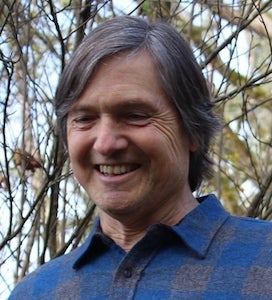
Raymond FreyView profile
Professor
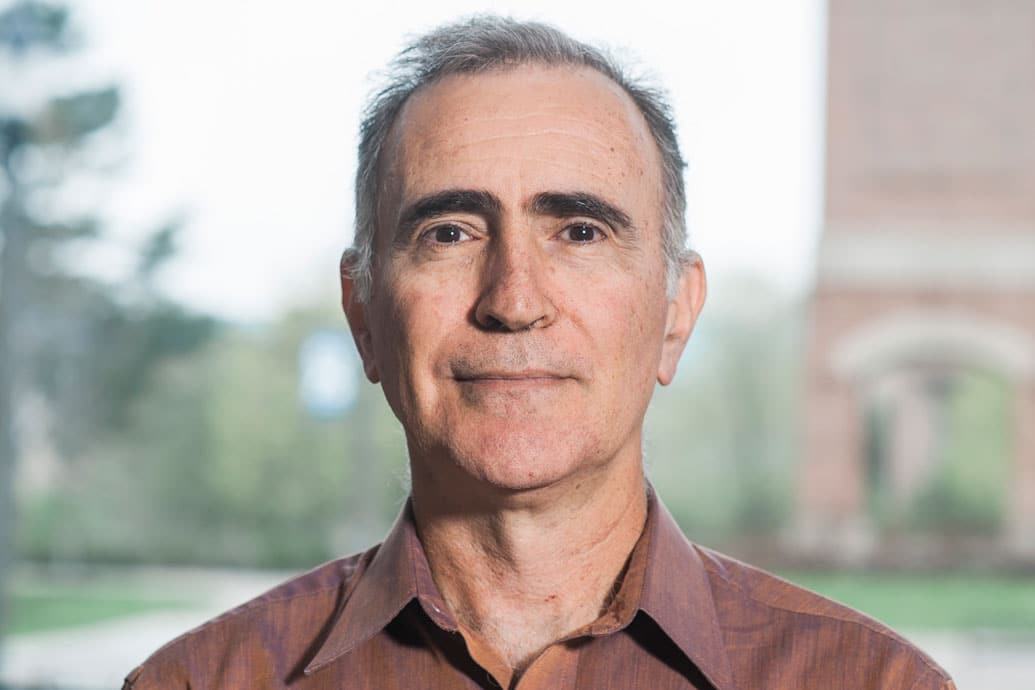
Raymond Frey is a Professor in the Department of Physics at the University of Oregon, part of the College of Arts and Sciences. He has been a key member of the UO faculty since 1989 and leads research in gravitational wave detection and astrophysics as part of the LIGO Scientific Collaboration. His group focuses on data analysis and characterizing non-astrophysical noise in LIGO detectors. Ph.D., University of California, Riverside, 1984 Joined University of Oregon: 1989 Former Head of Physics Department (2012–2018) Raymond Frey's research centers on experimental high energy physics and astrophysics, particularly the detection of gravitational waves from cataclysmic events such as black hole and neutron star mergers. His work contributes to opening the new field of gravitational wave astronomy. He specializes in identifying and mitigating environmental noise in LIGO data and in conducting triggered searches for gravitational wave signals associated with gamma-ray bursts and supernovae. The recent publications reflect a strong focus on multi-messenger astrophysics, especially the landmark detections of GW150914 and GW170817. These works span areas including signal detection, noise characterization, parameter estimation, and tests of general relativity, with a clear trajectory toward understanding compact object populations and the nature of dense matter. Scientific recognition includes being part of the LIGO team awarded Science Breakthrough of the Year in 2016 and 2017 . These honors celebrate the first direct detection of gravitational waves and the first observation of a binary neutron star merger with electromagnetic counterparts. Raymond Frey has advised numerous graduate students in physics, including Matthew Ball, Adrian Helmling-Cornell, Sudarshan Karki, Kara Merfeld, Philippe Nguyen, Jordan Palamos, Vinny Roma, and Paul Schale. His group has been supported by research grants from the National Science Foundation and other agencies funding LIGO-related work. He has taught a wide range of courses, from introductory physics and astronomy to advanced topics like mathematical methods and electronics. The UO LIGO group, which he co-leads, conducts research both at the LIGO Hanford Observatory and on campus, focusing on data analysis and detector characterization. The team regularly collaborates with international partners within the LIGO Scientific Collaboration and participates in major discovery efforts.