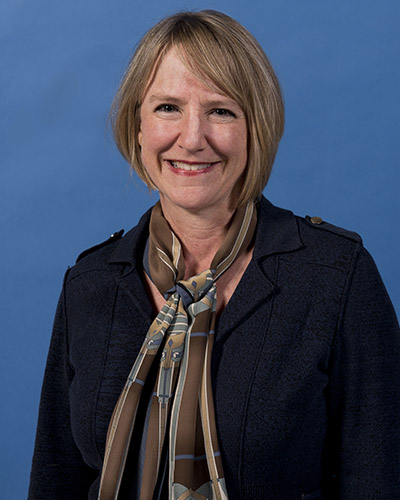
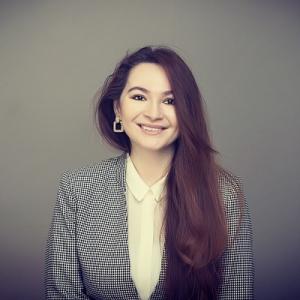
Prof. Hannah Dugdale is an Associate Professor at the Faculty of Science and Engineering , University of Groningen, leading the Dugdale group - Evolutionary Medicine . Her research bridges evolutionary genetics, animal behavior, and microbiome ecology, focusing on wild vertebrate populations. University: University of Groningen School: Faculty of Science and Engineering Academic Rank: Associate Professor Research Interests: Telomere dynamics and aging Gut microbiome evolution Cooperative breeding mechanisms Environmental stress impacts Population genetics Behavioral ecology Article Trends: Her recent work examines telomere length as a biomarker for survival, gut microbiome effects on fitness, and climate/predation impacts on avian populations. Studies often employ long-term ecological datasets and genomic analyses. Grants & Projects: Involved in 14 funded projects, including environmental buffering hypotheses and microbiome research. Collaborates extensively with Prof. Terry Burke (University of Sheffield) and Prof. Jan Komdeur (University of Groningen). Labs & Teams: Leads the Dugdale group in Evolutionary Medicine, collaborating with international teams on vertebrate population studies. Research spans fieldwork, genetic analysis, and ecological modeling.
Catherine Marler is a Professor in the Department of Psychology at the University of Wisconsin-Madison, where she leads the Marler Lab focused on the Biology of Brain and Behavior. Her research program investigates the intricate connections between endocrine systems and social behaviors, with particular emphasis on how hormones like testosterone and oxytocin shape complex social interactions in monogamous mammals. Dr. Marler's research primarily utilizes the California mouse (Peromyscus californicus) as a model organism, capitalizing on its unique monogamous, biparental, and territorial nature. Her work spans both laboratory and field settings, allowing for comprehensive investigation of neuroendocrine mechanisms in naturalistic contexts. Key research themes include the role of testosterone in territorial behavior and winner effects, oxytocin's influence on pair bonding and parental behavior, and the neural substrates of ultrasonic vocalizations. Recent publications reveal a strong focus on conditioned place preferences related to testosterone pulses, oxytocin's effects on social behaviors across different developmental stages, and the neuroendocrine mechanisms underlying aggression and pair bonding. Her work demonstrates how social experience, environmental context, and endocrine systems interact to shape complex behavioral outcomes, with particular attention to sex differences and transgenerational transmission of behaviors. Dr. Marler has published extensively in top journals including Hormones and Behavior, Proceedings of the Royal Society, and Animal Behaviour, with her most recent work appearing in high-impact venues throughout 2023-2025. Her research program represents a sophisticated integration of behavioral observation, endocrine manipulation, and neural analysis to unravel the mechanisms underlying social behavior in mammals. As an advisor, Dr. Marler mentors students in behavioral neuroscience and endocrinology, fostering research that bridges laboratory and field approaches to understand the evolution and mechanisms of social behavior. Her lab maintains a strong commitment to rigorous scientific methodology and innovative experimental design in the study of neuroendocrine-behavior relationships.
Prof. Dr. Kenny R. Cupers is Professor of Architectural History and Urban Studies at the University of Basel , affiliated with the Department of Social Sciences in the Faculty of Humanities and Social Sciences . He co-founded and leads the Urban Studies division, focusing on the intersections of architecture, urbanism, colonialism, and planetary design in African and European contexts. PhD, Harvard University (2010) M.Sc. and B.Sc. in Architecture, Catholic University of Leuven Studies in Visual Culture and Urban Theory, Goldsmiths College, London His research centers on architectural modernism, housing, infrastructure, and decolonization . Key themes include the planetary politics of design, coloniality of infrastructure, and the role of architecture in state transformation. He is currently working on two book projects in Kenya: one on unmaking the plantation system through arts and architecture, and another on post-independence Nairobi’s urban history. Recent publications include The Earth that Modernism Built: Empire and the Rise of Planetary Design (2024) and The Social Project: Housing Postwar France (2014). He leads the Sinergia project Governing through Design (2020–2025) and previously directed the SNF-funded How Infrastructure Shaped Territory in Africa (2018–2022). His work appears in journals such as e-flux Architecture , Antipode , and Architectural Theory Review . Scientific Awards: No specific awards listed in the provided text. As an educator, Cupers promotes engaged pedagogy and collaborative research, co-editing What is Critical Urbanism: Urban Research as Pedagogy (2022). His public research projects include Swiss Corporate Coloniality and Lamu Futures . He has advised multiple PhD and Master’s students, though specific names are not listed. He is part of a vibrant research team including Dr. Ernest Sewordor, Dr. Laura Nkula-Wenz, and Dr. Prita Meier. Laboratories and Research Teams: Urban Studies, University of Basel Critical Urbanisms Program Sinergia Project: Governing through Design How Infrastructure Shaped Territory in Africa (completed) Infrastructure Space and the Future of Migration Management (completed)
Elizabeth Rhoads is a Senior Lecturer and Researcher at the Centre for East and South-East Asian Studies, Lund University, under The Joint Faculties of Humanities and Theology. She is also a member of the LU Profile Area on Human Rights, reflecting her deep engagement with human rights issues in Southeast Asia. Her work is interdisciplinary, bridging law, anthropology, geography, and urban studies. Education: PhD in Law, King's College London (Dickson Poon Fellow) M.A. in Human Rights Law, SOAS A.B. in Anthropology, Bryn Mawr College Her research focuses on citizenship, displacement, property relations, and minority-state dynamics in Myanmar and Indonesia. She employs a multidisciplinary approach combining legal history, legal anthropology, and urban studies to examine how law shapes everyday life in contexts of political upheaval and marginalization. Her fieldwork in Myanmar and Indonesia includes work on land disputes, transitional justice, women’s political participation, and violent extremism. The analysis of her recent publications reveals a consistent focus on legal and social exclusion in Southeast Asia, particularly around citizenship and urban informality. Her work often explores how legal frameworks produce statelessness, displacement, and spatial violence, especially in Myanmar. She frequently collaborates with local organizations and researchers, emphasizing participatory and ethical research practices during crises. Her publications span journal articles, reports, book chapters, and reviews, with increasing attention to post-coup dynamics and community resilience. Scientific Awards and Honors: Dickson Poon Fellow, King's College London Blakemore-Freeman Fellowship for advanced Burmese language study British Academy Co-Investigator and Post-Doctoral Fellowship Elizabeth Rhoads is actively involved in advising and research grants. She is currently leading a Swedish Research Council-funded project on citizenship and displacement in Myanmar in collaboration with a Burmese organization. She is also a Co-Investigator on the EU-funded EUVIP project under Horizon Europe, examining the EU’s role in the Indo-Pacific. She serves on the editorial board and as Guest Editor for Jurnal HAM , contributing to academic discourse on human rights in the region. She has been involved in collaborative research networks focusing on spatial violence, urban informality, and legal pluralism in Southeast Asian cities. Her work emphasizes community-based and interdisciplinary methodologies, often co-producing knowledge with local actors. She contributes to public engagement through web publications and digital storytelling, such as the 'Yangon Stories' initiative.
Shelley Roff serves as Associate Professor of Architecture and Planning within the Margie and Bill Klesse College of Engineering and Integrated Design at The University of Texas at San Antonio (UTSA). Her academic appointment bridges historical scholarship with contemporary architectural discourse through rigorous analysis of pre-industrial built environments. Dr. Roff's research fundamentally challenges patriarchal narratives in architectural history by excavating women's contributions to medieval and early modern construction. Her work demonstrates how female laborers, merchants, and property owners shaped urban landscapes across Spain, Catalonia, and colonial territories through meticulous examination of tax records, guild documents, and material artifacts. This feminist reclamation of architectural history reveals complex gendered economies in construction trades while analyzing how urban prosperity narratives masked socioeconomic disparities. Analysis of her publication trajectory since 2009 shows consistent methodological innovation, evolving from case studies of specific cities (Barcelona, Valencia) to broader theoretical frameworks for understanding gender in global architectural history. Her scholarship increasingly incorporates comparative colonial perspectives while maintaining primary focus on Iberian contexts, with recent work interrogating how women navigated restrictive social structures to participate in building processes. Her scholarly impact is recognized through prestigious awards: Bogliasco Fellowship (2019) from the Bogliasco Foundation for advanced research in humanities Fulbright U.S. Student Program (1995) supporting international research with the U.S. Department of State While the source material provides no details about doctoral advisees or current research grants, Dr. Roff's sustained publication record in leading architecture/history venues indicates active mentorship and research leadership. Her work with the Virtual Archive of Medieval Barcelona project demonstrates commitment to digital scholarship methodologies that preserve and reinterpret historical architectural data for contemporary pedagogy.
School for Advanced Studies in the Social SciencesFrance
Elie Haddad is a CNRS Research Director at the École des Hautes Études en Sciences Sociales (EHESS) and a member of the Center for Historical Research (CRH) . His work bridges anthropology, sociology, and legal studies to analyze the social history of French nobility in the modern era, with a focus on kinship, seigneurial power, and feudalism. Research Groups: RHiSoP, LaDéHiS, GRIHL Teaching: Courses like 'Social constructions of political categories' and 'Society and Power in the Modern Era' (2024-2025). His research interests encompass the nobility’s evolving relationship to land and power, legal frameworks of feudalism, and the sociopolitical implications of genealogical practices. He has co-edited special issues on topics such as racial discourse in early modern Europe and the social history of categorization. Publications include monographs on noble 'houses' (e.g., Foundation and ruin of a 'house' , 2009) and articles in French Historical Studies , Revue d’Histoire Moderne & Contemporaine , and L’Atelier du CRH . Recent works analyze noble kinship, fiscal privilege, and the historiography of nobility. Administrative Roles span membership in EHESS’s Educational Council (2015-2019; since 2021), CNRS National Committee (2012-2021), and the CRH Laboratory Council (2010-2014). He serves on editorial boards of L’Atelier du CRH and Revue d’Histoire Moderne & Contemporaine . Projects and Collaborations include the 2023-2025 DOMINIUM project on feudalism’s historiography and participation in transnational conferences on Haitian debt history (2025) and noblewomen’s voices (2025). He is also active in academic advocacy, serving as treasurer for Save the University! and secretary of the FSU section at EHESS.
Dr David Plater is an Associate Professor at the University of Adelaide Law School and Deputy Director of the South Australian Law Reform Institute (SALRI), a nonpartisan law reform body formed through partnership between the University, Law Society, and State Government. He also serves as an Adjunct Associate Professor at the University of Tasmania Law School. His teaching portfolio includes Law Reform (supporting SALRI's work), Criminal Law, Selected Issues in Criminal Law, Evidence, and Advocacy. Dr Plater holds a PhD from the University of Tasmania (2011) examining the historical development and modern application of the prosecutor's role as a 'minister of justice'. He is admitted as a legal practitioner in England, Republic of Ireland, Northern Territory, Tasmania, and South Australia. His extensive practical experience includes work as a Senior Crown Prosecutor and with the State DPP in South Australia. His research focuses on modern Law Reform, surrogacy, prosecution discretion, victims' rights, vulnerable parties in the justice system, and legal history. His thematic approach emphasizes making the legal system more efficient, equitable, and accessible for traditionally overlooked groups including victims of sexual abuse, individuals with cognitive impairments, and Aboriginal communities. He often draws on historical analysis to highlight longstanding legal issues and explores how fair trial rights must balance competing interests of accused, victims, and community. Dr Plater's recent publications reveal consistent focus on law reform through SALRI's work, with particular attention to vulnerable witnesses, surrogacy law, powers of attorney, and historical perspectives on criminal justice. His research bridges historical legal analysis with contemporary challenges, especially regarding fair trial rights and balancing competing interests in the justice system. Australian Research Council Linkage grant ($252,124) for national jury study on sentencing for sex offences Research on surrogacy law and practice in South Australia Independent statutory review of the Ageing and Adult Safeguarding Act South Australian Law Foundation project examining Communication Partner model As Deputy Director of SALRI, Dr Plater oversees major inquiries into difficult legal topics with Professor John Williams (Director) and Louise Scarman (EO). SALRI's work emphasizes inclusive engagement with regional and Indigenous communities, and many of its reports have led to significant legislative changes in South Australia. He has been instrumental in SALRI references on succession law, surrogacy, provocation issues, abortion, powers of attorney, and adult safeguarding.
Juan Hernandez Franco is a Professor of Modern History at the University of Murcia, affiliated with the Faculty of Arts and Humanities and the Department of Modern, Contemporary and American History, History of Thought and Social and Political Movements. He is a leading scholar in the study of nobility, family structures, honor, and blood purity in early modern Spain. University: University of Murcia School: Faculty of Arts and Humanities Department: Department of Modern, Contemporary and American History, History of Thought and Social and Political Movements Academic Rank: Professor Email: jhf@um.es He earned his doctorate from the University of Murcia with a thesis on Floridablanca's political and reformist thought. His research focuses on social and political elites, lineage, and cultural identity in early modern Iberia. He leads the research project "Generaciones Inciertas. Las Familias de los Influyentes Españoles en Tiempos de Transformación (1740–1830)" and co-directs the "Seminario Familia y Elites de Poder." His publications span topics such as noble marriages, hydraulic management, and ideological continuity of noble values. Recent works analyze debates on blood purity in the 1630s, marriage alliances among the Alba and Villafranca families, and the transition from lineage-based to citizen-family models. His scholarly output includes major books like Nobilitas and Sangre limpia, sangre española , reflecting deep engagement with social hierarchies and identity formation. He has no listed scientific awards in the provided texts, but his leadership of funded research projects indicates recognition and support from academic institutions. Juan Hernandez Franco advises PhD and Master’s students, though specific names are not listed. His work is supported by research grants enabling his project on influential Spanish families. He collaborates with scholars internationally and contributes to collective volumes and peer-reviewed journals. He is associated with the research group "Family, Society and Power Elites" and has previously contributed to "Familia, Sociedad y Elites de Poder." These groups focus on elite networks, social mobility, and cultural transformations in early modern Europe.
Kevin Hector serves as the Naomi Shenstone Donnelley Professor of Theology and of the Philosophy of Religions at the University of Chicago Divinity School, with additional affiliation in the College. His position represents a distinguished endowed chair within one of the world's leading theological institutions. Hector's research centers on interpretive theology and philosophy of religion, with particular focus on how faith commitments interact with cultural contexts and personal identity. His work critically examines language's relationship to the divine, the formation of selfhood through religious practices, and systematic frameworks for understanding Christianity as transformative lived experience. He explores how theological concepts from Kant through Tillich address fundamental human concerns about meaning and coherence. His major publications reveal an evolving trajectory from metaphysical critiques to constructive systematic theology. The 2023 work Christianity as a Way of Life represents his most comprehensive synthesis, analyzing religious practices as mechanisms for perceptual and existential transformation. Current research investigates memoir as theological reflection through a Templeton Foundation-funded project. Faculty Award for Excellence in Graduate Teaching and Mentoring (2013) Hector's Templeton Foundation grant supports collaborative research in Christian theological anthropology. His mentoring excellence recognized by the 2013 university teaching award demonstrates significant impact on graduate education. Current work expands into interdisciplinary territory examining how personal narrative intersects with inherited theological frameworks. Hector's scholarship operates at the intersection of analytic philosophy, historical theology, and practical religious studies, maintaining rigorous philosophical engagement while developing constructive theological frameworks for contemporary religious practice.
Prof. Zbigniew Ofiarski is a Professor at the Faculty of Law and Administration of the University of Szczecin, specializing in financial law, banking law, and tax law. He holds the position of Professor and has served as Dean of the faculty between 1999–2005. He leads the Department of Financial Law and has contributed to numerous scientific councils and editorial boards, including the Great Encyclopedia of Law. His research focuses on public finance, tax systems, and financial market regulations. Over 700 publications, including monographs and commentaries, reflect his expertise. He has held roles such as tax advisor and has been involved in academic administration, including committee memberships and institutional governance. His research interests span state and local financial law, tax law fundamentals, banking regulations, and foreign exchange policies. He has published extensively on topics like budgetary institutions, tax exemptions, and financial crisis management. His work integrates legal analysis with practical policy implications, contributing to Poland's legal and fiscal frameworks. He has been actively involved in academic leadership, including roles in evaluation committees, editorial boards, and institutional policy-making bodies. Prof. Ofiarski’s professional activities include teaching tax law and banking law, alongside advisory roles in public finance. His involvement in the International Center of Public Finance and Tax Law Research underscores his global academic engagement. He has also contributed to the development of legal standards through his participation in high-level regulatory councils and academic journals.
Björn Laukemann is a Professor of Civil Law and German/International Civil Procedure Law at the University of Tübingen's Faculty of Law. His work focuses on European and International Insolvency Law , Private International Law , and the intersection of Artificial Intelligence with Legal Dispute Resolution . He also contributes to Comparative Procedural Law and Digital Legal Innovation . His research explores cross-border insolvency frameworks , judicial transparency , and AI-driven dispute resolution mechanisms . He has published extensively on EU Insolvency Regulation , synthetic proceedings , and procedural efficiency in civil litigation. Recent work analyzes the European AI Act 's impact on platform-based legal enforcement . Scientific awards include the Serick Prize (2009) , Gravenbrucher Kreis Science Prize (2009-2010) , and participation in the Baden-Württemberg Elite Program for Postdoctoral Researchers (2011-2012) . He serves as an International Advisor to the American Law Institute on Restatement of the Law Fourth Property since 2015. For full details, consult his 15 most recent publications (2006-2024), covering topics from cross-border asset allocation to digital self-help mechanisms in civil law contexts. His secretariat operates at Geschwister-Scholl-Platz, Tübingen, with office hours Monday-Friday and via email sekretariat.laukemann@jura.uni-tuebingen.de .
Ryan Thomson is an Assistant Professor in the Department of Agricultural Economics & Rural Sociology at Auburn University's College of Agriculture. His research focuses on land ownership dynamics, environmental policy, and socio-economic disparities in rural communities. Key areas include heirs' property issues, climate resilience in agriculture, and spatial analysis of environmental injustices. Thomson's work integrates quantitative methods with interdisciplinary approaches, addressing topics such as wildlife trafficking networks, financialization of agriculture, and reparations frameworks tied to land rights. He has published extensively on legal, economic, and social dimensions of rural development, with a regional emphasis on the Southern U.S. and Appalachian regions. His articles analyze geospatial data to map environmental hazards and assess disaster vulnerabilities, while also critiquing colonial legacies in territorial island governance. Thomson collaborates with stakeholders to develop policies that promote equitable land access and climate adaptation strategies for agricultural communities.
Jonathan Wyrtzen is a Professor of Sociology & History at Yale University, specializing in modern North Africa and the Middle East, with a focus on empire, colonialism, nationalism, and state-formation. He is affiliated with the Council on Middle East Studies, Council on African Studies, and Jackson School of Global Affairs. His research examines how colonial interventions reshaped political identities, particularly during the Protectorate era in Morocco and the geopolitical reconfiguration of the Middle East post-World War I. Wyrtzen’s major works include *Making Morocco: Colonial Intervention and the Politics of Identity* (2015) and *Worldmaking in the Long Great War* (2022), which received multiple academic accolades. His courses span Islamic societies, comparative historical methods, and imperialism’s legacy. Current research explores metropole formation in imperial contexts, global Texas history, and mid-20th century decolonization struggles. He holds affiliations with national organizations like the American Sociological Association and Middle East Studies Association. His research streams emphasize transnational dynamics, colonial legacies, and the interplay between local and global forces in shaping political landscapes.
Associate Professor Terri Bird is an artist and academic at Monash University's Department of Fine Art, within the Faculty of Art, Design and Architecture. Her research explores sculptural practices that interrogate material dynamics and their intersections with geology, colonisation, and the Anthropocene. She co-founded OSW (Open Spatial Workshop), recipients of the 2005 Melbourne Prize for Urban Sculpture, known for works like Converging in Time (2017) at MUMA. Bird holds a PhD in Visual Culture (2007) from Monash, alongside earlier degrees from RMIT and the University of Melbourne. Her research interests emphasize material force and ethics, with projects analyzing resource extraction, territorial politics, and feminist materialism. Notable collaborations include the West Brunswick Sculpture Triennial (2009) and ongoing work with OSW on geo-social assemblages. Bird has authored essays such as Registering Surfaces, Excavating Inheritances (2016) and contributed to exhibitions addressing climate-aware creative pedagogy and sustainable art practices. Awards include the 2018 National Works on Paper Prize finalist recognition and the AAANZ Best Exhibition Catalogue Prize. Her work bridges studio practice with critical theory, advocating for art's role in addressing environmental and colonial histories. Current research priorities include Climate Aware Creative Practices, focusing on ethics of making and decolonial perspectives. Terri Bird supervises graduate research and has led projects funded by Creative Victoria and the Australia Council for the Arts. Her interdisciplinary approach integrates sculpture, installation, and curatorial practice to explore urgent contemporary issues.
Višnja Lachner is an Assistant Professor at the Faculty of Law, Josip Juraj Strossmayer University of Osijek, specializing in Legal History and Roman Law. She holds a PhD in Public Law and Public Administration from the University of Zagreb (2015), focusing on the legal status of Osijek under Austro-Hungarian rule. Her teaching includes courses on Croatian Legal History, Administrative Studies, and Gender in Law. She actively participates in international conferences and research projects, emphasizing Croatian legal evolution, medieval statutes, and socio-legal issues. Education: B.A. (2008, cum laude) and PhD (2015) from the Faculty of Law, Zagreb. Pedagogical training from the Faculty of Education Sciences, Osijek (2011-2012). Research expertise spans administrative justice, medieval legal systems, and social welfare legislation. Fluent in English and German, she collaborates with institutions like the Croatian Institute for Local Government and association 'Antique Fontis.' Research interests: Croatian legal history, European legal traditions, medieval statutory law, gender studies in law, and socio-economic legal frameworks. Over 20 publications in domestic and international journals, including studies on Trianon Treaty impacts, Dalmatian trade regulations, and administrative systems in Osijek. A prolific conference presenter and reviewer for legal publications. Key contributions include analysis of medieval inheritance laws (Korčula Statute), 19th-century social welfare systems, and comparative legal studies with Hungary and Austria-Hungary. Her work bridges historical legal analysis with contemporary socio-legal challenges.