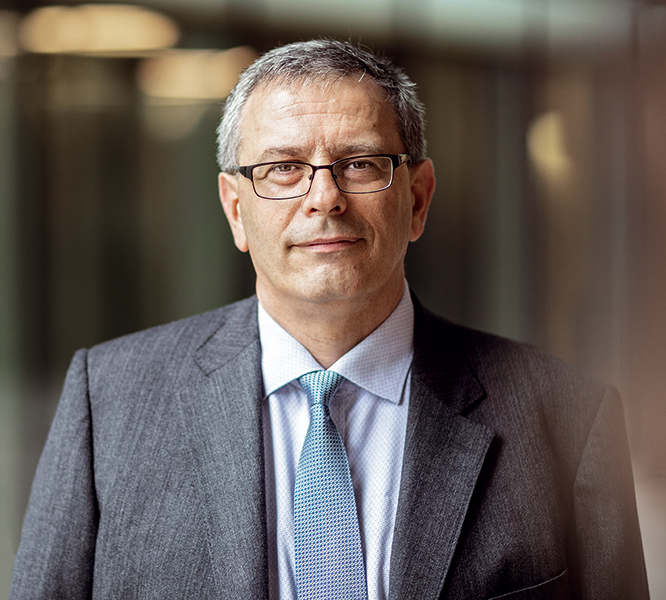
Álvaro González is a Researcher in Section 2.6 (Seismic Hazard and Risk Dynamics) at Deutsches GeoForschungsZentrum (GFZ) in Potsdam. His research focuses on seismic hazard assessment, earthquake mechanics, and geophysical modeling. His investigations span diverse areas including thermal controls on seismogenesis, seismic catalog analysis, slow-slip earthquakes, and induced seismicity. González employs advanced statistical methods and 3D modeling techniques to study earthquake processes globally, with regional foci on Caribbean, Iberian, and Central American tectonics. His publication record demonstrates consistent contributions to understanding seismic source characterization, subduction zone dynamics, and innovative approaches in probabilistic seismic hazard analysis. Recent work emphasizes the integration of slow-slip earthquake phenomena into hazard models.
Freek van der Meer is Professor and Vice Dean at the University of Twente's Faculty of Geo-Information Science and Earth Observation, where he leads the Department of Earth System Analysis. He holds adjunct positions at Delft University of Technology and Utrecht University. His research specializes in hyperspectral remote sensing for geological applications, geostatistical modeling of geothermal systems, and geoscience education. Key projects include EU Asialink BRIDGE and GEOCAP, focusing on sustainable geosystem exploration across Southeast Asia. Recent publications emphasize geoscience curriculum development, ecosystem resilience monitoring via spectroscopy, and advanced hyperspectral data processing techniques. His teaching covers physical principles of remote sensing and hyperspectral data analysis methodologies.
Stephen Andrew Miller is a Full Professor (Professeur ordinaire) at the University of Neuchâtel's Centre for Hydrogeology and Geothermics (CHYN), part of the Faculty of Science. His primary research focuses on geodynamics, hydrogeology, and geothermal systems with emphasis on fluid-rock interactions, seismicity mechanics, and volcano-tectonic processes. He holds dual roles as Chair of Geothermie et géodynamique at UniNE and maintains an adjunct professorship at the University of Bonn. Education: PhD in Natural Science, ETH Zurich (Switzerland) MSc in Geophysics, Stanford University (USA) BSc in Civil Engineering, University of Maryland (USA) Research Interests span: Fluid-driven earthquake cycles and aftershock mechanics Thermal-hydrological-chemical (THC) modeling of geothermal systems Subduction zone dynamics and volcanic arc evolution Hydrothermal mineralization processes 3D numerical modeling of crustal deformation Recent work (2021-2025) emphasizes: Fluid pressure's role in seismicity triggering (Apennines/Greece) Decarbonization/dehydration mechanisms in fault zones Mars volcanic morphological comparisons Geothermal reservoir sustainability challenges Laboratory affiliations include the CHYN's Geothermal and Geodynamics lab, and he leads initiatives in multi-GPU computational geophysics. His research integrates field data with advanced numerical simulations to address pressing questions in energy geoscience and natural hazard mitigation.
Heather DeShon is a Professor of Geophysics and Department Chair in the Roy M. Huffington Department of Earth Sciences at Southern Methodist University (SMU). Her research focuses on earthquake physics, induced seismicity, and seismogenic zone processes, particularly in subduction zones and intraplate faults. She holds a B.S. in Geophysics and Mathematics from SMU (1999) and a Ph.D. in Earth Sciences from the University of California Santa Cruz (2004). Her work integrates advanced seismic techniques such as local earthquake tomography, waveform cross-correlation, and InSAR data to study fault dynamics and earthquake mechanisms. Key projects include analyzing induced seismicity in Texas basins (e.g., Fort Worth, Delaware), subduction zone processes in Costa Rica and Ecuador, and volcano seismology. She leads collaborative efforts to improve seismic monitoring and hazard assessment in industrial and natural settings. Recent studies emphasize the spatiotemporal evolution of human-induced earthquakes, stress drop variations near disposal wells, and fault slip potential linked to fluid injection. She has developed high-resolution seismic catalogs and 3D velocity models to better understand seismicity patterns in oil and gas regions. DeShon’s research also explores seismogenic zone characteristics through teleseismic relocations and fault imaging. She advises on scientific communication strategies for public safety during seismic events, particularly in urban areas like Dallas-Fort Worth.
Professor Dietmar Dommenget is a faculty member at Monash University’s School of Earth, Atmosphere and Environment. He is a leading expert in climate dynamics, with a focus on large-scale climate variability, ENSO dynamics, and climate modeling. His work aims to understand the mechanisms driving climate changes and improve public access to climate science through simplified models. Affiliations: School of Earth, Atmosphere and Environment at Monash University Research Interests: Climate variability, ENSO, climate modeling, and paleoclimate studies His research explores questions like the causes of decadal climate shifts, ENSO dynamics, and the implications of global warming. He has contributed to major projects such as the ARC Centre of Excellence for Climate Extremes and studies on regional sea level rise projections. Recent publications emphasize ENSO diversity, tropical interactions, and climate model improvements. Dommenget advocates for accessible climate models to empower public understanding, while his work highlights the chaotic nature of climate systems and the importance of cautious assumptions about future changes. Key projects include investigating India-Asia tectonic impacts on climate and improving sea level projections. He collaborates with institutions like the Bureau of Meteorology and the Australian National University. Despite no listed awards, his contributions to climate science are recognized through extensive peer-reviewed publications and collaborative research networks. His advising and grants involve leading roles in ARC-funded initiatives and international collaborations, focusing on climate extremes and computational climate science. Dommenget’s work bridges theoretical climate dynamics with practical applications, emphasizing the urgent need for accurate models to address climate uncertainties.
Sandy Cruden is a Professor of Tectonics and Geodynamics at Monash University's School of Earth, Atmosphere and Environment within the Faculty of Science. Previously, she held a Professor and Chair position in the Department of Earth Sciences at the University of Toronto (1989–2010). She earned a BSc (Hons) from the University of Dundee (Scotland) and a PhD from Uppsala University (Sweden). She currently consults for Canada's Nuclear Waste Management Organization and previously worked with Swedish Nuclear Fuels Ltd, Voisey's Bay Nickel Co., and other industry partners. Her research focuses on experimental tectonics, magma emplacement dynamics, Precambrian tectonics, and structural controls on mineralization. She teaches EAE 3511 (Deformation of the Crust) and EAE 2532 (Field Geology). Active research projects include plate boundary fault systems, Proterozoic rift basins, and fluid migration studies funded by Australian Research Council grants. Recipient of the prestigious 2023 S. W. Carey Medal for contributions to Earth sciences. Supervises PhD students in experimental tectonics and ore deposit structural analysis through field and lab-based projects.
Dr. Jeffrey Oalmann is a Researcher in the CODES Analytical Laboratory at the University of Tasmania's School of Natural Sciences, where he currently serves as Manager. He holds a PhD in Geology from the University of Kansas, an MS in Geosciences from Texas Tech University, and a BS in Geology from Kansas State University. His research focuses on geochronology, geochemistry, and petrology, particularly in volcanic systems and metamorphic processes. Dr. Oalmann has published extensively on topics including caldera dynamics, magmatic processes, and crustal evolution. His work integrates advanced analytical techniques like LA-ICPMS to study geological materials. He currently supervises doctoral research on volcano rock properties and has collaborated widely in东南亚 and the Pacific region. Key research themes include volcanic eruption mechanisms, crustal-scale magmatism, and high-pressure metamorphic systems.
Nicholas H.S. Oliver is a Professor in the Department of Earth and Environmental Sciences within James Cook University's College of Science and Engineering, specializing in economic geology and mineral deposit research. His work spans global locations including Australia, Brazil, Chile, Russia, and West Africa with particular focus on hydrothermal systems and ore formation processes. Oliver's research interests center on iron oxide copper-gold (IOCG) deposits , rare earth element mineralization , and structural controls on hydrothermal ore systems . His work integrates field studies with advanced geochemical and microanalytical techniques to understand fluid-rock interactions, metal transport mechanisms, and deposit-scale structural evolution. Notable contributions include establishing genetic models for intrusion-related gold systems and characterizing unconformity-related REE deposits in northern Australia. Analysis of his recent publications reveals an increasing focus on multi-scale integration - connecting microscale fluid inclusion data to deposit-scale structural frameworks and regional tectonic settings. His work demonstrates particular expertise in applying structural geology to mineral exploration targeting, with significant contributions to understanding fluid pathways in metamorphosed terrains and the role of brecciation in ore formation. Oliver has collaborated extensively with industry partners and government geological surveys, contributing to major reference works including the Society of Economic Geologists' Geology of the World's Major Gold Deposits and Applied Structural Geology of Ore-forming Hydrothermal Systems . His research group has produced influential studies on the Cloncurry District IOCG systems and the Tanami Region REE deposits.
Prof. Alexey Gvishiani is a leading geophysicist and Professor at the Russian Academy of Sciences (RAS), with affiliations to the Geophysical Center RAS and the International Institute for Applied Systems Analysis (IIASA). He serves as Acting Chair of IIASA's Scientific Council (since 2017) and has led the Geophysical Center RAS since 2005. His career spans roles as RAS Deputy Academician-Secretary (Earth Sciences Division), CODATA Vice President, and EMSC Vice President. Education: PhD in Mathematics (1974) and Doctor of Sciences in Geophysics (1984) from Moscow State University Key Collaborations: Institut de Physique du Globe de Paris, Université de Versailles Saint-Quentin-en-Yvelines, European-Mediterranean Seismological Centre His research focuses on seismic zonation , magnetic field analysis , and geoinformatics , contributing to global efforts in magnetic field mapping and digital magnetic atlas creation. His publications exceed 300, including 174 in ISI journals. Recent article themes include automated geomagnetic monitoring (2016), fuzzy clustering for earthquake zones (2013), and historical tectonic stress mapping (1989). These span geophysical data science , seismic risk modeling , and volcanic activity analysis . 2015 Russian Geographical Society Fellow 2011 Full Member, RAS 2006 Doctor Honoris Causa, National Technological University of Ukraine 2009 RF Order of Friendship A prolific researcher, he has led projects like the CODATA-European Geoscience Union digital magnetic atlas initiative and advised the Russian Science Foundation as an Expert Council member.
Charlotte Krawczyk is a Professor of Geophysics at Technische Universität Berlin and Director of the Department of Geophysics at GFZ German Research Centre for Geosciences since 2016. Her research focuses on geophysical exploration, seismic imaging, and structural analysis of deformation processes in Earth's crust. Academic Training: PhD in Geophysics (GEOMAR and Kiel University, 1995) Diploma in Geophysics (Kiel University, 1991) Vordiplom in Oceanography/Physics (Kiel University, 1986) Her research spans seismic methods, fault detection, salt tectonics, and urban geophysics applications. She has pioneered shear-wave reflection seismics for near-surface imaging and geothermal energy exploration. Recent publications (2021-2018) emphasize fiber-optic sensing, evaporite karst dynamics, and fracture network characterization. Notable awards include membership in Academia Europaea (2018), the German Science Foundation (DFG) Senate (2020), and multiple EAGE/SEG recognitions. She leads the Geophysical Imaging section at GFZ and has held leadership roles at LIAG Hannover.
Liviu Ciprian Matenco is a Professor of Tectonics and Sedimentary Basins at Utrecht University in the Netherlands, holding this position since 2017. Previously, he served as Associate Professor at Utrecht University (2012–2017) and VU University Amsterdam (2011–2012), with earlier roles including Research Leader at the Royal Academy of Sciences and Arts of the Netherlands and Researcher at VU University Amsterdam. He is a member of the Academia Europaea, elected in 2018 into its Earth & Cosmic Sciences section. Education: MSc in Geology (1991), University of Bucharest PhD in Tectonics (1997), VU University Amsterdam Research Interests: Focus on sedimentary basin dynamics, lithosphere evolution, and the interplay between tectonic processes and sedimentary systems. Key areas include source-to-sink systems, long-term sediment dynamics, and the integration of anthropogenic impacts into geological frameworks. Awards & Leadership: Burgen Award of Academia Europaea (2002) G.M. Murgoci Geosciences Award (1999) Chairperson, International Lithosphere Program Task Force VI (2015–present) Editor-in-Chief, Global and Planetary Change (2017–present) Professional Contributions: Served as Co-chair for ERC Grants (2010–2017), member of multiple national and international review panels, and frequent reviewer for top geoscience journals. Actively involved in PhD supervision and academic governance roles, including directorships at Dutch research schools.
Professor Tim Henstock is a Professor of Geophysics at the University of Southampton, specializing in applying physics to study Earth processes. His research focuses on imaging Earth structures using seismic waves and numerical modeling, with applications in offshore engineering, active tectonics, and oceanic lithosphere evolution. He co-leads the NERC-supported Ocean Bottom Instrument Facility and supervises multiple PhD students. Education: BA Natural Sciences (Physics/Theoretical Geophysics), University of Cambridge (1987–1990) PhD Earth Sciences, University of Cambridge (1990–1993) Career Progression: Lecturer (1999–2004) → Senior Lecturer (2004–2013) → Reader (2013–2015) → Professor (2015–present) His research interests include imaging Earth structures at scales from centimeters to thousands of kilometers, active tectonics, and subduction zone dynamics. He collaborates across disciplines and has contributed to understanding seabed sediment properties for offshore engineering, particularly in optimizing marine power cable ratings. External Roles: Member, IFREMER (France, 2023) Member, Geological Society of London (since 2019) Teaching responsibilities include leading field courses and advanced modules in geophysics and seafloor surveying.
Professor Susan Ringrose is affiliated with the School of Social & Environmental Sustainability, focusing on geomorphological processes in arid and tectonically active regions. Her research investigates landscape evolution, sedimentary formations, and environmental dynamics across diverse geographical settings, including Botswana, Namibia, and Scotland. Key research themes include playa landform diversity, silcrete formation mechanisms, rift zone geomorphology, and hyper-arid floodplain systems. Her work combines field observations with geochemical analysis to elucidate long-term environmental changes and lithological interactions. Publications (2018–2024) emphasize interdisciplinary approaches to understanding arid zone geomorphology, with contributions to the Scottish Geographical Journal , South African Journal of Geology , and Transactions of the Royal Society of South Africa . She has co-authored a book chapter on Botswana's Okavango Rift Zone landscapes. No scientific awards, grants, or advising activities are explicitly documented in the provided text. Her research remains centered on advancing knowledge of Earth surface processes in extreme environments.
Shin-Chan Han is a Professor at the School of Engineering, University of Newcastle, Australia. He specializes in space geodesy, geophysics, and planetary sciences. His research focuses on analyzing satellite geodetic measurements and modeling geophysical processes related to mass distribution in Earth and terrestrial planets. He has contributed to missions like GRACE, GRAIL, and Mars Reconnaissance Orbiter. Education: B.S. and M.S. from Seoul National University (South Korea), Ph.D. in Geodetic Science from Ohio State University (USA). Career highlights include postdoctoral work at Ohio State University and NASA Goddard Space Flight Center. His research has led to advancements in gravity field analysis, ocean tides, and earthquake-induced mass changes. Awards: NASA Early Career Fellow, Geodesy Section Award (AGU), Robert H. Goddard Honor Award, William T. Pecora Award, and South Korean government recognition. He has supervised numerous students and postdocs, many now in academic and research roles globally. Scientific contributions include pioneering GRACE data processing techniques, analyzing lunar and Martian gravity fields via GRAIL, and developing methods to track climate changes via satellite gravity. Collaborations span geodesy, hydrology, and planetary science. He currently edits the Journal of Geophysical Research - Solid Earth.
Ed Garrett is an Assistant Professor (Lecturer) in Physical Geography within the Department of Environment and Geography at the University of York. He joined the department in 2019 after holding research and teaching positions at the Geological Survey of Belgium and Durham University, where he also completed his PhD. Garrett leads the Creating a Climate Resilient World research group and currently serves as Principal Investigator for two active research projects: Partnership on sea-level change along Brazilian shores (SLABS) funded by NERC (2023-2025) and Connecting Blue Carbon Research (2023). Garrett's research program focuses on the globally significant and often interlinked hazards of subduction zone earthquakes, tsunamis, and sea-level rise. He utilizes sedimentary and geomorphic records to reconstruct the timing, rates, and magnitudes of these processes over annual to multi-millennial timescales. His methodological approach draws on diverse techniques including field-based surveying, sedimentology, microfossil analysis, geochronology and geophysical modeling. A significant new strand of his research examines carbon storage in intertidal environments, particularly saltmarsh blue carbon ecosystems and their relationship with sea-level rise. Analysis of Garrett's recent publication record (2021-2025) reveals three major research trajectories: (1) paleoseismic and paleotsunami studies focusing on megathrust earthquakes in Chile, New Zealand, and Japan; (2) relative sea-level reconstruction using microfossil and geochemical proxies across multiple global regions including the UK, Ireland, Australia, and the USA; and (3) blue carbon research examining organic carbon accumulation in saltmarshes and the implications for climate change mitigation. His work demonstrates strong international collaboration, with field sites spanning six continents and partnerships with researchers from over 20 countries. Garrett has secured significant research funding through the Natural Environment Research Council (NERC), including as Principal Investigator for the Partnership on sea-level change along Brazilian shores project (2023-2025) and the Connecting Blue Carbon Research project (2023). His research group includes multiple postdoctoral researchers and has produced over 40 peer-reviewed publications, two book chapters, and one edited book since 2013. Garrett leads the Creating a Climate Resilient World research group at York, which focuses on understanding past environmental changes to inform future climate resilience strategies. The group maintains active field programs in Chile, New Zealand, the UK, and Brazil, with particular expertise in coastal sedimentology, microfossil analysis, and blue carbon assessment. The group collaborates extensively with international partners including the Geological Survey of Belgium, Durham University, and research institutions in Chile, Japan, and Australia.