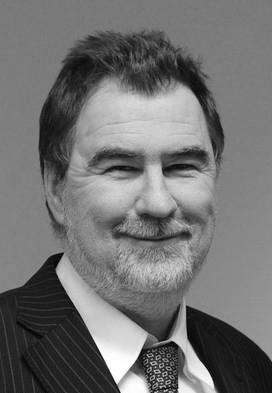
Prof. Dr. Frederik Tilmann is a leading seismologist at the GFZ German Research Centre for Geosciences (Section 2.4 Seismology) and a professor at the Freie Universität Berlin . His work focuses on seismic waveform analysis to understand geodynamic processes in subduction zones and continental collisions. Current affiliations: Head of Seismology Section, GFZ Potsdam University Professor, Freie Universität Berlin Research interests include: Earthquake source characterization Seismic tomography methods Mantle dynamics and lithospheric deformation Machine learning applications in seismic data analysis Volcano-seismic monitoring Ocean bottom seismology techniques Recent publications highlight advancements in: Full waveform inversion for mantle dynamics Machine learning for seismic phase picking Anisotropy studies in Alpine and Himalayan regions Subduction zone microseismicity analysis Volcano-induced landslide detection Scientific awards include: Feodor-Lynen Fellowship (Humboldt Foundation) Trinity Hall College Staff Fellowship Multiple citations in high-impact journals Collaborative work spans global seismic infrastructure projects like SMART cables, the Collaborative Seismic Earth Model, and the AlpArray network. His methodology innovations in shear wave splitting and depth phase picking have become standards in computational seismology.
Prof. Dr. Christian Mayer is a Professor in Physical Chemistry at the Faculty of Chemistry, University of Duisburg-Essen. He serves as Head of the working group focusing on origin of life research, nanocapsules, and NMR spectroscopy techniques. His research group is located at Universitätsstraße 5, D-45141 Essen, Germany, with contact information including phone number +49 201 183-2570. Prof. Mayer's research interests primarily focus on the origin of life in deep tectonic fault zones of the first continental fragments, where he collaborates with Prof. Dr. Ulrich Schreiber from the Faculty of Biology and Prof. Dr. Oliver Schmitz from Applied Analytical Chemistry. His work investigates how vesicle formation occurs in tectonic fault systems through cyclic phase transitions of carbon dioxide, creating ideal conditions for molecular evolution. He specializes in pulsed field gradient NMR (PFG-NMR), high-resolution NMR, and solid-state NMR techniques to characterize nanoscale systems including nanocapsules, vesicles, and microemulsions. His recent publication trends reveal a strong interdisciplinary focus spanning physical chemistry, prebiotic chemistry, and astrobiology. The articles demonstrate increasing integration of computational methods with experimental approaches, particularly in analyzing molecular structures and dynamics. His research has evolved from fundamental studies of nanocapsule systems to broader investigations of protocell formation mechanisms under early Earth conditions, with recent work extending to astrobiological contexts including potential life formation on Titan. Prof. Mayer has established significant collaborations across multiple disciplines, particularly with geologists and biologists, to investigate the physical chemical processes that could have led to the emergence of life. His work bridges fundamental physical chemistry with practical applications in nanomedicine, particularly in developing artificial oxygen carriers based on nanocapsule technology. His laboratory utilizes high-pressure facilities to simulate early Earth crust conditions, with a particular focus on supercritical CO 2 environments. The working group combines experimental approaches with theoretical modeling to understand vesicle formation processes and their implications for the origin of cellular life.
Ralf Jaumann is a Professor at the Free University of Berlin within the Institute of Geological Sciences, Department of Planetary Sciences and Remote Sensing . He serves as Deputy Director of the Institute of Planetary Research and previously led the Planetary Geology Department at the German Aerospace Center (DLR) in Berlin-Adlershof until January 2020. As Principal Investigator of the High Resolution Stereo Camera (HRSC) on ESA's Mars Express mission (2013-2021), he has significantly contributed to Mars geology studies. Co-PI of Mastcam-Z on NASA's Mars 2020 mission Co-I on instruments for Rosetta , Cassini , Dawn , and ExoMars missions Coordinated global Mars color mosaics and long-term surface change detection using HRSC data His research focuses on planetary geology , remote sensing , and space mission instrumentation , particularly analyzing geological processes on Mars, asteroids, and icy satellites. Recent publications examine spectral properties of asteroid regolith, Martian aeolian processes, and hydration dynamics on the Moon. Despite his extensive involvement in mission operations, no specific student advisement records or scientific awards are mentioned in the provided data. Jaumann teaches Planetary Exploration: Space Missions and Planetologie Literaturseminar at the graduate level.
Ingo Grevemeyer is a Scientist at GEOMAR Helmholtz Centre for Marine Research and an apl-Professor at Christian-Albrechts University in Kiel. He specializes in marine geodynamics , focusing on the seismotectonics of plate boundary zones, particularly transform faults, subduction zones, and mid-ocean ridges. His research involves ocean-bottom seismometer (OBS) deployments and geophysical data analysis to study seismicity, source mechanisms, crustal structure, and tectonics. He has participated in 37 marine geophysical cruises, serving as chief scientist 18 times. His research interests span seismotectonics , marine geophysics , crustal seismology , and heat flow surveys of mid-ocean ridges, hotspot provinces, and subduction zones. His recent work, funded by an Advanced Grant of the European Research Council , explores the seismotectonics of transform faults. Over the past decade, Grevemeyer has published extensively on topics such as subduction zone dynamics , transform fault earthquakes , mantle serpentinization , and crustal accretion . His peer-reviewed output includes 154 publications, with 37 as first author, reflecting a strong h-index of 41 (Web of Science) and 49 (Google Scholar). Scientific Awards: Advanced Grant of the European Research Council
Dr. Renas I. Koshnaw is a postdoctoral researcher at the Department of Structural Geology and Geothermics, Georg-August University Göttingen, and holds a research associate position at MIT. His research focuses on tectonic processes, particularly the coevolution of fold-thrust belts and sedimentary basins, integrating field-based geology, geochemistry, and thermochronology. He received his BSc from Salahaddin University-Erbil (2006), MSc from the University of Texas at Austin (2011), and PhD (2016). He has held fellowships including the Humboldt Postdoctoral Fellowship (Göttingen) and Swiss Government Excellence Scholarship (Bern). Research interests include structural geology, tectonics, sedimentary basin evolution, and geodynamic processes. His work emphasizes the Zagros orogen and Neotethys slab dynamics, with applications to continental collision processes. He has published extensively on topics like foreland basin subsidence, detrital zircon provenance, and magmatic activity in ophiolite complexes. Awards: Humboldt Postdoctoral Fellowship (2019–present), Swiss Government Excellence Scholarship (2018), American Fellowship (MSc/PhD funding). Grants: Not explicitly listed, but fellowships imply significant funding support. Labs/Teams: Collaborates with institutions like MIT (EAPS), University of Bern (Geology), and Göttingen’s Geowissenschaftliches Zentrum.
Boris Kaus is a Full Professor and Chair of Geophysics and Geodynamics at the Institute of Geosciences, Johannes Gutenberg University Mainz, Germany. His research focuses on understanding geological processes from grain scale to planetary scale using mathematical and numerical models. Funded by the German Research Foundation, European Research Council, and BMBF, his work spans lithospheric deformation, melt migration, fold-and-thrust belts, and high-performance computing applications in geosciences. His research interests center on geodynamic modeling of lithospheric processes, including subduction zones, mantle convection, and crustal deformation. Kaus develops novel numerical approaches to simulate complex geological phenomena, with emphasis on coupling between erosion, lithosphere dynamics, and mantle flow. His group creates specialized software for high-performance computing systems to tackle multi-scale geophysical problems. His scientific awards include the Paul Niggli Medal, EGU Arne Richter Award, multiple ERC grants (Starting, Proof-of-Concept, Consolidator), and the Carl Friedrich Gauss Lecturer honor. He has received recognition for editorial contributions including G-Cubed's Excellence in Refereeing award. ERC Consolidator Grant MAGMA (2018-2023) ERC Proof of Concept Grant SALTED (2016-2017) ERC Starting Grant MODEL (2010-2015) John von Neumann Excellence Project for HPC ETH Medal for Ph.D. thesis Kaus actively supervises graduate students and leads research projects funded by major European and German agencies. His group develops open-source software like GeophysicalModelGenerator.jl and maintains strong collaborations with international institutions including ETH Zürich and USC. Current projects focus on magma dynamics, lithospheric shear localization, and the development of advanced numerical methods for geodynamic simulations. The research group operates within the Geodynamics & Geophysics team at JGU Mainz, utilizing high-performance computing resources and collaborating with multiple European research initiatives including IMPRS and FORTHEM networks. Their laboratory specializes in numerical modeling of Earth systems with applications to tectonics, volcanology, and crustal evolution.
Prof. Sean Gallen is an Associate Professor in the Department of Geosciences at Colorado State University (CSU), USA. He holds a Senior Humboldt Research Fellowship at the GFZ German Research Centre for Geosciences, where he collaborates with Prof. Jean Braun's team in the Earth Surface Process Modeling section. His research integrates fieldwork, numerical modeling, geochronology, and GIS to study landscape evolution, tectonics, and natural hazards. Gallen earned his Master's (2008) from Western Washington University and PhD (2013) from North Carolina State University, followed by a Turner Postdoctoral Fellowship at the University of Michigan. Research Focus: His work examines climate-landscape interactions, subduction zone dynamics, and extreme event impacts on erosion. Notable projects include studying Colorado Front Range topography using cosmogenic nuclides and modeling climate effects on volcanic island landscapes. His interdisciplinary approach addresses topics like tectonic uplift quantification, silicate weathering feedbacks, and landscape-fish coevolution. Awards: Recipient of the NSF CAREER Award (2021) and Senior Humboldt Fellowship (2024). His research has been supported by NSF grants focusing on critical zone dynamics and subduction zone hazards. Current Projects: Investigating climatic controls on river incision in hotspot volcanoes and quantifying glacial erosion impacts on fault slip in the Sangre de Cristo Mountains. Collaborates internationally, including with Tribhuvan University (Nepal) on coseismic landslide studies.
Prof. Dr. Maik Schmeling is a Professor of Finance at the Department of Finance, Goethe University Frankfurt, and a Research Fellow at the Centre for Economic Policy Research (CEPR) in London. His research focuses on empirical asset pricing, machine learning applications in finance, international finance, FX markets, monetary policy impacts on financial markets, and textual analysis in finance. He supervises BSc and MSc theses through a centralized allocation process, emphasizing empirical analysis and collaboration with institutions like the SAFE Data Room. Research Areas: Empirical Asset Pricing, Machine Learning in Asset Pricing, International Finance and FX, Monetary Policy and Financial Markets, Analysis of Option-Implied Information, Banks and Global Dollar Funding, Non-bank Financial Intermediation, Textual Analysis in Finance, Money Markets. His recent publications span geophysics topics like melt migration, mantle convection, and subduction zone dynamics, though these appear unrelated to his current finance role. All articles are classified under geophysics and geodynamics keywords. No scientific awards or student names are mentioned in the provided texts.
Prof. Dr. Lena Noack is a Professor of Planetary Geodynamics at the Institute of Geological Sciences, Freie Universität Berlin. She leads the Planetary Geodynamics research group, focusing on geodynamics, mineral physics, and planetary processes. Her work explores mantle convection, crust formation, and atmospheric evolution, with a particular emphasis on exoplanets and habitability. Dr. Noack holds prestigious grants such as the ERC Consolidator Grant (DIVERSE project) and has received awards including the Paolo Farinella Prize (2021) and the Teaching Award from her institute (2019). Education: PhD in Planetology (University of Münster, 2012), Diplom in Mathematics (Humboldt University Berlin, 2008). Research interests span planetary interior dynamics, exoplanet habitability, and the interplay between geology and climate. Key projects include modeling volcanic outgassing, mantle redox states, and thermal evolution of rocky planets. She collaborates on missions like PLATO and LIFE, advancing exoplanet detection and characterization. Her work on TRAPPIST-1 planets and induction heating mechanisms has been widely recognized. Current grants include leadership in ISSI workshops and ERC-funded research. Students and advisees include over a dozen doctoral researchers studying topics like mantle evolution and planetary atmospheres.
Sarah A. Gleeson is a Professor of Mineral Resources at the Freie Universität Berlin and Head of the Inorganic and Isotope Geochemistry Section at the GFZ German Research Centre for Geosciences. She also serves as Director of 'Topic 8 – Georesources' in the Helmholtz programme 'Changing Earth – Sustaining our Future'. Her career includes roles at the University of Alberta (2001–2015), where she advanced from Assistant to Full Professor, and postdoctoral research at the University of Leeds and the Natural History Museum London. Her research focuses on hydrothermal ore deposits, fluid-rock interactions, and sediment-hosted metals. Notable contributions include studies on the Kupferschiefer district, Ni-laterites, and clastic-dominated Zn deposits. Gleeson has been honored with the Waldemar Lindgren Award, H.S. Robinson Medal, and the European Association of Geochemistry Distinguished Lectureship. She is recognized for both research and teaching excellence, including awards for student engagement at the University of Alberta.
Prof. Dr. Eileen Eckmeier serves as Director of the Institute for Ecosystem Research at Christian-Albrechts-University of Kiel and holds a W3 Professorship in Geoarchaeology and Environmental Risks. She concurrently acts as Co-spokesperson of the ROOTS Cluster of Excellence (since October 2023), Spokesperson of the ROOTS subcluster "Socio-Environmental Hazards," Vice President of DEUQUA (German Quaternary Association), and Board member of multiple academic organizations including the Soil and Archaeology Working Group of the German Soil Science Society. Her educational background includes a Dr. sc. nat. from the University of Zurich (2007) with award from the Faculty of Mathematics and Natural Sciences for her dissertation "Detecting prehistoric fire-based farming using biogeochemical markers," and a Diploma in Geography from the University of Cologne (2002) with minors in Soil Science, Prehistory and Early History, and History. Eckmeier's research centers on soil geography and geoarchaeology , particularly human-environment relationships during the Holocene where soils serve as both resources and archives of human activity. Her work investigates changes in soil properties due to land use and climate change across spatial and temporal scales, with geographical focus spanning European and Asian loess/steppe landscapes (Central Europe, Middle East, Mongolia), North Frisian Islands, the Alps, and African savannahs. She employs interdisciplinary approaches combining soil science, archaeology, and paleoenvironmental reconstruction. Analysis of her 15 most recent publications reveals strong emphasis on paleoenvironmental reconstruction through soil archives , with significant contributions to understanding prehistoric agriculture, loess-paleosol sequences, and human impacts on landscapes. Key thematic clusters include Neolithic fertilization practices, ridge and furrow cultivation systems, wildfire impacts on soils, and tectonic-landscape-human interactions in critical regions like the Kenya Rift and European loess belts. Award from Faculty of Mathematics and Natural Sciences, University of Zurich As Director of the Institute for Ecosystem Research and Co-spokesperson of the ROOTS Cluster of Excellence, Eckmeier leads major research initiatives examining societal, environmental, and cultural change. Her leadership extends to the Scientific Advisory Board of the Stone Age Park Dithmarschen and multiple institutional boards focused on Quaternary research and soil-archaeology integration. Current projects investigate socio-environmental hazards through the ROOTS framework while maintaining active fieldwork in diverse global landscapes from European loess regions to African savannahs. Eckmeier directs research teams within the Institute for Ecosystem Research's Geoarchaeology and Environmental Risks group, coordinating work across multiple specialized units including Geobotany, Environmental History and Archives, Applied Ecology and Paleoecology, and Technical Platform teams. Her ROOTS Cluster leadership integrates these efforts into a comprehensive framework examining human responses to environmental change over millennia.
Dr. Juliane Müller is a Geoscientist and Researcher at the Alfred Wegener Institute (AWI), specializing in Marine Geology with a focus on high-latitude paleoclimates, sea ice dynamics, and biomarker proxies. She leads the Organic Geochemistry Laboratories and co-leads major projects like the ERC Synergy Grant 'i2B' and the MARUM Excellence Cluster (Ocean Floor). Her work integrates sedimentological, geochemical, and biomarker data to reconstruct past environmental changes in polar regions. Deputy Section Head, AWI Head of Organic Geochemistry Laboratories Co-PI for international grants and networks Her research emphasizes sea ice variability, glacial history, and Southern Ocean dynamics, with recent expeditions including PS128 to the Weddell Sea. Key publications analyze Holocene glacial activity, Antarctic ice sheet sensitivity, and Pliocene climate transitions. Müller collaborates globally, contributing to initiatives like the PalaeoArc network and IODP expeditions.
Professor Dr. habil. Elmar Buchner serves as Vice President for Research and Research Career Development and Head of the HNU Doctoral Centre at Neu-Ulm University of Applied Sciences. His academic career spans multiple institutions including extensive work at the University of Stuttgart's Institute of Planetology from 1997 to 2013, where he later became a Privatdozent in Geology. Dr. Buchner's research focuses on the interface of Earth and Health Sciences, with particular expertise in: Impact Geology and Crater Studies Structural Geology and Tectonics Sedimentology and Paleoenvironmental Reconstruction Geothermal Energy and Social Acceptance Healthcare Technology and Digital Ethics His groundbreaking work primarily centers on the Ries and Steinheim impact structures in Germany, where he has challenged the long-held belief that these were formed by a binary asteroid impact. Through detailed stratigraphic and seismic analysis, Buchner and colleagues have presented compelling evidence for two independent impact events separated by approximately 0.5 to 1 million years. This research has significant implications for understanding impact cratering processes on Earth and other planetary bodies, with applications to Martian geology through terrestrial analog studies. His publication record reveals an evolving research trajectory that increasingly bridges geological sciences with health applications. While his core expertise remains in impact cratering and structural geology, recent work extends into geothermal energy social acceptance studies and the ethical dimensions of digital healthcare technologies, demonstrating his commitment to applying geological knowledge to contemporary societal challenges. With 231 publications, over 66,000 reads, and 1,471 citations, Professor Buchner has established himself as a leading researcher in impact cratering studies. His collaborative work spans multiple international institutions and research teams, reflecting the interdisciplinary nature of modern impact crater research. As Head of the HNU Doctoral Centre, Professor Buchner oversees doctoral training and research career development at Neu-Ulm University. His leadership in research administration complements his active research program, demonstrating his commitment to fostering the next generation of scientists while maintaining his own cutting-edge research in Earth sciences.
Prof. Dr. Derya Gürer is affiliated with the Institute of Geosciences at Heidelberg University , where she focuses on tectonic processes, paleomagnetism, and geodynamic reconstructions. Her research spans from the Mediterranean to the Agulhas Plateau, integrating fieldwork and geochemical analysis. Research Themes : Tectonic evolution of Anatolia, paleomagnetic constraints on plate motions, subduction zone dynamics, and Cretaceous climate studies via oceanic plateau investigations. Methodologies : Utilizes paleomagnetic data, U-Pb geochronology, clumped isotope thermometry, and structural analysis of ophiolites and sedimentary basins. Scientific Engagement : Actively contributes to diversity initiatives in geosciences and science communication through digital platforms. Her recent work emphasizes the interplay between Arabia-Eurasia convergence and Anatolian tectonics, while advancing polar wander resolution techniques through uncertainty quantification. She participates in international collaborations like IODP Expedition 392.
Dr. Philipp Balling is a Researcher at the Institute of Geosciences, Friedrich-Schiller-Universität Jena , Germany. His work focuses on the tectonic evolution of mountain ranges, particularly the Dinarides , with additional studies on the Iranian Plateau and Appenines . He employs balanced cross-sections, fieldwork, structural analyses, and 3D modeling in his research, specializing in MOVE software. Education : PhD (2023) in Geosciences at Jena University, MSc (2014) and BSc (2011) in Geosciences from Universität Potsdam (with international fieldwork experience at University of Montana). Research Interests : Tectonic processes driving mountain building, active tectonics influencing landscape evolution, and geodynamic modeling of collisional belts. Scientific Awards : Best Student Paper Award, GeoUtrecht 2020 2008 Student exchange scholarship (€12,000) to University of Montana Teaching : Leads field courses, geological mapping fundamentals, and balanced cross-section workshops. Publications : His recent work explores the Dinarides' deformation mechanisms, exhumation dynamics, and thermal history of rift basins, with a focus on integrating structural analysis with geochronological data.