About
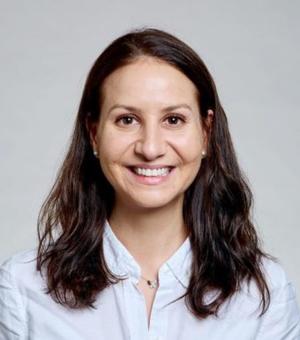
Boris Kaus is a Full Professor and Chair of Geophysics and Geodynamics at the Institute of Geosciences, Johannes Gutenberg University Mainz, Germany. His research focuses on understanding geological processes from grain scale to planetary scale using mathematical and numerical models. Funded by the German Research Foundation, European Research Council, and BMBF, his work spans lithospheric deformation, melt migration, fold-and-thrust belts, and high-performance computing applications in geosciences.
His research interests center on geodynamic modeling of lithospheric processes, including subduction zones, mantle convection, and crustal deformation. Kaus develops novel numerical approaches to simulate complex geological phenomena, with emphasis on coupling between erosion, lithosphere dynamics, and mantle flow. His group creates specialized software for high-performance computing systems to tackle multi-scale geophysical problems.
His scientific awards include the Paul Niggli Medal, EGU Arne Richter Award, multiple ERC grants (Starting, Proof-of-Concept, Consolidator), and the Carl Friedrich Gauss Lecturer honor. He has received recognition for editorial contributions including G-Cubed's Excellence in Refereeing award.
- ERC Consolidator Grant MAGMA (2018-2023)
- ERC Proof of Concept Grant SALTED (2016-2017)
- ERC Starting Grant MODEL (2010-2015)
- John von Neumann Excellence Project for HPC
- ETH Medal for Ph.D. thesis
Kaus actively supervises graduate students and leads research projects funded by major European and German agencies. His group develops open-source software like GeophysicalModelGenerator.jl and maintains strong collaborations with international institutions including ETH Zürich and USC. Current projects focus on magma dynamics, lithospheric shear localization, and the development of advanced numerical methods for geodynamic simulations.
The research group operates within the Geodynamics & Geophysics team at JGU Mainz, utilizing high-performance computing resources and collaborating with multiple European research initiatives including IMPRS and FORTHEM networks. Their laboratory specializes in numerical modeling of Earth systems with applications to tectonics, volcanology, and crustal evolution.