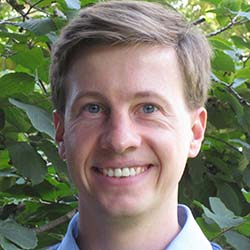
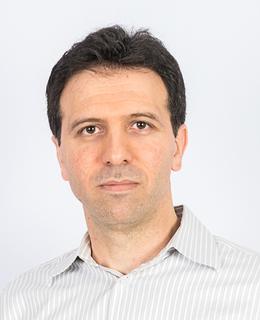
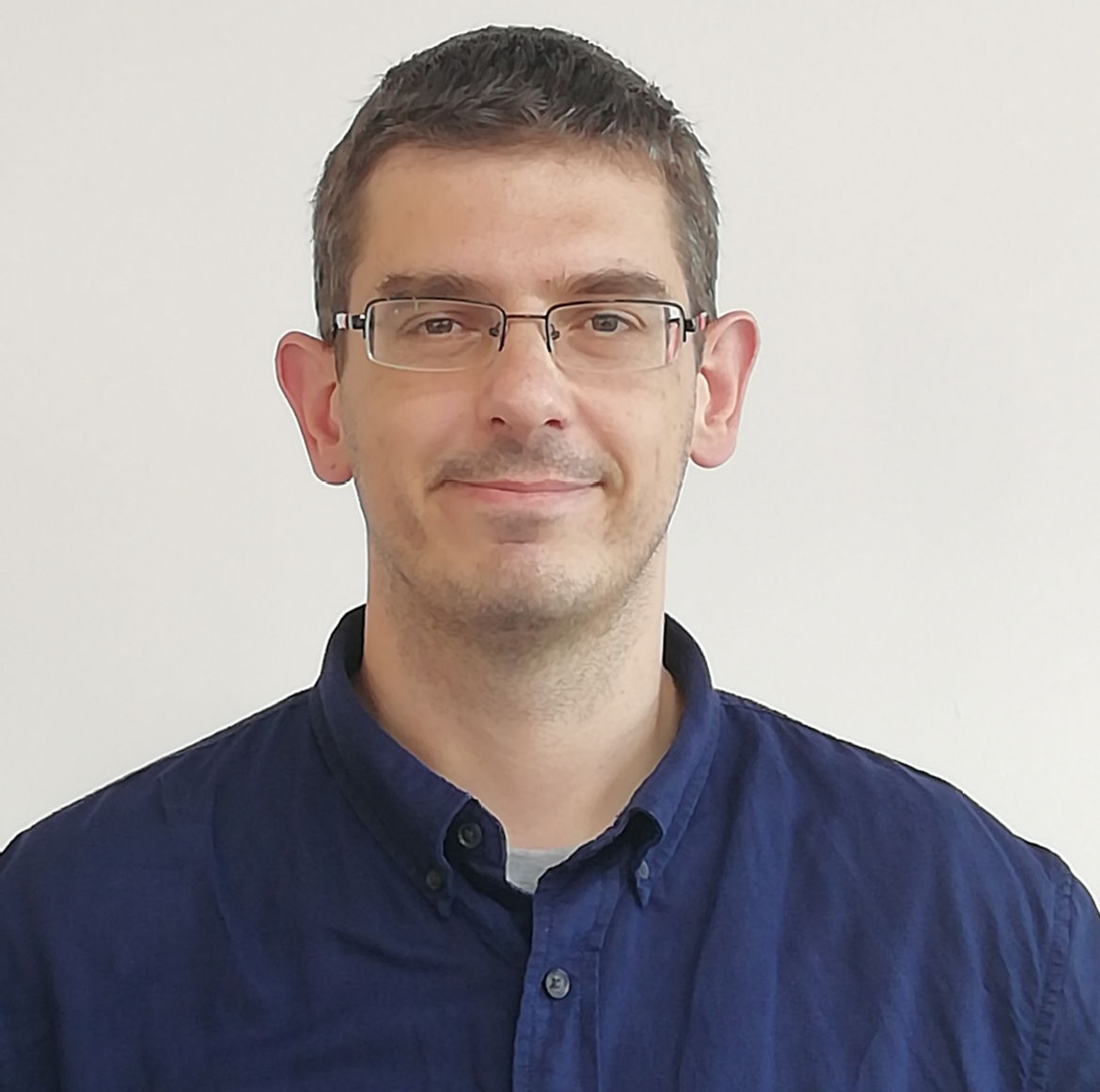
Miklos Z. Racz is an Assistant Professor at Northwestern University with a joint appointment in the Department of Computer Science and the Department of Statistics and Data Science. He is affiliated with the IDEAL Institute. Previously, he was an Assistant Professor at Princeton University (ORFE Department) and a postdoc at Microsoft Research. His research focuses on probability, statistics, computer science, and information theory, with emphasis on combinatorial statistics, discrete probability, and applied probability. Key interests include statistical inference on random discrete structures like random graphs, community detection, latent geometry inference, and DNA data storage. He has advised numerous PhD and undergraduate students. Education: PhD in Statistics (UC Berkeley, 2015), MS in Computer Science (UC Berkeley), MS in Mathematics (Budapest University of Technology and Economics). Research interests span random graph theory, network analysis, information cascades, and computational biology. He teaches courses like Mathematical Foundations of Computer Science and Probability for Statistical Inference. His work has been published in top venues like Annals of Applied Probability, NeurIPS, and IEEE journals. Notable contributions include breakthroughs in graph matching algorithms for stochastic block models, community recovery, and DNA synthesis optimization. His research has practical applications in data storage and network science.
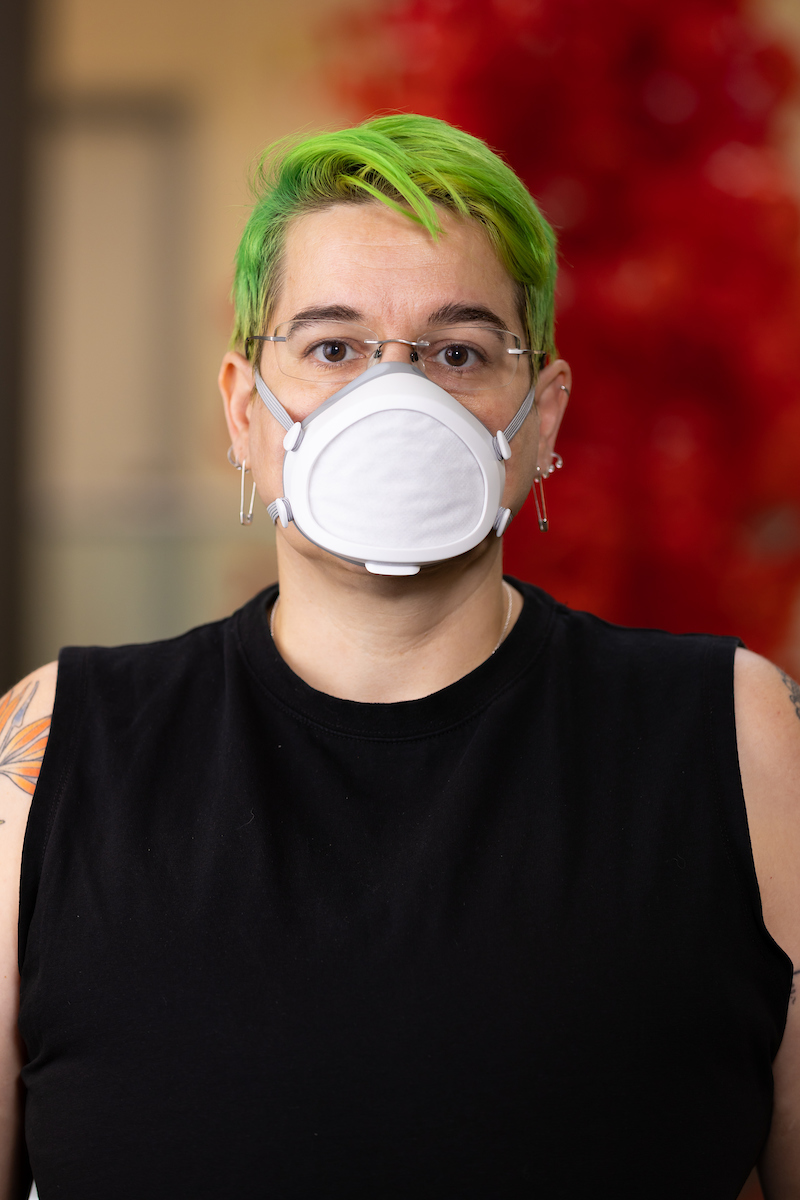
Paulo Blikstein is an Associate Professor of Communication, Media, and Learning Technologies Design at Teachers College, Columbia University. He holds affiliations with the Mathematics, Science & Technology department and the Communication, Media, and Learning Technologies Design program. His expertise spans curriculum design, digital innovation, science education, and educational technology. Dr. Blikstein earned a Ph.D. in Learning Sciences from Northwestern University (2009), M.Sc. in Media Arts & Sciences from MIT Media Lab (2002), and degrees in Engineering from the University of São Paulo (Brazil). His research focuses on leveraging technology to enhance learning through computational modeling, maker education, and tangible interfaces. He leads the Transformative Learning Technologies Lab and the FabLearn Program, which develop innovative tools like MoDa and PlayData, integrating computational thinking with real-world science experiments. His work emphasizes equitable access to technology-driven education, particularly in the Global South. Recent projects include deploying cloud labs for biology education, analyzing disinformation dynamics via agent-based models, and exploring how social media influences political radicalization. He critiques commercial education technology discourse through a critical pedagogy lens, advocating for culturally responsive, hands-on learning. Blikstein’s research bridges theory and practice, addressing systemic challenges in science education through participatory design with teachers and communities. His labs create sustainable educational technologies, such as DIY liquid handling robots and haptic feedback systems, to democratize STEM access. He also investigates computational identity formation in K-12 students and the role of making in fostering gender equity in STEM.
Debra A. Noumair is Professor of Psychology and Education at Teachers College, Columbia University, and Founder & Director of the Executive MA Program in Change Leadership (XMA) within the Department of Organization and Leadership. She actively engages in teaching, consulting, coaching, and research, focusing on systems psychodynamics applied to organizational change. Her work emphasizes systemic thinking, addressing covert dynamics in social systems, and advancing underrepresented groups through executive coaching and systemic barrier analysis. B.A., Boston University Ed.M. & Ed.D., Teachers College, Columbia University Professor Noumair’s research integrates systems psychodynamics with organizational development, creating frameworks like X-Ray Vision to analyze group and organizational dynamics. She has co-authored seminal texts including Organization Development: A Process of Learning & Changing and co-edited the Research in Organization Change and Development book series. Her collaborations span private, public, and nonprofit sectors globally, with leadership programs in the U.S., Europe, and Asia-Pacific. Her scholarly contributions include foundational work on inclusive leadership, social identity dynamics, and behavioral science applications in organizational settings. She serves on editorial boards for journals such as The Journal of Applied Behavioral Science and Organisational and Social Dynamics , and sits on the Academic Board of Mind Gym, an international behavioral science firm. Teachers College Teaching Award (2020, 2022) Fellow, A.K. Rice Institute for the Study of Social Systems As a core faculty member in the Consulting & Coaching for Change Program (Oxford Said Business School & HEC-Paris) and director of executive education globally, she bridges academic theory with practical organizational transformation. Her teaching philosophy emphasizes co-creation of learning environments that foster personal and professional growth.
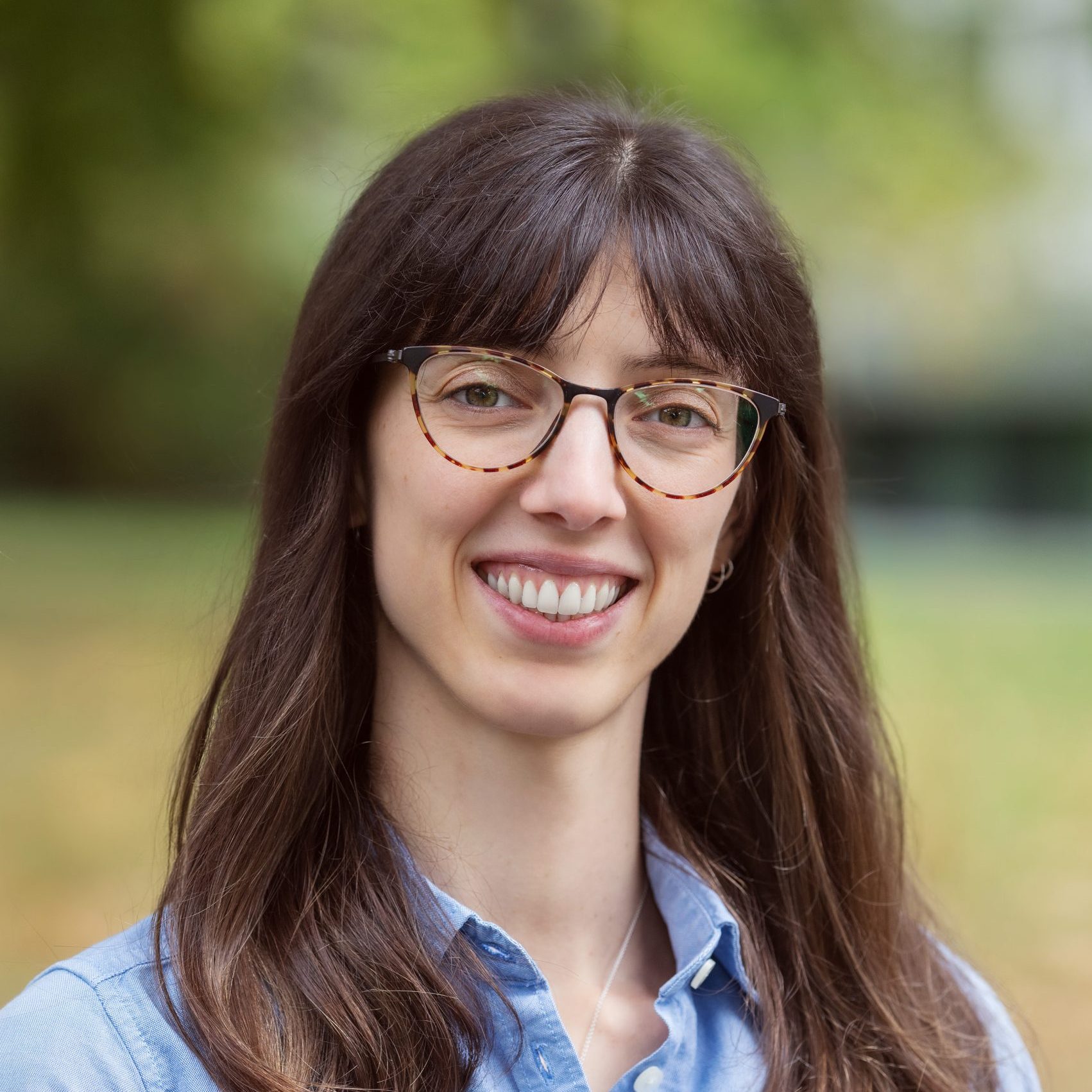
Dr. Andrea Grover is an Associate Professor in the Department of Information Systems and Quantitative Analysis at the University of Nebraska Omaha’s College of Information Science & Technology. Her research focuses on citizen science, technology design, and collaboration systems in data-intensive environments. She holds a Ph.D. in Information Science & Technology from Syracuse University, an MS in Information from the University of Michigan, and a BA in Mathematics from Alma College. Her research interests include organizational impacts of technology, open collaboration frameworks, and ethics in information systems. She teaches courses on management and IT ethics, employing ungrading techniques to enhance student engagement. Notable contributions include work on citizen science data quality, cyber-security tools leveraging crowdsourcing, and barriers in STEM education equity. Dr. Grover has been recognized with the 2022 Rising Star Distinguished Ecologist award and serves on editorial boards (e.g., Frontiers in Ecology) and conference committees (e.g., ACM CSCW DEI Co-chair). She has secured grants such as the NSF-funded “Streamlining Embedded Assessment to Understand Citizen Scientists' Skill Gains” (2017–2019) and contributed to media discussions on citizen science via National Public Radio. Her recent publications explore hybrid human-AI tools, agile citizen science methodologies, and systemic barriers in education. She actively participates in interdisciplinary initiatives, bridging technology, ecology, and social sciences to advance participatory research practices.
Collin Brooks, Ph.D., is an Assistant Professor at the University of West Georgia since 2020, affiliated with the Department of Sport Management, Wellness, and Physical Education in the College of Education. He holds a National Board Certification and serves on the Society of Health and Physical Educators America (SHAPE America) Board of Directors, actively contributing to online professional learning through his blog PHYEDagogoy.com. Dr. Brooks earned his BS (2006) and MS (2007) in Exercise and Sport Science/Physical Education from Oregon State University, followed by a PhD in Sport Pedagogy (2021) from the University of Northern Colorado. His research focuses on effective teacher preparation, curriculum design, and innovative uses of technology/social media in physical education. His recent publications explore AI applications in kinesiology, gamification strategies for engagement, cross-cultural physical activity experiences, and virtual professional development challenges. These works highlight trends toward technology integration and global educational practices. Scientific Awards: National Board Certified Teacher In advising and grants, Dr. Brooks has extensive K-12 teaching experience and mentors students through National Board Portfolio courses (EDUC-7001/7002). He teaches courses ranging from elementary physical education foundations (PHED-3671) to legal issues in sports (PHED-7630), emphasizing practical and administrative aspects of the field. His work with SHAPE America and PHYEDagogoy.com demonstrates commitment to professional community-building. Brooks collaborates on initiatives like the Online Professional Development in Physical Education project and contributes to the CMWL-3401 (Technology in Wellness) program. His research lab focuses on digital tools for educator training and student engagement through technology-driven methodologies.
Matt Kerr is a Professor of Mathematics at Washington University in St. Louis, where he has been a faculty member since 2010. He earned his Ph.D. in Mathematics from Princeton University in 2003 and held previous positions at UCLA, the Max Planck Institut, the University of Chicago, and Durham University. Professor Kerr's research centers on Algebraic Geometry and Hodge Theory, with particular expertise in Algebraic Cycles, Moduli Spaces, Normal Functions, and Arithmetic Geometry. His work explores the deep connections between topological invariants of algebraic varieties and their finer analytic and arithmetic properties, contributing to fundamental questions like the Hodge conjecture. An analysis of Kerr's recent publications (2020-2025) reveals a sustained focus on degenerations of Hodge structures, compactifications of moduli spaces, and arithmetic aspects of algebraic cycles. His research trajectory shows increasing sophistication in applying Hodge-theoretic methods to problems in mirror symmetry, Calabi-Yau varieties, and quantum curves, while maintaining connections to classical problems in algebraic geometry. Professor Kerr has secured significant research funding through multiple NSF grants, including 'Algebraic cycles, Hodge theory, and arithmetic' (2011-14), 'FRG: Hodge theory, moduli, and representation theory' (2014-19), 'Asymptotic Hodge theory, fibered motives, and algebraic cycles' (2021-24), and 'Algebraic cycles and normal functions' (2025-27). He has mentored numerous postdoctoral researchers and PhD students, including current advisees Devin Akman and Rachel Wu, and has graduated PhD students such as Ryan Keast, Genival da Silva Jr., and Xiaojiang Cheng. Active in the mathematical community, Kerr organizes major conferences including the Western Algebraic Geometry Symposium (2023), a special session on 'Hodge Theory, Algebraic Cycles, and Arithmetic' for the AMS Central Sectional Meeting (2025), and 'Hodge-theoretical and Combinatorial Aspects of Mirror Symmetry' (2026). His teaching includes undergraduate honors mathematics courses and graduate-level algebraic geometry.
Joséphine Gantois is an Assistant Professor in Human Dimensions of Biodiversity Conservation at the University of British Columbia, jointly appointed in the Institute for Resources, Environment and Sustainability (IRES) and the Food and Resource Economics Program within the Faculty of Land and Food Systems. Her work bridges economics, ecology, and data science to address ecological footprints in agricultural and natural landscapes. She holds a Ph.D. in Sustainable Development from Columbia University, an M.P.A. in International Development from the London School of Economics, and advanced degrees in economics and the sciences from École Polytechnique. Research Focus: Dr. Gantois investigates practical solutions for reconciling land use incentives with conservation goals, particularly in agricultural areas. Her research emphasizes causal inference methods, integrating remote sensing, machine learning, and qualitative tools like interviews. Key areas include biodiversity monitoring, policy impact assessment, and ecosystem function analysis. She has explored habitat restoration in Ontario grain farms during her postdoctoral work under Dr. Claire Kremen at UBC. Teaching & Engagement: She teaches in the Master of Food and Resource Economics (MFRE) program, focusing on interdisciplinary approaches to sustainability challenges. Her work highlights the intersection of human behavior, policy design, and ecological outcomes, aiming to inform actionable conservation strategies.
Benjamin E. Hermalin is the Executive Vice Chancellor & Provost at the University of California, Berkeley. He holds dual appointments as the Thomas & Alison Schneider Distinguished Professor of Finance at the Haas School of Business and as a Distinguished Professor of Economics in the Department of Economics. His academic career at Berkeley spans over three decades since joining as an assistant professor in 1988 after completing his PhD at MIT. Professor Hermalin's research focuses on corporate governance, leadership, the economics of organization, industrial organization, contract theory, and law and economics. His work bridges theoretical economic models with practical applications in business and policy. He has developed influential frameworks for understanding board composition, executive compensation, organizational leadership, and two-sided markets. Hermalin's publications reveal a consistent focus on governance structures and organizational design. His research explores how formal and informal institutions shape economic outcomes, with particular attention to the interplay between leadership, incentives, and organizational culture. His work on two-sided markets has provided foundational insights for understanding platform economics and network effects. Schwabacher Award for outstanding teaching and research (1993) Earl F. Cheit Outstanding Teaching Award (1991) Throughout his career, Hermalin has held significant administrative positions including Economics Department Chair (2005-2008), Chair of the Academic Senate (2015-2016), and Vice Provost for the Faculty (2016-2022). He has served on the Board of Directors of the National Bureau of Economic Research and was co-editor of the RAND Journal of Economics.
Garnet K. Chan is the Bren Professor of Chemistry and Director of the Rudolph A. Marcus Center for Theoretical Chemistry at the California Institute of Technology. He received his B.S. from the University of Cambridge in 1996 and his M.A. and Ph.D. from the University of Cambridge in 2000. Dr. Chan's research lies at the interface of theoretical chemistry, condensed matter physics, and quantum information theory, focusing on quantum many-particle phenomena and the numerical methods to simulate them. His group has developed numerous methodologies including density matrix renormalization and tensor network algorithms, canonical transformation-based down-foldings, local quantum chemistry methods, quantum embeddings, and new quantum Monte Carlo algorithms. His work addresses problems that appear naively exponentially hard but where understanding of physics, particularly entanglement structure, allows for calculations of polynomial cost. Analysis of his recent publications reveals a strong focus on quantum simulation techniques, particularly tensor network methods applied to strongly correlated systems. His research spans fundamental theoretical developments to practical applications in quantum computing, molecular simulation, and materials science, with increasing integration of machine learning techniques and GPU acceleration in computational chemistry frameworks. Dr. Chan leads an active research group at Caltech dedicated to simulating chemical and physical systems at the level of many-particle quantum mechanics. His group has welcomed numerous researchers including Kasra Hejazi, Zuxin Jin, Zhihao Cui, Ke Liao, Henrik Larsson, and Wenyuan Liu. He teaches courses in Physical Chemistry (Ch 21 abc) and Advanced Quantum Chemistry (Ch 225), contributing significantly to theoretical chemistry education at Caltech.
Dr. Holly Doel-Mackaway is an Associate Professor at Macquarie Law School and a leading expert in children's rights, Indigenous studies, and international law. She co-leads the Children’s Rights, Participation and Protection Research Stream in Macquarie’s Faculty of Arts and serves as Co-Editor-In-Chief of the Australian Journal of Human Rights. Her interdisciplinary research focuses on advancing children’s rights globally, with a particular emphasis on Indigenous children’s participation in law and policy development. Dr. Doel-Mackaway holds a PhD in Law from Macquarie University and has extensive international experience with organizations like UNICEF and Save the Children. She teaches courses on Child and Elder Law, International Human Rights Law, and Research Methodologies. Recognized for her teaching excellence, she won the Vice-Chancellor's Learning & Teaching Award in 2021 and was nominated again in 2024. Her research includes groundbreaking work such as the 2022 book Indigenous Children's Right to Participate in Law and Policy Development , which provides a framework for involving Indigenous youth in policy decisions. She leads major grants like the 2024 ARC Linkage Grant on child-centered evidence for social change and collaborates with NGOs and governments across five continents. Key awards include the Macquarie University Executive Dean’s Higher Degree Research Excellence Award (2017) and the Erasmus+ Mobility Grant (2023). She actively participates in international committees like LAWASIA’s Human Rights Committee and advises on child rights in Australia, the Pacific, and beyond. Current research projects include exploring intergenerational policymaking, child protection in the Pacific, and the impact of the Voice to Parliament referendum on Indigenous rights.
Majid Ghaderi is a Professor in the Department of Computer Science at the University of Calgary, Faculty of Science. His expertise spans network algorithms, secure communication, and machine learning applications in network control. He holds a Ph.D. in Computer Science from the University of Waterloo (2006), and M.Sc. and B.Sc. degrees in Software Engineering from Sharif University of Technology (2001 and 1999). Education: Ph.D. Computer Science, University of Waterloo, 2006 M.Sc. Software Engineering, Sharif University of Technology, 2001 B.Sc. Software Engineering, Sharif University of Technology, 1999 Research Interests: Dr. Ghaderi focuses on optimizing network algorithms, securing communication in distributed systems, and leveraging machine learning for network control. His work addresses challenges such as secure wireless protocols, SDN-based network management, and efficient resource allocation in data centers. He explores proactive traffic scheduling and anomaly detection in critical infrastructures like industrial control systems and vehicular networks. Publications Trends: His recent work emphasizes covert communication in heterogeneous networks, adaptive federated learning in edge environments, and low-overhead diagnostic systems for cloud networks. He also investigates cybersecurity defenses against hardware vulnerabilities and dynamic threat landscapes. Awards: Best in-session Presentation Award, IEEE INFOCOM 2018 Municipal Excellence Award, Government of Alberta 2018 Faculty of Science Excellence in Teaching Award 2012 Advising & Grants: While no specific advisees are listed, his research has been supported by grants focusing on network security, edge computing, and IoT applications. He teaches CPSC 441 (Computer Networks) and maintains an active lab focused on network systems and cybersecurity. Labs & Teams: His research group collaborates on projects involving software-defined networks, vehicular communication, and industrial IoT security. The team develops open-source tools for network monitoring and anomaly detection.
Yongxiang Li is a Professor in the School of Engineering at RMIT University, Australia, specializing in advanced materials and nanotechnology. His research focuses on piezoelectric materials, 2D functional materials, and energy harvesting systems. He is actively involved in supervision of PhD and Master’s projects, including topics like flexible piezoelectric nanogenerators, 2D heterostructures, and low-temperature co-fired ceramic (LTCC) sensors. Research Interests: Materials Engineering, Electrical Engineering, Nanotechnology, Condensed Matter Physics, and Functional Ceramic Design. Key projects include developing lead-free piezoelectric materials, integrating sensors for lithium-ion batteries, and exploring gas sensors using liquid metal-derived oxides. Teaching Interests: Dielectric materials, ferroelectric systems, sensor technologies, and LTCC applications. His interdisciplinary work bridges materials science with optoelectronics and energy storage. Publications span over 400 outputs, emphasizing machine learning-driven materials discovery, defect engineering in 2D materials, and sensor innovation. He leads projects in collaboration with industry, focusing on practical applications of advanced ceramics and nanomaterials.
Geoffrey Cook is a Senior Lecturer at the Scripps Institution of Oceanography, UC San Diego, within the VC Marine Sciences school and Geosciences Research Division. He holds a PhD in Geology from Washington State University (2009), an M.S. from Boise State University (2002), and a B.A. from Franklin and Marshall College (2000). His research focuses on physical volcanology, including the volcanic evolution of large calderas, petrogenesis of magmas, and geoscience education. Notable projects include studies on the Otowi Member of the Bandelier Tuff and crustal assimilation processes in Iceland’s Fagradalsfjall Fires (2021). He emphasizes innovative teaching methods, such as active learning and experiential education, to address student misconceptions in geoscience. Dr. Cook has received multiple teaching awards, including the 2023 Scripps Outstanding Undergraduate Teaching Award and the 2018 UCSD Panhellenic Chapters Outstanding Faculty Award. His publications span volcanology, geochemistry, and educational pedagogy, with recent work in Nature (2024) and active learning strategies in STEM education. His academic profile reflects a commitment to both advancing geoscience research and improving undergraduate education through evidence-based practices.
Andreas Markoulakis is a Lecturer in the Department of Economics at the University of Warwick. He teaches modules including EC134: Topics in Applied Economics, EC229: Economics of Strategy, and EC138: Introduction to Environmental Economics. His research spans Behavioral Economics, Experimental Economics, and Microeconometrics, with a focus on energy policy, environmental economics, and pedagogical innovations. He has conducted studies on the One-Minute Paper (OMP) teaching intervention, analyzing its impact on student engagement and comprehension across seminar sessions. This intervention, implemented in EC138, employs paper-based feedback to assess student understanding and has shown discrepancies in responses when framing questions differently (e.g., addressing hesitant students explicitly). Education: PhD in Economics from the University of Kent Key research areas: Energy security policy, creative production incentives, and the application of experimental methods in economics Teaching responsibilities include advising international students and assessing graduate teaching assistants His work on the OMP intervention highlights lower comprehension rates when questions explicitly acknowledge student hesitation, suggesting potential barriers for non-native English speakers or shy students. He also explores long-term learning retention and the correlation between OMP feedback and academic performance. Future research directions include expanding the OMP analysis to broader student demographics and integrating assessment with formal exam performance data. Contributions to educational practices include publishing findings on small-group teaching effectiveness and fostering transparent communication between instructors and students. Ongoing projects involve studying semiconductor economics' impact on labor markets and AI's role in creative industries.
Filippo Carlo Wezel is a Full Professor of Organization and Management at the Faculty of Economics of Università della Svizzera italiana (USI), where he also serves as Director of the Institute of Management and Organisation. He holds additional research affiliations as a Visiting Research Professor at emlyon Business School (France) and a Research Fellow at Judge Business School, University of Cambridge. He plays a significant editorial role as Senior Editor at Organization Studies and serves on the editorial review boards of Organization Science , Strategic Entrepreneurship Journal , Strategic Organization , and the Advisory Board of Research in the Sociology of Organizations . His educational background includes a PhD in Management from the University of Bologna. Prior to joining USI in 2009, he held academic positions at the University of Groningen (post-doctoral researcher) and Tilburg University (Assistant and Associate Professor). He has also been a visiting scholar at leading institutions including Wharton, MIT, Columbia, Duke, London Business School, LSE, and Hong Kong University. His research centers on organizational identity, managerial and inter-firm mobility, entrepreneurship, and institutional theory. His recent publications explore identity hybridization in political parties, category dynamics in creative industries, historical organizational practices in colonial firms, and stigma in emerging markets. He frequently employs longitudinal, historical, and experimental methodologies, often bridging sociology and management. The most recent articles (2020–2025) reflect a strong trajectory in the sociology of organizations, with recurring themes of identity, categorization, legitimacy, and mobility. He investigates how social evaluations, historical constraints, and institutional environments shape organizational behavior and strategic positioning. His work spans diverse contexts—from 18th-century Lyon silk traders to modern ICT firms and medical marijuana markets—demonstrating a broad empirical and theoretical reach. Scientific Honors and Editorial Roles: Senior Editor, Organization Studies Editorial Review Board, Organization Science Editorial Review Board, Strategic Entrepreneurship Journal Editorial Review Board, Strategic Organization Advisory Board, Research in the Sociology of Organizations He has extensive experience in teaching organizational theory and behavior at undergraduate, master’s, PhD, and executive levels. His research has been published in top-tier journals such as Administrative Science Quarterly , American Sociological Review , Academy of Management Journal , and Strategic Management Journal . He leads a vibrant research agenda at USI, supported by a broad international network, though specific grants and funded projects are not detailed in the provided text. He is also involved in mentoring students and shaping the next generation of organizational scholars, though a list of advisees is not available. Filippo Carlo Wezel is a key figure in the European organizational studies community, leading the Institute of Management and Organisation at USI and fostering interdisciplinary dialogue between organization theory and strategy. His work combines deep historical insight with contemporary theoretical innovation, contributing significantly to our understanding of how organizations and careers evolve under institutional and social pressures.