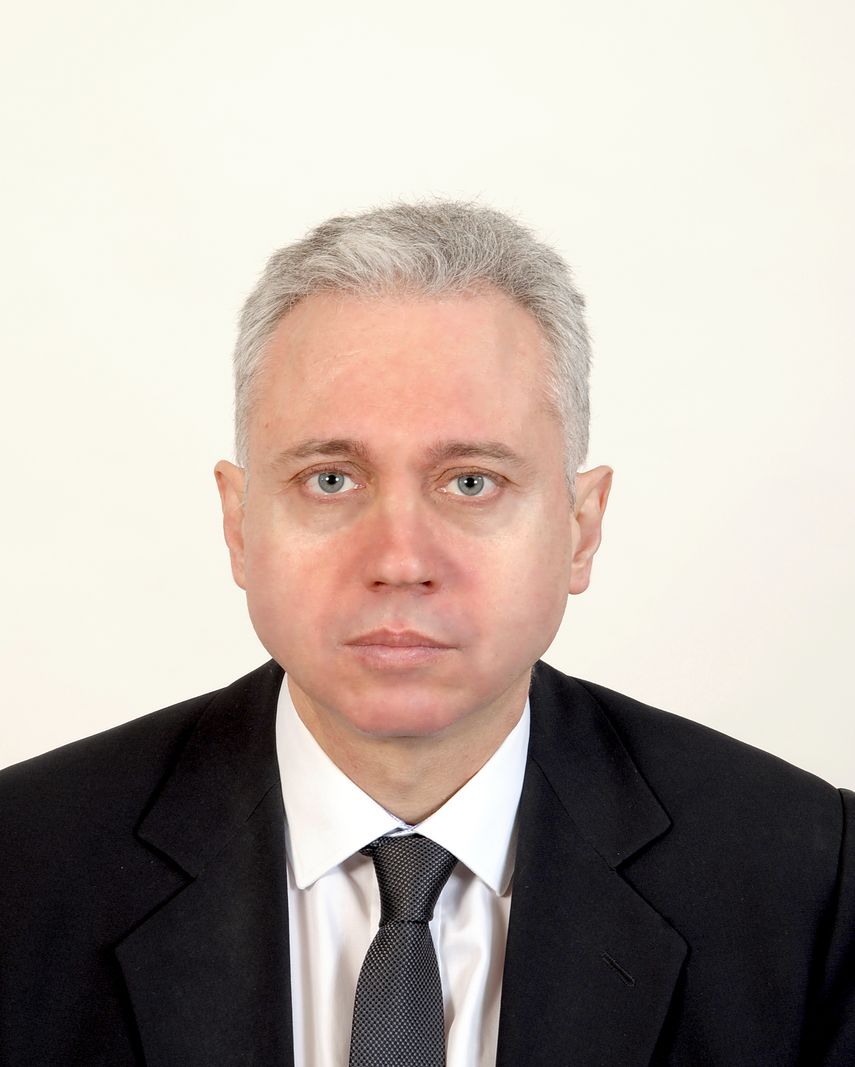
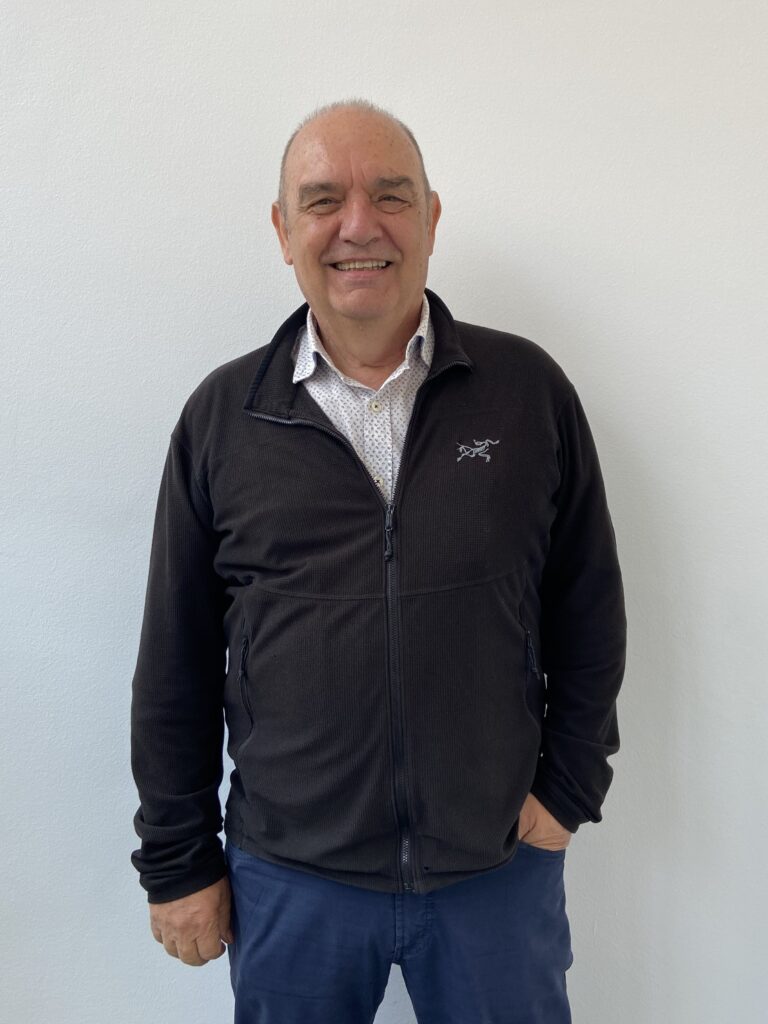
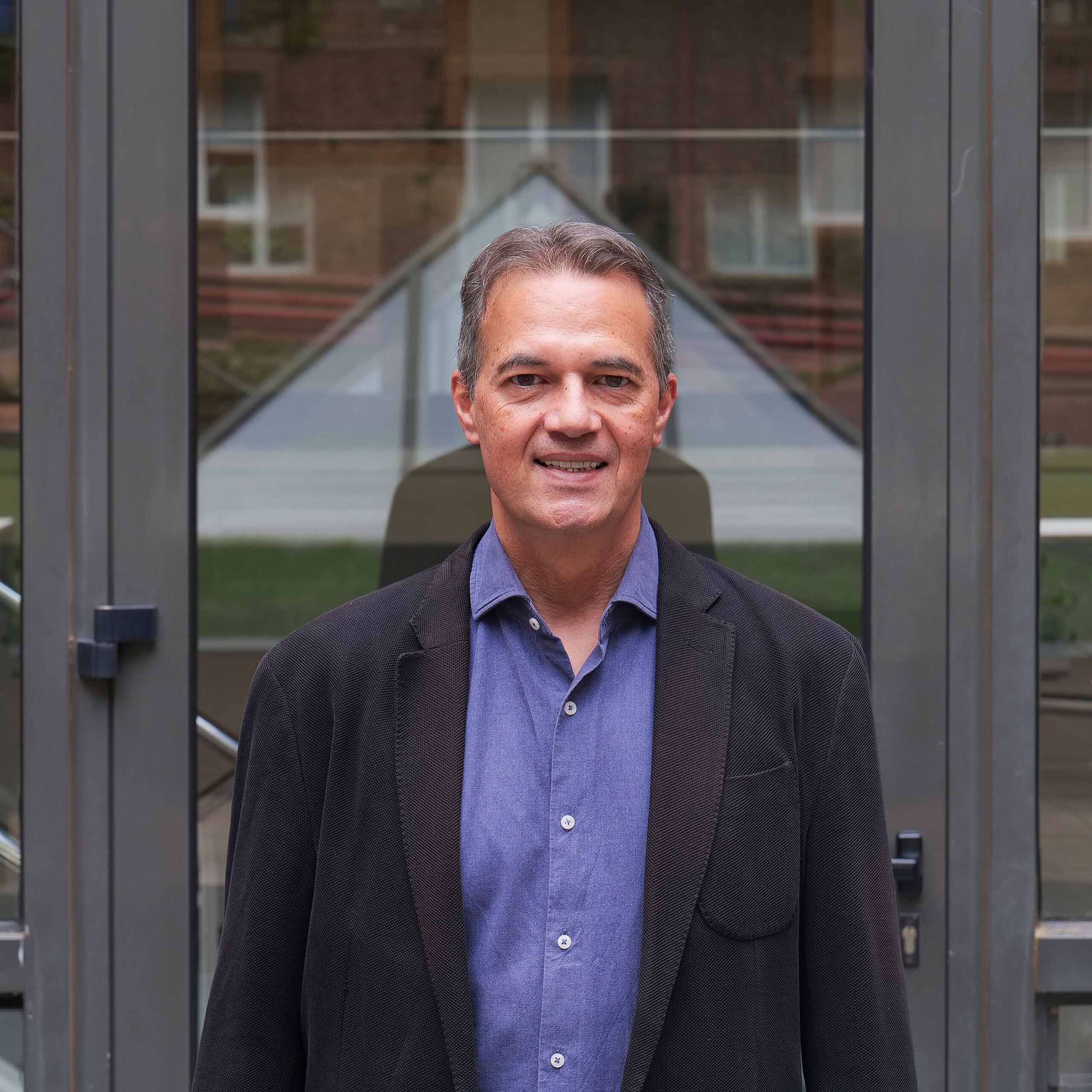
Justin Trogdon, PhD, is a Professor in the Department of Health Policy and Management at the University of North Carolina's Gillings School of Global Public Health. His research focuses on health economics, particularly assessing the economic burden of cancer, evaluating policy cost-effectiveness, and developing methods to estimate causal effects of interventions. Education : B.A. in Economics, Baylor University, 1999 M.A. in Economics, Duke University, 2001 PhD in Economics, Duke University, 2004 Research Interests : Dr. Trogdon's work addresses policy-relevant questions in three key areas: (1) economic burden of cancer, (2) cost-effectiveness of interventions, and (3) causal inference methods. He has evaluated HPV vaccination incentives, Medicare/Medicaid underinsurance, and stroke care continuity. His research combines econometric modeling with real-world policy analysis. Labs/Teams : He participates in the Triangle Health Economics Workshop and collaborates with the Gillings School's research teams focusing on public health economics and outcomes research.
Prof. Dr. Henning Tappe is a Professor of Public Law, German and International Tax Law at the University of Trier, Faculty of Law. He holds a doctoral degree from the University of Münster (2008) and habilitation (2012). Before joining Trier in 2014, he was a professor at the University of Osnabrück (2013–2014). His research focuses on tax law (constitutional and international dimensions), budget law, public debt law, and fiscal equalization. He is affiliated with organizations such as the German Society for Tax Law and the Trier Tax Forum. Education: Studied law at the University of Münster (LL.M. 2000), legal clerkship in Berlin (2000–2004), and completed his habilitation on tax law justification in 2012. His doctoral thesis on budget law earned the University of Münster's Dissertation Prize. Research interests include constitutional aspects of taxation, international tax harmonization, and public finance mechanisms. He teaches courses on income tax, VAT, corporate tax, and European tax law, emphasizing practical legal application through moot courts and case studies. Professional roles include advising on fiscal policy and contributing to debates on EU tax governance. His team includes researchers like Dr. Christian Wehmörner (VAT expert) and administrative support staff. He has supervised numerous students, including Sabrina Wortmann, Ferhat Kayhan, and others. Member: German Constitutional Law Professors' Association, German Tax Society, Trier Tax Forum Award: University of Münster Dissertation Prize (2008) Labs/Teams: Leads the Tax Law specialization program at Trier, collaborating with practitioners and offering interdisciplinary training in tax law and public finance.
Eric Laity is a Professor of Law and Associate Dean for Academic Affairs at Oklahoma City University School of Law. He holds a J.D. and B.A. from Harvard University and practiced law in Texas for twelve years before joining the faculty, focusing on financial and energy sectors. His research centers on international and U.S. tax law, with affiliations to the International Fiscal Association and American Society for International Law. He has chaired committees on international tax law for the American Bar Association and remains active in the Texas Bar. Key Roles: Associate Dean for Academic Affairs (2006–2011, 2012–2017), Interim Dean (2011–2012) Research Focus: International tax jurisdiction, corporate tax design, energy taxation, and tax havens. Scientific Awards: Member, International Fiscal Association Member, American Society for International Law Chair, ABA Committees on International Tax Law Recent Publications: Focus on tax expenditure frameworks, Subpart F exclusions, and cross-border compliance.
Andreas Tsourouflis is an Associate Professor of Public Law at the National and Kapodistrian University of Athens, specializing in Tax Law, International Taxation, and European Legal Frameworks. He holds a doctorate in Tax Law from the University of Osnabrück (1997) and teaches courses on Tax Law, Administrative Court Procedure, and European Tax Harmonization. Education: LL.M. (University of Saarbrücken, 1993); PhD (University of Osnabrück, 1997) His research focuses on judicial resolution of tax disputes, corporate taxation harmonization in the EU, and the intersection of tax policy with human rights. He has authored major works including Transfer Pricing (2010) and The Interpretation of Tax Treaties (2010). Recent publications analyze Greek tax procedure codes, corporate tax subjectivity under EU standards, and real estate taxation challenges. His work bridges national and supranational legal systems, emphasizing compliance and equity in fiscal frameworks.
Prof. Dr. Hanno Merkt, LL.M. (University of Chicago) is a University Professor and Director of the Institute for Foreign and International Private Law at the Albert-Ludwigs-Universität Freiburg since 2003. He holds a habilitation and doctorate from the University of Münster and Hamburg, respectively, and has held prominent roles such as Dean of the Faculty of Law (2008–2010) and Judge at the Higher Regional Court of Karlsruhe (2008–2025). His expertise spans civil law, commercial law, corporate governance, and international private law. Education: Bachelor of Law (1987), Master of Laws (1989) from University of Münster Doctorate (1989) under Otto Sandrock Habilitation (2000) at University of Hamburg Research Interests: Focuses on corporate law dynamics, capital market regulation, accounting law, and comparative law. His work emphasizes legal harmonization, corporate governance, and the interplay between EU law and national frameworks. Key areas include audit regulation, cross-border transactions, and the impact of global financial crises on legal systems. Awards: Recognized for his habilitation thesis (1st Prize, German Stock Institute 1999) and dissertation (University of Münster 1990). Professional Roles: Served as an expert for multiple German ministries, including the Federal Ministry of Finance, and holds editorial roles in journals like the ZGR (Journal of Corporate and Company Law). Active in international law societies and advisory roles. Labs/Teams: Leads research initiatives at the Institute for Foreign and International Private Law, collaborating with global scholars on projects like the EU Company Law Reform and cross-border legal harmonization.
Jane Livingstone is a Professor in the School of Accounting, Finance, Information Systems, and Business Law at Western Carolina University's College of Business. Her research focuses on tax policy, executive compensation, and organizational tax strategies. She holds a Ph.D. from Pennsylvania State University, an M.A.C. from Virginia Polytechnic Institute, and a B.S. from Syracuse University. Her research spans tax law applications in retirement planning, international provisions, and corporate entity selection. Key trends in her work include analyzing tax implications of market collapses, incentive-driven depreciation policies, and cross-border financial reporting. Articles frequently explore intersections between tax compliance and business operations. No scientific awards are listed. Advising and grant information is not provided in available texts. She is affiliated with the School's tax policy research initiatives. Her work contributes to understanding tax law dynamics in global finance, small business incentives, and crisis-driven tax responses.
Josep Casanovas is a Full Professor at the Statistics and Operations Research Department of the Technical University of Catalonia (UPC), affiliated with the Barcelona School of Informatics. He previously served as head of inLab FIB (2012-2020) and as dean (1998-2004) and vice-rector (2006-2011) of UPC, leading strategic initiatives in university governance and ICT policies. His research focuses on Modelling and Simulation , Internet and Information Systems , and Urban Mobility . He has led projects for the European Union, including C-ROADS Spain, REMEDiAL, and ECHORD++, addressing intelligent transport, software automation, and robotic innovation. Recent publications highlight his work on agent-based simulation for urban health, deep learning applications in traffic and energy savings, and wildfire management tools . He co-directs LogiSim and coordinates the Severo Ochoa Research Excellence Program at the Barcelona Supercomputing Center (BSC-CNS).
Luca Nogler is a Full Professor at the Faculty of Law of the University of Trento, specializing in Labour Law, Human Rights, and Comparative Law. He teaches courses on comparative and transnational labour law, focusing on extraterritorial human rights violations in global supply chains, due diligence frameworks, and transnational collective bargaining. His expertise spans contract law, child labour, and the historical evolution of legal systems. His research emphasizes transnational legal mechanisms for protecting labour rights, with a focus on judicial remedies, corporate responsibility, and regulatory frameworks. Recent work explores monopsony dynamics in labour markets and the impact of fiscal policies on industrial relations. Nogler has contributed significantly to legal scholarship through commentaries on civil codes, analyses of landmark legislation (e.g., Germany’s Supply Chain Act), and comparative studies of legal traditions. Key Research Themes: Labour Rights in Global Value Chains, Legal History of Labour Law, Corporate Due Diligence, and Judicial Remedies for Human Rights Violations Teaching Responsibilities: 'Comparative and Transnational Labour Law' and 'Labour Law Fundamentals' in the Law Degree Program Notable Contributions: Analysis of extraterritorial liability mechanisms, critique of fiscal incentives in labour markets, and historical studies of legal scholars like Philipp Lotmar His publications span over three decades, reflecting deep engagement with both theoretical and practical dimensions of labour law. Nogler’s work bridges legal doctrine with socio-economic realities, offering frameworks for addressing modern challenges in transnational employment relations.
Professor Robert Evans holds a prominent academic position at Curtin University within the School of Accounting, Economics and Finance, part of the Faculty of Business and Law. His role includes serving in the Office of the Provost, demonstrating leadership in academic governance. He holds a BBus from WAIT, an MBus and PhD from Curtin University, and is a Chartered Accountant (CPA). His research focuses on corporate governance mechanisms, executive remuneration structures, and performance evaluation frameworks, with an emphasis on cross-jurisdictional comparisons across Australia, Thailand, Indonesia, and Malaysia. Evans' academic career spans over two decades with significant industry experience in corporate and government sectors. His publications analyze topics such as related-party transaction impacts, tax haven strategies, bankruptcy reorganization governance, and managerial ownership dynamics. Recent work examines ESG moderation of insider trading behaviors in corporate contexts. His research frequently intersects corporate finance with organizational performance metrics, addressing both theoretical and applied challenges in emerging markets. Through collaborative studies with international researchers, Evans explores governance challenges in transitional economic environments, publishing in journals like Journal of Financial Reporting and Accounting and Australian Accounting Review . His conference presentations span global venues including Greece, Malaysia, and New Zealand, reflecting international academic engagement.
Philip Bennett is a Professor in Practice at Durham Law School, Durham University, and a leading expert in pensions law. He holds dual roles as a legal academic and practitioner, focusing on pension scheme governance, fiduciary duties, and cross-border regulatory challenges. Prior to his academic appointment, he spent over 30 years as a partner in Slaughter and May’s Pensions Group, advising on major pension restructuring cases. His research bridges legal theory and practice, addressing issues like ESG integration in pension investments, climate change impacts on fiduciary duties, and EU pension directives interpretation. Education: Graduate of Durham University. Bennett has authored/co-authored 16 chapters in the 2024 Elgar Commentary on EU Pensions Law, co-edited with Hans van Meerten. His work appears in journals like Trust Law International and European Review of Private Law . He frequently engages with regulatory bodies, including the UK Pensions Regulator, providing expert input on funding codes, climate governance, and ESG compliance. Teaching: Created the UK’s first undergraduate Pensions Law module and leads Durham’s Employability Course. Professional Roles: Past Chair of the International Association of Pension & Employee Benefits Lawyers, Vice-chair of IPEBLA 2022 Conference. Key Areas: Pension scheme mergers, deficit management, EU insolvency law (Bauer case analysis), and trustee fiduciary obligations in ESG contexts. Bennett’s recent work emphasizes the intersection of climate change and pension fund governance, including papers on green investments’ legal implications and fiduciary duties in sustainability decision-making. He has advised on high-profile cases involving pension fund trustees’ liability for leveraged liability-driven investment (LDI) strategies.
Giuseppina Guagnano is an Associate Professor at the Department of Methods and Models for Economy, Territory, and Finance at the University of Rome "La Sapienza". Her research focuses on measurement error models, two-step models, social capital, and tax evasion. Research Interests: Measurement error models, Two-step models, Social capital, Tax evasion Recent Publication Trends (2019–2025): 8/15 articles address undeclared work, tax evasion, and measurement error. 5/15 focus on social capital's impact on demographics and policy. 3/15 analyze social theater projects through quantitative surveys. Teaching: Leads courses in Statistics and Statistical Models for Business, with detailed grading policies and office hours (Tuesday 11:00–13:00). Provides extensive course materials on e-learning platforms, including R code, datasets, and lecture slides.
Caren Sureth-Sloane is a Professor of Business Administration, especially Business Taxation at Paderborn University, where she has held a tenured position since 2004 (W3 since 2009). She also serves as an Adjunct Professor of Business Taxation at Vienna University of Economics and Business (WU) since 2010. Her institutional affiliations include being the spokesperson for the DFG Collaborative Research Centre 'TRR 266 Accounting for Transparency', a member of the steering committee of the Network for Empirical Tax Research at the German Federal Ministry of Finance (NeSt), and Vice President of the Schmalenbach-Gesellschaft für Betriebswirtschaft since 2019. Her educational background includes a Dr. rer. pol. from Universität Bielefeld (1999), Habilitation in Business Administration from the same institution (2003), and a Diplom-Kauffrau from Universität Passau (1993), where she studied Business Administration, English, French, and Chinese from 1988-1993. Professor Sureth-Sloane's research focuses on the economic analysis of tax regulation, including corporate income tax, income tax, trade tax, capital gains tax, wealth tax, and anti-avoidance rules. Her work particularly examines how taxes, tax risk, tax complexity, and tax disputes affect tax management, tax compliance, and risk-taking within and across countries. She has pioneered survey-based measurement of tax complexity and tax misperception, developing the Tax Complexity Index as a standardized country measure. Her publication record demonstrates a strong focus on international tax complexity, corporate tax decision-making, and the behavioral aspects of taxation. Her recent work shows increasing emphasis on empirical approaches to measuring tax complexity across jurisdictions and analyzing how tax uncertainty affects corporate investment decisions. Her numerous scientific awards include the 2024 European Accounting Review Best Paper Award, two honorary doctorates (Bremen 2022, Graz 2021), and multiple Best Paper Awards from academic conferences. She has also received recognition for editorial excellence as Reviewer of the Year and for teaching innovation. As a principal investigator in the Doctoral Program in International Business Taxation (DIBT), she mentors PhD students in research on international business taxation, enforcement, investment, and compliance. She leads multiple research projects under TRR 266 'Accounting for Transparency', focusing on tax complexity, tax burden transparency, and investment effects of multidimensional tax policy. Professor Sureth-Sloane is deeply embedded in the academic tax research community as a founding member of arqus (working group on quantitative analysis of business taxation), member of the Schmalenbach-Gesellschaft's 'Taxes' and 'Transfer Prices' working groups, and editorial board member for leading journals including the European Accounting Review and Review of Managerial Science.
Prof. Dr. Holger Kahle is a Professor of Business Administration specializing in business taxation and auditing at the University of Hohenheim's Faculty of Economics and Social Sciences, Institute of Business Administration in Stuttgart, Germany. His research expertise spans several key areas: Accounting and Taxation Taxation of National Companies International Taxation EC Law and Taxation Decision-Making Effects of Taxation Prof. Kahle's scholarly work primarily examines the intersection of accounting standards and tax law, with particular emphasis on international taxation issues, the impact of IAS/IFRS on tax accounting, and the taxation of business structures like partnerships. His research demonstrates consistent expertise in both German commercial law (HGB) and international accounting frameworks. His publications span from the 1990s through 2007, with recent work focusing on international accounting standards, business valuation in tax law, and specialized tax issues like the taxation of gambling. The research shows a clear trajectory toward increasingly complex international tax challenges and the practical implications of accounting standards for tax determination. Prof. Kahle has contributed extensively to professional resources including commentaries on the German Commercial Code, handbooks on accounting, and educational materials on business taxation, demonstrating his commitment to both academic scholarship and practical application in the field.
David Castillo Merino is an Associate Professor in the Department of Economics and Finance at the IQS School of Management , Universitat Ramon Llull. His academic work focuses on Corporate Governance , Audit , Financial Reporting , and ESG Reporting . He collaborates actively with the CORPGOV – Corporate Governance Research Group , recognized by AGAUR as a Consolidated Research Group. Education: PhD in Information and Knowledge Society (2005, UOC) Master’s in Tax Consultancy (1998, UB) Degree in Business Administration and Management (1996, UB) His research explores intersections between gender diversity in corporate boards , tax aggressiveness , sustainability metrics , and audit regulation . Articles highlight empirical analyses of European firms , including studies on female directors’ impact on financial decisions and stock market reactions to environmental policies . He has participated in multiple research projects, such as Investigating the impact of female directors on firm performance in turbulent times , Innovators' reaction to disclosure readability in Financial Information , and Recerca en govern corporatiu i sostenibilitat . His work spans interdisciplinary domains, connecting business ethics , corporate tax compliance , and strategic sustainability .
Jack F. Williams is a Professor at Georgia State University College of Law and currently serves as an adjunct professor at St. John’s University School of Law and Emory University School of Law. He has held visiting professorships at Cardozo Law School, the University of Georgia, New York Law School, and St. John’s University, and has served as a tax advisor to the National Bankruptcy Review Commission. His interdisciplinary work bridges bankruptcy law , finance , and cultural studies , with a particular focus on tribal law , Islamic finance , and ancient markets . Education: B.A. in Economics, University of Oklahoma J.D., George Washington University National Law Center (High Honors, Order of the Coif) Ph.D., University of Leicester, UK Dr. Williams’ research explores governance and ethics , debt across cultures , and forensic investigations . His work on bankruptcy valuations and fraudulent transfer law has influenced legal practice, while his recent scholarship addresses professional wellness and habits of ethical legal practice . His publications span bankruptcy law , tax policy , and sports revenue models , with articles in journals like Public Administration Review and American Bankruptcy Institute Law Review . Notable awards include the 2024 Kroll Zolfo Cooper Randy Waits Award (gold medal) for his contributions to insolvency studies, the 2022 AALS Inaugural Faculty Pro Bono Award , and the 2022 President’s Lifetime Achievement Award for volunteer services. He has co-authored over 18 books, including Bloomberg on Bankruptcy Law (2014), and serves on boards such as the St. John’s University LL.M. program in bankruptcy and the American Bankruptcy Institute’s Law Review . Additional roles include co-chairing the ABI’s Veteran’s Affairs Task Force and being a Academic Member of the Maritime Law Association .