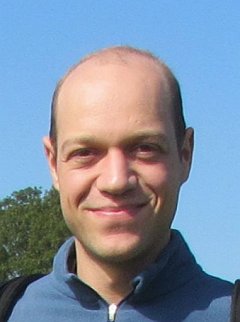
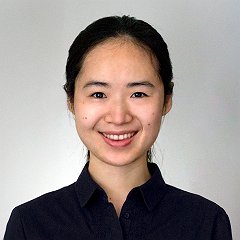
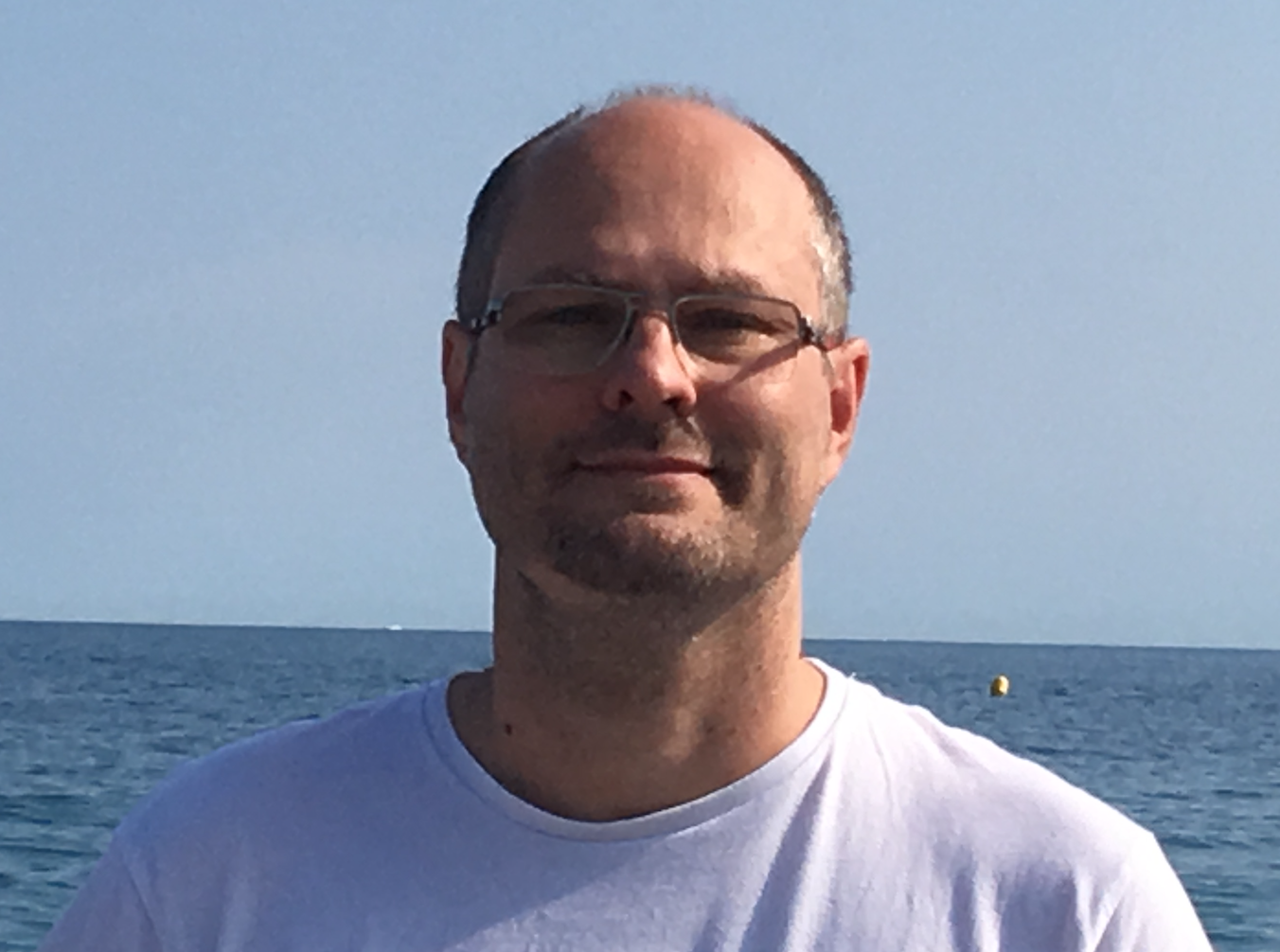
Yasmina Abdeddaïm is an Associate Professor at Université Gustave Eiffel and affiliated with ESIEE Paris. She works within the Laboratoire d'Informatique Gaspard-Monge (Softwares, Networks and Real-time team) and serves as Head of the Master in Artificial Intelligence and Cybersecurity (AIC) program. Her research focuses on real-time systems, critical systems, and scheduling algorithms. University: Université Gustave Eiffel Role: Head of Master AIC program Laboratory: Laboratoire d'Informatique Gaspard-Monge Team: Softwares, Networks and Real-time Her research spans real-time systems , mixed-criticality scheduling , energy-harvesting systems , and probabilistic schedulability . Recent publications analyze compilation optimization impacts on timing variability and propose new models for real-time deep neural networks over GPUs. She employs formal methods like timed automata for scheduling verification. Her teaching includes courses on Real-time Systems , Model Checking , Critical Application Development , and Artificial Intelligence . She is based at Cité Descartes, Champs-sur-Marne, France, with office contact details provided.
Samuel Thibault is a Professor at University of Bordeaux, affiliated with Laboratoire Bordelais de Recherche en Informatique (LaBRI) and Inria Bordeaux -- Sud-Ouest. He is a member of the SATANAS team at LaBRI (theme: High Performance Runtime Systems for Parallel Architectures) and the STORM research team at Inria Bordeaux (previously RunTime). His work bridges academic research and practical implementation of high-performance computing systems. Thibault's research focuses on task-based runtime systems, particularly StarPU, for heterogeneous and parallel computing architectures. His work addresses critical challenges in scheduling algorithms, memory management under constraints, data locality optimization, and performance modeling for complex NUMA architectures. He has made significant contributions to the field of parallel computing through the development and analysis of runtime systems that efficiently manage tasks across diverse hardware resources including CPUs, GPUs, and other accelerators. His research has practical applications in scientific computing, deep learning inference, and large-scale simulations requiring extreme computing power. His recent publication trends show a strong emphasis on optimizing task-based runtime systems for heterogeneous architectures with particular attention to memory constraints and data locality. There's a clear progression toward applying these techniques to deep learning inference workloads, as evidenced by his StarONNX project. His work consistently addresses the challenge of balancing throughput and latency in complex computing environments, with increasing focus on recursive task graphs and dynamic adaptation strategies. Thibault is actively involved in European research initiatives including TEXTAROSSA (focusing on exascale technologies) and EXA2PRO (high development productivity on heterogeneous systems). His work has been published consistently in top-tier conferences and journals in parallel and distributed computing. As part of the STORM team at Inria Bordeaux, Thibault contributes to advancing the state of the art in runtime systems for high-performance computing. His team's work on StarPU has become a reference implementation in the field, enabling researchers and practitioners to develop applications that can efficiently utilize heterogeneous computing resources without needing to manage the complexity of different hardware architectures directly.
François Trahay is an Associate Professor at Telecom SudParis, affiliated with the SAMOVAR research laboratory. His research focuses on high-performance computing systems, storage optimization, and performance analysis tools for parallel and distributed environments. He completed his PhD at Université Bordeaux I (2009) and Habilitation (HDR) at Institut Polytechnique de Paris (2021). Research Interests: Trahay specializes in optimizing storage systems (SSDs, RAID configurations), developing performance analysis frameworks (e.g., EZTrace, NumaMMA), and enhancing energy efficiency in HPC. Key areas include I/O performance, parallel runtime systems, and adaptive computing for machine learning workloads. Publication Trends: His recent work (2018–2025) demonstrates strong focus on: (1) SSD/RAID management techniques for modern storage hardware, (2) HPC performance tools for tracing and analysis, and (3) optimization strategies for distributed deep learning systems. Laboratory Affiliation: Member of SAMOVAR Laboratory (UMR CNRS), conducting research in distributed systems, networks, and computational efficiency.
François Chaumette is a Senior Research Scientist (Directeur de recherche) at Inria, affiliated with IRISA and the Centre Inria de l'Université de Rennes. He has been a key researcher in robotics and computer vision since 1990 and led the Lagadic research team from 2004 to 2017. His research interests are centered on robot vision, particularly visual servoing and active perception . He has made foundational contributions to image-based and position-based visual servoing, and his work integrates control theory, computer vision, and robotics. His research spans applications in mobile robotics, aerial systems, medical robotics, space robotics, and soft object manipulation. The recent publications highlight a consistent focus on visual servoing under complex constraints—such as motion blur, occlusions, and deformations—applied to drones, cable-driven robots, and space systems. There is a strong emphasis on robustness , stability analysis , and hybrid sensing (e.g., vision + proximity, vision + force). His work with the RemoveDebris mission demonstrates real-world impact in space robotics. AFCET/CNRS Prize for best Ph.D. in Automatic Control Best paper awards at RFIA 1996 & 2004 Best paper in IEEE T-RA (2002) Best paper in IEEE RA-L (2019) Best paper in IEEE RAM (2020) IEEE Fellow (2013) He has advised over 30 Ph.D. students, many of whom have become active researchers in robotics. He has served in editorial roles for top journals including IEEE Transactions on Robotics , IEEE Robotics and Automation Letters , and the International Journal of Robotics Research . He was elected to the IEEE RAS Administrative Committee (2016–2018) and served on ERC grant panels for robotics. Chaumette is the main developer of ViSP (Visual Servoing Platform), a widely used C++ library for visual tracking and servoing. His leadership in both theoretical advances and software tools has significantly shaped the visual servoing community.
Arthur Charguéraud is a senior researcher (Directeur de Recherche) at Inria, based in Strasbourg within the Camus team, affiliated with the iCube laboratory at Université de Strasbourg. His research spans program verification, program optimization, and mechanized semantics of programming languages, with a strong focus on separation logic and interactive theorem proving using Coq. Affiliation: Inria, Camus team, iCube Laboratory, Université de Strasbourg Position: Senior Researcher (Directeur de Recherche) Research Focus: Formal verification, separation logic, source-to-source transformations, high-performance computing His research interests center on developing formal methods to ensure correctness and efficiency in software systems. He works extensively on separation logic to verify both time and space complexity of programs, especially in the presence of garbage collection. His work bridges theoretical foundations with practical tools, such as the CFML framework and the OptiTrust optimization framework, which enables trustworthy source-to-source transformations with formal guarantees. His publications reveal a consistent focus on interactive verification, formal semantics, and performance optimization. Key themes include granularity control in parallelism, mechanized semantics (e.g., for JavaScript), and verified compilation. He has made significant contributions to separation logic, including extensions for time and space credits, big-O reasoning, and higher-order representation predicates. Arthur Charguéraud has received notable recognition for his work, including: Distinguished Paper Award at CPP 2022 SIGPLAN Research Highlight at PPoPP 2019 He has advised several PhD students and postdoctoral researchers, including Guillaume Bertholon, Alexandre Moine, and Armaël Guéneau. He leads the ANR-funded OptiTrust project (2022–2027), which aims to build a framework for verified source-to-source optimizations. He has also been involved in other major projects such as ANR VOCAL, ANR AJACS, and ERC DeepSea. His work is supported by both national (ANR, Inria) and institutional (CEA, ENS) grants. He is actively involved in the programming languages research community, serving on the program committees of top conferences including POPL, ICFP, PLDI, CPP, and CoqPL, and has chaired several workshops. He is also engaged in education and outreach, co-authoring the book Separation Logic Foundations in the Software Foundations series and designing challenges for the Concours Castor Informatique to promote computer science among young students.
Sébastien Pillement is a Lecturer at Polytech'Nantes, the College of Engineering of the University of Nantes, and a member of the ASIC research team within the IETR UMR 6164 laboratory. His career spans over 13 years at the IUT of Lannion (University of Rennes 1) before joining the University of Nantes in 2012. He holds a PhD in Computer Science from the University of Montpellier II (1998) and a Habilitation à Diriger des Recherches (HDR) from the University of Rennes 1 (2010). Current Research Focus: Dynamically Reconfigurable Architectures (DRA), Hardware Security, Fault-Tolerant Embedded Systems, NoC (Network-on-Chip), Design Methodologies. Teaching Areas: Digital Circuits, Computer Architecture, Operating Systems, Real-Time Systems, and Algorithms for Embedded Computing. His research explores flexible and efficient architectures for embedded systems, emphasizing real-time management, reliability, and security. Key article trends include RISC-V processors, neural network acceleration on MPSoC, formal verification of arithmetic circuits, and runtime FPGA scheduling. Collaborations span international institutions like the University of Toronto and CEA, as well as industrial partners such as STMicroelectronics and Thales. PhD Students : Current: Laureline Dubucq (Security & AI), Mustafa Ibrahim (Ultra-Low Power AI), Téo Biton (Runtime Anomaly Detection), Mohamed Amine Zhiri (Adaptive NoC), Juliette Pottier (RISC-V Protection). Graduates: Quentin Dariol (Neural Network Timing), Alexis Duhamel (FPGA Scheduling), Safouane Noubir (Security in Multi-Core Systems), Hai Dang Vu (Probabilistic Timing Analysis), David Pallier (Sensor Clock Synchronization). Projects : Current: ADAPTING (2023-2029), FITNESS (2023-2027), SEC-V (2022-2025), NOP (2021-2025). Past: SPARTE (2015-2018), ARDyT (2011-2015), FosFor (2008-2011).
Jiasi Shen is an Assistant Professor in the Department of Computer Science and Engineering at The Hong Kong University of Science and Technology. She leads the HKUST Automated Reasoning and Transformation of Software research group. PhD and Master's from Massachusetts Institute of Technology Bachelor's from Peking University Her research focuses on automating software development through program analysis , program transformation , and active learning . She explores how to systematically introduce safety checks, optimize performance, and enable cross-platform adaptation while maintaining core functionality. Recent work includes: Dynamic graph-based fingerprinting for cryptomining detection Benchmarking LLMs for operating system verification tasks Improving program comprehension via deimplicitization techniques She has received the Distinguished Artifact Award at SLE 2017 and serves on program committees for OOPSLA, Onward!, and SPLASH conferences. Her group supervises multiple PhD and MPhil students while developing systems like Konure (database application modeling) and KumQuat (parallel Unix command synthesis).
Anne Condamines is a Research Director at CNRS, affiliated with the CLLE (Cognition, Languages, Language, Ergonomics) laboratory at University Toulouse - Jean Jaurès. Her work bridges corpus linguistics, terminology, and cognitive ergonomics, focusing on specialized communication and controlled language applications. Key affiliations: CNRS, CLLE, EDF R&D, CERN collaborations Research themes: Terminology construction, linguistic variation in specialized contexts, cognitive aspects of term usage Research Highlights : 2024: Analyzed controlled language effectiveness in technical communication 2022: Explored knowledge-rich contexts and exobiology terminology 2021: Investigated terminological anomalies and conceptual relations Academic Contributions : Co-developed textual terminology frameworks Founded MAR-REL (Conceptual Relation Markers Database) Pioneered ergonomic linguistics for language engineering
Sandra Molesti is a Lecturer at Toulouse Jean Jaurès University, affiliated with the Cognition, Languages, Ergonomics (CLLE) research unit and the Language and Cognitive Processes Team. Her work focuses on primate social behavior, cooperation, and emotional mechanisms, particularly using thermal imaging to study children's emotions and cross-species comparisons. Primary research areas: Primate gestural communication Cooperation and reciprocity mechanisms Emotional dynamics in social interactions Evolutionary psychology Key recent publications analyze macaque social networks, baboon gestural intentionality, and handedness lateralization in primates. Her methodological approaches include long-term behavioral observation and cross-institutional collaboration networks. Current projects investigate emotional evaluation in cooperative contexts and comparative gestural analysis across primate species. She teaches Developmental Psychology, Comparative Psychology, and Observation Techniques at Toulouse Jean Jaurès University.
Vincent Danjean is an associate professor at Grenoble Alpes University , specializing in parallel computing, high-performance computing, and bioinformatics. He earned his PhD in 2004 from École Normale Supérieure de Lyon under the supervision of Raymond Namyst. Research Interests: Vincent's work spans several critical areas in computational science: Parallel and Distributed Systems: Focus on task-based parallelism and hybrid cluster architectures. Performance Analysis: Development of visual frameworks for analyzing parallel applications. Bioinformatics: Application of computational methods to genetic and genomic data analysis. GPU Computing: Efficient scheduling and work stealing strategies for multi-GPU systems. Reproducible Research: Workflows using Git and Org-mode for scientific transparency. Publication Trends: His publications demonstrate a consistent focus on advancing parallel computing techniques, with significant contributions to GPU scheduling, cache-efficient algorithms, and visualization tools. Recent work includes interdisciplinary applications in genomics and cybersecurity protocols. Contact: vincent.danjean@imag.fr
Overview Dr. Jean-François DOLLINGER is a Researcher-Lecturer at CESI LINEACT (Strasbourg campus), affiliated with the Engineering and Numerical Tools research team. His academic roles include teaching Computer Science courses (undergraduate/graduate) and supervising student projects in algorithmics, programming, databases, and networks. Education: PhD in Computer Science (2011-2015), University of Strasbourg - ICube Lab MSc in Computer Science (2009-2011), University of Strasbourg (Highest Honors) BSc in Computer Science (2008-2009), University of Strasbourg (Honors) Research Interests: Focuses on edge-cloud computing, high-performance distributed systems, combinatorial optimization in IoT networks, and smart city infrastructure. Specializes in optimizing federated learning, WSN deployment strategies, and hybrid CPU/GPU execution frameworks. Advising & Collaboration: Supervises PhD/Master’s students (e.g., A. BAAHMED on federated learning, K. BOUHOUCH on OpenStack edge deployment) Collaborated with Indonesian universities (Mercu Buana) on RPL protocol extensions Research Team: Leads the Engineering and Numerical Tools group, developing frameworks for edge-cloud infrastructures and BIM-based WSN deployments in smart buildings.
Tobias Wrigstad is a faculty member at Uppsala University, Sweden, with research interests spanning type systems, reference capabilities, programming language design, scripting languages, and concurrent/parallel programming. His work focuses on memory management, concurrency safety, and language extensions for performance optimization. Education: Not explicitly mentioned in provided data Research Interests: Designing type systems to enforce concurrency safety and memory correctness Reference capabilities for manual and automatic memory management Actor model programming and garbage collection co-design Cache locality optimization without program restructuring Formal verification of language designs using Dafny Recent Publications (2025-2015): Explore concurrency safety through region ownership Develop parallel array programming models in Kappa Investigate energy-efficient garbage collection Design capability-based dynamic languages for data race freedom Create formal models for heap invariants and incorrectness Optimize memory allocation via load barriers Conference Involvement: 2025: IWACO Committee Member, OOPSLA Associate Chair 2024: Program Co-Chair for IWACO, Author in VIMPL, MPLR, ISMM 2023: SPLASH Steering Committee, ECOOP PC Member 2022-2015: Active in PLDI, ECOOP, ICFP, and related workshops
Raja Appuswamy is an Assistant Professor in the Department of Data Science at EURECOM, focusing on data management on modern hardware and molecular information storage. His research integrates cutting-edge storage technologies with bioinformatics, particularly in DNA-based data storage. He teaches courses in cloud computing, distributed systems, and databases. His work spans Optimizing storage hierarchies with DNA archival systems Hardware-conscious algorithms for GPUs and heterogeneous architectures Error correction in molecular storage Long-term database preservation strategies Key research interests include Cross-architecture data joins (e.g., OneJoin, XJoin) Cold storage innovation with CMOSS and OligoArchive Integration of bio-inspired storage with traditional computing and explores interdisciplinary challenges at the intersection of computer science and molecular biology. Publications emphasize scalable solutions for DNA storage density, error tolerance, and archival systems. Awards highlight contributions to DNA-based image encoding, storage reliability, and page cache checksums. Current projects focus on enzymatic DNA ligations for storage density improvement, motif-based error correction, and hardware acceleration for knowledge graphs. His work targets both theoretical advancements and practical implementations in storage systems.
Stéphane Descombes is a Full Professor of Applied Mathematics at the University of Nice Sophia Antipolis since 2007, where he is a member of the JA Dieudonné Laboratory (UMR CNRS-UNS N°7351) and the Nachos project team at Inria Sophia Antipolis - Méditerranée. He currently serves as the Director of the House of Modeling, Simulation and Interactions (MSI) of the University of Côte d'Azur. From September 2012 to September 2016, he was Director of the Mathematics Department, Head of the Mathematics and Interactions master's degree program, and Coordinator of the Mathematical Engineering specialty from 2012 to 2014. His research focuses on numerical analysis, scientific computing, and high-performance computing, particularly in the analysis of partial differential equations. His specific interests include numerical analysis of steep evolution problems arising from biological, medical, or chemical phenomena; methods for decomposing high-order operators in time; high-order time methods for partial differential equations; and artificial boundary conditions and space-time domain decomposition. His recent publications show a strong focus on computational electromagnetics, particularly discontinuous Galerkin methods for Maxwell's equations, and multi-scale reaction-diffusion systems. His work bridges theoretical numerical analysis with practical applications in combustion, biomedical modeling, and electromagnetic wave propagation. His scientific achievements include significant contributions to operator splitting methods, with numerous publications in top journals. His students have received prestigious awards including the Smai-Gamni prize and the Eccomas prize. Prof. Descombes has supervised several PhD students including Julien Olivier, Max Duarte, Ludovic Moya, Lord Youmbi Bienvenu, and Marin Deresco, with research spanning reaction-diffusion systems, computational electromagnetics, and multi-scale modeling.
Lionel Boillot is an Expert Engineer and holds a PhD in the MAGIQUE-3D project team at Inria, located in Bordeaux, France. His work focuses on High-Performance Computing (HPC), Scientific Computing, and numerical simulation techniques for geophysical applications. He specializes in parallel algorithms, discontinuous Galerkin methods (DGM), and optimizing wave propagation simulations in anisotropic media. His research emphasizes hardware optimization, including vectorization via SIMD and GPU acceleration, and task-based parallel programming models for large-scale simulations. Education: PhD in Applied Mathematics and Parallel Algorithmic Optimization (2014), Université de Pau et des Pays de l'Adour, France. Research Interests: Boillot's work spans HPC architecture, absorbing boundary conditions for elastic waves, and seismic imaging. He has contributed to developing efficient algorithms for TTI (Tilted Transverse Isotropic) media modeling and optimizing simulations using runtime systems like StarPU. His research also explores collaborative tools in geology, such as VR-based seismic analysis (Sismage-VR). Key Projects: Collaborations include work with TOTAL (via MATHIAS symposia), the Depth Imaging Partnership (INRIA-TOTAL), and international workshops like SIAM PP and EAGE. His publications span conferences such as SIAM, SEG, and ECCOMAS, focusing on parallel computing, boundary conditions, and geophysical applications. Affiliations: Active member of the MAGIQUE-3D team, contributing to both theoretical and applied aspects of computational geophysics. His work intersects applied mathematics, computer science, and geoscience to advance computational methods in resource exploration and seismic analysis.