Rozailin Abdul Rahman is a Lecturer in Enterprise and Entrepreneurship at Coventry University's CBL International Centre for Transformational Entrepreneurship (ICTE). Her work focuses on interdisciplinary research spanning entrepreneurship, SME sustainability, Islamic management practices, and halal industry dynamics. She has contributed to understanding rural SME growth, employee retention strategies in Islamic institutions, and digital competency challenges faced by marginalized groups. Research interests include: Entrepreneurial ecosystems in developing economies Halal certification adoption and global market positioning Islamic perspectives in organizational behavior Biological studies related to natural product applications Her publications demonstrate a thematic shift from early biological research (e.g., plant cytotoxicity studies) to contemporary focus on enterprise development and human resource management issues. Notable contributions include frameworks for SME sustainability in Malaysia's sports-coaching sector and conceptual models for OIC countries' halal certification strategies. Awards information is currently unavailable. Advising and grant details are not explicitly mentioned in available sources. She is affiliated with Coventry University's ICTE center, contributing to transformational entrepreneurship initiatives.
Zara Whysall is Associate Professor of Business Psychology at Nottingham Business School, Nottingham Trent University. A Chartered Psychologist with over twenty years of consultancy experience, her research examines talent management, organisational culture transformation, and presenteeism. She currently serves as Research & Impact Director at Kiddy & Partners and has led multiple Knowledge Transfer Partnerships focused on organisational growth. Research focuses on: Organisational behavior and sustainable culture change Presenteeism decision-making and health/performance optimization Leadership development in changing environments Diversity management implementation challenges Whysall's extensive publication record includes influential studies on UK organisational culture patterns, presenteeism biases, and SME transformation frameworks. Her 2024 research reveals significant mismatches between organizational policies and employee behaviors in UK workplaces.
Prof. Marco Cucculelli is a Full Professor at the Department of Economics and Social Sciences, part of the Faculty of Economics 'Giorgio Fuà' at the Polytechnic University of Marche in Ancona, Italy. His work focuses on applied economics with emphasis on innovation management, environmental economics, digital transformation, and regional development. He holds office hours every Wednesday 17:00-19:00 at the Faculty of Economics. Research interests include eco-innovation metrics, corporate governance of family firms, transnational entrepreneurship, and the impact of digital technologies on business models. His recent work explores renewable energy trade dynamics, AI applications in finance, and regional competitiveness strategies. Publications span over 50+ articles in peer-reviewed journals and conference proceedings, with a focus on empirical analyses using patent data, bibliometrics, and policy evaluation. He actively contributes to research projects analyzing SME innovation, ESG factors in regional enterprises, and Industry 4.0 adoption strategies.
Teresa Cardoso Grilo is an Assistant Professor and Pro-Rector at Iscte, affiliated with the Marketing, Operations and General Management Department. She serves as an Integrated Researcher at BRU-Iscte - Business Research Unit (Management Group). Her academic background includes a PhD in Engineering and Management (2009-2013) and an Integrated Master's degree in Biomedical Engineering (2004-2009), both from the University of Lisbon's Higher Technical Institute. Her research focuses on: Healthcare systems planning and long-term care optimization Supply chain management using mathematical modeling Operations research with multi-criteria decision-making Stochastic optimization for resource allocation Lean management implementation Healthcare workforce planning methodologies Publications (2011-2024) demonstrate consistent focus on healthcare operations, supply chain optimization, and sustainable systems. Recent work shows increased emphasis on digital transformation in healthcare, electric fleet planning, and integrating Six Sigma methodologies. Her research employs advanced techniques including stochastic programming, location-allocation modeling, and multi-objective optimization to address complex operational challenges in healthcare and logistics. As Pro-Rector, she has led institutional initiatives including scholarship programs for PhD students, demonstrating commitment to academic development. She maintains active research collaborations across Europe and participates regularly in operations research and healthcare management conferences.
David Ferraz is an Associate Professor at the Department of Political Science and Public Policy at Iscte - University Institute of Lisbon, and an Integrated Researcher at CIES-Iscte. He holds a PhD in Public Policy (2018) and extensive professional experience in public administration, including roles at the National Institute of Administration and IHRU. His research focuses on public policy design, digital transformation in education, governance models, and administrative reform. Ferraz has led projects like STUDIES-DIG, exploring transnational education modernization, and contributed to international collaborations in public administration theory. He teaches courses such as 'Public Policies: Theories and Models' and 'Management Science' across undergraduate and graduate programs. His work emphasizes the intersection of technology and governance, with publications on topics like digitalization challenges in Morocco and post-pandemic governance innovations. Ferraz has also engaged in policy debates regarding public sector leadership and civil service reforms, as seen in media contributions addressing executive recruitment challenges. Key research themes include administrative modernization, public sector performance metrics, and the role of data analytics in policy-making. He has collaborated with institutions like the ISCSP-UTL and HSE Moscow, and his work spans comparative studies between European, Asian, and African governance systems.
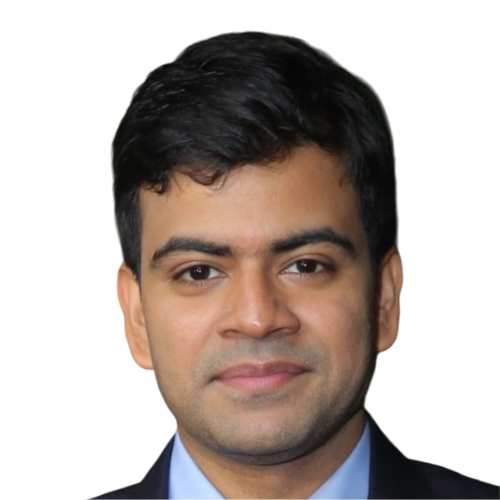
Dr. Devanik Saha is a Lecturer in Public Health at the University of Greenwich , affiliated with the School of Human Sciences and Faculty of Education, Health and Human Sciences. He joined the university in July 2024 after completing his PhD at the University of Sussex and a postdoctoral fellowship at the University of Essex. Education: PhD from Institute of Development Studies, University of Sussex Postdoctoral Research Fellow at University of Essex Research Interests: Gender and Intersectionality Men and Masculinities Maternal & Reproductive Health Migration Health Global Health Security Education and International Development Scientific Recognition: Global Talent Visa by UK Government Fellow of the Royal Society of Arts (FRSA) Professional Affiliations: Country-of-Origin Expert for India at Communitology Collaborated with institutions like UNICEF India, World Bank, and Brookings Institution
Eduardo Luís Cardoso serves as Assistant Professor at the Faculty of Biotechnology and Researcher at the Centre for Biotechnology and Fine Chemistry (CBQF), Universidade Católica Portuguesa (UCP Porto). He additionally holds leadership positions as Executive Director of the EBRI Center for Knowledge Valorization and Transfer and Coordinator of Services to Companies at the Faculty of Biotechnology. His educational background includes a PhD in Innovation from the School of Engineering of Minho University (awarded January 1, 2005), a Master's in Industrial Management from the Faculty of Engineering of Porto University (1992), and a Bachelor's in Chemical Engineering from the same institution (1986). PhD in Innovation, School of Engineering of Minho University Master in Industrial Management, Faculty of Engineering of Porto University (1992) Bachelor in Chemical Engineering, Faculty of Engineering of Porto University (1986) Dr. Cardoso's research spans Innovation, Individual and Organizational Learning, Knowledge Management, and Entrepreneurship. His work bridges academic theory with practical applications across multiple sectors. His fingerprint analysis reveals significant contributions to Entrepreneurship (100%), Electronic Learning (54%), Knowledge Transfer (51%), Technology (51%), and Technology Transfer (47%). His recent publications demonstrate a strong focus on technology transfer in agri-food systems, knowledge sharing in bioproducts communities, e-learning assessment methodologies, and sustainable agricultural solutions. His research often integrates educational technology with business innovation, creating practical frameworks for knowledge valorization. Technology transfer frameworks for agri-food sector innovation Knowledge sharing mechanisms in bioproduct communities E-learning assessment tools for educational technology Sustainable agricultural solutions through soil microbial diversity Phytomanagement strategies for contaminated land rehabilitation Dr. Cardoso has coordinated numerous R&D+I projects funded by programs including RTD FP, PRIMA, and ERASMUS+. His portfolio includes T-GREEN (Transforming Graduate Education), SFT-EDIH (Smart Sustainable Farms), DIP4Agri, YouARIn, and 3Boost projects, demonstrating his commitment to sustainable innovation and knowledge transfer. He serves on boards at the Faculty, CBQF Research Center, and AESBUC University-Industry Association. Previously, he consulted for Portugal's Education Ministry Evaluation Office and coordinated a Competence Center for ICT in Education for 10 years as part of the National Network supporting ICT in Schools. He was also part of a spinoff team established in 2009 that now operates internationally in Laboratory Technologies.
Judie Gannon is Senior Lecturer and Director of Doctoral Programmes at Oxford Brookes Business School, specializing in coaching and mentoring studies. She leads the International Centre for Coaching and Mentoring Studies (ICCAMS) and oversees doctoral education programs including the Doctorate in Coaching & Mentoring. PhD, MA, PgCert, BA Editor-in-Chief, International Journal for Evidence-based Coaching and Mentoring UKCGE Recognised Research Supervisor Her research examines coaching alliances, mentoring networks, and the application of social movement theories to organizational development. She founded the Bacchus Mentoring Program and leads the STAMINa Mentoring Network, focusing on mentoring scheme sustainability and best practices. Recent publications analyze mentoring in creative industries, migrant workforce integration, and intercultural/virtual team development. She has secured grants from the Institute of Coaching (Harvard) and European Commission for projects on gender equality and pro bono coaching. EMCC Global Mentoring Award (2019) Over 15 peer-reviewed publications Supervised 26 doctoral students to completion Consultancy work on mentoring programs and international HRM
Prof. Dr. Andrea Back leads the Institute of Business Information Systems (IWI-HSG) at the University of St. Gallen. Her research explores digital transformation, AI literacy, and business-IT integration. Back develops frameworks for organizational ambidexterity, digital intrapreneurship, and IoT ecosystems. Recent projects include AI competency taxonomies, fintech education tools, and robotics in construction. Publications address innovation culture, platform reputation mechanisms, and data-driven sports analytics. She advocates for ethical AI deployment and digital maturity benchmarking through real-time data mining.
Misagh Tasavori is a Senior Lecturer at the Essex Business School , University of Essex , specializing in Strategy, Operations and Entrepreneurship (SOE) . With a PhD from Manchester Business School and prior qualifications in Industrial Engineering and MBA, he focuses on business strategy, international business, and entrepreneurship, particularly for Small and Medium-sized Enterprises (SMEs) across for-profit, non-profit, and social enterprise sectors. Education: PhD (Business Administration, University of Manchester), BSc (Industrial Engineering), MBA His research explores three core areas: Business Strategy: Aligning stakeholder expectations with competitive advantage, especially net-zero strategies via digitalization and AI. International Business: SME internationalization dynamics, including digital technology roles in supply chain resilience during crises like the COVID-19 pandemic . Social Entrepreneurship: Performance evaluation of social enterprises, balancing dual missions of social impact and commercial sustainability. Recent articles analyze talent retention in developing economies, AI-driven net-zero strategies, and digital transformation in fresh food supply chains. He has received grants from Innovate UK , European Commission , and The British Academy for projects on SME growth, women's enterprise development, and digital resilience. As Undergraduate Director of the SOE Group , he mentors PhD and Master’s students like Chukwuma Ndubuisi Okeke and Hanan Saud S Almathami , while previously supervising Oluwatosin Oluwadamilola Adebola-Akande and Charan Raj Bhattarai .
Silvana MacMahon is an Assistant Professor and Assistant Head for Research & Innovation in DCU's School of Computing. A Lero and ADAPT collaborator, her research covers Health IT risk management, standards development, and inclusive education for autistic software engineers. Awards include the NSAI 1997 Award and a Presidential Early Career Researcher honor. She chairs NSAI Health Informatics Standards Committee and contributes to ISO/IEC standards.
Rachael Woodcock is a Senior Lecturer in Organizational Behavior and Human Resource Management (OB/HRM) at the Department of Management, part of Sheffield Business School at Sheffield Hallam University. She teaches both undergraduate and postgraduate programs, including modules like Leading and Managing Teams and Developing People and Organisations . Her professional background includes running her own consultancy business focused on employee and organizational development, as well as roles as a Workplace Experience Mentor and Course Leader. She has also held external responsibilities such as SBS Collaborative Course Leader in Hong Kong (2011–2015) and Course Leader positions in the UK (2009–2012). Rachael holds a PhD in Leadership Development (in progress since 2016) alongside a BA (Hons) Business Studies (1996), Advanced Professional Diploma in Management Development (2001), and multiple postgraduate qualifications from Sheffield Hallam University and Leeds Beckett University, including a PgC in Research Methods (2014), MSc Human Resource Management (2011), and PgG in Learning and Teaching in Higher Education (2009). She maintains professional memberships with the Chartered Institute of Personnel and Development (CIPD) since 2010 and the Higher Education Academy (HEA) since 2009. Her research interests center on leadership development through innovative qualitative methodologies, including phenomenological studies, visual/arts-based research, and poetic inquiry. She explores how unexpected experiences, sensory perceptions, and reflective practices shape leadership understanding. Recent work engages with organizational learning dynamics and talent management strategies across sectors. In publication trends, Rachael’s presentations (2018–2024) emphasize creative approaches to leadership analysis, such as using drawings and poetry to uncover tacit knowledge. Her work bridges academic research and practical organizational development, particularly in public and private sector contexts. Rachael’s professional recognitions include ongoing CPD compliance and certifications like the NVQ Level 4 in Business Advice (2007). She has advised organizations on leadership strategies and supported academic programs globally, balancing teaching innovation with industry engagement.
Dr. Mark Meehan is an Associate Professor of Business at Rivier University with 25+ years of international experience. His teaching centers on entrepreneurship, global strategy, and leadership development. Meehan created the university's multi-internship program and leads the entrepreneurship course that awards $20,000 startup packages to student ventures. His research examines Islamic philosophy's application to business ethics and global education models. Meehan has consulted worldwide and developed curricula for international institutions.
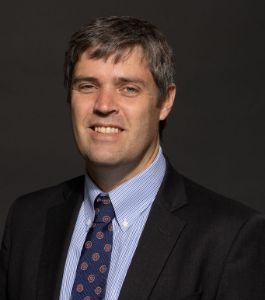
Michael Sinkey is an Associate Professor of Economics at the University of West Georgia's Richards College of Business, Department of Economics. He specializes in econometrics, sports economics, and behavioral finance. He has taught courses such as Statistics for Business II, Economics of Sports, Forecasting, and Business Analytics Capstone since 2020. Education: B.B.A. in Economics from University of Louisville (2005), M.A. and Ph.D. in Economics from The Ohio State University (2006, 2011). Research focuses on topics like socioeconomic impacts on labor contracts in sports, cognitive biases in expert decision-making, and market efficiency in betting markets. His work combines empirical analysis with behavioral theories, particularly in non-traditional economic environments like sports and gambling. Recent publications explore the intersection of sports economics and labor market dynamics, as well as behavioral finance principles applied to betting markets. His 2025 study examines socioeconomic factors in MLB contract timing, while earlier works analyze expert belief revision and hot-hand fallacy in college football betting. No scientific awards explicitly listed, but his research demonstrates significant contributions to behavioral and sports economics. Teaching responsibilities include advanced statistical methods and capstone projects in business analytics.
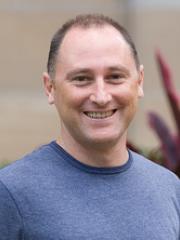
Professor Robbie Wilson is a Professor at the School of the Environment, The University of Queensland, and serves as Academic Director of the Hidden Vale Wildlife Centre and Director of Partnerships for the Hidden Vale Research Station. His research program spans both ecological and sports science domains, focusing on animal performance across diverse model systems including freshwater fish, crayfish, reptiles, marsupials, and humans. Dr. Wilson's research examines the mechanistic basis of physical performance and its implications for survival and reproductive success. He investigates how organisms respond to environmental variation such as seasonal or long-term temperature changes, and the costs of these responses to other traits. His work explores interactions between behavioral, physiological, and morphological traits to understand how animal performance is optimized, with applications to conservation practices in both urban and wild habitats. Current projects include studying the importance of performance to male mating success in northern quolls, the relative importance of athleticism versus skill in soccer players, and investigating when and why animals engage in deceptive behaviors. Analysis of Professor Wilson's recent publications reveals a strong interdisciplinary approach bridging wildlife conservation and sports science. His work on northern quolls focuses on habitat quality, survival probability, and semelparity, while his sports science research develops protocols for talent identification in soccer using small-sided games and examines the biomechanics of performance. This dual focus demonstrates how principles of animal performance can be applied across evolutionary and human contexts. Current funding through 2026 for manganese exposure effects on children's motor control Multiple ARC Discovery and Linkage Projects Collaborations with Aboriginal communities on Groote Eylandt International partnerships with FA Selangor in Malaysia Professor Wilson has successfully supervised numerous PhD students across diverse topics including koala movement behavior, predator-prey interactions, wildlife sociality, and talent identification in soccer. His extensive grant history demonstrates significant research impact, with current funding through 2026 for projects examining manganese exposure effects on children's motor control, bilby conservation, and koala mortality risk prediction. Leading the Performance Lab at UQ, Professor Wilson and his team investigate performance-related phenomena across the animal kingdom and sporting world. Their field work on Groote Eylandt has yielded important insights into northern quoll ecology, while their soccer research collaborations with FA Selangor in Malaysia demonstrate the global reach of their work.