Karen Reid serves as a Lecturer in the Department of Communication at the University of Colorado Boulder, a position she has held since 2022. Leveraging her professional background as a communication and engagement consultant, she develops strategic communication plans and customized engagement programs for diverse clients including nonprofits, corporations, and educational institutions. She earned both her Master's and Bachelor's degrees from the University of Colorado Boulder and holds a Certified Volunteer Administrator (CVA) credential. Her expertise spans strategic communication, public speaking, volunteer management, and organizational communication. Reid designs training sessions that empower organizations to recruit top volunteer talent and cultivate vibrant, mission-driven teams, emphasizing effective communication and increased participation across associations, alumni groups, community organizations, and executive boards.
Prof. Dr. Gesche Joost is Professor of Design Research at Berlin University of the Arts since 2011, leading the Design Research Lab, and heads the Design Research eXplorations department at the German Research Center for Artificial Intelligence (DFKI) since 2016. She serves on the board of the Einstein Center Digital Future Berlin and leads research on digital sovereignty and maker culture at the Weizenbaum Institute for the Networked Society. Her research focuses on: Design Research methodology Human-Computer Interaction for tangible interfaces Wearable Technology with textile integration Digital Sovereignty frameworks Community-driven Maker Culture Sensor-rich Smart Textiles Recent publications reveal a trajectory toward socially embedded technology through co-creation processes, with emphasis on capacitive textile sensing for motion capture and communication devices that prioritize user agency and accessibility in human-technology interaction. Her scientific recognition includes: Young Talent Award for Science (2009) by the City of Berlin Designation as '100 Head of Tomorrow' in the federal 'Germany – Land of Ideas' initiative (2006) She directs major research initiatives including MYOW (personalized wearables development), TexaS (textile-adapted electronics), OrthoSuPer (orthopedic sensor platforms), and Minodu (sustainable land management in Africa), while leading the Design Research Lab and DFKI's Design Research eXplorations group to bridge academic research with industrial applications.
Irene Metsis is a lead lecturer in the Human Resources Management Development Program at Estonian Business School (EBS). She serves as a board member and trainer at FendaF OÜ, co-founding the pet food brand FendaF. With nearly 30 years of experience across 8 organizations including Eesti Energia, Ministry of Economy, and Skanska, her expertise spans team leadership, HR management, and organizational development. Irene holds an International Business Management degree from EBS, completed EBS Executive MBA (2020), and studied psychology at Tallinn University. Her professional focus includes adapting leadership strategies to digitalization, remote work challenges, and fostering organizational culture through shared values. She frequently contributes to EBS initiatives like the podcast Satelliit , discussing topics such as talent management and workplace trends. Irene emphasizes practical management skills, advocating for human-centric approaches in leadership.
Vera Rocha is an Associate Professor at the Department of Strategy and Innovation , Copenhagen Business School. Her research focuses on entrepreneurship, organizational dynamics, and labor markets, with particular emphasis on hiring strategies, startup performance, and the societal impacts of entrepreneurial activity. Her work contributes to UN Sustainable Development Goals related to decent work and economic growth. Key areas of expertise include the role of affiliations in startup hiring, refugee integration in organizations, gender dynamics in entrepreneurship, and innovation strategies in early-stage ventures. Her recent articles explore topics such as successive entrepreneurial stints, refugee hiring's impact on organizational performance, and the hidden costs of platform economies. She actively participates in academic conferences and media discussions, addressing issues like female founder leadership and entrepreneurial labor markets. Dr. Rocha has supervised three academic works and collaborates internationally on research projects. Despite her prolific output, no formal scientific awards or dedicated grants are explicitly mentioned in the provided texts.
Prof. Katharina Heissenberger-Lehofer holds the position of Professor for Gifted Education and Practitioner Research at the University of Applied Sciences Styria (PHSt). She is affiliated with the Institute for Practical Teaching and Practical Research . Her work focuses on giftedness and talent promotion, pedagogical research, and practical process support within teacher training programs. She leads the educational department specializing in gifted and talented education. Teaching Areas: Giftedness promotion, individualization in education, pedagogical research methodologies Research Interests: Educational processes, action research, and systemic approaches to talent development She oversees practical training components (Pädagogisch-Praktische Studien) and collaborates on institutional initiatives like the ZePPS Graz research center. Her professional activities include expert roles in educational governance and contributions to academic publications.
Anthony Rafferty is a Professor in Employment Studies and HRM at the Alliance Manchester Business School (AMBS) , University of Manchester. He leads the Work and Equalities Institute (WEI) and serves on the Executive Team of The Productivity Institute (TPI) . His research focuses on the Future of Work , Labour Market Inequalities , Job Quality , and Universal Basic Income (UBI) . He employs mixed-methods with large datasets from governments and international organizations. Key roles include advising the UK government on welfare reform and giving evidence to parliamentary committees. He collaborates with organizations like the UN ILO, Eurofound, and the ESRC. His work contributes to UN Sustainable Development Goals (SDGs) addressing inequality and sustainable economic growth. Research highlights include studying gender and ethnic disparities in employment, the impact of technological change on labour markets, and inclusive regional development strategies. He is open to supervising PhD students in quantitative or mixed-methods projects using survey data. He directs courses such as Leading People and Organisations and Engaging Human Talent in the Full-time and Global MBAs. His work bridges academia and policy, influencing initiatives like the Digital Futures Platform at the University of Manchester.
Agnès Ceccarelli is an Associate Professor at ICN Business School's Department of Human Resources and Organizational Behavior. She holds a Master's from ESC Troyes and Trinity College Dublin, and a PhD from the University of Lorraine (2012) on appearance-based discrimination in recruitment interviews. Her research focuses on dress code policies, social innovation, organizational justice, and generational workplace dynamics. Teaching spans Bachelor, Master, MSc, and EMBA programs, covering topics like sustainable management, self-image, and impression management. She also advises executives globally via AC Conseil, her consulting firm (established 1998). Key areas include non-verbal communication, professional appearance, and corporate social responsibility (RSE). Her 2020-2025 publications analyze dress code impacts, Gen Z workforce challenges, and social innovation frameworks. Recent work explores digital accessibility, banking sector hiring norms, and post-pandemic workplace culture shifts. She frequently contributes to media discussions on professional attire ethics and leadership strategies. Notable teaching includes 'Management Durable des Organisations' (2023), 'SMArt Hackathon' (2023), and executive courses on self-image and diversity management. Her research also examines organizational justice paradoxes in recruitment processes and cross-generational workforce dynamics.
Gabriel Gomes is an Assistant Professor in the Departments of Chemistry and Chemical Engineering at Carnegie Mellon University, where he leads the Gomes Group research program focused on the intersection of machine learning and chemistry. His work centers on developing new chemical reactions, catalysts, and materials using state-of-the-art machine learning and automated synthesis techniques. Dr. Gomes received his Ph.D. in Chemistry from Florida State University in 2018 under Professor Igor V. Alabugin, where he researched stereoelectronic effects. Prior to joining CMU in 2022, he was a Banting Postdoctoral Fellow at the University of Toronto in the Matter Lab led by Professor Alán Aspuru-Guzik. He earned his B.S. in Chemistry from Federal University of Rio de Janeiro, Brazil in 2013. His research program focuses on developing autonomous platforms for reaction discovery, with emphasis on catalysis. Gomes aims to create inverse design frameworks where algorithms can propose new functional catalysts from scratch based on desired properties. His work integrates quantum mechanics with machine learning to teach computers chemical intuition, enabling novel approaches to catalyst design and chemical synthesis. He strongly advocates for the integration of AI with human creativity to transform chemical research. Gomes' recent publications demonstrate a clear trend toward integrating large language models with chemical discovery, developing transferable machine learning potentials for catalysis, and advancing molecular representations with quantum chemical insights. His work spans from fundamental quantum chemistry to practical applications in biocatalysis and materials design. Scialog Fellow (2023) C&EN Talented Twelve (2022) NSERC Banting Postdoctoral Fellowship (2020-2021) CAS SciFinder Future Leaders Program (2018) ACS COMP Chemical Computing Group Excellence Award (2018) FSU's Graduate Student Research and Creativity Award (2018) IBM Ph.D. Scholarship (2017) Dr. Gomes mentors several graduate students including Robert MacKnight and Daniil Boiko, who have contributed to projects like the Catnip web application for biocatalyst prediction. His research has received funding through prestigious programs like the Scialog Automating Chemical Laboratories awards. Gomes actively promotes open science initiatives and has contributed to the Open Reaction Database to improve data accessibility for machine learning in chemistry. The Gomes Group operates at the cutting edge of AI-driven chemistry research, developing tools like Coscientist that bridge the gap between natural language prompts and actual chemical reactions. Their work on autonomous reaction discovery systems represents a significant step toward fully automated chemical laboratories where machines can 'dream of molecules' with specific desired properties.
Dr. Andreu Català Mallofré is a Full Professor at the Universitat Politècnica de Catalunya (UPC), affiliated with the Department of Systems, Automatic and Industrial Informatics Engineering. He serves as the principal investigator at the CETpD - Centre d'Estudis Tecnològics per a l'Atenció a la Dependència i la Vida Autònoma (Technical Research Center for Dependency Care and Autonomous Living) and leads the TOC - Tecnologia Orientada a la Comunitat (Community-Oriented Technology) research group. With an academic career spanning over 30 years, he specializes in assistive technologies, human-computer interaction, and biomedical data analysis. His research interests focus on Wearable health monitoring systems Parkinson's disease management solutions Frailty assessment algorithms Emotion-driven computing Community-embedded technology Gerontechnology applications These areas have produced 367 academic outputs including 59 indexed journal articles, 148 conference papers, and 66 competitive R&D projects. Recent publications demonstrate a clear trend toward multimodal health monitoring combining inertial sensors with biometric data for aging populations . Key application areas include freezing-of-gait detection in Parkinson's patients and distress estimation during assisted mobility. His 2024 work explores agricultural sustainability through data-driven fertilizer optimization. Scientific recognition includes UPC Social Council Award (2013) 20+ years as conference committee member Multiple competitive R&D grants 23391773000 Scopus ID Orcid 0000-0001-8775-1955 As academic advisor, he has mentored 3 PhD candidates including Daniel Manuel Rodriguez-Martin (Human Movement Analysis, 2020) Leonid Ivonin (Physiological Signal Processing, 2014) John Neal Abram Brown (Calm Computing, 2014) His teams operate within Vilanova i la Geltrú's School of Engineering, with strong industry and healthcare sector collaborations.
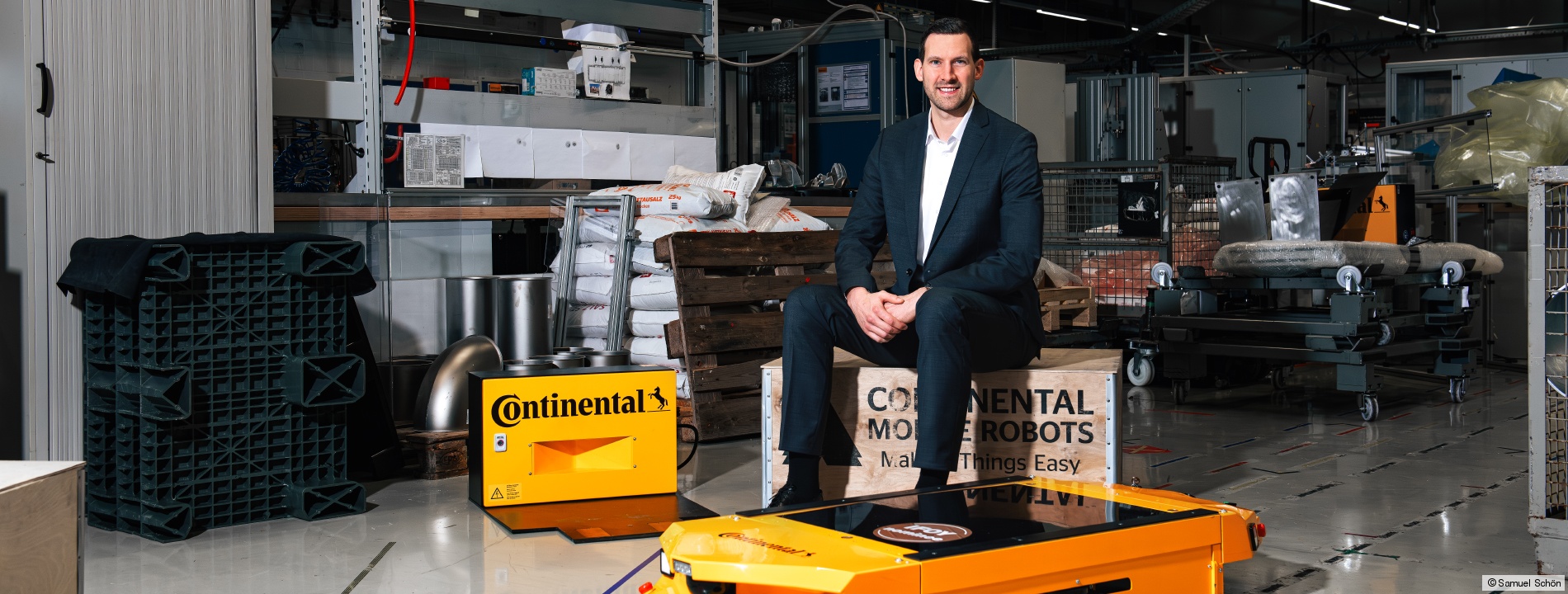
Prof. Dr.-Ing. Tobias Bornemann holds a Cooperative Professorship for Production & Lean Management at Frankfurt University of Applied Sciences , while also serving as Head of Product Management for Autonomous Mobile Robotics at Continental AG . His work bridges theory and practice in areas such as Lean Management , Industrial Engineering , and Smart Factory through teaching, research, and industry collaboration. His research focuses on Intralogistics , Autonomous Mobile Robotics , and Agile Product Development . He leads projects at the Research Lab for Urban Transport (ReLUT) and contributes to the House of Logistics and Mobility (HOLM) , where he co-developed a learning factory. His publications emphasize Industry 4.0 , AMR fleet management , and digital education tools . Cooperative Professorship at Frankfurt UAS Head of Industrial Engineering (M.Sc.) program Research Lab for Urban Transport (ReLUT) House of Logistics and Mobility (HOLM) collaboration Continental AG Tech Matinees and Ambassadorship His academic efforts include mentorship for students, interdisciplinary teaching , and industry-academia partnerships under the PROFfm initiative.
Liang Feng is a Professor in Materials Science and Engineering and Electrical and Systems Engineering at the University of Pennsylvania's School of Engineering and Applied Science. He was selected for the 2024 Gordon and Betty Moore Foundation Experimental Physics Investigators Initiative cohort, receiving $1.25 million for high-risk, high-reward quantum photonics research. Research Focus : Feng investigates photonic hyperentanglement, where photons exhibit multiple mirrored quantum properties simultaneously. His work aims to advance chip-scale quantum communication, computing, and key distribution by exploring high-dimensional symmetries in hybrid material platforms. The Feng Group develops integrated quantum photonic systems for noise-resilient, large-scale distributed quantum networks. Awards & Equity Efforts : As part of the Moore Foundation's initiative, Feng will foster inclusivity in Penn Engineering's departments while recruiting diverse research talent to bring varied perspectives to quantum technology innovation.
Associate Professor Alfred Presbitero serves as Associate Head of School for Postgraduate Programs at Deakin Business School, Deakin University. He specializes in cross-cultural management and international human resource management, with affiliations to editorial boards of journals like Applied Psychology: An International Review . His research focuses on cultural intelligence, global workforce dynamics, and organizational resilience. Presbitero has secured grants totaling over AUD 3.9M, including projects on Australia-India innovation partnerships and Indigenous employment pathways. He supervises doctoral students in areas like B2B supply chains and SME mental health. Awards include the Nanyang Postdoctoral Fellowship and Macquarie University Research Excellence Scholarship. Education: PhD (Macquarie University), Master of Arts (Ateneo de Manila), Bachelor of Arts (University of Santo Tomas) Grants: Empowering Innovation (AUD 340K), Geelong Indigenous Employment (AUD 150K), ASEAN Women Entrepreneurs (AUD 48K) Affiliations: Academy of Management, Academy of International Business, ANZIBA Research emphasizes cultural intelligence's role in global teams, disaster HR preparedness, and AI's impact on careers. His work spans 59+ publications, with recent focus on sustainability in procurement and expatriate career planning. Active in professional development, he teaches global mindset and leadership courses.
David Martinez-Chico is a Research Fellow at the University of Valencia's Department of Prehistory, Archaeology and Ancient History within the Faculty of Geography and History. He currently holds an Atracció de Talent Fellowship at the University of Barcelona (2025-2026) and previously received the Margarita Salas Fellowship at the Universities of Valencia and Girona (2022-2024). His research focuses on ancient numismatics, Mediterranean archaeology, and Roman military-economic systems. Dr. Martinez-Chico earned his PhD in Numismatics from the University of Valencia in 2020 with the thesis "Los tesoros imperiales de Hispania," supervised by Dr. Pere Pau Ripollès Alegre. He completed his Master's degree in Archaeology at the University of Valencia in 2017 and his Bachelor's degree in History at the University of Murcia in 2016. His academic journey reflects a deep specialization in Mediterranean historical archaeology with increasing methodological sophistication. Martinez-Chico's research interests span Classical Archaeology, Ancient Numismatics (particularly Greek and Roman), and Historical Materialism. His work examines the intersection of coinage, military organization, and economic systems in the ancient Mediterranean world, with particular focus on how coins, riches, and lands were distributed among soldiers and warriors from Late Pharaonic through Early Medieval times. His publications reveal intricate connections between monetary systems and military logistics across the Mediterranean basin and its peripheries, from Central Europe to the Sahara margins. His recent publications demonstrate methodological innovation, including the development of the AMALIA algorithm for lead isotope analysis, which has enhanced understanding of Roman metallurgical practices. Analysis of coin hoards from Spain, Yemen, Iraq, and Turkey provides evidence for trade networks, military campaigns, and economic practices that challenge traditional narratives about cultural isolation in antiquity. Atracció de Talent Fellow at the University of Barcelona (2025-2026) Margarita Salas Fellow at the Universities of Valencia and Girona (2022-2024) Editor of "Coins, Riches and Lands. Paying for Military Manpower in Antiquity and Early Medieval Times" (2025) Co-author of over 50 scholarly publications in international journals Martinez-Chico actively collaborates with international researchers on numismatic and archaeological projects. His work on clipped siliquae in Southern Spain has transformed understanding of late Roman monetary practices, while his research on Byzantine solidi hoards provides crucial evidence for Mediterranean economic connections during political transitions. His interdisciplinary approach combines traditional archaeological methods with advanced scientific techniques to reconstruct ancient economic systems. As a member of the GRAM Archaeological Research Group on the Mediterranean, Martinez-Chico contributes to regional archaeological projects while maintaining international connections. His current research examines the relationship between military organization and economic systems in Late Antiquity, with particular focus on the transformation of Roman military pay structures during the 4th-5th centuries CE.
Prof. Sea Jin Chang is the Lim Kim San Chair Professor at the National University of Singapore (NUS) Business School , with a career spanning institutions like Wharton, NYU Stern, and KAIST. His research focuses on multinational firm strategy , executive redeployment , and corporate governance in business groups , particularly in East Asia. Education: PhD in Strategic Management from Wharton, MA/BA in Economics from Seoul National University Research: Explores resource allocation , political strategy dynamics , and executive mobility in diversified firms Books: Sony vs. Samsung , Rise and Fall of Chaebols , and Multinationals in China His 15 most recent publications span topics like executive redeployment in Korean business groups , CEO approval ratings , and dynamics of resource allocation in semiconductors . He has held editorial roles at the Strategic Management Journal and Journal of International Business Studies , and his awards include Fellowships from the Strategic Management Society and Academy of International Business.
Gordon Waddington is the UC AIS Professor of Sports Medicine at the University of Canberra's Research Institute for Sport & Exercise and holds a Professorship in Physiotherapy within the Faculty of Health. He earned his PhD from the University of Sydney in 2000 and has since authored over 100 peer-reviewed publications. His research focuses on somatosensory function, particularly proprioception and its role in movement performance, injury rehabilitation, and athlete health. He serves as Editor-in-Chief of the Journal of Science and Medicine in Sport and sits on multiple editorial and grant review boards, including the NHMRC Project Grant panel. Key research areas include ankle proprioception, stroke recovery, and injury prevention in athletes. His work addresses clinical applications such as optimizing talent identification in sports, managing chronic ankle instability, and enhancing neuromuscular performance. Projects span collaborations on military injury prevention, concussion management, and high-performance athlete health surveillance. Over 25 supervised works highlight his mentorship in sports medicine and physiotherapy. Notable grants include projects on athlete attrition factors and injury profiles in hockey athletes. His contributions align with UN Sustainable Development Goals related to health and well-being through advancements in sports medicine and rehabilitation.