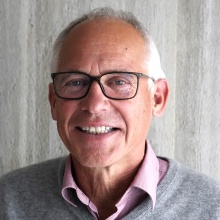
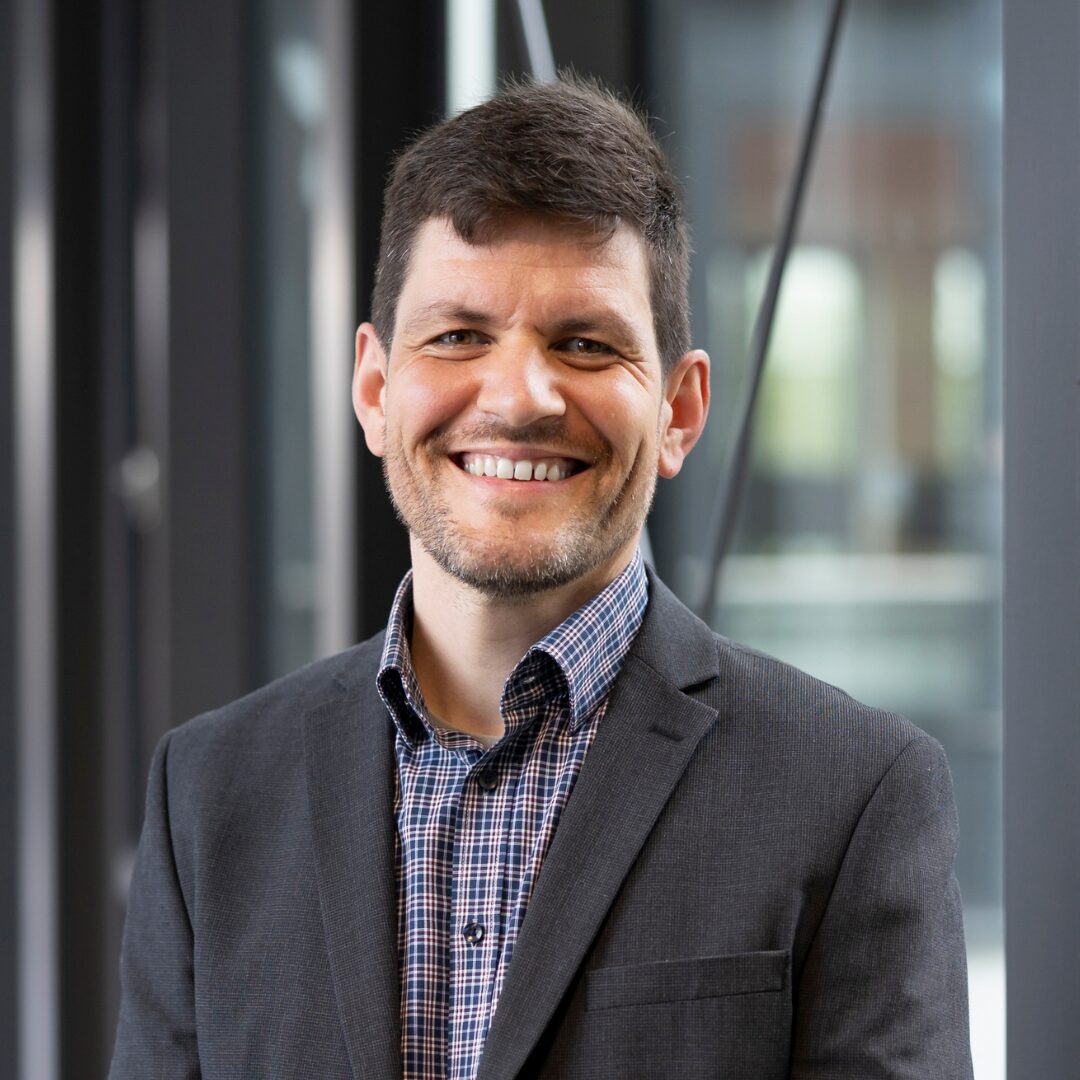
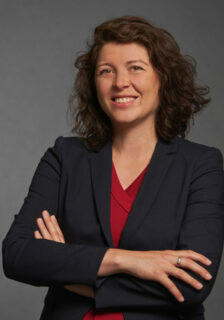
Maxim Romanov heads 'The Evolution of Islamic Societies' project at University of Hamburg's Asia-Africa-Institut, funded by DFG's Emmy Noether Program. Former positions include senior research fellow at KITAB Project and University of Vienna. Research reconstructs social history of Islamic world (c.600-1600 CE) through computational analysis of Arabic chronicles and biographical collections. Research Focus: Digital humanities approaches to premodern Islamic history including OCR development for Arabic manuscripts, corpus linguistics, and geospatial modeling of historical data. Technical Contributions: Developed OpenITI corpus infrastructure, al-Ṯurayyā gazetteer system, and computational methods for large-scale historical text analysis. Recent work enhances NLP for classical Arabic with OCR accuracy exceeding 90%.
Prof. Dr. Andreas Beyer holds a faculty position at the University of Cologne, affiliated with the Cluster of Excellence Cellular Stress Responses in Aging-Associated Diseases (CECAD) and the Cologne Excellence Cluster for Cellular Mechanisms in Cancer (CMMC). His research focuses on systems-level analysis of aging processes in humans and model organisms, integrating genomic, proteomic, and computational approaches. Key interests include understanding how genetic variation influences protein networks, developing algorithms for big data analysis, and exploring epigenetic mechanisms related to longevity. Research projects include studying age-associated changes in transcriptional elongation, molecular networks in kidney disease, and the impact of dietary restriction on aging. His group develops tools for proteomics and systems biology, such as methods for analyzing limited proteolysis data and single-cell resolution imaging. Collaborative efforts emphasize translational research in aging-related diseases and drug discovery. Prof. Beyer’s work spans computational biology, molecular genetics, and translational medicine. Notable contributions include identifying epigenetic changes linked to longevity and developing predictive models for age-related disease progression. His lab’s projects often involve multi-omics integration and network-based analyses to uncover disease mechanisms. His research has implications for personalized medicine, cancer biology, and interventions to extend healthspan. Current efforts include optimizing drug combinations targeting aging processes and advancing proteomic technologies for clinical applications.
Marcel Gebhardt (born 1987) is a Professor in the Department of General Business Administration at the Faculty of Industrial Engineering, Mannheim University of Applied Sciences since April 2022. His expertise spans B2B Marketing, Technical Sales, and Data-driven Marketing & Sales, with a focus on Digital Sales and Business Performance Methods. University: Mannheim University of Applied Sciences School: Faculty of Industrial Engineering Rank: Professor Research Interests: Digital Marketing & Sales Marketing & Sales Analytics Data-driven Marketing & Sales Cost Management in Industrial Engineering Publications Trends: His research focuses on data-driven approaches in B2B marketing, lead scoring models, cost analysis for engineering changes, and optimization of production systems. His work bridges academic theory with industrial applications, particularly in machine building and laser technologies. Scientific Awards: Dissertationspreis der Péter Horváth-Stiftung (2018) Other Contributions: Gebhardt has served as a researcher and consultant in public and industry-funded projects, including roles at the International Performance Research Institute (IPRI).
Prof. Dr. Heike Schinnenburg is a Professor of Business Administration with a focus on Human Resource Management at the Faculty of Economics and Social Sciences, Osnabrück University of Applied Sciences. She directs the Master's program in Business Management and specializes in talent management, international HRM, career research, and change management. Her research explores AI's impact on jobs, gender dynamics in careers, and organizational resilience in global contexts. She holds a PhD from Leibniz University Hannover and has extensive industry experience as a consultant and HR director. Her academic career includes guest professorships at Shanghai University of International Business and Economy. Key research projects include inclusive education's impact on workforce development and cultural factors in change management. Her publications span over 50 articles in journals like Employee Relations and Personalquarterly , addressing topics such as frontline work challenges, virtual leadership, and global talent strategies. She frequently presents at international conferences and collaborates on EU-funded research initiatives.
Dr.-Ing Alexander Vahl is a Researcher at the Technical Faculty of Kiel University, leading the subgroup Nanoparticles for Nanocomposites . He specializes in advanced materials science, focusing on nanoparticle synthesis, functional thin films, and neuromorphic engineering. His research bridges nanotechnology with applications in memristive systems and plasmonics, emphasizing strain-invariant conductors and photocatalytic growth mechanisms. Key projects include developing self-assembled nano-object networks for brain-inspired computing and optimizing gas aggregation cluster sources for novel material fabrication. His work spans disciplines such as memristive switching, plasmonic metasurfaces, and bio-inspired electronics. Notable contributions include studies on silver/polymer nanofluids, ITO-TiO₂ heterojunctions, and multicomponent nanoparticle synthesis. Vahl collaborates with the Chair for Functional Nanotechnology, leveraging interdisciplinary expertise to advance materials innovation. His articles highlight advancements in neuromorphic systems, photocatalytic deposition, and thin-film technologies. The research emphasizes scalability and real-world applications, such as energy-efficient sensors and hybrid zinc batteries. Vahl’s subgroup webpage and extensive publications reflect a commitment to pushing boundaries in nanomaterials engineering.
Dr. Salih Veziroglu is a post-doctoral researcher and subgroup leader at the Chair for Multicomponent Materials at Kiel University, under Prof. Franz Faupel. His research focuses on functional metal-oxide micro-/nanostructures, including thin films and particles, for applications in energy, self-cleaning surfaces, and sensing technologies. Notably, he has pioneered photocatalytic methods to create conductive metal patterns on titanium dioxide substrates, mimicking axon growth and enabling advanced biomedical and electronic systems. Veziroglu earned his doctoral degree in Materials Science from Kiel University in 2020, supported by Federal State Funding. His work integrates nanomaterial synthesis, surface functionalization, and interdisciplinary applications. Key areas include 3D porous cerium oxide networks for catalysis, superhydrophobic coatings, and biomedical materials like algae-incorporated polylactide acid patches for tissue engineering. His research highlights include strain-invariant all-organic conductors developed with Prof. Adelung's team, and novel methods for gold deposition on titanium dioxide using light-driven processes. These innovations address challenges in energy storage, environmental remediation, and medical device coatings. Veziroglu’s subgroup actively explores gas-phase synthesis techniques, plasma treatments for biofilm decontamination, and material design for high-performance applications. Publications span topics like additive manufacturing of titanium alloys, photocatalytic nanoparticle synthesis, and biomedical coatings. His work emphasizes practical solutions for sustainability and healthcare, driven by advanced material chemistry.
Prof. Matthias Fuchs is a Professor and Head of Department for Accelerator Research and Development I at the Karlsruhe Institute of Technology (KIT). His research focuses on advanced accelerator technologies, laser-plasma acceleration, and ultrafast X-ray science. He is affiliated with the IBPT group (Institut für Beschleunigerphysik und Teilchenphysik) and coordinates activities at the Department of Physics. His work bridges fundamental plasma physics with applied accelerator engineering, aiming to develop next-generation compact light sources and ultra-short wavelength technologies. Research interests include laser-plasma electron acceleration, quasi-isochronous storage ring dynamics, and nonlinear X-ray optics. His team explores parametric excitation mechanisms, high-order beam dynamics, and novel X-ray wave mixing phenomena in materials like silicon. Collaborations involve developing predictive laser stabilization techniques and high-bandwidth imaging systems for precision experiments. No scientific awards are explicitly listed, but his contributions to the Snowmass 2021 report on advanced accelerators highlight his influence in the field. He leads the Accelerator Research and Development I group, overseeing projects like the FLUTE compact storage ring commissioning and compact transverse deflecting system experiments. His lab work focuses on creating tunable X-ray sources and studying betatron radiation generation through transverse oscillating bubbles in plasma.
Dr. Shahaf Peleg is the Head of the Energy Metabolism and Epigenetics Working Group at the Research Institute for Farm Animal Biology (FBN). His research focuses on aging biology, epigenetic mechanisms, and metabolic interventions. Key areas include histone acetylation regulation, mitochondrial function, and dietary effects on longevity. He uses models like Drosophila, C. elegans, and mice (e.g., Titan mouse) to study aging pathways. Leading interdisciplinary projects on energy metabolism and epigenetic interactions. Developing optogenetic tools for mitochondrial research. Expertise in lipidomics and circadian metabolism. Recent work emphasizes dietary interventions in obesity-related aging and optogenetic rejuvenation of cellular energetics. Active in collaborative networks like ARDD Emerging Science workshops. Publications span metabolic pathway analysis, alcohol's epigenetic impacts, and longevity biomarkers. His team's Titan mouse model is a key tool for testing frailty attenuation strategies.
Jürgen Groeneveld is a researcher at the Department of Ecological Modelling at the Helmholtz Centre for Environmental Research (UFZ) in Leipzig, Germany. His work focuses on agent-based modelling of ecological and socio-environmental systems, with a particular emphasis on pollinator conservation, climate change impacts, and biodiversity digital twins. He contributes to the BioDT Project and collaborates on initiatives like the BEEHAVE and BEE-STEWARD models for honeybee and bumblebee dynamics. His research integrates computational methods with ecological theory to address challenges in sustainable land use and environmental policy. Key projects include modeling land use transformations, analyzing the effects of pesticides on pollinators, and exploring risk-sharing mechanisms for smallholder farmers. Groeneveld has published extensively on topics such as metapopulation dynamics, forest fragmentation, and the application of standardized protocols (e.g., ODD) for simulation models. His work bridges theoretical ecology with practical applications, aiming to inform conservation strategies and climate adaptation policies. He participates in interdisciplinary collaborations across the UFZ’s research units, including the 'Smart Models / Monitoring' group. His contributions span publications in journals like Ecological Modelling, Ecosphere, and Nature, reflecting his expertise in both ecological and computational methodologies.
Prof. Moritz Drupp is a Professor for Sustainability Economics at the University of Hamburg's Faculty of Business, Economics and Social Sciences (Department of Economics). As the head of the Sustainability Economics Group, he focuses on climate policy, environmental valuation, and co-benefits of sustainability policies. From April 2025, he will join ETH Zurich as a faculty member. Research Interests: His work bridges environmental economics with policy design, emphasizing climate mitigation strategies, ecosystem valuation under socioeconomic change, and quantifying co-benefits of environmental regulations. Recent projects include analyzing EU emissions trading systems and the social cost of carbon. Awards: 2018 BUND Research Prize. Grants & Projects: Led projects like 'Mapping effects of environmental policies' (2024-2027) and 'Marine ecological-economic systems' (2019-2023). Current team includes Alexandra Herter (Foreign Language Assistant) and former associates Dr. Piero Basaglia and Luciana Puebla Rentería.
Andreas Maier is a Researcher at the University of Hamburg's Faculty of Mathematics, Informatics and Natural Sciences, affiliated with the Computational Systems Biology department. He began his PhD in May 2021 with Cosy.Bio (Center for Systems Biology) at UHH, focusing on drug repurposing projects such as REPO-TRIAL. Previously, he completed a Bioinformatics master's thesis at TUM (Technical University of Munich), developing a web application for analyzing molecular disease networks. His research interests emphasize network medicine, drug repurposing, and computational tools for biomedical discovery. He has contributed to platforms like NeDRex-Web, Drugst.One, and BioCypher, which democratize access to systems medicine workflows. His work bridges heterogeneous data integration, federated learning for rare diseases, and quantum computing applications in genetics. Maier's publications highlight innovations in knowledge graph-based drug discovery, privacy-preserving federated learning, and single-cell network analysis. He actively develops open-source bioinformatics tools to address challenges in disease module identification and patient stratification. His projects align with the REPO4EU consortium and other collaborative initiatives in translational bioinformatics.
Prof. Dr. Ger Duijzings holds the Chair of Social Anthropology (with a focus on Southeastern and Eastern Europe) at the University of Regensburg. He is also affiliated with the College of Europe in Natolin, Poland. His academic roles include Spokesperson of the Europaeum and Principal Investigator of the seeFField project. Previously, he served at UCL (2005-2014) in roles including Reader in Anthropology of Eastern Europe and Director of the Centre for South-East European Studies. Education: PhD in Social Anthropology (1999), University of Amsterdam MSc in Social and Cultural Anthropology (1989), Radboud University Nijmegen Research Interests: Focuses on urban transformation in post-socialist cities like Bucharest, war and memory studies centered on Srebrenica, and the intersection of religion/identity politics in Southeastern Europe. His work combines ethnographic methods with interdisciplinary approaches to contemporary art and environmental issues. Grants & Leadership: Editor of Comparative Southeast European Studies since 2014 Supervised over 20 PhD students on topics ranging from Balkan trauma to environmental justice Led international research projects including Social Sorting (2014-2019) Labs & Teams: Active in the Graduate School for East and Southeast European Studies and Leibniz Science Campus initiatives. Collaborates with global networks including Strelka Institute in Moscow and UNARTE in Bucharest.
Udo Seifert is a Professor in the II. Institute for Theoretical Physics at the University of Stuttgart, part of Faculty 08. His research focuses on stochastic thermodynamics, non-equilibrium statistical mechanics, and entropy production in complex systems. He has contributed significantly to understanding Markov networks, thermodynamic inference, and the interplay between fluctuations and irreversibility. His work bridges theoretical frameworks with experimental techniques, such as single-molecule experiments and motor-bead assays. Key areas of interest include entropy estimation in partially accessible systems, localization of entropy production, and the development of model-free entropy estimators. His recent studies explore the thermodynamic uncertainty relation, active matter systems, and the dynamics of biochemical oscillators. He has published extensively on topics like nonequilibrium fluctuations in chemical reaction networks, driven systems, and the application of stochastic processes to biophysical systems. Seifert's research also extends to membrane mechanics, with studies on fluid vesicle shapes and membrane-mediated interactions. His work emphasizes the integration of theoretical models with experimental data, aiming to uncover fundamental principles governing non-equilibrium phenomena. Despite the absence of listed awards or students in the provided text, his prolific publication record underscores his influential role in advancing stochastic thermodynamics and related fields.
Prof. Christian Liebscher is a Professor of Advanced Transmission Electron Microscopy at the Ruhr University Bochum , affiliated with the Faculty of Physics and Astronomy and the Research Center Future Energy Materials and Systems (RC FEMS). His work focuses on developing cutting-edge TEM techniques to understand energy-related materials' atomic-scale structure-functionality relationships. He combines aberration-corrected scanning TEM (STEM), 4D-STEM, and in-situ microscopy with machine learning to analyze complex material datasets. Education and Career: 2000–2006: Study of Materials Science at the University of Bayreuth. 2006–2010: PhD at the University of Bayreuth (summa cum laude) with a thesis on phase and dislocation analysis in superalloys. 2011–2014: Postdoc at the University of California, Berkeley, and the National Center for Electron Microscopy (Lawrence Berkeley National Laboratory). 2014–2015: Staff scientist at the University of Duisburg-Essen. 2015–2024: Group leader at the Max Planck Institute for Sustainable Materials in Düsseldorf. Research Interests: Prof. Liebscher’s research bridges microscopy innovation and materials understanding. He emphasizes atomic-scale characterization of interfaces, defects, and grain boundaries in metals and alloys using advanced STEM and 4D-STEM. His work addresses how structural features—like segregation, strain, and phase transitions—impact material properties. He also pioneers machine learning tools to automate data analysis from microscopy and tomography, advancing materials dataspaces. Key topics include energy materials (e.g., PEM fuel cells), high-entropy alloys, and nanomaterials for applications like semiconductors and electromagnetic absorption. Scientific Contributions: His publications highlight trends in grain boundary phase transitions, microstructure-property correlations, and integration of AI into microscopy. For example, recent work explores how grain boundary complexions affect mechanical strength in alloys and how in-situ TEM reveals deformation mechanisms under realistic conditions. He has contributed significantly to methodologies like scanning precession electron diffraction tomography and unsupervised machine learning for atomic-resolution datasets. Labs and Collaborations: Prof. Liebscher leads the Advanced Transmission Electron Microscopy group at RUB, building on his previous leadership at the Max Planck Institute. His lab collaborates with institutions like the Lawrence Berkeley National Laboratory and integrates interdisciplinary approaches combining experimental microscopy with computational modeling.
Prof. Dr. Franziska Mathis-Ullrich is a Professor at Friedrich-Alexander-University Erlangen-Nuremberg (FAU) leading the Surgical Planning and Robotic Cognition Lab (SPARC) in the Department of Artificial Intelligence in Biomedical Engineering. Previously, she was an Assistant Professor at Karlsruhe Institute of Technology (KIT) from 2019 to 2023. Her research focuses on minimally invasive robotic systems, soft robotics, and embedded machine learning for surgical applications. She holds a PhD in Microrobotics from ETH Zurich (2017), with earlier degrees from the same institution. Education: B.Sc. and M.Sc. in Mechanical Engineering and Robotics (ETH Zurich, 2009–2012) Ph.D. in Microrobotics (ETH Zurich, 2017) Research Interests: Minimally invasive medical robotics, soft robotic systems, AI-driven surgical assistance, microrobotics, and robot-assisted surgery. Her work emphasizes translating robotics innovations into clinical applications through interdisciplinary collaboration. Key Awards: IEEE ICRA Best Paper Award in Medical Robotics (2014) IEEE BioRob Best Student Paper Award (2016) ICRA Microassembly Challenge First Prize (2014 & 2015) Forbes 30 under 30 (2017) Grants & Projects: Leading a Bavarian State Ministry-funded project on endometriosis diagnostics (€3M). Active in multidisciplinary collaborations with Erlangen University Hospital. Serves as Vice-President of the German Society for Computer- and Robot-assisted Surgery (CURAC). Labs & Teams: Directs the SPARC Lab, which develops cognitive robotic systems for surgical planning and execution. Collaborates with institutions like Max Planck, Fraunhofer, and Helmholtz.