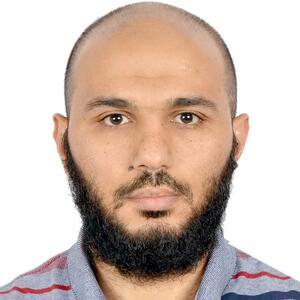
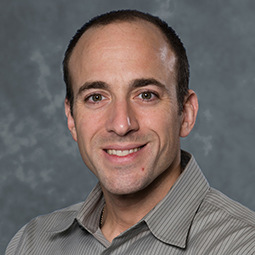
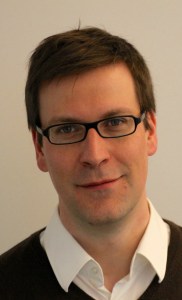
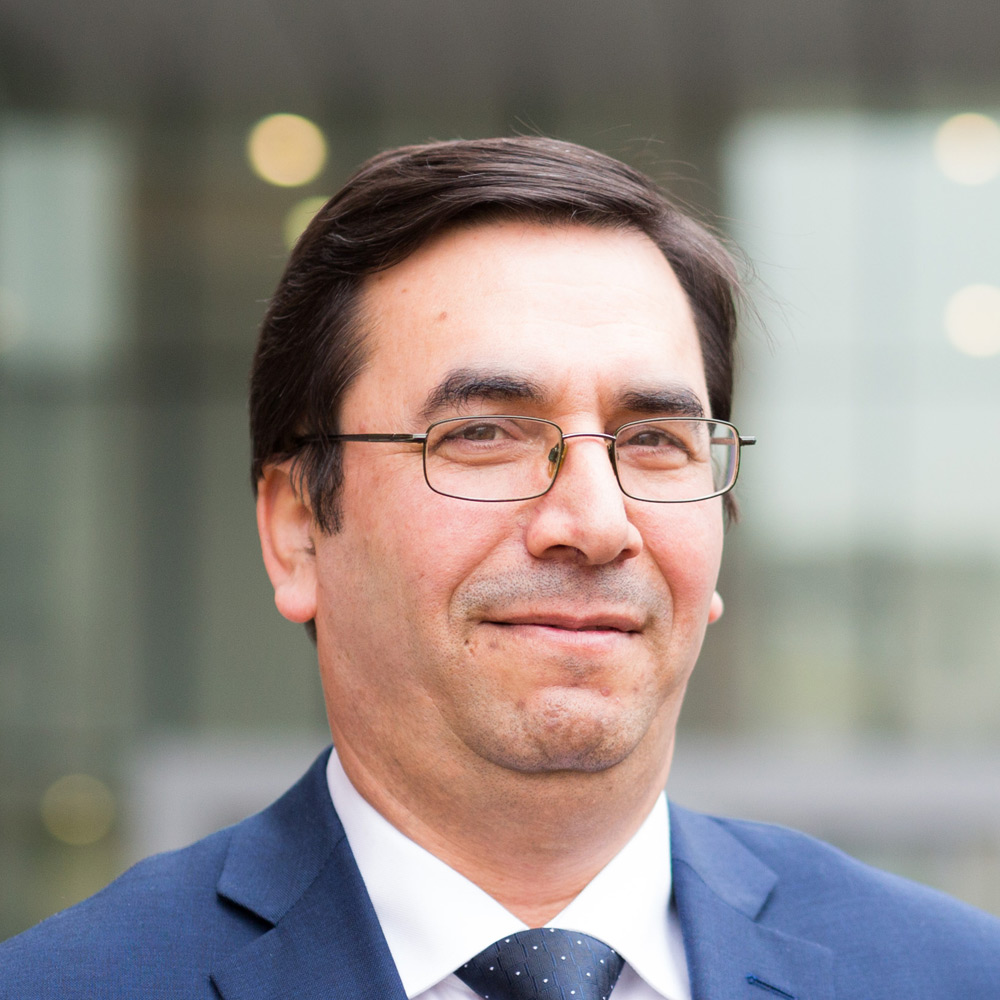
Børge Rokseth is an Associate Professor at the Department of Engineering Cybernetics , Norwegian University of Science and Technology (NTNU). His work focuses on integrating advanced methodologies for safety and risk control in autonomous maritime systems. He has held academic positions since at least 2014, with a consistent record of research collaboration and publication. Research Areas: Maritime risk analysis, autonomous ship systems, safety engineering, dynamic positioning systems, systems-theoretic process analysis (STPA) Key Publications: 15 most recent articles cover topics like trajectory prediction for autonomous vessels, hybrid power systems safety, machine learning in risk assessment, and dynamic positioning system reliability His publications (2014-2025) emphasize safety-critical systems in marine environments. Common themes include: Application of STPA for hazard analysis in autonomous shipping Development of risk-informed control systems Integration of machine learning with engineering risk assessment Comparative studies of different ship autonomy levels As a supervisor, Rokseth has guided master's students including Ane Joramo Stokke and Ludvig Vik Løite. His work has been presented at international conferences such as the European STAMP Workshop, International Conference on Conceptual Modeling, and the International Seminar on Safety and Security of Autonomous Vessels.
Atrisha Sarkar is an Assistant Professor in the Department of Electrical and Computer Engineering at Western University , Canada, and heads the Humans and Autonomous Agents Lab . She is also a faculty member of the Rotman Institute of Philosophy and a Faculty Affiliate at the Schwartz Reisman Institute for Technology and Society . Her research integrates empirical and behavioral game theory with software engineering to design human-centric AI systems that prioritize safety and societal well-being. Education: Atrisha holds a PhD and has previously served as a postdoctoral fellow at the Schwartz Reisman Institute for Technology and Society at the University of Toronto under the supervision of Prof. Gillian Hadfield. Research Focus: Her work centers on human-centric multiagent systems , combining methods from: Behavioral and empirical game theory Software engineering Human-AI and human-robot interaction AI safety and reliability She applies these to domains such as autonomous driving, cooperative AI, and social media dynamics, aiming to ensure AI systems align with human values and societal norms. Publications and Impact: Atrisha has published extensively in top-tier venues including AAAI , AAMAS , ICRA , NeurIPS , and EC . Her work spans from theoretical models of strategic behavior to practical frameworks for validating autonomous systems, with a strong emphasis on real-world applicability. Labs and Teams: She leads the Humans and Autonomous Agents Lab at Western University, where her team focuses on designing AI agents that can cooperate effectively with humans in complex, dynamic environments.
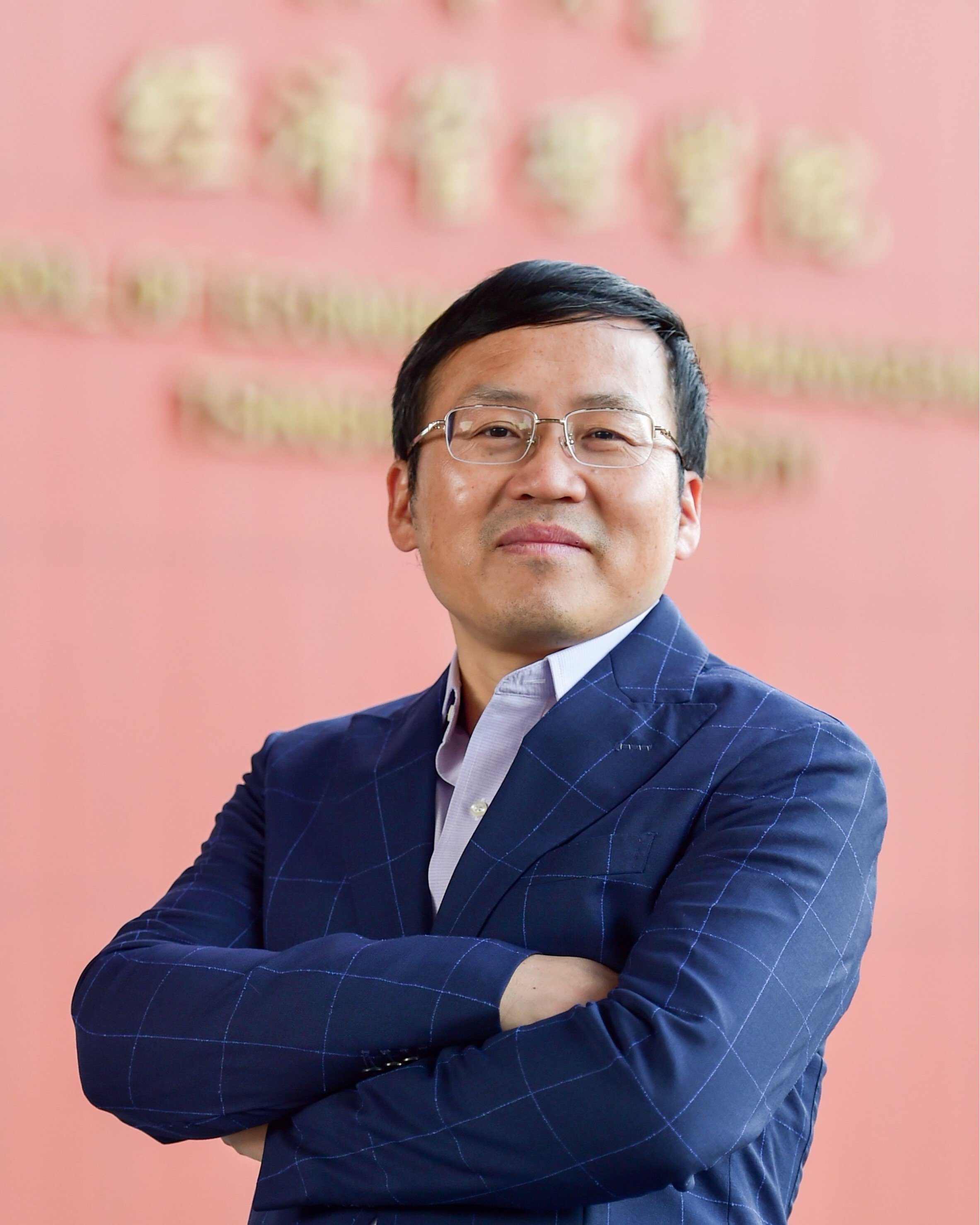
Li Jizhen serves as Professor in the Department of Innovation, Entrepreneurship and Strategy at Tsinghua University's School of Economics and Management, where he has held academic positions since 2002. He concurrently serves as Deputy Director of the Center for Technology Innovation Research and was an International Faculty Fellow at MIT Sloan School of Management in Spring 2006, demonstrating his international academic engagement. His educational foundation includes a 1997 Double Bachelor's Degree from Tsinghua University spanning Automotive Engineering and Economics and Management, followed by a 2002 PhD and Master of Management from the same institution. This dual technical-management background informs his interdisciplinary research approach. Professor Li's research centers on digital transformation, technological innovation systems, and science-technology policy with particular focus on China's innovation ecosystem. His work examines corporate innovation strategies, venture evaluation mechanisms, and the interplay between institutional frameworks and entrepreneurial activity. He investigates how firms leverage both internal capabilities and external networks to drive innovation in emerging economies. His publication record in premier journals including Administrative Science Quarterly , Management Science , and Strategic Management Journal reveals consistent focus on innovation dynamics, entrepreneurial finance, and China-specific institutional contexts. Recent work analyzes AI market positioning, fraud-innovation relationships, and international open innovation by latecomer firms, showing evolving research trajectories toward digital transformation and global innovation networks. As Deputy Director of Tsinghua's Center for Technology Innovation Research, Professor Li leads institutional initiatives bridging academic research with practical innovation policy development. His work informs national technology strategies while maintaining strong empirical grounding in Chinese firm-level data and institutional contexts.
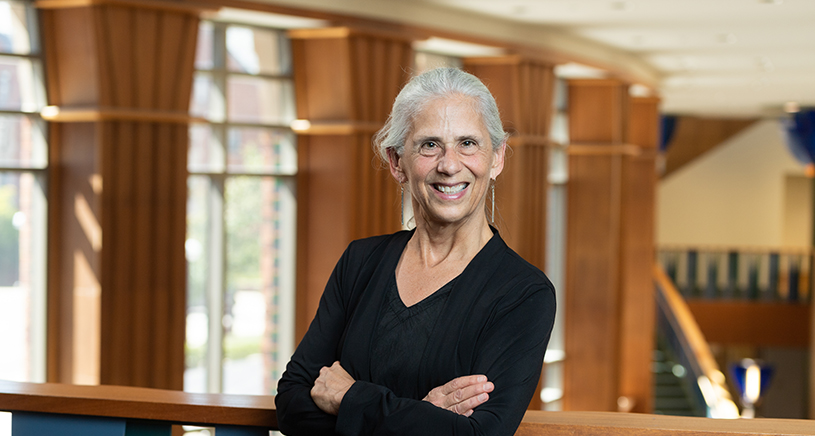
Amy J. Schulz is the University Diversity and Social Transformation Professor at the University of Michigan School of Public Health , specializing in the Department of Health Behavior and Health Equity . She is a sociologist and leading scholar in community-based participatory research (CBPR) , focusing on how social and physical environmental exposures contribute to racial and socioeconomic health inequities . Her current work with the Community Action to Promote Healthy Environments (CAPHE) partnership addresses air pollution disparities in the Detroit Metropolitan Area through policy intervention and community science initiatives. Education PhD, University of Michigan (1994) MSW, University of Michigan (1990) MPH, University of Michigan (1981) Her research examines environmental racism , health impact assessments , and CBPR methodologies . She has conducted policy evaluations for the Gordie Howe International Bridge and state energy plans, while also linking policing, clean water access, and COVID-19 disparities to systemic racism. Recent publications analyze cumulative environmental risks , neighborhood poverty effects , and policy advocacy tools for health equity. She teaches graduate courses such as Environmental Health Promotion and Community-Based Participatory Research , emphasizing interventions for vulnerable populations. Her collaborative work spans public health practice , community science , and urban health disparities , with funding for projects in air quality monitoring , student environmental advocacy , and policy translation . She maintains active partnerships with community organizations in Detroit and has published extensively on the intersection of social determinants and physical environmental risks .
Kyle Chapman serves as Associate Professor and Department Chair of Humanities and Social Sciences at Oregon Institute of Technology, where he has strengthened the Population Health Management program since joining in 2016. His work bridges sociological theory with practical healthcare applications through teaching and community-engaged research. His educational background includes a Doctor of Philosophy in Sociology with specializations in Medical Sociology and Gerontology from the University of Kansas (2016), a Master of Arts in Sociology from Texas Tech University (2011), and dual Bachelor of Arts degrees in Sociology and Mass Communication from Texas Tech University (2008). Dr. Chapman's research investigates social determinants of health with emphasis on aging, chronic disease, and health disparities. His work examines how socioeconomic factors shape physical and mental health outcomes across community and population levels, particularly focusing on rural healthcare challenges in Oregon. Recent projects analyze wildfire smoke impacts on hospital capacity, mental health among first responders, and barriers to healthcare access for vulnerable populations. His publication record reveals a consistent trajectory from foundational sociological studies toward applied public health research, with increasing focus on environmental health crises since 2020. The 2023-2025 articles demonstrate sophisticated integration of case-crossover methodologies with state health data to address Oregon's unique wildfire-related health challenges, while maintaining core interests in health behaviors and chronic disease management. As an educator, Dr. Chapman teaches medical sociology, research methods, and social inequality courses. His curriculum development work, including the 'Integrated Sociology Programs' framework, reflects commitment to preparing students for health sector careers through the Population Health Management program. Outside academic duties, he explores Pacific Northwest natural attractions with his family.
Bruce Jacob is a Keystone Professor and Full Professor in the Department of Electrical & Computer Engineering at the University of Maryland College Park's College of Engineering. His research primarily focuses on memory systems design and exascale computing architectures, with significant contributions to DRAM simulation and high-performance computing systems. Dr. Jacob received his A.B. in Mathematics from Harvard University (1988), followed by his M.S. and Ph.D. in Computer Science & Engineering from the University of Michigan (1995 and 1997 respectively). His research interests include memory systems design, exascale computing architectures, embedded systems, circuit integrity, and algorithmic composition. His recent publications demonstrate a strong focus on next-generation memory technologies, particularly ReRAM and advanced DRAM architectures. His work bridges the gap between theoretical modeling and practical implementation, with significant contributions to memory system simulation through projects like DRAMsim. His research shows a consistent trajectory toward solving the memory bottleneck problem in high-performance computing systems. Named Fellow, IEEE (2021) Multiple University of Maryland Research Leader awards (2006, 2010, 2012, 2016, 2017) Clark School of Engineering Keystone Professor (2006) National Science Foundation CAREER Award (2000) University of Maryland Award for Teaching Excellence (2004) Dr. Jacob has led significant research initiatives including the University of Maryland Exascale Systems Research and Memory-Systems Research groups. He has developed important computational artifacts such as DRAMsim (a public-domain DRAM-system simulator) and BioBench (a set of bioinformatics workloads). His work has influenced both academic research and industry practices in memory system design.
Niklas Rorsman is a Research Professor at the Microwave Electronics group, part of the Department of Microtechnology and Nanoscience at Chalmers University of Technology . His work focuses on advanced semiconductor devices, particularly gallium nitride (GaN) and silicon carbide (SiC) high-electron-mobility transistors (HEMTs) for microwave and cryogenic applications. Expertise : Semiconductor device physics, microwave electronics, cryogenic transistor characterization Key Technologies : GaN HEMTs, SiC MESFETs, graphene FETs Rorsman's research investigates trapping effects, thermal management, and material optimization in GaN/SiC devices. Recent studies explore field plates for cryogenic stability, recessed ohmic contacts, and high-κ dielectric interfaces. His publications demonstrate a focus on improving device linearity, noise performance, and reliability through structural and process innovations. Selected trends in his work include: Cryogenic GaN HEMTs with superconducting Nb gates Buffer-free AlGaN/GaN heterostructures for high breakdown voltage Graphene integration for millimeter-wave communication systems Advanced SiNx passivation and gate stack engineering Contact: niklas.rorsman@chalmers.se
Helmut Meiss serves as an Assistant Professor at the University of Lorraine's University Institute of Technology (IUT) Nancy-Brabois, where he directs the DUT Biology with Agronomy option study program. His research focuses on conservation biological control of crop pests and weeds through natural enemies within innovative cropping systems, bridging ecological science and agricultural practice. Dr. Meiss's work emphasizes biological pest control and weed management in sustainable agriculture, investigating how landscape features, crop rotations, and biodiversity enhance ecosystem services. His research integrates field studies with predictive modeling—particularly machine learning—to develop practical tools for farmers, as evidenced by his leadership in the ARENA project which establishes observation networks for natural pest regulation. Analysis of his 15 most recent publications reveals consistent themes in cereal aphid regulation, weed dynamics in cropping systems, and data-driven approaches to agri-environmental indicators. His work demonstrates a strong trajectory toward generic predictive models for pest control and the integration of biocontrol into farm-level decision-making, with increasing emphasis on ecosystem service quantification since 2017. Dr. Meiss co-supervises PhD candidate Eric STELL on predicting conservation biological pest control in cereal crop mixtures. His involvement in the ARENA project indicates collaborative grant-funded research, though specific funding sources aren't detailed in available materials. He actively contributes to farmer advisory systems through biodiversity indicators and crop management tools. As part of a multidisciplinary research group organized around three thematic axes, he participates in the ARENA network for pest biocontrol assessment and engages in public outreach including school workshops, biodiversity exhibitions, and science-society initiatives like the 'Grand Nancy Terre de pollinisateurs' project.
Mahima Gupta is an Assistant Professor in the Department of Electrical & Computer Engineering at the University of Wisconsin-Madison. Her research focuses on power electronics, motor drives, and power converter systems with applications in renewable energy integration and grid infrastructure. Her educational background includes: PhD in Electrical Engineering, University of Wisconsin-Madison (2019) MS in Electrical Engineering, University of Wisconsin-Madison (2015) BE in Electrical Engineering, Birla Institute of Technology & Science, Pilani (2011) Dr. Gupta's research spans multiple areas of power electronics with particular emphasis on Power Electronics Conversion & Control , Modular Multi-level Power Converters , and Motor Drive Systems . Her work addresses critical challenges in the application of Wide Band-gap Semiconductor Devices and mitigating Electromagnetic Interference Issues in modern power electronic circuits. Her research has significant implications for renewable energy integration, electric transportation, and next-generation power grid infrastructure, with a strong focus on efficiency, reliability, and power density optimization. Her recent publications demonstrate a cohesive research trajectory focused on high-performance power conversion systems, with particular attention to modular architectures, fault tolerance mechanisms, and innovative topologies that minimize energy storage requirements while maintaining high performance. Her work spans from fundamental converter designs to application-specific implementations for motor drives, wireless power transfer, and grid integration, showing increasing sophistication and real-world relevance. Dr. Gupta has received several prestigious awards including: Gerald Holdridge Teaching Excellence Award from University of Wisconsin-Madison (2018) Austrian Marshall Plan Scholar for Visiting Scholar position at Technische Universit¨at Graz, Austria (2016) Edward R. Felber Power Fellow from University of Wisconsin-Madison (2016) As a dedicated educator, Dr. Gupta advises graduate students through courses including ECE 699 (Advanced Independent Study), ECE 790 (Master's Research), and ECE 890 (Pre-Dissertator's Research). Her teaching portfolio also includes specialized courses like ECE 512 (Power Electronics Laboratory), demonstrating her commitment to both theoretical and practical aspects of power electronics education. Her research program has attracted significant scholarly attention, as evidenced by her productive publication record in top-tier power electronics conferences and journals.
Nikos Hardavellas is a Professor of Computer Science and Electrical and Computer Engineering at Northwestern University, affiliated with the McCormick School of Engineering. He leads the Parallel Architecture Group at Northwestern (PARAG@N), focusing on energy-efficient parallel computing and quantum systems. His research spans quantum computing systems, fault-tolerant quantum error management, memory-centric architectures, and photonics-based interconnects. Education: Ph.D. Computer Science, Carnegie Mellon University (2009) M.S. Computer Science, Carnegie Mellon University (2006) M.S. Computer Science, University of Rochester (1997) B.S. Computer Science, University of Crete (1995) Research Interests: Quantum system software stack and error mitigation Memory-centric computing and programmable memory systems Energy-efficient architectures and dark silicon Photonics and optical interconnects Parallel systems and compiler-hardware co-design Key Contributions: Developed SupermarQ, a scalable quantum benchmark suite Pioneered optical cache hierarchies (Pho$) and energy-proportional photonic networks Advanced compiler-driven virtual memory systems (CARAT) and MPI autotuning (ACCLAiM) Awards & Honors: NSF CAREER Award (2015) Future CRA Leader (2024) Best Paper Awards at HPCA (2022) and ISLPED (2021 nomination) Test-of-Time Award at EDBT (2019) Grants & Service: Secured $4.8M in research funding from NSF, industry partners, and university initiatives Executive Committee member of Northwestern’s INQUIRE Institute for Quantum Research General Co-chair of IEEE/ACM MICRO 2022 Extensive service on departmental committees and thesis advisory boards Labs & Teams: Directs PARAG@N, collaborating on quantum computing, photonics, and energy-efficient architectures. Engages with industry partners like AMD, Intel, and Synopsys.
Hesham ElSawy is an Assistant Professor in the Department of Systems and Networks at the School of Computing, Faculty of Arts and Science, Queen's University. His work focuses on advancing next-generation wireless systems, with particular emphasis on federated learning, IoT networks, and edge computing. He is affiliated with Ingenuity Labs Research Institute, Queen's University, and contributes to interdisciplinary research at the intersection of communication theory and network optimization. His research interests span stochastic geometry modeling, energy-efficient protocols for massive IoT deployments, and resilient federated learning frameworks. ElSawy explores novel paradigms in aerial wireless networks, UAV-assisted communication, and network security through percolation theory applications. Recent publications highlight his contributions to system-level analysis of parallel computing at extreme edges, UAV-enabled federated learning architectures, and energy-as-a-service models for RF-powered networks. His work emphasizes practical implementations and large-scale network validation. ElSawy holds no listed awards or grants in the provided text but maintains active collaborations through Ingenuity Labs. His research addresses critical challenges in 5G/6G networks, including latency optimization, resource allocation, and heterogeneous network integration.
Alnoor Ebrahim is the Thomas Schmidheiny Professor of International Business at The Fletcher School and Tisch College of Civic Life, Tufts University. He holds a PhD in Environmental Planning & Management from Stanford University and is a leading scholar in social impact measurement, nonprofit governance, and leadership for systemic change. PhD, Environmental Planning & Management, Stanford University (1999) MS, Civil/Environmental Engineering, Stanford University (1994) BSc, Civil/Environmental Engineering, Massachusetts Institute of Technology (1991) His research focuses on accountability mechanisms within nonprofits, strategic leadership for social change, and the governance of hybrid organizations . He explores how businesses, NGOs, and public agencies can balance competing stakeholder demands while addressing system-level challenges like global poverty. Professor Ebrahim’s publications highlight lean data methodologies , NGO governance , and social performance frameworks . His work spans books, journal articles, and policy reports with a consistent emphasis on performance metrics and organizational accountability across sectors. Scientific Awards & Recognitions Excellence in Sustainable Finance Education (2022) Terry McAdam Book Award (2020) James L. Paddock Teaching Award (2018) Pantheon Recognition (2017) Outstanding Book Award (2004) Carlo Masini Award for Innovative Scholarship (runner-up, 2010) He has served on advisory boards for the Stanford Social Innovation Review , the World Bank’s GPSA , and the G7 Social Impact Investment Taskforce . His teaching includes executive programs at Fletcher, Harvard, and Georgetown, with prior roles at Harvard Business School and Virginia Tech.
Dr. Jason D. Bakos is a Professor in the Department of Computer Science and Engineering at the University of South Carolina's Molinaroli College of Engineering and Computing. His research focuses on high-performance domain-specific architectures, including reconfigurable computing, embedded systems, and machine learning acceleration. He has held academic positions since 2005, progressing from Assistant to Associate Professor before becoming a full Professor in 2017. Education : Ph.D., Computer Science, University of Pittsburgh (2005) B.S., Computer Science, Youngstown State University (1999) Research Interests : Dr. Bakos specializes in computer architecture at multiple levels (circuit, micro-architectural, and system) with a focus on VLSI design, reconfigurable computing, high-performance computing, and applications in embedded systems. His recent work includes FPGA acceleration of machine learning algorithms, structural health monitoring systems, and real-time signal processing. Awards : 2018 Teaching Award in Computer Science and Engineering 2009 NSF CAREER Award Multiple design competition awards for innovative chip and circuit designs Grants & Funding : He leads and co-leads projects funded by NSF, Savannah River National Laboratory, and industry partners like Texas Instruments. Recent grants focus on edge computing for real-time machine learning, FPGA-based accelerators, and corrosion analysis of nuclear materials. Labs & Teams : His research group collaborates on projects involving embedded systems, FPGA design, and interdisciplinary applications in structural engineering and bioinformatics. He advises a dynamic team of graduate students and post-doctoral researchers.
Patrick Emmenegger is a Professor of Comparative Political Economy and Public Policy at the University of St. Gallen's School of Economics and Political Science (SEPS-HSG). He chairs the PhD Program in International Affairs and Political Economy and serves on the Executive Committee of the Council for European Studies. His research focuses on direct democracy, electoral systems, vocational education policy, and the political economy of skill formation. He has held roles in federal vocational education commissions and served as editor of the Socio-Economic Review. His academic interests include the interplay between economic policy and political institutions, particularly in Switzerland and Europe. Recent work examines voter behavior in direct democratic contexts, electoral district design, and the adaptation of skill formation systems to the knowledge economy. He co-authored a forthcoming book on electoral system reforms and contributed to policy reports on industrial policy and education reforms. Key research outputs include analyses of higher education as industrial policy, municipality-level voting patterns in Switzerland, and partisan strategies in electoral districting. His work bridges comparative political economy with methodological rigor, addressing topics like taxation politics, labor market governance, and the impact of war on state capacity. Advising and grants include leadership of the PhD program and contributions to federal education policy initiatives. His research team explores themes such as gender segregation in occupations and the role of skill requirements in labor markets. He maintains strong links with European policy networks through his involvement in the Council for European Studies.
Professor Mehmet Demirbag serves as Deputy Dean of Essex Business School and Professor of International Business at the University of Essex. Previously, he held significant leadership roles including Vice Dean (Internationalisation) and Head of Department of Strategy and Organisation at Strathclyde Business School, and Chair in International Business at the University of Sheffield Management School. His extensive academic career spans over a decade in UK higher education institutions with specialized expertise in international business strategy. Dr. Demirbag completed his Master's degree in Business Analysis at the University of Leicester and earned his PhD at the University of Bradford Management School. His educational background established the foundation for his research focus on international business phenomena, particularly regarding emerging economies and multinational enterprises. His research interests center around internationalisation of R&D activities, offshore R&D, FDI location choice, product and regional diversification strategies of MNEs, multinationals from emerging countries, international mergers and acquisitions, and reverse knowledge transfer by emerging country MNEs. These interconnected research streams examine how firms navigate global markets, particularly focusing on the strategic behavior of emerging market multinationals and their interactions with developed economies. Analysis of his recent publications reveals consistent thematic patterns across international business, strategic management, and human resource management domains. His work demonstrates particular emphasis on emerging market multinationals, cross-border knowledge transfer mechanisms, international strategic decision-making in uncertain environments, and the institutional contexts shaping multinational enterprise behavior. The interdisciplinary nature of his research bridges theoretical frameworks from international business, strategic management, and organizational studies. Professor Demirbag maintains active editorial roles as consulting editor of the Journal of International Management and advisory editor of Eurasian Business Review. He has co-guest edited special issues for numerous prestigious journals including British Journal of Management, Human Resource Management, Journal of World Business, and International Business Review, among others. His editorial contributions span research areas related to emerging market MNEs, MNEs in emerging markets, transitional periphery contexts, and human resource management in uncertain environments. As an educator, Professor Demirbag teaches International Business and International Strategic Management at undergraduate, postgraduate, and executive levels. His supervision portfolio includes doctoral candidates such as Selman Alisan Gemuhluoglu and previously guided Koushik Das Sarma to completion of their PhD in Business Administration. His research has received funding from various sources including the European Commission, and his work on FDI and SMEs has contributed to REF impact cases at both the University of Bradford and the University of Sheffield.