Yaşar Fatih AKBAŞ is an Associate Professor at Kafkas University, Faculty of Theology, Department of Basic Islamic Sciences. He specializes in Arabic Language and Rhetoric, focusing on grammatical structures, semantic analysis, and classical Arabic texts. Education: PhD in Fundamental Islamic Sciences, Atatürk University (2016-2020) Master's in Arabic Language and Rhetoric, Atatürk University (2014-2016) BA in Theology, Atatürk University (1997-2002) Research Interests: Arabic Grammar Rhetoric and Stylistics Semantics and Syntax Quranic Exegesis Historical Linguistics Scientific Contributions: He has published 11 articles, focusing on topics like particle analysis, syntactic flexibility, and stylistic features in classical Arabic texts. His work spans journals such as Şırnak University Theology Faculty Journal and Sakarya University Theology Faculty Journal. Awards: Aylıkla Ödüllendirme (2010) Academic Collaborations: He has co-authored works with Yakup Kızılkaya (2024) and advised Master's theses for Adem Ağbaba (2025) and Fırat Çeledir (2023).
Prof. Dr. Gisela Zifonun is a retired University Professor of German Linguistics at the University of Mannheim and former Head of the Grammar Department at the Institut für Deutsche Sprache (IDS) until July 2011. She holds a doctorate (1971) and habilitation (1994) in German Linguistics. Her career includes roles as a scientific employee at the IDS (1973–1995), Head of the Grammar Department (1986–1995), and professorships at the Free University of Berlin (1995–1998) and the University of Mannheim (1998–2011). Her research focuses on grammar theory, German syntax/semantics/morphology, language typology, and comparative linguistics. Key projects include the Grammar of German in European Comparison (GDE-N) and the EuroGr@mm initiative. She has authored/co-authored over 130 works, including monographs and edited volumes on German linguistics. Notable publications include Das Deutsche als europäische Sprache (2021) and Grammatik des Deutschen im europäischen Vergleich (2017). Her work emphasizes cross-linguistic analysis and corpus-driven research. Research interests span syntax, morphology, and typological comparisons across German, Romance, and Slavic languages. Recent contributions address gender-inclusive language reform and corpus-based studies. She has supervised numerous academic projects and serves as a key figure in German linguistic infrastructure, including IDS initiatives. No explicit awards are listed, but her extensive bibliography reflects significant scholarly impact. Professional roles include managing the IDS’s Grammar Department and coordinating international collaborations. Her work bridges theoretical linguistics with applied research, contributing to both academic discourse and language policy discussions.
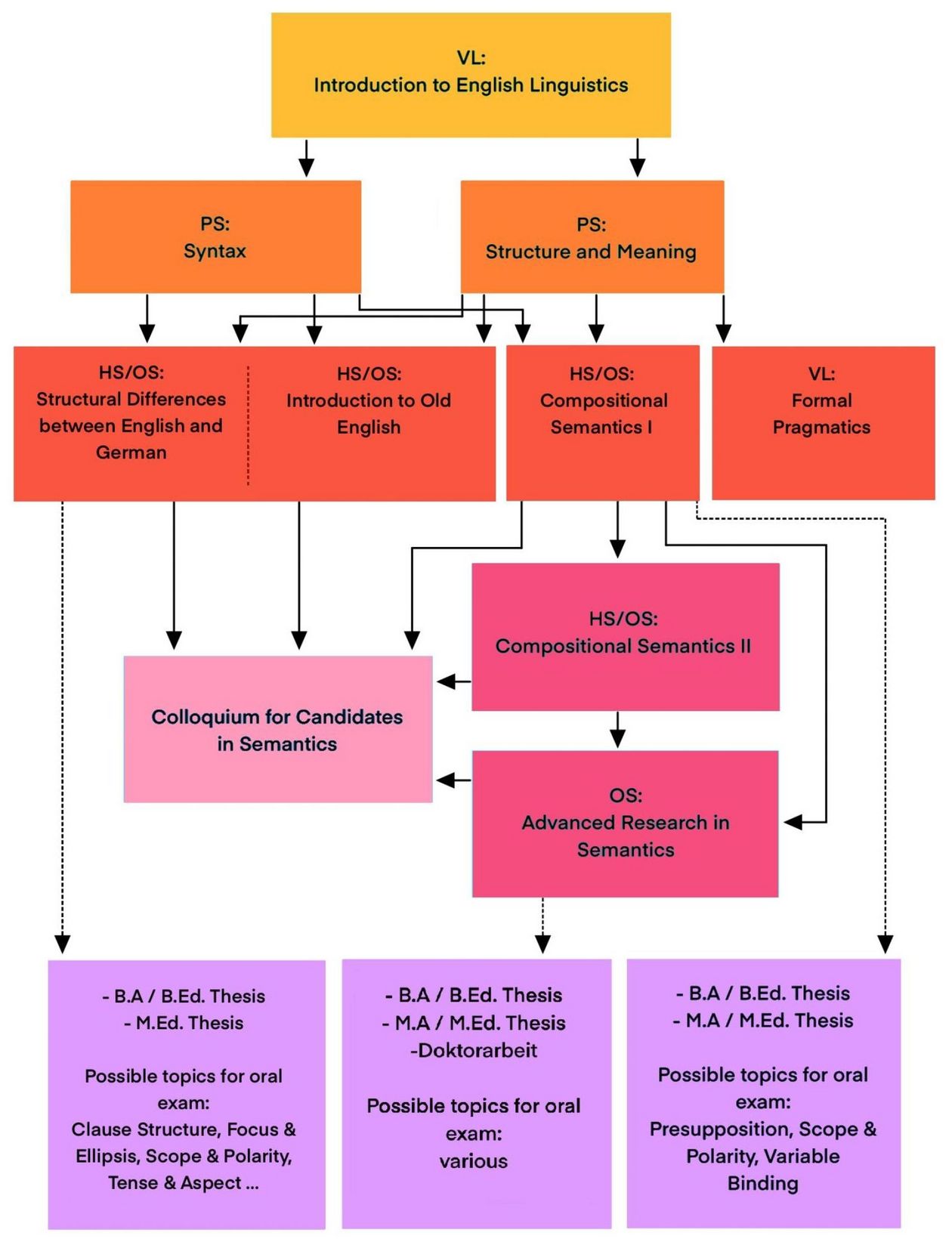
Prof. Dr. Sigrid Beck holds the Chair of Descriptive and Theoretical Linguistics at the Department of English, University of Tübingen. She is affiliated with the Faculty of Humanities and specializes in semantics, focusing on questions, focus structures, plurals, comparison constructions, and decomposition adverbs. Her research integrates crosslinguistic, diachronic, and acquisition data to inform semantic theory. Education: PhD (1996) and Habilitation (2003), University of Tübingen and Goethe University Frankfurt Key positions: Held roles at MIT, University of Massachusetts Amherst, University of Connecticut, and University of Potsdam Publications include Structure and Meaning: Contrasting English and German Grammar (2014) and foundational lecture notes on tense and modality (2011). She teaches semantics and syntax within the Department's structured program. Office hours are Tuesdays 4-5pm via secretary appointment.
Mai Ha Vu is an Assistant Professor at the University of Toronto Mississauga , split between the Department of Language Studies and the Department of Mathematics, Computer Science, and Statistics . Her work bridges theoretical linguistics, computational methods, and biological data modeling. Ph.D. in Linguistics, University of Delaware (2020) M.A. in Linguistics, University of Delaware (2014) B.A. in Psychology and Linguistics, Grinnell College (2013) Research focuses on applying formal language theory to understand human language patterns and train biologically reliable language models . Recent work includes antibody language modeling (Nature Computational Sciences 2022) and syntax-prosody mapping via logical transductions (SIGMORPHON 2022). Key research trends in publications: interdisciplinary applications of computational linguistics to immunology, psycholinguistic modeling of neural language models, and formal syntactic analysis of negation and wh-questions across languages.
Yoshiko Matsumoto is the Yamato Ichihashi Professor in Japanese History and Civilization and Professor of East Asian Languages and Cultures at Stanford University, with a courtesy appointment in Linguistics. She has been a faculty member at Stanford since 1992, progressing from Assistant Professor to her current distinguished position. Matsumoto also serves as coordinator of the Japanese Language Program and has held significant administrative roles including Chair of the Department of Asian Languages (2003-2005) and Interim Chair of the Department of East Asian Languages and Cultures (2016). Matsumoto earned her Ph.D. in Linguistics from the University of California, Berkeley (1989), following M.A. degrees in Linguistics from UC Berkeley and General and Applied Linguistics from the University of Tsukuba, an M.I.A. in American Studies from the University of Tsukuba, and a B.A. in English Language & Literature from Japan Women's University. Professor Matsumoto's research focuses on linguistic pragmatics from cross-linguistic perspectives, with particular expertise in Japanese language. Her work spans structural and sociocultural aspects of language in use, including noun-modifying clause constructions, honorifics, discourse markers, and the intersection of language with gender and aging. She has pioneered research on conversational narratives of older adults, examining how ordinary framing strategies help individuals navigate difficult experiences. Her current projects explore intergenerational communication through haiku, communicative abilities of people with dementia, and noun-modifying constructions across Eurasian languages. Matsumoto's scholarship consistently bridges theoretical linguistics with practical applications for understanding human communication in diverse social contexts. Matsumoto's recent publications reveal a growing focus on practical applications of linguistic research for social benefit, particularly in intergenerational communication and dementia care. Her work increasingly integrates arts-based approaches, especially haiku poetry, to bridge generational divides and enhance communication with elderly populations. The research shows a consistent trajectory from theoretical linguistic frameworks toward applied, human-centered language studies that address real-world challenges in aging societies, with particular attention to how ordinary language practices help individuals navigate life transitions and difficult experiences. Dean's Award for Distinguished Teaching, School of Humanities and Sciences, Stanford University (2000) Richard E. Guggenhime Faculty Scholar, Stanford University (2000-2003) Violet Andrews Whittier Fellow, Stanford Humanities Center (2019-2020) Faculty Research Fellow, Michelle R. Clayman Institute for Gender Research (2014-2015) Research Fellow, Japan Foundation (2002) Internal Fellow, Stanford Humanities Center (2005-2006) Presidential Fund for Innovation in the Humanities, Stanford University (2009-2011) Professor Matsumoto has mentored numerous students through her teaching in Japanese language and linguistics courses, including specialized offerings on language and aging, points in Japanese grammar, and haiku-based communication. Her research has been supported by prestigious grants from the National Endowment for the Humanities, the Japan Foundation, and Stanford's Presidential Fund for Innovation in the Humanities. She has served on multiple editorial boards including the Journal of Pragmatics since 1992, demonstrating long-standing leadership in her field. Matsumoto has also advised students through individual studies and thesis projects in East Asian Languages and Cultures. Matsumoto leads several collaborative research initiatives including the 'Sharing Conversations' project which examines intergenerational communication through haiku, and research on communicative abilities of people with dementia. Her work often involves interdisciplinary teams spanning linguistics, gerontology, and creative arts, with fieldwork conducted in both Japan and the United States. The 'Noun-Modifying Constructions in Languages of Eurasia' project represents a major international collaboration examining linguistic structures across cultural boundaries. She also directs the 'Language, Old Age and Gender in Japan' project supported by the Stanford University/Japan Foundation, and the 'Difficult Conversations Continue: Memories of the 3.11 Disaster and Bereavement Narratives' project focused on post-disaster communication.
Carita Paradis is a Professor Emerita at Lund University's Centre for Languages and Literature, specializing in English Linguistics. She holds a PhD from Lund University (1997) and has held leadership roles including Chair of the Swedish Research Council's Linguistics panel (2010–2015). She coordinates the Language, Cognition and Discourse@Lund (LCD@L) research group, focusing on discourse meaning, language acquisition, and sociocultural variation. Her research spans cognitive linguistics, discourse analysis, semantics, and sensory language. She has authored/co-authored over 100 refereed publications, 5 books, and edited 10 journal volumes. Awards include membership in Academia Europaea (2016) and leadership roles in Scandinavian linguistic associations. She has supervised 14 PhD students and 8 postdocs, taught at all academic levels, and participated in numerous national/international research projects. Her editorial roles include serving on Cognitive Semantics, Languages, and Human Cognitive Processing series.
Prof. dr. Norbert Corver is a Professor of Dutch Linguistics at Utrecht University , affiliated with the Department of Languages, Literature and Communication and the Institute for Language Sciences . He chairs the Dutch Linguistics division and leads the Mind your Manner Adverbials! (MiMA) project funded by an NWO Open Competition grant (2021-2025). He was a Visiting Professor at the University of Connecticut (2019) and serves as editor of Studies in Generative Grammar . Education: PhD in Linguistics (1990, Tilburg University) Research Interests: Syntax, generative grammar, language variation, syntactic interfaces, and affective language structures Key Projects: MiMA (syntax of adverbials), AThEME (multilingualism in Europe), Syntax of Idioms (NWO-FWO collaboration), DiDDD (Dutch noun phrase diversity) Scientific Recognition: Member of Academia Europaea Current Work focuses on the syntax of adverbials through comparative Germanic studies, while his broader research explores curse expressions, numerical expressions, and dialectal variation. He maintains active collaborations across Europe and contributes to digital resources like the Taalportaal (Dutch/Frisian grammar portal).
Dr. Brigitta Mittmann is a Senior Lecturer at the Department of English and American Studies, Friedrich-Alexander University Erlangen-Nuremberg (FAU), holding the Alexander von Humboldt Professorship for Language and Cognition. Her work focuses on lexicography, phraseology, and comparative analysis of spoken English varieties.
Prof. Gerhard Jäger holds the Chair of General Linguistics at the Faculty of Humanities, University of Tübingen . He serves as a Principal Investigator (PI) in the Clusters of Excellence Human Origins and Machine Learning for Science , and leads projects like Phylomilia (funded by Volkswagen Foundation) and CrossLingference (ERC Advanced Grant). His career spans multiple institutions, including Bielefeld University (2004-2009) and Stanford University (visiting scholar, 2004). Habilitation (2002) at Humboldt University Berlin with thesis on Anaphora and Type Logical Grammar PhD (1996) at Humboldt University Berlin on Dynamic Semantics His research bridges computational linguistics , phylogenetic analysis , and game theory , focusing on Bayesian models , language evolution , and cross-linguistic typology . Recent work explores phylogenetic inference from acoustic speech data and geographic influences on language trees . Key contributions include 15+ recent publications on topics spanning phylogenetic typology , cognate detection , and Bayesian language modeling . These works employ machine learning , statistical inference , and evolutionary game theory to analyze language change , typological variation , and linguistic stability . Honors include ERC Advanced Grant , Volkswagen Foundation funding , and DFG-Humanities Centre for Advanced Studies participation. He has taught courses in Computational Historical Linguistics , Phylogenetic Methods , and Bayesian Data Analysis across institutions like Tübingen, Bielefeld, and Stanford. He actively contributes to academic communities through workshop organization (e.g., Quantitative Theoretical Linguistics , Game Theory in Pragmatics ) and serves on the faculty council at Tübingen. His team collaborates with institutions like Max Planck Institute for Evolutionary Anthropology , University of Pennsylvania , and LMU Munich .
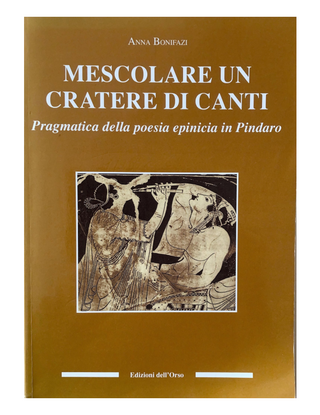
Prof. Anna Bonifazi holds a Professorship in Discourse Studies at the Department of Linguistics, University of Cologne. Her research spans Discourse Analysis, Pragmatics, Cognitive Linguistics, and Multimodal Communication with a focus on Ancient Greek Linguistics and Oral Epic traditions. She investigates phenomena like anaphoric cohesion in long texts, multimodal storytelling in film and oral traditions, and ancient Greek particles' discursive functions. Her work explores how multimodal elements (e.g., visual, musical, gestural) interact in communication, particularly analyzing films (e.g., mystery genres), ancient texts (e.g., Homeric epics), and South Slavic oral narratives. She examines cross-modal iconicity, viewpoint blending, and the cognitive underpinnings of discourse structures. Recent publications address topics like anaphoric strategies in crime stories and syntactic patterns in ancient Greek conversational frameworks. Prof. Bonifazi's research often bridges classical philology and modern cognitive theories, emphasizing embodied cognition and the interplay between language and other semiotic systems. She collaborates internationally on projects involving gesture analysis in storytelling and ancient papyrological studies. Her interdisciplinary work integrates linguistics with musicology, film studies, and cognitive science. Administratively, she oversees the Discourse Studies research group at Cologne and mentors assistants like Dr. Sandra Debreslioska and Madeleine Frings. Her lab focuses on multimodal discourse analysis using experimental and corpus-based methods.
Marc Authier is a Professor of French and Linguistics at The Pennsylvania State University's Department of French and Francophone Studies, part of the College of the Liberal Arts. His research focuses on syntactic theory, semantic theory, and Romance linguistics, with special emphasis on French constructs. He holds a Ph.D. from the University of Southern California. His professional bio highlights expertise in clausal structure, implicit arguments, polarity, quantification, and reference in Romance and Germanic languages. His work bridges theoretical linguistics with formal semantics and mathematical logic. Authier's recent publications (2014–2025) explore French syntax phenomena such as ellipsis, exceptives, mirative focus fronting, and quantification dynamics. He engages with debates on syntactic structures, phonological overt elements, and the syntax-semantics interface. No scientific awards are explicitly mentioned, though his extensive publication record suggests significant scholarly contributions. He has no listed advisees or grants in the provided data.
Dr Ares Llop Naya serves as an Affiliated Catalan Lecturer in the Department of Spanish and Portuguese within the Faculty of Modern and Medieval Languages and Linguistics at the University of Cambridge, while holding the Batista i Roca Fellowship at Fitzwilliam College. Her academic profile bridges theoretical linguistics with practical language pedagogy, focusing on Romance language structures and their educational applications. Her research centers on microsyntactic variation in Romance languages, particularly examining negation systems and syntactic phenomena in Catalan and Pyrenean varieties through both diachronic and synchronic lenses. She actively integrates theoretical insights into language teaching methodology, specializing in Catalan and Spanish pedagogy for both native and foreign language contexts. This dual focus manifests in her publications spanning syntactic theory, dialectology, and innovative language teaching approaches that address contemporary classroom challenges. Analysis of her publication trajectory reveals consistent thematic concentration on Romance microvariation, with recent work expanding into pedagogical applications. Her scholarship demonstrates methodological diversity—combining linguistic atlas data, corpus analysis, and classroom research—while maintaining core focus on Catalan syntax and its implications for language acquisition theory. The Pyrenean linguistic corridor remains a persistent geographical anchor across her diachronic and synchronic investigations. Dr Llop Naya's scholarly contributions have been recognized through prestigious awards: Joan Solà International Prize in Catalan Philology for her monograph on Romance negation systems Her teaching portfolio encompasses advanced courses in Romance linguistics, historical syntax, and sociolinguistics, with particular emphasis on translating theoretical frameworks into practical classroom resources. While specific grant funding details aren't publicly documented, her work consistently addresses real-world language education challenges through collaborative projects like the Microvariació.cat initiative. She contributes to the Microvariació.cat project—a digital repository documenting syntactic variation across Catalan dialects—which serves as both research infrastructure and pedagogical resource. This initiative exemplifies her commitment to creating practical applications from theoretical linguistic research while preserving endangered dialectal features of the Romance continuum.
Armin D. Baum is Professor of New Testament at the Freie Theologische Hochschule (FTH) Giessen (since 2010) and has additionally served as Prorector for Research since 2016. He is also Adjunct Professor in the doctoral programme of the Evangelical Theological Faculty, Leuven (Belgium) and was Visiting Professor at the Theological University Kampen (Netherlands) from 2012-2017. Education 1993 – Dr. theol., Theological University Kampen, Netherlands 1990 – Drs. theol., Theological University Kampen, Netherlands 1989 – M.Div., Freie Theologische Akademie, Giessen, Germany 1984 – Abitur, Elsa Brändström-Schule Hannover, Germany Research Focus Baum’s scholarship centres on the historical reliability of the New Testament writings , the formation of the biblical canon , and literary questions of authorship, anonymity and pseudepigraphy . A second strand of research engages contemporary ethical debates , producing detailed exegetical studies on homosexuality, women in ministry and sexual ethics. His methodological interests include the historical-critical method , the relationship between faith and historical scholarship, and the use of ancient historiographical conventions in the Gospels. Publications & Trends Across more than 120 scholarly works, Baum consistently explores how ancient literary and rhetorical conventions shape the New Testament text. Recent monographs such as Einleitung in das Neue Testament (2017) and edited volumes like Kernthemen neutestamentlicher Theologie (2022) consolidate decades of research on Gospel genre, Pauline authenticity, and canon theology. His 2024 articles extend this trajectory by addressing anonymity in Hebrews and the Catholic Epistles and by offering exegetical foundations for evangelical sexual ethics. Professional Memberships & Awards Society for New Testament Studies (SNTS) Society of Biblical Literature (SBL) Institute for Biblical Research (IBR) Tyndale Fellowship (TF) Rhein-Main-Exegesetreffen Coordinator, New Testament Study Group of the Arbeitskreis für evangelikale Theologie (AfeT) Advising & Research Leadership As Dean of Research (2012-2016) and Prorector for Research (2016-), Baum oversees doctoral training at FTH Giessen and mentors candidates in New Testament and canon studies. He has directed externally funded projects on the origins of the New Testament canon and regularly convenes colloquia for doctoral students and international guests.
Prof. dr. Enoch O. Aboh is Professor of Linguistics at the University of Amsterdam , Faculty of Humanities, Department of Literature and Linguistics. His office is located at Spuistraat 134, room 647, and he can be contacted at e.o.aboh@uva.nl . Research Interests: Prof. Aboh’s work lies at the intersection of formal syntax, language contact, and learnability. He investigates creole formation , multilingual ecologies , Gbe and Kwa syntax , cartographic approaches to clause structure , and sign language morphosyntax . A recurring theme is the emergence and evolution of grammatical systems under contact, approached through both descriptive fieldwork and formal theoretical modelling. His publications reveal a methodological breadth spanning experimental studies with kindergarteners on statistical learning, computational detection of loanwords, and fine-grained syntactic analyses of serial verb constructions, predication patterns, and determiner systems. This spectrum underscores his commitment to integrating cognitive, typological, and formal perspectives on language. Awards & Recognition: While no specific prizes are listed in the current material, Prof. Aboh’s extensive editorial and collaborative work—evidenced by numerous co-edited volumes and Festschrift contributions—attests to his standing in the field. Students & Grants: Details on PhD advisees or funded projects are not provided in the source text. Labs & Teams: No dedicated laboratory or research group names are mentioned, yet his affiliation with the Amsterdam Center for Language and Communication (ACLC) can be inferred from the institutional context.
Jane Bennett is the Andrew W. Mellon Professor in Humanities at Johns Hopkins University, holding joint appointments in the Departments of Comparative Thought and Literature (CTL) and Political Science. She serves as Director of Graduate Studies for CTL and is affiliated with the Krieger School of Arts & Sciences. Her research focuses on political theory, ecophilosophy, environmental humanities, and American romanticism. Bennett has held visiting professorships at institutions including Oxford University, Birkbeck Institute for the Humanities, and the Humanities Research Centre at Australian National University. She has edited major journals like Political Theory and co-founded Theory & Event . Her influential works include Vibrant Matter (2010), translated into eleven languages, and Influx & Efflux: Writing Up with Walt Whitman (2020). Her scholarly trajectory reflects interdisciplinary engagement with new materialism, environmental ethics, and the intersections of literature and politics. Recent work addresses Anthropocene discourse, material agency, and creative approaches to ecological thinking. Bennett’s academic leadership includes seminar direction at the School for Criticism and Theory (Cornell, 2013) and global collaborations through visiting roles. Her writing bridges theoretical rigor with accessible cultural critique, emphasizing the political dimensions of nonhuman forces. Award-winning author and editor, Bennett’s contributions span academic monographs, edited volumes, and public-facing essays. Her current projects explore ‘acting amidst’ ecological crises through concepts of entanglement and material vitality. Teaching and mentorship are central to her role at Johns Hopkins, where she guides graduate studies in comparative thought and literature.