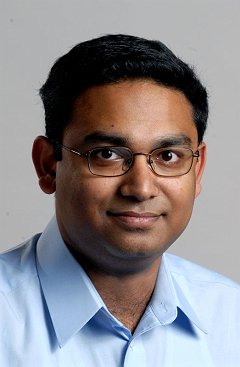
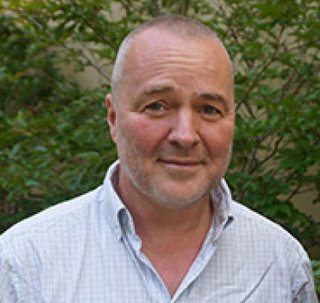
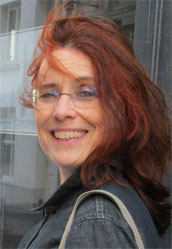
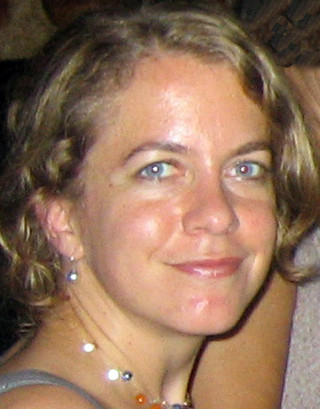
Dr. Sandhya Sundaresan is an Assistant Professor and Anandavalli & Dr. G. Swaminathan Endowed Research Professor in the Department of Linguistics at Stony Brook University. Her research focuses on syntax and its interfaces with morphology and semantics, particularly in Dravidian languages. Explores interaction between syntax and its interfaces Investigates dialectal/crosslinguistic variation for syntactic modeling Editor of Glossa: The Grammar of Agree(ment) and Reference Author of upcoming Oxford Handbook of Dravidian Languages chapter Her work includes publications under review and in preparation on phi-features, case theory, hyperraising, perspectival anaphora, and indexical shift, contributing to theoretical linguistics and syntactic universals. Scientific awards include: Anandavalli & Dr. G. Swaminathan Endowed Research Professorship
Laura Becker is an Assistant Professor at the Department of General Linguistics, University of Freiburg. Her research focuses on linguistic typology, quantitative methodology, and the role of coding efficiency in grammatical structures. She holds a PhD exploring article systems across languages and has contributed to cross-linguistic studies on syntax, morphology, and sociolinguistics. Her work emphasizes statistical rigor and computational tools, such as the glottospace R package for geospatial linguistic analysis. Recent projects include investigating phoneme inventories in Polynesian languages and socio-linguistic influences on conditional constructions. Publications highlight her expertise in morphosyntax, language contact, and corpus-based approaches. No scientific awards are explicitly mentioned in the provided materials. Dr. Becker has advised no recorded students in the available data and has not listed specific grants or labs. Her current research trends prioritize quantitative frameworks to address typological and evolutionary questions in linguistics.
Koushik Sen is a Professor in the Department of Electrical Engineering and Computer Sciences at the University of California, Berkeley. His research focuses on developing software tools and methodologies to enhance programmer productivity and software quality, with expertise in Software Engineering, Programming Languages, and Formal Methods. Education: B.Tech from Indian Institute of Technology, Kanpur M.S. and Ph.D. in Computer Science from University of Illinois at Urbana-Champaign Research Focus: Professor Sen pioneers automated testing techniques including concolic testing and DART (Directed Automated Random Testing). His work bridges formal methods with practical software development, emphasizing bug detection, program synthesis, and AI-driven software analysis tools. Recent innovations include machine learning approaches for code recommendation and fuzzing. Publication Trends: His recent publications (2019-2023) demonstrate strong emphasis on fuzzing techniques, program synthesis, and AI/ML applications in software engineering. Notable domains include smart contract security, automated testing, and developer tooling, with frequent collaborations in top-tier conferences. Awards and Honors: NSF CAREER Award (2008) Sloan Foundation Fellowship (2011) IFIP TC2 Manfred Paul Award (2010) Okawa Foundation Research Grant (2015) Multiple ACM SIGSOFT Distinguished Paper Awards UIUC Distinguished Alumni Educator Award (2014) Leadership: Active program committee member for premier conferences (PLDI, ICSE, ISSTA) and keynote speaker. His research is supported by NSF, Okawa Foundation, and Sloan Foundation.
Aron Hirsch is a researcher and Assistant Professor specializing in Semantics & Pragmatics , with affiliations including the ERC project Realizing Leibniz’s Dream: Child Languages as a Mirror of the Mind (Research Area 4). His work bridges theoretical linguistics and cognitive modeling. Current Role: Assistant Professor (since August 2023) Past Role: Researcher in the ERC project on child language and semantics Research Interests Aron Hirsch investigates the syntax-semantics interface, particularly focus particles like 'only,' type disambiguation, and logical strength in language. His research explores how cognitive constraints shape linguistic structures and how pragmatic principles interact with formal semantics. Recent Publications Aron’s publications (2022–2024) focus on semantic operators, cumulativity in questions, and register variation. He collaborates with leading scholars such as Bernhard Schwarz and Itai Bassi , contributing to major venues like Proceedings of Semantics and Linguistic Theory (SALT) and Sinn und Bedeutung . Labs & Collaborations He works within the ERC project Realizing Leibniz’s Dream , focusing on child language as a window into the mind, and collaborates with international teams at institutions including University of Rochester and Universidad Nacional Autónoma de México .
Dr. Mathis Richter is a Postdoctoral Researcher at the Institute of Neuroinformatics (INI), part of the Faculty of Computer Science at Ruhr University Bochum, Germany. He has been affiliated with the INI since 2008, progressing from Research Assistant to Research Associate, and currently serves as a Postdoctoral Researcher since July 2018. At the INI, he contributes to both the Embodied Cognition group and the Autonomous Robotics group, led by Prof. Dr. Gregor Schöner. Dr. Richter earned his Dr.-Ing. (Ph.D. equivalent) in Engineering from Ruhr-Universität Bochum between 2011 and 2018, following an M.Sc. and B.Sc. in Applied Computer Science from the same institution. His academic journey includes an exchange year at the University of Birmingham, UK. His research centers on higher cognition, specifically concept representation, how concepts combine to form complex mental scenes, and the neural mechanisms organizing cognitive operations in time. Using Dynamic Field Theory as his primary framework, he develops mathematical models explaining how neural populations represent objects and concepts. His work demonstrates how these cognitive models connect to sensory-motor systems, often implemented on robotic platforms to validate their autonomy and functionality. Analysis of Dr. Richter's publications reveals a consistent focus on neural dynamic modeling of cognitive processes, with particular emphasis on spatial relations, language grounding, and embodied cognition. His research trajectory shows increasing sophistication in modeling complex cognitive phenomena while maintaining strong connections to robotic implementations. As an educator, Dr. Richter has taught Lab courses in Autonomous Robotics across multiple terms since Winter 2015/2016 and has delivered Lectures in Computational Neuroscience: Neural Dynamics since Winter 2018/2019. His teaching directly reflects his research expertise in neural dynamics and cognitive systems. Dr. Richter actively participates in interdisciplinary research that bridges cognitive science, neuroscience, computer science, and robotics, contributing to the INI's mission of understanding how organisms generate behavior and cognition through interaction with their environments.
Prof. Matthias Schlesewsky is a Professor of Psychology at the University of South Australia. Previously, he held positions as Professor of General Linguistics at the University of Mainz and as a Junior Professor at the University of Marburg. With a unique background in chemistry and a PhD in linguistics, he specializes in interdisciplinary research at the intersection of science and humanities. His research focuses on the neurobiological foundations of language and how language processing evolves across the lifespan. Key interests include sentence comprehension mechanisms, cross-linguistic neurocognitive models, and the interplay between auditory processing and language evolution. Prof. Schlesewsky’s work integrates experimental methods like EEG and eye-tracking to explore real-time language processing. His contributions have advanced understanding of linguistic universals and neural mechanisms underlying language.
PD Dr. phil. Evangelia Kordoni is a research assistant at Humboldt University of Berlin's Faculty of Linguistics and Literary Studies, specifically within the Institute for English and American Studies. Her office is located at Dorotheenstraße 28, Room 3.04, and she can be contacted via email for appointments. She is an active researcher in computational linguistics with a focus on grammar engineering and natural language processing. Kordoni's research primarily explores: Computational linguistics frameworks including HPSG grammar implementation Multiword expression processing and machine translation systems Treebank development for languages including English, German and Bulgarian Lexical acquisition methods for large-scale grammars Semantic parsing and disambiguation techniques Her work bridges theoretical linguistics with practical NLP applications. Kordoni's publication record shows consistent focus on deep linguistic processing, with recent emphasis on: Multiword expression analysis in machine translation systems Parallel treebank development for multilingual applications Verb subcategorization and compound noun disambiguation Dynamic annotation methodologies for Wall Street Journal texts Cross-linguistic studies of Germanic syntax
Thomas Rainsford is a Lecturer at the University of Stuttgart's Institute of Linguistics, Division of Romance Linguistics. His research focuses on historical Romance linguistics, particularly phonological change, morpho-syntax, and corpus development. He holds a PhD from the University of Cambridge and has held positions at ENS de Lyon and as a British Academy Post-Doctoral Fellow at the University of Oxford. Research interests center on: Diachronic evolution of French, Occitan, and Italian Prosodic changes and phonological annotation Lexical and morpho-syntactic aspects of motion events Historical corpus development with multi-layer annotation Publications demonstrate consistent focus on: Historical phonology and orthographic systems Syntactic change in medieval Gallo-Romance languages Corpus linguistics methodologies Computational approaches to historical texts Awards include the British Academy Post-Doctoral Fellowship. Current research involves leading a DFG-funded project examining motion events in French and Italian through lexical and syntactic change analysis. Developed the Old Gallo-Romance Corpus (OGR) with specialized phonological and metrical annotation layers.
Dr. Giorgos Spathas is a senior researcher and project leader at the Leibniz-Zentrum Allgemeine Sprachwissenschaft (ZAS), Berlin, leading the DFG-funded project Measures of Change in the Grammar of Verbal Predications (MeasChange) . He holds a PhD in Linguistics from the Utrecht Institute of Linguistics OTS (2005-2010) and has held research positions at Humboldt University Berlin, University of Stuttgart, and MIT. His research focuses on the semantics of natural language interfaces with syntax and prosody, particularly in binding theory, focus theory, and argument structure alternations. Recent work emphasizes inner aspect and integrating event-decompositional/scalar analyses of verbal predication. Key Projects: DFG Project MeasChange (since 2022) DFG Project Relative measurement and the DP Border (2018-2022) Collaborative Research Center SFB 732, Project B6 (2003-2008) Research Interests: Proportional measurement in linguistic structures Event decomposition and aspectuality Diachronic developments in verbal predication
Maria Averintseva-Klisch is a Senior Lecturer at the Department of German Linguistics, Faculty of Humanities, University of Tübingen. She specializes in text coherence (particularly referential coherence), semantics and pragmatics (especially demonstrative pronouns), syntax (right displacement), and linguistic applications in school education. Her research bridges linguistic theory with pedagogical practice, focusing on text grammar, literary analysis, and language education. University of Tübingen Department of German Linguistics Senior Lecturer since 2018 Her work emphasizes the integration of linguistic theory into school curricula, particularly through the Topological Model and referential coherence in texts. She has published extensively on German syntax-discourse interfaces, anaphoric demonstratives, and aesthetic reading strategies. Recent publications focus on pragmatic inferences in medieval literature, reference resolution in educational texts, and demonstrative pronouns in discourse. She actively contributes to academic conferences and collaborates with institutions like the German Society for Linguistics (Deutsche Gesellschaft für Sprachwissenschaft).
Arnulf Deppermann is Professor of German Linguistics at the University of Mannheim and Head of the Pragmatics Department at the Leibniz Institute for German Language. He specializes in conversation analysis, multimodal interaction, and the study of spoken German. His research examines how meaning, understanding, and social action are interactively constituted through linguistic and embodied resources. Research interests focus on interactional semantics, multimodal resource coordination, and the temporal organization of social interaction. Key areas include action ascription, the relationship between grammar and interaction, and methodological advances in conversation analysis. His work spans diverse contexts from psychotherapy to theater rehearsals. Recent publications demonstrate strong emphasis on: Interactional semantics and meaning negotiation Multimodal coordination in institutional settings Therapeutic communication patterns German linguistics and conversation analytic methodology Editorial roles include founding co-editor of the online journal 'Gesprächsforschung'. He organizes major conferences including the International Conference on Conversation Analysis (ICCA).
Gabriele Diewald is a Professor of German Linguistics at the Department of German and Applied Linguistics, Leibniz University Hannover. She holds a habilitation in German linguistics and has held academic positions including Vice President for Teaching and Visiting Professorships at institutions like the University of São Paulo. Her research focuses on grammaticalization, language change, pragmatics, and gender-fair language use, with significant contributions to linguistic theory and public discourse on gendered language norms. Education & Career: PhD in German Linguistics (1990), University of Erlangen-Nuremberg Habilitation (1998), Friedrich-Alexander University Erlangen-Nuremberg Visiting Scholar at Stanford University (1996–1997) Professorships at University of Hamburg (2000–2001) and Leibniz University Hannover (since 2001) Vice President for Teaching, Leibniz University Hannover (2007–2012) Research Interests: Diewald’s work bridges theoretical linguistics and societal applications, particularly in gender-fair language. She analyzes grammaticalization processes, pragmatic functions of language, and the sociopolitical dimensions of linguistic change. Her studies address how language reflects and shapes gender norms, with critiques of traditional linguistic assumptions and advocacy for inclusive language practices. Publications & Impact: Over 50 peer-reviewed articles and books, including co-authored Duden guides on gender-fair language (e.g., Handbuch geschlechtergerechte Sprache ). Her research appears in journals like Linguistische Berichte and Constructions & Frames , addressing topics from modal particles to evidentiality in German. She also engages public debates via media interviews (e.g., NZZ , Tagesspiegel ) and policy consultations on gender-sensitive language in education and governance. Contributions: Editor of volumes on grammaticalization, construction grammar, and gender linguistics. Active in interdisciplinary initiatives like the Leibniz Institute for the German Language’s Empirical Gender Linguistics project. Her work emphasizes the societal role of linguistics, advocating for linguists to address cultural and political challenges.
Dr. Katharina Haude is a Chargée de Recherche HDR (Research Fellow) at the Laboratoire Structure et Dynamique des Langues (SeDyL - CNRS UMR8202) in Villejuif, France, and maintains an active affiliation with the Department of Linguistics at the University of Cologne, Germany. Her research focuses on the documentation and theoretical analysis of endangered languages, particularly the Movima language isolate spoken in Bolivia. Her academic background includes: Habilitation (HDR) from Université de Paris (2020) PhD in Linguistics from Radboud Universiteit Nijmegen (2006) Magister Artium (MA) in Linguistics from the University of Cologne (2001) Dr. Haude's research centers on syntax and information structure in under-documented languages, with Movima serving as her primary case study. Her work examines alignment systems, voice constructions, nominal tense, and clause structure, revealing how syntactic phenomena interact with discourse-pragmatic factors. She has made significant contributions to understanding inverse systems, ergativity patterns, and referential hierarchies across language families, particularly through her co-edited volumes on information structure and alignment. Her methodological approach combines rigorous fieldwork with cross-linguistic typological analysis, often focusing on how lesser-described languages challenge established theoretical frameworks. As a member of SeDyL laboratory, she contributes to collaborative projects documenting linguistic diversity, including the DoBeS archive of Movima multimedia documentation (2006-2012). Her editorial work includes special issues on information structure in lesser-described languages (2018) and referential hierarchies (2016), advancing methodological approaches for studying prosody-syntax interfaces in endangered languages. She has developed pedagogical materials for the Movima community, including grammars, dictionaries, and orthographic guides, demonstrating commitment to both theoretical linguistics and language preservation.
Marco Coniglio is a Professor of German Philology/Linguistics at the Department of German Philology, Georg-August-University Göttingen. His research spans historical grammar, syntactic theory, corpus linguistics, and digital humanities, with a focus on modal particles, information structure, and Germanic language interfaces. Key Research Areas: Historical Grammar, Modal Particles, Corpus Linguistics, Digital Humanities Projects: WiN-Korpus (Middle Low German Corpus), HIPKON (Historical Sermons Corpus), DFG Network on Subordinate Clauses Collaborations: Institute for Digital Humanities at Göttingen, Graduiertenkolleg 'Form-Meaning Mismatches' His 15 most recent publications (2021–2025) address Germanic syntax, modal particles, mood marking in subordinate clauses, and corpus-driven language change. Topics span grammaticalization of adverbs, information structure evolution, and comparative analysis across Old High German, Old Saxon, and Old English. Collaborative works include contributions to the 'Wörterbücher zur Sprach- und Kommunikationswissenschaft' project.
Christopher M. Hammerly is an Assistant Professor in the Department of Linguistics at the University of British Columbia and Director of the Experimental Linguistics and Fieldwork Lab (ELF-Lab). As a descendant of the White Earth Nation in Minnesota, much of his work focuses on documenting, analyzing, and revitalizing Anishinaabemowin (Ojibwe) through formal theories, computational models, and experimental methods. His research explores the cognitive foundations of morphosyntax, particularly person, number, and noun classification systems, and their role in linguistic phenomena like movement and agreement. Education: PhD in Linguistics (2020), UMass Amherst BA in Linguistics (2014), University of Minnesota BS in Psychology (2014), University of Minnesota Hammerly’s recent work includes developing speech synthesis systems, machine translation tools, and educational platforms for Ojibwe and other Indigenous languages. He advocates for community-driven language technologies and critical reflection on academic representation and ethics. Contact: chris.hammerly@ubc.ca