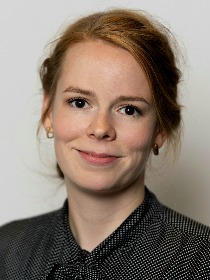
Lisa Lai-Shen Cheng is a Professor of General Linguistics at the Leiden University Centre for Linguistics, with a focus on comparative syntax and its interactions with semantics, prosody, and processing. She co-founded the Leiden Institute for Brain and Cognition (LIBC) and is a member of KNAW, Academia Europaea, and LSA Fellow. PhD in Linguistics from MIT (1991) Assistant/Associate Professor at UC Irvine (1991-2000) Her research explores language variation through comparative syntax , wh-questions , and interdisciplinary approaches involving the brain. Key projects include Ellipsis Licensing Beyond Syntax (NWO), Understanding Questions (NWO), and Advancing the European Multilingual Experience (FP7 EU). Her work spans Chinese , Bantu , and other languages, addressing phenomena like intervention effects and scope fixation . Her publications include studies on wh-in-situ in Chinese, French, and Bantu languages, emphasizing the role of interfaces and cognitive processes. Awards include membership in KNAW (2017), Academia Europaea, and LSA Fellow status. She has supervised over 20 PhD students and teaches syntax and syntax-semantics interface courses at Leiden University. Her affiliations include the Theoretical Linguistics and Experimental Linguistics groups.
Dr. Angeliek van Hout is a faculty member at the University of Groningen's Faculty of Arts, where she leads the Acquisition Lab within the Center for Language and Cognition Groningen (CLCG). Her academic profile centers on experimental research into first language acquisition in typically developing monolingual children, employing a crosslinguistic perspective to investigate fundamental aspects of language development. Her research expertise spans multiple interconnected domains of linguistic development: Temporal reference (tense and aspect, telicity, event culmination) Nominal reference (definiteness, quantification) Syntactic structures (questions, passives, pronouns) Pragmatic reasoning (scalar implicatures, theory of mind) Dr. van Hout's methodological approach integrates formal linguistic theory with empirical experimentation, examining how children acquire complex linguistic structures across different languages. Her recent work demonstrates particular focus on logical operators and their interpretation in child language, with extensive crosslinguistic comparisons examining how children process disjunction under negation in Dutch, French, Hungarian, and Italian. She investigates the cognitive mechanisms underlying these linguistic phenomena, bridging theoretical linguistics with cognitive science. Her publication record shows consistent productivity with 89 research outputs including 25 articles, 23 conference contributions, and 20 book chapters. Notable recent publications include work on prosodic disambiguation in Dutch, free choice interpretation in French children, and crosslinguistic patterns in quantifier acquisition. Dr. van Hout actively contributes to the academic community through: Supervision of PhD students (4 supervised works documented) Editorial work including the TABU Festschrift for Jack Hoeksema Organizing academic events such as "Novel Semantic Research in Theory, Processing and L1 Acquisition" Presenting research at international conferences including the Boston University Conference on Language Development Her research has practical applications in understanding typical language development trajectories, which she communicates to broader audiences through public engagement activities. She has presented on language development in twins at multiple public events and participated in the NEMO Science Live initiative from 2016-2018, demonstrating commitment to knowledge transfer beyond academic circles. As leader of the Acquisition Lab, Dr. van Hout directs research examining how children develop linguistic competence across various domains, with particular attention to the interface between syntax, semantics, and pragmatics in early language development.
Peter Hagoort is a renowned cognitive neuroscientist and Professor of Cognitive Neuroscience at Radboud University Nijmegen. He serves as Director Emeritus of the Max Planck Institute for Psycholinguistics and Founding Director of the Donders Institute for Brain, Cognition and Behaviour. His research focuses on the neural basis of language, employing techniques like ERP, MEG, PET, and fMRI to study language processing in health and disorders such as aphasia, dyslexia, and autism. He holds multiple prestigious awards, including the NWO-Spinoza Prize (2005), the Yuen Ren Chao Prize (2024), and the Silver University Medal from Radboud University (2023/2024). He is a member of the Royal Netherlands Academy of Arts and Sciences (KNAW) and the National Academy of Sciences (USA). Current research interests include the neurobiological mechanisms of language comprehension and production, inter-brain synchrony in communication, and the cognitive neuroscience of spoken language using animal models like bats. He supervises PhD students exploring topics such as vocal learning in bats and neural dynamics of communication in autism spectrum conditions. Awards: Over 10 major prizes, including the Spinoza Prize and Yuen Ren Chao Prize. Grants & Leadership: Programme director of the Gravitation program Language in Interaction; steering roles in national and international initiatives. Labs/Teams: Donders Institute Neurobiology of Language group; Max Planck Psycholinguistics Institute.
Prof. Sergey Avrutin is a Professor of Comparative Psycholinguistics at Utrecht University's Department of Languages, Literature and Communication, within the College of Humanities. His research integrates information theory into language processing studies, focusing on typically and atypically developing children, adults, and individuals with aphasia. He previously led the NWO-sponsored PIONEER research program (2000-2005) and current projects explore rule induction from partially ordered input and entropy-driven models. Prof. Avrutin has held academic roles such as Research Leader, Promoter, and Executor across multiple NWO and EU-funded projects. His research spans syntax-discourse interface, language acquisition disorders, bilingualism diagnostics, and special registers like headlines and TV commentary. He collaborates with international institutions including Berlin's Zentrum für Allgemeine Sprachwissenschaft and Russia's Herzen State Pedagogical University. His teaching includes courses on Cognitive Science, Language and Law, and the Syntax-Discourse Interface. Recent work highlights contributions to understanding lexical access in aphasia, the role of prosody in anaphora resolution, and statistical learning mechanisms. His articles and projects reflect a focus on interdisciplinary methods, combining experimental and theoretical approaches to linguistic phenomena.
Dr. Hanneke Loerts is an Assistant Professor at the University of Groningen's Faculty of Arts, specializing in Neurolinguistics and Language Development. She holds a position in the Department of Neurolinguistics and Language Development (NLD) and focuses on research areas including psycholinguistics, applied linguistics, cognitive aging, and neurolinguistics. Her work often explores the cognitive and neural mechanisms underlying language processing, particularly in multilingual contexts. Dr. Loerts has contributed to studies on the impact of language learning on cognitive functioning in older adults, the role of musical abilities in second language prosody perception, and the effects of bilingualism on cognitive reserve. Her research employs methodologies such as ERP studies, eye-tracking, and meta-analyses, addressing topics like grammatical gender processing, relative clause comprehension, and social aspects of minority language use. She is involved in projects funded by the University of Groningen, including a study on language of instruction and language-learning aptitude in higher education. Dr. Loerts teaches courses on applied linguistics, psycholinguistics, and research methodology, emphasizing statistical methods and multilingual language processing. She has been recognized with a PhD scholarship co-promotor award for her work on music perception and second language prosody. Her collaborative research extends to interdisciplinary teams, investigating topics ranging from cognitive flexibility in depression to the sociocultural dimensions of language use in multilingual societies. Key contributions include systematic reviews on ERP responses to gender stereotypes, meta-analyses on musical abilities and prosody perception, and randomized controlled trials assessing language learning interventions. Her work bridges neuroscience, psychology, and education, with implications for healthy aging, language policy, and cognitive health.
Dr. A.M.H. van Hout is a Professor in the Faculty of Arts at the University of Groningen, leading the Acquisition Lab within the Center for Language and Cognition Groningen (CLCG). Their research focuses on first language acquisition in monolingual children, particularly exploring temporal and nominal reference, tense/aspect, telicity, definiteness, and crosslinguistic variation. Key areas include syntax, semantics, pragmatics, and theory of mind reasoning in child language development. Research activities include cross-linguistic studies in Dutch, French, Hungarian, Italian, Spanish, and others, with emphasis on disjunction interpretation, negation scope, and tense systems. Collaborations involve international teams and comparative studies. Publications span 89 works, including peer-reviewed articles and conference contributions. Van Hout actively participates in academic events, editorial work, and public engagement initiatives on child language topics. Supervision activities include mentoring students in language acquisition research. The Acquisition Lab serves as a hub for experimental studies on child language development, integrating formal linguistic theories with empirical methods.
Leticia Pablos Robles is an Associate Professor at Leiden University's Humanities Centre for Linguistics (LUCL), specializing in Experimental Linguistics with a focus on sentence comprehension , prediction in the brain , and processing of long-distance dependencies . Her work integrates syntax, semantics, and prosody to explore how linguistic structures are processed across languages like Basque, Spanish, Mandarin, Dutch, French, and English. PhD in Linguistics (University of Maryland, 2006) BA in English Philology (University of Deusto, 1999) Her research employs event-related potentials (ERPs) , eye-tracking , and self-paced reading to analyze language comprehension. She investigates: Syntactic processing (e.g., clitic left dislocation, wh-dependencies) Syntax-semantics interface (e.g., Negative Polarity Items) Syntax-prosody interface (e.g., Wh-in-situ questions) Cognitive control in bilingualism and code-switching Recent publications highlight trends in cross-linguistic interference , bilingual reading , and ERP-based syntactic validation . She also contributes to replication studies and statistical methodology in linguistics. Scientific Awards : Teaching Excellence Award, University of Maryland (2002) Basque Government Post-doctoral Grant (2006-2008) Basque Government Pre-doctoral Grant (2002-2006) She supervises PhD candidates Zhenlin Chen and Ou Ourilige , and collaborates with projects like BRAINGLOT (Bilingualism and Cognitive Neuroscience). Her work bridges theoretical linguistics and experimental validation , emphasizing the competence-performance dichotomy.
Dr. Luisa Meroni is an Assistant Professor in the Department of Languages, Literature and Communication within the Faculty of Humanities at Utrecht University. Her research focuses on language acquisition, processing and disorders, with specialization in Italian language studies. Her areas of expertise include Bilingualism , Psycholinguistics , First Language Acquisition , Sentence Processing , and Second Language Acquisition . Dr. Meroni's work primarily investigates how children and adults process linguistic information, with particular attention to semantic constraints, logical expressions, and ambiguities in language. Her research employs experimental methodologies including eye-tracking to examine real-time language processing. Recent work has expanded to include cross-linguistic studies, particularly examining Mandarin Chinese collectives and Dutch language structures. Her publications reveal a consistent focus on the interface between linguistic theory and experimental evidence in language acquisition. Among her notable scientific contributions are studies on scalar implicatures, epistemic modals, and the acquisition of modality in Dutch. She has received research funding including a European Science Foundation grant and a Marie Curie grant. Dr. Meroni is actively involved in the academic community through conference organization (including Going Romance 2018), editorial work, and numerous invited presentations at international conferences. She has supervised research projects and collaborated with scholars internationally, particularly in studies involving Mandarin Chinese and Dutch language structures.
Dr. Stefan Sudhoff is an Assistant Professor in German Linguistics at Utrecht University's Faculty of Humanities, Department of Languages, Literature and Communication. He is affiliated with the Institute for Language Sciences and specializes in Language Structure: Variation and Change. His research focuses on information structure, specifically how the function of sentences within coherent discourse is reflected in grammatical form. His expertise spans multiple areas including syntax-semantics-pragmatics interfaces, language acquisition, multilingualism, corpus linguistics, morphosyntax, semantics, prosody, and pragmatics. His work examines how sentences vary in word order and intonation depending on linguistic and non-linguistic context, using both theoretical work and empirical methods including corpus studies and speech production/perception experiments. His publication record shows a significant evolution from early work on focus particles in German (culminating in his 2008 dissertation) to broader research on multilingualism, language education, and linguistic structure. Recent publications (2022-2024) demonstrate a strong focus on multilingualism in academic settings, particularly through the Lingua Receptiva approach, alongside continued contributions to language teaching materials for Dutch as a foreign language. Dr. Sudhoff has been actively involved in the Dynamics of Youth (DoY) research theme and Institutions for Open Societies (IOS) at Utrecht University, with research that bridges theoretical linguistics and practical applications in language education and multilingual university environments. His work combines theoretical linguistic research with practical applications in language education, as evidenced by his numerous language teaching materials alongside academic publications. He has made significant contributions to understanding how information structure operates across languages and in multilingual contexts, with implications for both linguistic theory and language education practice.
Prof. Aoju Chen is a Professor of English Linguistics: Language Development at Utrecht University's Faculty of Humanities, Department of Languages, Literature and Communication. She holds a VICI Grant (2021-2026) investigating prosodic development in early childhood and leads the NWO-funded VIDI project (2011-2016) on prosodic focus marking in children. Her research focuses on prosody's role in first and second language acquisition, with interdisciplinary projects in the Dynamics of Youth strategic theme exploring prosody's link to children's sense of belonging. Her expertise spans Information Structure, Language Comprehension, and Phonology, with a strong emphasis on cross-linguistic studies. Key projects include prenatal prosody acquisition and robot-assisted language learning. She has published extensively on prosodic focus marking, intonation, and bilingualism, with over 50 peer-reviewed articles since 2004. Awards include prestigious NWO grants and contributions to Oxford Handbook of Language Prosody (2020). Her research integrates experimental methods with computational prosody analysis, addressing both theoretical and applied questions in developmental linguistics. She leads the English Linguistics: Language Development chair and collaborates with robotics teams to apply prosody insights in educational technology. Her work bridges phonetics, psychology, and education, emphasizing real-world applications for language learning and child development.
Constantijn (Stan) van der Burght is an Assistant Professor in Experimental Linguistics at Leiden University’s Leiden University Centre for Linguistics (LUCL), specializing in the Psychology of Language. He holds a dual affiliation with the Max Planck Institute for Psycholinguistics in Nijmegen. His research focuses on prosody’s role in sentence processing and production, combining behavioral experiments and neuroimaging methods. Key interests include how prosodic cues (intonation, duration) guide syntactic and semantic expectations in listeners, and individual differences in prosody perception/production. Education: PhD in Psychology (2021), Leipzig University/Max Planck Institute for Human Cognitive and Brain Sciences MSc Clinical Neuroscience (2014), University College London BSc Liberal Arts & Sciences (2012), University College Utrecht Research: Investigates neurolinguistic mechanisms of language processing, particularly prosody’s influence on syntax and semantics. Recent work emphasizes methodological rigor in cognitive neuroscience and brain regions involved in intonation-guided sentence comprehension (e.g., inferior frontal gyrus). Collaborations: Active collaboration with MPI for Psycholinguistics and institutions like Utrecht University and the Donders Institute. Research integrates EEG, fMRI, and behavioral paradigms.
Dr. Anna de Koster serves as an Academic Advisor in the Department of Physics and Applied Physics at the University of Groningen's Faculty of Science and Engineering. Her role includes academic advising for students and program management within the Physics cluster. She holds a PhD and has conducted extensive research at the intersection of Linguistics, Cognitive Modelling, and Artificial Intelligence. Her research focuses on language acquisition and distributivity in sentence interpretation, particularly in children and adults. She employs experimental methods to investigate how cognitive processes like working memory influence semantic interpretations. Her work combines empirical studies with computational modeling, bridging linguistics, psychology, and computer science. Anna collaborates within the Physics cluster team, contributing to programme coordination and academic support alongside colleagues like Prof. Diederik Roest and MSc Bo Slot. She has been affiliated with the Optical Condensed Matter Physics group and has held past research roles in language acquisition. Her publications (2015-2022) explore distributivity in language processing, collective interpretations, and the cognitive mechanisms behind syntactic-semantic interactions. Though no scientific awards are noted, her interdisciplinary research reflects significant contributions to understanding language development and cognitive modeling.
Dr. Iris Mulders is an Assistant Professor at the Department of Languages, Literature and Communication, Utrecht University, and a Senior Researcher at the Institute for Language Sciences. Her work focuses on Eye movement monitoring Sentence processing mechanisms Psycholinguistics Interfaces between syntax, semantics, and pragmatics R programming for statistical analysis . Research Interests: Mulders specializes in experimental linguistics, particularly using eye-tracking to study language acquisition, processing, and disorders. Key subfields include Dutch posture verbs (functional vs. lexical analysis), prosodic focus processing, referential communication, and digital literacy in humanities education. Article Trends: Recent publications analyze: AI's role in language research (ChatGPT as informant) Eye-tracking methodology for reading patterns Focus marking in native/non-native English Stress processing in sentence comprehension Developmental differences in verb processing Interface phenomena across syntax/semantics/pragmatics Lab Involvement: She actively demonstrates and trains in eye-tracking lab facilities, contributing to experimental methods in language acquisition research through tutorials at EMLAR workshops and international conferences.
Stephen Jones is an Assistant Professor at the University of Groningen’s Faculty of Science and Engineering, affiliated with the Bernoulli Institute for Artificial Intelligence, Computer Science, and Mathematics. His research focuses on the intersection of grammatical theory and cognitive models of language processing, particularly the syntax-prosody interface in Korean and English. He holds a DPhil in General Linguistics from the University of Oxford (2019) and has taught undergraduate linguistics courses at both Oxford and Groningen. Key research areas include Lexical Functional Grammar (LFG), Dynamic Syntax, and computational modeling using the ACT-R architecture. He has also held visiting academic roles at the University of Oxford’s Faculty of Linguistics, Philology, and Phonetics. Awards include the MPhil to DPhil Progress Scholarship from Kellogg College, Oxford. His work bridges formal linguistics and cognitive science, with recent publications exploring Korean question focus, Dutch clitic pronouns, and cross-linguistic lexical tone learning. Grants include funding for computational modeling projects and participation in international conferences on syntax and psycholinguistics.