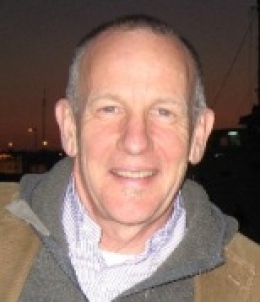
Peter Hagoort is a renowned cognitive neuroscientist and Professor of Cognitive Neuroscience at Radboud University Nijmegen. He serves as Director Emeritus of the Max Planck Institute for Psycholinguistics and Founding Director of the Donders Institute for Brain, Cognition and Behaviour. His research focuses on the neural basis of language, employing techniques like ERP, MEG, PET, and fMRI to study language processing in health and disorders such as aphasia, dyslexia, and autism. He holds multiple prestigious awards, including the NWO-Spinoza Prize (2005), the Yuen Ren Chao Prize (2024), and the Silver University Medal from Radboud University (2023/2024). He is a member of the Royal Netherlands Academy of Arts and Sciences (KNAW) and the National Academy of Sciences (USA). Current research interests include the neurobiological mechanisms of language comprehension and production, inter-brain synchrony in communication, and the cognitive neuroscience of spoken language using animal models like bats. He supervises PhD students exploring topics such as vocal learning in bats and neural dynamics of communication in autism spectrum conditions. Awards: Over 10 major prizes, including the Spinoza Prize and Yuen Ren Chao Prize. Grants & Leadership: Programme director of the Gravitation program Language in Interaction; steering roles in national and international initiatives. Labs/Teams: Donders Institute Neurobiology of Language group; Max Planck Psycholinguistics Institute.
Laura Colantoni is a Professor of Hispanic Linguistics at the Department of Spanish and Portuguese, University of Toronto. Her research focuses on phonetics, phonology, and second language acquisition, particularly in the context of sound change and variable phonetic parameters. She holds a BA from the University of Buenos Aires and a PhD from the University of Minnesota. She has held administrative roles including Chair of the Department of Spanish & Portuguese (2014-2019) and Associate Chair of Undergraduate Studies (2022-present). Her research involves collaborative projects funded by SSHRC and U of T, exploring topics like phonetic variability in bilingual language acquisition and electropalatographic studies of consonant assimilation patterns. Key collaborations include projects on Spanish-English bilingual children's grammatical development and cross-linguistic studies of nasal and lateral consonants in French, Spanish, and other languages. Publications highlight her work on Argentine Spanish, second language speech production, and the interplay between prosody and morphology. She has edited volumes on Argentine Spanish (2013) and co-authored Second Language Speech: An Introduction (2015). Her recent work examines articulatory timing differences in French/Spanish clusters and intonation patterns across languages such as Jordanian Arabic and Lombard Italian. Her teaching and research emphasize evidence-based approaches to pronunciation pedagogy and the application of laboratory methods to phonological analysis. She actively collaborates with scholars in linguistics, speech pathology, and related fields to advance understanding of language variation and acquisition processes.
Ellen Broselow is the Toll Professor in the Department of Linguistics at Stony Brook University. She holds a Ph.D. in Linguistics from the University of Massachusetts Amherst (1976). Her research focuses on phonology, second language acquisition, and the interfaces of phonology with phonetics, morphology, and syntax, with special attention to Arabic, Salish, Bantu, and Indonesian languages of Sulawesi. Her work examines second language phonology, including loanword adaptation and learner errors, as well as the phonetics-phonology interface. Broselow has served as editor for journals like Natural Language and Linguistic Theory and is currently on editorial boards of Bilingualism: Language and Cognition , Linguistic Inquiry , and others. She has received prestigious awards, including the Godfrey Excellence in Teaching Award and Fellowship in the Linguistic Society of America. Recent research explores factors influencing second language production errors, vowel insertion in foreign languages, and prosodic processing. Her studies highlight the role of perceptual biases in second language acquisition and the impact of vocal fry in intonation patterns among native and non-native speakers.
Meghann Peace, Ph.D., is an Associate Professor of Spanish in the Department of Languages at St. Mary’s University. She specializes in heritage language acquisition, Spanish dialects, and Spanglish. Research examines identity negotiation among Mexican-American students, dialect contact in study abroad, and critical pedagogy. Articles focus on sociolinguistic justice and community-based language reclamation. She developed the innovative course 'Spanish for Immigration, Human Rights and Community Engagement' and is a frequent media commentator on Spanglish.
Ugo Mondini is a British Academy Postdoctoral Fellow and Supernumerary Fellow at Exeter College, University of Oxford. He is affiliated with the Faculty of Classics and the sub-faculty of Byzantine and Modern Greek. Mondini holds a PhD from the University of Milan (2021) and has held positions at the Austrian Academy of Sciences (2021–2022) and Ghent University (2022). His research focuses on Ancient and Medieval Greek literature, with an emphasis on language pedagogy, textual criticism, and the interplay between poetry and education. His current British Academy project examines 11th-century schedography’s impact on Greek text production. He co-leads the TORCH Network Poetry in the Medieval World and organizes the GLARE reading group at Exeter and Lincoln Colleges. Teaching responsibilities include Byzantine Greek, Medieval Latin, and Modern Greek literature courses. Education: BA in Classics, University of Milan (2015) MA in Classics, University of Milan (2017) PhD in Byzantine Studies, University of Milan (2021) Research Interests: Pre-modern Greek poetry Grammatical pedagogy Textual transmission Byzantine-Hellenistic continuities Language preservation Grants & Projects: Principal Investigator: John Fell Fund Projects (2023–present) Marie Skłodowska-Curie Fellowship (Ghent University, 2022) Professional Activities: Co-organizer: Ghent Seminars on the Greek Language Peer reviewer: Bryn Mawr Classical Review Labs/Teams: TORCH Network Poetry in the Medieval World GLARE Greek/Latin Reading Group
Dr. Karen Huang is a Senior Lecturer in Asian Studies at the University of Auckland, specializing in Chinese Linguistics within the Faculty of Arts and Education. She holds a PhD in Linguistics from the University of Hawaii at Manoa (2012), alongside MA (2006) and BS (2003) degrees from National Taiwan University and the University of Hawaii at Manoa. Her research focuses on Chinese phonetics/phonology, dialects, sociolinguistics, and language policy, particularly in Taiwan. Key interests include lexical tone variation, language revitalization through music, and virtual language learning programs. She has published in journals like Journal of Chinese Linguistics and International Journal of Chinese Linguistics . Teaching responsibilities include modern Chinese language courses (CHINESE 101-302) and postgraduate educational linguistics (CHINESE 739). Current PhD supervision spans topics from Māori-Taiwan Indigenous language comparisons to game localization studies. She has served on academic committees since 2013 and contributed to language competitions as a judge. Research Themes: Language policy, tone systems, heritage language education Key Projects: Taiwan Mandarin tone evolution, Indigenous language revitalization via music Engagement: NZASIA conferences, Māori language comparison studies
Sunwoo Jeong is an Associate Professor in the Department of Linguistics at Seoul National University since 2023, having previously served as Assistant Professor at the same institution from 2019 to 2023. Prior to his appointment at Seoul National University, he was a Postdoctoral Research Fellow in the Program in Linguistics at Princeton University (2018-2019), following the completion of his Ph.D. in Linguistics from Stanford University (2013-2018). His educational background includes an MA in Linguistics (2011-2013) and BA in Linguistics (2006-2011), both from Seoul National University. Jeong's research spans multiple subfields of linguistics, with particular focus on the intersection of meaning, sound, and social context. Dr. Jeong's research primarily investigates context-sensitive semantic and pragmatic phenomena using experimental methodologies. His work examines how linguistic forms connect with complex interactional and social meanings, with special attention to Korean linguistics, intonation patterns, and the relationship between prosody and meaning. His publications reveal a strong interest in how grammatical structures interact with context to produce nuanced interpretations, particularly in questions, imperatives, and other speech acts. He has made significant contributions to our understanding of negative polarity items, rising declaratives, politeness phenomena, and gendered language use. The analysis of his recent publications shows consistent focus on experimental approaches to theoretical linguistic questions, with strong connections between formal semantic/pragmatic theory and empirical data. His work frequently bridges multiple sub-disciplines, connecting phonological patterns with semantic interpretations, and social meaning with grammatical structure, particularly in Korean language data. As an educator, Jeong has taught a wide range of courses including Introduction to Linguistics, Semantics, Experimental Linguistics, Advanced Semantics, and Seminar in Experimental Linguistics at Seoul National University. Previously, he taught Intonation and Varieties of Meaning at Princeton University, and served as a teaching assistant for courses in Semantics and Pragmatics, Language Acquisition, and Phonetics at Stanford University.
Kai Alter is a Senior Lecturer in Auditory Cognitive Neuroscience at Newcastle University's Faculty of Medical Sciences, affiliated with the Biosciences Institute. They also serve as an Affiliated Lecturer at the University of Cambridge's Faculty of Modern and Medieval Languages and Linguistics and maintain collaborations with institutions including the University of Lisbon and Tuebingen University. Their educational background includes: Habilitation from University of Leipzig (2002) PhD in Linguistics from University of Leipzig (1994) Post-grade in Linguistics from University of Geneva (1993) Post-grade in Phonetics from University of Lausanne (1993) Master in Linguistics from University of Leipzig (1990) Master in Russian Language from University of Belgorod (1988) Dr. Alter's research focuses on auditory neuroscience, particularly speech and language processing using behavioral and neuro-imaging methods (EEG, MEG, fMRI) in both healthy volunteers and patients. Their work spans cognitive neuroscience, examining the comparison between language and music processing, neurocognition of prosody and intonation in children, turn taking in communication, tinnitus research, dyslexia and working memory, and laughter and brain interactions. They also investigate developmental aspects of speech & language processing, speech segmentation on phrase and discourse level, and processing of durational, tonal, and spectral properties related to voice. Dr. Alter's publications reveal a strong focus on tinnitus research, emotional processing in laughter, and speech processing in neurological conditions. Their work combines multiple neuroimaging techniques to understand auditory processing mechanisms, with recent publications showing increasing interest in tinnitus as a neurological condition and its relationship to brain responses, as well as the neural basis of emotional vocalizations like laughter. Notable scientific achievements include: Oxford Visiting Senior Research Fellowship (2015-2017) Honorary appointment as Research Associate in Neurology by the NHS Trust Associate Member of Laboratorio de Fonetica & Lisbon Baby Lab Research Associate at the Tuebingen University Hospital for Psychiatry Dr. Alter has co-supervised 22 PhD students and 8 PDRAs, and currently co-supervises 5 PhD students and 1 PDRA. They have secured international and national grants totaling £1.8 million over the past 12 years. As a reviewer, they have evaluated proposals for numerous national and international Research Foundations including Human Frontier Science Program, ERC, German Research Foundation, Netherlands Organisation of Scientific Research, Austrian Research Foundation, French Research Foundation, MRC, ASRC, ESRC, and Wellcome Trust. Dr. Alter co-convenes the cross-Faculty Research Group on Phonetics and Phonology at Newcastle University and maintains an active research program investigating the neural basis of speech and emotional vocalizations. Their work bridges cognitive neuroscience, linguistics, and clinical applications, particularly in understanding speech processing disorders and tinnitus.
Prof. Alexander WERTH is the Chair of German Linguistics (W3) at the University of Passau since 2021. He holds a PhD (Dr. phil.) from the University of Marburg (2009) and has held academic positions at institutions including the Universities of Augsburg, Bonn, and Erlangen-Nuremberg. His research focuses on German dialectology, historical linguistics (especially the Early Modern period), syntax, phonology, and sociolinguistics. He has authored monographs on topics like the definite article in personal names and perceptual foundations of prosody. WERTH serves on numerous academic committees, including the Franconian Dictionary Project and the Society for the History of Germanic Languages. He is the founding Dean of Studies at the Faculty of Humanities and Cultural Studies (2023) and oversees double-degree programs in Media and Communication at the Turkish-German University of Istanbul. Education: Master's degree (Mag. Artium) in German Linguistics, Political Science, and Media Studies (Universities of Marburg and Hamburg, 2000-2005) PhD in German Linguistics from the University of Marburg (2009) Research Interests: WERTH’s work bridges theoretical linguistics and empirical research, emphasizing dialectological, historical, and psycholinguistic approaches. Key areas include morphosyntactic variation, onymic Movierung, and the interaction between language and society. He co-edits the Journal of Language Variation and Sociolinguistics and has led projects funded by the DFG and EU. Grants & Projects: DFG-funded project on auxiliary variation in German (2023-2026) DAAD-supported programs in Istanbul and České Budějovice Labs/Teams: Director of the Department of Linguistic Research at the Institute for Cultural Research of Eastern Bavaria (since 2021).
Dr. Rachael Frush Holt is a Professor in the Department of Speech and Hearing Science at The Ohio State University, affiliated with the College of Arts and Sciences. She serves as DEI Chair and Associate Director of the Center for Cognitive and Brain Sciences. Her research focuses on speech perception, neurocognitive development, and psychosocial outcomes in deaf/hard-of-hearing children using cochlear implants or hearing aids, emphasizing family environment impacts. She holds a Ph.D. in Hearing Science (2003) and completed a NIH Postdoctoral Fellowship (2003–2005) at Indiana University. Education: NIH Post-doctoral Fellowship, De Vault Laboratory, Indiana University School of Medicine (2003–2005) Ph.D. in Hearing Science, University of Minnesota (2003) Clinical Fellowship in Audiology, Mayo Clinic (2000) M.A. in Audiology, University of Minnesota (1999) B.S. in Speech and Hearing Science, University of Minnesota (1996) Her research interests include the interplay between family dynamics, executive function, and language outcomes in children with hearing impairments. She investigates accent perception across ages and linguistic backgrounds, leveraging computational methods to quantify speech variability effects. Her work bridges clinical audiology, cognitive neuroscience, and developmental psychology. Publications highlight longitudinal studies on family environments, speech perception metrics, and technology-driven solutions for hearing-impaired populations. She collaborates with interdisciplinary teams and mentors students across academic levels. Labs/Teams: Director of the Developmental Speech Lab, investigating speech perception and language development in diverse populations.
Daniela Sammler is an Adjunct Professor at Goethe University Frankfurt am Main and leads the Neurocognition of Music and Language Research Group at the Max Planck Institute for Empirical Aesthetics. Her work bridges cognitive neuroscience, linguistics, and musicology to explore shared neural mechanisms in music and language processing. PhD in Psychology from the University of Leipzig and Max Planck Institute (2008) Habilitation on intonation in speech and music (2018) Venia Legendi in Frankfurt (2022) Her research focuses on neurocognitive overlaps between music and language, including syntax, prosody, and interpersonal interaction. Key findings include cortical tracking of rhythm, neural hubs for melodic processing, and evidence of universal links in speech-song perception despite cultural diversity. Recent publications analyze audio-motor coordination in duets, prosody-emotion mapping, and dyslexia-related auditory processing deficits. Awards include the Otto Hahn Medal (2010) and European historic preservation recognition (2012). Co-led studies with institutions like Western Sydney University and University of Glasgow Editor for The Oxford Handbook of Language and Music (under contract) Grants from Max Planck Society and Heisenberg Foundation
Ellen Gurman Bard is a Reader in the Department of Linguistics and English Language at the University of Edinburgh's School of Philosophy, Psychology, and Language Sciences, and an Associate of the Human Communication Research Centre in the School of Informatics. Her academic career centers on experimental psycholinguistics, investigating the interplay between speech production and perception, and the cognitive mechanisms underlying dialogue. Her research explores two interconnected themes: the acoustic under-determinacy of running speech and its implications for speech recognition and production, and the role of listener modeling in audience design during dialogue. She examines how factors such as shared knowledge, predictability, and attention influence word intelligibility and articulation patterns, often using controlled dialogue corpora like the Map Task and eye-tracking methodologies in the Joint Eye-Tracking Laboratory. Recent publications demonstrate her expertise in experimental linguistics, with studies spanning determiner selection in Romance languages, eye-tracking in two-person tasks, auxiliary selection in Italian verbs, and structural influences on French accent placement. Her work bridges theoretical linguistics, cognitive science, and human-computer interaction, frequently involving large-scale collaborative projects. Scientific Awards: No specific awards, prizes, or fellowships are listed in the available profile information. Dr. Bard supervises graduate students, with recent MSc advisees including: Helen Robson Anna Pande Eirini Kelmali and PhD students: Margaret Mitchell Erin Brown Alice Foucart Hannele Nicholson Anastasia Mangana Evangelia Plemmenou Max Louwerse Her research is supported by grants from the NSF (iMAP project), EC Framework VI (JAST project), and EPSRC (MONITOR and ERF projects). She co-directs the Joint Eye-Tracking Laboratory (JEL), which investigates joint attention and action during collaborative tasks, utilizing eye-tracking technology to understand how humans coordinate in real-time interaction.
Lars Fant is a Professor at the Department of Romance Studies and Classics, Stockholm University, focusing on Pragmatics , Interactional Linguistics , Second Language Acquisition , and Intercultural Communication . He has supervised over 20 PhD and MA theses in Spanish, Portuguese, and Italian, and co-authored key language education materials like Bonnier's Spanish Grammar (2004, revised 2015) and a Course in Mediation (2007). Research Groups : Co-founder of RomSLA (Romance Languages and Second Language Acquisition) and RomLing (Romance Linguistics). Projects : Led programs like 'High-level Proficiency in Second Language Use' (funded by Riksbankens Jubileumsfond) and 'Interaction, Identity, and Language Structure' (funded by SU Humanities grant). Research Trends from his 200+ publications include cross-linguistic analysis of pragmatic markers , discourse strategies in advanced L2 users, and prosodic transfer from L1 to L2. His work bridges theoretical linguistics (e.g., syntactic periphery, modalisation) and applied pedagogy, emphasizing contrastive approaches in language teaching. Teaching spans BA/MA/PhD levels, covering Spanish phonetics, second language acquisition, scientific methodology, and historical linguistics. His supervision includes topics like metadiscursive markers , causative motion expressions , and discourse strategies in heritage speakers .
Giovanni Rossi is an Associate Professor and Vice Chair in the Department of Sociology at the University of California, Los Angeles (UCLA). His research focuses on human language and gesture as systems of social interaction, exploring both universal and culturally specific features across linguistic and social contexts. He holds a PhD in Social Science from the Max Planck Institute for Psycholinguistics/Radboud University Nijmegen (2015), an MA in Linguistics from Radboud University Nijmegen (2010), and a BA in Linguistics from the University of Bologna (2009). His research interests include conversation analysis, pragmatics, and the cross-cultural study of interactional systems. He has contributed to understanding how prosody, grammar, and social agency shape communication, particularly in multilingual and multicultural settings. Notable work includes studies on requesting systems in Italian, pragmatic typology, and the role of visual and verbal cues in repair sequences. Dr. Rossi’s publications reflect a focus on interactional universals and cultural diversity, with recent work analyzing recruitment sequences, the Parallel European Corpus of Informal Interaction (PECII), and the sociolinguistics of gratitude expression. His 2018 award from the International Society for Conversation Analysis recognizes his dissertation on pre-request sequences in Italian. While no advising or grant details are provided, his work frequently involves collaborative research projects, such as the PECII initiative. His contributions extend to methodological advancements in coding interactional sequences and analyzing cross-linguistic phenomena.
Aveen Mohammed Hasan is an Assistant Professor at the Department of English Language, University of Zakho, Iraq. She holds a PhD (2012) and MA (2005) in Linguistics from Ulster and Mosul Universities, respectively. Her primary research focuses on Kurdish linguistics, with specializations in phonetics, phonology, and sociolinguistics. She has served as Head of Department and contributed to editorial roles at journals like the Humanities Journal of University of Zakho and the Journal of Comparative Studies (Daugavpils University). Her academic career includes teaching roles since 2005 (Assistant Lecturer) and promotions to Lecturer (2013), Assistant Professor (2018). Key professional development includes TESOL Methodology (2019) and leadership training programs. She has conducted extensive research on Kurdish intonation, stress patterns, articulation tests for children, and the role of literature in language education. Notable contributions include analyzing loanword usage across Kurdish dialects and investigating the phonetic features of the glottal stop in Bahdini Kurdish. Her work bridges theoretical linguistics and applied research, with publications in journals like Journal of Experimental Phonetics and European Scientific Journal . She actively participates in international conferences, including the International Conference on Kurdish Linguistics and the Workshop on Low-Resource Languages. Her research emphasizes understudied aspects of Kurdish language structure, contributing to both Kurdish-specific scholarship and broader linguistic typology.