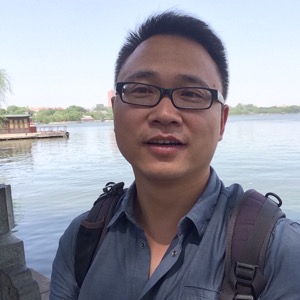
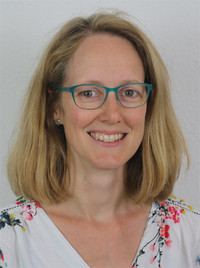
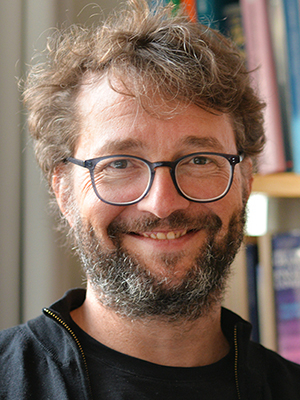
Chunsheng Yang is an Associate Professor in Chinese Studies at the University of Connecticut. He holds a Ph.D. in Chinese Linguistics from The Ohio State University (2011), along with MA degrees in Chinese Linguistics (2009) and English Linguistics (2005), and a BA in English (2000) from the University of Science and Technology of China. His research focuses on second language acquisition, Mandarin prosody, and technology-enhanced language teaching. Key research interests include L2 Mandarin pronunciation pedagogy, speech perception models, telecollaborative language learning, and the application of digital tools like WeChat and iPads in education. He has authored/co-authored seminal works such as The Acquisition of Second Language Mandarin Prosody (2016) and edited volumes on Chinese L2 pronunciation (2021). Yang's work bridges experimental linguistics and pedagogical practice, with studies on tonal acquisition, affricate articulation, and compliment response pragmatics. His projects investigate how L1 tonal backgrounds influence L2 Mandarin proficiency and explore innovative teaching strategies through virtual exchanges and rhythm metrics analysis.
Marcel Bollmann is an Associate Professor at the Department of Computer and Information Science (IDA) at Linköping University, Sweden, where he leads research in the Artificial Intelligence and Integrated Computer Systems (AIICS) division. His work focuses on natural language processing (NLP), machine learning, and computational linguistics, particularly in under-resourced languages, multilinguality, and historical document analysis. Education: He holds a PhD in Computational Linguistics from Ruhr-Universität Bochum (2018), funded by projects on historical German language corpora. Previously, he was a postdoc at the University of Copenhagen (2018–2021), supported by an EU Marie Skłodowska-Curie Fellowship, and an assistant professor at Jönköping University (2021–2023), where he developed AI Engineering courses. Research: Bollmann’s interests include linguistically-informed NLP approaches, historical text normalization, and improving NLP accessibility across language genres. His work has addressed challenges like morphology-aware models and low-resource language support. Awards: His 2021 paper on morphology’s role in error analysis won the EACL Best Long Paper Award. He also contributed to the ACL Anthology as Site Development Lead, advancing NLP infrastructure. Advising & Grants: He has supervised projects on historical language corpora and received funding from EU initiatives. His lab collaborations focus on advancing AI through interdisciplinary methods. Labs/Teams: Active in the AIICS division at IDA, contributing to WASP (Wallenberg Autonomous Systems Program) and other interdisciplinary AI initiatives.
Alice Mitchell is Junior Professor for Anthropological Linguistics of Africa at the University of Cologne's Institute for African Studies within the Faculty of Arts and Humanities. Her research focuses on anthropological linguistics, interactional sociolinguistics, and language documentation, with particular emphasis on African languages and cultures. Her work examines linguistic practices related to kinship, social hierarchy, and cultural norms in Tanzanian Datooga communities. Recent publications investigate children's acquisition of avoidance registers, kinship categorization, and the sociolinguistic history of pastoral societies in eastern Africa. Research Methodology: Fieldwork-based language documentation Cross-cultural linguistic comparisons Quantitative and qualitative analysis of social interactions
Dr. Varghese Peter is a Lecturer in Psychology at the University of the Sunshine Coast's School of Health. He holds a PhD from Macquarie University and degrees from the University of Mysore in India. His research focuses on speech perception and language development in infants/children, auditory cognition, and neural oscillations in speech processing. Dr. Peter uses EEG, psychophysics, and linear neural encoding models to investigate how environmental and genetic factors influence language acquisition. He has held academic positions at Western Sydney University and Macquarie University. Education : PhD (Macquarie University), MSc (University of Mysore), BSc (University of Mysore) Affiliations : School of Health, Discipline of Psychology His research explores topics such as maternal input quality, bilingualism, and genetic risks (e.g., dyslexia) on speech development. He also studies auditory perception impairments in conditions like dyslexia and hearing loss. Dr. Peter has secured research grants including the $495,500 'Perceptual and cognitive optimisation of visual augmented reality displays' and the $20,000 'Effect of age and background noise on cortical EEG entrainment to natural conversation'. Awards : Vice Chancellors Excellence in Research Interdisciplinary Group Award (2020) Director of Research Award for Team Research (2019) Society for Neurobiology of Language Travel Award (2009) Teaching areas include Introduction to Psychology and Personality Assessment. His work bridges developmental neuroscience and clinical applications, with recent publications focusing on cortical entrainment in dyslexia and neural mechanisms of speech perception in infants.
Dag Trygve Truslew Haug is a Professor at the Department of Classics at the University of Oslo, specializing in Greek and Latin linguistics with a focus on syntax and computational approaches. His research bridges classical philology with modern computational linguistics, particularly through treebank development and semantic analysis. His primary research interests include: Greek and Latin grammatical structures Lexical-Functional Grammar and formal semantics Computational linguistics and treebank development Historical linguistics and syntactic change Semantic annotation frameworks Morphological tagging systems His recent publications demonstrate a strong focus on computational linguistics applications for classical languages, semantic parsing methodologies, and the development of linguistic resources for Norwegian. The work shows consistent innovation in formal semantics, corpus linguistics, and interdisciplinary applications in computational biology. He leads the DAMOS project (Database of Mycenaean at Oslo) and participates in multiple research groups including Digital Humanities, Grammar and Meaning, Language Change, Linguistics and Poetics, Pragmatics: Theory & Experiments, and Super Linguistics.
Professor Michael Meeuwis is a distinguished academic at Ghent University's Department of Languages and Cultures, Faculty of Arts and Philosophy, where he serves as Professor of Lingala and African Sociolinguistics. With expertise spanning linguistic anthropology, African languages, and colonial history, Professor Meeuwis has established himself as a leading scholar in the study of Lingála and language policy in the Democratic Republic of Congo. Professor Meeuwis holds an MA in African History and Philology from Ghent University (1990), an MA in General Linguistics from the Universities of Antwerp and Amsterdam (1991), and a PhD in Sociolinguistic-Ethnographic studies from the University of Antwerp (1997). He was a Postdoctoral Research Fellow of the Fund for Scientific Research - Flanders from 1997-2002 and served as Professor of Anthropological Linguistics at the University of Amsterdam in 2001-2002 before joining Ghent University in 2002. Professor Meeuwis's research focuses on the linguistic, historical, and sociopolitical dimensions of African languages, particularly Lingála. His work examines the grammatical structure and historical development of Lingála, the sociolinguistic situation in the Democratic Republic of Congo, colonial language policies in the Belgian Congo, and the epistemological dimensions of colonial knowledge production. He explores how language ideologies intersect with power structures, colonial histories, and contemporary decolonial movements. His research bridges linguistic anthropology, historical sociolinguistics, and postcolonial theory to analyze how language functions as both a tool of colonial domination and a medium for resistance and identity formation. Professor Meeuwis's extensive publication record reflects his interdisciplinary approach, spanning linguistic description, historical analysis, and critical theory. His recent work has increasingly focused on the decolonial dimensions of language knowledge, examining how colonial language policies continue to shape contemporary linguistic landscapes in Africa. He has made significant contributions to understanding the complex relationship between missionary activity, language standardization, and political power in Central Africa. Professor Meeuwis has supervised numerous PhD students including Margot Luyckfasseel, Eric Mijts, Hilde Gunnink, Minah Nabirye, Bienvenu Sene Mongaba, and Gilbert Kadima Batumona Adi. His research has been supported by multiple projects including 'A historiography of Kikongo language studies and management (1624-1960),' 'Victor Roelens and the 'missionaries of Africa' (white fathers) in colonial society in Congo, 1880-1926,' and 'Lingala franca. Language, conflict and political power in Mobutu's Congo/Zaire, 1965-1997.' Professor Meeuwis is affiliated with several research centers at Ghent University, including the Afrikaans - Ghent Center for Afrikaans and the Study of South Africa, CARAM - Center for Anthropological Research on Affect and Materiality, CESSMIR — Center for the Social Study of Migration and Refugees, and MULTIPLES - Research Center for Multilingual Practices and Language Learning in Society. These affiliations reflect the interdisciplinary nature of his work, which connects linguistic analysis with broader social, historical, and political contexts.
Ana-Isabel Ribera Ruiz de Vergara is a Lecturer at the University of Rouen Normandy, affiliated with the UFR Letters and Human Sciences and the ERIAC Research Unit (UR 4705) . She holds a Doctorate in Foreign Languages and Literature. Her work focuses on applied linguistics , Spanish language teaching in French contexts , and educational theatre . She has coordinated multiple publications, including Discursive genres in the teaching of specialized Spanish (2018) and Practices and issues in language teaching today (2013). Her research emphasizes phonetics , neuroscience in language learning , and multimedia resources for teaching Spanish as a foreign language. She has organized several international conferences, such as the Rencontres sur la Didactique des Langues (since 2011), and serves on editorial boards for journals like Education and Multilingual Societies and Didáctica de E/LE . Her publications span topics like advertising analysis in language classes, kinesthetic learning for pronunciation, and avant-garde literature in pedagogy. She actively contributes to ERIAC’s research axes, particularly in Linguistic and didactic approaches (Axis 4).
Jeta Hamzai is a Senior Lecturer at the Language Center of South East European University (SEEU) in Tetovo, North Macedonia, employed full-time since 2013. She holds a PhD in Linguistics from the Faculty of Education at Ss. Cyril and Methodius University (2017), an MA in English Language Teaching from SEEU (2009), and a BA in English Education from SEEU (2005). Her research focuses on language teaching methodologies, legal English compound structures, multilingualism in education, and student-centered learning strategies. Research interests include morphological productivity in compound words, inquiry-based learning in higher education, and comparative analysis of English-Albanian lexical patterns. She has co-authored over 15 publications addressing topics like EFL pedagogy, legal discourse analysis, and educational technology adaptation during the pandemic. Notable works include studies on legal English compounds (2024), self-regulated learning in digital environments (2023), and multilingual university policies (2023). Her professional experience spans over 18 years in education, beginning as a secondary school English teacher (2005-2007) before transitioning to higher education roles. She has contributed to curriculum development in ESP (English for Specific Purposes) programs and professional development workshops for educators. Current work emphasizes bridging theoretical linguistics with practical teaching strategies in multilingual academic settings.
Rebeca Maria Delgado Fernandez is an Associate Professor in the Department of Philology at the University of Burgos, Spain, and maintains an affiliation with the Spanish Language Department at the University of Salamanca. She holds a doctorate in Spanish Language from the University of Salamanca, where she completed her thesis on lexical availability and social variation in adult language in Salamanca under the supervision of Dr. Julio Borrego Nieto. Her academic work bridges theoretical linguistics with practical language teaching applications. Dr. Delgado Fernandez specializes in Sociolinguistics, Lexical Availability, Spanish Grammar, and Spanish as a Foreign Language. Her research focuses on language variation, lexical patterns in different social contexts, and innovative teaching methodologies for Spanish language learners. She has made significant contributions to understanding how regional and social factors influence language use, particularly in rural communities and among migrant populations. Her recent publications reveal a strong emphasis on digital innovation in language education, with multiple projects developing audiovisual materials, microlearning videos, and MOOC integration for Spanish language instruction. She has also dedicated significant work to linguistic integration of migrants in Europe, developing practical tools and frameworks for inclusive language education. Dr. Delgado Fernandez leads several educational innovation projects including DIGITELE (digitalization of teaching practices), E-INTEGRA (audiovisual materials for CCSE preparation), and INCLULING (cooperative practices for inclusive language classrooms). Her work demonstrates a commitment to bridging theoretical linguistic research with practical applications in language education. She has developed comprehensive teaching materials including the 'Español ELElab' series for various proficiency levels and co-authored the popular linguistics book 'Cocodrilos en el diccionario' which explains linguistic phenomena in accessible terms. Her research on phraseological units, lexical norms in rural communities, and diatopic varieties has contributed to both academic understanding and practical language teaching approaches.
Hsiang-Lin Shih (she/her) is an Associate Professor of Asian Studies at St. Olaf College since 2022, with a PhD in Asian Languages and Literature from the University of Washington (2013). She specializes in early medieval Chinese poetry, diasporic Chinese literature, and agricultural themes in classical texts, blending digital humanities with experiental pedagogy. Education: PhD and MA (University of Washington), BA (National Dong Hwa University) Her research explores Chinese diaspora through historical migration patterns and literary representations, agricultural narratives in the Book of Songs and Yilan, Taiwan, and digital humanities via virtual exhibits and interactive tools like ThingLink. She employs multiliteracies pedagogy to enhance student engagement and career readiness. Recent publications, including the 2024 monograph on Cao Cao’s court poetry and 2021 article on hyperlinked farming poetry in the Shi jing, reflect her focus on intertextual connections and environmental contexts. Collaborative projects with students examine Taiwanese agrarian communities, digital mapping of Taipei, and translation of diasporic works. Scientific Awards: 2024 Professional Development Grant (St. Olaf) Mellon Digital Humanities on the Hill Grant (2017) Magnus the Good Awards for student projects (2016–2019) Luce Foundation Asia and Environment Grants (2016, 2018) Shih’s student collaborations include translations of Taiwanese literature (e.g., Wu Ming-Yi’s novella, 2024) and fieldwork in Yilan’s farming communities (2018–2019). She advocates for equity-driven education through online multilingual platforms and inclusive pedagogical frameworks.
Dr. Roberto Metere is a Lecturer in Cyber Security and Privacy within the Department of Computer Science at the University of York. His research focuses on formal verification of security properties for cryptographic constructions, with applications in cyber-physical systems and 5G/6G security . Expertise in formal verification via computational/symbolic models Current work on cybersecurity in active buildings and post-quantum threats Academic services: Program Committee member for SEC@SAC, ESORICS, and WISE-2024 Collaborator on multi-university projects including ABC and e4Future Developed ProVerif syntax highlight tools and educational resources Research Analysis: His publications emphasize security mechanization in protocols across multiple domains including vehicle-to-grid systems, smart buildings, and wireless network standards. While specific titles aren't always provided in the scraped content, his work consistently bridges cryptography with real-world cybersecurity implementation . Academic Contributions: Though no explicit scientific awards are listed, his role as Designated Expert for 802.11 security patches and Guest Editor for the Energies special issue on smart grid security demonstrate industry-standard technical authority.
Yuka Ando serves as Lecturer at the Institute of East Asian Studies (INEAST) within the Faculty of Social Sciences at the University of Duisburg-Essen, Germany, a position held continuously since 1999 following prior appointments at the University of Hawai’i at Manoa and Ruhr University Bochum (1992–1999). Her academic preparation includes: MA in Communication (1992) from the University of South Alabama, USA BA in English Literature and Japanese as a Foreign Language (circa 1990) from Kanagawa University, Japan Dr. Ando’s scholarly focus centers on Japanese language pedagogy with specialized research on cognitive linguistics and typological analysis of the Japanese case particle “ni”. Her work extends to Ryukyuan language revitalization frameworks and critical examinations of linguistic “correctness” in educational contexts, emphasizing practical applications for autonomous thinking development and assertive communication skills in learners. Analysis of her 15 most recent publications (2005–2017) reveals three dominant research trajectories: (1) cognitive linguistics applications to Japanese particle acquisition using prototype theory, (2) Ryukyuan/Okinawan language documentation and pedagogical frameworks for endangered languages, and (3) sociolinguistic investigations of language norms in Japanese education. These strands consistently bridge theoretical linguistics with classroom practice, particularly in intermediate-to-advanced Japanese instruction. No formal scientific awards are documented in available materials. As an educator, Dr. Ando maintains comprehensive teaching responsibilities across all proficiency levels (Japanese 1–5), including standard and intensive tracks for Summer Semester 2025 (Japanese 2+4 and Intensive Japanese II). Her curriculum development activities span composition, reading, technical writing, and advanced communication skills, reflecting sustained engagement with language pedagogy despite no explicitly documented grant funding. Her primary academic affiliation remains the Institute of East Asian Studies, with research activities extending to international collaborations evidenced by presentations at the European Association for Japanese Studies, Ryukyuan Heritage Language Symposium, and specialized linguistics conferences focused on language endangerment.
Ken Soderstrom is an Associate Professor in the Department of Pharmacology & Toxicology at the Brody School of Medicine, East Carolina University. His research utilizes zebra finches to investigate persistent neural and behavioral effects of CNS-active drugs during developmental critical periods and trauma recovery. Dr. Soderstrom's work centers on how drug exposures during sensitive developmental windows alter learning- and memory-related neural circuitry, leading to long-term behavioral impairments. His laboratory employs songbirds—which naturally develop complex vocalizations during a critical period—to study cannabinoid impacts on sensorimotor skill acquisition and recovery from neural damage. This research has direct relevance to human conditions including learning disabilities, traumatic brain injury, neuroinflammation, and neurodegenerative disorders. Analysis of his recent publications reveals a dominant focus on cannabinoid pharmacology, particularly contrasting effects of THC versus CBD on neuroinflammation, synaptic integrity, and vocal motor recovery. His work demonstrates how developmental cannabinoid exposure persistently modifies neural structure (dendritic spines, gene expression) and function (reward processing, vocal learning), while identifying CBD's therapeutic potential for neural repair. Dr. Soderstrom mentors graduate student Mark Tripson and collaborates with Research Specialist Saina Gao. His laboratory investigates mechanisms of neural plasticity and pharmacological interventions to mitigate developmental drug impacts and promote post-injury recovery, with implications for neuroprotective strategies in clinical contexts.
Dr. Johannes Graën is a Researcher at the University of Zurich , affiliated with the Department of Computational Linguistics under the Faculty of Arts and Social Sciences . He leads the Language Technology group within the Linguistic Research Infrastructure, focusing on corpus linguistics, computer-assisted language learning (CALL), and games with a purpose (GWAP). Primary Affiliation: University of Zurich Role: Researcher and Educator His research emphasizes corpus linguistics , NLP tools for education , and language learning games . He develops web-based infrastructures like the LiRI Corpus Platform and SwissBERT, a multilingual language model tailored for Swiss languages. His work often intersects with machine translation , word alignment , and multilingual resource exploitation . The trends in his publications highlight multimodal corpus analysis , CALL applications , and parallel corpora modeling . He has contributed to tools like Multilingwis and SPARCLING, which enhance the accessibility and annotation of multilingual datasets.
Reva Freedman is an Associate Professor in the Department of Computer Science at Northern Illinois University . Her work bridges Artificial Intelligence , Natural Language Processing , and Intelligent Tutoring Systems , with additional interests in Scientometrics and Cognitive Science . Education: Ph.D. in EECS (Northwestern University) M.A. in EECS (Northwestern University) B.A. in Mathematics (University of Chicago) Research Interests include: AI and Computational Linguistics: Text generation, knowledge representation, declarative formalisms (logic programming, constraint-based programming), dialogue annotation Linguistics: Romance and Semitic language structures Educational Technology: Gamified learning tools, adaptive systems for anatomy and physiology education Key article trends show a focus on AI-driven educational tools (2023), deep learning for stylistic analysis (2024), and long-term research impact metrics (2022). Publications span NLP, ITS, and scientometric studies. Advising and Collaborations: Co-author of ITS projects (ALAST, CRAM) with teams including Pi-Sui Hsu, Virginia Naples, and Ben Kluga Collaborated on cross-disciplinary studies with Ashli Fain (syntax), Melissa Wright (literary analysis), and others Labs and Teams: Actively involved in developing interactive tutoring systems (ALAST, CRAM) and contributing to graduate research methods courses. Notable projects include gamified tools for middle-school science and minigame-based physiology teaching systems.