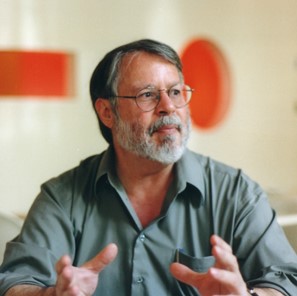
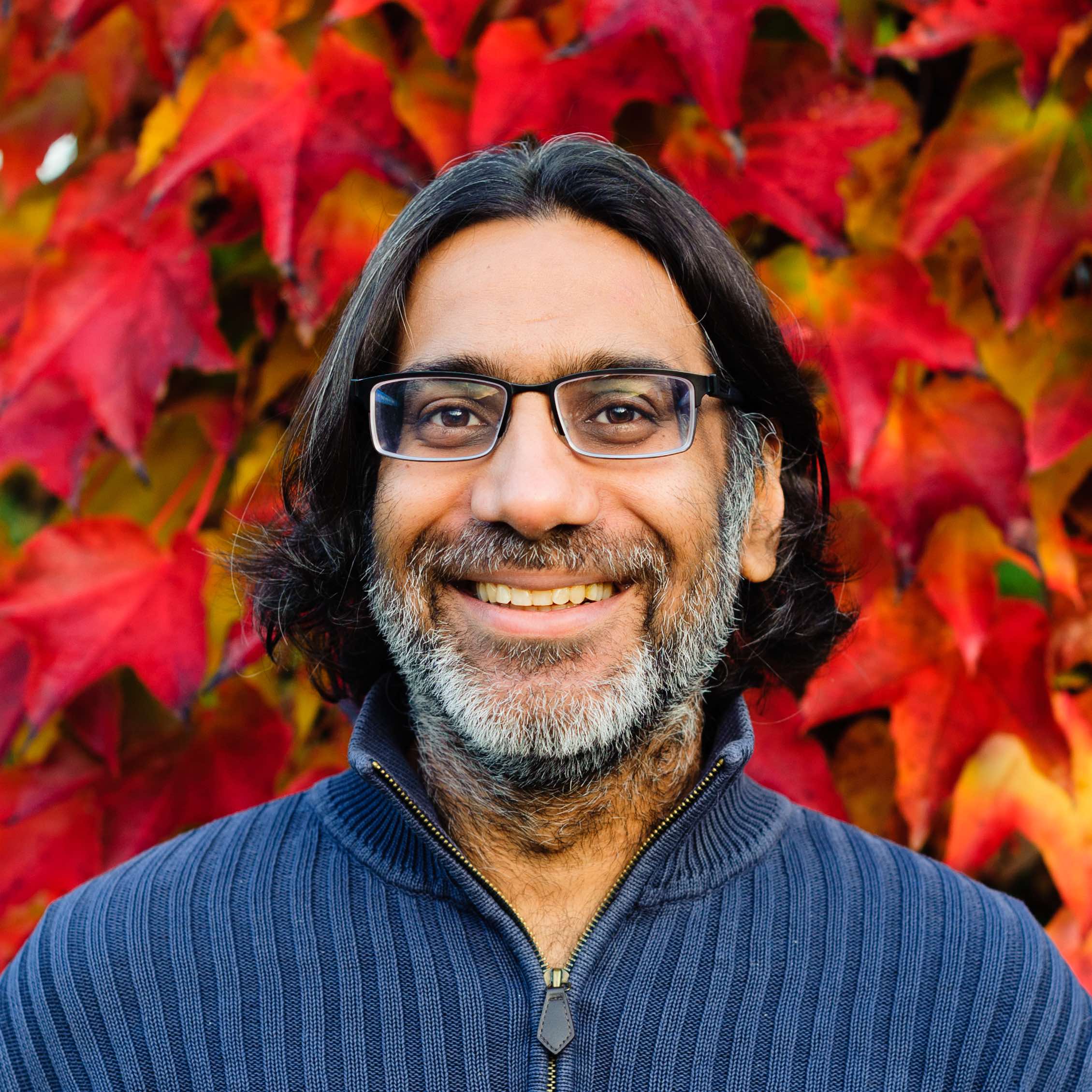
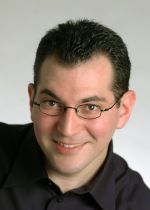
Mark Liberman is a Trustee Professor at the University of Pennsylvania , holding appointments in the Department of Linguistics and Department of Computer and Information Science . He serves as Director of the Linguistic Data Consortium and Faculty Director of Ware College House . His career spans linguistics, speech technology, and computational methods. Education: Harvard University (1965-1969), MIT (M.S. 1972, Ph.D. 1975) Professional Experience: AT&T Bell Laboratories (1975-1990), University of Pennsylvania (1990-present) His research interests include: Corpus-based Phonetics : Analyzing speech patterns via large-scale datasets. Clinical Applications : Developing speech biomarkers for neurodegenerative diseases. Tonal Phonology : Studying lexical tone and intonation in languages like Yoruba and Mandarin. Formal Annotation Models : Creating frameworks for linguistic data standardization. Recent publications highlight automated speech analysis, cross-linguistic prosody, and digital biomarkers for conditions like ALS-FTD and Alzheimer’s. His collaborations span computational linguistics , neurology , and cognitive science . Scientific awards include the IEEE James L. Flanagan Award (2017), Antonio Zampolli Prize (2010), and fellowships from the AAAS and Linguistic Society of America . He advises PhD students May Chan and Jonathan Him Nok Lee and contributes to editorial boards for journals like Cognition and Annual Review of Linguistics . His work bridges speech science , language technology , and neurocognitive research .
Mark Y. Liberman is the Christopher H. Browne Distinguished Professor of Linguistics and Trustee Professor at the University of Pennsylvania. He holds a joint appointment in the Department of Linguistics and the Department of Computer and Information Science. His roles include Director of the Linguistic Data Consortium (LDC), Faculty Director of Ware College House, and former Director of the Institute for Research in Cognitive Science. Education: A.B. in Linguistics and Applied Mathematics from Harvard University (1965–1969), M.S. (1972) and Ph.D. (1975) in Linguistics from MIT. Research focuses on corpus-based phonetics, clinical linguistics applications, tonal phonology, formal models for linguistic annotation, and computational linguistics. He explores speech production, prosody, and interdisciplinary topics like language evolution and neurobiology of speech. Recent articles highlight advancements in speech biomarkers for neurodegenerative diseases, autism analysis, and computational linguistics. Awards include Fellowships from the AAAS and Linguistic Society of America. He advises graduate students and leads large-scale language resource initiatives like LDC, contributing to open-access linguistic datasets. Labs/Teams: Linguistic Data Consortium (LDC), Institute for Research in Cognitive Science (IRCS), and collaborations in computational linguistics and neuroscience.
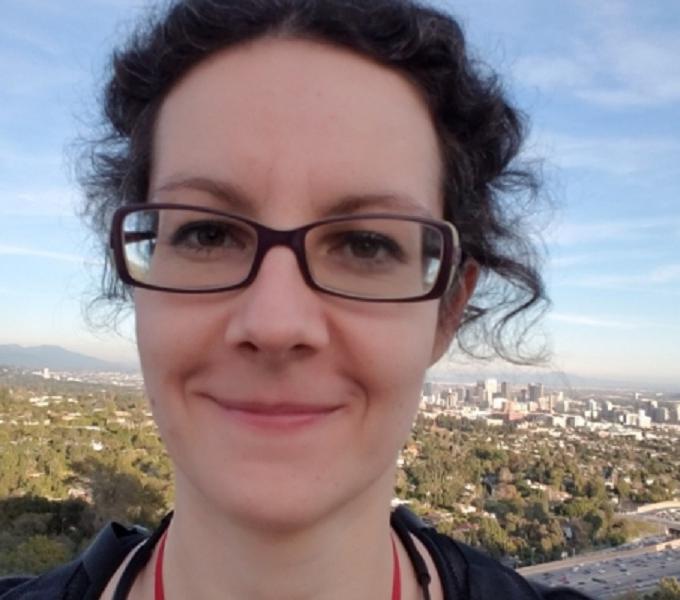
Adriana Kovashka is an Associate Professor at the University of Pittsburgh , affiliated with the School of Computing and Information and serving as Department Chair . Her academic journey began with BA degrees in Computer Science and Media Studies from Pomona College (2008) and a PhD in Computer Science from The University of Texas at Austin (2014). Joined Pitt’s faculty in January 2015 NSF CAREER awardee (2021) Google Faculty Research Award recipient Dr. Kovashka’s research spans Computer Vision , Machine Learning , and Natural Language Processing , focusing on visual rhetoric, weak multimodal supervision, and domain adaptation. She pioneered techniques for analyzing political imagery, developing robust object detection frameworks, and exploring the intersection of visual and textual persuasion through large-scale annotated datasets. Her recent work emphasizes geographic diversity in vision-language systems, audio-visual fusion for domain generalization, and shape-texture bias mitigation in CNNs. Key publications include groundbreaking studies on symbolic reasoning, multimodal dialogue systems, and ethical AI applications in education. Scientific honors include: NSF CRII Award (2016) NSF CAREER Award (2021) Pitt CRDF Award (2016, 2018) Best Paper at ECV Workshop (2021) Google Faculty Research Award (2016, 2018) Dr. Kovashka actively mentors students in multimodal learning projects and collaborates with interdisciplinary teams on NSF-funded initiatives. She co-organizes workshops like the first CVPR workshop on advertisement understanding and leads research groups exploring human-AI co-learning systems.
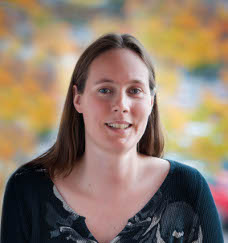
Sara Stymne is a Senior Lecturer in Computational Linguistics at the Department of Linguistics and Philology, Uppsala University, where she has been working since 2012. She initially joined as a post-doc (2012-2015), then worked as a researcher (2015-2017), and served as an assistant professor (2017-2023) before her current position as Senior Lecturer. Prior to Uppsala, she was a researcher at Linköping University's Department of Computer and Information Science. Dr. Stymne earned her PhD in Computational Linguistics from Linköping University in 2012 with the thesis 'Text Harmonization Strategies for Phrase-Based Statistical Machine Translation,' following a Licentiate degree in Computational Linguistics (2009) and a Master's degree in Cognitive Science (2006), both also from Linköping University. During her doctoral studies, she spent the autumn of 2010 and spring of 2009 at Xerox Research Centre Europe in Grenoble, France. Her primary research interests focus on cross-lingual natural language processing and digital humanities, with particular emphasis on multilingual dependency parsing. Dr. Stymne is passionate about applying computational linguistics to solve research questions in other fields, including language history, literary analysis, and political science. Her earlier work concentrated on machine translation, with specific interests in discourse-aware translation, compound processing, and error analysis. She has made significant contributions to the development of language technology tools for analyzing dialogue, narrative, and stylistic features in literature. Analysis of Dr. Stymne's recent publications reveals a strong focus on cross-lingual and cross-domain natural language processing. Her work spans multiple subfields including dependency parsing across genres and topics, discourse relation analysis in low-resource languages like Egyptian Arabic, direct speech identification in Swedish literature, and causality detection in governmental documents. A notable trend is her application of NLP techniques to digital humanities problems, particularly in analyzing literary texts and historical language change. Her research often involves creating and utilizing specialized datasets for specific linguistic phenomena across multiple languages. Dr. Stymne actively supervises graduate students, having guided numerous master's and bachelor's theses on topics ranging from speech recognition to multilingual parsing and causality detection. She leads or participates in several research projects including 'Fictional prose and language change' (funded by VR, 2021-2023) and 'Enabling climate-resilient development' (funded by Marianne and Marcus Wallenberg Foundation, 2023-2027), demonstrating her commitment to interdisciplinary research with practical applications. Her work has resulted in several notable software resources including uuPronPred for cross-lingual pronoun prediction, uuparser for dependency parsing, and Docent for document-level machine translation. Within the Computational Linguistics and Language Technology group at Uppsala University, Dr. Stymne contributes to multiple research initiatives focused on developing language technology tools for digital humanities applications. Her team works closely with literary scholars and historians to create computational methods for analyzing large corpora of literary texts, particularly focusing on Swedish literature across different historical periods. Her research bridges the gap between theoretical computational linguistics and practical applications in the humanities, creating new methodologies for quantitative analysis of literary and historical texts.
Prof. Dr. Gülşen Eryiğit is a Professor at Istanbul Technical University within the Faculty of Computer and Informatics , Department of Artificial Intelligence and Data Engineering . She founded and directs the ITU Natural Language Processing Group , Turkey's leading team in Turkish-language NLP, and serves as Senior Action Editor for ACL RR , Director of ITU TÖMER (Turkish Language Teaching Center), and Co-Chair of the EU UniDive Cost Action WG3. Education: PhD in Computer Engineering from ITU (2007), MSc and BSc from ITU and Marmara University Research: Focuses on Natural Language Processing for Turkish, including dependency parsing , coreference resolution , multiword expressions , and language education technology Her recent work involves multilingual transfer learning , LLM applications for Turkish text simplification, and gamification for morphology education. She has received prestigious awards like the Siemens Excellence Award and TÜBİTAK's Above Threshold Award . Her research has produced 65+ publications and 29+ projects funded by EU, TÜBİTAK, and industry partners. Scientific Awards: Siemens Excellence Award (2007) Above Threshold Award (TÜBİTAK, 2015) Certificate of Appreciation (EU 7th Framework, 2012) Thank You Plaque (ITU, 2017) The ITU NLP Group under her leadership has developed Turkey's first licensed NLP software exported internationally. She collaborates with European institutions through COST actions and participates in ACL, CoNLL, and LREC conferences. Her lab focuses on language technology for Turkish , including sign language processing and social media normalization.
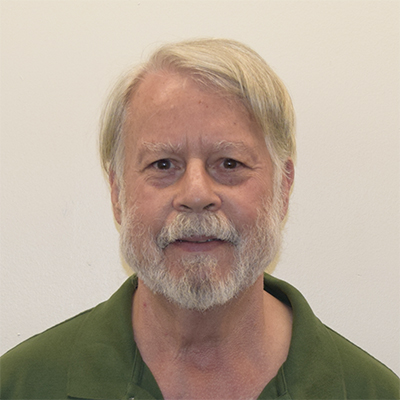
Pranav Anand is a Professor in the Department of Linguistics at the University of California, Santa Cruz (UCSC). He currently serves as the Faculty Director of the Humanities Institute at UCSC since July 2023. His research focuses on the interplay between context, interpretation, and grammatical perspective, particularly in areas like de re/de se contrasts, evaluative predication, and indexical shift. He has contributed to studies on narrative structures, evidential restrictions, and the syntax-semantics interface in sluicing. Dr. Anand has taught a variety of courses including Ling 119: Narratives , Ling 231: Semantics A , and special topics like Invented Languages: From Elvish to Esperanto . His work bridges theoretical linguistics with computational methods, evidenced by collaborations in projects such as the Santa Cruz sluicing dataset and analyses of political discourse in online commentary. His research has been published in journals like Linguistics and Philosophy , Language , and Discourse and Society , with a focus on semantics, pragmatics, and narrative linguistics. He has also contributed to computational linguistics initiatives, including the development of annotated corpora for sentiment analysis and argumentation studies. Dr. Anand's academic contributions span both theoretical exploration and applied computational linguistics, reflecting his interdisciplinary approach to understanding language structure and usage.
Jiwon Yun is an Associate Professor in the Department of Linguistics at Stony Brook University. She holds a Ph.D. in Linguistics from Cornell University (2013) and a B.S.E. in Computer Science & Engineering from Seoul National University (cum laude with honors). Her research focuses on speech prosody, syntax-semantics interfaces, and computational modeling of sentence processing, with special attention to East Asian languages like Korean, Mandarin, and Japanese. Dr. Yun teaches undergraduate and graduate courses in computational linguistics, semantics, pragmatics, and experimental phonetics. Her work bridges theoretical linguistics and experimental methods, examining how prosody interacts with syntactic and semantic structures. Recent publications investigate prosodic disambiguation of syntactic ambiguities, computational models of relative clause processing, and intonation patterns in Korean and Mandarin. She has developed tools for automated speech corpus analysis and maintains a Hangul-Yale Romanization Converter for linguistic research. Her research has been published in journals like Humanities and Social Sciences Communications , Linguistic Inquiry , and Journal of East Asian Linguistics . Teaching responsibilities include courses such as LIN 335 (Computational Linguistics) and LIN 627 (Computational Semantics).
Mark Steedman is Professor of Cognitive Science at the University of Edinburgh's School of Informatics, with adjunct appointment at University of Pennsylvania. His research spans computational linguistics, AI, and cognitive science, focusing on Combinatory Categorial Grammar (CCG) and its applications. His research examines: Combinatory Categorial Grammar parsing and semantics Language model capabilities and limitations Cross-linguistic semantic inference Brain modeling of language processing Recent publications analyze hallucination sources in large language models, cross-linguistic entailment graphs, and brain-computer parallels in structure-building. He develops computational models integrating symbolic and distributional approaches to semantics. Honors include ACL Lifetime Achievement Award (2018) and George E. Davis Medal (2001). He serves on editorial boards of major linguistics journals and has authored influential books including 'The Syntactic Process' and 'Taking Scope'.
Tim Van de Cruys is a Senior Lecturer at the Faculty of Arts, KU Leuven, serving as Head of the Centre for Computational Linguistics (CCL). He maintains significant affiliations with LECTIO (KU Leuven Institute for the Study of the Transmission of Texts, Ideas and Images), Leuven.AI (KU Leuven Institute for Artificial Intelligence), and LILI (KU Leuven Interdisciplinary Language Institute). His work bridges computational linguistics, artificial intelligence, and humanities research with practical applications across multiple disciplines. Dr. Van de Cruys specializes in computational semantics and creative language generation, with particular expertise in applying NLP techniques to historical and classical texts. His research spans multiple domains including: Natural Language Processing for ancient languages (Latin, Ancient Greek) Computational approaches to lexical and compositional semantics Large language models and their applications in humanities research Creative language generation and human-AI collaboration Named entity recognition and disambiguation in historical contexts Non-autoregressive modeling for sequential generation tasks His recent publications demonstrate a strong focus on applying cutting-edge NLP techniques to humanities challenges, particularly in processing ancient languages. He frequently employs transformer models to address named entity recognition, word sense discrimination, and semantic analysis in low-resource language contexts. His work consistently bridges formal linguistic theory with practical computational applications, creating valuable tools for digital humanities scholars. As promotor and co-promotor on numerous research projects extending through 2029, Dr. Van de Cruys supervises PhD students working at the AI-humanities intersection. His current major projects include "Living Corpora" (exploring human-AI collaboration in digital humanities), "Stochastic processes and non-autoregressive models for sequential generation," and "NIKAW" (exploring knowledge networks from classical antiquity). These projects demonstrate his commitment to advancing both theoretical understanding and practical applications of computational linguistics. He teaches various courses including Computational Linguistics, Scripting Languages, Programming for Humanities, Computational Creativity, and AI for Humanities, training students to work at this critical interdisciplinary crossroads. His leadership of the Centre for Computational Linguistics positions him at the forefront of computational linguistics research in Belgium, where he continues to expand the boundaries of what's possible at the intersection of language, computation, and humanistic inquiry.
Joakim Nivre is a Professor at Uppsala University's Department of Linguistics and Philology. He is a leading researcher in computational linguistics, with a focus on dependency parsing, Universal Dependencies (UD) framework development, and multilingual NLP applications. His recent work explores LLMs in climate change discourse analysis, pharmacovigilance explainability, and historical text processing. Key research areas: Dependency parsing theory, Universal Dependencies standardization, LLM evaluation Collaborations: SweSAT-1.0 benchmark development, ClimateEval project, PARSEME integration His 2025-2023 publications demonstrate expertise in explainable AI for healthcare, synthetic data generation for idioms, and multilingual benchmark design. Notably, he co-developed SweSAT-1.0 to evaluate Swedish LLMs and contributed to typology-informed UD revisions. Despite extensive work in NLP, no scientific awards are mentioned in available texts.
Yevgeni Berzak is an Assistant Professor at the Technion and a Research Affiliate at Mit BCS . He directs the Technion Language, Computation and Cognition (LaCC) Lab and leads the Cognitive Science Track in the Data Science and Engineering degree at the Technion. His academic background includes: PhD in Computer Science at Infolab, MIT CSAIL Postdoctoral research with Roger Levy at MIT CPL Lab Masters in Computational Linguistics at Universities of Saarland and Nancy Bachelors in Cognitive Science and Amirim Honors Program at Hebrew University of Jerusalem His research focuses on the intersection of Cognitive Science and Natural Language Processing (NLP) , studying human language acquisition and processing through computational modeling, linguistic theory, and neuroimaging. He develops datasets like OneStopQA and CELER , and explores how human gaze patterns can improve machine language understanding. Recent publications address topics such as: Eyetracking for language proficiency assessment Repetition effects in reading behavior Readability prediction via scrolling interactions Structured annotation schemes for reading comprehension The LaCC Lab under his leadership combines theoretical linguistics with machine learning to bridge human and artificial language processing.
Benoît Sagot is a Senior Researcher in Natural Language Processing and Computational Linguistics at Inria , currently holding the 2023-2024 Informatics and Digital Sciences Annual Chair at Collège de France. He directs the ALMAnaCH research team and contributes to the PRAIRIE Institute for AI research. Research Focus: His work spans neural language models, machine translation, text simplification, multimodal NLP, and lexical resource development for French and low-resource languages. He explores computational morphology, etymology, and historical linguistics, with applications in opinion mining and computational oenology. Recent Articles emphasize language model interpretability, cross-lingual transfer, and multimodal integration (speech, image). Tools & Resources: He has developed morphological lexicons (Le fff, Alexina), corpora (OSCAR, CAMEMBERT), and parsing pipelines (SxPipe). Projects: Involved in initiatives like ANR BASNUM (Furetière's dictionary digitization) and 3IA PRAIRIE (AI research). His career combines foundational work in syntactic analysis with evolving deep learning approaches.
Daniel Klein is a Professor in the Computer Science Division at the University of California at Berkeley , affiliated with the Berkeley Artificial Intelligence Research Lab (BAIR) and the Berkeley Natural Language Processing Group . His research focuses on statistical natural language processing, including unsupervised learning, syntactic parsing, information extraction, and machine translation, with applications in historical linguistics and AI.
Reynaldo Romero serves as Associate Professor in the Department of History, Humanities and Languages at the University of Houston-Downtown, where he has maintained active teaching and research since at least 2012. His academic foundation spans linguistics, public health, and translation studies across multiple institutions. His educational background includes: Ph.D. in Spanish Linguistics from Georgetown University (Dissertation: Structural Consequences of Language Shift: Judeo-Spanish in Istanbul) M.P.H. in Community Health Practice from UTHealth (Dissertation: Beliefs on COVID-19 vaccination among Hispanic day laborers) M.A. in Translation from Kent State University Multiple B.A. degrees in French, General Linguistics, and Spanish Language/Linguistics from Rice University Romero's research creates critical intersections between linguistic theory and real-world applications. His work on Spanish for the Professions establishes frameworks for medical and legal interpreting while addressing systemic language access barriers. The scholarship on endangered languages—particularly Judeo-Spanish and Afro-Hispanic varieties—combines rigorous documentation with urgent revitalization efforts. His healthcare access research directly engages Houston's linguistic minorities through community-based projects like the Medical Translation Project with HISD. Recent publications reveal three dominant trajectories: (1) advancing methodologies in Afro-Hispanic linguistics through collaborative edited volumes; (2) developing social justice frameworks for marginalized language communities; and (3) documenting endangered linguistic varieties with innovative digital approaches. These threads converge in his community-engaged scholarship that bridges academic research and practical language access solutions. Professional recognition includes: Certified Translator status from the American Translators Association Advanced Professional Analytic Linguist certification Specialized medical and legal interpreter credentials Online teaching certification with digital tools specialization Romero's grant activity demonstrates sustained commitment to practical applications of linguistic research. Current projects include 'Promoting the Critical and Responsible Use of Digital Tools and AI in Written Tasks' (2024-2025), while past work developed medical interpreter training during disaster relief and language access protocols for healthcare settings. His service learning initiatives—like the Medical Translation Project with Houston ISD—create tangible community impact while advancing pedagogical innovation. Through the Medical Translation Project and language access advocacy, Romero cultivates collaborative spaces where academic research directly serves Houston's linguistic minorities. His work with heritage speakers and endangered language communities establishes frameworks for linguistic empowerment beyond traditional academic boundaries.
Martin Rajman is a Senior Scientist at École Polytechnique Fédérale de Lausanne (EPFL) with multiple affiliations across the institution. He holds positions in the School of Computer and Communication Sciences (SIN - Teaching, SCI IC MR Group, SSC - Teaching) as well as in the Vice Presidency for Strategic Development (VPS Artificial Intelligence) and the Vice Presidency for Academic Affairs (SNAI Administration). He serves as the Executive Director of Nano-tera.ch, a large Swiss Research Program funding collaborative multi-disciplinary projects in Health and the Environment. Rajman's research spans the intersection of artificial intelligence, natural language processing, and information retrieval. His work demonstrates a consistent focus on developing practical applications of computational linguistics and machine learning techniques. Early in his career, he contributed significantly to syntactic parsing, stochastic language models, and vector space representations for text. More recently, his research has expanded into deep learning applications for 3D reconstruction, empathetic conversational agents, and distributed analytics systems. His publications reveal a trajectory from foundational NLP research toward increasingly applied and interdisciplinary work connecting AI with healthcare, environmental monitoring, and human-computer interaction. Analysis of his recent publications (2015-2024) shows a clear evolution toward more applied AI research with strong interdisciplinary connections. While maintaining his core expertise in natural language processing and information retrieval, his work has expanded into computer vision, healthcare applications, and sustainable computing. The publications demonstrate increasing collaboration across disciplines, with applications in medical imaging, mental health support systems, environmental monitoring, and human-centered AI. His leadership role in the Nano-tera.ch program reflects this interdisciplinary approach, connecting computing research with real-world challenges in health and environmental contexts. Rajman has mentored several PhD students including Ailomaa Marita, Eckard Emmanuel, Melichar Miroslav, and Veselý Martin. His research has been supported through the Nano-tera.ch program, which has funded more than 100 research projects with over 95 million CHF in public funding. He has also managed more than 20 European projects during his tenure as Director of the EPFL Global Computing Center. As Executive Director of Nano-tera.ch, Rajman leads a significant research initiative connecting EPFL with national and international partners. His work bridges academic research with industry applications, notably through collaborations with eBay on product ranking technology and with Elsevier on article recommendation systems. His leadership extends to managing large-scale research programs while maintaining an active research agenda and mentoring the next generation of computer scientists.