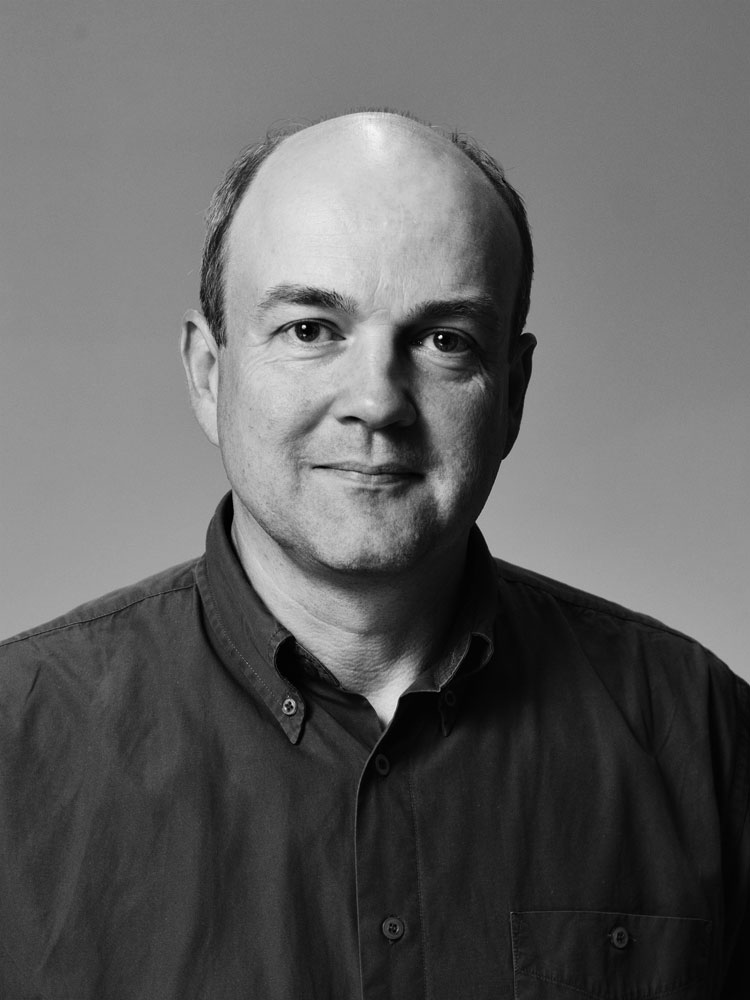
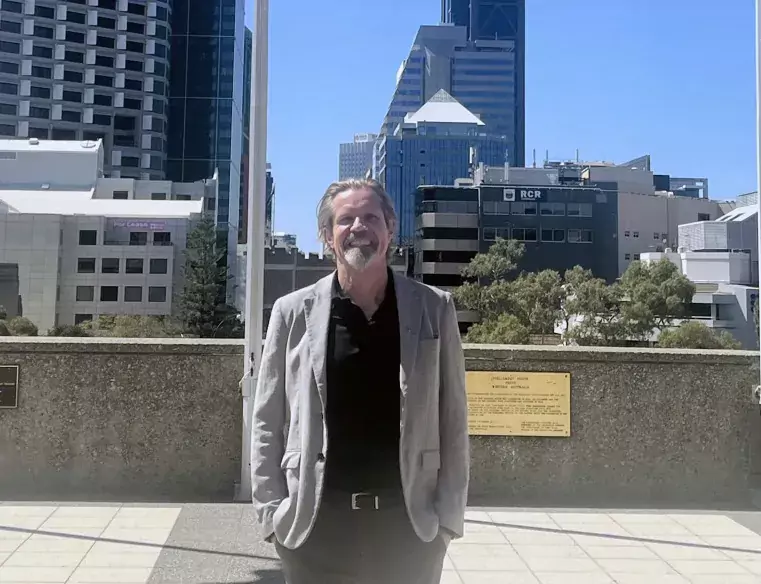
Jens Edlund is a Professor at KTH Royal Institute of Technology's Division of Speech, Music and Hearing. His research focuses on speech technology, dialogue systems, prosody, and evolutionary phonetics. He has contributed to foundational work on speech synthesis, conversational interaction, and multimodal corpora like the D64 corpus. Key projects include the MonAMI Reminder system and analysis of primate vocalizations to understand speech evolution. Edlund has collaborated extensively with global researchers, producing over 150 peer-reviewed works. His work integrates computational methods with linguistic and biological insights, emphasizing human-like dialogue systems and cross-species vocal analysis. Education: Ph.D. in Speech Technology (2011, KTH) Grants: Multiple EU and Swedish Research Council grants for speech technology and interdisciplinary studies Research labs include the KTH Speech, Music and Hearing Lab and collaborations with institutions like Max Planck Institute for Evolutionary Anthropology. Current work explores evolutionary origins of speech biomechanics and AI-driven speech synthesis evaluation.
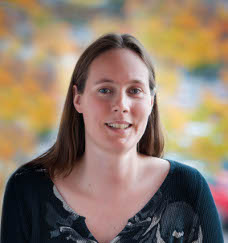
Sara Stymne is a Senior Lecturer in Computational Linguistics at the Department of Linguistics and Philology, Uppsala University, where she has been working since 2012. She initially joined as a post-doc (2012-2015), then worked as a researcher (2015-2017), and served as an assistant professor (2017-2023) before her current position as Senior Lecturer. Prior to Uppsala, she was a researcher at Linköping University's Department of Computer and Information Science. Dr. Stymne earned her PhD in Computational Linguistics from Linköping University in 2012 with the thesis 'Text Harmonization Strategies for Phrase-Based Statistical Machine Translation,' following a Licentiate degree in Computational Linguistics (2009) and a Master's degree in Cognitive Science (2006), both also from Linköping University. During her doctoral studies, she spent the autumn of 2010 and spring of 2009 at Xerox Research Centre Europe in Grenoble, France. Her primary research interests focus on cross-lingual natural language processing and digital humanities, with particular emphasis on multilingual dependency parsing. Dr. Stymne is passionate about applying computational linguistics to solve research questions in other fields, including language history, literary analysis, and political science. Her earlier work concentrated on machine translation, with specific interests in discourse-aware translation, compound processing, and error analysis. She has made significant contributions to the development of language technology tools for analyzing dialogue, narrative, and stylistic features in literature. Analysis of Dr. Stymne's recent publications reveals a strong focus on cross-lingual and cross-domain natural language processing. Her work spans multiple subfields including dependency parsing across genres and topics, discourse relation analysis in low-resource languages like Egyptian Arabic, direct speech identification in Swedish literature, and causality detection in governmental documents. A notable trend is her application of NLP techniques to digital humanities problems, particularly in analyzing literary texts and historical language change. Her research often involves creating and utilizing specialized datasets for specific linguistic phenomena across multiple languages. Dr. Stymne actively supervises graduate students, having guided numerous master's and bachelor's theses on topics ranging from speech recognition to multilingual parsing and causality detection. She leads or participates in several research projects including 'Fictional prose and language change' (funded by VR, 2021-2023) and 'Enabling climate-resilient development' (funded by Marianne and Marcus Wallenberg Foundation, 2023-2027), demonstrating her commitment to interdisciplinary research with practical applications. Her work has resulted in several notable software resources including uuPronPred for cross-lingual pronoun prediction, uuparser for dependency parsing, and Docent for document-level machine translation. Within the Computational Linguistics and Language Technology group at Uppsala University, Dr. Stymne contributes to multiple research initiatives focused on developing language technology tools for digital humanities applications. Her team works closely with literary scholars and historians to create computational methods for analyzing large corpora of literary texts, particularly focusing on Swedish literature across different historical periods. Her research bridges the gap between theoretical computational linguistics and practical applications in the humanities, creating new methodologies for quantitative analysis of literary and historical texts.
Michael J. Black is a Professor and Honorarprofessor at the University of Tübingen's Faculty of Science, Department of Computer Science, and a founding Director of the Max Planck Institute for Intelligent Systems, leading the Perceiving Systems department. He holds a B.Sc. from the University of British Columbia (1985), M.S. from Stanford (1989), and Ph.D. in Computer Science from Yale (1992). His research focuses on computer vision, 3D human modeling, motion capture, and AI-driven digital humans. Key contributions include the SMPL body model, optical flow algorithms, and datasets like Middlebury Flow and Sintel. He has received major awards such as the PAMI Distinguished Researcher Award, multiple Koenderink and Longuet-Higgins Prizes, and is a member of the German National Academy of Sciences Leopoldina and Royal Swedish Academy of Sciences. His commercial ventures include co-founding Body Labs (acquired by Amazon) and Meshcapade, advancing 3D human generation and interaction technologies. Recent work includes markerless motion capture systems (e.g., MAMMA, PICO), 3D hair and garment synthesis, and AI tools like ChatHuman for 3D human interaction analysis. His research bridges vision, graphics, and robotics, with applications in animation, healthcare, and robotics.
Mattias Heldner is Professor of Phonetics and Head of Department at the Department of Linguistics, Stockholm University. He also serves as Director of the Phonetics Laboratory where he has developed advanced recording facilities for breathing movements and voice quality dynamics in conversation. Dr. Heldner received his PhD in Phonetics from Umeå University in 2002, completed a postdoc at TeliaSonera Sweden in 2005, became Docent in Speech Communication at KTH Royal Institute of Technology in 2007, and was appointed Professor in Phonetics at Stockholm University in 2011. His research focuses on communicative behavior relevant for turn-taking in conversation and signaling of prosodic functions such as prominence and boundaries. His work spans multiple dimensions of speech communication, including: Respiratory patterns and their role in conversation flow Voice quality dynamics as turn-taking cues Prosodic functions in spontaneous speech Physiological constraints in verbal communication Acoustic properties of child speech development Neural correlates of lexical stress Dr. Heldner's recent publications demonstrate how respiratory signals provide crucial information for predicting speech activity and managing turn-taking. His research combines physiological measurements with acoustic analysis to uncover hidden aspects of conversational organization, particularly the relationship between breathing patterns and speech timing. As an educator, Dr. Heldner has taught phonetics courses for Speech and Language Pathology students at Karolinska Institutet, University of Gothenburg, and Umeå University. He currently supervises one PhD student and has successfully supervised two PhD theses to completion. Dr. Heldner has held several Swedish research grants and served as one of the Technical Program Chairs for Interspeech 2017 in Stockholm. His Phonetics Laboratory has developed innovative systems like RespTrack for measuring respiratory movements during speech with high experimental control.
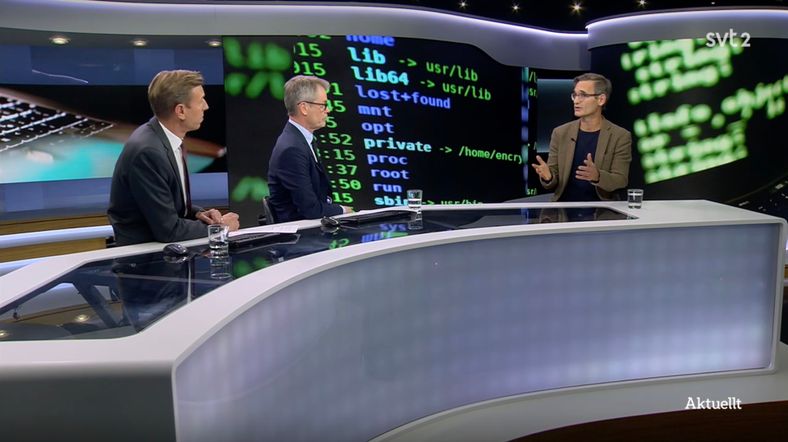
Pontus Johnson is a Professor at the KTH Royal Institute of Technology in Stockholm, Sweden. He leads the Center for Cyber Defense and Information Security (collaborating with Swedish Armed Forces, FRA, MSB, FOI, FHS) and serves as vice director of Cybercampus Sweden since 2024. His research focuses on cybersecurity , enterprise architecture analysis , and probabilistic threat modeling , particularly through his development of the Meta Attack Language (MAL) for simulating cyber attacks on networked systems. Education: MSc in Computer Science, Lund Institute of Technology (1997) PhD in Computer Science, KTH (2002) Docent title, KTH (2007) Leadership Roles: Director, Center for Cyber Defense and Information Security (2013–present) Vice Director, Cybercampus Sweden (2024–present) Board Member, Swedish Research Council (2025–present) Deputy Chair, Swedish Royal Academy of Engineering Sciences (IVA) Board (2024–present) His work spans cybersecurity research , attack simulation methodologies , and enterprise architecture frameworks . He has developed tools like securiCAD (acquired by Google) and pwnPr3d for probabilistic threat modeling. His 15 most recent publications highlight advancements in graph-based attack simulations , automated security assessments , and AI applications in cyber defense . Scientific recognition includes: Listed among Tech Awards Sweden's 50 Most Influential People in Swedish Tech (2022, 2023) Discovery of vulnerability in the Universal Turing Machine (2021) He supervises 16 PhD students and alumni (2005–2024), including Simon Gökstorp , Jakob Nyberg , and Sotirios Katsikeas . His academic service includes over 50 program committee roles and leadership positions in international conferences. He contributes to both academic and public domains through media appearances (SVT, Aftonbladet), courses in ethical hacking , and industry collaboration via his role at Google (20% of his time). His research group Software Systems Architecture and Security (SSAS) focuses on predictive security frameworks and system-of-systems analysis.
Hedvig Kjellström is a Professor at the Division of Robotics, Perception and Learning within the School of Electrical Engineering and Computer Science at KTH Royal Institute of Technology. She holds significant affiliations with the Swedish e-Science Research Centre and the Max Planck Institute for Intelligent Systems in Germany. Her work spans multiple interdisciplinary domains and she serves as Editor-in-Chief for CVIU and was Program Chair for CVPR 2025. Her research centers on Computer Vision as a sub-field of AI, with three interconnected themes: Computational Aesthetics (exploring aesthetic aspects of human communicative behavior), Communicative Behavior (developing models of how humans and animals perceive and produce non-verbal communication), and Embodied Artificial Intelligence (creating methodologies for robots and autonomous agents to perceive the world through sensors, primarily vision). Her work has significant applications in medical diagnostics, animal welfare, human-robot interaction, and creative arts. Analysis of her recent publications reveals a strong trend toward multimodal AI systems that integrate vision, language, and action understanding. Her research increasingly focuses on animal-centered applications, particularly equine pain detection and behavior analysis, while maintaining strong foundations in human communication modeling, gesture recognition, and 3D reconstruction techniques. The interdisciplinary nature of her work bridges computer science with veterinary medicine, neuroscience, and performing arts. Hedvig Kjellström actively supervises numerous PhD and Master's students across various projects and maintains extensive collaborations with institutions including Karolinska Institutet, Swedish University of Agricultural Sciences, and international partners. Her research is supported by major funding bodies including WASP, VR, and SeRC. She leads or participates in several notable projects including OrchestrAI (communication between conductor and orchestra), ANITA (Animal Translator), MARTHA (3D horse motion analysis), and STING (synthesis and analysis with transducers and invertible neural generators). Her work with ACAI (Animal Centered Artificial Intelligence), which she co-founded and directs, demonstrates her commitment to applying AI for animal welfare.
Elias Jarlebring is a Professor in Numerical Linear Algebra at the Department of Mathematics, KTH Royal Institute of Technology, Stockholm. He has held the position of Full Professor since 2021, following his tenure as Associate Professor (2013-2021) and Dahlquist Research Fellow (2011-2013). His research focuses on numerical analysis, numerical linear algebra, matrix computations, and scientific computing. Jarlebring develops linear algebra algorithms to solve problems from various fields including systems and control, acoustics, electromagnetics, data science, quantum mechanics, and quantum chemistry. He is a core developer of NEP-PACK, a scientific computing software package for nonlinear eigenproblems. His recent publications demonstrate significant contributions to computational methods for nonlinear eigenvalue problems, matrix functions, and parameterized linear systems. The research shows a clear trajectory toward increasingly complex applications in quantum computing, data science, and wave propagation problems. Project grant, Swedish research council (2019) Ruth och Nils-Erik Stenbäcks foundation, junior grant (2019) Göran Gustafsson Prize for junior researchers (2014) Project grant for junior researchers, Swedish research council (2014-2018) Professor Jarlebring has supervised numerous PhD students including Vilhelm Peterson Lithell, Gustaf Lorentzon, Siobhán Correnty, Parikshit Upadhyaya, Emil Ringh, Antti Koskela, and Giampaolo Mele. He has received multiple research grants from the Swedish Research Council and serves as editor for BIT Numerical Mathematics, Linear and Multilinear Algebra, NACO Numerical Algebra Control and Optimization, and CALCOLO. He is actively involved in the numerical linear algebra community as a member of ILAS (International Linear Algebra Society), GAMM Activity Group on Numerical Linear Algebra, and the Nordic Numerical Linear Algebra Association. He also contributes to open source projects, particularly in the Julia programming language ecosystem.
Martin Volk is a Full Professor of Computational Linguistics at the University of Zurich, with a dual affiliation to the Department of Informatics since 2019. He holds a PhD from the University of Koblenz and has held academic positions at institutions including Stockholm University (part-time from 2008-2011), Zurich University of Applied Sciences, and the University of Georgia. His research focuses on grammar engineering, machine translation evaluation, multilingual text analysis, and cross-language information retrieval. Education : Born in Cochem, Germany Studied Computer Science and Computational Linguistics at EWH University, Koblenz Master's in Artificial Intelligence at the University of Georgia (Fulbright Scholar) PhD in Computational Linguistics from the University of Koblenz Research Interests : His work emphasizes data-driven NLP methods, including corpus-based approaches, parsing technologies, and the application of machine learning to historical and multilingual texts. Key focuses include: Machine translation systems and evaluation frameworks Grammar testing environments (e.g., GTU) OCR and digitization of historical documents (e.g., Gothic script) Development of parallel corpora for linguistic research Projects : SMULTRON: Multilingual parallel treebank project Bullinger Digital: Historical document digitization initiative Text+Berg: Digital Humanities project for alpine textual heritage EU-funded MuchMore (cross-language medical IR) Grants & Collaborations : Recipient of grants from the Swiss National Science Foundation, EU projects, and industry partnerships (e.g., Siemens, Xerox). His work integrates academic and industrial perspectives in NLP tool development. Labs & Teams : Leads research teams in the Institute of Computational Linguistics at UZH, focusing on projects like the Zurich Parallel Corpus Collection and MODERN (modeling discourse for MT).
Joakim Nivre is a Professor at Uppsala University's Department of Linguistics and Philology. He is a leading researcher in computational linguistics, with a focus on dependency parsing, Universal Dependencies (UD) framework development, and multilingual NLP applications. His recent work explores LLMs in climate change discourse analysis, pharmacovigilance explainability, and historical text processing. Key research areas: Dependency parsing theory, Universal Dependencies standardization, LLM evaluation Collaborations: SweSAT-1.0 benchmark development, ClimateEval project, PARSEME integration His 2025-2023 publications demonstrate expertise in explainable AI for healthcare, synthetic data generation for idioms, and multilingual benchmark design. Notably, he co-developed SweSAT-1.0 to evaluate Swedish LLMs and contributed to typology-informed UD revisions. Despite extensive work in NLP, no scientific awards are mentioned in available texts.
Sven Bölte is a Professor at Karolinska Institutet where he leads the research group focused on Autism, ADHD and other developmental neurological conditions as part of the Center for Neurodevelopmental Disorders (KIND). His work bridges clinical research, education, and practical implementation of evidence-based approaches for neurodevelopmental conditions. Professor Bölte's research spans multiple domains within neurodevelopmental disorders, with particular emphasis on implementing the International Classification of Functioning, Disability and Health (ICF) Core Sets for autism and ADHD using digital solutions. His group has developed and evaluated social skills training programs (KONTAKT, SKOLKONTAKT, iKONTAKT) for autistic children and adolescents, conducted twin research through the Roots of Autism and ADHD Twin Study in Sweden (RATSS), and advanced diagnostic instruments for autism, ADHD, social cognition, and adaptive behavior. His recent publications reveal a strong focus on translating research into practice, with significant work on strengths-based approaches, social inclusion, neurodiversity-affirmative assessment, and the development of practical tools for clinicians and educators. The research demonstrates increasing attention to adult experiences of autism, cross-cultural validation of interventions, and the integration of digital technology in assessment and intervention. Bölte's group also delivers extensive educational components for professionals through KI-Utbildning (Assignment Education), making it one of the largest providers of training on diagnosis and support for individuals with developmental neurological conditions within Karolinska Institutet. His work frequently addresses policy implications, as evidenced by participation in Swedish parliamentary discussions about autism and ADHD.
Mikko Kurimo is a Full Professor at Aalto University's Department of Information and Communications Engineering, School of Electrical Engineering. He earned his M.Sc., Lic.Tech., and D.Sc.(Tech.) from Helsinki University of Technology (1992, 1994, 1997) and pioneered neural networks for automatic speech recognition (ASR) in his PhD thesis. After research roles at IDIAP (Swiss AI center) and visiting positions at University of Colorado, Edinburgh, SRI, ICSI, and Nitech, he leads Aalto's ASR group since 2000. His work focuses on unsupervised subword modeling for morphologically complex languages (Finnish, Estonian, Turkish, Arabic) and large speech foundation models. PhD in Neural ASR (Helsinki University of Technology, 1997) Research Scientist at IDIAP (Switzerland) Visiting Fellow at University of Colorado, Edinburgh, SRI, ICSI, Nitech Head of Aalto ASR Group (2000-present) His research spans deep learning for ASR, spoken language modeling , and low-resource language solutions . Recent work explores continued pre-training of self-supervised models, multimodal emotion recognition, and pronunciation assessment using LLMs. He led the winning team in the 2017 Multi-Genre Broadcast challenge and secured competitive funding in Tekes Challenge Finland and EC's H2020-ICT-2017. Key article trends include: Advancements in children's speech recognition and dysarthric speech processing Integration of generative AI for language learning feedback Specialization in low-resource Uralic languages (Finnish, Northern Sámi) Development of robust ASR systems for complex phonetic environments Scientific Awards ACM Multimedia 2023 Computational Paralinguistics Challenge Prize First place in MGB3 2017 Arabic ASR Challenge ISCA Best Student Paper Award (2011) Professeur Invité at Université de Saint-Etienne (2005-2006) Royal Society International Short Visit Fellowship (2004) Professor Kurimo leads the Speech Recognition Group at Aalto, collaborating with COIN (Centre of Excellence in Computational Inference) and AIRC (Adaptive Informatics Research Centre). His projects like CaptainA mobile app demonstrate practical applications of ASR in language education. He has supervised numerous publications with co-authors in domains spanning bandwidth extension, stuttering detection, and speech sound disorder assessment.
Senior Lecturer Christoffer Dahl is a faculty member at Kristianstad University within the Faculty of Teacher Education and the Department of Subject Teacher Education . He specializes in Swedish with a didactic focus and is an active member of the Learning in Language and Literature (LiLL) research group. Since 2015, he has contributed significantly to both teaching and research in literature education, particularly in the areas of textbook analysis, multimodal discourse, and literary didactics. Research Focus: Theoretical and methodological intersections between linguistics , literary studies , and didactics Reception theory, genre theory, and discourse analysis in educational contexts Multimodal analysis of literature textbooks Comparative Nordic textbook studies (Denmark, Norway, Sweden) Intersectionality in literature education His current major project is a comparative study that builds on his doctoral thesis, Litteraturstudiets legitimeringar , analyzing how Nordic literature textbooks legitimize the study of literature through writing and images, with a focus on intersectionality. Teaching & Collaboration: Christoffer teaches text analysis and children's literature . He has collaborated since 2013 with Mikael Nordenfors (University of Gothenburg) on the Swedish National Agency for Education’s website, contributing to the SMDI network (Swedish with a didactic orientation). Supervision & Academic Service: Supervised 75 student works Active peer reviewer for journals and publishers (e.g., Routledge, Taylor & Francis) Organizer and participant in multiple academic conferences and workshops Consultant and expert reviewer for educational agencies
Magnus Boman is a Professor of AI and Health at the Department of Medicine, Solna, Karolinska Institutet (KI), where he leads the AI@KI initiative to support researchers in AI integration. He is affiliated with the Chronic Inflammatory Disease Epidemiology research group under Johan Askling. His research focuses on AI applications in precision medicine, multimodal prediction, ethical norms in AI systems, energy-efficient computing, and quantum sensor data interpretation. Research Interests: Artificial Intelligence in healthcare and precision medicine Multimodal data analysis for disease prediction and treatment Machine learning for clinical decision support systems Ethical and societal implications of AI Grants: Swedish Research Council: Improving breast cancer histology image classification (2024-2026) Scalable Federated Learning (2022-2025) Ai in sustainable cities (VINNOVA, 2019) Advising & Students: Supervised over 50 PhD and Master's students across KI, KTH, and Stockholm University, focusing on AI applications in healthcare, machine learning, and computational epidemiology. Notable projects include predictive modeling for mental health outcomes and variant filtering in genetic data. Labs & Teams: Leads AI@KI, fostering AI adoption in medical research. Collaborates with the Johan Askling group on epidemiology and chronic disease studies.
Alina Landowska serves as Assistant Professor in the Department of Cultural Studies at the Faculty of Humanities, SWPS University of Social Sciences and Humanities in Warsaw. Her academic profile integrates cultural studies, computational linguistics, and ethics, with significant contributions to understanding moral foundations in digital discourse and technological futures. Her educational background includes degrees in Management and Economics from Gdańsk University of Technology and European Integration from the Pontifical University of John Paul II in Krakow, complemented by international scholarship experiences: SDG Academy (United Nations) Tantur Ecumenical Institute, Jerusalem (University of Notre Dame) Baltic University Program, Uppsala Swedish Institute of Environmental Research, Kalmar Royal Danish Student Fund, Copenhagen Landowska's research investigates cultural evolution through computational discourse analysis, focusing on morality-technology intersections. She pioneers text-mining methodologies to examine moral foundations in social media, anticipatory rhetoric in digital communication, and value-based management frameworks. Her work bridges humanities with data science, analyzing polarization mechanisms and proleptic cues in online environments while exploring cooperation ethics in business contexts. Recent publications demonstrate methodological innovation in mapping technological futures through sentiment/emotion analysis and moral-value detection systems. Her article corpus reveals consistent thematic threads: digital rhetoric analysis (particularly prolepsis functions), moral psychology applications in AI/social media, and cultural evolution studies linking cooperation theory with business ethics. This interdisciplinary approach positions her at the nexus of computational social science and humanistic inquiry. No scientific awards or prizes are documented in her current professional profile. As an educator, Landowska mentors students in discourse analysis methodologies and socio-economic media studies while serving as executive coach with EMCC Poland. Her research leadership extends to co-founding the Institute for Development think tank and representing Employers of Poland at the OECD's Business and Industry Advisory Committee (2016-2018). She previously held vice-presidential roles in the Polish Association of Businesswomen. Landowska maintains active research affiliations with the Humanistic Management Center (University of Lucerne), International Council for Small Business (George Washington University), and ArgDiaP association. Her 2022-2024 tenure with New Ethos Lab advanced dialogue studies in persuasion frameworks, complementing her current work on digital rhetoric's ethical dimensions.
Mads Dam is a Professor in Teleinformatics at the School of Computer Science and Communication at Kungliga Tekniska Högskolan (KTH), where he heads the Department of Theoretical Computer Science. His research focuses on computer security, formal methods, and program logics, with particular emphasis on the formal modeling and verification of low-level hardware and software execution platforms for security and application isolation. His educational background includes: PhD in Computer Science from the University of Edinburgh (1990) MSc in Computer Engineering from Aalborg University, Denmark BSc in Information Technology from Aalborg University, Denmark Mads Dam's research interests center on computer security, formal methods, and program logics. His current work focuses on the formal modeling and verification of low-level hardware and software execution platforms such as hypervisors and OS kernels and their underlying hardware. He has made significant contributions to information flow security, verification of microarchitectural systems, and network programming language security. His research bridges theoretical foundations with practical security applications. His recent publications show a strong trend toward verifying low-level systems, with a focus on information flow security for processors, network programming languages (particularly P4), and microarchitectural vulnerabilities. His work combines formal methods with practical security concerns, developing verification techniques that address real-world security challenges in hardware and software systems. The research spans theoretical foundations in temporal and epistemic logics to practical applications in network security and processor verification. His scientific awards and recognition include: Two framework grants from the Swedish Foundation for Strategic Research A junior individual grant from the Swedish Foundation for Strategic Research Project grants and a five-year research fellowship from the Swedish Research Council (VR) Project grants from Ericsson, Microsoft Research, US Air Force, and Vinnova (the Swedish Innovation Agency) Mads Dam has been a principal investigator on numerous research projects and has supervised many graduate students. He has been a partner in several European projects including HATS, S3MS, VerifiCard, LOMAPS, and UaESMC. His research has been supported by substantial grants from major funding bodies, reflecting the significance and impact of his work in computer security and formal methods. He is a founding member of several research centers at KTH, including Access, the CASTOR software research center, and the CDIS center for cyber defense and information security. These centers bring together researchers from multiple disciplines to address complex challenges in cybersecurity and software engineering.