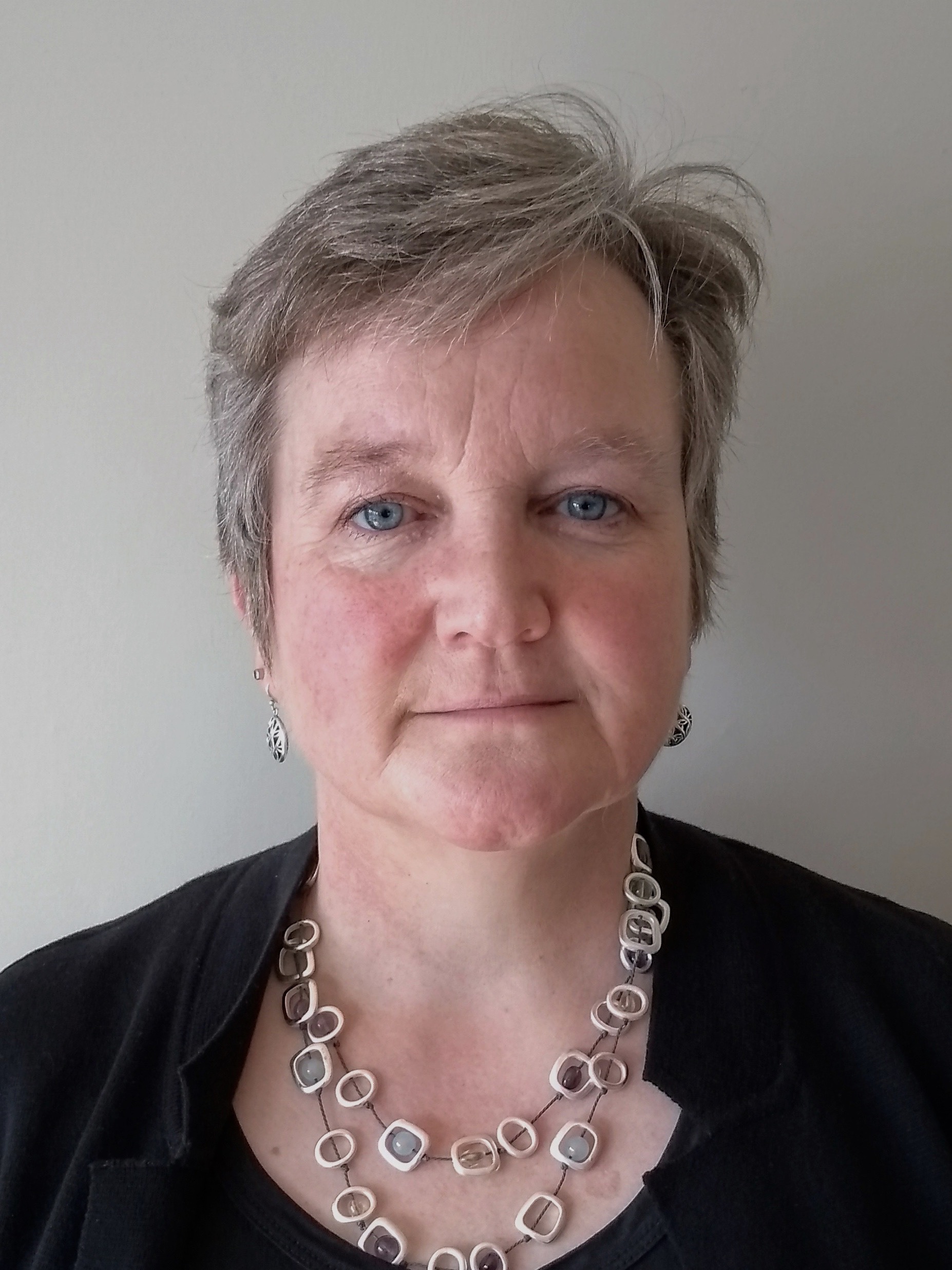
Professor Jan Bebbington holds the Rubin Chair in Sustainability in Business at Lancaster University and serves as Director of the Pentland Centre for Sustainability in Business . Her research intersects sustainable development with organisational operations, focusing on accounting technologies for control and accountability, the Sustainable Development Goals (SDGs), and carbon accounting. Her recent work explores sustainability reporting norms , inter-corporate accountability mechanisms , and biodiversity scenario analysis . Publications highlight interdisciplinary approaches to climate accountability, organisational stability, and resilient business practices. Key projects include collaborations with Stockholm Resilience Centre , The Swedish Research Council , and Innovate UK , addressing topics like ocean stewardship (SeaBOS) and biodiversity decision-making frameworks. She employs virtual labs and cross-sector partnerships to advance sustainability governance.
London School of Economics and Political Science (LSE)United Kingdom
Susana Mourato is Professor of Environmental Economics at the Department of Geography and Environment at the London School of Economics and Political Science (LSE). She joined LSE in 2008 after ten years at Imperial College London. In 2021, she became the Vice President and Pro-Vice Chancellor (Research) at LSE. She also holds positions as Visiting Reader at Imperial College London and Honorary Senior Fellow at CSERGE (University of East Anglia). Professor Mourato is an expert in environmental economics and the application of economic valuation techniques to measure environmental change and social value. Professor Mourato's research focuses on valuing natural wealth and creating markets for ecosystem services, perceptions and preferences for low-carbon energy technologies, environmental valuation methods and applications, and the relationship between life satisfaction and the environment. Her work spans the fields of environmental economics, wellbeing economics, and behavioral environmental economics. She has conducted extensive research on ecosystem services, wildlife conservation, air and water pollution, chemicals, climate change, low carbon technologies, and cultural heritage, testing and applying economic valuation techniques to these diverse areas. Her recent publications show a strong trend toward integrating behavioral economics with traditional environmental valuation techniques. She has published extensively on the links between subjective wellbeing and environmental quality, as well as the application of economic valuation methods to inform environmental policy. Her work often involves interdisciplinary collaborations across economics, ecology, and social sciences, with significant policy impact through government advisory roles and international organizations. Member of Culture & Heritage Capital Advisory Board (UK Department for Digital, Culture, Media & Sport) Associate of the Grantham Research Institute on Climate Change and the Environment Former Academic Director of LSE Summer School Former Head of Department (2017-2020) Professor Mourato has worked on more than 45 research projects and consultancies for research councils, government, industry, charities, and international organizations. She currently leads projects for the OECD evaluating the impact of chemicals on IQ, for LSE Middle East Centre estimating preferences for climate change policies in the Gulf Region, and for water conservation in Kuwait. Her research has informed policy development in multiple countries and international contexts.
Professor Jason Hall-Spencer is a globally recognized marine biologist at the University of Plymouth and a full professor at the University of Tsukuba (Japan), with an adjunct role at Xiamen University. His research focuses on ocean acidification, invasive species (e.g., lionfish), and climate change impacts on marine ecosystems. He pioneered the use of underwater CO2 seeps as natural analogues for climate change studies, a methodology now adopted globally. His work has influenced policies to protect deep-water corals and Arctic reefs, and he leads projects like RELIONMED to combat lionfish invasions in the Mediterranean. Education: Studied Applied Marine Biology at Heriot-Watt University, completed a PhD on coralline algae at Millport Marine Station, and conducted fieldwork across Europe, Asia, and the Pacific. His career includes discovering UK deep-water coral reefs and Arctic reefs, leading to their legal protection. Research Interests: Ocean acidification effects on marine organisms, invasive species management, CO2 seep dynamics, coral reef ecology, and marine conservation. His work combines field experiments, policy advocacy, and community engagement to address global marine challenges. Grants and Collaborations: Secured €1.7M from the EU Life Programme for lionfish control and a $400K grant on plankton dynamics. Collaborates with organizations like the Marine Biological Association and international researchers on projects such as the Ocean Organ to visualize CO2 impacts. Labs/Teams: Leads the Marine Conservation Research Group at Plymouth, coordinating initiatives like RELIONMED and influencing global marine policies through partnerships with governments and NGOs.
Professor Tavis Potts is a Personal Chair in Sustainable Development and Environmental Governance at the University of Aberdeen, affiliated with the Department of Geography and Environment within the School of Geosciences. He is actively engaged in research on just transitions, environmental justice, marine governance, and participatory planning. His research focuses on: Understanding just transitions and the social dimensions of climate and energy Marine resource governance and planning Participatory and community-based approaches to managing natural capital The political economy of environmental policy The blue economy and net zero transitions His recent publications highlight a strong trend toward policy-relevant research on just transitions, stakeholder engagement, and environmental governance. Articles and reports examine climate assemblies, community participation in net zero planning, nuclear decommissioning, and measuring equitable outcomes in transition processes. His work integrates social science perspectives with environmental policy, emphasizing democratic participation and equity. Key scientific contributions include commissioned reports for the Just Transition Commission and the Nuclear Decommissioning Authority, as well as peer-reviewed articles in journals such as Environmental Science & Policy and Marine Policy . He has led and contributed to projects funded by Interreg EU, NERC, British Council, and the World Bank. Professor Potts advises research students and leads the Just Transition Lab at Aberdeen. He holds external advisory roles with Aberdeen City Council’s Net Zero Delivery Unit and Aberdeenshire Council’s Climate Ready Aberdeenshire Board, demonstrating active engagement with policy and practice. He is affiliated with key research centers including the Centre for Marine and Coastal Zone Management and the Just Transition Lab, where he advances interdisciplinary work on sustainable futures and equitable environmental governance.
Philipp Koralus is the McCord Professor of Philosophy and AI at the University of Oxford and serves as Director of the Human-Centered AI Lab (HAI Lab) within the Institute for Ethics in AI. He is also a member of St Catherine's College. Koralus holds a Ph.D. in Philosophy and Neuroscience from Princeton University and a B.A. from Pomona College. His research focuses on the human capacity for reasoning and decision-making, exploring how these processes relate to artificial intelligence agents and large language models like GPT. He advocates for the Erotetic Theory of Reason (ETR), which posits that reason aims to resolve issues or questions directly, explaining both human rationality and fallibility. His work extends to moral judgment, definitions of intelligence, and interdisciplinary collaboration with computer scientists, psychologists, linguists, and neuroscientists. Koralus is preparing to launch the HAI Lab in Fall 2024, aiming to advance human-centered AI ethics and cognition research. His educational background includes advanced studies in philosophy and neuroscience, combining analytical rigor with empirical insights. Collaborations span diverse fields, including fisheries management through agent-based modeling and healthcare ethics in AI applications. He has published widely on topics such as attention mechanisms, visual perception, and the theoretical foundations of AI reasoning. Koralus regularly teaches graduate seminars on philosophy and AI, including upcoming sessions like 'Building the Philosophy to Code Pipeline' starting in 2025. He has supervised doctoral students in both philosophy and computer science but currently lists no specific advisees. His research has been recognized in symposia and commentary, though no formal scientific awards are explicitly mentioned.
Professor Alan J Murphy is a leading academic in Maritime Engineering at the University of Southampton. He holds a First-Class BEng in Naval Architecture and a PhD in Experimental Hydrodynamics. His research focuses on decarbonizing maritime systems, emission reduction, and sustainable propulsion technologies. He has held leadership roles including Head of the Marine, Offshore and Subsea Technology Group at Newcastle University and is currently Editor-in-Chief of the International Journal of Maritime Engineering. Education: BEng Naval Architecture (Newcastle University), PhD Experimental Hydrodynamics (University of Southampton) Affiliations: Royal Institution of Naval Architects Fellow, Worshipful Company of Shipwrights Liveryman Research interests include net-zero maritime propulsion, energy efficiency, and policy/regulation for sustainable shipping. He has supervised numerous PhD students and contributed to major projects such as the establishment of Newcastle University’s Singapore campus. Publications span topics like electrified port systems, alternative marine fuels, and underwater vehicle navigation. Awards include the Stanley Grey Fellowship and Froude Scholarship.
Dr. Rachel Seary is a Lecturer in Marine Conservation at the University of Kent's Durrell Institute of Conservation and Ecology (DICE). She holds an MSc from the University of St Andrews and a PhD in Geography from the University of Cambridge. Her work focuses on applied marine conservation solutions that balance ecological preservation with community needs, particularly in coastal and fishing communities. Key areas include dynamic ocean management, mangrove-fisheries interactions, and mitigating human-wildlife conflicts in fisheries. Professional Roles: Member of PICES Working Group 51, Editorial Board Member for Frontiers in Marine Science and Bulletin of Marine Science . Education: PhD in Geography, University of Cambridge (2019) MSc in Ecosystem-based Management of Marine Systems, University of St Andrews Research Interests: Social-ecological systems, sustainable fisheries, marine protected areas, and participatory conservation approaches. Her research spans global contexts including California, Indonesia, Cambodia, Greece, and the UK. Notable projects include studying whale-fishery interactions on the US West Coast and assessing mangrove-fisheries in South-East Asia. She advocates for interdisciplinary solutions to ensure biodiversity goals align with human well-being under climate and regulatory changes. Teaching includes modules on environmental sustainability, the Anthropocene, conservation policy, and climate change impacts. She supervises postgraduate research in marine conservation and resource management topics.
Douglas Yu is a Professor in the School of Biological Sciences at the University of East Anglia (UEA), where he also serves as Principal Investigator and Director of the Ecology, Conservation, and Environment Center (ECEC), a joint venture with the Kunming Institute of Zoology. He is a member of the Centre for Ecology, Evolution and Conservation and the Organisms and the Environment research group. His research focuses on cooperation in ecological systems, particularly mutualisms between species and conservation as cooperation between humans and nature. Key methodologies include environmental DNA (eDNA), metabarcoding, and game theory. He co-founded NatureMetrics to commercialize biodiversity monitoring tools. His work spans tropical ecology, conservation genetics, and human-wildlife conflict resolution, notably in the Amazon. His recent research outputs highlight trends in molecular biodiversity assessment, landscape-scale eDNA analysis, and integrating remote sensing with ecological data. He leads multiple NERC-funded projects and industry collaborations focused on pollination services, cocoa sustainability, and statistical frameworks for eDNA. He is actively involved in scientific governance, serving on the NERC Biomolecular Analysis Facility Steering Committee and UKRI grant panels. He also contributes to public discourse through media appearances on topics like leech-based disease surveillance and bee conservation. He teaches courses in evolutionary biology, conservation genetics, and statistical modeling using R. He welcomes PhD and postdoctoral researchers, especially those interested in fieldwork in East Asia.
Professor Steve Simpson is a leading marine biologist and fish ecologist at the University of Exeter's Biosciences department. He serves as Professor of Marine Biology & Global Change and leads a dynamic research group focused on understanding marine ecosystems, particularly in the context of climate change and human impacts. His work has been prominently featured in Blue Planet II and he actively engages with industry, policy makers, and the public through media appearances and outreach activities. Education PhD, University of York, UK (2000-2004) MRes Marine & Coastal Ecology & Environmental Management, University of York, UK (1998-1999) BSc Marine Biology (Hons), University of Liverpool, UK (1995-1998) Professor Simpson's research centers on the behavior of coral reef fishes, bioacoustics, and the effects of climate change on marine ecosystems. His approach uniquely combines fieldwork in remote environments with laboratory experiments, data-mining, and computer modeling. He has pioneered new methods for listening to ocean soundscapes and understanding fish communication, revealing how anthropogenic noise disrupts natural behaviors and ecological processes. His work on climate change impacts examines shifting fish distributions and their implications for fisheries management and conservation. Analysis of Simpson's recent publications reveals two dominant research themes: the impacts of anthropogenic noise on marine life and climate change effects on fisheries. His work demonstrates how underwater noise from boats and industrial activities impairs fish hearing, disrupts predator-prey relationships, and affects reproductive success. Simultaneously, his climate change research tracks how warming seas are altering fish distributions, creating 'mackerel wars' and requiring fisheries adaptation. These research strands converge in his innovative work on developing solutions like bubble curtains to mitigate noise impacts. Scientific Awards FSBI Medal (2016) NERC Knowledge Exchange Fellowship (2011-2014) NERC Postdoctoral Research Fellowship (2004-2007) Royal Society International Fellow (2007-2008) EPHE Postdoctoral Fellow (2007-2008) Professor Simpson leads a thriving research group of approximately 10 postdocs, PhD, and Masters students. His grant portfolio includes major NERC funding for projects on marine noise impacts and climate change effects on fisheries. He has developed strong industry partnerships through a Knowledge Exchange Fellowship, working with Cefas, the Met Office, Sustainable Marine Energy Ltd, and HR Wallingford Ltd. His research has directly informed policy through contributions to Marine Climate Change Impacts Partnership reports and presentations to European Parliament. Simpson has also created innovative knowledge exchange initiatives including the 'Vision of Sustainable Fisheries in 2050' thinktank. Simpson has developed specialized research infrastructure including a mobile lab with Ecocean in Montpellier for assessing marine noise impacts, and has conducted large-scale acoustic experiments in dry docks. His work on underwater acoustics was prominently featured in Blue Planet II, and he maintains active engagement with media through TEDx talks, BBC appearances, and public lectures to schools and community groups. He serves on the International Quiet Ocean Experiment Science Committee, helping shape global research on ocean noise.
Dr. Chiara Bertelli is a Lecturer in Biosciences at Swansea University within the Faculty of Science and Engineering, School of Biosciences, Geography and Physics. With over 15 years of experience in coastal and marine ecological surveys, she specializes in seagrass ecology and restoration, marine conservation, and habitat suitability modeling. Dr. Bertelli has extensive field experience including boat-based surveys, SCUBA diving, and snorkeling in both temperate and tropical environments. She is currently completing her PhD part-time focusing on environmental drivers of change in seagrass meadows in the UK and Brazil. Her educational background includes advanced training in marine biology with specialization in ecological survey techniques and data analysis using R and Primer. Her primary research focuses on seagrass ecology as nature-based solutions for climate change. She develops habitat suitability models to inform optimal locations for seagrass restoration, with applications in carbon sequestration (blue carbon) and marine biodiversity enhancement. Her work aligns with UN Sustainable Development Goals 13 (Climate Action) and 14 (Life Below Water). Analysis of Dr. Bertelli's recent publications (2020-2025) reveals a strong emphasis on practical applications of seagrass research to inform restoration efforts. Her work spans habitat suitability modeling, environmental stress responses, nutrient dynamics, and decision-support tool development. A significant portion addresses seed-based restoration techniques, ecosystem services, and the socio-ecological dimensions of marine conservation. Dr. Bertelli actively collaborates with external organizations including Project Seagrass, Sky Ocean Rescue, WWF, Natural England, and the National Oceanographic Centre. Her current ReSOW project aims to develop the CEEDS (Coastal Ecosystem Enhancement Decision Support) tool, an open-source platform to guide seagrass restoration practitioners. As an educator, Dr. Bertelli teaches several field-based marine biology courses including BIO260 Marine Biology Field Course, BIO327 Tropical Marine Ecology Field Course, and BIO346 Professional Skills in Marine Biology. Her teaching emphasizes practical, field-based learning and professional skill development for marine biologists, with a focus on survey techniques, data analysis, and environmental impact assessment. Dr. Bertelli is actively involved in research teams focused on marine ecosystem restoration and coastal management. Her work bridges academic research with practical conservation applications, working closely with government agencies, NGOs, and international research partners to translate scientific findings into actionable conservation strategies.
Yenkong Ngangjoh-Hodu is a Professor of International Law at The University of Manchester, where he formerly served as Head of Law School. He currently serves as a WTO Dispute Settlement Body Panellist and counsel at Fortior Law firm in Geneva, advising governments, parliaments, and international organizations on trade and investment law matters. His research spans international trade law (WTO), investment law, monetary law, energy law, and regional integration frameworks. He investigates sustainability in international law, dispute resolution mechanisms, and legal dynamics of north-south/south-south relations, with current projects examining compliance theories in trade law and legitimate expectations in investment arbitration. Recent publications analyze the international economic legal order's evolution, emphasizing Global South perspectives. Key themes include regional trade agreements, WTO rule of law contestations, EU sustainability directives' impact on developing nations, and investment arbitration doctrines, blending theoretical rigor with practical policy implications. He has supervised 13 research students and welcomes new PhD proposals. Funded projects include the Finnish Ministry-commissioned analysis of the EU Corporate Sustainability Due Diligence Directive's impact on Least Developed Countries. As global faculty for the Trade Policy Centre in Africa (Trapca) in Arusha, he designs and delivers training programs on international trade law for African officials and regional organizations.
Professor Ana Ivanovic is a Personal Chair (equivalent to Full Professor) in the School of Engineering at the University of Aberdeen, specializing in Geotechnical Engineering with a focus on offshore applications. She holds a MEng in Civil Engineering with major in Geotechnics and Foundations from Belgrade and a PhD in Geotechnical Engineering from the University of Aberdeen (2001). She is a Chartered Civil Engineer (CEng) and Member of the Institution of Civil Engineers (MICE) since 2008. MEng Honours degree, 1st class, in Civil Engineering with major in Geotechnics and Foundations, School of Civil Engineering, Belgrade, Yugoslavia (1997) Ph.D. in Geotechnical Engineering, School of Engineering, University of Aberdeen (2001) Professor Ivanovic's research spans two major streams: the dynamic behavior of ground anchorage systems and the impact of trawling gears on the seabed ecosystem. Her work combines numerical modeling with physical experimentation to address critical challenges in offshore renewable energy, subsea pipelines, and marine environmental protection. She has developed sophisticated models for rock-steel interfaces, pipeline buckling, and seabed disturbance from fishing activities, with applications in offshore wind, oil and gas, and sustainable fisheries. Her recent publications reveal a strong focus on offshore renewable energy foundations, particularly rock anchor systems for wind turbines, and the environmental impact of marine activities. Her research consistently bridges theoretical geotechnics with practical engineering applications, often incorporating large deformation numerical analysis and physical testing under realistic seabed conditions. NERC Industrial CASE studentship (2016-2018) examining biogeochemical effects of benthic trawling Innovate UK KTP project (2016-2018) developing 'DeepBuoy' pumpable buoyancy technology EU FP7 BENTHIS grant (2012-2016) studying benthic ecosystem fisheries impact Fisheries Innovation Scotland grant (2015) modeling physical impact of demersal fishing gears EPSRC grant (2008-2011) investigating anchorage head design for multi-strand anchorages Professor Ivanovic supervises numerous PhD and MSc students and serves as External Examiner for Strathclyde and Napier Universities. She regularly reviews manuscripts for leading journals including International Journal of Rock Mechanics and Mining Sciences, Journal of Geotechnical and Geoenvironmental Engineering, and Ocean Engineering. Her work with the Scottish Universities Geotechnical Network (SUGN) and the Society for Underwater Technology's Offshore Site Investigation and Geotechnics Committee demonstrates her commitment to advancing geotechnical knowledge in marine environments.
Dr. Martin Taylor is an Associate Professor in Molecular Ecology at the University of East Anglia's School of Biological Sciences. He has held academic positions since 2013, including Senior Lecturer roles at Bangor University and postdoctoral research experience in Belgium. His primary research focuses on molecular ecology, evolution, and conservation of marine and freshwater fishes, with an emphasis on genetic methods like microsatellite markers and next-generation sequencing. Key interests include polyploidy in Corydoras catfishes, fisheries-induced evolution, and traceability of fish populations. Taylor leads projects on lobster ageing via DNA methylation and collaborates internationally on studies of biodiversity and conservation genetics. Education: BSc (Animal and Plant Biology) from the University of Leeds (1990–1993) and PhD from the University of Aberdeen/Southampton (1993–1996), studying speciation in African cichlids. Research projects include Woodland impacts on pollinator diversity Genetic basis of catfish venoms Development of novel ageing methods for European lobsters His work bridges fundamental and applied research, addressing challenges in fisheries management, conservation, and ecological sustainability. Taylor serves as an Associate Editor for Marine Biology and maintains an active lab group at UEA. Key contributions include advancing DNA-based methods for ecological and conservation applications, such as detecting jellyfish predation and tracking fish populations via genetic markers.
Alison Copeland is a Research Postgraduate (PhD) in the Department of Biosciences at Durham University. Her research focuses on Bermuda’s vegetation communities, particularly invasive plant species and their interactions with indigenous flora. Previously, she served as Biodiversity Officer for Bermuda’s Government, leading projects like the IUCN Red Listing of endemic plants and the Governor Laffan’s Fern recovery initiative. She holds an MSc in Geography from Memorial University of Newfoundland (MUN), where her thesis involved seabed habitat mapping in Newman Sound fjord using multibeam sonar and field sampling. Her expertise spans marine and terrestrial conservation, with a focus on endangered species recovery, habitat management, and translating science into policy. Key affiliations include MUN’s Marine Habitat Mapping Group and the Royal Botanic Gardens Kew. Awards include the Durham Doctoral Studentship (Faculty of Science) and a Bermuda Public Service Education Award. Her recent work highlights invasive species dynamics in island ecosystems, biodiversity assessments, and policy frameworks for conservation. She has contributed to over 15 peer-reviewed articles, emphasizing habitat mapping methodologies, invasive species management, and endangered species recovery strategies. Awards: $3000 Garden Club of Bermuda Grant (PhD support) Fellow of MUN’s School of Graduate Studies Grants: Durham Doctoral Studentship (2022–present) Her PhD project investigates the ecological origins and interactions of invasive plants in Bermuda, bridging field research with policy recommendations to enhance biodiversity protection.
Dr. Jaan Pu is an Associate Professor at the University of Bradford, UK, affiliated with the School of BEACI within the Faculty of Engineering & Digital Technologies. He holds visiting scientist roles at Tsinghua University and Nanyang Technological University. His research focuses on numerical and experimental approaches to water engineering challenges, including sediment transport, turbulence modeling, and flood dynamics. Dr. Pu serves as Associate Editor for Frontiers in Environmental Science and Frontiers in Built Environment , and editorial roles in other journals. His work integrates computational tools (e.g., Delft3D, MATLAB) with experimental techniques (ADV, PIV) to study flows in rivers, coastal areas, and urban environments. Research interests include turbulence structures around bridge piers, scour reduction mechanisms, and environmental hydraulics. Teaching areas cover Water Engineering, Fluid Dynamics, and Mechanics. His publications span 73 works addressing topics from coral reef protection to sedimentation in rainwater systems. Professional activities include editorial board memberships, conference organizing, and peer review for high-impact journals.