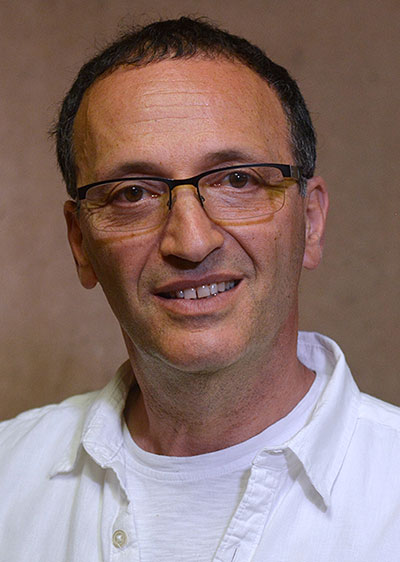
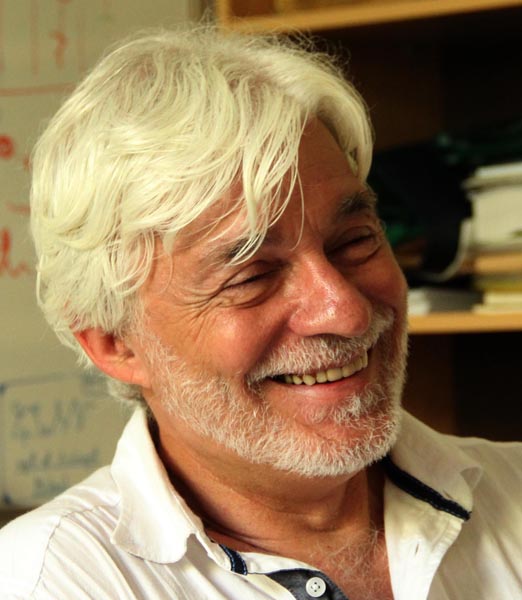
László G. Nagy is a Principal Investigator at the Biological Research Centre, Hungarian Academy of Sciences, in Szeged, Hungary, since 2014. He has held postdoctoral research roles at Clark University (USA) from 2012–2014 and has been affiliated with institutions such as the University of Szeged and the University of Leiden. PhD in Biology (2011), University of Szeged MSc in Biology (2008), Department of Microbiology, University of Szeged His research spans Phylogenetics , Fungal Genomics , Systems Biology , and Comparative Evolutionary Genomics , focusing on computational biology and convergent evolution in fungi. He has contributed to 81 publications with a cumulative impact factor of 528.874 and an h-index of 32. Notable scientific awards include the 2021 Alexopoulos Prize, the 2020 Szent Gyorgyi Talent Prize, and multiple Momentum Program grants from the Hungarian Academy of Sciences. His editorial roles include Associate Editor for Studies in Mycology and reviewer for journals like Nature Microbiology and PNAS . 2019 Supercomputing Facility Access Grant (DOE, USA) 2018 ERC Starting Grant 2016 ERC Acceleration Grant He has delivered invited talks at international conferences, including the Asian Mycological Congress (2019) and the DOE Joint Genome Institute User Meeting (2017).
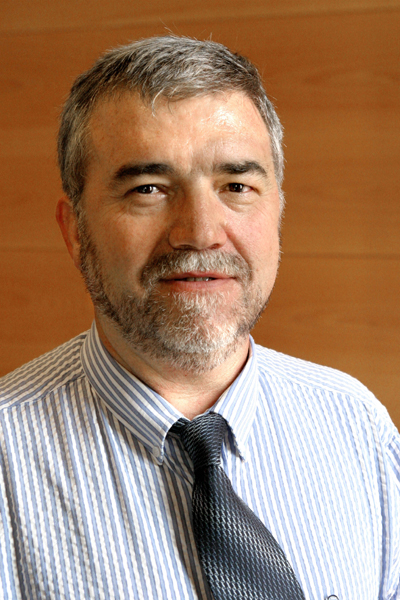
Manolis G.H. Katevenis is a Professor at the Department of Computer Science, University of Crete, and Deputy Director and Head of the Computer Architecture and VLSI Systems (CARV) Laboratory at the Institute of Computer Science (ICS), Foundation for Research & Technology - Hellas (FORTH). He co-founded the European Research Center on Computer Architecture (EuReCCA) and is a founding partner of the European Network of Excellence on High-Performance and Embedded Architecture and Compilation (HiPEAC). PhD in Computer Science from University of California, Berkeley (1983) Co-founder of EuReCCA (2011) Contributed to RISC architecture (1980-1983), interconnection networks (1985-2011), and parallel computing (1993-2010) His research spans Scalable Multicore Systems , Interconnection Network Architecture , Packet Switch Design , Computer Architecture , and VLSI Systems . He has made foundational contributions to per-flow queueing, backpressure mechanisms, and wormhole IP over ATM, with applications in internet routers, data centers, and supercomputers. His publications focus on high-radix crossbar switches, flow control algorithms, and explicit interprocessor communication. Notable scientific awards include: ACM Doctoral Dissertation Award (1984) David J. Sakrison Memorial Prize (1983) IBM PhD Fellowship (1981-1983) Greek State Fellowship (1973-1978) He has supervised 40 graduate theses and participated in 22 R&D projects totaling €9M, including HiPEAC (coordinator of interconnection networks), SARC (FPGA prototype design), and ENCORE (cache-optimized remote DMA). His work has received over 2000 citations, with an h-index of 23.
Prof. Liew Kim Meow is a Chair Professor of Civil Engineering at City University of Hong Kong (CityU) since 2005. He previously served as Head of the Department of Architecture and Civil Engineering (2011–2017) and held tenured professorial positions at Nanyang Technological University (NTU), Singapore. He earned BS from Michigan Tech (1985), MEng (1988), and PhD (1991) from the National University of Singapore. His research focuses on composite materials, multiscale modeling, structural optimization, and computational mechanics. Notable contributions include pioneering work on carbon nanotube-reinforced composites and advanced numerical methods. He has published over 800 papers with 38,000+ citations (H-index 97). Education: BS, Michigan Technological University (1985) MEng, National University of Singapore (1988) PhD, National University of Singapore (1991) His awards include Clarivate Analytics' Highly Cited Researcher (2018–2019), Xiangjiang Scholar (2017), and multiple fellowships from professional institutions. He serves as Editor-in-Chief of International Review of Civil Engineering and holds editorial roles in over a dozen journals. He founded key research centers like the Nanyang Center for Supercomputing and Visualization (NTU) and led initiatives in computational mechanics. His work influences global research in composite materials and structural analysis.
Martin Ostoja-Starzewski , Ph.D. (McGill), is a Professor of Mechanical Science & Engineering at the University of Illinois at Urbana-Champaign , with affiliate appointments at the Beckman Institute and National Center for Supercomputing Applications . His research spans continuum mechanics , stochastic wave propagation , and fractal media , focusing on scaling laws and the statistical-to-representative volume element transition. 2006–Present: Professor, UIUC 2001–2005: Canada Research Chair, McGill University 2023: Rothschild Distinguished Visiting Fellow, University of Cambridge 2022: Member, European Academy of Sciences and Arts 2024: Academia Europaea Foreign Member His work pioneered continuum mechanics with spontaneous second law violations and tensor random fields for stochastic PDEs. He authored four foundational books, including Tensor-Valued Random Fields for Continuum Physics (2019), and edited 16 special issues. Recent 2025–2023 articles explore odd elasticity , fractal thermodynamics , and stochastic wavefronts , bridging non-equilibrium thermodynamics to granular Couette systems . Scientific accolades include the Worcester Reed Warner Medal (2018) and ASME , AAM , SES fellowships. As part-time faculty at Beckman Institute (2008–Present), he integrates bioimaging with mechanics across electrosurgery and traumatic brain injury modeling.
Christoph Dellago is a full Professor of Computational Physics at the Faculty of Physics of the University of Vienna, where he has been a faculty member since 2003. He currently serves as Director of the Erwin Schrödinger Institute for Mathematics and Physics, Head of the Computational and Soft Matter Physics Group, and Project lead of EuroCC Austria - National Competence Centre for Supercomputing. Previously, he served as Dean of the Faculty of Physics (2009-2012) and Coordinator of the Doctoral College Advanced Functional Materials (DCAFM). Full Professor, Faculty of Physics, University of Vienna (2003-present) Director, Erwin Schrödinger Institute for Mathematics and Physics (2017-present) Head, Computational Physics and Soft Matter Group (2024-present) Coordinator, Doctoral College Advanced Functional Materials (DCAFM) Austrian Representative, Council of CECAM Dellago received his PhD in Physics from the University of Vienna in 1996, followed by postdoctoral research at UC Berkeley as a Schrödinger Fellow of the Austrian Science Foundation. His research focuses on developing computational methods to study rare events in condensed matter systems, particularly transition path sampling methodology for simulating nucleation, chemical reactions, and biomolecular reorganizations. He has pioneered the application of machine learning to molecular structure recognition and potential energy surfaces. Recent work examines self-assembly of nanocrystals, biopolymer folding, aqueous interfaces, phase separation in alloys, thermo-polarization, cavitation, and freezing phenomena. Analysis of Dellago's recent publications (2023-2025) reveals a strong emphasis on machine learning applications in computational physics, particularly neural network potentials for simulating water interfaces, crystal defects, and phase transitions. His work bridges traditional statistical mechanics with modern computational techniques, creating powerful tools for studying complex dynamical processes that occur on timescales far beyond conventional molecular dynamics simulations. The publications demonstrate increasing integration of machine learning with rare event sampling methods, reflecting the cutting-edge direction of computational statistical mechanics. Förderpreis der Stiftung Futura zur Förderung junger Südtiroler im Ausland (1997) The Raymond and Beverly Sackler Prize in the Physical Sciences (2005) UNIVIE Teaching Award of the University of Vienna (2014) Dellago leads an active research group with multiple PhD students and postdocs, focusing on computational statistical mechanics. His group develops trajectory-based sampling methods and machine learning approaches for molecular simulation. He has secured significant funding through EuroCC Austria and various research platforms including the Research Platform Accelerating Photoreaction Discovery and the Research Platform Erwin Schrödinger International Institute for Mathematics and Physics. His research has been supported by numerous grants enabling advanced computational infrastructure for high-performance simulations. The Dellago Group operates within the Computational and Soft Matter Physics division at the University of Vienna, with strong connections to the Research Network Data Science. The group collaborates extensively with international research institutions and maintains close ties with the Erwin Schrödinger Institute, which Dellago directs. Their research environment combines theoretical physics, computational chemistry, and machine learning expertise to tackle fundamental questions in condensed matter physics and soft matter systems.
Torsten Hoefler is a Full Professor of Computer Science at ETH Zurich, Switzerland, with an adjunct appointment in Electrical Engineering. He previously held roles at the National Center for Supercomputing Applications (University of Illinois at Urbana-Champaign) and Indiana University. Full Professor of Computer Science, ETH Zurich (2020–present) Adjunct Professor of Electrical Engineering, ETH Zurich (2020–present) Member at Large, ACM SIGHPC Executive Committee (2013–present) Leadership roles in the MPI Forum and Blue Waters project His research focuses on performance-centric system design , with emphasis on scalable networking, parallel programming models, and performance modeling. Key contributions include the Slim Fly network topology, Data-Centric Python framework, and innovations in parallel graph computations and RDMA-based systems. Recent publications span topics like LLM training networks , quantization geometry , chiplet interconnects , and AI-driven climate modeling , reflecting his interdisciplinary approach combining HPC, AI, and hardware-software co-design. ACM Gordon Bell Prize (2019) ERC Consolidator Grant (2020) IEEE TCSC Award for Excellence (2019) SIAM SIAG/SC Junior Scientist Prize (2012) Latsis Prize of ETH Zurich (2015) He has received multiple best paper awards at top conferences (SC10, SC13, SC14, SC19, IPDPS'15, HPDC'15, OOPSLA'16) and contributed to MPI-3 standardization.
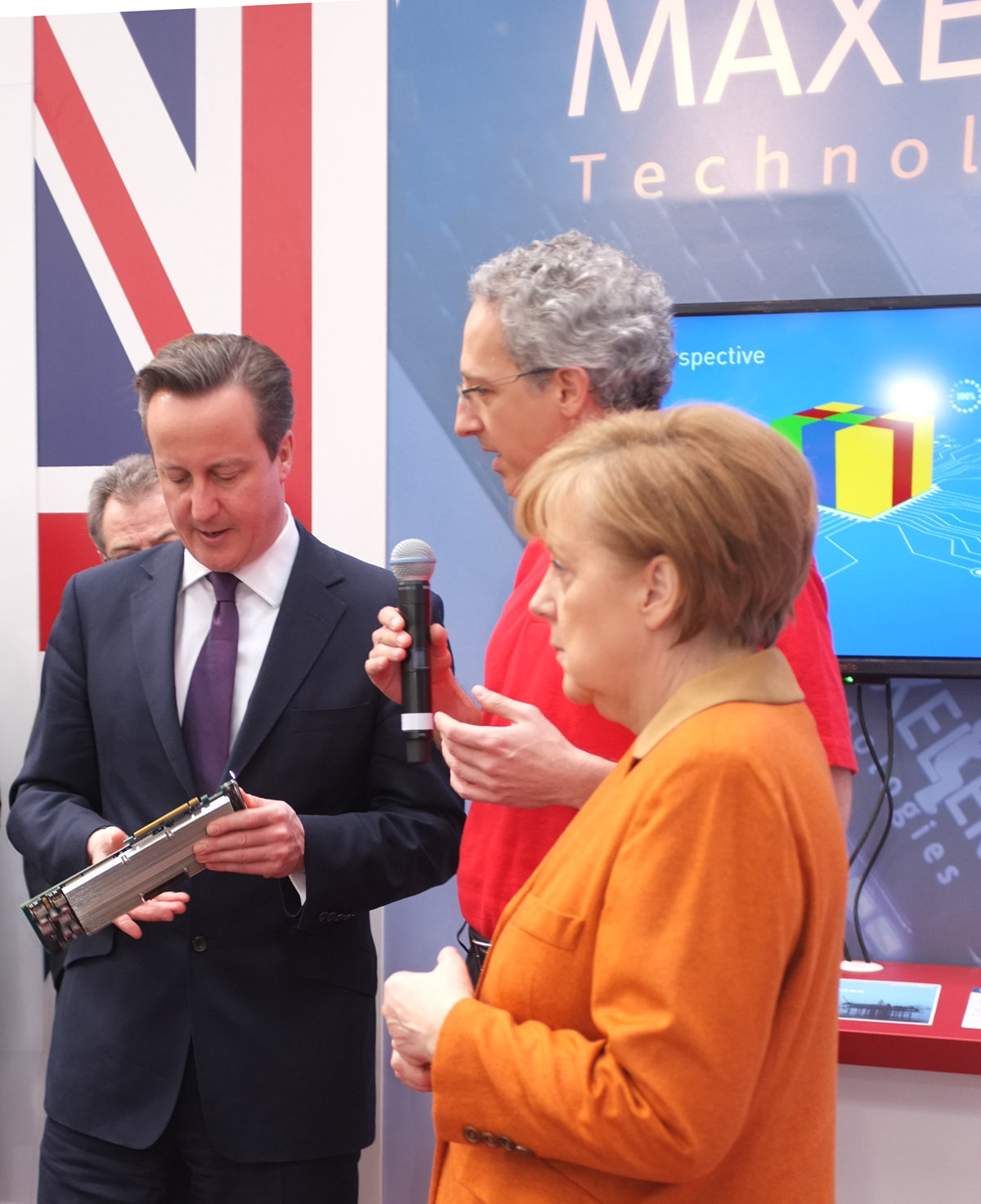
Oskar Mencer is a Professor in the Department of Computing at Imperial College London , where he has been a member of academic staff since 2000. He was also a Consulting Professor at Center for Computational Earth and Environmental Science , Stanford University (2009-2010). His research focuses on Multiscale Dataflow Computing , exploring the interaction of hardware and software systems through domain-specific representations, parallel programming, VLSI design, and compiler methodologies. He has contributed to fields including high-performance computing, FPGA optimization, and computational finance. Dr. Mencer's work has been recognized with a Special Award from Com.sult (2012), Imperial College Research Excellence Award (2007), and a Top EPSRC Advanced Fellowship (2001). He has received multiple best paper awards, including at ICFPT'08 and ASAP 2008, and his 2000 paper on stream architectures was recognized as historically significant in 2015. His publications demonstrate a strong emphasis on FPGA acceleration , custom architectures , and parallel processing across geophysics, finance, and neuroscience applications. Special Award for Dataflow Innovation (2012) Best Paper Award - ICFPT'08 Best Paper Award - ASAP 2008 He has served on technical committees for conferences such as FPL , DATE , and FPT , and leads the Computer Architecture Research Group (currently inactive).
Alexandru Nicolau is a Distinguished Professor and Chair of the Department of Computer Science at the University of California, Irvine (USA), where he has worked since 1992. He previously held positions as Associate Professor (1988–1992) and Assistant Professor (1984–1988) at UC Irvine and Cornell University, respectively. Education : B.A., Brandeis University (1980) MS (1981), Ph.D. (1984), Yale University Research Interests : A leading expert in parallelizing compilers , high-performance computing , and software-hardware co-design , Nicolau pioneered foundational techniques like Percolation Scheduling and Optimal Loop Parallelization . His work enables efficient exploitation of instruction-level parallelism in general-purpose programs, with applications in embedded systems , matrix algorithms , and GPU-based neural networks . He has also contributed to Electronic Design Automation (EDA) and lightweight synchronization protocols . Scientific Awards : IEEE Fellow (2014) ACM SIGPLAN Most Influential Paper (PLDI 20 years) EDAA/IEEE/ACM DATE Most Influential Paper (10 years) ACM ICS Most Influential Paper (25 years) 4 Best Paper awards (VLSI design 2003, ISHPC 2005, CASES 2008, IJCNN 2009) Advising & Grants : He has mentored notable scholars now at Stanford, McGill, and Google, and secured over $20M in funding from NSF , DARPA , and industry leaders like IBM and Intel . His professional service includes chairing ACM ICS’09 and PPOPP’13, and serving on steering committees for LCPC and ICS. Labs & Collaborations : His techniques have been adopted by IBM Watson, Siemens Munich, Fujitsu Labs Japan, and the open-source GCC compiler.
Prof. Jesper Larsson Träff is a Full Professor and Head of the Research Unit in Parallel Computing at Technische Universität Wien (TU Wien). His academic role is centered within the Department of Computer Engineering. He holds an MSc and PhD, and has contributed extensively to the field of parallel computing through his research and leadership in international projects. His research focuses on parallel algorithms, scheduling, and optimization of the Message Passing Interface (MPI), with emphasis on high-performance computing (HPC) systems and distributed architectures. Key projects include the Process Mapping initiative (2019–2024), Autotune (2021–2025), and contributions to Exascale Programming Models. He has also led efforts in evaluating MPI performance tools and their reproducibility challenges. Research Areas: Parallel Algorithms, MPI Optimization, HPC, Process Mapping, Collective Communication, and Memory Models. Notable Achievements: Awarded the Best Paper at EuroMPI 2014 and recognized by the Innovation Radar for his work on PGAS-based MPI interoperability in 2018. Teaching: Teaches courses such as Advanced Multiprocessor Programming, Bachelor/Master Thesis supervision, and seminars in Computer Engineering and Theoretical Computer Science. Prof. Träff’s advising includes students researching topics like lock-free data structures, MPI datatype optimization, and task scheduling. His grants span Austrian and EU funding bodies, addressing challenges in exascale computing and reproducible experimental research. He is affiliated with the Vienna Mapping and Sparse Quadratic Assignment (Vienna Mapping) project and actively contributes to international workshops and conferences.
Erich Neuhold is a Professor of Computer Science at the University of Vienna and Darmstadt University of Technology. He holds honorary professorships at several institutions, including the University of Guiyang and the New Jersey Institute of Technology. His career spans over five decades, with roles as Director of the Fraunhofer Institute for Integrated Publication and Information Systems (IPSI) and professorships at multiple universities globally. Education: Erich Neuhold earned a Dipl.-Ing. (M.S.) in Electronics and a Dr.-techn. (PhD) in Mathematics and Computer Science from the Technical University of Vienna. He holds special honors in his academic career, including Fellowships from IEEE and the Gesellschaft für Informatik. Research Interests: His work focuses on distributed databases, object-oriented systems, internet databases, information retrieval, semantic web, interoperability, and applications in digital libraries, e-science, and e-government. He pioneered advancements in transaction models, multimedia databases, and semantic integration frameworks. Publications: Over 200 papers and four books, with recent contributions including retrospectives on computing history and foundational work in supercomputing architectures. His articles reflect deep engagement with historical and future trends in computer science. Awards: Recognitions include the Meritorious Service Award from IEEE, medals from academic institutions, and honorary professorships worldwide. Grants & Labs: Led projects like the POREL distributed database system and contributed to initiatives like the EU’s FRESCO e-science cockpit. His work spans academic-industrial collaborations, with budget leadership at IPSI (€10M/year). Labs/Teams: Co-founded the Fraunhofer IPSI and directed research teams in Austria, Germany, and internationally, emphasizing interdisciplinary collaboration in information systems.
Mateo Valero is a full Professor at the Computer Architecture Department of the Technical University of Catalonia (UPC) , and has served as Director of the Barcelona Supercomputing Center (BSC) since 2004. His career spans multiple leadership roles, including Chair of the Computer Architecture Department (2001-2005), Director of CIRI (CEPBA-IBM Research Institute, 2000-2004), and Director of C4 (Catalan Center for Computation and Communications, 1995-2000). He has been an active member of advisory boards and research institutes, including Intel Microprocessor Research Lab (2002-2004). Valero’s research focuses on High-performance computing Computer architecture Parallelism and supercomputing Engineering and information technology integration His work has driven advancements in computational efficiency, national research infrastructure, and international collaboration in technology. Scientific awards and honors include Eckert-Mauchly Award (IEEE/ACM) Spanish National Awards (Julio Rey Pastor, Leonardo Torres Quevedo, King Jaime I) Honorary Doctorates from Chalmers, Belgrade, Las Palmas, and others Founding member of the Royal Spanish Academy of Engineering IEEE and ACM Fellow Intel Distinguished Research Fellow Harry H. Goode Award (2009) Narcís Monturiol Award (Generalitat de Catalunya) Barcelona Prize 2024 (La Vanguardia) Barceloní de l'Any 2024 Award Valero has secured significant research grants, including an ERC Advanced Grant , and his leadership has earned institutional accolades for the UPC, such as the UPC Prize for Quality of University Management as director. He has also contributed to educational innovation initiatives like the Reutiliza program and been recognized for digital design and sustainable development practices .
Prof. Leandar Litov is a Professor in Nuclear and Particle Physics at the Faculty of Physics, University of Sofia "St. Kliment Ohridski". He serves as Team Leader of the Sofia University team in CMS collaboration at CERN and chairs the Board of the SEEIIST Association. Established Master's in Nuclear and Particle Physics Co-founder of Bulgarian National Center for Supercomputing Applications Initiator of Bulgarian Ion Therapy Center project His research spans experimental particle physics, computational biophysics, and medical physics. He has participated in CMS, NA48, NA49, and NA62 experiments, focusing on rare decays and detector simulation. Recent publications highlight his work on Higgs boson properties (2012-2019), dark photon searches, and computational biophysics applications like heparin's anti-inflammatory effects in COVID-19 (2020). 1200+ publications, 75,000+ citations h-index: 123 (INSPIRE), 105 (Scopus) Notable awards include: Double JINR First Prize (1986, 1990) CERN Council membership "Pythagoras" National Awards (2010, 2013)
Ioannis Vardas is a Researcher in Parallel Computing at TU Wien's Faculty of Informatics. His work focuses on optimizing high-performance computing systems through advanced process mapping, MPI programming, and performance analysis tools. Key research areas: Topology-aware process mapping for HPC MPI library development and optimization Performance profiling of parallel applications Resource allocation in hierarchical architectures Energy-efficient parallel computing He contributes to projects improving MPI performance tools and develops methods for efficient resource utilization in supercomputing environments.
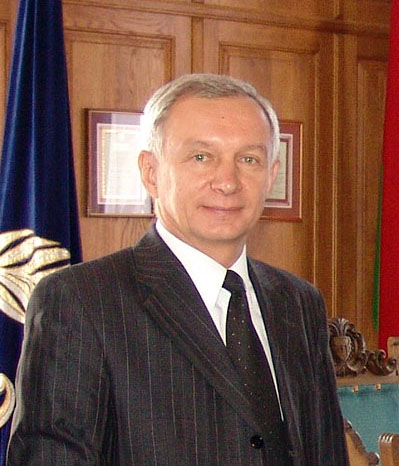
Sergey Ablameyko is a Belarusian academic and researcher currently serving as the Rector of Belarusian State University . He is also an Academician of the National Academy of Sciences of Belarus (2009) and holds multiple international academic distinctions, including memberships in the Russian Space Federation, Academia Europea, and other prestigious institutions. Education: Diploma in Mathematics, Belarusian State University (1978) PhD in Information Processing Systems, Institute of Cybernetics, Ukrainian Academy of Sciences (1984) DSc in Information Processing Systems, Institute of Cybernetics, Ukrainian Academy of Sciences (1990) His research focuses span image analysis, pattern recognition, digital geometry, medical imaging, supercomputers, and geographical information systems , supported by leadership in international projects funded by the European Commission and bilateral initiatives with Russia, Ukraine, India, and China. He has supervised 10 PhD and 2 DSc dissertations. Scientific Awards: A.S. Popov Award (1990) Komsomol Premium for Best Young Scientist (1990) State Prize of Belarus (2002) Multiple medals from the Russian Space Agency and Federation, Union State, and international academies Academician of four international academies (Belarus, Spain, Europe, and economy/enterprise management)
Sergey V. Ablameyko serves as Rector of Belarusian State University (BSU) since 2008 and holds the distinguished title of Academician of the National Academy of Sciences of Belarus. Previously Director General of the United Institute of Informatics Problems (2002-2008), he has shaped national research policy while maintaining active scholarly engagement in computational sciences through international collaborations and editorial leadership. Education: Belarusian State University, Diploma in Mathematics (1978) PhD in Information Processing Systems, Institute of Cybernetics, Ukrainian Academy of Sciences (1984) DSc in Information Processing Systems, Institute of Cybernetics, Ukrainian Academy of Sciences (1990) Research Interests: Professor Ablameyko's pioneering work integrates Image analysis , Pattern recognition , and Knowledge-based systems with applications spanning Medical imaging , Geographical information systems , and Supercomputers . His research demonstrates consistent focus on practical implementations in space technology and diagnostic systems, leveraging digital geometry and graphics recognition for real-world problem solving in high-stakes environments. Scientific Awards: State Prize of Belarus (2002), highest national scientific honor Academician of four national academies including National Academy of Sciences of Belarus (2009) IEEE Senior Member and Fellow of International Association for Pattern Recognition 15+ medals from Russian space agencies for international cooperation A.S. Popov Award and Norbert Wiener Bronze Medal for engineering contributions Advising and Grants: Supervised 10 PhD and 2 DSc dissertations while securing major international funding. Led European Commission projects through COPERNICUS, INTAS, and Framework Programs alongside Russian-Belarusian joint initiatives in Space and Supercomputing (each exceeding $10 million). Held 15+ extended research visits at global institutions including Kyushu University, Nottingham University, and Russian Academy of Sciences under grants from British Royal Society, NATO, and national research councils. Labs and Teams: Founded and led the Image Processing and Recognition Laboratory at Minsk's Institute of Engineering Cybernetics (1987). As Deputy Chairman of Belarus' National Space Committee and Chairman of BSU's Academic Council, he directed national research strategies while fostering international teams across European, Asian, and Russian institutions for space technology development and high-performance computing infrastructure.