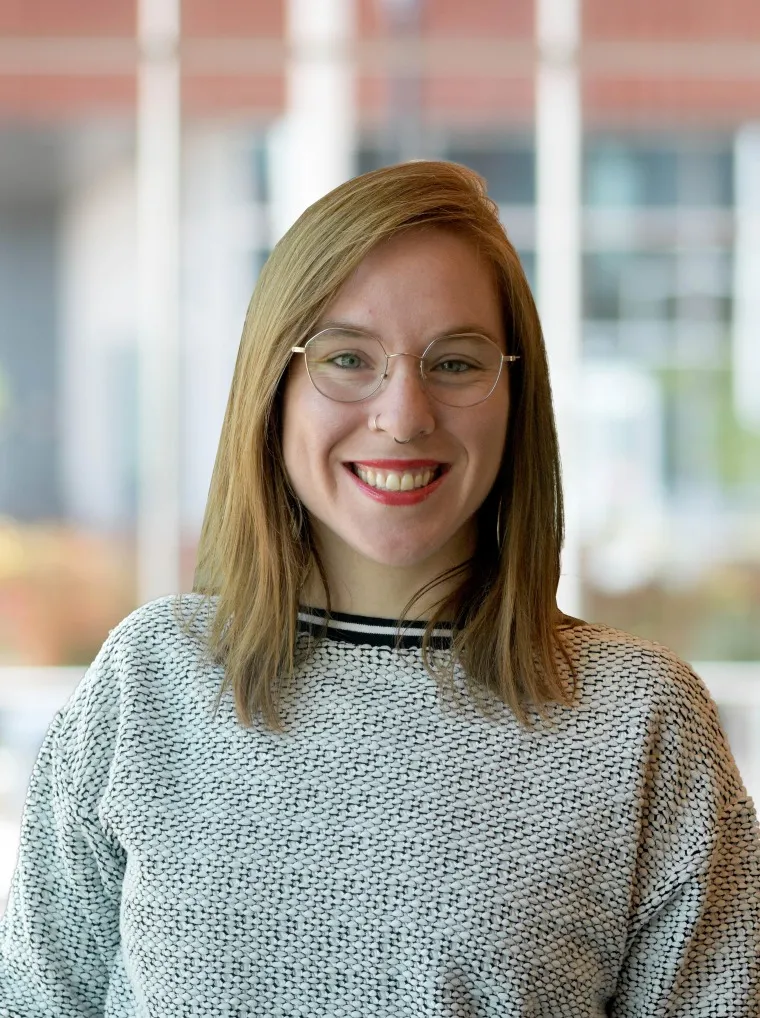
Venkatesh Merwade is a Professor in the Lyles School of Civil Engineering at Purdue University , where he has been since 2007. His research focuses on GIS applications in water resources engineering , surface water hydrology , river hydraulics , and cyberinfrastructure for hydrology , with regional interests in water management in developing countries . PhD in Civil Engineering (University of Texas at Austin, 2004) MSc in Engineering Hydrology (National University of Ireland, Galway, 2000) B.Engg. in Environmental Engineering (Shivaji University, India, 1997) His work includes floodplain mapping , hydrological modeling , and cyber-enabled hydrology education via tools like RWater and SWATShare . He has received awards such as the 2022 Purdue Individual Graduate Student Mentorship Award and 2018 Seed for Success for securing major research grants. Merwade collaborates with students and colleagues on flood prediction , soil moisture assimilation , and hydro-climatic impact analysis . His projects emphasize data-driven modeling , uncertainty quantification , and GIS integration for watershed management. He is affiliated with the Burke Hydraulics and Hydrology Lab and Purdue's Center for the Environment .
Seth Blumsack is a Professor at the Pennsylvania State University in the Department of Energy and Mineral Engineering and serves as Director of the Center for Energy Law and Policy . He holds an Adjunct Research Professor position at the Carnegie Mellon Electricity Industry Center and is affiliated with the Santa Fe Institute as an External Faculty member. His research spans energy economics , power grid reliability , and complex infrastructure networks . Key projects include: Interdependent natural gas and electricity systems analysis Governance of regional transmission organizations Smart grid consumer behavior studies Power grid reliability tools development He has secured funding from the U.S. National Science Foundation , Department of Energy , Environmental Protection Agency , and private industry. His Best paper award at Hawai’i International Conference on System Sciences (2011) and John T. Ryan, Jr. Fellowship (2011-17) highlight his scientific recognition. Publications emphasize electricity market deregulation , energy infrastructure resilience , and consumer response to smart grid technologies . His work has been cited in major media outlets like The New York Times and The Los Angeles Times , and he has consulted for National Renewable Energy Laboratory , U.S. Department of Energy , and other industry stakeholders.
Kathy Fontaine serves as Senior Lecturer in Information Technology and Web Science at Rensselaer Polytechnic Institute and Program Manager for the RPI-IBM AI Research Collaboration. She joined RPI in 2014 after 25 years at NASA Goddard Space Flight Center where she developed international data access policies through CEOS WGISS, GEO, and USGEO. Her educational background includes: B.S. in Physics with Astrophysics Option from New Mexico Institute of Mining and Technology (1984) M.A. in Science, Technology and Public Policy from The George Washington University (2002) Ph.D. in Public Policy and Public Administration from Walden University (2013) Dr. Fontaine's research integrates data science policy with ethical frameworks, focusing on international data sharing cultures and volunteer organization dynamics. She develops courses like Big Data Policy and Ethical Informatics that address data scientists' societal responsibilities. Her work examines how policy implementations affect global earth observation systems and research data ecosystems, with particular attention to cross-cultural collaboration challenges in scientific consortia. Analysis of her publications reveals strong interdisciplinary connections between earth sciences and computer science, with emerging trends in data dexterity training, knowledge graph applications for social equity, and mineral inventory data legacies. Her research increasingly bridges technical data infrastructure with ethical considerations in data sharing. Dr. Fontaine actively contributes to scientific communities through the Earth Science Information Partners (ESIP), where she serves on GEO's Programme Board, and maintains affiliations with AGU, ACM Web Science, IEEE GRSS, and IEEE SSIT. Her current leadership in the RPI-IBM AI Research Collaboration extends her mission to develop responsible AI frameworks.
Dr. J. David Frost is the Elizabeth and Bill Higginbotham Professor of Civil Engineering at Georgia Institute of Technology and a Regents' Entrepreneur. He has held academic positions at Purdue University and Georgia Tech, with a focus on geotechnical engineering and disaster response. As founding director of Georgia Tech's Savannah campus and head of the Geosystems Engineering Group, Frost has shaped academic programs and research initiatives. Education: B.A.I and B.A. in Civil Engineering and Mathematics, Trinity College, Dublin (1980) M.S. and Ph.D. in Civil Engineering, Purdue University (1986, 1989) Research Interests span geotechnical engineering, bio-inspired design, and disaster resilience. His work emphasizes digital data collection systems for subsurface hazard assessment, soil-polymeric material interactions, and geotechnical responses to earthquakes, hurricanes, and anthropogenic disasters. Recent projects integrate ant nest geometry, plant root mechanics, and geosynthetic innovations into infrastructure solutions. Scientific Contributions include two U.S. patents for subsurface data systems, leadership in NSF-funded post-disaster reconnaissance missions (e.g., 9/11, Türkiye earthquakes), and co-founding the Geotechnical Extreme Events Reconnaissance (GEER) Association. His articles reflect expertise in bio-inspired geotechnics, machine learning for disaster modeling, and advanced computational simulations. Awards & Recognition: ASCE Huber Civil Engineering Research Prize NSF National Young Investigator Award Georgia Society of Professional Engineers Engineer of the Year in Education Coastal Business & Education Technology Alliance Leadership Innovation Award Professional Engagement includes chairing the Savannah Area GIS board, advising on ASCE Geo-Legislative Committees, and founding a software company serving 350+ global clients. His work bridges academia, policy, and industry innovation.
Linda Bailey Hayden is a distinguished Professor and Associate Dean of Mathematics and Computer Science at Elizabeth City State University (ECSU), where she has made significant contributions to mathematics education and geoscience applications since 1980. Originally from Portsmouth, Virginia, she overcame segregation barriers to pursue her academic career, earning degrees from Virginia State University, University of Cincinnati, Old Dominion University, and American University. At ECSU, she founded the Center of Excellence in Remote Sensing Education and Research to increase minority participation in environmental science. Dr. Hayden's research interests span mathematics education, applications of mathematics in geoscience, remote sensing technologies, and environmental science. Her work uniquely bridges theoretical mathematics with practical applications in climate science, ice sheet monitoring, water quality assessment, and Antarctic research. She has pioneered educational approaches that connect mathematics with real-world environmental challenges, particularly through NASA-related programs and the GLOBE initiative. Her publication record reveals a strong focus on mentorship, educational outreach, and interdisciplinary research connecting mathematics with environmental science. The most recent publications demonstrate her ongoing commitment to developing innovative approaches for engaging students in scientific research, particularly through hackathons, remote sensing applications, and climate change education. Her work consistently emphasizes increasing participation of underrepresented groups in STEM fields. Presidential Award for Excellence in Science, Mathematics, and Engineering Mentoring (2003) Emerald Honors for Educational Leadership from US Black Engineer magazine Mathematically Gifted & Black Black History Month 2017 Honoree An Antarctic ice shelf was named after her institution by the Advisory Committee on Antarctic Names Dr. Hayden has dedicated her career to mentoring minorities and women in STEM fields through various programs including the Nurturing ECSU Research Talent (NERT) initiative, the Home-Institution Support Program, and numerous NASA-funded educational projects. Her grant history reflects strong partnerships with federal agencies to offer interdisciplinary training in remote sensing and environmental science. She has established multiple educational partnerships focused on enhancing undergraduate involvement in research, particularly for underrepresented students. As founder of the Center of Excellence in Remote Sensing Education and Research at ECSU, she has built a significant infrastructure for geoscience research and education, developing cyberinfrastructure for remote sensing of ice sheets and creating numerous educational programs from middle school through undergraduate levels. Her work has connected ECSU with major research institutions and federal agencies, establishing the university as a hub for remote sensing education in minority-serving institutions.
Roger Flage is a Professor of Risk Management at the University of Stavanger, affiliated with the Faculty of Science and Technology and the Department of Security, Economics and Planning. His research focuses on foundational and applied aspects of risk analysis, uncertainty quantification, and decision-making under uncertainty, with applications in critical infrastructure, environmental systems, and offshore energy. Roger Flage's research interests lie at the intersection of risk science, safety engineering, and decision theory. He investigates how uncertainty—especially epistemic uncertainty and assumptions—affects risk assessments, and advocates for more transparent and robust frameworks. His work spans theoretical advances, such as the treatment of 'black swan' events and the concept of 'real risk', as well as practical applications in offshore safety, power systems, and geohazards. He emphasizes the integration of data-driven methods, AI, and digital twins while critically assessing their limitations and associated security risks. His recent publications show a strong trend toward integrating dynamic, data-rich, and interdisciplinary approaches to risk analysis. Themes include the role of time in risk, AI applications, infrastructure interdependencies, and environmental risk in the oil and gas sector. He frequently publishes in top-tier journals like Risk Analysis , Reliability Engineering & System Safety , and Safety Science , often in collaboration with leading scholars such as Terje Aven and Seth Guikema. No scientific awards are mentioned in the provided text. Roger Flage has supervised or collaborated with several researchers, though no formal list of advisees is provided. His work is supported through academic collaborations and institutional affiliations rather than explicit grant mentions. He is actively involved in advancing risk science methodology, particularly in the treatment of assumptions and uncertainty, and contributes to both theoretical foundations and real-world applications in safety-critical domains. He is associated with research groups and collaborative networks at the University of Stavanger, particularly within the Department of Security, Economics and Planning. His work often involves interdisciplinary teams focusing on risk in complex engineered systems, including energy, transportation, and environmental systems.
Marco Barla is a Full Professor of Geotechnical Engineering at the Department of Structural, Building and Geotechnical Engineering (DISEG) at the Polytechnic of Turin, where he also leads a research group focused on energy geostructures, tunneling, slope stability, and numerical modeling. He serves as Editor-in-Chief of the ASCE International Journal of Geomechanics and holds leadership roles in international organizations such as the International Society for Energy Geostructures (President, 2025–2029) and ELGIP (Past President). He is actively involved in multiple EU and national research projects, including GEOREFIT, REGENERATE, and FOLIAGE. Research Interests: Thermoactive geostructures for shallow geothermal energy Tunnel design and construction under challenging conditions Real-time detection of debris flows and snow avalanches using fiber optics Numerical modeling of geotechnical systems Energy retrofitting of existing underground infrastructure His recent publications (2024–2025) demonstrate a strong focus on sustainable urban development through geothermal energy integration, particularly in tunnels and buildings. Key themes include energy geostructures, thermal storage, landslide monitoring, and climate resilience, reflecting his commitment to SDGs 7, 9, 11, and 13. He frequently publishes in top venues such as Tunnelling and Underground Space Technology , Geothermics , and Landslides . Scientific Awards: Telford Premium, Institution of Civil Engineers (2016) IACMAG Excellent Contributions Award (2011) Best Paper, 11th ISRM Congress (2007) Iacmag Award (2005) Top 5 Project Nominee, European Geothermal Innovation Award (2018) Advising and Grants: He supervises multiple PhD students in civil and environmental engineering and has led over 70 research projects, securing more than 2 M€ in funding from national and international sources. His projects span fundamental research (e.g., PRIN, H2020) and applied consulting (e.g., tunnel safety, landslide risk, structural monitoring). He is the scientific responsible for numerous contracts with public and private entities, including Autostrade per l’Italia and regional governments. Labs and Teams: He leads the Rock Mechanics and Rock Engineering research group at Politecnico di Torino ( www.rockmech.polito.it ), which conducts laboratory testing, field monitoring, and numerical simulations. The team is active in international collaborations and coordinates the COST Action FOLIAGE, dedicated to scaling up energy geostructure deployment.
Dr. Susan D. Hovorka is a Research Professor at the Bureau of Economic Geology, The University of Texas at Austin, specializing in geological techniques for environmental applications. She focuses on subsurface permeability dynamics in both tight and highly transmissive systems, with a primary emphasis on geological carbon sequestration and CO₂ storage security. Ph.D. in Geology (1990), The University of Texas at Austin M.A. in Geology (1981), The University of Texas at Austin B.A. in Geology (1974), Earlham College Her research addresses critical challenges in carbon geological storage, including: Characterizing salt formations as containment materials Analyzing carbonate fabrics for karst aquifer flow understanding Field CO₂ injection experiments for sequestration assessment Developing composite confining systems for secure CO₂ retention The articles she has contributed to since 2002 demonstrate a consistent focus on: Carbon capture and storage (CCS) technologies Reservoir pressure dynamics and fault permeability Permit-ready site workflows and risk mitigation Geological analogs from petroleum systems Dr. Hovorka actively collaborates with institutions like the Gulf Coast Carbon Center (GCCC) and participates in international CCS initiatives. Her work integrates sedimentology, geophysics, and environmental policy to advance subsurface carbon management solutions.
William Harbert is a Professor in the Department of Geology and Environmental Science at the University of Pittsburgh, where he leads research in geophysics and subsurface characterization. His work bridges fundamental geophysical principles with practical applications in energy and environmental systems. Education: MS in Exploration Geophysics from Stanford University PhD in Geophysics from Stanford University Research focuses on seismic analysis across multiple scales, from micro-CT to surface seismic. His group specializes in advanced processing of microseismic, reflection seismic, and VSP data to image subsurface structures and understand pore-scale dynamics. Current work integrates deep learning for geophysical object detection and classification, with emphasis on organic shale systems and CO 2 storage monitoring. Key areas include rock physics, microseismicity analysis, and environmental geophysics for water quality assessment. Publication trends show strong emphasis on energy-related geophysics, particularly hydraulic fracturing monitoring, CO 2 sequestration verification, and unconventional reservoir characterization. Recent work increasingly incorporates machine learning techniques and addresses environmental monitoring challenges in subsurface operations. Scientific recognition: DOE ORISE Research Associate Resident Institute Fellow of the NETL-Institute for Advanced Energy Solution Professional engagements include membership on the Altarock Review Board for DOE-funded geothermal projects and prior service on the Scientific Advisory Board for the In Salah CO 2 Injection Project. His research involves extensive collaboration with national laboratories and industry partners on subsurface monitoring technologies. His laboratory group develops advanced geophysical processing techniques for subsurface imaging across multiple scales, with current projects focusing on microseismic monitoring of shale reservoirs and CO 2 storage sites.
Paul D. Brooks is a Professor in the Department of Geology/Geophysics at the University of Utah, where he has been a faculty member since July 2014. His research focuses on understanding water, energy, and biogeochemical cycling in seasonally snow-covered catchments, with increasing emphasis on predicting how climate and land use changes impact snow accumulation, ablation, and snowmelt-derived surface and ground water resources. His educational background includes a BS in Biology and Chemistry from Florida State University, followed by an MS in Ecohydrology (1991) and PhD in Biogeochemistry (1995), both from the University of Colorado, Boulder. Prior to his position at the University of Utah, Dr. Brooks was a Professor in the Department of Hydrology and Water Resources at the University of Arizona from December 2000 to June 2014. Dr. Brooks' research spans multiple disciplines within earth sciences, focusing primarily on hydrology, ecohydrology, and biogeochemical cycling in mountainous, snow-dominated environments. His work examines how climate change affects snowmelt processes, groundwater-surface water interactions, and water resource availability in the western United States. He employs a combination of field measurements, isotope hydrology, and modeling approaches to understand complex hydrological processes across multiple spatial and temporal scales. His research increasingly involves collaboration with stakeholders to translate scientific findings into practical water resource management applications. Analysis of Dr. Brooks' recent publications reveals a strong focus on groundwater-surface water interactions in snowmelt-dominated systems, with particular attention to how climate change affects streamflow generation processes. His work bridges fundamental hydrological science with practical water resource concerns, examining topics such as runoff efficiency, groundwater storage dynamics, and the impacts of land cover changes on hydrological processes. A significant portion of his recent research investigates the Western United States water resources under changing climate conditions. AGU Fellow (American Geophysical Union) Dr. Brooks actively mentors graduate students through thesis research (both PhD and Master's level) as evidenced by his teaching activities. His lab conducts research supported by various grants focused on understanding water resources in mountainous regions, particularly examining how climate change affects snowmelt hydrology and water availability. He collaborates extensively with researchers across multiple institutions, as demonstrated by his numerous co-authored publications with scientists from various universities and research organizations. Dr. Brooks leads research efforts through his lab at the University of Utah and is involved with the Wasatch Environmental Observatory, a mountain-to-urban research network in the semi-arid Western US. His work integrates field measurements across complex terrain to understand how topography, vegetation, and climate interact to control water, energy, and biogeochemical cycling in seasonally snow-covered environments.
Dr. C. Rhett Jackson serves as the Associate Dean of Academic Affairs and holds the John Porter Stevens Distinguished Professorship in Water Resources at the University of Georgia's Warnell School of Forestry and Natural Resources. His research focuses on the impacts of land use (forestry, agriculture, urbanization) on water quality and aquatic habitats, with particular emphasis on riparian vegetation, stream temperatures, and hydrological processes. He leads trans-disciplinary projects involving collaborators from environmental engineering, ecology, and geology. Education: PhD in Hydrology (University of Washington), MSE and BSE in Environmental Engineering (Duke University). Affiliations: Institute for Resilient Infrastructure Studies (IRIS), River Basin Center, and Coweeta LTER. Research interests include interflow dynamics, nitrogen cycling in mountain catchments, and the effectiveness of best management practices for nonpoint source pollution. He has authored over 100 peer-reviewed articles and has been recognized for his contributions to environmental science through the Distinguished Professor title. Key labs/centers: Water Resources Area, IRIS, and Coweeta LTER. His work bridges basic hydrologic science with applied water resource management, addressing both rural and urban challenges such as bioenergy crop impacts, karst groundwater interactions, and urban stream restoration.
Steven Hall is an Assistant Professor and Extension Specialist in the Department of Plant and Agroecosystem Sciences at the University of Wisconsin-Madison (UW-Madison), College of Agricultural & Life Sciences. Previously, he held roles as Assistant and Associate Professor in the Department of Ecology, Evolution, and Organismal Biology at Iowa State University. His research focuses on agroecosystem water quality, soil carbon dynamics, and nutrient management in agricultural landscapes, with an emphasis on how redox conditions, geochemical factors, and microbial communities influence carbon sequestration and greenhouse gas emissions. He obtained a PhD in Ecosystem Science from UC Berkeley and MS/BS degrees from UW-Madison in Environment and Resources/Botany, respectively. His educational background includes studies at the University of California-Berkeley (PhD, Ecosystem Science), University of Wisconsin-Madison (MS, Environment & Resources; BS, Botany). Research priorities include evaluating conservation practices, crop diversification, and novel fertilizer technologies for environmental benefits. The Hall Lab employs mesocosm experiments, isotopic tracing, and continental-scale datasets to address challenges in climate-smart agriculture and water quality preservation. Research highlights include groundbreaking work on iron-driven carbon decomposition mechanisms, microbial controls on lignin mineralization, and nitrous oxide emissions from tile-drained soils. Recent studies emphasize the role of poorly drained depressions as nutrient leaching hotspots and the unexpected carbon losses from anaerobic soils, challenging existing biogeochemical models. Advising and grants involve mentoring current graduate students (Moira Keith, Hariom Yadav) and undergraduate researchers. Opportunities to join his lab depend on funded projects. Collaborations include the International Soil Radiocarbon Database (ISRaD) and partnerships with institutions like the Savanna Institute. The lab is situated in Moore Hall, Plant Sciences Building, with outreach activities through UW-Madison's extension programs. Key infrastructure includes automated gas flux measurement systems and soil block mesocosms. Ongoing work integrates machine learning with NEON soil data to model organic carbon dynamics, while field studies explore digestate amendments and biochar impacts. His research bridges laboratory experiments with landscape-level observations to inform sustainable agricultural practices.
Caitlyn Hall is a Joint Assistant Professor of Practice in Hydrology and Atmospheric Sciences, Assistant Professor of Practice in Biosystems Engineering, and Director of the Future Earth Resilience minor program at the W.A. Franke Honors College. She founded the Arizona Science Policy Network and advises decision-makers on equitable legislation. Her roles span multiple departments at the University of Arizona, integrating environmental science with policy and community engagement. Educations: PhD in Environmental Engineering, Arizona State University BS and MS in unspecified fields from the University of Arizona Research Interests: Hall focuses on environmental justice, natural hazard resilience, and science policy, particularly in water governance, sustainability, and soil/water remediation. Her work emphasizes community-driven solutions and equitable policy development, leveraging transdisciplinary approaches to address climate adaptation and disaster recovery. She has pioneered efforts in open science and inclusive geoscience education. Articles Trends: Her recent publications emphasize integrating earth observation technologies with policy, advancing microbial-based ground stabilization techniques, and promoting equity in post-disaster recovery. Key themes include climate action frameworks, cross-cultural sustainability solutions, and open hydrology practices. Awards: No specific awards listed. Advising & Grants: Leads the Future Earth Resilience minor program and advises policymakers on legislative frameworks. Active in curriculum development for interdisciplinary environmental studies and community-driven research initiatives. Labs/Teams: Founder of the Arizona Science Policy Network, collaborates with global hydrology platforms like eWaterCycle, and engages in initiatives addressing US-Mexico border sustainability challenges.
Dr. Wael El-Dakhakhni is a Professor of Civil Engineering at McMaster University, holding the Martini, Mascarin and George Endowed Chair in Masonry Design. He serves as Director of the INTERFACE Institute and NSERC CaNRisk-CREATE program, focusing on systemic risk and resilience in complex systems. His research spans interdependent networks, data-driven modeling, and infrastructure resilience under climate and disaster scenarios. He leads the INViSiONLab, advancing AI-driven solutions for urban resilience through digital twins. El-Dakhakhni is a Fellow of the American Society of Civil Engineers and a Member of the Royal Society of Canada, with notable awards including the NSERC Discovery Accelerator Supplement (twice), Ontario Early Researcher Award, and John B. Scalzi Research Award. His work bridges academia and industry, contributing to codes, standards, and real-world applications in structural engineering and disaster response. Education: BSc (Ain Shams University, Egypt), MSc and PhD (Drexel University, USA). Research Interests: Complex systems simulation, systemic risk quantification, resilient infrastructure design, AI applications in urban planning, and climate resilience frameworks. His work integrates advanced machine learning, network theory, and physics-informed models to address multi-hazard challenges in energy, transportation, and urban systems. Key Projects: CITYDNA, McMasterDNA, and infrastructure digital twins for pandemic and climate crisis decision-support systems. He collaborates with governments and organizations to enhance infrastructure resilience through predictive analytics and adaptive strategies. Labs/Teams: INViSiONLab, McMaster INTERFACE Institute, NSERC-CaNRisk-CREATE program, and the Centre for Effective Design of Structures. His research has informed policy and standards in North America, emphasizing interdisciplinary solutions for systemic risk mitigation.
Diego Riveros-Iregui is a Professor in the Department of Geography at the University of North Carolina at Chapel Hill, recognized for pioneering research in ecohydrology and biogeochemistry. His work focuses on water-carbon-nitrogen interactions in tropical ecosystems, urban-rural gradients, and climate-impacted watersheds, employing high-frequency monitoring and advanced modeling techniques to address critical environmental challenges. His research interests center on tropical ecohydrology, particularly in Andean páramos and Galápagos Islands, examining carbon cycling in peatlands, nitrogen dynamics across land-use gradients, and stormwater impacts on urban streams. He integrates stable isotope analysis, machine learning, and field observations to study how geomorphology and climate variability regulate biogeochemical fluxes, with emphasis on vulnerable ecosystems facing anthropogenic pressures. Analysis of his 15 most recent publications (2021-2025) reveals dominant trends in high-resolution watershed monitoring, tropical carbon emissions, and urban hydrology. Key methodological innovations include machine learning for water use estimation, isotope-based tempestology, and bias correction in contaminant plume mapping, demonstrating interdisciplinary approaches spanning environmental engineering, climatology, and ecosystem science. Professor Riveros-Iregui has received the following scientific awards: Presidential Early Career Award for Scientists and Engineers (PECASE), the U.S. government's highest honor for early-career scientists, nominated by the National Science Foundation As a PECASE awardee, he leads NSF-funded research programs examining watershed processes across tropical and temperate regions. His collaborative work includes contributions to the EU-funded WELL CARE consortium on water security, though specific grant details and student mentorship records aren't documented in the source material. Current research priorities involve scaling point observations to watershed-level fluxes and assessing climate change impacts on island hydrology. While no dedicated laboratory is specified, his field studies leverage international partnerships in Ecuador's páramos and the Galápagos archipelago, focusing on microclimate-soil microbiome interactions and sustainable water resource management in high-elevation ecosystems.