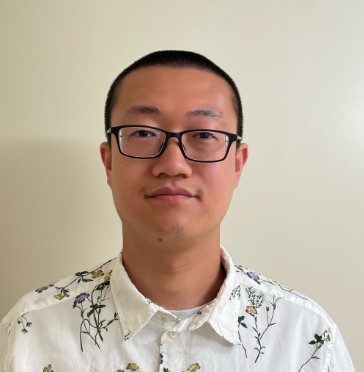
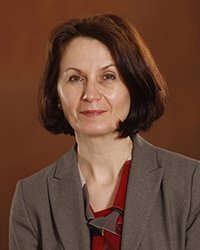
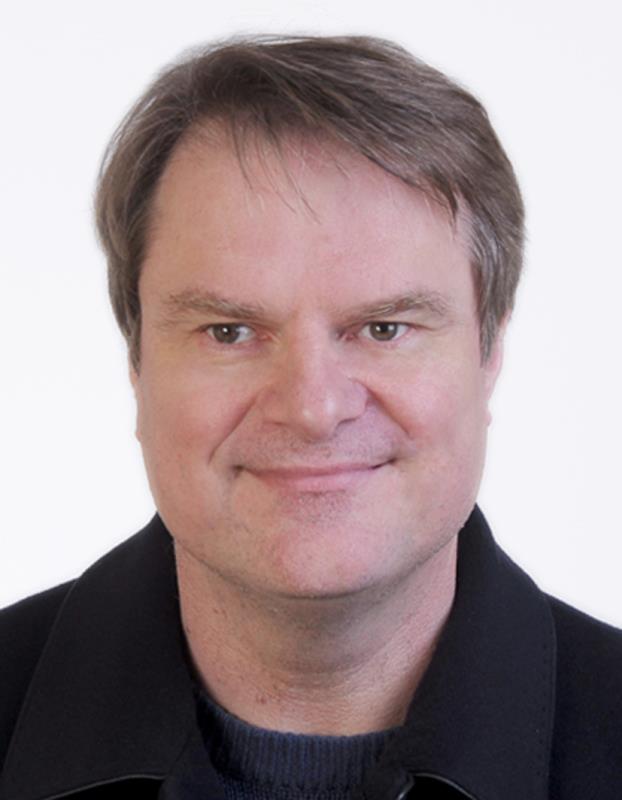
Jūratė Aleinikovienė is an Associate Professor at Vytautas Magnus University's Department of Agroecosystems and Soil Sciences. She specializes in soil microbiology, sustainable agriculture, and ecosystem management. Doctor of Biomedical Sciences (2009) Active in EU-funded initiatives like HoliSoils Focuses on soil health, microbial dynamics, and bioremediation Coordinates national projects on agricultural sustainability Her research explores soil microbiota dynamics, bio-based solutions for soil restoration, and climate-resilient agricultural practices. Recent projects analyze nano-fertilizers, organic residue mineralization, and soil carbon stabilization. Scientific activities intersect with economic modeling, environmental policy, and stakeholder engagement. She collaborates with institutions like the Bioeconomy Research Institute and European climate-focused consortia.
Pantaleon Peralta is a tenure-track Assistant Researcher at IMDEA Nanoscience Institute in Madrid, Spain, where he joined the Theoretical Modelling Group in May 2019. His position is affiliated with the Theory Group, focusing on computational and theoretical investigations of nanoscale quantum phenomena in low-dimensional materials. His academic background includes: Bachelor of Science in Physics from Universidad Autónoma de Baja California (2007) Master of Science in Nanoscience and Nanotechnology from Universidad Autónoma de Baja California (2010), specializing in electronic transport in quantum nanowires with embedded impurities PhD in Physics from The University of Manchester's School of Physics and Astronomy (2019), researching electronic and transport properties of ferromagnetic spin lattices Dr. Peralta's work centers on electronic, topological, structural, and superconducting properties of graphene multilayers and 2D material heterostructures. His research particularly addresses twisted systems (moiré patterns) and artificial superlattices, combining ab initio calculations with machine learning optimization to unravel correlated phenomena. This interdisciplinary approach bridges fundamental quantum physics and advanced computational methodology. Publication analysis (2021-2024) reveals a concentrated focus on graphene heterostructures and moiré superlattices , with recurring themes in substrate interactions, electrostatic control, and topological transport. His output appears predominantly in high-impact journals including Physical Review Letters , Nature Reviews Physics , and Nature NPJ Computational Materials , demonstrating significant contributions to understanding superconductivity mechanisms in engineered 2D systems. The researcher operates within IMDEA Nanoscience Institute's Theoretical Modelling Group, utilizing institutional high-performance computing resources to simulate quantum material behavior. This group maintains close collaborations with experimental teams to validate theoretical predictions about correlated electron systems in artificially structured nanomaterials.
Assoc. Prof. Zbigniew Wróbel is a member of the Scientific Groups at the Institute of Organic Chemistry Polish Academy of Sciences (IChO), where he acts as Acting head of the group . His work focuses on the synthesis of nitrogen heterocycles from aromatic nitro compounds, utilizing nitroso intermediates for the preparation of indoles, quinolones, phenazines, and related systems. Research Interests : Development of efficient, scalable methods for organic heterocycles, including: One-pot, multigram-scale syntheses Heavy-metal-free quinoline derivatives Trifluoromethylated benzimidazoles Reductive cyclization pathways Functionalization of nanocrystals Atmospheric chemistry of organic iodine His publications span Organic Chemistry , Materials Science , and Environmental Chemistry , with a recurring emphasis on reaction mechanism studies and industrial-scale applications. Affiliations : Institute of Organic Chemistry Polish Academy of Sciences (IChO). Contact : zbigniew.wrobel@icho.edu.pl
Brigitte Guérin is a Professor at the Université de Sherbrooke, leading research at the Centre de recherche du CHUS. Her work bridges nuclear medicine, chemistry, and oncology, with a focus on developing novel PET radiotracers for cancer and neurodegenerative diseases. She holds the Jeanne et Jean-Louis Lévesque Research Chair in Radiobiology (2025) and directs significant projects on radiopharmaceutical design and cyclotron production of medical isotopes. Research Focus: Design and synthesis of peptide-based radiotracers targeting cancer biomarkers Development of ultra-fast radiosynthesis methods for isotopes like 18 F, 64 Cu, and 68 Ga Novel chelators for improved in vivo stability of radiometal complexes Clinical translation of imaging agents for prostate cancer, neuroendocrine tumors, and Alzheimer's disease Her recent publications (2023-2025) demonstrate a strong trend toward theranostic applications , particularly in prostate cancer (PSMA-targeting agents) and neurodegenerative disorders (amyloid/SOD1 imaging). Work frequently combines PET imaging validation with mechanistic studies on radiation chemistry and metabolism. Major Awards: Clara Benson Award (2018), Innovation Prize (Université de Sherbrooke), Prix d'excellence du CIUSSS (2023), and 10+ distinctions for cyclotron technology and cancer diagnostics. Secured $30M+ in grants including NSERC Discovery, CIHR Project Grants, and industrial partnerships. Leadership: Directs radiotracer development at the CHUS imaging platform. Mentored 15+ graduate students (2020-2025) in chemistry and medical physics. Current projects include FAP inhibitor imaging for head/neck cancer and 89 Zr-based Alzheimer's probes.
Marc R Knecht serves as a Professor and Chair of the Department of Chemistry within the College of Arts and Sciences at the University of Miami. His research program bridges chemistry, materials science, and nanotechnology with a focus on biomimetic approaches to materials design and catalysis. Dr. Knecht's research interests center on developing peptide-based strategies for controlling nanomaterial synthesis and function. His work spans Materials Chemistry , Nanotechnology , Biomimetic Materials , and Peptide Engineering , with particular emphasis on protein-material interactions, catalytic nanoparticle design, and sustainable materials synthesis approaches. His research often combines experimental techniques with computational modeling to understand structure-function relationships at the nanoscale. His recent publications demonstrate a strong focus on using peptides to control the structure and function of nanomaterials, particularly bimetallic catalysts. His work shows how peptide sequences can be engineered to direct metal distribution in nanoparticles, how protein conformations affect surface binding, and how light-responsive ligands can enable optical control of catalytic activity. The research spans fundamental surface science to practical applications in sustainable catalysis. Dr. Knecht has maintained an active research program with numerous publications in high-impact journals including ACS Nano, Journal of Physical Chemistry, and Small. His work demonstrates interdisciplinary collaboration across chemistry, materials science, and computational modeling fields. As Department Chair, he leads the Chemistry Department's academic and research initiatives while maintaining an active laboratory investigating biomimetic materials design. His research program appears well-funded through multiple grants supporting the synthesis and characterization of peptide-directed nanomaterials. His laboratory utilizes advanced characterization techniques including X-ray absorption spectroscopy, electron microscopy, and quartz crystal microbalance analysis to understand nanomaterial structure-property relationships at the molecular level.
John Stewart Preston is a Professor in the Department of Engineering Physics at McMaster University's Faculty of Engineering. His research focuses on advanced materials development using laser-based techniques, with particular emphasis on photovoltaic applications. He directs the NSERC CREATE Program in Photovoltaics and utilizes world-class facilities including the Brockhouse Materials Research Institute, Canadian Centre for Electron Microscopy, and McMaster Analytical X-Ray Facility. Professor Preston's research spans three primary areas: Pulsed Laser Deposition (operating three specialized chambers for thin film deposition), Self-Assembly of Epitaxial Nanostructures (investigating gold on spinel crystals and CdTe nanostructures on sapphire), and Photovoltaics (developing novel enhancements to silicon solar cells, II-VI solar cells, and hybrid organic-inorganic cells). His work demonstrates an evolution from fundamental laser-material interactions to practical photovoltaic applications, with recent research focusing on interface engineering, epitaxial growth mechanisms, and advanced characterization of semiconductor materials. His publication record shows consistent contributions to materials science, with recent work emphasizing heteroepitaxial growth, interface characterization, and photovoltaic material development. The research demonstrates strong interdisciplinary connections between materials science, nanotechnology, and renewable energy applications, with significant focus on crystal growth mechanisms and interface phenomena. Professor Preston teaches several courses including Engineering: Communications and Social Impact (ENGINEER 2PX3), Professional Communication and Project Management (ENGPHYS 3EC4), and Principles of Solid-state Materials and Devices (ENGPHYS 3F03). His research group operates specialized laser deposition facilities and collaborates extensively with McMaster's advanced materials characterization centers. His laboratory work involves three pulsed laser deposition chambers (optimized for pure materials, large area deposition, and oxygen-sensitive materials) and leverages McMaster's world-class electron microscopy and x-ray facilities for comprehensive materials characterization. Recent research directions include developing new material systems for exceptional photovoltaic performance and exploring the self-assembly of nanoscale structures driven by strain and surface tension.
Craig Myrum is an Assistant Professor in the Department of Biology at Loyola University Maryland , focusing on neurobiological mechanisms underlying cognitive aging. His research integrates molecular genetics, behavioral neuroscience, and systems-level analysis to study age-related memory decline and neurodegenerative processes. Specializes in the Arc gene —critical for long-term memory formation Investigates interactions between aging, memory performance , and sleep quality Utilizes rat models to characterize neurobiological substrates of aging Recent work explores the epigenetic regulation of Arc in aging and cortical network dynamics linked to cognitive outcomes. Publications span molecular neurobiology, structural biology, and systems neuroscience. Email: cmyrum@loyola.edu
Aysenil Belger, PhD is an Adjunct Assistant Professor in the Department of Radiology at the University of North Carolina at Chapel Hill and a Faculty Network Member of the Duke Institute for Brain Sciences as well as a Member of the Center for Brain Imaging and Analysis. Her translational research integrates neuroimaging, electrophysiology, and experimental psychology to elucidate the cortical circuits underlying attention, executive function, and emotion processing and their disruption across neuropsychiatric disorders. Education Ph.D., University of Illinois, Urbana-Champaign (1993) Research Interests Dr. Belger’s laboratory employs functional magnetic resonance imaging (fMRI), electroencephalography (EEG), and functional near-infrared spectroscopy (fNIRS) to investigate: Neurobiological substrates of autism spectrum disorder across development Neural signatures predicting conversion from clinical high risk to psychosis Impact of early childhood adversity on adult brain structure, function, and substance abuse trajectories Stress regulation and neural circuitry maturation during adolescence Her interdisciplinary approach combines experimental psychology paradigms with advanced neuroimaging and electrophysiological techniques to map sensory and cognitive deficits onto underlying neural circuit abnormalities. Publication Trends Across 2019-2020, Dr. Belger and collaborators produced a prolific body of work (>15 peer-reviewed articles) concentrating on three major themes: (1) reliability and predictive utility of EEG biomarkers (mismatch negativity, P300, gamma oscillations) for psychosis onset; (2) multimodal neuroimaging investigations of temporal lobe asymmetry, dynamic functional connectivity, and cortical genetics in schizophrenia; and (3) neuroendocrine and stress-response studies relating acute psychosocial stress to cognitive disorganization and psychosis risk in youth. Scientific Awards No specific awards listed in the provided text. Funding & Mentorship Dr. Belger currently holds or has held major federal grants including: A High-Performance 3T MRI for Brain Imaging (2021-2022) fMRI Assessment of Attention and Memory in PTSD (2006-2012) She actively mentors a diverse cohort of trainees ranging from undergraduate and graduate students to postdoctoral fellows and junior faculty, and teaches the graduate course Cognitive Clinical Neuroscience at UNC. Laboratory & Team Dr. Belger leads an interdisciplinary laboratory embedded within the UNC-Chapel Hill radiology department and maintains collaborative ties with the Duke Institute for Brain Sciences and the Center for Brain Imaging and Analysis. Her team participates in multi-institutional consortiums such as the North American Prodrome Longitudinal Study (NAPLS) to leverage large-scale datasets in order to accelerate discovery and translation.
Kuan Qin is a Research Fellow at the University of Georgia's College of Agricultural & Environmental Sciences, affiliated with the Horticulture department under Dr. Ferrarezi's supervision. Based at the Cowart Building, Griffin campus, their work focuses on controlled environment agriculture and sustainable vegetable production systems. Department: Horticulture University: University of Georgia Email: kuanqin@uga.edu Research Focus Dr. Qin's research investigates: Machine learning applications in nutrient management for containerized crops Biochar's role in disease suppression and substrate optimization Light use efficiency in hydroponic lettuce cultivation Microbial solutions for salinity stress mitigation in leafy greens Humic substances' impact on nitrogen use efficiency in tomatoes Climate resilience strategies through rootstock grafting Their work addresses critical challenges in controlled environment agriculture including resource optimization, stress tolerance, and sustainable production methods. Publication Trends Recent publications demonstrate a consistent focus on: Hydroponic system optimization (8/15 papers) Stress mitigation techniques (7/15 papers) Soil amendment applications (9/15 papers) Plant-microbe interactions (4/15 papers) Climate-resilient horticulture practices Technology-driven agricultural solutions
Dr. Georgeta Rosca is a tenured Professor at Central Michigan University's College of Medicine, where she has served as a founding faculty member since 2014. She teaches physiology and pathophysiology to medical students and co-directed the renal-endocrine course. Her educational excellence earned her the Founding Faculty Appreciation Award (2017) and Spirit of Teaching Award (2019). Education: M.D., Grigore T. Popa University of Medicine and Pharmacy Postdoctoral Fellowship, Case Western Reserve University (two fellowships) Her research focuses on mitochondrial dysfunction in metabolic diseases, particularly diabetes complications affecting kidneys, heart, and retina. She investigates therapeutic interventions targeting bioenergetic pathways and oxidative stress. Current NIH-funded projects explore mitochondrial toxicity mechanisms and metabolic syndrome pathophysiology. Recent publications (2017-2024) predominantly examine mitochondrial bioenergetics in diabetic complications, cardiovascular diseases, and therapeutic agents like methylene blue and liraglutide. Common themes include redox imbalance, metabolic flexibility, and organ-specific mitochondrial pathology. Scientific Awards: Fulbright Postdoctoral Scholarship Juvenile Diabetes Research Foundation Fellowship Proteomics in Diabetes Workshop Travel Award Best Research Award Founding Faculty Appreciation Award (2017) Spirit of Teaching Award (2019) She mentors undergraduate and medical students in her laboratory, which has received funding from JDRF, AHA, and United Mitochondrial Disease Foundation. Current NIH grants support her investigations into mitochondrial toxicity screening and metabolic disease mechanisms. Her CMED Research Building laboratory studies mitochondrial bioenergetics using biochemical and molecular approaches. She collaborates with national institutions and maintains professional memberships in the American Heart Association and United Mitochondrial Disease Foundation.
Prof. Christian Ulrichs leads the Urban Ecophysiology of Plants group at Humboldt University's Albrecht Daniel Thaer Institute of Agricultural and Horticultural Sciences. His work bridges agricultural sustainability with ecological physiology. Academic affiliation: Humboldt University of Berlin Department: Albrecht Daniel Thaer Institute of Agricultural and Horticultural Sciences Research spans biocircular systems, including insect-based waste valorization , plant stress responses , and urban agriculture . Recent studies examine: Yellow mealworm substrate optimization Hemp waste fermentation for insect rearing Biodegradable packaging for leafy vegetables UV spectrum effects on cannabis metabolites Nutrient cycling in aquaponic systems His publications from 2023-2025 demonstrate interdisciplinary approaches combining entomology, horticulture, and waste management. Contact: dekan.lewi@hu-berlin.de
Prof. Dr. Thomas Maskow is a senior scientist and group leader at the Department of Microbial Biotechnology, Helmholtz Centre for Environmental Research - UFZ in Leipzig, Germany. Since 2023, he has also served as a Professor at the University of Cooperative Education in Riesa, Saxony. His work focuses on biothermodynamics and biocalorimetry, with applications in environmental biotechnology and sustainable chemistry. He leads the Working Group Ecothermodynamics / Biocalorimetry and is actively involved in international scientific organizations. Dr. Maskow received his Diploma in Theoretical and Physical Chemistry from TU Leuna-Merseburg in 1988. He completed his PhD at the University of Halle-Wittenberg (1988-1992) with research on 'Thermodynamics of complex multicomponent mixtures.' In 2005, he earned his Habilitation at the Technical University Dresden with the thesis 'Thermodynamic Characterization and Calorimetric Control of Microorganisms in Transient Growth States.' Dr. Maskow's research centers on developing quantitative understanding of bioconversions through irreversible thermodynamics. His work creates biothermodynamic models and real-time analytical tools for monitoring biological systems. Key applications include microbial adaptation to extreme environments, food web analysis, bioenergy production, and biosynthesis optimization. Current projects investigate energy-matter balances in soil systems, microplastic recycling, complex metabolic networks, bacteriophage roles, and nanoparticle effects. His recent publications (2023-2025) demonstrate expertise in soil microbiology, thermodynamics, and biocalorimetry. Research focuses on energy fluxes in soil organic matter, microbial carbon utilization, advanced calorimetric instrumentation, and microbial responses to environmental variables. His work bridges fundamental thermodynamics with practical environmental applications, particularly in soil systems and bioprocess monitoring. Dr. Maskow has received significant recognition for his contributions: Lavoisier Medal from the International Society for Biological Calorimetry (2018) As Chair of ISBC (2010-2012) and Co-speaker of ICTAC since 2023, Dr. Maskow has shaped international research directions in calorimetry. His leadership extends to collaborative projects on soil systems, microplastic recycling, and biothermodynamic modeling. While specific grant details aren't provided, his extensive publication record suggests substantial funding support for his research program. Dr. Maskow leads the Working Group Ecothermodynamics / Biocalorimetry at UFZ, developing advanced analytical tools for microbial monitoring. His team's work on isothermal microcalorimeters with integrated sensors represents cutting-edge instrumentation for studying microbial processes in environmental systems. The group's research contributes to understanding fundamental biothermodynamic principles while addressing practical environmental challenges.
Milos Trajkovic is an external researcher at the University of Groningen , affiliated with the Faculty of Science and Engineering and the Biotechnology department. His work focuses on biocatalysis, enzyme engineering, and computational methods in organic chemistry, particularly for lignin-derived compounds and stereoselective synthesis. Biocatalysis Enzyme Engineering Synthetic Biology Organic Chemistry Lignin-derived Compounds His recent publications highlight trends in computational redesign of enzymes (e.g., aspartase for β-alanine synthesis), stereoselective reductions and oxidations (e.g., F420-dependent alcohol dehydrogenase), and lignin valorization through tailored oxidase/peroxidase systems. Key subfields include enantioselectivity, cofactor engineering, and biocatalytic cascades. M. Trajkovic collaborates with prominent researchers such as M.W. Fraaije and A. Mattevi on projects involving enzyme stability, bioluminescence, and synthetic biology applications. His work has resulted in 20 research outputs, including patents and datasets, with significant citations and Mendeley readership.
Ewen Silvester is an Associate Professor in the Department of Ecological, Plant and Animal Sciences at La Trobe University's School of Agriculture, Biomedicine and Environment. He serves as Director of Graduate Research overseeing >250 higher degree students and Director of the Research Centre for Applied Alpine Ecology (RCAAE), with strong industry engagement in alpine landscape management. His research group conducts field studies across southeastern Australia's surface water systems including alpine wetlands, headwater streams, and coastal rivers. BSc Hons (Chemistry) - University of Melbourne PhD - University of Melbourne (1992, Physical Chemistry) Professor Silvester's research centers on biogeochemical processes in rivers and wetlands, with three primary focuses: (i) hydrological controls on organic molecule mobility in landscapes, (ii) alpine moss-aqueous environment interactions using synchrotron infrared microspectroscopy, and (iii) peatland biogeochemical function during base-flow and storm events. His work integrates benchtop and synchrotron-based techniques to analyze natural organic matter and environmental contaminants, directly informing wetland management and peatland condition assessment in alpine regions. Key research areas include alpine ecosystem resilience, water quality dynamics, peatland carbon cycling, and legacy mining impacts on river systems. Analysis of his 15 most recent publications (2023-2025) reveals strong thematic consistency in alpine peatland research, with emphasis on carbon cycling, hydrological resilience, and contaminant impacts. His work increasingly incorporates molecular-level analysis (proteomics, amino acid profiling) and remote sensing to develop peatland condition metrics. The publications demonstrate interdisciplinary collaboration across environmental chemistry, ecology, and hydrology, with growing application of synchrotron techniques to understand ecosystem responses to climate change and human disturbance. Professor Silvester leads significant research initiatives including the NESP PeatSense project (2025-2027) improving peatland monitoring, and previously directed the ARC-funded "Rivers of Gold" project examining historical mining impacts. His current grant portfolio includes Australian Government, catchment management, and national park authority funding focused on peatland condition assessment, remote sensing applications, and dissolved oxygen management in river systems. He co-leads a specialized chemical laboratory for natural organic matter and contaminant analysis, utilizing both conventional and synchrotron-based techniques. His research group maintains strong industry partnerships with the Australian Alps National Parks, North East Catchment Management Authority, and Murray-Darling Basin organizations, ensuring practical application of findings to environmental management challenges in alpine and riverine ecosystems.
Sara-Sophie Poethe is a researcher at Bielefeld University, holding dual affiliations with the Faculty of Biology's Prokaryote Genetics department and the Center for Biotechnology (CeBiTec) Prokaryote Genetics Group. Her office is located at UHG W6-120, and she can be contacted at sara-sophie.poethe@uni-bielefeld.de or by phone at +49 521 106-5603. Dr. Poethe's research spans two distinct but equally significant domains in molecular biology. In microbial biotechnology, she focuses on metabolic engineering of Corynebacterium glutamicum for pharmaceutical applications, developing strains that efficiently produce compounds like tyrosol and tyramine which serve as precursors for important drugs. Her work demonstrates how engineered bacterial systems can provide sustainable alternatives to traditional chemical synthesis methods, with particular attention to pathway optimization and alternative carbon source utilization. In forensic science, Dr. Poethe has developed innovative next-generation sequencing approaches for STR typing that significantly improve analysis of challenging DNA samples including degraded material, mixed samples, and those containing PCR inhibitors. Her maSTR assay combined with the SNiPSTR bioinformatics pipeline offers a cost-effective alternative to commercial forensic STR kits while providing superior performance with difficult samples. Her publications from 2023-2025 reveal a researcher actively contributing to both pharmaceutical biotechnology and forensic DNA analysis. The progression of her work shows increasing sophistication in metabolic engineering approaches and methodological improvements in DNA analysis techniques. Dr. Poethe is also involved in the iCulture project (2027), a European Union-funded initiative developing a digital bio-platform for sustainable macroalgae utilization, demonstrating her capacity for interdisciplinary collaboration. Dr. Poethe works within the Prokaryote Genetics Group at CeBiTec, which focuses on fundamental and applied research in bacterial genetics and metabolism. Her work bridges basic microbial research with practical applications in pharmaceutical production and forensic science, contributing to Bielefeld University's strategic research focus on the Material World and its interfaces across biological disciplines.