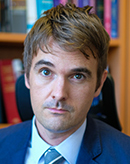
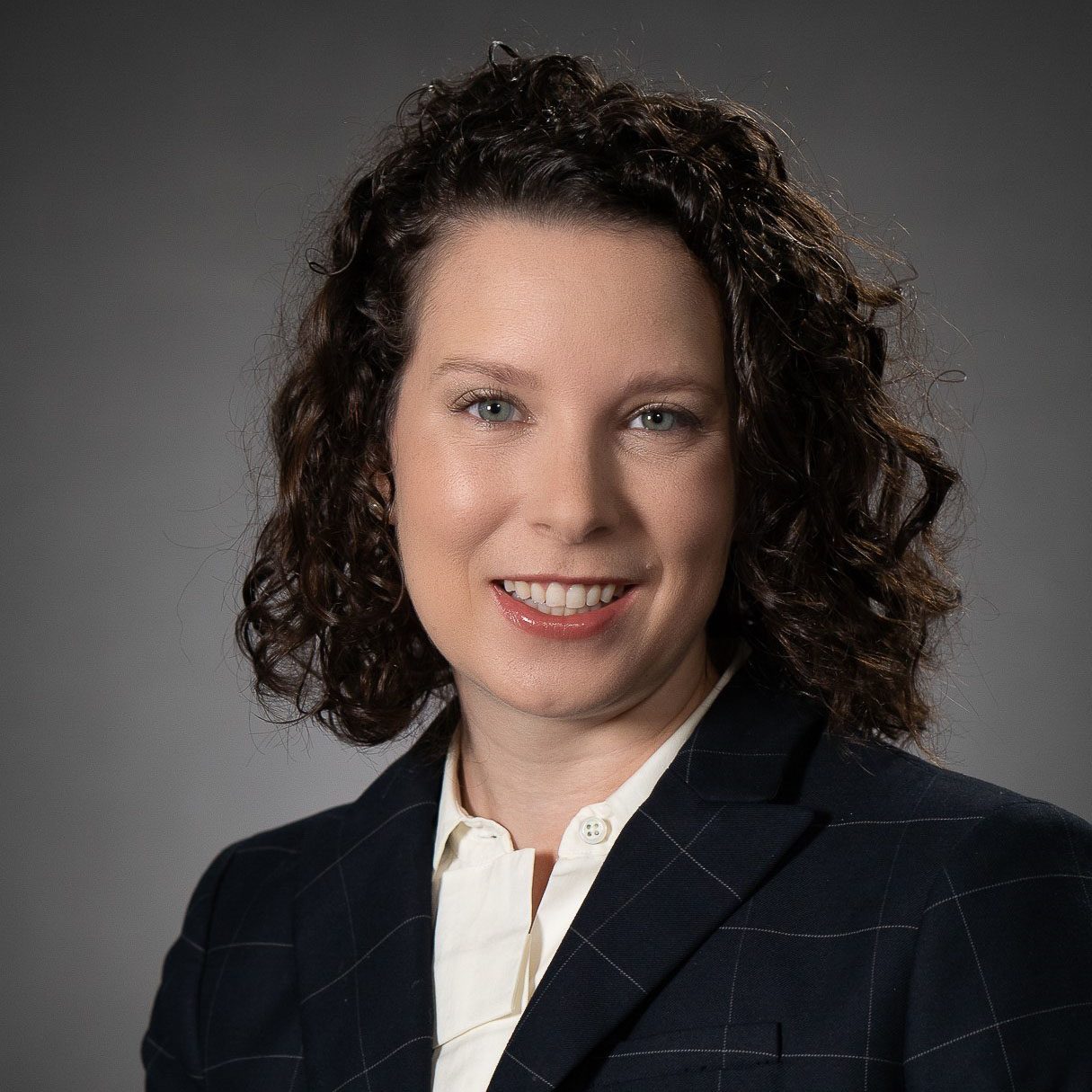
Ashton Anderson is an Associate Professor in the Department of Computer Science at the University of Toronto's Faculty of Arts & Science, where he leads the Computational Social Science Lab. His work intersects AI, data science, and societal impact, examining topics from algorithmic fairness to online behavior. Research investigates human-AI collaboration , social media dynamics , and computational ethics . Recent projects evaluate LLMs' impact on creativity and social media's agenda-setting power. His group develops methods to audit algorithmic systems for bias and alignment. Honored with a Google PhD Fellowship and NSERC Scholarship, he mentors graduate students in social computing and human-centered AI. His teaching covers social network analysis and computational social science methodologies.
Graham Neubig is an Associate Professor at the Language Technologies Institute (LTI) within Carnegie Mellon University (CMU). His research focuses on advancing artificial intelligence, particularly in natural language processing (NLP), multimodal reasoning, and large language models (LLMs). He explores topics such as AI safety, generative AI, and human-AI interaction, with an emphasis on practical applications like machine translation and web-agent systems. His work often involves developing frameworks for evaluating AI systems, such as OpenAgentSafety and BehaviorBox, which assess real-world agent performance and model behavior. Neubig's research also delves into improving LLM capabilities through reasoning analysis, hallucination detection (e.g., ZINA), and culturally aware systems (e.g., CAIRe). He has contributed to open-source projects like Pangea (a multilingual LLM) and frameworks such as Cmulab for model deployment. His recent work addresses challenges in agentic tasks, self-improving agents (Skillweaver), and benchmarking across domains like visual reasoning (VisualPuzzles) and software engineering. Notable achievements include advancing evaluation methodologies for LLMs, developing tools for ethical AI, and creating benchmark suites that test systems under realistic conditions. His lab collaborates on projects like the BrowserGym ecosystem and OpenHands platform, which aim to standardize web-agent research and AI-driven software development. Neubig's contributions span theoretical advancements and practical implementations, bridging the gap between cutting-edge research and real-world applications. He advises students such as Apurva Gandhi and actively publishes in top venues, addressing topics from instruction-following improvements to the societal impacts of AI. His work frequently emphasizes the importance of transparency, controllability, and cultural awareness in AI systems.
Immanuel Trummer is a Professor of Computer Science at Cornell University, specializing in database systems, query optimization, and applications of large language models (LLMs) and quantum computing. He leads research projects such as DB-BERT, UDO, and SkinnerDB, focusing on automated database tuning, adaptive query processing, and leveraging LLMs for code synthesis and system optimization. His research interests span quantum computing for database optimization, cost-efficient LLM utilization, and voice-based data exploration. Key contributions include developing systems like CEDAR for claim verification, CodexDB for LLM-driven code generation, and ThalamusDB for multimodal data querying. Trummer has received prestigious awards, including the NSF CAREER Award (2023-2028) and the Best Demonstration Award at BDA 2020. His work has been funded by NSF, Google, Huawei, and others, supporting projects like quantum-index selection and misinformation detection. He advises graduate students in database systems and teaches advanced courses such as CS 6320 (Advanced Database Systems) and CS 7390 (Seminar in Database Systems). His research lab hosts open-source tools like JoinGym and maintains extensive collaborations in industry and academia.
Kevin Mackie is Professor and Chair of the Department of Civil, Environmental and Construction Engineering (CECE) at the University of Central Florida’s College of Engineering. He has been a faculty member since 2006, advancing from assistant to full professor, and previously served as associate chair and interim department chair. His leadership includes spearheading departmental improvements in culture, workload policy, and digital accessibility. Education: Ph.D. in Civil Engineering, University of California, Berkeley (2004) M.S. in Civil Engineering, University of California, Berkeley (2000) B.E. in Engineering, Cooper Union, New York (1998) His research focuses on structural engineering , particularly in bridge engineering , performance-based seismic design , nonlinear analysis , and advanced materials for infrastructure repair . He integrates analytical, numerical, and experimental methods to assess and improve the resilience of civil infrastructure under extreme loads. His work addresses critical challenges in soil-structure interaction, seismic retrofitting, and the use of composites and smart materials. The 15 most recent publications reflect a strong emphasis on nonlinear modeling , seismic performance , and computational structural analysis of bridges and tall buildings. Key themes include fiber-based modeling, contact-friction problems, soil-structure interaction, and probabilistic assessment, demonstrating a consistent trajectory toward resilient and sustainable infrastructure systems. Scientific Awards: Faculty advisor of the year (2022, 2021, 2019) – ASCE East Central Branch and Florida Section Technical Contribution Leader Award Winner (2021) – ASCE East Central Branch Distinguished faculty member at UCF (2018) – Department of Housing and Residence Life Arthur N.L. Chiu Award for excellence as faculty advisor (2018) – Chi Epsilon Honor Society Mackie has been a dedicated mentor, supervising 11 doctoral , 18 master’s , and over 30 undergraduate students . His research has been funded by the National Science Foundation , U.S. Department of Transportation , Caltrans , FDOT , and industry partners. He has published nearly 200 papers and been cited over 7,000 times. He led the reaccreditation of CECE’s undergraduate programs and established the accelerated bachelor’s-to-master’s pathway. He leads the Structures Laboratory at UCF and collaborates with multidisciplinary teams on infrastructure resilience. His vision includes expanding graduate programs, strengthening industry partnerships, and diversifying the Senior Design curriculum to reflect real-world engineering challenges.
Steven Swanson is a Professor in the Department of Computer Science and Engineering at the University of California, San Diego, within the Jacobs School of Engineering. He is the Director of the Non-Volatile Systems Laboratory (NVSL), where he leads cutting-edge research in non-volatile memory, storage systems, and hardware-software co-design. His work bridges computer architecture, systems, and software to develop efficient, reliable, and secure computing platforms. Ph.D., University of Washington, 2006 B.S., University of Puget Sound, 1999 Dr. Swanson's research centers on non-volatile and persistent memory systems , exploring how next-generation storage technologies can transform computing. His lab develops full-stack solutions including file systems like NOVA and Orion , programming models such as NV-Heaps , and hardware prototypes like Moneta and Onyx . The team also works on low-power co-processors (e.g., GreenDroid ) and tools for debugging and verifying persistent memory programs. Research spans system reliability, security, energy efficiency, and performance optimization. His recent publications reveal a strong focus on persistent memory safety , zero-copy I/O , RDMA-based distributed file systems , and real-world characterization of Intel Optane . These works appear in top venues including ASPLOS, FAST, MICRO, and USENIX ATC, demonstrating sustained innovation in storage and systems research. Scientific honors include: NSF CAREER Award Google Faculty Award Facebook Faculty Award NetApp Faculty Fellow Dr. Swanson has advised 15 PhD students and 4 postdocs , many now faculty or senior engineers at Google, Microsoft, Intel, and other leading tech firms. He has secured significant research funding and leads major community initiatives such as the annual Non-Volatile Memories Workshop and Persistent Programming In Real Life (PIRL) . His educational efforts include innovative courses on robotic system design, quadcopter building, and modern storage systems, emphasizing hands-on learning and real-world implementation. The Non-Volatile Systems Laboratory (NVSL) under his leadership fosters a collaborative, international research environment, hosting visitors and postdocs from around the world. The lab is recognized globally as a pioneer in storage systems research and a key contributor to the adoption of persistent memory technologies in industry.
Alfredo Capozucca is a full permanent Researcher at the Department of Computer Science (DCS) within the Faculty of Science, Technology and Medicine (FSTM) at the University of Luxembourg. He holds a PhD in Computer Science from the University of Luxembourg (2010) and an M.S. from the National University of Rosario, Argentina (2003). His research focuses on modern software engineering methods, dependable systems, and computing education, with an emphasis on formal verification and sustainable computing practices. Capozucca has contributed to the design of courses at undergraduate and master's levels, including serving as Deputy Programme Director for the BSc in Computer Science from 2021-2024. His work bridges theoretical foundations with practical applications in education and industry. Research interests prominently include AI in education (e.g., ChatGPT's role in formal specification writing), formal verification techniques, and the integration of DevOps philosophies into academic curricula. He has authored numerous papers on topics ranging from security policy analysis to energy-efficient transactional models. Capozucca's contributions extend to open-source projects and tool development, such as the Messir UML requirements engineering tool. His teaching spans software engineering fundamentals, dependability, and modern DevOps practices, reflecting a commitment to aligning education with industry needs. Key professional roles include R&D engineer positions (2004-2006) and leadership in educational program design. His research infrastructure is based at the Maison du Nombre facility in Luxembourg. While no specific grants or awards are listed, his extensive publication record and teaching contributions highlight sustained academic engagement.
Aspy P. Palia is a Professor of Marketing at the Shidler College of Business, University of Hawaii at Manoa. He has held academic roles since 1984, including visiting professorships at institutions such as Singapore Management University, Chulalongkorn University, and the National University of Singapore. His research focuses on Marketing Decision Support Systems, Countertrade in Asia-Pacific, and experiential learning methodologies. He has published extensively in journals like European Journal of Marketing and Developments in Business Simulation and Experiential Learning , with a recent emphasis on virtual scaffolding and engagement in educational simulations. His work has earned multiple best paper awards and nominations. Dr. Palia's education includes a DBA in International Business from Kent State University (1985), an MBA from the University of Hawaii (1976), and a BS in Mechanical Engineering from the University of Bangalore (1966). His teaching spans global institutions, emphasizing strategic marketing and decision-making tools. Notable awards include the 2017 Marquis Lifetime Achievement Award and the 2011 Fellowship from the Association for Business Simulations and Experiential Learning. His research contributions bridge theoretical marketing frameworks with practical applications, particularly in leveraging technology for pedagogical innovation. Collaborations with organizations like the Japan America Institute of Management Science further underscore his engagement with global academic networks.
Steven Davidoff Solomon is a Professor at the University of California, Berkeley - School of Law. He is also affiliated with the European Corporate Governance Institute (ECGI) and the Berkeley Center for Law and Business, reflecting his deep engagement in corporate law and governance research. His research interests span Corporate Law, Securities Regulation, Mergers and Acquisitions, Corporate Governance, Financial Regulation, Private Equity, and ESG . His scholarship often integrates empirical legal studies with doctrinal analysis, focusing on the economic and regulatory implications of corporate transactions and governance structures. His recent publications reveal a consistent focus on modern corporate governance challenges, including dual-class stock, passive investing, public benefit corporations, and the impact of social movements on executive contracting. His work frequently appears in top-tier law reviews and is highly cited, indicating significant scholarly influence. He has collaborated extensively with leading scholars such as Jill E. Fisch, Matthew D. Cain, David Zaring, and Randall S. Thomas. While no specific awards or students are listed in the provided text, his prolific output and institutional affiliations underscore his prominence in the legal academic community. His research has practical implications for policymakers and practitioners, demonstrated by his testimony before the Senate Homeland Security and Governmental Affairs Committee on financial regulatory reform. He continues to be an active contributor to legal scholarship, with recent publications extending into 2025.
Christian Rossow is Faculty at CISPA – Helmholtz Center for Information Security in Dortmund, Germany, where he leads the System Security research group. He holds dual academic appointments as a professor in the Computer Science department at Saarland University and as an honorary professor at TU Dortmund University. His research spans systems, software, and network security, with a focus on cyber attacks, defenses, and privacy. Research Interests: His primary research areas include software and system security (e.g., exploitation techniques, compiler-assisted defenses, AI-assisted (in)security), network security (e.g., DDoS mitigation, attack attribution, traffic analysis), and cybercrime (e.g., malware analysis, data-driven studies). He emphasizes foundational research with practical applications. Publication Trends: His recent work (2023–2025) shows a strong focus on microarchitectural attacks (e.g., cache side-channels, prefetcher analysis), browser and web security (e.g., sandbox escapes, CSS fingerprinting), network protocol vulnerabilities (e.g., TCP spoofing, infinite loops), and applied cryptography (e.g., ISA extensions for key management). His research consistently targets top-tier venues like IEEE S&P, USENIX Security, ACM CCS, and NDSS. Distinguished Paper Award at IEEE EuroS&P 2021 Best Student Paper Award at MIT Spam Conference 2010 Advising and Grants: He actively supervises PhD students and postdoctoral researchers, with alumni placed in industry (NVIDIA, Crowdstrike, Continental) and academia. His research is supported by major grants including EU H2020 SISSDEN, BMBF-funded BOB, DFG-funded anonymous communication, and RAMSES. He regularly serves in leadership roles in the community, including PC Chair for RAID 2022/2023 and USENIX WOOT 2018, and Track Chair for ACM CCS 2026. Labs and Teams: He leads the System Security research group at CISPA, a world-leading institution for security and privacy. The group comprises talented full-time researchers and focuses on cutting-edge research with strong individual supervision and worldwide collaborations.
Hamza Salih Erden is an Associate Professor (Docent) at the Informatics Institute of Istanbul Technical University in Turkey. His research focuses on energy optimization in data centers, thermal management systems, and computational fluid dynamics applications. With over 34 research outputs and an h-index of 12, he leads projects in energy-grid integration and carbon-aware load management. Research Focus Dr. Erden's work centers on improving energy efficiency in technological infrastructure through: Advanced cooling techniques for data centers Integration of thermal energy storage systems Computational fluid dynamics modeling Demand-response optimization for smart grids AI-driven monitoring of energy systems Publication Trends Recent works (2022-2025) demonstrate strong focus on sustainable energy technologies, particularly optimization of data center operations through thermal management innovations, integration of renewable energy solutions, and AI applications for system monitoring. Economic assessments of energy-saving techniques feature prominently. Awards and Recognition Technical Paper Award (2016) Multiple International Scientific Publication Incentive Awards (2017-2021) Poster Award (2012) Graduate Student Grant (2007) Projects and Funding Leads multiple energy research projects including: Carbon-aware load management in data centers (2025) Grid-integrated energy system modeling for data centers (2021-2023) CFD analysis of CRAH bypass methods (2018-2020) Economizer applications in Turkish data centers (2016-2017)
Stephan J. Goetz is a Professor in the Department of Agricultural Economics, Sociology and Education at the College of Agricultural Sciences, Pennsylvania State University. He is based at 207C Armsby Building, University Park, PA 16802, and can be reached at sjg16@psu.edu. His research spans agricultural economics, regional development, and rural policy, with a strong emphasis on human and social capital, innovation, and community well-being. His research interests focus on the role of markets and human capital in economic growth and poverty reduction. Key areas include regional food systems, self-employment, social network analysis, targeted regional development, agritourism, direct farm sales, and the digital divide. His work often integrates data science, spatial analysis, and policy evaluation to understand rural economic dynamics. The recent publications highlight a consistent trend in analyzing rural innovation, food system resilience, and socioeconomic impacts of technology and crises. His work combines empirical methods with optimization models, often using county-level U.S. data. Themes include food hub logistics, cloud computing in rural economies, pandemic-related food insecurity, and gender impacts in farming. While no specific awards are listed, his extensive publication record in high-impact journals reflects scholarly recognition. He has collaborated with researchers across disciplines, suggesting active grant-funded projects and likely student mentorship, though formal advisees are not named. He is involved in research on equitable communities and the built environment, and affiliated with initiatives related to health and environmental sustainability. His work with extension services indicates engagement with public outreach and community development programs.
Stuart Hargreaves is an Associate Professor at the Faculty of Law , The Chinese University of Hong Kong . His research focuses on information and privacy law and constitutional law and legal theory , reflecting his prior legal practice and academic background. Education: SJD, University of Toronto (2013) BCL, Oxford University (2008) JD, Osgoode Hall Law School (2006) BA in Politics & Sociology, McGill University (2000) His work examines the intersection of artificial intelligence and legal education , with projects like “Teaching Avatars” using AI for educational content creation. He also investigates surveillance technologies , privacy law , and constitutional rights in the context of Hong Kong’s political and legal environment. Scientific Awards and Grants: CUHK Teaching Excellence Award (2017) CUHK Direct Grant for Research University Grants Committee Teaching Development Grant Research Grants Council General Research Fund Joseph-Armand Bombardier Canada Graduate Scholarship Google Policy Fellowship He has contributed to AI in legal pedagogy through multiple conference presentations (e.g., “Teaching Avatars” at the 2024 CUHK Teaching & Learning Innovation Expo) and serves on the Board of Advisors for Teach for Hong Kong . His external roles include journal reviewing and LAWASIA membership.
Børge Rokseth is an Associate Professor at the Department of Engineering Cybernetics, Norwegian University of Science and Technology (NTNU). His work focuses on maritime systems, autonomous vessel control, and safety verification. He actively supervises Master's students and contributes to research on risk-informed control systems, hybrid power systems, and systems-theoretic process analysis (STPA). Research Interests: Rokseth's research spans autonomous ship systems, dynamic risk assessment, and safety verification. He explores risk-based decision-making for maritime autonomy, hazard identification in hybrid propulsion systems, and control function allocation in dynamic positioning. His work integrates systems theory, machine learning, and regulatory compliance (e.g., COLREGS) to enhance safety and environmental performance in marine operations. Publications: His recent work includes probabilistic trajectory prediction frameworks for autonomous ships, STPA-based safety analyses, and studies on decarbonization barriers in the maritime industry. These publications emphasize risk modeling, systems-theoretic approaches, and simulation-based verification. Teaching: Rokseth teaches courses such as TTK4130 - Modelling and Simulation, contributing to the education of future engineers and researchers in cybernetics and maritime systems.
Allison Godwin is a Professor in the Department of Chemical Engineering at Cornell University, joining the faculty in 2023. She holds a B.S. (2011) and Ph.D. (2014) in Chemical Engineering and Science Education from Clemson University. At Purdue University, she was a tenured member of the School of Engineering Education and held a joint appointment in the Davidson School of Chemical Engineering (2020). Research Interests: Engineering identity development, particularly for underrepresented groups Inclusive pedagogies to reduce equity gaps in STEM Engineering workforce diversity and retention strategies Mixed-methods research on belonging and motivation Scientific Awards: 2023 American Institute of Chemical Engineers Award for Excellence in Engineering Education Research 2022 AERA Division I Outstanding Research Publication Award 2021 CEE William H. Corcoran Award 2017-Present NSF CAREER Award 2016 NARST Outstanding Doctoral Dissertation Award Leadership Roles: Past Chair of ASEE Educational Research Methods Division (2021-2023) Associate Editor for Chemical Engineering Education (2020-Present) Co-led Purdue’s Faculty Learning Community for inclusive teaching
Marco Caccamo is a Professor at the Technical University of Munich (TUM) , holding the Chair of Cyber-Physical Systems in Production Engineering within the Faculty of Mechanical Engineering. He is also a Principal Investigator and Professor at the Department of Computer Science, with courtesy appointments in Electrical and Computer Engineering, Coordinated Science Lab (CSL), and Aerospace Engineering at the University of Illinois at Urbana-Champaign (UIUC). His research spans Embedded Systems , Real-Time Systems , and Cyber-Physical Systems (CPS) , focusing on resource management, reinforcement learning architectures, and 6D pose recognition for robotics. University of Pisa (B.Sc., 1997) Scuola Superiore Sant'Anna (Ph.D., 2002) Research highlights include predictable resource management on heterogeneous platforms, security frameworks for AI-based controllers , and UAV testbed development . His work integrates deep learning and real-time constraints in industrial applications like avionics, farming, and automotive systems. His 15 most recent publications emphasize cache optimization , memory bandwidth regulation , and reinforcement learning for CPS , with a focus on multi-core processors and DNN inference . Awards include the IEEE Fellow (2018), Alexander von Humboldt Professorship (2018), and multiple Best Paper Awards at RTSS, RTNS, and RTAS. NSF CAREER Award (2003) IEEE Fellow (2018) Alexander von Humboldt Professorship (2018) Best Paper Awards (RTSS 2024, RTNS 2023, ECRTS 2019) He has advised numerous Ph.D. students and postdocs, with a track record in UAV development and industrial collaborations . His lab, the Real-Time and Embedded System Laboratory , focuses on real-time OS and predictable computing .