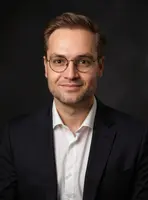
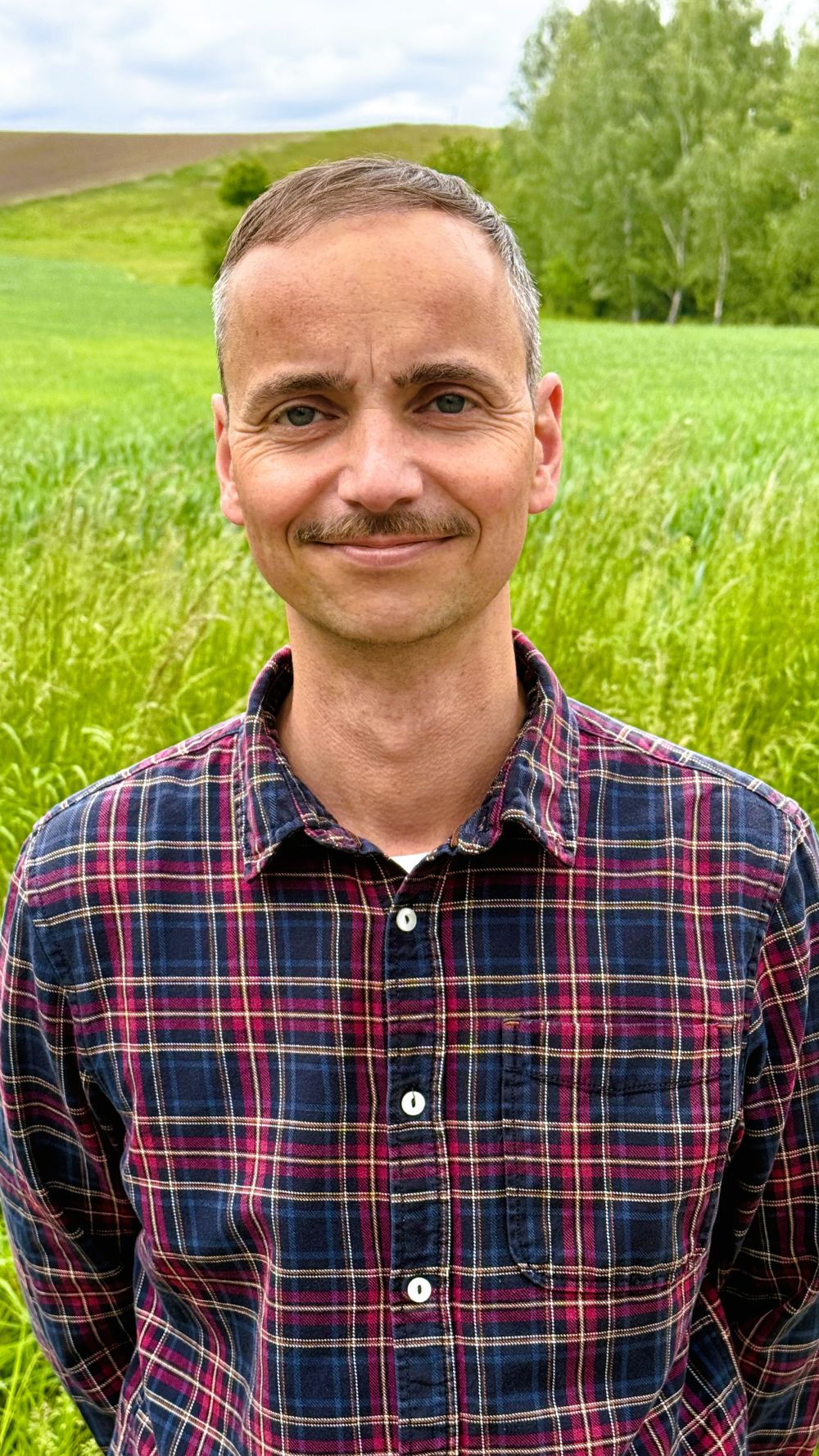
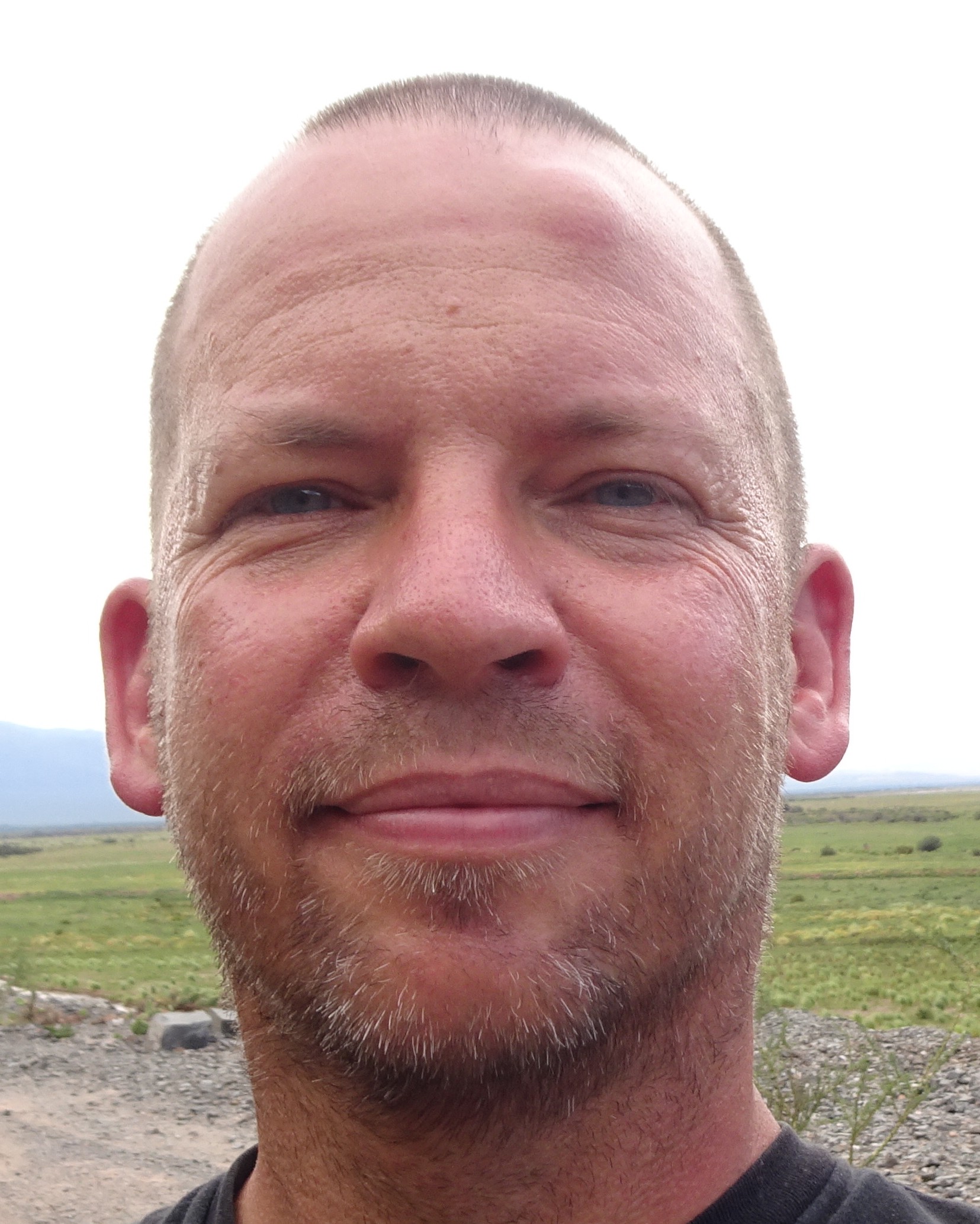
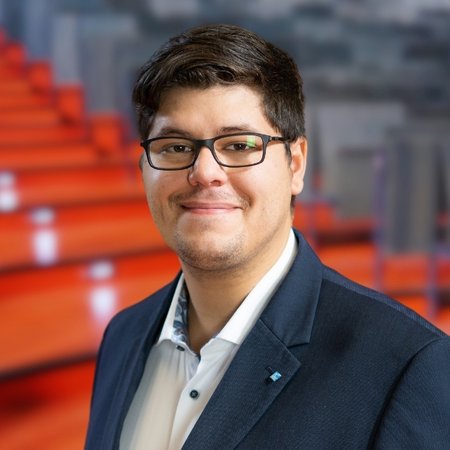
Christoph Wehner is a doctoral candidate and Research Assistant at the Faculty of Information Systems and Applied Computer Sciences, Otto-Friedrich-Universität Bamberg. He works in the Cognitive Systems Group on interactive and interpretable machine learning methods applied to knowledge graphs. PhD research focuses on integrating human knowledge and preferences into AI systems Active in industrial AI applications for manufacturing and automotive sectors Specializes in reinforcement learning with rule-based expert feedback His work combines knowledge graphs with explainable AI techniques to solve real-world problems in root cause analysis and failure mode detection. Current research trends include: Developing hybrid human-AI systems for link prediction Creating interpretable structures from knowledge graph embeddings Applying causal discovery algorithms to industrial processes Thesis advising focuses on practical implementations of knowledge graph-based AI systems in production environments.
Dr. Franziska Sörgel is a Researcher at the Institute for Technology Assessment and Systems Analysis (ITAS) within the Karlsruhe Institute of Technology . She specializes in Science and Technology Studies , focusing on the sociology of emotions , participatory processes , and real-world laboratory research . Education 2023: PhD in Philosophy, Humboldt University of Berlin 2014-2018: MA in European Ethnology, Humboldt University 2011-2014: BA in Comparative Cultural Studies and Political Science, University of Regensburg Her current projects include PaFo (participatory processes in research agendas), Real-World Lab Autonomous Driving , and LinkLab (integrating real-world labs with disciplinary research). She actively contributes to debates on knowledge governance , power dynamics in science , and ethical innovation . Recent work spans emotional drivers in prototype development , fairness in citation practices , and formative evaluation of real-world labs . She collaborates with networks like ERA4Health and German Committee Future Earth , and participates in STS conferences across Europe.
Professor Martin Kraska is a faculty member at Brandenburg University of Technology in the Department of Technology within the College of Engineering. His office is located in the Engineering Science Center (IWZ), Room 401, at Magdeburger Straße 50, 14770 Brandenburg an der Havel. He teaches core engineering subjects including Technical Mechanics, Materials Science, Product Planning, and Finite Element Method, with specialized Master's level courses in Materials Selection and Component Optimization. His research spans computational mechanics with a strong focus on finite element analysis, particularly through his work with CalculiX, an open-source nonlinear finite element program. He has developed extensive parametric examples demonstrating various analysis types, which have gained significant recognition with over 350 GitHub stars. His research interests include structured materials properties, metal foams, 3D printed parts, and digital education tools for technical mechanics. Professor Kraska has made substantial contributions to the CalculiX ecosystem through his GitHub repository 'CalculiX-Examples,' which demonstrates parametrized geometry generation in CGX and meshing with GMSH. His work shows expertise in both theoretical mechanics and practical software implementation, with recent publications covering beam sections, modal analysis, plane stress/strain conditions, and Hertz contact problems. The repository serves as an excellent educational resource for mastering parametric modeling with CGX and CCX. His scientific activities include development of SMath Studio resources, including German-language documentation and bilingual interactive tutorials. He also serves as an advisor for the 'German Center for Digital Tasks' project, focusing on interactive graphical input tasks in Moodle using STACK-type questions. His work bridges theoretical mechanics with practical educational applications and software development.
Nadja Klein is a Professor at the Scientific Computing Center (SCC) at Karlsruhe Institute of Technology (KIT), where she leads the Methods for Big Data research group. She holds the position of Emmy Noether Research Group Leader and is a member of prestigious organizations including AcademiaNet and Die Junge Akademie. Her academic journey includes doctoral studies in Mathematics, a postdoctoral position at the University of Melbourne as a Feodor-Lynen fellow by the Alexander von Humboldt Foundation, and a professorship in Statistics and Data Science at Humboldt-Universität zu Berlin before joining KIT. Her research focuses on Bayesian learning methods, which allow for the incorporation of prior knowledge, quantification of uncertainties, and bringing clarity to the "black boxes" of machine learning. The Methods for Big Data lab under her leadership develops innovative, reliable, and generalizable methods to handle massive datasets across diverse fields including biomedical data analysis, weather prediction, and autonomous driving technologies. Her work spans theoretical analysis, method development, and practical applications of statistical and machine learning techniques. Dr. Klein's recent publications demonstrate a strong trend toward integrating Bayesian principles with deep learning approaches to address challenges in uncertainty quantification, data efficiency, and model interpretability. Her research shows particular strength in distributional regression frameworks, copula modeling, and developing robust methods for real-world applications where uncertainty matters. She has been recognized with the prestigious Committee of Presidents of Statistical Societies (COPSS) Emerging Leader Award for her outstanding contributions to statistical methodology. Her work bridges theoretical statistics with practical machine learning applications, making significant contributions to both academic research and industry collaborations. Dr. Klein actively collaborates with industry partners such as Continental Automotive GmbH on cutting-edge research in autonomous driving technologies. Her lab maintains a strong focus on both theoretical foundations and practical implementations of statistical learning methods, with particular emphasis on making machine learning more reliable, interpretable, and data-efficient through Bayesian approaches.
Dr. Thiemo Leonhardt serves as a Professor leading the Department of Learning Technologies within the Faculty of Computer Science at Dresden University of Technology. His academic career spans over 15 years with continuous research contributions to computer science education, focusing on innovative pedagogical approaches for diverse learner populations. Leonhardt's research program centers on computer science education with particular emphasis on serious games , virtual reality applications , and gender-inclusive teaching strategies . His work bridges theoretical frameworks with practical classroom implementations, developing tools like the MTLG framework for educational game creation and investigating collaborative learning through multitouch tabletops. He has pioneered approaches for teaching complex concepts like regular expressions and finite automata through gamified environments. Analysis of his publication trajectory reveals consistent focus on k-12 computer science education , with significant contributions to understanding gender dynamics in STEM, developing immersive learning technologies, and creating adaptable teaching frameworks. His research spans all educational levels from elementary (e.g., 'Zauberschule Informatik' for primary students) through secondary education. Leonhardt maintains active leadership in the German educational technology community through the DELFI conference series, where he has served as proceedings editor. His work with the InfoSphere student laboratory at RWTH Aachen University demonstrates long-standing commitment to practical outreach and talent development, particularly in initiatives targeting girls in STEM like the go4IT! project.
Jiping Li is an Assistant Professor of Organizational Behavior at Frankfurt School of Finance & Management since 2018. She holds a PhD and M.Phil. in Organizational Behavior from Hong Kong University of Science and Technology and a B.B.A. in Human Resource Management from Renmin University of China . PhD in Organizational Behavior, HKUST M.Phil. in Organizational Behavior, HKUST B.B.A. in Human Resource Management, Renmin University Her research examines how individuals from disadvantaged backgrounds navigate organizational challenges, focusing on structural barriers, workplace proactivity, and inclusive environments. She also investigates the social dynamics of initiating workplace change. The trends in her publications span diversity and inclusion , team emotion dynamics , leadership responses to dissimilarity , and pandemic-related workplace adaptations . The work emphasizes contextual factors like geographical diversity , social class , and emotional regulation in team settings. At Frankfurt School, she teaches Principles of Management , Applied Research Methods , and Scientific Writing , integrating theoretical and practical insights for organizational analysis.
Ole Engel is a postdoctoral researcher and research associate at the Department of Education Science, Humboldt University of Berlin. He specializes in digital transformation in education, migration dynamics in academia, and internationalization of universities. His work bridges empirical research with policy implications. PhD in Education Science (2020), Humboldt University of Berlin European Master in Global Studies (2011), University of Wroclaw and University of Stellenbosch Bachelor of Arts in Education and Social Sciences (2008), Bielefeld University His research focuses on: education in digital spaces, international academic mobility, and migration backgrounds in higher education. Recent projects include the Mercator initiative on equal opportunities from studies to careers and studies on competency-oriented curricula. Engel's publications and talks (e.g., at the Society for Higher Education Research) analyze structural differentiations in higher education, career conditions for international academics, and digital media's role in teaching. He has taught seminars on digital education, migration, and research methodologies since 2012.
Dr. Eve Castille is a Researcher at the Albrecht Daniel Thaer Institute of Agricultural and Horticultural Sciences within the Faculty of Life Sciences at Humboldt University . Her primary affiliation is with the Department of Resource Economics . Her research focuses on: Collaborative Governance Social-Ecological Systems Institutional Analysis Environmental Policy Public Discourse Analysis Recreational Fisheries Management Her recent publications (2020-2024) explore governance dynamics in natural resource management, power structures in collaborative systems, and social-ecological modeling. These works emphasize institutional alignment, volunteer-based organizations, and interdisciplinary approaches to environmental challenges. Scientific Awards: No formal awards mentioned in the provided text. Advising & Grants: Information on students or grant funding is not available in the provided materials. Labs & Teams: Dr. Castille operates within the Albrecht Daniel Thaer Institute, which specializes in agricultural and horticultural sciences with a focus on resource economics.
Michael Janowitz is a Research Associate at the Martin Luther University Halle-Wittenberg , affiliated with the Faculty of Philosophy III and the Department of Social Pedagogy/Social Work . His work integrates democracy education , organizational pedagogy , and critical analysis of precariousness in social work, particularly in Eastern Germany. PhD in Social Work (University of Applied Sciences Erfurt) Bachelor's and Master's degrees in Social Work (Alice Salomon University Berlin) His research focuses on mobile youth work , precariousness , and democracy education , using (auto)ethnographic methodologies to explore organizational and institutional dynamics. Recent publications analyze the interplay between democratic practices and structural precarity in youth work. Michael has received the Rosa Luxemburg Foundation Scholarship (2009–2011) and contributes to debates on organizational justice , diversity , and digital transformation in social work. He actively collaborates with practitioners in projects like Encountering Diversity on Site and engages in international conferences on organizational pedagogy.
Professor Daniel Wrana is a faculty member at the Institute for Pedagogy , Martin Luther University Halle-Wittenberg , within the Faculty of Philosophy III. His work focuses on educational theory, discourse analysis, and subjectivation processes. Academic Rank: Professor of Systematic Educational Science Contact: daniel.wrana@paedagogik.uni-halle.de Location: Francke Foundations, House 5, Room 2.22 His research explores epistemology of educational knowledge, governmentality analyses, and methodologies for analyzing discursive practices. Current projects examine the discursive construction of academic excellence, while past work includes self-directed learning dynamics and historical transformations of school knowledge. Recent publications address crises in educational contexts, translational ethics, and temporal dimensions of pedagogy. His 15 most recent articles span topics like educational crisis discourses , intergenerational knowledge transfer , and discursive constructions of inclusion , with methodologies rooted in critical theory and qualitative analysis. He has edited key handbooks on discourse analysis and produced monographs including Das Subjekt schreiben (2006) and Theorie und Empirie (2021). His career includes prior professorships at the University of Teacher Education in Northwestern Switzerland and research roles at Justus Liebig University Giessen.
Patrick Sahle is a University Professor for Digital Humanities at the Faculty of Humanities and Cultural Sciences at Bergische Universität Wuppertal. He maintains an active research profile with numerous publications, projects, and presentations in the field of Digital Humanities. He is affiliated with the IDE - Institut für Dokumentologie und Editorik e.V. and participates in various official contexts related to Digital Humanities. His research interests span a broad spectrum of Digital Humanities topics including Digital Scholarly Editing, Electronic Texts and Textuality, Textual Markup Theory, Data Modeling, Data Visualization, Knowledge Organization, Cultural Heritage Digitization, Palaeography, Codicology, and Medieval History. His work focuses particularly on the intersection of traditional humanities scholarship with digital methodologies and tools, with special attention to textual scholarship, scholarly editions, and the theoretical foundations of Digital Humanities. Professor Sahle's recent publications demonstrate a strong focus on modeling approaches in Digital Humanities, scholarly editing practices, and the development of digital research platforms like VedaWeb. His work shows consistent engagement with TEI (Text Encoding Initiative), data structures, and the theoretical underpinnings of digital scholarly work. He has made significant contributions to understanding how digital methods transform traditional humanities practices. He actively supervises theses and dissertations in Digital Humanities and has developed numerous courses and workshops on digital scholarly methods. His teaching covers topics from introductory Digital Humanities to specialized areas like Codicology and Palaeography, Information Visualization, and Digital Resources for History. Professor Sahle leads and participates in multiple research projects including DFG-funded initiatives like 'History as a visual concept: Peter of Poitiers' Compendium historiae', 'Rhodomanologia', 'VedaWeb', and 'Consilium Communis' (a citizen science project involving Neuss City Archives). He has coordinated Digital Humanities implementation in numerous academy projects including Niklas Luhmann: Theory as Passion and Capitularia. His institutional involvement includes the development of the Data Center for the Humanities (DCH) at the University of Cologne, participation in DARIAH-DE (Digital Research Infrastructures for the Arts and Humanities), and coordination of various Digital Humanities initiatives and working groups in Germany.
Stefan Engelberg is a Professor of German Linguistics at the University of Mannheim and Honorary Professor of Lexicography at the University of Tübingen. He serves as Head of the Lexicon Department and Head of the Program Area "Lexical Syntagmatics" at the Leibniz Institute for the German Language (IDS), with responsibilities in human resources management and research planning . His affiliations include membership in the Management Board and Extended Management Board of IDS, editorial roles in "Studies on the German Language" and "Colonial and Postcolonial Linguistics" book series, and leadership in projects like the International Association for Colonial and Postcolonial Linguistics .
Mohamed Kari is a Presidential Postdoctoral Fellow at the Department of Computer Science, Princeton University , and an Associate Member at the University of Duisburg-Essen 's Integrated Information Systems research group. His work bridges Mixed Reality , Human-Computer Interaction , and Machine Learning , with a focus on semantically coherent, sensor-rich systems. PhD in Computer Science from University of Duisburg-Essen (with highest distinction) Fulbright Full Grant recipient for studies in the U.S. Research Interests span immersive technologies, sensor integration, and context-aware systems. He investigates how to seamlessly blend virtual actions with physical environments through Scene Responsiveness and develops audio-augmented reality applications like SoundsRide for automotive contexts. Article Trends reveal his focus on environmental manipulation in mixed reality affordance-synchronized user experiences pose-aware object substitution mobile and constrained VR input methods automotive context modeling Scientific Awards include Best Paper Awards at ACM UIST 2021 and 2023 Honorable Mention , as well as recognition for his dissertation with the highest distinction. Thesis Supervision at UDE involves rigorous requirements: English-language theses using LaTeX , original research with structured problem statements, and mandatory video presentations of contributions. He has guided students in topics like Intra-Company Networking Platforms and Automated UI Testing . Laboratory Affiliations include Princeton's Situated Interactions Lab , ETH Zurich's Sensing, Interaction & Perception Lab , and industry labs at Apple , Meta , and Porsche Emerging Tech Research .
Bayes Ahmed is an Associate Professor in the Department of Risk and Disaster Reduction at University College London (UCL), where he teaches courses on geographic information systems, machine learning, research methodologies, and disaster-related subjects from both physical and social science perspectives. Dr. Ahmed's educational background includes: PhD in Disaster Risk Reduction from University College London (2013-2017) MSc in Geospatial Technologies from Jaume I University, Spain (2009-2011) Bachelor of Urban and Regional Planning from Bangladesh University of Engineering and Technology (2003-2008) His research focuses on the intersection of conflict and disaster, with particular emphasis on disaster risk reduction, climate change adaptation, genocide studies, community vulnerability assessment, climate mobility, and disaster displacement. Dr. Ahmed specializes in working with displaced populations and stateless communities to develop actionable policy recommendations that address their specific challenges. Analysis of his recent publications shows a consistent focus on landslide risk assessment in vulnerable regions, particularly Bangladesh and Rohingya refugee camps, climate-induced migration, and the political dimensions of water management. His work increasingly integrates machine learning and geospatial technologies with traditional social science approaches to disaster risk reduction. Dr. Ahmed has received numerous scientific recognitions: Ranked in global top 0.37% of highly-cited scientists in Geological and Geomatics Engineering (2024) Google's Geo for Good (G4G) Impact Award 2023 ICT for Mountain Development Award 2015 Fellow of the Royal Geographical Society Lifetime Member of The International Association of Genocide Scholars As a principal investigator, Dr. Ahmed currently leads the "Politics of Denial and Non-Recognition of Genocide" project (£300,000 funded by the British Academy, 2024-2026) and three research groups focusing on Landslides in Bangladesh, Climate Mobility, and Hydrocide. His research has been supported by prestigious organizations including the Royal Society, British Academy, NERC, UNDP, and NASA. Dr. Ahmed leads several research initiatives including the Disaster Displacement Research Hub and Hydrocide Research Hub, with a particular focus on developing early warning systems for landslides in Bangladesh, which has direct applications for vulnerable communities including refugees in Cox's Bazar.
Peter Thomas is a Researcher in the Department of Archaeometallurgy at the German Mining Museum Bochum, where he focuses on prehistoric mining archaeology. His work primarily investigates Bronze Age copper production in the Eastern Alps and Transylvania, with a special emphasis on the analysis of ancient mining timber and environmental impacts of early metallurgy. He earned his Master's and PhD in Prehistory and Early History from Philipps-University Marburg. His Master's thesis examined wood finds from the prehistoric Arthurstollen mine in the Mitterberg area, while his doctoral research expanded to Bronze Age mining woods across the entire Mitterberg region, establishing his expertise in dendroarchaeology. Thomas's research integrates archaeometallurgy, wood science, and environmental analysis to reconstruct prehistoric mining technologies. Key interests include copper ore exploitation in Alpine contexts, timber usage in ancient mines, and Transylvanian mining history from pre-Roman epochs, often employing interdisciplinary methodologies to understand societal resource utilization. His publication record (2009-2018) demonstrates consistent focus on Bronze Age mining in Alpine and Carpathian regions. Recurring themes include dendroarchaeological reconstruction of mine structures, environmental consequences of prehistoric extraction, and cross-cultural metallurgical exchange, frequently developed through international collaborations with institutions like University College London and Ruhr University Bochum. Thomas actively contributes to major research initiatives including 'The Mitterberg – Eastern Alpine large scale copper production in the Bronze Age' and 'Copper and Gold – Ancient Ore Mining in Transylvania'. He has significantly shaped public understanding through exhibition curation for 'Bergauf Bergab – 10.000 Jahre Bergbau in den Ostalpen' and 'Aus der Tiefe geboren – Die Himmelsscheibe von Nebra', combining academic rigor with museum-based knowledge dissemination.