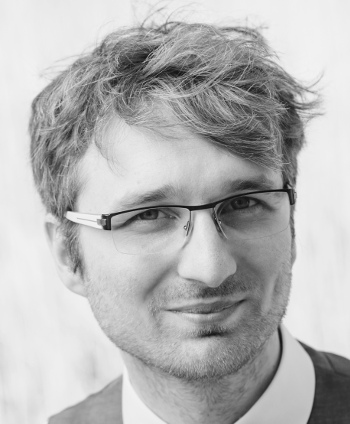
Prof. Dr. M. Bjørn von Rimscha is a full-time Professor of Media Economics at the Department of Social Sciences, Media and Sport, Johannes Gutenberg University Mainz. He serves as Prodekan for Studium und Lehre since 2023 and previously held leadership roles including Geschäftsführender Leiter of the Institute for Journalism. His research focuses on media economics, digital transformation, advertising markets, and cross-border media management. Positions: Professor (2015–present), Prodekan (2023–present) Education: Freie Universität Berlin, University of Ulster Key Collaborations: Co-edited De Gruyter Handbook of Media Economics (2024), Handbuch Medienökonomie (2021) His recent work examines digital disruption in media industries, payment models for journalism, and the economic value of creativity. He advises PhD students like Robin Riemann and holds editorial roles at the Journal of Media Business Studies . Contact: b.vonrimscha@uni-mainz.de
Markus Schmidt is a Professor of Fiber Optics at Friedrich Schiller University Jena and serves as Head of the Research Department of Fiber Photonics at the Leibniz Institute for Photonic Technologies (IPHT), where he leads the Hybrid Fibers work group. He previously held a team leadership position at the Max Planck Institute for the Science of Light (2006–2012) and conducted research at Imperial College London (2011). His research integrates fiber optics and photonics for applications in biophotonics, optofluidics, plasmonics, and nonlinear optics. Key innovations include 3D nanoprinted holograms for remote focus control, liquid-core fibers for stable supercontinuum generation, and fiber-integrated platforms for nanorheology and quantum spectroscopy. His work bridges materials science and applied photonics , enabling advancements in telecommunications, environmental monitoring, and bioanalytics. Scientific awards and student mentorship details are not explicitly mentioned in the provided texts. His email is markus.schmidt@leibniz-ipht.de .
Christian Moormann serves as Director and Full Professor of the Institute of Geotechnics at the University of Stuttgart, where he has held his position since 2010. His leadership extends to national and international geotechnical organizations, including serving as Chairman of the German Geotechnical Society (DGGT) since 2022. His educational background includes a distinguished Diplom in Civil Engineering from Leibniz University Hannover (1989-1994), followed by doctoral studies at TU Darmstadt where he earned his Dr.-Ing. with distinction in 2002 for research on soil-groundwater interaction in deep excavations. He completed his habilitation at TU Darmstadt in 2009 on optimization of geotechnical composite structures. Professor Moormann's research spans the critical intersection of theoretical geomechanics and practical engineering applications. His work focuses on material behavior of semi-solid and variable-strength rocks, numerical methods in geotechnics, and reliability analyses for geotechnical composite structures. He has made significant contributions to deep foundation systems, pile-raft foundations, and the application of geosynthetics in construction. His recent work increasingly addresses sustainable applications including near-surface geothermal energy systems and innovative ground improvement techniques. With over 350 publications throughout his career, Moormann's scholarly output demonstrates consistent focus on practical geotechnical challenges. His publication themes reveal evolving emphasis from fundamental soil mechanics to complex system behavior, with growing attention to sustainability and reliability-based design approaches in geotechnical engineering. Professor Moormann holds numerous leadership positions that reflect his standing in the field: Chairman of the German Geotechnical Society (DGGT) since 2022 Head of the "Earth and Foundation Engineering" section of DGGT since 2018 German Delegate to Eurocode 7 Technical Committee (TC 250/SC 7) Chair of the DIN Standards Committee "Piles" (NABau 005-05-07) Member of the Professional Image Committee of ISSMGE His professional activities extend to significant consulting work through his own firm "Prof. Moormann Geotechnik Consult" established in 2010, and leadership of the PÜZ certification office. Moormann serves as an officially appointed expert for earthworks, foundation engineering, and rock engineering. His work on developing practical engineering standards through multiple DIN committees and Eurocode 7 implementation demonstrates his commitment to bridging academic research with practical engineering applications. The Institute of Geotechnics under Professor Moormann's leadership maintains strong connections with industry through its COMMAS program and extensive field testing capabilities. His team actively participates in developing practical engineering solutions for complex geotechnical challenges, particularly in deep foundation systems, excavation support, and sustainable geotechnical applications including geothermal energy systems.
Dr. Hilde Kuehne is a Professor at the University of Tuebingen and a key researcher at the Tuebingen AI Center. She holds affiliations with MIT-IBM Watson AI Lab and Goethe University Frankfurt, with a focus on computer vision, multimodal learning, and explainable AI. Her work bridges vision-language models, audio-visual alignment, and self-supervised methods. Co-organizer of the New Frontiers in Associative Memories workshop @ ICLR 2025 Member of the Scientific Advisory Board of the Carl-Zeiss-Foundation Contributor to CVPR 2025's UTD dataset for unbiased video benchmarks Her research addresses critical challenges in: Explainability for Vision Transformers (LeGrad) Fine-grained audio-visual alignment (CAV-MAE Sync) Zero-shot visual recognition automation (Meta-Prompting) Spatio-temporal grounding without annotations Recent collaborative work spans 15+ publications across CVPR, NeurIPS, ICCV, and ICLR, with emphasis on multimodal foundation models, dataset bias mitigation, and differentiable logic networks. She actively contributes to workshop organization and peer review as evidenced by her involvement in CVPR 2025 and ICLR 2025 program committees.
Marc Hodes is Professor in Mechanical Engineering and Mathematics at Tufts University. With a PhD from MIT, his research focuses on heat transfer phenomena with applications in electronics cooling, supercritical fluids, and thermoelectric systems. He directs the graduate program in Mechanical Engineering. Education: BS, University of Pittsburgh (1990) MS, University of Minnesota (1994) PhD, Massachusetts Institute of Technology (1998) Research Areas: Thermal management of electronics through microchannel cooling and liquid metal technologies; Apparent slip phenomena in microstructured surfaces; Mass transfer in supercritical CO 2 systems for aerogel processing; Thermoelectric module optimization for precision temperature control. Awards & Honors: NSF REU Fellowship (1989) E.T.S. Walton Visitorship Award Best Associate Editor, ASME Journal of Heat Transfer (2023) Research Leadership: Principal investigator on multiple NSF grants including projects on aerogel manufacturing, dropwise condensation, and analysis of convection in slip flows. Industry collaborations include Google, DARPA, and Bell Labs.
Chantal Pellegrini is a Lecturer and PhD student at the Chair of Computer Aided Medical Procedures (Prof. Navab) at Technical University of Munich (TUM). Her research focuses on Deep Learning applications in medical imaging, including explainable AI for radiology report generation and Vision-Language Models for clinical decision support. She actively contributes to the DHM, NARVIS Lab, and RobUSt research groups. Teaching responsibilities include courses such as 'Computer Aided Medical Procedures', 'Medical Augmented Reality', and 'Surgical Robotics'. She supervises student projects in medical AI and healthcare innovation, with recent projects involving multimodal report generation and graph pretraining for medical applications. Education: BSc/MSc Computer Science (TUM), current PhD student since 2022 Labs: DHM (German Heart Center), NARVIS Lab, RobUSt Robotics & Ultrasound Research Keywords: Medical Image Understanding, Radiology Reports, LLMs in Healthcare Her publications span surgical OR dataset development, reinforcement learning for clinical decisions, and explainable X-ray diagnosis systems. She mentors MA/BA students in medical AI and project management for healthcare applications.
Prof. Dr. Bernd Skiera holds the first chair for electronic commerce in Germany at Goethe University Frankfurt am Main since 1999. He serves on the board of efl - The Data Science Institute and the Schmalenbach Society, while representing Germany at the European Marketing Community (EMAC). Chair of Marketing, Goethe University Frankfurt am Main Board member, efl - The Data Science Institute National representative, European Marketing Community (EMAC) His research focuses on MarTech/SalesTech integration, customer value management, online advertising analytics, data-driven pricing models, and the economic implications of internet privacy regulations. He leads the ERC Advanced Grant project on cookie usage restrictions' economic consequences. Recent publications examine dynamic pricing in digital markets, competition visualization using big data, and AI applications in marketing analytics. The ERC Advanced Grant research has produced empirical analyses of GDPR impacts on advertising ecosystems. 2015 Journal of Marketing Best Paper Award 2013 International Journal of Research in Marketing Best Paper Award Multiple MSI/H. Paul Root Award recognitions He has mentored 17 doctoral students who became professors globally, including at London Business School and LMU Munich. His work bridges marketing analytics with financial valuation through customer equity modeling.
Prof. Dr.-Ing. Lars Linsen is a full Professor of Computer Science at the Westfälische Wilhelms-Universität (WWU) Münster, leading the VISualization & graphIX (VISIX) group. His primary affiliation is the Institute of Computer Science within the Faculty of Mathematics and Computer Science. He holds adjunct professorships at Jacobs University, Bremen, and has held previous academic roles including Full Professor at Jacobs University (2012–2017) and Associate/Assistant Professor roles in Germany and the U.S. His research focuses on interactive visual analysis, medical visualization, and scientific visualization, with applications in life sciences and engineering. Education: PhD (Dr.-Ing.) in Computer Science from Universität Karlsruhe (2001), M.Sc. (Diplom) in Computer Science (1997), B.Sc. (Vordiplom) in Computer Science (1994). Awards: IEEE Visualization Design Contest Winner (2008, 2022, 2018), Preis des Fördervereins des Forschungszentrum Informatik (2002). Research Highlights: Develops visualization tools for medical imaging (e.g., mass spectrometry imaging, MRI data analysis) and physical simulations (e.g., wildfire spread analysis, asteroid impact modeling). Active in EU-funded projects like Pig-Pro-QuO (surface coatings) and cells-in-motion initiatives. Supervised over 20 PhD/MS advisees, including notable graduates in medical visualization and simulation ensemble analysis. Publications: Over 100 peer-reviewed articles in top venues like IEEE Transactions on Visualization and Computer Graphics, Computers & Graphics, and EuroVis. Key works include SciVis contest-winning wildfire analysis frameworks and medical visualization tools for stenosis detection. Teaching: Offers courses on visualization, computer graphics, and computational science. Actively involved in thesis supervision and curriculum development at both WWU Münster and Jacobs University. Grants & Collaborations: Principal investigator on DFG-funded projects (e.g., hemodynamics simulations, ensemble visualization) and industry collaborations (e.g., Tascon GmbH for coating quality analysis). Member of the Cells-in-Motion Interfaculty Centre and CDH board at WWU.
Prof. Mathias Drton holds the Chair of Mathematical Statistics at the Technical University of Munich (TUM), within the Department of Mathematics and School of Computation, Information and Technology. His research focuses on graphical models, algebraic statistics, causal inference, and multivariate data analysis. He has authored numerous publications in top-tier journals and conferences, including work on conditional independence, sparse factor analysis, and causal discovery in linear models. Drton has supervised a large number of theses, mentoring students in areas like high-dimensional statistics, graphical models, and causal inference. He is actively involved in teaching advanced courses such as 'Graphical Models in Statistics' and 'Fundamentals of Mathematical Statistics.' His academic contributions span theoretical developments in statistical methodology and computational tools, including R packages like SEMID and symRC . Drton collaborates internationally, contributing to projects like the TUM-ICL Mathematical Sciences Hub and Exzellenzcluster MCQST. His work bridges algebraic methods with statistical challenges, addressing identifiability in latent variable models and robust graphical modeling under non-Gaussian assumptions. Recent research emphasizes causal structure learning under partial homoscedasticity, distribution-free independence tests, and multi-domain causal representation learning. Drton’s lab actively explores applications in genomics, epidemiology, and machine learning, leveraging both theoretical rigor and practical computational methods.
Joakim Nivre is a Professor at Uppsala University's Department of Linguistics and Philology. He is a leading researcher in computational linguistics, with a focus on dependency parsing, Universal Dependencies (UD) framework development, and multilingual NLP applications. His recent work explores LLMs in climate change discourse analysis, pharmacovigilance explainability, and historical text processing. Key research areas: Dependency parsing theory, Universal Dependencies standardization, LLM evaluation Collaborations: SweSAT-1.0 benchmark development, ClimateEval project, PARSEME integration His 2025-2023 publications demonstrate expertise in explainable AI for healthcare, synthetic data generation for idioms, and multilingual benchmark design. Notably, he co-developed SweSAT-1.0 to evaluate Swedish LLMs and contributed to typology-informed UD revisions. Despite extensive work in NLP, no scientific awards are mentioned in available texts.
Michael Schaub is a tenure-track Assistant Professor in the Department of Computer Science at RWTH Aachen University, specializing in Computational Network Science. His research focuses on analyzing complex systems through network and graph models, integrating dynamical systems, control theory, and machine learning. He leads the Computational Network Science group, advancing methodologies for higher-order network models like simplicial complexes and hypergraphs. Schaub holds a PhD from Imperial College London and has held postdoctoral positions at MIT and Oxford. He is an ERC Starting Grant recipient (2022) and a Marie Curie Fellow, recognized for contributions to network dynamics and topological data analysis. Education: PhD in Mathematics, Imperial College London (2011-2015) MSc in Biomedical Engineering, Imperial College London (2010) BSc in Electrical Engineering, ETH Zurich (2007-2010) Research Interests: Schaub’s work spans interdisciplinary applications of network science, including biological systems, social networks, and technical infrastructures. Key areas include: Higher-order network models (hypergraphs, simplicial complexes) Graph signal processing and dynamics on networks Community detection and dynamical systems analysis Topological data analysis and machine learning Grants & Awards: ERC Starting Grant (2022): HIGH-HOPeS project Marie Skłodowska-Curie Fellowship (2017-2019) Junior Fellow, German Informatics Society (GI) Member of Junges Kolleg (North Rhine-Westphalia Academy) Labs & Teams: Leads the Computational Network Science Lab at RWTH Aachen, collaborating internationally on projects like the ELLIS Society and the European Laboratory for Learning and Intelligent Systems (ELLIS). Active in organizing workshops (e.g., Toponets, SIAM MDS).
Dr. Peter Bartsch serves as curator of the fish collection and construction project officer at the Museum für Naturkunde (MfN), Leibniz Institute for Evolution and Biodiversity Science, which is affiliated with Humboldt University Berlin. With expertise in ichthyology, embryology, and comparative anatomy, Dr. Bartsch has been instrumental in the museum's collection management and building renovation projects since joining the institution as a research associate before becoming curator in 2000. Dr. Bartsch received his academic training in ichthyology, embryology, and comparative anatomy at the University of Cologne. His academic career includes positions as a research assistant at the University of Tübingen and a postdoctoral fellowship at the Natural History Museum in Stockholm before joining the Museum für Naturkunde. Dr. Bartsch's primary research focuses on the evolution and systematics of major groups of bony fishes (Osteichthyes), with particular emphasis on primitive ray-finned fish lineages. His work integrates morphological analysis of both fossil and extant species to understand evolutionary relationships. A significant portion of his research centers on the developmental biology of ancient fish groups, especially the Polypteridae (bichirs), examining embryonic development, skeletal formation, and sensory systems. More recently, his interests have expanded to include the logistics and optimal management of research collections, reflecting his administrative responsibilities at the museum. Analysis of Dr. Bartsch's recent publications reveals a consistent focus on fish morphology, evolution, and development, with particular attention to primitive actinopterygian lineages. His work spans both systematic taxonomy and functional morphology, with increasing attention to museum collection management challenges. The publications demonstrate expertise in comparative anatomy across diverse fish groups including chondrichthyans (sharks, rays, and chimaeras) and basal actinopterygians. Recent work shows integration of molecular phylogenetic approaches with traditional morphological analysis. Dr. Bartsch has held significant administrative roles at the Museum für Naturkunde, serving as head of the collections department from 2011 to 2013. He was responsible for the museum's construction program for the east wing reconstruction, completed in 2010, which created modern facilities for the storage and scientific processing of the museum's wet collections. Currently, he manages the second phase of the building's renovation that began in 2011 and participates in planning for the future development of the museum's facilities. The Museum für Naturkunde houses extensive ichthyological collections that form the basis for Dr. Bartsch's research. His work involves close collaboration with various research teams within the museum, particularly in the areas of molecular phylogenetics, collection preservation, and paleontological research. The museum's facilities include specialized laboratories for morphological analysis, molecular studies, and collection management that support his research activities.
Dr. Moritz Ziegler is a geomechanics researcher affiliated with the Technical University of Munich (TUM) and the Assistant Professorship of Geothermal Technologies . He previously worked at GFZ Potsdam (2017–2023) and earned his PhD in Geophysics from the University of Potsdam (2014–2017). His research focuses on geomechanical numerical modeling , uncertainty quantification , and 3D stress field analysis , with applications to geothermal energy, seismic hazard, and rock mechanics. Education: Bachelor of Science in Geosciences (2008–2011), Freie Universität Berlin Master of Science in Geophysics (2011–2014), University of Potsdam PhD in Geophysics (2014–2017), University of Potsdam & GFZ Potsdam His work integrates advanced computational methods ( Altair Hypermesh , Dassault Systèmes Abaqus , Python , Matlab ) to address complex geomechanical problems. Recent publications analyze stress gradients in the North Alpine Foreland Basin, fault-stress interactions, and physics-based machine learning in geomechanics. He has contributed to software development (DOuGLAS v1.0) and calibration tools (FAST Calibration v2.4). Scientific awards or honors are not explicitly mentioned in the provided text. However, his research has been published in leading journals such as Geophysical Journal International , Solid Earth , and Pure and Applied Geophysics .
Prof. Dr. rer. nat. Lothar Elling is a University Professor and director at the Helmholtz Institute for Biomedical Engineering, RWTH Aachen University, Germany. His research focuses on biomaterials, glycoengineering, and enzymatic synthesis of carbohydrates and glycoconjugates. Institution: RWTH Aachen University Research Unit: Helmholtz Institute for Biomedical Engineering Academic Rank: Full Professor Prof. Elling's research interests include: Glycoengineering of biomaterials Enzymatic synthesis of glycans Glycosyltransferase immobilization Glycan-protein interactions Biocatalytic cascade reactions Biomedical applications of glycomaterials His recent publications demonstrate strong expertise in: - Automated enzymatic glycan synthesis - Multi-enzyme cascade systems for nucleotide sugar production - Glycosyltransferase engineering - Galectin-targeted glycomaterials - Microgel-based biosensors
Günter Rote is a Professor in the Department of Computer Science at Freie Universität Berlin, specifically within the Theoretical Computer Science group (Arbeitsgruppe Theoretische Informatik). He holds a formal academic title of Professor Dr. and is affiliated with the Faculty of Mathematics and Computer Science. His research focuses on theoretical computer science, computational geometry, algorithms, and discrete mathematics. Key research interests include geometric algorithms, optimization problems (e.g., shortest paths, traveling salesman problems), and algorithm design for parallel computing systems. His work spans topics such as systolic arrays, convex hulls, and combinatorial optimization. Rote’s contributions include foundational studies on computational geometry problems, algorithmic complexity, and practical applications in energy equity and infrastructure design. Publications highlight contributions to solving extremal equations, polygon transformations, and the quadratic assignment problem. He has been active in academic leadership, mentoring students, and contributing to computational science communities. His email is rote@inf.fu-berlin.de, and his office is located at Takustraße 9 in Berlin.