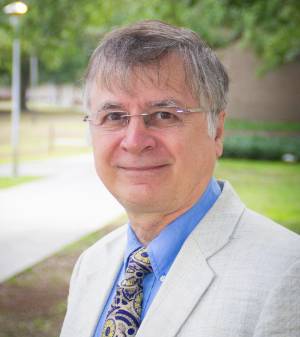
Lars BEEX is a Senior Research Scientist at the University of Luxembourg's Faculty of Science, Technology and Medicine, Department of Engineering. He holds the right to supervise PhD students and has directed five to completion. His research focuses on computational mechanics of solids, including Bayesian inference, multiscale methods, and quasicontinuum approaches, with applications to materials like textiles, foams, and medical devices. His academic journey includes a PhD from Eindhoven University of Technology (2008-2012), supervised by Marc Geers and Ron Peerlings, as well as MSc and BSc degrees from the same institution. **Research Interests:** - Computational mechanics of solids - Bayesian inference and uncertainty quantification - Multiscale modeling (quasicontinuum method) - Mechanical modeling of fibrous and discrete materials - Phase-field damage models - Contact mechanics and elastoplasticity **Awards:** - Biezeno Solid Mechanics Award 2013 (Best PhD thesis in solid mechanics, Netherlands) - Cum laude distinction for both MSc and BSc degrees **Industrial Collaborations:** - SISTO Armaturen - IEE - Kiswire International **Teaching:** - Numerical methods for continuous optimization - Courses for Computer Science, Mathematical Modelling, and Engineering students **Lab/Affiliations:** - Legato Team (part of the University of Luxembourg's engineering research cluster)
Jacob Fish holds the Rosalind and John J. Redfern Jr. Chair in Engineering at Columbia University's Department of Civil Engineering and Engineering Mechanics within the Fu Foundation School of Engineering and Applied Science. His research program focuses on computational mechanics and multiscale modeling with applications across material science and structural engineering. His research interests center on developing advanced computational frameworks for multiscale analysis of heterogeneous materials. Key areas include computational continua, atomistic-to-continuum coupling, fracture mechanics of composites, and thermomechanical modeling of advanced materials. His work bridges theoretical developments with practical engineering applications through reduced-order modeling and data-physics integration. His recent publications demonstrate strong trends in multiscale computational engineering, particularly in homogenization techniques, phase-field fracture modeling, and data-driven approaches for material behavior prediction. The research spans from atomistic simulations to structural-scale analysis with emphasis on computational efficiency and physical fidelity. Fellow, U.S. Association for Computational Mechanics (USACM) Computational Structural Mechanics Award, 2005 Fellow, International Association for Computational Mechanics (IACM), 2002 National Science Foundation Presidential Young Investigator Award, 1992 Walter P. Murphy Fellowship, Northwestern University, 1986 Fish serves as Editor-in-Chief of the International Journal for Multiscale Computational Engineering and has secured numerous research grants focused on multiscale modeling of advanced materials. His collaborative network spans multiple institutions and disciplines, particularly in computational mechanics and material science. His laboratory develops computational frameworks for multiscale analysis with applications in structural engineering, material science, and biomechanics, focusing on efficient algorithms for complex material behavior prediction.
Rajesh Rajaguru is a Senior Lecturer in Marketing at the Tasmanian School of Business and Economics (TSBE), University of Tasmania. He is actively engaged in research, teaching, and industry collaboration, with a focus on marketing management, consumer behavior, sustainability, and digital technologies. His work bridges academia and practice, particularly in service ecosystems, SME resilience, and ethical consumption. Research Interests: Marketing Management and Strategy Consumer Behavior and Decision-Making Sustainability and Responsible Consumption Digital Marketing and eWOM Blockchain and AI in Consumer Trust Service Exclusion and Inclusive Service Design SME Resilience and Market Shaping His recent publications reflect a strong trend toward interdisciplinary research, integrating insights from psychology, information systems, and environmental science. A significant portion of his work explores how technology and sustainability concerns influence consumer trust and purchasing behavior, particularly in food, hospitality, and retail sectors. He also investigates pedagogical innovations in higher education and supply chain dynamics in emerging markets. Scientific Awards and Recognition: Certified Practicing Marketer, Australian Marketing Institute (since 2019) Supervision and Grants: Rajesh Rajaguru has successfully supervised multiple PhD students to completion and is currently supervising a doctoral candidate on SME resilience. He has secured both internal and external funding, including grants from the University of Tasmania, Australian Institute of Business, and the Korean Government. He is also a key participant in the Marine Bioproducts Cooperative Research Centre, a major $59 million initiative funded by the Australian Government and industry partners. Labs and Research Teams: He collaborates within interdisciplinary research teams focused on service ecosystems, sustainable business models, and digital transformation. His work is aligned with the UN Sustainable Development Goals, particularly Responsible Consumption and Production , Industry, Innovation and Infrastructure , and Climate Action .
Kurt Kremer serves as Director and Scientific Member of the Theory Department at the Max Planck Institute for Polymer Research (MPI-P) in Mainz, Germany, a position he has held since 1995. His leadership oversees a multidisciplinary research group focused on computational soft matter physics, with close collaboration from senior scientists including Dr. D. Andrienko, PD Dr. Kostas Daoulas, and Dr. R. Cortes-Huerto. His research spans statistical physics , computational methods , and multiscale modeling of soft matter systems, with emphasis on polymers, biopolymers, membranes, organic electronics, and glassy dynamics. The group develops advanced simulation techniques like adaptive resolution methods and coarse-grained modeling to study structure-process-property relationships in synthetic and biological materials. Analysis of his co-authored publications (2015–2019) reveals dominant trends in free energy calculations , finite-size effects in simulations , and mesoscale self-assembly phenomena , particularly in conjugated polymers and nematic systems. Keywords consistently include computational physics, thermodynamics, and polymer science with subfields spanning adaptive resolution frameworks, solvation thermodynamics, and charge transport mechanisms. Key recognition includes membership in the German National Academy of Sciences (Leopoldina). Notable alumni from his research group include Prof. B. Baumeier (TU Eindhoven) and Prof. D. Donadio (UC Davis), who have established independent careers in biophysics and materials science. Kremer mentors a team of senior scientists and postdoctoral researchers, driving projects funded through Max Planck Society resources and collaborative grants. Current work emphasizes bridging atomistic simulations with continuum models for organic electronic materials and nonequilibrium molecular dynamics.
George Koch is a Professor in the Department of Biological Sciences at Northern Arizona University and is affiliated with the Center for Ecosystem Science and Society. His research focuses on the physiological and ecological mechanisms governing tree growth, carbon storage, and responses to environmental stress. His research interests lie at the intersection of plant physiology and ecosystem science, particularly in understanding how trees manage carbon reserves, respond to drought, and transport water and nutrients through sapwood. He investigates species such as Populus , Pinus , and Sequoia , with a strong emphasis on long-term carbon dynamics and forest resilience under climate change. The recent publications highlight a consistent focus on tree ecophysiology, with key themes including sapwood function, remote sensing of forest biomass, global water potential monitoring (e.g., PSInet), and nutrient use efficiency in challenging environments. These works reflect interdisciplinary collaboration across institutions and integration of field measurements with modeling and remote sensing. George Koch has been actively publishing in top ecological journals such as New Phytologist , Tree Physiology , and Functional Ecology , demonstrating sustained scholarly productivity. While specific awards are not listed, his h-index of 6 and consistent publication record indicate significant scholarly impact. He collaborates widely across the globe, contributing to large-scale ecological initiatives and mentoring early-career researchers through joint publications. His work contributes to foundational knowledge in forest ecology and supports efforts to model and predict ecosystem responses to global change.
Christopher Janjigian is an Assistant Professor in the Department of Mathematics at Purdue University, specializing in probability theory with a focus on random walks in random environments, KPZ universality class phenomena, and stochastic partial differential equations. He holds a Ph.D. from the University of Wisconsin-Madison (2016) and has held postdoctoral positions at Université Paris Diderot (2016–2017) and the University of Utah (2017–2020). His research explores the infinite volume structure of random walks in random potentials and connections to models like the Kardar-Parisi-Zhang equation. He organizes the Purdue University Probability Seminar and has taught advanced courses including Stochastic Processes, Probability Theory, and Stochastic Calculus. His work bridges theoretical probability with applications in mathematical physics, emphasizing geometric and dynamic properties of stochastic systems. Recent research focuses on geodesic structures in percolation models, Busemann functions, and ergodic properties of directed polymer models. His articles investigate topics like exit point bounds in last-passage percolation and synchronization in the KPZ equation, contributing to the understanding of universal behaviors in stochastic systems.
Fanze Kong is a Pearson Fellow and Acting Instructor at the Applied Math Department of the University of Washington. He holds a Ph.D. in Mathematics from the University of British Columbia (2021-2024), an M.Sc. in Mathematics from Southwestern University of Finance and Economics (2018-2021), and dual B.Sc. degrees in Mathematics and Economics from the same institution (2014-2018). His research focuses on the analysis of Partial Differential Equations (PDEs), particularly reaction-advection-diffusion systems and chemotaxis models. Key interests include: Nonlinear dynamics in biological systems Pattern formation and stability Fluid-structure interactions in chemotaxis His recent publications explore phenomena such as spike dynamics in Keller-Segel models, aggregation in chemotaxis-fluid systems, and localized patterns under advection-dominated conditions. These studies bridge applied mathematics with mathematical biology, emphasizing rigorous analytical techniques. No scientific awards are listed. While no advising or grant details are provided, his work is disseminated through platforms like Google Scholar and institutional homepages.
Dr. Tom Palmer is a Senior Lecturer in Biostatistics Applied to Genetics at the University of Bristol's Bristol Medical School. He holds advanced degrees including a PhD and specializes in biostatistical methodologies for genetic and epidemiological research. His work integrates Mendelian randomization techniques and large-scale observational studies, particularly focusing on cardiovascular diseases, diabetes, and the impacts of the SARS-CoV-2 pandemic. Palmer's research emphasizes causal inference and methodological innovations in public health, leveraging electronic health record systems like OpenSAFELY to analyze vaccine efficacy, post-infection complications, and chronic disease outcomes. His studies often involve large cohorts (e.g., 16 million people in England) and address critical questions about the long-term health effects of infectious diseases and vaccination strategies. Education: PG Cert, PhD, MSc, BSc (specific degree institutions not explicitly stated) Affiliations: Bristol Medical School (PHS), OpenSAFELY initiative His research interests include: Mendelian randomization and causal inference methods Genetic epidemiology of obesity, cardiovascular disease, and diabetes Evaluation of vaccine effectiveness and safety Public health responses to pandemics Palmer collaborates closely with leading epidemiologists and statisticians at the University of Bristol, including Professors George Davey Smith, Kate Tilling, and Jonathan Sterne. His work has significant implications for healthcare policy and clinical decision-making in post-pandemic and chronic disease management contexts.
David Chopp is a Professor of Engineering Sciences and Applied Mathematics at Northwestern University's McCormick School of Engineering. His research focuses on numerical methods, scientific computing, and interface motion, with applications in bacterial biofilms, neurophysiology, and materials science. He holds the Charles Deering McCormick Professor of Teaching Excellence award. Chopp earned his Ph.D. in Mathematics from UC Berkeley and a B.S. in Mathematics and Applied Mathematics from the University of Washington. Research interests include level set methods, computational neuroscience, fracture mechanics, and biofilm modeling. Notable contributions span phase field modeling, microbial fuel cell simulations, and adaptive algorithms for neural systems. His work bridges computational tools with real-world applications in engineering and biology. Key Projects: Phase field modeling with large driving forces (2023), biofilm potassium signaling (2021), non-planar crack tracking (2016). Awards: Charles Deering McCormick Professor of Teaching Excellence. Chopp advises students in biofilm dynamics, computational materials, and fracture mechanics. His lab develops algorithms for interface tracking and neural simulations, collaborating on biofilm bioclogging and material failure analysis. Active in teaching and publishing, he authored textbooks on high-performance computing and contributed to over 60 peer-reviewed articles.
Glen McGee is an Assistant Professor in the Department of Statistics and Actuarial Science at the University of Waterloo. He holds a PhD in Biostatistics from Harvard University and a BScH in Mathematics from Queen's University. His research focuses on developing statistical tools for epidemiology, environmental health, and health policy, with a particular emphasis on environmental mixture analysis, cluster-correlated data modeling, and outcome-dependent sampling methodologies. Education : PhD in Biostatistics, Harvard University BScH in Mathematics, Queen's University Research Interests : McGee advances methodologies for analyzing complex environmental mixtures and their health impacts, including incorporation of biological knowledge into statistical frameworks. His work addresses challenges in multigenerational studies, informative cluster sizes, and measurement error correction in case-crossover designs. Key application areas include hospital profiling, exposure misclassification, and longitudinal health data analysis. Research Trends : His publications emphasize Bayesian methods for mixture modeling, innovative sampling strategies for clustered data, and causal inference techniques. Notable contributions include frameworks for integrating biological pathways into environmental health analyses and developing efficient sampling approaches for healthcare performance evaluation. Grants & Labs : McGee collaborates on projects involving CMS data applications and maintains GitHub repositories like hospODS for hospital profiling methodology implementation. His work bridges statistical theory with practical public health applications, particularly in environmental epidemiology and healthcare analytics.
Toan T. Nguyen is a Professor in the Department of Mathematics at Pennsylvania State University, affiliated with the Eberly College of Science. He holds a Ph.D. from Indiana University (2009). His research focuses on Partial Differential Equations, Mathematical Physics, Fluid Dynamics, and Kinetic Theory, with contributions to boundary layer stability, inviscid limits, and plasma physics. Education: Ph.D. in Mathematics, Indiana University, 2009. Affiliations: Editorial Board member of Kinetic & Related Models and SIAM Journal on Mathematical Analysis. Grants & Support: Recipient of Simons Fellowship (2019), Centennial Fellowship (2018). His work bridges theoretical analysis and applications, including nonlinear wave dynamics, fluid-structure interactions, and quantum kinetic models. He has organized international conferences, such as the VIASM Summer School in Mathematical Physics (2023–2024), and advised Ph.D. students like Chanjin You and Trinh T. Nguyen. Awards: T. Brooke Benjamin Prize (2022), highlighting his contributions to nonlinear waves and Landau damping. His research also explores instabilities in boundary layers and the mathematical foundations of plasma physics. Nguyen collaborates internationally, contributing to journals like the Journal of the American Mathematical Society and Communications in Mathematical Physics. His teaching includes advanced graduate courses on PDEs and kinetic theory.
Robert D. Gray is a Professor of Mathematics at the School of Mathematics, University of East Anglia. His research focuses on combinatorial and geometric group and semigroup theory, algorithmic problems in algebra, decidability, homological finiteness properties, and group actions on graphs and topological spaces. EPSRC Research Fellow Editorial Board: International Journal of Algebra and Computation Available for PhD supervision in semigroup and inverse monoid theory His recent work explores: Topological finiteness properties of monoids Undecidability in one-relator inverse monoids Algorithmic properties of inverse monoids Maximal subgroups in special inverse monoids Key article trends include: Geometric and algorithmic aspects of inverse monoids Homological properties of semigroups Connections between group theory and semigroup theory Applications to graph theory and automata Scientific Awards: EPSRC Fellowship EP/V032003/1 EPSRC grant EP/N033353/1 EPSRC Postdoctoral Fellowship EP/E043194/1 Contact: Room S1.29, School of Mathematics, University of East Anglia, Norwich NR4 7TJ. Email: Robert.D.Gray@uea.ac.uk . Phone: +44 1603 591443.
Dr. Aydin K. Sunol is a Professor of Chemical, Biological and Materials Engineering at the University of South Florida's College of Engineering. With a distinguished career spanning several decades, he leads the Environmentally Friendly Engineered Systems (EFES) Lab and serves as principal investigator for numerous research projects funded by NASA, DOD, NSF, and industry partners. Education: PhD in Chemical Engineering, VPI & SU, Blacksburg, Virginia MEng in Industrial Engineering and Operational Research, VPI & SU, Blacksburg, Virginia Diploma in Chemical Engineering, University of Aston, Birmingham, England BS in Chemical Engineering, Bogazici University, Istanbul, Turkey Dr. Sunol's research focuses on green engineering and chemistry, sustainability in the chemical industry, systems engineering, and cleaner energy conversion processes. His work integrates global computational methods, machine learning, product prototyping, and experimentation across multiple temporal and spatial scales. Recent projects include developing nano-structured photo-catalysts, therapeutic particles, and energetic materials using environmentally friendly pathways, as well as creating efficient fuel conversion processes utilizing supercritical fluids. His research demonstrates a consistent trend toward sustainable solutions that address fundamental challenges in materials science, energy conversion, and environmental protection through innovative application of supercritical fluid technology and computational methods. Scientific Awards: USF Chemical and Biomedical Engineering Department Outstanding Teaching Award, 2018 University of South Florida Outstanding Undergraduate Teaching Award, 2002-2003 Engineering Professor of the Year, 1984 Outstanding Professor of Chemical Engineering, VPI & SU, 1981 Outstanding Technology Innovation Award, Aerospace Space System Conference, 2010 As an educator, Dr. Sunol has advised 18 PhD and 29 Master's students, developing innovative teaching methods and curricula including NSF-funded Web-based Teaching Modules and Design Course Series. His research has been supported by diverse funding sources including DOE, NSF, NATO, UNESCO, NAVY, NASA, and numerous industry partners. Dr. Sunol also serves as principal partner and CTO of Temptroll LLC and Accent Creations LLC, which develop self-heating and cooling products, demonstrating the practical application of his research. The EFES Lab, which Dr. Sunol directs, brings together interdisciplinary researchers including chemical engineers, mechanical engineers, and computer scientists to tackle complex challenges in sustainable engineering. Current team members include PhD candidates working on nano-structured materials, wastewater management systems, and temperature modulation products, continuing the lab's tradition of innovation in environmentally friendly engineered systems.
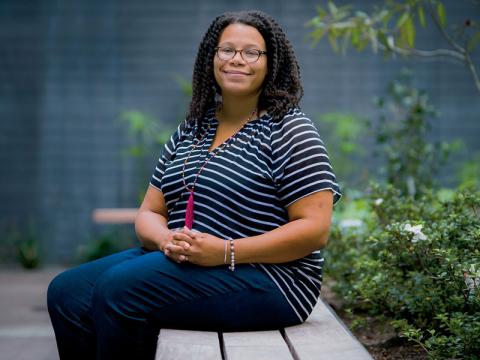
Lisa Molix is an Associate Professor at Tulane University's School of Science & Engineering. Her research focuses on intergroup relations, health disparities among marginalized populations, and the psychological impacts of social stigma. She teaches courses in Social Psychology, Intergroup Relations, and Structural Equation Modeling. Her publications investigate how social factors like stigma and discrimination affect physiological and psychological health outcomes, particularly in minority populations. Research methodologies include biomarker analysis and meta-analytic approaches to understand broad patterns in social perception and health outcomes.
Sergey Dyachenko is an Assistant Professor in the Department of Mathematics at the University at Buffalo, New York. He holds a PhD in Applied Mathematics from the University of New Mexico (2014) and a BS in Applied Physics and Mathematics from Moscow Institute of Physics and Technology (2007). PhD: University of New Mexico BS: Moscow Institute of Physics and Technology His research focuses on nonlinear wave phenomena and fluid dynamics, particularly singularity formation in free-surface flows like water wave breaking and whitecapping. He employs computational mathematics and applied analysis to study: Free surface wave dynamics Stokes wave singularities Wave turbulence theory Integrable systems (NLS, KdV) Recent publications analyze: Stokes wave instabilities Capillary wave propagation Conformal mapping techniques Operator splitting methods Contact: Office: 312 Mathematics Building, UB North Campus Email: sergeydy@buffalo.edu