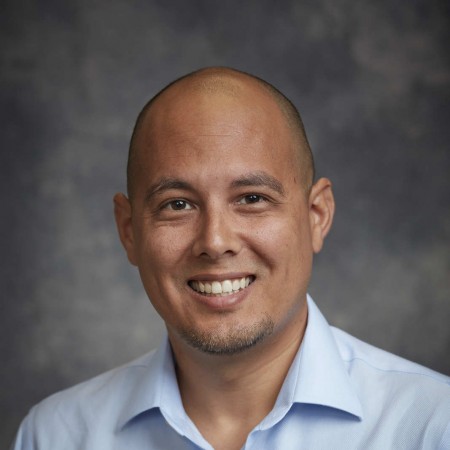
David N. Wear is an Adjunct Professor at North Carolina State University's Department of Forestry and Environmental Resources, affiliated with the Southern Research Station of the USDA Forest Service. He holds a B.A. from the University of Montana (1981), an M.F. from Duke University (1983), and a Ph.D. from the University of Montana (1987). His research focuses on integrated forest science, forest sustainability, land-use analysis, and the biophysical and financial risks affecting timberland investments. As co-leader of the Center for Integrated Forest Science, he bridges natural and social science research to inform policy and management decisions. His work emphasizes understanding complex interactions between forest ecosystems and human activities. Key publications include studies on timberland investment risks, forest carbon dynamics, and climate change impacts. He collaborates with interdisciplinary teams to address challenges in forest resource management, including invasive species control and long-term sustainability. His expertise spans policy-relevant scales, linking empirical data with actionable insights for stakeholders. Dr. Wear's contributions include advancing methodologies for annual timber production monitoring and analyzing future forest conditions under changing environmental and economic pressures. His research supports evidence-based decision-making for forest conservation, land-use planning, and climate resilience strategies.
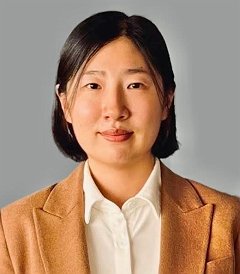
Christine Jubb is a Professor of Accounting at Swinburne University of Technology's School of Business, Law and Entrepreneurship. She specializes in auditing, corporate governance, and environmental, social, and governance (ESG) reporting, with significant contributions to research on climate-related disclosures, carbon pricing impacts, and boardroom diversity. Her work frequently employs empirical methods and policy analysis to address regulatory frameworks in Australia and globally. Professional Activities and Roles: She has served on the Auditing and Assurance Standards Board (2005–2010), chaired the Australian National Centre for Audit & Assurance (2010–2012), and currently chairs Swinburne's Senate. She is actively involved in public consultations on sustainability reporting standards and has led over 15 grants, including Australian Research Council projects focusing on corporate governance and environmental reporting. Key Research Focus: ESG assurance, gender diversity in corporate boards, and the impact of carbon pricing policies. Grants: Includes ARC grants on regulatory responses to corporate collapses (2005–2009) and carbon taxation (2004–2005). Awards: Recognized as a Top Research Supervisor (ANU, 2009) and frequently publishes in top journals like Business Strategy and the Environment and British Accounting Review . Her recent work explores how female director representation and environmental committees influence corporate performance and capital market outcomes. She also advises on climate-related financial disclosures and their implications for investor decision-making.
James Harrington is the Associate Dean of Undergraduate Education in the School of Economic, Political and Policy Sciences (EPPS) and an Associate Professor of Public and Nonprofit Management at the University of Texas at Dallas. His research focuses on technology policy, education policy, performance management, and policy analysis. He holds a PhD and MPA from the University of Missouri’s Truman School of Public Affairs (2013 and 2009) and a BA in Psychology from Truman State University (2005). His work explores intersections between public policy and institutional behavior, including pension reform impacts on labor supply, antitrust policy in digital systems, and social media conduct challenges in public employment. Recent publications analyze Texas public pensions, blockchain antitrust implications, and teacher compensation strategies. Harrington emphasizes applied research with practical governance applications, particularly in education and sustainability sectors.
José Santiago Fernández Vázquez serves as a Full Professor in the Department of Modern Philology at the University of Alcalá, specializing in English-language literature and cultural studies. His academic portfolio spans both teaching and administrative responsibilities across multiple degree programs including English Studies, Hispanic Studies, and Translation. His research interests center on postcolonial literature, ecolinguistics, and critical discourse analysis, with particular emphasis on transcultural narratives and environmental communication. Recent scholarly output reveals a strategic pivot from traditional postcolonial literary analysis toward multimodal ecolinguistic studies examining sustainability discourse in digital spaces. Analysis of his 15 most recent publications demonstrates an evolving trajectory from foundational postcolonial literary criticism (2000-2015) toward contemporary interdisciplinary environmental communication research (2020-2023), reflecting broader academic shifts toward sustainability studies while maintaining postcolonial theoretical frameworks. His work consistently applies critical discourse analysis to examine power structures in both literary and digital contexts. Fernández Vázquez actively participates in the American Interdisciplinary Cultural Studies research group, focusing on Spanish presence in North America, US-geopolitical relations, and American comic studies. His collaborative projects frequently address educational innovation, particularly regarding sustainability competencies and transcultural awareness in university curricula. His teaching responsibilities include History of English-Speaking Countries and Postcolonial Literatures across multiple undergraduate programs, demonstrating institutional commitment to decolonial perspectives in language education. Administrative contributions include directing orientation programs for secondary school students and participating in university sustainability initiatives through the UI GreenMetric framework.
Djuddah Arthur Joost Leijen is an Associate Professor of English Language at the University of Tartu's Faculty of Arts and Humanities, Institute of Foreign Languages and Cultures since May 2022, and an Affiliated Researcher at Malmö University since November 2023. With a Doctoral Degree in Estonian and General Linguistics from the University of Tartu (2016), his career spans over 15 years of dedicated work in academic writing research, rhetoric and composition, and language education across Baltic and Nordic contexts. His educational background includes: Doctoral Degree in Estonian and General Linguistics, University of Tartu (2010-2016) Annual Dartmouth Summer Seminar for Composition Research (2013) MSc in Education Training and Systems Design, University of Twente, The Netherlands (2003-2004) Leijen's research focuses on academic writing traditions across cultures, metadiscourse analysis, peer review processes, and the application of AI in writing instruction. His cross-linguistic studies examine rhetorical structures and metadiscourse patterns in Estonian, Latvian, and Lithuanian academic texts, revealing both disciplinary similarities and language-specific features. Recent work increasingly addresses AI competence in higher education, exploring how generative AI tools impact academic writing practices while developing systematic approaches for integrating these technologies responsibly into writing instruction. His publication record demonstrates a clear progression from foundational work on peer review and second language writing to sophisticated cross-linguistic analyses and cutting-edge research on AI in academic communication. Recent publications like 'Decoding Metadiscourse Markers in Estonian Academic Texts' (2025) and 'AI Competence Frameworks and Policies in Higher Education' (2025) showcase his dual expertise in linguistic analysis and educational technology. Leijen has received recognition through significant editorial appointments including: European Editor for editorial teams (2024-present) Member of Kalbotyra Editorial Board (2023-present) Member of Journal of Academic Writing Editorial Board (2022-present) Chair of the European Association of Teaching Academic Writing (2017-present) Chair and founder of NB!Write (The Nordic and Baltic Network for Writing in Higher Education) (2016-present) As a supervisor and grant leader, Leijen has secured substantial funding including the €424,110 Estonian Research Council grant for 'Academic Writing in the Baltic States' (2020-2024) and currently leads the 'STARS: Self-Regulated Learning Tool for Academic Success' project (2024-2026, €62,941). His supervision portfolio includes doctoral candidates researching metadiscursive perspectives of Estonian academic text and master's students examining tabletop games in EFL instruction. Leijen co-founded Keelekord OÜ, a University of Tartu spin-off company, and hosts the 'Communicating Science Podcast,' which engages practitioners, students, and experts in dialogue about science communication in the Estonian context. Through these initiatives, he has developed comprehensive learning experiences that extend beyond traditional classroom boundaries to serve the entire university community and beyond.
Prof. Hande Demirel is a Professor at the Department of Geomatics Engineering, Istanbul Technical University. She holds a PhD in Geoinformatics from Technical University of Berlin (2002). Her academic career includes roles as Associate Professor (2008–2019) and Assistant Professor (2004–2008) at ITU, alongside research at the European Commission Joint Research Center (2011–2014). She specializes in GIS applications, remote sensing, photogrammetry, and spatial data analysis. Education: B.Sc. (1996) and M.Sc. (1998) in Geodesy & Photogrammetry from ITU, followed by a PhD in Geoinformatics (2002) from TU Berlin. Awards include Best PhD Award (2003), DAAD Scholarship (2007), and Best Poster Award (2016). Research focuses on transportation accessibility, climate change impacts, 3D spatial modeling, and BIM-GIS integration. She leads projects like 'Building Information Model Based Fire Evacuation Simulation' (TUBITAK-funded) and 'Spatio-Temporal Accessibility Analysis in Istanbul'. Key contributions include over 30 peer-reviewed publications, including works on land use prediction, ship detection via AI, and indoor navigation systems. She advises numerous graduate students, with 15+ theses supervised since 2009. Active in professional societies including the German and American Associations for Remote Sensing.
Silvia Winter is a researcher at the Institute of Plant Protection , part of the Department of Agricultural Sciences at the University of Natural Resources and Life Sciences Vienna (BOKU). With a career spanning over two decades, she focuses on agroecology , vineyard biodiversity , and ecosystem services in agricultural landscapes. Education: Master in Bioinformatics (2018, FH Campus Wien) Doctorate in Natural Sciences (2012, BOKU) Degree in Agricultural Sciences (2005, BOKU) Her research investigates how vineyard management practices , landscape composition , and climate change impact biodiversity , soil health , and pest control . She specializes in predatory mite ecology , soil biota interactions , and citizen science applications in biodiversity monitoring. A meta-analysis of her 15 most recent articles reveals trends in agroecosystem modeling , functional trait analysis , and environmental policy evaluation . Scientific Awards: Dr. Karl Schleinzer Förderungspreis (2006) Winter leads projects like "Detection dogs hunting for poisonous plants in arable fields" and "EU Environmental scenarios for ERA of non-target organisms" , funded by the Austrian Science Fund (FWF) , EU institutions , and national agencies . She collaborates with institutions across Europe and South Africa, integrating soil science , plant ecology , and technology for sustainable agriculture .
Dr. Wenxi Wang is an Assistant Professor in the Department of Computer Science at the University of Virginia, where he leads the Hiprel research group. He completed his PhD at the University of Texas at Austin under the supervision of Sarfraz Khurshid, with close collaborations with Kenneth McMillan and Darko Marinov. His research bridges software engineering, formal methods, and machine learning, focusing on enhancing software security and reliability through innovative techniques. Research Interests: Wang's interdisciplinary work explores: (1) Integration of deep learning (LLMs, GNNs) with automated reasoning tools like SAT/SMT solvers; (2) Enhancement of software verification tools (Verus, Dafny) using LLMs; (3) Improvement of ML model/framework reliability; and (4) Advanced code generation quality through verification. His group develops methods to combine formal methods with machine learning for robust software systems. Recent Publications: Wang's 15 most recent publications (2018-2024) demonstrate consistent focus on ML-formal methods integration, particularly in SAT solving, software verification, and testing. Key trends include GNNs for constraint solving, automated repair of security vulnerabilities, and novel testing methodologies for formal tools. His work appears in top venues including ICLR, ASE, ESEC/FSE, and ICSE. Awards and Honors: George J. Heuer, Jr. Ph.D. Endowed Graduate Fellowship (2023-2024) Rising Stars in EECS (2022) Research Group: Leads the Hiprel Group with 6 members: PhD Students: Zichen Xie (ML for verification), Lize Shao (LLMs for SE) Master's: Chaitanya Shahane (LLMs for testing) Undergraduate: Carter Opperman (SAT solving) Interns: Tianyi Huang (ML for SAT), Mrigank Pawagi (LLMs for protocol verification)
Maria Papanikou is a Senior Lecturer in Aviation Engineering at the Aviation Academy, Amsterdam University of Applied Sciences. She holds a PhD from the University of Greenwich (2017), focusing on 'The philosophy of safety: system changes and the re-organisation of the aviation industry'. Her research emphasizes aviation safety, fatigue management, and policy-making in air transport. Key areas include operator variability in advanced systems, neuroscientific tools for fatigue monitoring, and safety metrics for aviation organizations. Recent work explores crisis-driven HR practices' impact on aviation safety and the application of big data in risk assessment. She has supervised student theses on MRO incident taxonomies and just culture in aviation. Collaborations include EUROSIM Congress and Rijkswaterstaat. A notable dataset, 'raak pro SMS Aviation', examines safety management systems in aviation. Her research outputs span peer-reviewed journals like Aircraft Engineering and Aerospace Technology, and she actively participates in academic conferences. Her contributions bridge engineering, cognitive science, and policy to enhance aviation safety frameworks.
Professor Eleni Kokkinou holds a position at the Hellenic Mediterranean University (HMU) as a Professor of Environmental Geology and Geotechnology, with an affiliation to the Institute of Computer Science at FORTH. She earned her Geology degree from Aristotle University of Thessaloniki, followed by a postgraduate diploma and PhD in Applied Geophysics from the Technical University of Crete. Her research focuses on environmental geology, geotechnical studies, geodata modeling, and coastal vulnerability. She has pioneered work in remote sensing for agricultural management, oil spill modeling in the Eastern Mediterranean, and precision agriculture using UAV technology. She has supervised over 73 diploma dissertations, 5 ongoing theses, and examined multiple international M.Sc. theses in Egypt and Cyprus. Teaching includes courses on GIS, geotectonics, and geoscience software at HMU and TEI Crete. She actively contributes to committees like the Research Management Board of HMU and is a licensed UAV pilot with expertise in geophysical prospection. Her work integrates geomatics, environmental monitoring, and civil protection strategies for coastal and marine systems. Key collaborations include Cairo University and the Technical University of Crete. She has developed decision-support systems for irrigation optimization and participated in major projects like the Nereids oil spill risk assessment initiative.
Dr. Laura Ermert is an Established Researcher at the Swiss Seismological Service (SED) of ETH Zurich. Her work focuses on computational seismology, ambient noise monitoring, and seismic interferometry. She holds a PhD from ETH Zurich (2013–2018) under Prof. Andreas Fichtner, followed by postdoctoral positions at the University of Washington, Harvard University, and the University of Oxford. Her research explores shallow structure monitoring, basin resonances, and the influence of ocean microseism sources on ambient noise cross-correlation amplitudes. She has contributed to projects like the DEEP initiative for geothermal reservoir modeling and collaborated on Mexico City basin subsidence studies funded by the Packard Fellowship. Dr. Ermert co-developed Python tools like noisi for ambient noise analysis and pioneered methods for ambient seismic source inversion. Her studies include modal analysis of Alpine valley resonances and global-scale ambient noise inversion. She actively promotes gender equity in seismology through collaborative initiatives.
Mats Jensen-Urstad is a senior researcher at Karolinska Institute, leading the Electrophysiology research group within the Department of Medicine, Huddinge. His team manages Scandinavia's largest electrophysiological operation, combining extensive clinical work with a robust research program focused on advancing cardiac rhythm disorder treatments. The group maintains a comprehensive database that supports numerous studies in the field of cardiac electrophysiology. Dr. Jensen-Urstad's primary research interests center on catheter ablation techniques, with particular expertise in cryoablation (freezing treatment) for cardiac arrhythmias. His work has established him as an international leader in cryoablation development, significantly expanding treatment options for patients with heart rhythm disorders while minimizing complications. His research spans multiple dimensions of arrhythmia management, including structural heart changes affecting treatment outcomes in atrial fibrillation and ventricular tachycardia, as well as genetic factors influencing arrhythmia development and treatment response. The publication record demonstrates consistent focus on practical clinical applications, with recent work examining gender differences in arrhythmia presentation and treatment outcomes, technological innovations in cardiac mapping and monitoring, and long-term patient outcomes following various ablation techniques. His research group actively investigates how procedural techniques impact healthcare utilization, quality of life, and patient experiences from multiple perspectives. As group leader, Dr. Jensen-Urstad supervises numerous doctoral students and collaborates extensively with clinical specialists across multiple disciplines. His team includes several associate professors and specialist physicians working on complementary aspects of cardiac electrophysiology research. The group operates within the Integrative Cardiovascular, Cancer and Aging Research (ICCA) framework at Karolinska Institute, facilitating interdisciplinary collaboration.
L. Oostwegel is a Researcher at GFZ German Research Centre for Geosciences, working within the Seismic Hazard and Risk Dynamics department. The researcher specializes in earthquake exposure modeling, building stock characterization, and multi-hazard risk assessment using geospatial data and open-source information. Oostwegel's research focuses on seismic hazard and risk assessment, with particular emphasis on building exposure modeling using OpenStreetMap and remote sensing data. Key research areas include earthquake risk modeling, flood risk assessment, landslide risk management, and the development of tools for multi-hazard risk assessment. The researcher has made significant contributions to understanding building stock characteristics at various scales, from individual buildings to global assessments. Analysis of recent publications reveals a strong focus on utilizing volunteered geographic information and Earth observation datasets for risk assessment. Oostwegel has developed methods for assessing the completeness of OpenStreetMap building data globally and has created tools like 'risk-calculator' for multi-hazard risk assessments. The research shows an interdisciplinary approach combining geophysics, geospatial analysis, and disaster risk reduction. Top-down or bottom-up in earthquake exposure modeling (2025) Safe Haven – Landslides: A Serious Game for Enhancing Risk Awareness (2025) A model of European buildings (2024) From Shelters to Skyscrapers: Worldwide Building Exploration (2024) Seismic loss assessment sensitivity study (2023) Oostwegel has collaborated extensively with researchers including Evaz Zadeh, T., Schorlemmer, D., and others across multiple projects focused on natural disaster risk assessment. The research has practical applications in urban planning, disaster risk reduction, and climate adaptation strategies, particularly for coastal megacities and areas prone to seismic activity.
Michael L. Collard is an Assistant Professor of Computer Science at the Department of Computer Science , Buchtel College of Arts and Sciences , The University of Akron . He teaches courses in iOS Development and Software Engineering , focusing on modern programming languages like Swift and Objective-C. Research Interests: His work centers on software engineering , source code analysis , and iOS development . Key areas include forward static slicing, code stereotyping, traceability, and tools like srcML for mixed-language software infrastructure. Publications: Recent publications address scalable static slicing ( srcSlice ), source code modeling with XML, stereotype-based feature location, and tools for software visualization. Awards: Recipient of NSF grants (CISE CRI 2013, REU Supplement 2013) and the Most Influential Paper Award at ICPC'13 for his 2003 work on C++ fact extraction. Students: Mentored undergraduate researcher Brian Kovacs through NSF-funded REU. Labs: Cofounder of SDML, LLC , commercializing research tools for source code analysis.
Elisabet Golobardes Ribé is a Full Professor at La Salle Digital Engineering School, Ramon Llull University, where she is affiliated with the Engineering Department. She leads and participates in the Research Group on Smart Society and is actively involved in major international research collaborations, particularly with CERN's LHCb experiment. Her research spans artificial intelligence, machine learning, data science, and high-energy physics, focusing on analyzing particle physics data and detecting disinformation in digital societies. She applies computational techniques to fundamental physics problems, including B-meson decays and searches for physics beyond the Standard Model. The body of her recent publications demonstrates a strong trend in experimental particle physics, with numerous contributions to high-impact journals such as the Journal of High Energy Physics and Physical Review D. These works involve amplitude analyses, angular distributions, branching fraction measurements, and constraints on new physics, primarily through the LHCb and ATLAS collaborations. She has secured competitive research funding, including EU grants such as FLAIR and national grants from AGAUR, and serves as Principal Investigator on projects related to AI readiness and disinformation detection. Her work bridges engineering, computer science, and fundamental physics. Notable research projects include: FLAIR (Fostering Learners' AI Readiness) – European Commission-funded project (2024–2026) LHCb-RTA-URL – CERN data challenges and new physics searches (2023–2026) Rapid response for detecting disinformation flows – Internal grant (2021) Research Group on Smart Society – AGAUR-funded network (2022–2025) She is a member of the LHCb collaboration and contributes to large-scale data analysis in high-energy physics experiments. Her work emphasizes computational methods in science and societal applications of AI.