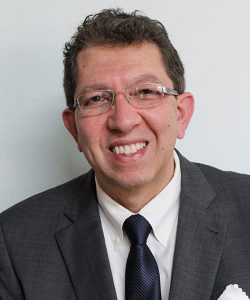
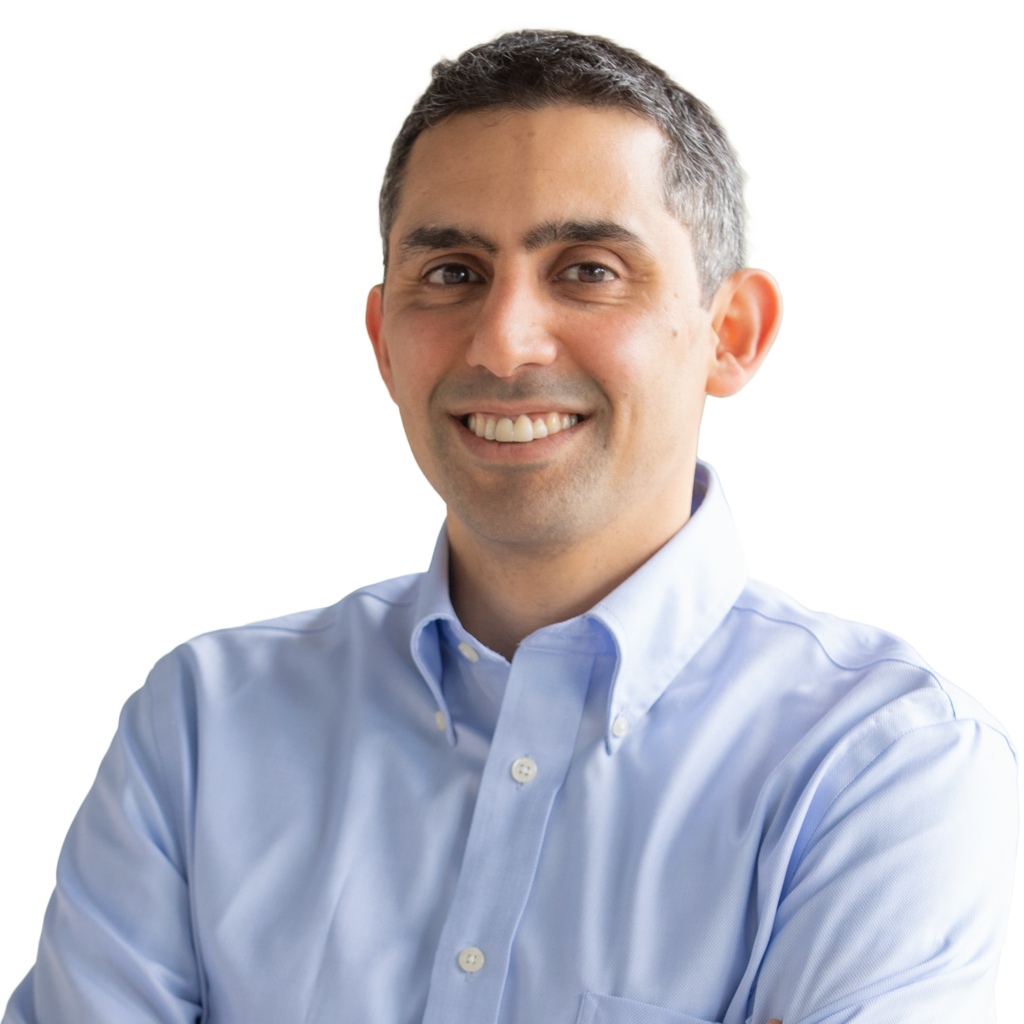
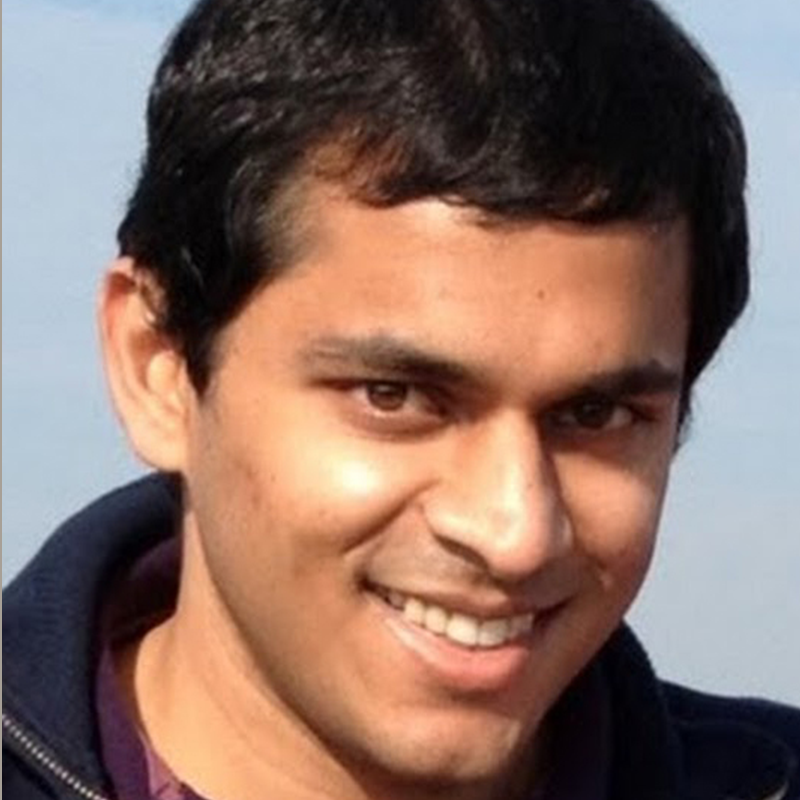
Robert Likamwa is an Associate Professor at Arizona State University, affiliated with the School of Arts, Media and Engineering and the School of Electrical, Computer and Energy Engineering. His research focuses on the intersection of mobile computing, augmented reality, and sensor design through Meteor Studio. Ph.D., Rice University M.S., Rice University B.S., Rice University His work spans three core research arcs: (i) advanced visual capture systems, (ii) hybrid virtual-physical immersion through sensory augmentation, and (iii) data-driven frameworks for AR/VR storytelling. He explores mobile operating systems, low-power architectures, computational imaging, and holographic computing. Recent publications analyze multi-resolution visual sensing, geospatial cross-virtuality collaboration, planetary data visualization, spatial audio optimization, and multi-sensory virtual environments. His 2013 paper on energy-proportional image sensors received the Best Paper Award at ACM MobiSys. Best Paper Award, ACM MobiSys 2013 LiKamWa advises graduate students through research and thesis courses and leads grants related to mobile vision systems, haptic interfaces, and energy-efficient sensor design. He directs Meteor Studio, a research group focused on immersive technology innovation.
Henry Corrigan-Gibbs is an Assistant Professor in MIT's Department of Electrical Engineering and Computer Science (EECS) and a member of the Computer Science and Artificial Intelligence Laboratory (CSAIL). He leads research in computer security, cryptography, and privacy-preserving systems. His work focuses on practical cryptographic systems that empower users while maintaining strong security guarantees. Notable contributions include the Tiptoe private search engine, Prio for privacy-preserving data aggregation, and Larch for secure authentication. His research has influenced industry standards at Apple, Google, and Mozilla, and has been recognized with awards such as the Best Young Researcher Paper at Eurocrypt and the Caspar Bowden Award. Education: PhD in Computer Science (Stanford University, advised by Dan Boneh), Postdoc at EPFL (hosted by Bryan Ford). B.S. in Computer Science from Yale University. Research Interests: Private Information Retrieval, Secure Authentication, Cryptographic Systems, Privacy-Preserving Analytics, and Hardware Security. His lab collaborates with PDOS and CSS research groups at MIT and co-hosts the MIT Security Seminar series. Grants and Funding: Supported by industry and government agencies (details in paper acknowledgments). Teaching roles include co-instructor for Applied Cryptography (6.5610) and Foundations of Computer Security (6.1600). Key Projects: Prio (used in iOS/Android), Tiptoe (private web search), Larch (backdoor-resistant authentication), and Whisper/Poplar systems for private data aggregation. His team includes postdocs, PhD students, and undergrad researchers working on cutting-edge cryptographic protocols.
Raed Ahmed Mahmood Al-Juboori serves as an Assistant Professor in the Department of Built Environment at Aalto University's School of Engineering, specializing in advanced water and wastewater treatment technologies through the Water and Environmental Engineering research group. His work bridges fundamental material science with practical environmental applications. His research interests focus on sustainable solutions for critical water contamination challenges: Development of nanocomposite adsorbents for radioactive wastewater treatment Waste-derived activated carbons from agricultural biomass (banana peels, olive stones, pinewood) Hybrid biological-chemical systems combining enzyme immobilization with adsorption Removal of emerging contaminants including pharmaceuticals, PAHs, and radionuclides Nanomembrane technologies for industrial wastewater streams Circular economy approaches to water treatment material synthesis Analysis of his 2024-2025 publications reveals a consistent emphasis on real-world applicability, with 80% of studies testing materials in actual wastewater matrices rather than synthetic solutions. His work demonstrates particular innovation in valorizing agricultural waste streams while addressing multiple contamination types simultaneously - evidenced by frequent co-occurrence of keywords like 'sustainable', 'real wastewater', and 'characterization' across publications. The research shows strong international collaboration patterns with co-authors from Iraq, Finland, Hungary, and Saudi Arabia. Dr. Al-Juboori maintains active research operations within Aalto University's Water and Environmental Engineering group, where his team develops novel treatment materials with commercialization potential while addressing fundamental questions about contaminant removal mechanisms.
Phillip B. Gibbons is a Professor in both the Computer Science Department and Electrical & Computer Engineering Department at Carnegie Mellon University. He received his Ph.D. in Computer Science from the University of California at Berkeley in 1989 and has held research positions at AT&T Bell Laboratories, Lucent Bell Laboratories, and Intel Research Pittsburgh before joining CMU's faculty. His research spans parallel computing, distributed systems, databases, computer architecture, and machine learning. Gibbons' work bridges theory and systems, with publications in top-tier conferences including SOSP, OSDI, SIGMOD, VLDB, NeurIPS, and many others across computer science and engineering disciplines. His research has been supported by significant funding from NSF, Intel, and other organizations. Gibbons has made substantial contributions to streaming algorithms, parallel computing frameworks, distributed systems security, and large-scale machine learning systems. His work on data stream algorithms with Alon, Matias, and Szegedy has been particularly influential in the field. He has served in numerous leadership roles including Editor-in-Chief of ACM Transactions on Parallel Computing (2012-2018) and on the editorial boards of Journal of the ACM and IEEE Transactions on Cloud Computing. He has also been active on program committees for major conferences in systems, databases, and theory. IEEE Fellow (2014) - For contributions to parallel computing and databases ACM Fellow (2006) - For contributions to parallel computing, databases, and sensor networks Selected for Oral Presentation at NeurIPS '13 (only 20 selected out of 1420 submissions) Co-winner of the best paper award for NSDI '06 Gibbons has advised numerous students and mentored researchers who have gone on to make significant contributions in academia and industry. His research has been supported by major grants including the $15M Intel Science and Technology Center for Cloud Computing (2011-2015) where he served as Co-PI/Co-Director. He currently leads research projects on write-efficient algorithms, big learning systems, and visual cloud systems. His laboratory work focuses on bridging theoretical computer science with practical systems implementation, particularly in the areas of parallel and distributed computing. Current research directions include adapting algorithms for emerging memory technologies and optimizing machine learning systems for large-scale deployment.
Mihaela van der Schaar is the John Humphrey Plummer Professor of Machine Learning, Artificial Intelligence, and Medicine at the University of Cambridge, leading the van der Schaar Lab. She holds dual affiliations with the Department of Applied Mathematics and Theoretical Physics (DAMTP) and the Centre for Mathematical Imaging in Healthcare. Her research focuses on healthcare AI, machine learning, and operations research. She has authored over 250 journal articles and 275 conference papers, with notable contributions to synthetic data for privacy, causal inference, and clinical decision-making. Her work has led to 35 U.S. patents, including foundational innovations in streaming video compression (MPEG-4 standards). Awards include the Oon Prize (2018), IEEE Fellow (2009), and recognition as the UK's most-cited female AI researcher (2019). Leadership roles include Director of the Cambridge Centre for AI in Medicine and Co-Director of the European Laboratory for Learning and Intelligent Systems. She has mentored global academic leaders and pioneered initiatives like the Inspiration Exchange for early-career researchers. Key projects include predictive models for hospital resource allocation during pandemics and AI tools for personalized medicine. Publications span machine learning theory, healthcare applications, and interdisciplinary fields like network science. Her lab's impact includes tools like AutoPrognosis (automated ML for clinical prediction) and SynthCity (synthetic healthcare data generation).
Ke Xu is a Professor in the Department of Computer Science at Tsinghua University's School of Information Science and Technology. With extensive research contributions in network security, privacy-preserving technologies, and machine learning applications for networking, Professor Xu has established himself as a leading researcher in computer science. Professor Xu's research interests span network security, privacy-preserving technologies, machine learning for networking, federated learning, internet protocols, encrypted traffic analysis, blockchain applications, and AI in networking. His work bridges theoretical foundations with practical implementations, focusing on real-world security challenges and network optimization problems. He has developed novel frameworks for secure network operations, privacy-preserving data sharing, and efficient AI deployment in distributed environments. Professor Xu's publication record shows a clear trend toward integrating artificial intelligence with traditional networking challenges. His recent work explores federated learning security, encrypted traffic analysis using deep learning, and novel approaches to network security that leverage machine learning techniques. The interdisciplinary nature of his research spans computer networking, security, privacy, and artificial intelligence. Professor Xu has received recognition for his contributions to network security and privacy-preserving technologies through publications in top-tier venues including IEEE journals, ACM conferences, and security symposia. His work has appeared in IEEE Transactions on Dependable and Secure Computing, IEEE/ACM Transactions on Networking, and security conferences like CCS and NDSS. Professor Xu actively collaborates with researchers across institutions, supervising students and junior researchers in exploring cutting-edge problems in network security and AI. His research has been supported by significant grants focusing on network security, privacy, and intelligent networking infrastructure. He leads projects that address fundamental challenges in secure communication, privacy-preserving data analysis, and intelligent network management. Professor Xu is involved with research laboratories focusing on network security and intelligent systems at Tsinghua University. His team works on developing practical security solutions, privacy frameworks, and AI-enhanced networking protocols that address real-world challenges in today's increasingly connected world.
Jiannong Cao is a Chair Professor and Director of the University Research Facility in Big Data Analytics at the Department of Computing, Hong Kong Polytechnic University. He has held various academic roles since 1990, including Assistant Professor at City University of Hong Kong and Lecturer at Australian universities. PhD in Computer Science, Washington State University (1990) MSc in Computer Science, Washington State University (1986) BSc in Computer Science, Nanjing University (1982) His research focuses on cloud and edge computing , parallel and distributed computing , and mobile computing , with significant contributions to wireless sensor networks (WSN) for structural health monitoring (SHM) and software-defined networking (SDN) for vehicular communications. Recent work includes WiFi-based non-invasive health monitoring systems and multi-user computation partitioning in mobile cloud environments. Dr. Cao’s publications demonstrate trends in WSN optimization , SDN architectures , and cognitive modeling for network embedding , with applications in smart healthcare , transportation systems , and industrial IoT . Ministry of Education Natural Science Award (2018) ACM Distinguished Member (2017) IEEE Fellow (2014) Best Paper Awards at IEEE DSAA, SMARTCOMP, WCNC He has mentored numerous researchers, including Linchuan Xu , Xuefeng Liu , and Weigang Wu , who have authored key publications in top venues like ACM WSDM and IEEE INFOCOM . His professional roles include chairing IEEE committees and serving on grant panels for the Hong Kong Research Grant Council.
Dr. Tan Kim Lim is a Senior Lecturer at the James Cook University (Singapore Campus), specializing in organizational psychology and consumer behavior. He holds a PhD from Curtin University (2016–2019), an MBA from the University of Melbourne (2004–2006), and a Bachelor of Business from Monash University (1999–2002). His research focuses on the future of work, employee attitudes, technology adoption in hospitality/tourism, and consumer behavior analysis. He employs advanced methodologies like PLS-SEM and has published over 47 articles in top journals like the European Business Review and Asia Pacific Journal of Marketing and Logistics . Dr. Lim has held roles including Assistant Professor at BNU-HKBU United International College (2020–2022) and Post-doctoral researcher at the Human Capital Leadership Institute (2019–2021). He currently serves on editorial boards of the Journal of Responsible Tourism Management and Journal of Global Responsibilities , and is a member of the Singapore Human Resource Institute and Society of Industrial-Organizational Psychology. His applied research spans commissioned projects for governments and private entities, including studies on waste classification behavior, country music festivals, and AI adoption in social services. Awards include the JCUS Early Career Researcher Award (2023) and Emerald Literati Reviewer Award (2022). Dr. Lim also actively speaks at regional conferences on topics like AI in networking and post-pandemic workplace trends. His current research interests include STARA (Smart Technologies, AI, Robotics, Algorithms) impacts on work, meaningful work dynamics, and tourism behavior analysis. He supervises PhD students exploring AI in social services, indigenous tourism, and workplace technology adoption.
Bo Chen is a postdoctoral researcher at the Siebel School of Computing and Data Science and the Coordinated Science Laboratory at the University of Illinois at Urbana-Champaign. His work focuses on AI-system co-design for immersive computing, particularly in extended reality (XR) and multi-modal content delivery over wireless networks. Ph.D. in Computer Science (2022), advised by Klara Nahrstedt B.S. in Computer Science from Shanghai Jiao Tong University (2016) His research integrates AI techniques with system-level optimizations to address challenges in XR infrastructure , including multi-view video streaming , NeRF-based content delivery , and uncertainty management in video transmission . He has pioneered methods like Loose Frame Referencing for learned codecs and Context-Aware NeRF Serving for mobile XR applications. Bo Chen's recent publications span top venues like ACM MobiSys, ACM SenSys, and USENIX NSDI. Key themes include AI-driven compression , dynamic 3D rendering , and reliable streaming over mobile networks . He has received recognition including the Rising Star Best Presentation Award (ACM MobiSys 2025) and Best Student Paper Award (ACM MMSys 2022). Bayesian optimization for XR systems Multi-view video aggregation at edge networks 3D Gaussian Splatting for immersive media
Professor Ingrid Undeland leads the Marine research group at the Division of Food and Nutrition Science, Department of Life Sciences at Chalmers University of Technology. She is a distinguished researcher with expertise spanning marine food science, lipid chemistry, and blue biorefining, having established herself as a leading figure in sustainable seafood research and marine biotechnology. Her educational background includes food science studies from Linnaeus University and a PhD in bioscience from Chalmers University of Technology and SIK (now RISE). Between 1999-2002, she was a post-doctoral fellow at University of Massachusetts Marine Station, which significantly shaped her research trajectory in marine food science. Professor Undeland's research focuses on pioneering next-generation seafood through innovative value chains from seaweed, small pelagic fish, fish side streams, mussels, and microalgae. Her specialized expertise lies in marine lipids and proteins, particularly their stabilization, isolation from complex sources, and nutritional properties including digestibility. She has extensive experience with antioxidant strategies using plant-derived side streams or extracts and fundamental studies of fish hemoglobins as pro-oxidants. Her work also encompasses innovative technologies for biomass fractionation and nutrient recycling to build blue biorefineries, along with in vitro digestion models and general seafood analytics. Beyond marine research, she explores filamentous fungi as sustainable alternative food protein sources. The trends in her recent publications reveal a strong emphasis on valorizing marine resources through advanced processing techniques. Her work increasingly focuses on sustainable extraction methods for seaweed proteins, particularly Ulva fenestrata, and developing antioxidant strategies using berry side streams to stabilize fish proteins. There's a growing interest in understanding the nutritional properties and digestibility of alternative marine proteins, along with environmental assessments of processing technologies. Her research consistently bridges fundamental science with practical applications for creating sustainable seafood value chains. Swedish representative in Nordic Lipidforum, WEFTA, and EuCheMS Editorial board member of Journal of the Aquatic Food Product Technology Member of the National Committee for Nutrition and Food Science at the Royal Swedish Academy of Sciences Co-founder of the startup company AquaFood H-index of 47 according to Google Scholar Professor Undeland has an extensive record of academic mentorship, having supervised or currently supervising 23 PhD students, 14 postdoctoral researchers, and examining over 25 MSc students. Her research is supported by numerous grants, including the WaSeaBi Project which focuses on valorizing seafood side-streams through holistic value chain design. She collaborates with various industry partners and academic institutions across Europe. Her laboratory includes technicians Dr. Karin Larsson and Dr. Rikard Fristedt, and she leads a dynamic research team working on multiple projects related to marine biorefining and sustainable seafood development. Her research group operates within well-equipped facilities at Chalmers University, with specialized laboratories for marine food analysis, protein extraction, lipid oxidation studies, and in vitro digestion modeling. The team also maintains cultivation systems for seaweed and filamentous fungi, enabling integrated research from raw material production to final product development.
Marios Polycarpou is a Professor of Electrical and Computer Engineering and Director of the KIOS Research and Innovation Center of Excellence at the University of Cyprus. He holds honorary positions at Imperial College London and is a member of Academia Europaea. His expertise spans intelligent systems, adaptive control, machine learning, and critical infrastructure. Education: B.A. Computer Science (Rice University, 1987) B.Sc. Electrical Engineering (Rice University, 1987) M.S. Electrical Engineering (University of Southern California, 1989) Ph.D. Electrical Engineering (University of Southern California, 1992) Research Focus: Polycarpou’s work emphasizes fault diagnosis in cyber-physical systems, water distribution networks, and adaptive control. He pioneers digital twin technologies for infrastructure resilience and develops algorithms for real-time anomaly detection and system optimization. Article Trends: His recent publications address adaptive control strategies, cybersecurity in networked systems, and AI-driven solutions for water management. Key themes include distributed control, event-triggered mechanisms, and transformer-based anomaly localization. Awards: 2023 IEEE Frank Rosenblatt Technical Field Award 2016 IEEE Neural Networks Pioneer Award Fellow of IEEE and IFAC Grants & Leadership: He secured prestigious grants including ERC Advanced and Synergy Grants. He led KIOS CoE’s Horizon 2020 projects and served as IEEE Computational Intelligence Society President (2012–2013). Labs & Teams: Directs the KIOS CoE, a hub for AI in critical infrastructure. Collaborates on projects like ERC Water-Futures, focusing on long-term water system transitions and contamination mitigation.
Jennifer Widom is the Frederick Emmons Terman Dean of Stanford University's School of Engineering and holds the Fletcher Jones Professorship in Computer Science and Electrical Engineering. She previously served as Chair of the Computer Science Department (2009–2014) and Senior Associate Dean (2014–2016). Widom earned her Ph.D. in Computer Science from Cornell University (1987) and completed her undergraduate degree in Music at Indiana University (1982). She joined Stanford in 1993 after research at IBM Almaden. Education: Ph.D., Computer Science, Cornell University, 1987 MS, Computer Science, Cornell University, 1985 MS, Computer Science, Indiana University, 1983 BS, Music, Indiana University Jacobs School of Music, 1982 Research Interests: Widom's work focuses on nontraditional data management, including data streams, uncertain databases, crowdsourcing, and query processing systems like STREAM and Deco . She has pioneered methods for managing and querying uncertain data, optimizing graph algorithms, and integrating human computation into data systems. Key Contributions: Developed the STREAM system for real-time data stream management Advanced techniques for crowdsourcing quality management Contributed to foundational work in uncertain databases and provenance tracking Awards & Recognition: ACM Fellow (2005) Member, National Academy of Engineering (2005) Edgar F. Codd Innovations Award (2007) ACM-W Athena Lecturer (2015) EPFL-WISH Erna Hamburger Prize (2018) Teaching & Leadership: Widom teaches courses on data analytics and database systems, advising students like Arnav Joshi. She has led major initiatives in computational education and institutional leadership at Stanford.
Kassem Fawaz is an Assistant Professor in the Department of Electrical & Computer Engineering at the University of Wisconsin-Madison. His research focuses on security, privacy, and mobile computing, with applications in social robotics, generative AI, and adversarial machine learning. He teaches graduate-level courses including Advanced Computer Security, Master's Research, and Independent Study in Electrical & Computer Engineering. Education: PhD (2017) and MS (2011) from the University of Michigan, BE (2009) from the American University of Beirut His work addresses challenges in privacy-preserving analytics, model robustness, and ethical AI, leveraging commodity devices for secure systems. Recent publications explore social media algorithms, black-box attacks, and family dynamics in generative AI use. Key scientific awards include the NSF CAREER Award (2020), Caspar Bowden Award (2019), and multiple student travel grants from ACM, PETS, and USENIX. He has supervised graduate research projects and taught core security courses since 2023.
Grégoire DANOY is a Researcher at the University of Luxembourg's Interdisciplinary Centre for Security, Reliability, and Trust (SnT) and Head of the Parallel Computing and Optimization Group (PCOG). He specializes in artificial intelligence, with a focus on optimization algorithms, machine learning, and swarm intelligence. His work addresses challenges in cloud computing, high-performance computing, smart mobility, and unmanned autonomous systems like drone swarms. He has authored over 150 publications, including articles in IEEE Transactions and conferences like NeurIPS and GECCO. He currently leads major projects such as UltraBO (€1.019M), ADHOC (€1.291M), and SERENITY (€1.228M), collaborating with institutions in France and Poland. Education: PhD in Computer Science (2008) from École Nationale Supérieure des Mines de Saint-Étienne, Master’s in Computer Science (2004), and Industrial Engineering Degree (2003) from Luxembourg University of Applied Sciences. Research Interests: Developing novel AI techniques for solving large-scale optimization problems, with applications in distributed systems, autonomous robotics, and federated learning. He emphasizes scalable solutions for combinatorial challenges using parallel computing and swarm intelligence. Grants & Projects: Principal Investigator for EU-funded initiatives like ADARS (2021–2024) and FNR PoC/SIMMS (2019–2021). His work bridges academia and industry, with technology transfer projects in autonomous robot swarms. Awards: Recognitions include the Best Student Paper Nomination (2022), IEEE CybConf Best Paper Award (2017), and ACM GECCO nominations (2016, 2009). He serves on the editorial board of Engineering Applications of Artificial Intelligence (EAAI). Labs & Teams: Leads the Parallel Computing and Optimization Group (PCOG), focusing on interdisciplinary research in AI and distributed systems. He also contributes to outreach programs like FNR's Researchers at School.
Vyas Sekar is the Tan Family Professor of Electrical and Computer Engineering at Carnegie Mellon University (CMU), with a courtesy appointment in the Computer Science Department. He is affiliated with CyLab and co-directs the Future of Enterprise Security initiative. His research focuses on networking, cybersecurity, distributed systems, and IoT security, with an emphasis on data-driven approaches and network verification. Education: Ph.D. in Computer Science (2010) from CMU; B.Tech. from IIT Madras (President of India Gold Medal recipient). Professional roles include Chief Scientist at Conviva and co-founder of Rockfish Data. Research Interests: Cybersecurity, network security, software-defined networking (SDN), IoT security, DDoS defense, privacy-preserving data sharing, and network performance optimization. Recent work includes developing tools like Pigasus (FPGA-accelerated intrusion detection), Nomad (cloud side-channel mitigation), and frameworks for anomaly detection in IoT networks. Articles Trends: Recent publications address advanced threats like LLM-driven network attacks, stealthy automotive network exploits (CANDid), and optical-layer DDoS defenses. Emphasis on practical solutions (e.g., SketchPlan for telemetry, Pryde for firewall evasion detection). Awards: ACM SIGCOMM Test of Time Award (2022), IIT Madras Young Alumni Achiever Award (2022), Intel Outstanding Researcher Award (2021), and NSF CAREER Award (2016). Recognized for contributions to intrusion prevention, network security, and IoT resilience. Grants & Projects: Led NSF-funded ONSET project (optical-layer DDoS defense), CyLab's Secure IoT Initiative, and collaborations with industry partners like Intel, Facebook, and Nokia Bell Labs. Advises graduate students in cybersecurity and networking. Labs & Teams: Active contributor to CyLab, co-developer of frameworks like Lumos (hidden IoT device detection) and KalKi (IoT security platform). Engages in interdisciplinary research across CMU’s Robotics Institute and Software Engineering Institute.