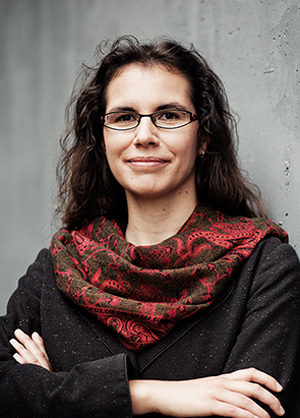
Prof. Dr. Bianca Burgfeld-Meise is a faculty member at the Department of Education and Social Sciences at South Westphalia University of Applied Sciences (FH-SWF). Her research focuses on media education, digitalization, and media socialization with a particular emphasis on media literacy, digital humanities, and social network sites. Key collaborations include TU Dresden (Digital@Humanities), HfM Detmold (digital music editions), and nationwide initiatives like Keine Bildung ohne Medien e.V. Research funded by DFG, BMBF, and institutional grants for projects on digital learning processes, MINT promotion, and digital edition methodologies. Her recent publications analyze lifelogging practices, digital memory, and interdisciplinary software development in educational contexts. She contributes to theoretical frameworks in media pedagogy and digital culture. She currently serves in the national steering committee of Keine Bildung ohne Medien e.V., advocating for systematic integration of media education across societal domains through workshops and policy discussions.
Mette Ranta is an Associate Professor of Educational Psychology and University Researcher at the University of Helsinki's Faculty of Education, affiliated with the Department of Educational Sciences and the Research Group for Educational Psychology. She is a key member of the DigiConsumers research consortium, funded by the Strategic Research Council, focusing on improving youth financial literacy in technologically driven societies. Previously, she held a postdoctoral researcher position at the University of Jyväskylä (2015–2018) supported by the Eino Jutikkala Fund and Finnish Academy of Sciences. Her research expertise spans educational and developmental psychology, emphasizing life course transitions, financial independence, and agency in emerging adulthood. Notable qualifications include a Docent in Educational Psychology (University of Helsinki, 2022) and a PhD in Psychology (University of Jyväskylä, 2015, awarded with distinction). She completed a Master’s in Sociology (University of Jyväskylä, 2008). Ranta collaborates extensively on projects such as the Mind Hub research group and Finnish Educational Transitions Studies , addressing youth financial well-being and societal integration. Her work has been featured in over 50 peer-reviewed publications, with recent focus on pandemic impacts, cross-cultural comparisons, and digital consumer behavior. She serves on editorial boards (e.g., Frontiers in Psychology ) and actively participates in international conferences and policy advisory roles (e.g., European Commission). Ranta’s contributions include developing digital tools for financial education and advising on policy frameworks to enhance youth resilience. Her research bridges psychological, sociological, and economic disciplines, aiming to foster inclusive and sustainable consumer practices in multicultural contexts.
Lisa Saum-Manning is the Associate Director of the International Security and Defense Policy Program, a Senior Political Scientist, and Professor of Policy Analysis at the RAND School of Public Policy, RAND Corporation. She is actively engaged in research that bridges defense policy, international security, and public administration. RAND Corporation – Associate Director, International Security and Defense Policy Program RAND Corporation – Senior Political Scientist RAND School of Public Policy – Professor of Policy Analysis Her educational background includes a Ph.D. in Political Science from the University of California, Los Angeles. Ph.D., Political Science – University of California, Los Angeles Lisa Saum-Manning's research focuses on strategic planning for the U.S. Armed Forces and Department of State, particularly in the areas of security cooperation, conflict prevention in fragile states, WMD nonproliferation, and unconventional warfare. She has also led field research on building sustainable security capacity in Africa, Central and South America, and disaster recovery in Puerto Rico. Her work frequently addresses diversity and inclusion in the military, homeland security policy, and U.S. foreign military sales accountability. She recently served as a senior advisor to the Assistant Secretary of State for Conflict Stabilization Operations during implementation of the Global Fragility Act. Her recent publications span topics such as Foreign Military Sales (FMS) accountability, Army readiness, disaster recovery in Puerto Rico, and diversity in military personnel. The body of her work demonstrates a consistent focus on policy-relevant research that informs national security decision-making, with an interdisciplinary approach combining political science, security studies, and public policy analysis. Scientific Awards and Recognitions: No specific awards listed in the provided text. Lisa Saum-Manning has advised on major defense and homeland security initiatives, including FEMA’s terrorism risk formula, U.S. Army personnel policy, and Coast Guard diversity strategies. She has received funding for multiple RAND studies from U.S. government agencies, including the Department of Defense and Department of Homeland Security. Her advisory roles include direct engagement with senior officials in the State Department and Congress, particularly through her testimony before the U.S. Senate Committee on Armed Services. She leads and contributes to research teams at RAND focused on international security, defense policy, and stability operations. Her projects often involve interdisciplinary collaboration, field data collection, and policy implementation analysis, particularly in complex operational environments such as post-conflict zones and disaster-affected regions.
Elif Bilgic is an Assistant Professor and Education Scientist at McMaster University's Department of Pediatrics. Her research program focuses on performance assessment across medical specialties, with an emphasis on optimizing clinical and simulation-based evaluations through technological innovation, interdisciplinary collaboration, and competency-based frameworks. McMaster University, Department of Pediatrics (2025-present) McGill University, Department of Surgery (2018-2025) Research Interests span performance assessment in surgical and pediatric education, virtual reality simulations, and artificial intelligence applications in health sciences training. She investigates: Valid assessment tools for laparoscopic suturing and endoscopic procedures Extended reality (XR) adoption in Canadian medical simulation centers Emotional impacts of competency assessment mandates on trainees and faculty Interdisciplinary AI integration in surgical education Educational analytics for skill acquisition tracking Teaching includes modules like The Fundamentals of Skill Acquisition (HSEDUC 704) and Program Evaluation in Health Sciences Education (HSEDUC 710). Her 2025 publications highlight advancements in simulation platforms for pediatric acute care, AI implications in surgical training, and emotional analysis of assessment systems.
Sabine Seufert is a Full Professor of Management of Educational Innovations at the University of St. Gallen (HSG), where she has held leadership roles including Director of the Institute of Educational Management and Educational Technologies (since 2021) and Director of the Institute of Business Education and Educational Management (2009–2020). She holds a PhD in Information Management (1996) and a Habilitation in Business Education (2006) from the University of St. Gallen, specializing in educational innovation and technology integration. Her research focuses on digital transformation in education, AI applications in learning environments, and competence development in vocational training. She has pioneered initiatives like the Swiss Centre for Innovations in Learning (scil) and contributed to frameworks for hybrid intelligence in education. Her work bridges academic research and practical implementation, emphasizing ethical AI use and teacher preparedness for technological change. Key affiliations include the European Foundation for Management Development (EFMD), the editorial board of the International Journal of Learning Technology , and advisory roles for journals like Empirical Research in Vocational Education and Training . Her recent publications explore AI literacy, social robots in classrooms, and the impact of generative AI on teaching and learning. Her career spans over 25 years, including guest professorships at the University of Southern Queensland and Stanford University, leadership in educational institutions, and policy advisory roles. She is actively involved in shaping future-ready education systems through digital innovation and human-AI collaboration strategies.
Joachim Krueger is a Professor of Cognitive and Psychological Sciences at Brown University. He holds editorial roles at the Personality and Social Psychology Review and the American Journal of Psychology . His research focuses on social judgment, decision-making, and the intersection of cognitive psychology with behavioral economics and organizational behavior. Key themes include self-perception, intergroup relations, free will belief paradoxes, and the volunteer’s dilemma. Dr. Krueger earned his Ph.D. from the University of Oregon (1988) and completed postdoctoral research at the Max Planck Institute in Berlin before joining Brown in 1991. He teaches courses on psychology in business, happiness philosophy, and behavioral decision sciences. His work critiques positivist methodologies while exploring creativity, leadership, and the replication crisis in psychological research. He is a Fellow of the Association for Psychological Science, Society for Experimental Social Psychology, and Eastern Psychological Association. His writings include books on social judgment, rationality, and happiness, alongside a Psychology Today blog. Krueger collaborates across disciplines, emphasizing pragmatic approaches to understanding human social behavior.
Lee Edwards is a Professor of Strategic Communications and Public Engagement at the London School of Economics and Political Science (LSE), within the Department of Media and Communications. Her academic career spans roles including Associate Professor at LSE (2017-2021) and the University of Leeds (2011-2017). She holds a PhD from Leeds Metropolitan University (2007), an MSc from the University of Auckland (1995), and a BSc from the University of Surrey (1991). Her research focuses on critical public relations, promotional culture, deliberation processes, and copyright policy. She has authored influential books including *Understanding Public Relations: Theory, Culture, and Society* (2018) and *Power, Diversity, and Public Relations* (2014). Professor Edwards has received awards such as the ICA Environmental Communication Division Top Faculty Paper Award (2020) and the LSE Excellence in Education Award (2018-19). She has contributed to over 100 scholarly articles, book chapters, and research reports, including studies on media literacy, misinformation, and policy design. Her professional service includes roles as Secretary of the ICA PR Division (2014-2016), editorship of *PR Inquiry* (2014-2018), and external examiner for multiple universities. She has led grants totaling over £500k, including AHRC-funded projects on deliberation and copyright. Edwards is a vocal advocate for diversity in PR and media industries, founding the Ignite Networking Group (2010-2013). She has advised organizations like the PRCA and participated in leadership programs such as the Aurora Leadership Initiative (2018-2019).
Tapio Juhani Lahtero serves as Administrative Principal at the Viikki Teacher Training School, University of Helsinki, and as Supervisor for the Doctoral Programme in School, Education, Society, and Culture. He is affiliated with the Faculty of Educational Sciences and leads the Leadership in Educational Contexts research group (LeadEd). His primary research focuses on educational leadership frameworks, particularly examining inclusive leadership practices, pedagogical leadership models, and distributed leadership approaches within the Finnish education system. His work bridges theoretical foundations with practical implementation, addressing how leadership practices influence educational quality, equity, and curriculum development. Analysis of his recent publications reveals a consistent emphasis on inclusive leadership frameworks across diverse educational settings. His research examines how principals construct meaning around inclusive practices, investigates distributed leadership models, and explores leadership development across early childhood, pre-primary, and basic education levels. His work demonstrates strong connections between leadership theory and practical school improvement initiatives. Dr. Lahtero actively supervises doctoral students in the Doctoral Programme in School, Education, Society, and Culture and has secured significant research funding, including the Academy of Finland's Flagship Programme 'EDUCA: Education for the Future' (2024-2028) and projects with the Finnish National Agency for Education. His international collaborations include teacher training initiatives in Chile, UAE, Kenya, and Pakistan. Through the Leadership in Educational Contexts research group, he contributes to advancing understanding of effective leadership practices that promote educational excellence while addressing contemporary challenges in diverse school environments.
Viktória Dabóczi is a lecturer in the Department of German Studies at the University of Siegen, Faculty I. She holds a doctorate from the University of Siegen (2016) and has been actively involved in teaching and research in German linguistics since 2012. Her current academic role as AOR aZ (Akademische Oberrätin auf Zeit) began in June 2025, indicating a senior academic position. She teaches courses such as Introduction to German Linguistics, Grammatical Variation, and Language Acquisition. Research Interests: Her work focuses on word classes, spoken language, grammar theory, language acquisition, and lexical change in German, often with comparative insights from Hungarian. She investigates how words are conceptualized in speech and writing, the evolution of discourse markers, and grammatical variation in contemporary usage. The analysis of her recent publications (2005–2025) reveals a consistent focus on theoretical and applied German linguistics, with increasing attention to sociolinguistic phenomena such as pandemic-related neologisms and ideological word formations. Her research bridges empirical analysis, cognitive linguistics, and language teaching, often in interdisciplinary or contrastive frameworks. Reviewed works on German morphology and grammar Contributed to international projects like EuroGr@mm and ProGr@mm Participated in interdisciplinary conferences on ellipsis and language processing Advising and Grants: While no formal students are listed, her editorial and collaborative roles suggest mentorship and academic leadership. She has been involved in long-term research projects, including EuroGr@mm (2004–2012), indicating sustained grant-supported activity. Her current role at Siegen reflects ongoing institutional support for her research and teaching. Labs and Teams: She has collaborated with researchers at Justus Liebig University of Giessen, University of Szeged, and IDS-Mannheim. Her work with the Diskursmonitor research group and participation in interdisciplinary conferences highlight her integration into active research networks in German linguistics.
Dr. Elizabeth Shaunessy-Dedrick is a Professor and Chair of the Department of Language, Literacy, Ed.D., Exceptional Education, and Physical Education at the University of South Florida's College of Education. She coordinates the Gifted Education Program and teaches in the fully-online Gifted Education program, offering courses for the Florida Endorsement and Master's degree. Her roles include leading the Ed.D. in Educational Program Development and serving on various college committees. Education: B.A. in English (University of Miami, 1990), M.A. in English (Florida State University, 1991), Ph.D. in Special Education with an emphasis in Gifted Education (University of Southern Mississippi, 2003). Research focuses on underrepresented gifted children and social-emotional needs of AP/IB students. Notable projects include the Javits-funded REACH initiative and an IES study on intrapersonal factors in AP-IB success. Her work emphasizes technology integration, program development, and mental health interventions in advanced curricula. Key grants include a Javits Gifted Education Award (2009-2011) and an IES grant (2010-2012). Awards include the NAGC Early Scholar Award (2013). Advising and grants: Primary Investigator on multiple projects; collaborates with Dr. Shannon Suldo on major studies. Active in college committees like the Tenure and Promotion Committee and Strategic Plan Revision Committee. Labs/Teams: Leads the Gifted Education Program and collaborates on interdisciplinary research teams focusing on advanced learners and educational innovation.
Dr Cristina Stoian is a Reader in International Business and Director of Postgraduate Research at Brunel Business School, Brunel University London, within the College of Business, Arts and Social Sciences. She is affiliated with the Strategy, Entrepreneurship and International Business (SEIB) research group and contributes significantly to academic and professional discourse on SME internationalization and global entrepreneurship. Her research focuses on international business, entrepreneurship, and international marketing strategies, particularly in the context of small and medium-sized enterprises (SMEs). Key themes include knowledge-based perspectives, dynamic capabilities, sustainable development, cultural diversity, and the role of digital technologies in internationalization. She has published extensively in top-tier journals such as International Business Review , Journal of Small Business Management , and International Journal of Entrepreneurial Behaviour and Research . Her recent publications highlight trends in SME foreign market entry, post-entry growth of born globals, CSR in SMEs, and systematic reviews of knowledge-based approaches. These works reflect a strong interdisciplinary focus combining strategic management, organizational capabilities, and international marketing. Best Paper Award at British Academy of Management Conference (International Business and International Management track) Dr Stoian has secured research funding as Principal Investigator from the ISBE/RAKE Award (supported by ESRC and Barclays Bank) and internal Brunel grants, and as Co-Investigator on projects funded by the Spanish Ministry of Education, Culture and Sports. She welcomes PhD applications in international entrepreneurship, SME internationalization, knowledge approaches, sustainable development, returnee entrepreneurship, and digital technologies in global business. She has served on advisory bodies including the London Chamber of Commerce and Industry’s International Trade Committee and The Institute of Export and International Trade. She is actively involved in professional networks and collaborates with researchers such as Dr Janja Tardios, Dr Marios Samdanis, and Dr Xiaoqing Li. Her work bridges academic research and practical applications for SME managers navigating global markets.
Alain Lempereur is the EUI Chair in Leadership and Negotiation at the Florence School of Transnational Governance , with a focus on responsible negotiation and mediation frameworks. As a tenured professor at Brandeis University (Alan B. Slifka Chair in Conflict Resolution), he bridges academic theory with field practice across 75+ countries. Harvard Law School affiliate faculty since 1993 Co-founder of Co-Dev capacity-building organization Former director of Brandeis Coexistence Program (2011-2021) Research Pillars : Humanitarian negotiation power dynamics, post-conflict reconciliation in Burundi/DRC, and philosophical foundations of negotiation. His work emphasizes joyful mediation , nonverbal emotional perception , and responsible leadership through 20+ books and 150+ articles. Training Impact : Designed executive programs for EU institutions, UN initiatives, and global corporations (Airbus, Sanofi-Pasteur). Pioneered the LEARN hybrid program for senior humanitarian leaders with the Slifka Chair. Awards & Recognition : Chevalier des Tastevins (2019) UN Mediation Roster member Harvard PON affiliate faculty Who's Who (2009, 2010) Global Engagement : Facilitated Israeli-Palestinian dialogues with the Negotiation Strategies Institute. Developed negotiation methodologies for MSF, ICRC, and UNDP. Holds degrees from Harvard (SJD) and Université Libre de Bruxelles (MPhil, LL.M).
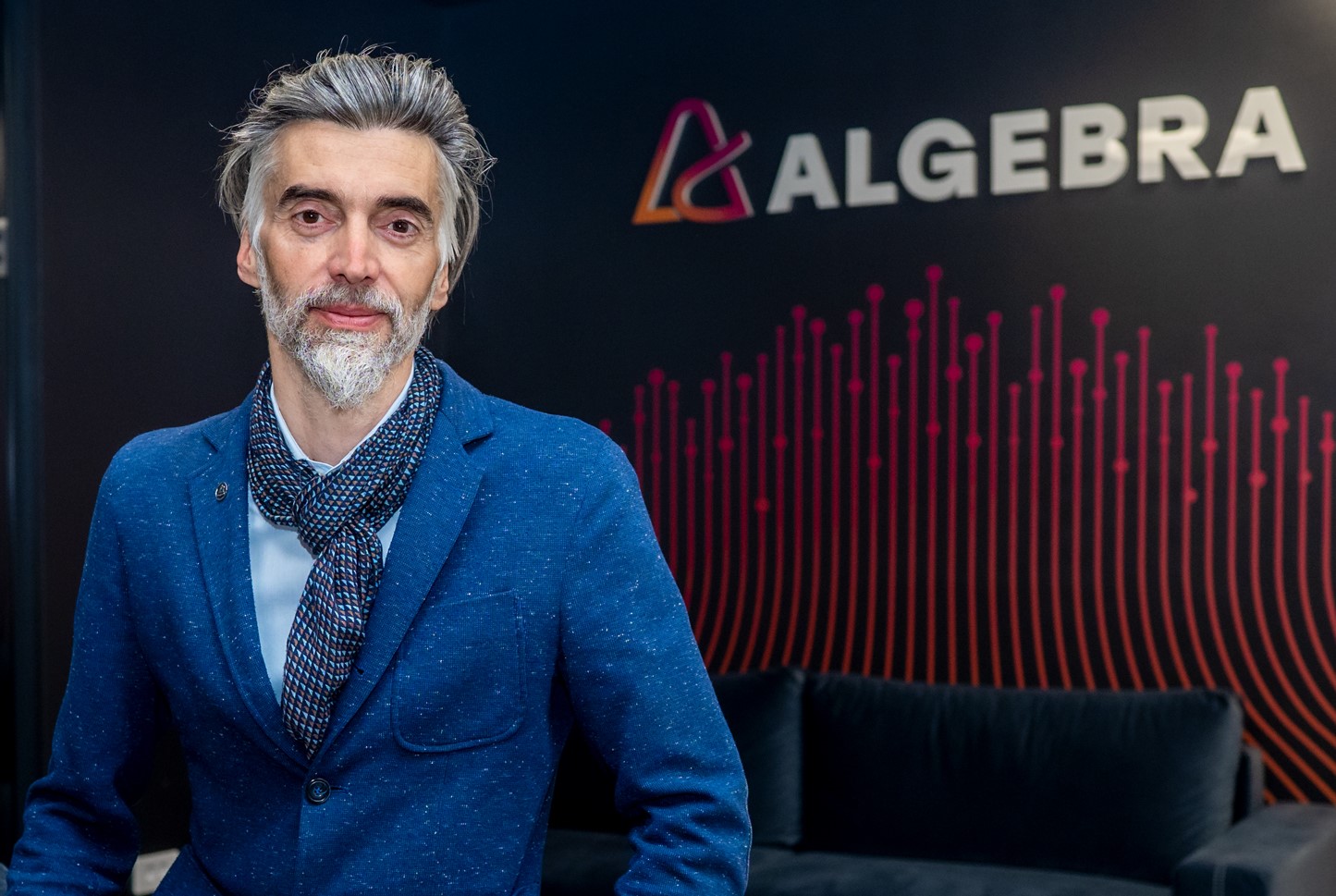
Mislav Balković is an Associate Professor at Algebra University of Applied Sciences, where he has served as Director and Dean since 2000 and 2009, respectively. He drives strategic development for the Algebra Group and contributes to national education policy through roles in expert bodies like the National Council for Science, Higher Education and Technology, and the Accreditation Council of the Agency for Science and Higher Education. Education: PhD (2016) from Faculty of Electrical Engineering and Computing, University of Zagreb Bachelor’s and Master’s degrees from Faculty of Electrical Engineering and Computing, University of Zagreb Research Interests: Mislav’s work bridges Data Science with applications in labor market dynamics , education policy , qualification frameworks , and energy systems . His projects focus on smart grid optimization, digital identity protection, and AI-driven educational reforms. Publications Trends: His recent articles emphasize cross-disciplinary applications , including brain-computer interfaces for image generation, EU labor market analysis , and smart grid resilience . Earlier works explore blockchain-based academic credentials and data analytics in auditing . Grants and Projects: He has led ~50 EU and domestic projects , spanning smart tourist management , lean methodologies for screen creators , and ICT services for alternative communication . His policy work includes drafting laws on adult education and higher education reform. Leadership: Vice President of the Croatian Employers' Association in Education (HUP-UPO) and past President of the Sectoral Council for Electrical Engineering and Computing.
Prof. Dr. Andrea Dreyer is a full-time Professor of Art and its Didactics at the Bauhaus University Weimar , where she has served since 2013. She is Vice Dean for Strategic Development within the Faculty of Art and Design and actively participates in academic governance, including roles in graduation committees, teacher training advisory boards, and curriculum commissions. Her research focuses on teacher professionalization, architectural pedagogy, and digital art education, emphasizing interdisciplinary approaches and qualitative social research methodologies. First and Second State Examination for Teaching at Grammar Schools in Art Education and Social Studies (1994–2000, 2004–2006) Andrea Dreyer’s publications span topics such as Bauhaus-inspired pedagogy, urban-rural spatial education, and digital integration in art teaching. She has led initiatives like DigiProSMK and Denkraum.Bauhaus , and her work often bridges art, architecture, and societal transformation. She has served as Dean of Studies and Vice-Rector for Studies and Teaching at Bauhaus University, advocating for phase-transcendent teacher networks and reflective professional practices. Her recent articles address participatory architectural psychology, interdisciplinary curriculum design, and digitalization in art education. Despite extensive committee involvement and editorial contributions, no specific scientific awards are highlighted in the provided texts. She mentors students and collaborators within the kunst:pädagogik | netz:werk platform and maintains active partnerships with institutions like the Thuringian Ministry of Education and Friedrich-Schiller University Jena.
Sophie Isaksson Hallstedt is a Full Professor at Chalmers University of Technology, conducting research in Sustainable Product Development (SPD) with a focus on strategic sustainability integration in product innovation. She holds appointments at both Chalmers and Blekinge Institute of Technology, and serves on international Design Society committees. Key Research Areas: Strategic socio-ecological sustainability, digital decision support tools, circular value chains, and sustainability in emerging technologies. Notable Projects: SUSTAIN (aerospace sustainability), Circular Design Nexus (user behavior analysis), and Digital Materials Ecosystems. Awards & Recognition: Featured in Royal Swedish Academy of Engineering Sciences (IVA) 100-list (2020, 2023). Publications: Over 80 peer-reviewed works demonstrating methods for sustainability maturity assessment, impact evaluation, and progress visualization. Teaching & Education: Developed master's programs and PhD courses in sustainability-driven product development. Collaborates extensively with industry partners like GKN Aerospace and VINNOVA. Current work examines predictive models for user behavior and sustainability implications of additive manufacturing.