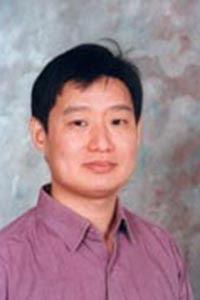
Yongcheng Qi is a Professor at the Department of Mathematics and Statistics, Swenson College of Science and Engineering, University of Minnesota - Duluth. His research focuses on probability theory, extreme-value statistics, and random matrix theory. PhD, University of Georgia (2001) PhD, Peking University (1992) B.S., Peking University (1987) Qi’s work explores applied probability, bootstrap methods, copulas, and high-dimensional statistics. Recent publications analyze spectral radii of random matrices, tail dependence functions, and empirical likelihood techniques. His research has been supported by NSF and NSA grants, including projects on extreme value theory, high-dimensional normal distributions, and asymptotic distributions for branching processes. Qi is affiliated with the American Statistical Association and the Institute of Mathematical Statistics.
Helle Sørensen is a Professor at the Department of Mathematical Sciences, University of Copenhagen. Her work bridges theoretical and applied statistics with interdisciplinary applications in biological and environmental sciences. Education : BSc (1993), MSc (1997), PhD (2000) in Statistics from University of Copenhagen. Employment : Professor (2018–present), Head of Data Science Lab (2018–2021), Professor MSO and head of Laboratory for Applied Statistics (2013–2018), Associate/Assistant Professor across multiple departments (2000–2013). Research Interests focus on: Functional data analysis Statistical inference for dependent data and stochastic processes Applications in biology, agriculture, and food science Her recent publications highlight statistical methodologies applied to: Enzymatic degradation of plant material Multivariate analysis in metabolic studies Random forest efficiency in metric spaces Quantile regression for longitudinal data Child food texture preferences and insect acceptance Teaching includes courses in basic probability, statistical theory, and applied statistics for bio/life sciences students. She supervises BSc, MSc, and PhD students in Statistics with co-supervision roles in interdisciplinary fields.
Audrey Repetti is an Associate Professor in the Department of Actuarial Mathematics and Statistics within the School of Mathematical and Computer Sciences at Heriot-Watt University in Edinburgh, UK. She also holds a dual affiliation with the Institute of Sensors, Signals, and Systems in the School of Engineering and Physical Sciences, and is part of the Maxwell Institute for Mathematical Sciences - Edinburgh. Her research spans mathematical imaging, optimization, and computational methods with applications across astronomy, medical imaging, and optical engineering. Dr. Repetti's research focuses on developing advanced mathematical frameworks for solving imaging inverse problems. Her work centers on optimization algorithms, Bayesian uncertainty quantification, and the integration of machine learning with traditional mathematical approaches. She has made significant contributions to radio interferometric imaging, computational optical imaging with photonic lanterns, and uncertainty quantification in medical imaging. Her research bridges theoretical mathematics with practical applications in astronomy, healthcare, and engineering. Analysis of her recent publications reveals a clear trajectory toward integrating traditional mathematical imaging approaches with modern machine learning techniques. Her work increasingly focuses on 'hybrid' methodologies that combine data-driven models with optimization frameworks. Key themes include plug-and-play algorithms, uncertainty quantification in imaging, and the development of efficient computational methods for high-dimensional inverse problems. Her research demonstrates strong interdisciplinary connections between mathematics, signal processing, astronomy, and medical imaging. Dr. Repetti is actively involved in academic service, including co-organizing the 2026 ICMS Workshop on Imaging inverse problems and generating models. She has received research funding supporting her work in computational imaging and inverse problems, though specific grant details aren't listed in the provided materials. Her teaching portfolio includes advanced courses in scalable inference, deep learning, and statistics for sciences. She leads several research projects with associated software toolboxes including BUQO (Bayesian Uncertainty Quantification by Optimization), SARA-COIL (Compressive optical imaging with a photonic lantern), and CALIM (Self direction-dependent effect calibration and imaging in radio-interferometry). These projects demonstrate her commitment to developing practical computational tools that advance both theoretical understanding and real-world applications in imaging science.
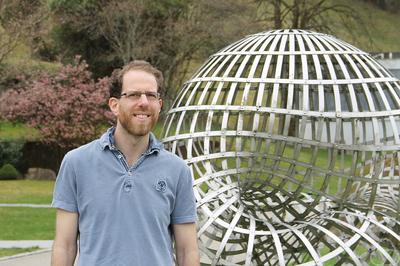
Yoav Zemel is a Lecturer at the École polytechnique fédérale de Lausanne (EPFL) , affiliated with the School of Basic Sciences and Department of Mathematics . He specializes in statistical aspects of optimal transport and related geometric methods. B.Sc. Mathematics & Economics, Hebrew University of Jerusalem (summa cum laude, 2010) M.Sc. Applied Mathematics, EPFL (2012) PhD Mathematical Statistics, EPFL (2017), advised by Victor M. Panaretos His research focuses on geometrical statistics , point processes , shape theory , and optimal transportation . Recent work explores covariance operators, Gaussian processes, and stochastic algorithms in Wasserstein spaces. Publications bridge theoretical advancements with applications in ecology, genetics, and machine learning. Scientific awards include the Robert May Prize , Swiss government scholarship , and multiple Hebrew University honors. He has taught courses on probability, statistical machine learning, and optimal transport at EPFL, Göttingen, and Cambridge.
Marcelo Pereyra is a Professor in Statistics at the School of Mathematical & Computer Sciences of Heriot-Watt University and the Maxwell Institute for Mathematical Sciences in Edinburgh, UK. His academic journey began with a double M.Eng. degree from ITBA (Argentina) and INSA Toulouse (France), followed by a M.Sc. from INSA Toulouse in 2009. He earned his Ph.D. in Signal Processing from the University of Toulouse in 2012, after which he served as a Research Fellow in Statistics at the University of Bristol from 2012 to 2016. In 2017, he joined Heriot-Watt University as an Assistant Professor in Statistics, was promoted to Associate Professor in 2019, and subsequently to Professor in Statistics in 2023. His educational background includes: Ph.D. in Signal Processing, University of Toulouse (2012) M.Eng. (double degree) from ITBA (Argentina) and INSA Toulouse (France), with M.Sc. from INSA Toulouse (2009) Professor Pereyra's research advances the statistical foundations of quantitative and scientific imaging. He has made important contributions to Bayesian imaging sciences and developed significant connections between statistical, variational, and machine learning approaches to imaging. His specific interests include robust uncertainty quantification in imaging inverse problems, automatic calibration and verification of statistical image models, scalable Bayesian computation algorithms derived from stochastic diffusion processes, and applications of imaging with high social or environmental value. His work sits at the intersection of statistics, computational mathematics, and imaging science, with a strong emphasis on developing mathematically rigorous methods that provide reliable uncertainty quantification alongside point estimates. His recent publications demonstrate a clear trajectory toward integrating modern machine learning techniques, particularly diffusion models and generative approaches, with traditional Bayesian statistical methods for imaging problems. The research spans applications from medical imaging to astronomical observations and industrial inspection, with consistent emphasis on uncertainty quantification. His work increasingly focuses on developing scalable computational methods that can handle the high-dimensional nature of modern imaging problems while maintaining statistical rigor. Professor Pereyra has received numerous prestigious awards throughout his career: SIAM SIGEST Award in Imaging Sciences for contributions to proximal Markov chain Monte Carlo methodology Marie Curie Intra-European Fellowship for Career Development (2013) Brunel Postdoctoral Research Fellowship in Statistics (2012) Postdoctoral Research Fellowship from French Ministry of Defence (2012) Leopold Escande PhD Thesis award from the University of Toulouse (2012) INFOTEL R&D award from the Association of Engineers of INSA Toulouse (2009) ITBA R&D award from the Buenos Aires Institute of Technology (2007) Professor Pereyra is deeply committed to developing early career talent, currently supervising five PhD students and two Postdoctoral Research Associates (PDRAs), having previously supervised four PhD students and three PDRAs to completion. His research has received significant support from Heriot-Watt University and the UK Engineering and Physical Sciences Research Council (EPSRC). He is known for fostering multidisciplinary collaboration, having organized eleven international interdisciplinary research meetings in the UK since 2012 and chaired the IMA Conference on Inverse Problems in Edinburgh (2022). As a leader in his field, Professor Pereyra has held Invited Professor positions at prestigious institutions including Institut Henri Poincaré (Paris, 2019), Ecole Normale Supérieure Lyon (2023), and Université Paris Cité (2024). He frequently delivers invited talks at leading mathematical centers worldwide (CIRM, BIRS, IHP, Flatiron, Hausdorff School, INI, and ICMS) to promote multidisciplinary collaboration in imaging sciences.
Steven Wu is an Associate Professor in the School of Computer Science at Carnegie Mellon University, with primary appointments in the Software and Societal Systems Department (S3D) and affiliated roles in the Machine Learning Department, Human-Computer Interaction Institute, CyLab, and Theory Group. Previously, he held positions at the University of Minnesota (Assistant Professor) and Microsoft Research-New York City (post-doctoral researcher). Ph.D. in Computer Science, University of Pennsylvania (co-advised by Michael Kearns and Aaron Roth) His research spans Machine Learning , Algorithms , Privacy , and Fairness , focusing on responsible AI foundations, interactive learning, causal inference, and economic applications. Recent work explores uncertainty quantification and privacy risks in synthetic data. He has received prestigious awards including the NSF CAREER Award and Penn's Rubinoff Award for his dissertation. His group mentors students across Ph.D. , postdoc, and visiting programs, with alumni now at institutions like UC Berkeley, Stanford, and Amazon. Key grants: NSF, Okawa Foundation, Open Philanthropy, Amazon, Google, J.P. Morgan, Meta, Mozilla, Apple, Cisco
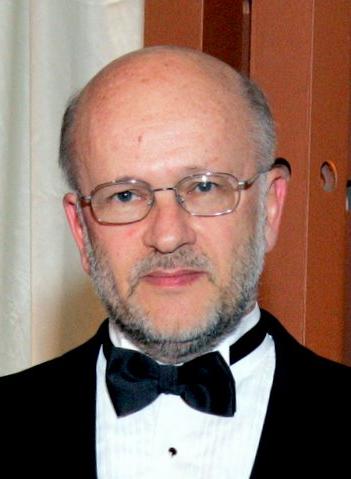
Bruno Ebner is a researcher at the Institute of Stochastics within the Department of Mathematics at Karlsruhe Institute of Technology (KIT). He maintains an active research program in theoretical and applied statistics, with particular expertise in goodness-of-fit testing and distribution characterizations. His office is located in Kollegiengebäude Mathematik (20.30) room 2.018, and he holds regular office hours on Tuesdays from 2 p.m. to 3 p.m. Dr. Ebner's primary research interests focus on asymptotic statistics , goodness-of-fit problems , stochastic processes , and distribution characterizations . His work prominently features Stein's method as a theoretical foundation for developing new statistical tests. He has made significant contributions to directional data analysis, particularly for hyperspherical data, and has developed novel approaches for testing uniformity on spheres. Analysis of his recent publications reveals a strong trend toward developing unified theoretical frameworks for goodness-of-fit testing across various distribution families. His work increasingly integrates computational methods with theoretical statistics, particularly through collaborations that bridge Stein's method with modern computational techniques. The development of R packages like gofIG, mnt, and gofgamma demonstrates his commitment to making theoretical advances accessible to practitioners. Dr. Ebner has developed several R packages that implement his theoretical work, including gofIG for Inverse Gaussian distribution testing, mnt for multivariate normality tests, and gofgamma for Gamma distribution testing. These packages represent significant contributions to statistical methodology with practical applications across various scientific domains. His teaching portfolio demonstrates expertise across multiple domains, including introductory stochastics for teaching candidates, generalized regression models, statistics for biology students, and specialized courses on Stein's method. He has also contributed to educational initiatives for economics students at KIT, reflecting his commitment to statistical education across disciplines.
Dr. Elliot Carr is a Senior Lecturer in the School of Mathematical Sciences at Queensland University of Technology (QUT), Faculty of Science. He holds a PhD in Mathematics from QUT and has been a faculty member since 2015, progressing from Lecturer to his current rank. His research and teaching focus on applied and computational mathematics, with strong interdisciplinary applications. Education: PhD in Mathematics, Queensland University of Technology, 2009–2012 Bachelor of Applied Science (Honours) in Mathematics, QUT, 2008 Bachelor of Mathematics, QUT, 2005–2007 Elliot Carr's research lies at the intersection of applied mathematics and real-world physical systems. His work centers on developing and analyzing mathematical models of advection, diffusion, and reaction processes, particularly in heterogeneous media. He employs both deterministic (PDE-based) and stochastic (random walk) frameworks, contributing to analytical solutions, multiscale modeling, surrogate models, and numerical methods such as finite volume and Newton-Krylov techniques. His research has been applied to diverse fields including groundwater contamination, drug delivery, heat transfer, and tumor spheroid modeling. The latest publications reflect a consistent focus on transport phenomena in complex geometries and heterogeneous environments. Key themes include dual-grid mapping for contaminant transport, analytical modeling of drug release from spherical capsules, thermal diffusivity in shell geometries, and stochastic models of biological systems. His methodological contributions span analytical, numerical, and statistical approaches, demonstrating versatility across applied mathematics. Scientific Awards and Recognitions: JH Michell Medal, ANZIAM (2022) ARC DECRA Fellowship (2015) QUT Outstanding Doctoral Thesis Award (2012) University Medal, QUT (2008) Dean’s Award for top graduate in both Honours and Bachelor programs Keynote and plenary speaker at major conferences including ANZIAM and Forum “Math-for-Industry” Dr. Carr actively supervises PhD and Masters students, with completed and ongoing projects on diffusive transport, tumor modeling, and sports analytics. He has secured competitive research funding, including an ARC Discovery Project on multiscale modeling. His teaching includes computational mathematics, linear algebra, and differential equations, with a focus on MATLAB-based implementation. He is a member of the Australian Mathematical Society (AustMS) and ANZIAM. Research Labs and Teams: While not explicitly tied to a named lab, Carr is part of the broader Applied Modelling and Computation research environment at QUT. He collaborates extensively with researchers such as Ian Turner, Matthew Simpson, and Chris Drovandi, contributing to interdisciplinary teams in mathematical biology, environmental modeling, and statistical computation.
Prof. Jan Magott holds a research position at the Faculty of Information and Communication Technology of Wrocław University of Science and Technology , specifically within the Department of Computer Engineering . His work bridges formal methods in computer science with safety engineering applications. Focus on safety-critical systems across railway and aviation domains Expertise in computational intelligence and dependability analysis Research interests span: Formal verification of time-dependent systems Fault tree modeling with temporal constraints Functional Resonance Analysis Method (FRAM) applications Hospital safety and medical diagnostics optimization Urban transport reliability analysis Human factors in safety systems Recent publications show increasing focus on: Railway safety protocols and traffic management (2023) Medical error prevention in primary care (2021-2020) Formal timing analysis in software engineering (2016) Aviation incident modeling with fuzzy logic (2016) Key methodological contributions include: Time-dependent fault tree analysis Execution time modeling for real-time systems Fuzzy probability applications in safety engineering FRAM framework for complex system analysis
Sahand Hormoz is an Assistant Professor at Harvard Medical School and a faculty member in the Department of Data Science at Dana-Farber Cancer Institute. His research focuses on controlling biological systems to understand cell state transitions and develop technologies for single-cell analysis, synthetic biology, and organoid modeling. PhD in Applied Physics from Harvard University (advised by Michael Brenner) Postdoctoral work at Kavli Institute for Theoretical Physics (UCSB) and Elowitz Lab at Caltech Research Interests His lab combines high-throughput single-cell measurements with differential geometry and machine learning to analyze complex biological data. They engineer cells for lineage tracing, develop organoid systems, and aim to automate biological modeling to overcome human cognitive limitations in understanding life systems. Publication Trends Key areas in his recent work include: Computational methods for single-cell and lineage analysis Cancer evolution in myeloproliferative neoplasms Synthetic biology tools for DNA-based cellular memory Integration of machine learning with biological dynamics Applications in stem cell biology and microbial systems Development of microfluidic platforms Labs & Teams Hormoz Lab at Harvard Medical School collaborates with Dana-Farber's Data Science Department to advance quantitative biology approaches.
Professor Robin Purshouse is a leading academic at the University of Sheffield , currently serving as Professor of Decision Sciences in the Department of Automatic Control and Systems Engineering within the School of Electrical and Electronic Engineering . With a career spanning academia and industry, his work bridges computational modelling , optimization , and systems science to address complex challenges in public health and engineering. His research has been pivotal in developing mechanisms for agent-based modelling and evolutionary multi-objective optimization . Education: PhD in Control Systems (2004), MEng in Control Systems Engineering (1999) from the University of Sheffield Professor Purshouse's research focuses on computational modelling of complex social systems , decision analytics for population health policy , and Bayesian optimization . He has pioneered the integration of machine learning and uncertainty quantification in social science simulations, with notable projects like the Sheffield Alcohol Policy Model and CASCADE initiative. His work spans interdisciplinary domains, including health economics , policy evaluation , and engineering design . Recent publications highlight his expertise in agent-based modelling for smoking/vaping dynamics , intersectional disparities in alcohol consumption , and inclusive economy frameworks . He has secured substantial funding (exceeding £16 million) through grants from NIH , CRUK , UKPRP , and MRC , including his role as co-PI in the HealthMod cluster. His contributions to multi-objective optimization and evolutionary algorithms have advanced methodologies in both engineering and public health domains. Scientific Awards: ESRC Future Research Leaders Award (2012-2015) As a co-developer of the Liger optimization environment , Purshouse has fostered open-source tools for complex decision-making. He leads the SIPHER consortium for systems science in public health and serves on editorial boards for journals like Environmental Modelling & Software . His teaching includes Agent-Based Modelling (ACS6132), and he maintains professional memberships in the Association for Computing Machinery and Research Society on Alcohol .
Alexander Shapiro is the A. Russell Chandler III Chair and Professor at the H. Milton Stewart School of Industrial and Systems Engineering , Georgia Institute of Technology. His work bridges optimization and statistics, focusing on stochastic programming, risk analysis, and simulation-based optimization. He has received numerous accolades, including the Khachiyan Prize (2013) , Dantzig Prize (2018) , and John von Neumann Theory Prize (2021) . Education: Ph.D. in Applied Mathematics-Statistics (Ben-Gurion University, 1981), M.Sc. in Mathematics (Moscow University, 1971) His research explores stochastic programming , risk-averse optimization , and multivariate statistical analysis , with recent work on distributionally robust control, Bayesian stochastic methods, and convex multistage optimization. Publications highlight theoretical advancements and computational frameworks for uncertainty modeling. Recent articles focus on asymptotics (2025), duality in MDPs (2023-2024), and statistical inference (2014-2024). These span stochastic control , robustness , and time consistency , reflecting his expertise in bridging probability theory with large-scale optimization. Scientific awards : Khachiyan Prize of INFORMS (2013) Dantzig Prize (2018) John von Neumann Theory Prize (2021) Election to National Academy of Engineering (2020) Dr. Shapiro has served as Area Editor (Optimization) for the Operations Research Journal and Editor-in-Chief of Mathematical Programming, Series A , demonstrating sustained leadership in his field.
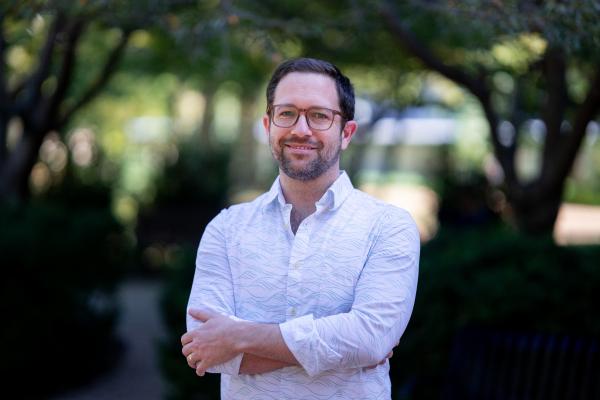
Pierre Nyquist is an Associate Professor and docent in the Department of Mathematical Sciences at Chalmers University of Technology and Gothenburg University. His research is sponsored by the Swedish Research Council, the Swedish e-science Research Center (SeRC), and the Wallenberg Artificial Intelligence, Autonomous Systems and Software Program (WASP). He is also an elected member of the Young Academy of Sweden for the period 2024-2029 and has served as a scientific ambassador for EURANDOM since November 2021. Dr. Nyquist's research interests lie at the intersection of probability theory, mathematical statistics, and applied mathematics. His main expertise is in probability theory, with a focus on large deviations theory and stochastic numerical methods. He has a general interest in all aspects of probability theory and much of what is categorized as applied mathematics, particularly questions related to partial differential equations, optimization, and stochastic optimal control. Recently, he has become increasingly interested in the mathematical foundations of complex data analysis and modeling, and the interplay with ideas from physics. His current research interests include large deviations, gradient flows and their generalizations, stochastic numerical methods, statistical learning theory, stochastic processes, and random dynamical systems. Pierre Nyquist has received research funding from several prestigious sources including the Swedish Research Council, the Swedish e-science Research Center (SeRC), and the Wallenberg Artificial Intelligence, Autonomous Systems and Software Program (WASP). His publications demonstrate a consistent focus on theoretical aspects of probability with applications to computational methods and data analysis, showing increasing integration with machine learning techniques in recent years. elected member of the Young Academy of Sweden (2024-2029) scientific ambassador for EURANDOM (since November 2021) Dr. Nyquist is actively involved in mentoring the next generation of researchers. He currently supervises several PhD students including Cinja Arndt (starting Aug. 2025), Niki Wilhemlson (started Aug. 2024), and Viktor Nilsson (started Aug. 2020). He has previously supervised successful PhD students such as Federica Milinanni (Aug. 2020-May 2025) and Carl Ringqvist (Aug 2015-June 2021). He regularly teaches graduate-level courses including "Modern methods of statistical learning" and has supervised numerous MSc theses on topics ranging from deep learning for time-series radar signals to neural network embedding in insurance pricing. His research group is active in both theoretical developments and practical applications, with current projects spanning from mathematical foundations of probability to applications in machine learning and data science. Dr. Nyquist maintains strong international collaborations, as evidenced by his frequent travel for conferences and research visits to institutions such as Brown University and TU Delft.
Michael Landis is Assistant Professor of Biology at Washington University in St. Louis, developing statistical models and computational tools to reconstruct evolutionary patterns. Research integrates phylogenetics, biogeography, and trait evolution to study historical biodiversity dynamics across deep timescales. Key research areas: Developing Bayesian methods for phylogenetic biogeography Modeling biome shifts and diversification patterns Creating open-source software for evolutionary analysis (RevBayes, phyddle) Reconstructing ancestral networks for pierid butterflies Recent work includes novel approaches for state-dependent diversification modeling, deep learning applications in phylogenetics, and global-scale analyses of butterfly evolution. The lab emphasizes collaborative software development and evolutionary hypothesis testing.
James L. Beck is the George W. Housner Professor of Engineering and Applied Science, Emeritus at Caltech, with joint appointments in Computing and Mathematical Sciences and Mechanical and Civil Engineering. His research develops theory and algorithms for stochastic system modeling, uncertainty propagation, and Bayesian updating of dynamic systems. Research interests include: Probability logic and computational Bayesian statistics Stochastic dynamics and system reliability theory Bayesian system identification Stochastically robust structural control Quantum stochastic mechanics Awards and Honors: Distinguished Member of ASCE Masanobu Shinozuka Medal Housner Medal European Association of Structural Dynamics Senior Research Prize