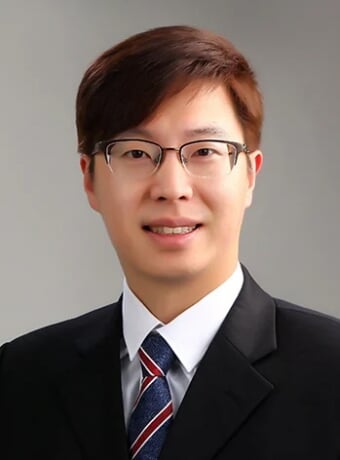
Dr. Han Du is an Associate Professor in the Department of Psychology at the University of California, Los Angeles (UCLA). He holds a PhD from the University of Notre Dame and leads the Du Research Lab. His methodological expertise includes Bayesian statistics, longitudinal data analysis, structural equation modeling, meta-analysis techniques, and machine learning applications in psychological research. Dr. Du's substantive research applies quantitative methods to developmental, clinical, cognitive, educational, and health psychology. His recent publications focus on transgender adolescent stress assessment, LGBTQ+ mental health in military contexts, social network interventions for HIV prevention, and minority stress theory applications. He teaches advanced statistical methods and supervises graduate students in quantitative psychology.
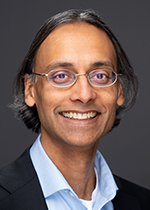
Richard A. Davis is the Howard Levene Professor of Statistics at Columbia University's Faculty of Arts and Sciences. He is affiliated with the Data Science Institute (DSI) and the Financial and Business Analytics Center. His research focuses on applied probability, time series analysis, stochastic processes, and extreme value theory, with applications to financial data and spatial modeling. He co-founded the Space-Time Aquatic Resources Modeling and Analysis Program (STARMAP), supported by an EPA-STAR grant. Education details are not explicitly provided in the text, but his academic roles indicate advanced qualification in statistics. His work combines theoretical advancements with practical applications, such as analyzing financial time series models (e.g., GARCH) and spatial environmental data. Recent research emphasizes high-dimensional extremes, sparsity, and privacy-preserving methods. His articles explore cutting-edge topics like kernel PCA for multivariate extremes, quantile treatment effects, and goodness-of-fit testing for time series. He has also contributed to applications in healthcare imaging and disaster economics. His collaborative projects aim to bridge statistical theory with environmental and societal challenges. Key contributions include the STARMAP initiative and grants focused on extreme value analysis. His work often integrates advanced statistical techniques with real-world data challenges, reflecting a commitment to both methodological innovation and interdisciplinary impact.
Dr. Hassan Ashtiani is an Associate Professor in the Department of Computing and Software at McMaster University and a faculty affiliate at the Vector Institute. He holds a PhD in Computer Science from the University of Waterloo (2018), a master’s in AI and Robotics, and a bachelor’s in computer engineering from the University of Tehran. His research focuses on machine learning, statistical learning theory, and theoretical computer science, with emphasis on adversarial robustness, privacy-preserving algorithms, and sample-efficient learning. Current projects include differentially private machine learning, robustness against adversarial perturbations, and distribution shifts. Recent work highlights include NeurIPS 2018 best paper award for pioneering distribution compression schemes in Gaussian mixtures. He routinely serves as an area chair for NeurIPS and other ML conferences. His CAS 775 course explores modern distribution learning theory, covering topics like PAC learning, computational complexity, and differential privacy. Awards: NeurIPS Best Paper Award (2018) Advising: Open PhD/MSc positions are listed on his homepage. His research group collaborates with the Vector Institute, focusing on advancing theoretical foundations of machine learning with practical applications.
Khaled Giasin is a Senior Lecturer in Mechanical Engineering at the University of Portsmouth, part of the School of Electrical and Mechanical Engineering and affiliated with the Portsmouth Centre for Advanced Materials and Manufacturing. He joined the university in 2019, bringing expertise in machining aerospace materials through experimental and numerical techniques. Prior to this, he worked at Cardiff University on the ASTUTE2020 project, focusing on applied research for advanced manufacturing challenges in Wales. His research interests span machining of metals, composites, and fiber metal laminates, finite element modeling of machining processes, and additive manufacturing of metallic alloys. He collaborates internationally with institutions in France, Turkey, China, and Australia, emphasizing industry-academia partnerships. Dr. Giasin currently supervises PhD projects on topics such as GLARE fiber metal laminate machining and ultrasonic-assisted drilling, reflecting his focus on advanced materials and manufacturing solutions. He teaches modules including Engineering Materials and Design, Advanced Materials, and Metrology. Over 137 research outputs highlight his contributions to machining methodologies, material characterization, and sustainable manufacturing techniques. His work bridges theoretical modeling and industrial applications, addressing challenges in aerospace and advanced manufacturing sectors.
Gunnar Blohm is an Assistant Professor in the Department of Biomedical and Molecular Sciences at Queen's University, affiliated with the School of Medicine and Faculty of Health Sciences. His research focuses on sensorimotor neuroscience, particularly 3D sensorimotor control, eye-hand coordination, and computational modeling of neural processes. He holds a Ph.D. from Université Catholique de Louvain and has held postdoctoral positions at York University and his alma mater. Cross-appointed to the School of Computing, Department of Psychology, and Department of Mathematics and Statistics, he is also Vice-Director of the Connected Minds initiative. His research integrates behavioral experiments, brain imaging (MEG/EEG), and patient studies to understand how sensory information is transformed into goal-directed actions. Key areas include visuomotor transformations, multisensory integration, and Bayesian processes in neural computations. Blohm leads the Computational Sensorimotor Neuroscience Lab, emphasizing collaborative projects like Neuromatch Academy and contributions to open science initiatives. Affiliated with Queen's Centre for Neuroscience Studies and Ingenuity Labs, his work bridges computational approaches with clinical applications, aiming to develop frameworks for understanding brain dysfunction and clinical tools. His recent articles explore topics like saccade dynamics, pupil responses, and generative adversarial collaborations in scientific discourse.
Florence d'Alché-Buc is a Professor at Télécom Paris (Institut Polytechnique de Paris), holding an Isaac Newton Institute Simons Chair (2025) and leading the Data Science and Artificial Intelligence for Digitalized Industry & Services (DSAI) Chair. She heads the Image, Data, and Signal Department and is part of the Signal, Statistics, and Learning (S2A) team at the LTCI laboratory. Her research focuses on machine learning, bioinformatics, and industrial applications, emphasizing kernel methods, structured prediction, and reliable AI. Education: Previously a professor at Université d’Evry and deputy director of the IBISC lab. Co-director of the Paris-Saclay Data Science Master and creator of specialized AI programs (e.g., Certificate of Specialized Studies in AI). Research highlights include contributions to operator-valued kernel methods, graph prediction, and frugal AI. She actively collaborates with institutions like Inria, École Polytechnique, and industry partners (Airbus, Engie, etc.). Notable roles: Scientific director of Digicosme Labex, Ellis Fellow, and board member of IVADO (Montreal). Her recent work addresses AI explainability, robustness, and sustainability, including projects on interpretable networks and energy-efficient models.
Professor Alexander J. Hartemink holds dual appointments in the Department of Computer Science and Department of Biology at Duke University, Trinity College of Arts & Sciences. He is also a Bass Fellow in Computer Science. His research focuses on computational biology, machine learning, and systems biology, with applications to genomics, epigenomics, and transcriptional regulation. Hartemink leads the Duke Office of University Scholars and Fellows and has directed the Computational Biology and Bioinformatics graduate program. He earned a PhD from MIT (2001), MPhil from the University of Oxford (1996), and BS from Duke (1994). Research Interests His work integrates computational methods to study chromatin dynamics, transcriptional networks, and epigenetic mechanisms. Key areas include modeling chromatin accessibility, predicting transcription factor binding, and understanding cell-cycle regulation. Techniques employed include Bayesian networks, dynamic systems modeling, and machine learning algorithms. Publications & Trends Recent work emphasizes single-cell multi-omics integration, chromatin occupancy modeling (RoboCOP framework), and transcriptional regulation in response to genetic perturbations. Themes include epigenetic plasticity, disease-associated enhancers, and systems-level analysis of gene expression. Awards & Grants Hartemink has received the Sloan Research Fellowship (2005) and NSF CAREER Award (2004). Active grants include NIH funding for chromatin-transcription interplay studies and NSF support for regulatory genome research. He collaborates on projects like the Data+ initiative, promoting interdisciplinary data science. Affiliations & Labs Associated with Duke’s Center for Genomic and Computational Biology and Center for Advanced Genomic Technologies. His lab develops computational tools for genomic analysis, including software for chromatin modeling and epigenetic data integration.
Adrián Lozano-Durán is an Associate Professor of Aerospace at the California Institute of Technology (Caltech), affiliated with the Guggenheim Laboratory for Aeronautics (GALCIT). He holds a B.S., M.S., and Ph.D. from the Polytechnic University of Madrid (2010–2015) and joined Caltech as a Visiting Associate in 2024 before becoming a faculty member in the same year. His research focuses on fluid dynamics, turbulence, and machine learning applications in computational fluid dynamics (CFD), particularly for aerospace systems. He leads the Aerofluids, Learning & Discovery (ALD) Lab, collaborating with MIT’s AeroAstro department. Key research areas include causal inference in fluid systems, reduced-order modeling, and machine-learning-based closure models for large-eddy simulation (LES). His work addresses challenges in low-speed aerodynamics, supersonic, and hypersonic flows. Notable recent contributions include advancements in LES wall models and information-theoretic approaches to turbulence control. He frequently presents at international conferences and has co-authored high-impact papers in Nature Communications , Journal of Fluid Mechanics , and Physical Review Research . Education: B.S., Polytechnic University of Madrid (2010) M.S., Polytechnic University of Madrid (2012) Ph.D., Polytechnic University of Madrid (2015) Affiliations: GALCIT, Caltech AeroAstro, MIT (collaboration) Advising focuses on students like Álvaro Martínez-Sánchez and Tristan, whose work spans causality in turbulence and flow control. He actively engages in interdisciplinary research, bridging fluid mechanics with machine learning and information theory to advance aerospace engineering solutions.
May Yuan is the Ashbel Smith Professor of Geospatial Information Sciences at the University of Texas at Dallas (UT-Dallas), affiliated with the School of Economic, Political and Policy Sciences. She directs the Geospatial Analytics and Innovative Applications (GAIA) Lab. Her research focuses on space-time representation, GIS analytics, and environmental/social problem-solving (e.g., disaster risk, pollution, crime mapping). She holds a Ph.D. in Geography from SUNY Buffalo (1994) and B.S. from National Taiwan University (1987). Previously, she was Brandt Professor and Director of the Center for Spatial Analysis at the University of Oklahoma (1994–2014). Education: Ph.D. in Geography, State University of New York at Buffalo, 1994 M.A. in Geography, State University of New York at Buffalo, 1992 B.S. in Geography, National Taiwan University, 1987 Research Interests: Her work integrates space-time GIS databases with cognitive science, environmental modeling, and social dynamics. Key areas include: - Spatiotemporal query and analytics for geographic processes - GIS-based disaster risk assessment (wildfires, tornadoes) - Urban air quality modeling - Neurogeography and Alzheimer’s disease prediction using environmental complexity metrics - Deep mapping and spatial narratives. Grants & Partnerships: Supported by NSF, NASA, DoD, DHS, NOAA, EPA, and state agencies. Her GAIA Lab explores 'place' concepts in space-time analytics. Awards & Roles: Fellow, AAAS and AAG Editor-in-Chief, International Journal of Geographical Information Science (2017–present) Former President, Cartography and Geographic Information Society (2020–2021) and UCGIS (2011–2012) Member, NOAA Environmental Information Services Working Group (2016–2022) Labs/Teams: Leads the GAIA Lab, collaborating on geospatial AI, environmental health, and urban analytics.
Byung-Jun Kim is an Assistant Professor in the Department of Mathematical Sciences at Michigan Technological University, where he joined as a tenure-track faculty in August 2020. His research focuses on statistical methodologies for complex observational data, particularly in nonparametric/semiparametric regression frameworks under high-dimensional and measurement error scenarios. PhD in Statistics from Virginia Tech (2020) BS/MS in Statistics from Chung-Ang University Research Expertise: Multivariate data analysis Covariance matrix estimation and graphical modeling Kernel regression in machine learning Statistical inference with measurement errors
Anant Sahai is the Qualcomm Chair Professor in the Department of Electrical Engineering and Computer Sciences (EECS) at the University of California, Berkeley. He holds affiliations with the Berkeley Artificial Intelligence Research Lab (BAIR), Berkeley Laboratory for Information and System Sciences (BLISS), and the Berkeley Wireless Research Center (BWRC). His academic journey includes a BS from UC Berkeley (1994), and MS (1996) and PhD (2001) degrees from MIT. He previously worked at Enuvis, Inc., focusing on adaptive software radio techniques for low-SNR GPS environments. Research interests span machine learning, wireless communication, information theory, signal processing, and decentralized control, with a focus on intersections between these fields. Key areas include spectrum sharing, ultra-reliable low-latency wireless protocols, and the foundations of overparameterized machine learning. Recent work explores in-context learning in modern AI models. He has received awards such as the IEEE ComSoc Leonard G. Abraham Prize (2012) and teaching/mentorship accolades at Berkeley. He advises UC Berkeley’s Eta Kappa Nu chapter and coordinates machine learning efforts for NSF’s SpectrumX. Current teaching includes CS 182/282A on deep neural networks. His lab focuses on theoretical and applied challenges in communication systems, AI, and control theory. Awards: IEEE ComSoc Leonard G. Abraham Prize (2012), Teaching Excellence Awards (2015–2017) Grants: NSF Center for Spectrum Innovation (SpectrumX), multiple collaborative projects in wireless and AI Labs/Teams: BLISS, BAIR, BWRC
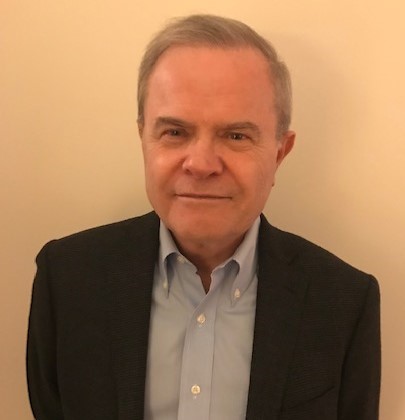
Professor Michael Evans is a faculty member at the University of Toronto , affiliated with the Department of Statistical Sciences (St. George campus) and the Department of Computer and Mathematical Sciences at the Scarborough Campus . His research focuses on statistical inference , Bayesian methods , and measuring statistical evidence through his work on the relative belief ratio . He has contributed to ROC analysis , linear models , and stochastic processes , with recent work addressing biases in statistical reasoning and connections to frequentist criteria. Research Themes : Defining and measuring statistical evidence Bayesian inference and prior-data conflict resolution Monte Carlo methods and stochastic process theory Recent Publications explore statistical evidence in scientific practice, medical diagnostics, and Bayesian frameworks. His 2024 Encyclopedia article critiques frequentist criteria, while the 2022 Entropy paper introduces relative belief in ROC analysis. Awards : ASA Fellow (American Statistical Association) Teaching : He teaches advanced courses like STAC62 (Probability and Stochastic Processes) and STAC63 (Probability and Stochastic Processes II), emphasizing theoretical rigor and applications in fields like mathematical finance and machine learning .
Shruti Phadke is an Assistant Professor in the Information Science Department at Drexel University's College of Computing & Informatics. Her work focuses on social knowledge construction, participation, and disengagement in online communities dealing with problematic information, such as conspiracy theories and extremist groups. She employs both quantitative and qualitative methods, including statistics, causal machine learning, and natural language processing. Education: PhD in Information Science from the University of Washington; MS in Computer Engineering from Virginia Tech. Her research spans computational social science, social computing, and human-computer interaction, with a particular emphasis on understanding how individuals navigate and exit harmful online discussions. She has over a year of experience as a trust and safety research expert at a social media company. Scientific Awards: Shruti has authored award-winning papers at the CSCW and ICWSM conferences, which recognize significant contributions to collaborative computing and web science. She is actively seeking PhD students for Fall 2025 and undergraduates/Masters students for Fall 2024 to collaborate on these research themes.
Hyuck Jin Park is a Full Professor in the Department of Energy Resources and Geosystems Engineering at Sejong University, South Korea, where he has been teaching and conducting research since 2003. With a Ph.D. in Engineering Geology from Purdue University, his expertise spans geotechnical engineering, landslide analysis, and geospatial technologies. Professor Park has built a distinguished career in landslide hazard assessment, combining traditional geotechnical approaches with modern machine learning techniques to improve prediction accuracy and risk management. His educational background includes: B.S. in Geology from Yonsei University (1990) M.S. in Geophysics from Yonsei University (1993) Ph.D. in Engineering Geology from Purdue University (2011) Professor Park's research focuses on the spatial and temporal probability of landslide occurrence, utilizing fuzzy logic, probabilistic analysis, GIS, Monte Carlo simulation, and machine learning for landslide hazard assessment. His work integrates physically based models with statistical approaches to better understand landslide mechanisms and improve prediction capabilities. He has made significant contributions to the development of methodologies that account for geological uncertainties in hazard assessment, with applications ranging from rock slope stability to rainfall-induced shallow landslides. His recent publications demonstrate a clear trend toward integrating explainable artificial intelligence with traditional geotechnical approaches for natural hazard assessment. Professor Park's work increasingly focuses on making machine learning models transparent and interpretable while maintaining high predictive accuracy. The research spans multiple hazard types including landslides, earthquakes, and floods, with a growing emphasis on climate change impacts and data-scarce environments. With an h-index of 28 and over 3,421 citations, Professor Park has established himself as a leading researcher in his field. His work has been published in high-impact journals including Engineering Geology, Landslides, and Catena, reflecting the significance and quality of his contributions to geotechnical engineering and natural hazard assessment. Professor Park has mentored numerous researchers through collaborative projects and has secured funding for his innovative work in landslide prediction and hazard assessment. His research has involved significant international collaboration, particularly with researchers from Malaysia, Australia, and Yemen, addressing landslide and flood risks in diverse geographical contexts. He leads research activities within the Department of Geoinformation Engineering at Sejong University and has contributed to the development of specialized tools like DEWS (Distance, Elevation, Watershed, and Slope unit) for landslide early warning systems.
Helge Langseth is a Professor at the Department of Computer Technology and Informatics , within the Faculty of Information Technology and Electrical Engineering at the Norwegian University of Science and Technology (NTNU). His research focuses on Artificial Intelligence , Machine Learning , and Probabilistic Graphical Models , particularly Bayesian Networks and their applications in Decision Support Systems . Langseth's work addresses Explainable AI (XAI) , Reinforcement Learning , and Recommender Systems . He has contributed to Bayesian Optimization , Probabilistic Modeling , and Robotic Control in oceanic environments. His recent publications emphasize transparency , fairness , and scalability in AI systems, with applications spanning maritime trade, migraine diagnosis, and power grid management. He is affiliated with the Intelligent Systems Research Group at NTNU and actively mentors doctoral and master's students. Co-authored works with Yanzhe Bekkemoen , Sverre Herland , and Jørgen Hanssen reflect his role in advising the next generation of AI researchers.