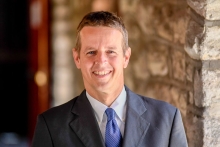
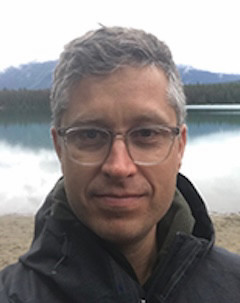
Dr. Katherine Davies is an Assistant Professor in the Department of Mathematics and Statistics at McMaster University. She holds a B.Sc. (2002) and M.Sc. (2004) in Mathematics and Statistics from McMaster, and a Ph.D. in Statistics (2008) from Western University. Prior to joining McMaster, she spent 14 years at the University of Manitoba, where she was promoted to Associate Professor. Her research focuses on statistical theory and modeling, particularly the analysis of lifetime data, censoring methodologies, and distribution theory with applications in engineering and medical sciences. She has supervised multiple graduate students and maintains international collaborations. Dr. Davies teaches undergraduate and graduate courses including Generalized Linear Models, Applied Regression Analysis, and Introduction to Probability. She is an active member of the Statistical Society of Canada and founded the 'Steering Women into Statistics' outreach initiative.
Clare Robinson is a Senior Lecturer in Ecology at the University of Manchester's School of Earth and Environmental Sciences. She holds a NERC CASE PhD from Lancaster University and a BSc (Hons) from the University of Exeter. Her research focuses on fungal communities, Arctic and Antarctic biogeochemistry, and soil microbial ecology. Key areas include peatland restoration, carbon cycling, and microbial roles in environmental processes. Robinson has extensive experience in Arctic and Antarctic fieldwork, studying fungal community dynamics and their ecological impacts. She leads the Molecular Environmental Science research group, exploring microbial contributions to ecosystem resilience. Her work intersects with global climate change, soil health, and environmental policy. Collaborations include international partnerships such as the University of Lund and the University Centre in Svalbard. She has served on review panels, including the British Embassy’s climate workshop in Moscow. Her research emphasizes practical applications, such as peatland restoration techniques and bioremediation strategies for contaminated sites. Education: NERC CASE PhD, University of Lancaster (1990) BSc (Hons), University of Exeter (1986) Her research interests span fungal ecology, soil microbiology, and environmental sustainability. Recent projects include microbial controls on carbon loss in peatlands and the role of mycorrhizal fungi in metal transfer. She actively supervises PhD students and contributes to interdisciplinary initiatives like the Energy and Digital Futures research beacons.
Dr. Joseph McMahon serves as a Postdoctoral Research Fellow at the School of the Environment within the Faculty of Science at The University of Queensland. His research is primarily focused on environmental water management, sediment processes, and ecosystem services within Australian river systems, with particular emphasis on the Great Barrier Reef catchments. His work bridges academic research and practical environmental policy applications. Dr. McMahon completed his Doctor of Philosophy in Geomorphology and Regolith and Landscape Evolution at Griffith University. His educational background provides the foundation for his current research in river systems, sediment transport, and landscape evolution processes. Dr. McMahon's research interests center on water quality management, sediment dynamics in river systems, and ecosystem service valuation. His work investigates how vegetation, sediment connectivity, and ecosystem restoration affect riverbank erosion and water quality, particularly in subtropical Australian environments. He applies advanced techniques including deep learning models for environmental monitoring and has made significant contributions to understanding water quality offsetting schemes. His research has practical implications for managing the Great Barrier Reef catchments and developing sustainable water policies. Analysis of his recent publications shows a strong focus on water quality offsetting mechanisms, particularly in the context of the Great Barrier Reef catchments. His research integrates geomorphological principles with environmental policy development, using both field studies and computational modeling approaches. A notable trend is his increasing focus on predictive modeling for future environmental scenarios, as evidenced by his 2025 review of water quality offsetting policies and his 2023 work estimating demand for water quality offsets by 2050. Dr. McMahon is available for supervision of research students, indicating his active role in academic mentoring. While specific grant information isn't detailed in the provided materials, his extensive publication record across multiple high-impact journals suggests successful research funding. His collaborative approach is evident through numerous co-authorships across different institutions. Though specific laboratory or research team affiliations aren't explicitly stated in the provided text, Dr. McMahon's work appears to be connected to broader research initiatives at The University of Queensland's School of the Environment focused on catchment management and Great Barrier Reef protection. His research contributes significantly to the university's environmental science capabilities, particularly in the areas of water quality management and sediment processes.
Dr Christiern Rose is a Senior Lecturer in the School of Economics at The University of Queensland (UQ), within the Faculty of Business, Economics and Law. He holds a PhD in Economics from the University of Bristol (2016) and completed a post-doctoral fellowship at Toulouse School of Economics. His research focuses on applied microeconometrics with emphasis on peer effects, high-dimensional econometrics, health economics, and illicit drug markets. He is affiliated with the Centre for Efficiency and Productivity Analysis. Education: PhD in Economics, University of Bristol (2016) Post-doctoral Research, Toulouse School of Economics (2016–2018) Joined UQ in 2017 Research Interests: Dr Rose investigates peer effects in social networks, health economics (including mental health, healthcare utilization, and aging populations), and the economics of illicit drugs. He develops econometric methods for high-dimensional data and network analysis, with applications to policy evaluation and social spillovers. Research Trends: His work bridges theoretical econometrics and empirical policy analysis, often using advanced statistical techniques to address causal questions. Recent studies explore housing insecurity’s mental health impacts, physician networks’ influence on innovation adoption, and the role of social peers in addiction recovery. Grants & Supervision: Leading the ARC Discovery Project Understanding macroeconomic fluctuations with unobserved networks (2022–2025) Available for PhD supervision in health economics, network econometrics, and applied microeconometrics Labs/Teams: Affiliate of the Centre for Efficiency and Productivity Analysis, collaborating on productivity measurement and efficiency analysis methods.
Ben Waterson is a Professor in Transportation at the University of Southampton within the Faculty of Engineering and Physical Sciences. He has been a member of the Transportation Research Group since 1997, specializing in traffic control, traveler behavior, and AI applications. His research focuses on improving urban traffic systems, air quality, and safety using VR and AI. Education: BSc (1st Class Honours) in Statistics, University of Reading (1996) MSc in Operational Research (Distinction), University of Southampton (1997) PhD in Data Fusion for Real-Time Traffic Monitoring (2005) Research Interests: His work spans road transport, AI-driven traffic control, traveler behavior analysis, and VR applications. Recent projects include narrow passage driving simulations and coordinated signal control algorithms. Teaching: He teaches modules such as Transport Modelling (CENV6153), Highway and Traffic Engineering (CENV3060/CENV6171), and Transport Management and Safety (CENV6168). He supervises projects on topics like self-calibrating traffic lights and virtual reality train stations. Awards: William W. Millar Prize (2017) Grants/Projects: EPSRC-funded IVP Signals project Siemens-funded Future SCOOT Algorithm AI Development Project Labs/Groups: Member of the Transportation Research Group and Southampton Marine and Maritime Institute.
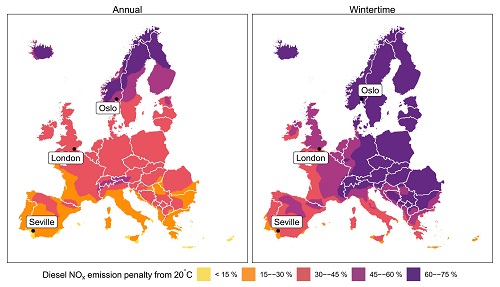
Professor David Carslaw is a leading academic in the Department of Chemistry at the University of York, specializing in urban air pollution, vehicle emissions, and receptor modeling. His research focuses on developing open-source tools (e.g., openair) and applying statistical techniques to quantify emissions and evaluate air quality interventions. Collaborations with institutions like Ricardo Energy & the Environment have advanced understanding of real-world vehicle emissions, particularly regarding NOx, ammonia, and temperature dependencies. His work has exposed critical gaps in national emission inventories and contributed to global air quality policy frameworks. Education details are not explicitly stated in the text, but his professional background indicates advanced academic training in atmospheric chemistry or environmental science. The openair project, funded by NERC, underscores his commitment to democratizing air quality data analysis through software development. Research interests include: (1) Urban air pollution dynamics, (2) Remote sensing of vehicle emissions, (3) Meteorological normalization for time series analysis, and (4) Source apportionment using statistical methods like bivariate polar plots and clustering. His team’s innovations, such as ammonia emission quantification and temperature-dependent NOx emissions, challenge conventional emission assumptions. Recent articles highlight advances in machine learning applications for air quality policy, hydrogen combustion impacts, and indoor-outdoor pollutant linkages. While no scientific awards are listed, his contributions have been widely adopted by the international air quality community. Grant activities include NERC funding for openair. Supervision of PhD students is implied through research group activities, though specific advisee names are not provided. The openair project and vehicle emission studies form core lab activities, supported by partnerships with industry and academic collaborators.
Jacqueline Curtis, PhD, is an Associate Professor in the Department of Population and Quantitative Health Sciences at Case Western Reserve University School of Medicine. She specializes in spatial epidemiology, focusing on environment-health relationships and using geospatial techniques to improve care for vulnerable populations, including neurodiverse individuals. Her work emphasizes integrating local knowledge into spatial data collection to inform clinical interventions. Education: PhD in Geography from Louisiana State University (2005). Professional affiliations include the American Public Health Association, Society of Gynecologic Oncology, and International Dyslexia Association. She teaches courses like MPH 426/PQHS 426: GIS for Health & Social Sciences. Research Interests: Spatial epidemiology, geonarratives, GIS applications in public health, and health disparities. Her contributions include developing methods to assess environmental perceptions and enhance geospatial approaches for marginalized populations. Affiliations: Member of the Case Comprehensive Cancer Center's Population and Cancer Prevention Program and faculty affiliate at the Mary Ann Swetland Center for Environmental Health. She also serves on editorial boards for Cartography and Geographic Information Science and International Journal of Environmental Research and Public Health . Grants & Labs: Focuses on projects addressing homelessness, air pollution exposure, and lung transplantation through place-based methods. Collaborates on initiatives like GeoMEDD for early disease detection.
Greg Ridgeway serves as the Rebecca W. Bushnell Professor of Criminology at the University of Pennsylvania's School of Arts and Sciences, with a dual appointment in the Department of Statistics and Data Science. He holds multiple leadership roles including Co-director of the Data Driven Discovery Initiative and Co-editor-in-chief of the Journal of Quantitative Criminology. His affiliations span the Quattrone Center for the Fair Administration of Justice, Penn Injury Science Center, Center for Causal Inference, and Population Studies Center. His educational background includes a Ph.D. in Statistics from the University of Washington (1999), where his dissertation focused on Bayesian inference for massive datasets under advisors David Madigan and Thomas Richardson. Additional degrees include an M.S. in Statistics (1997) and B.S. in Statistics (1995) from the University of Washington and California Polytechnic State University respectively. Ridgeway's research centers on statistical methods for crime analysis and justice system improvement, with major contributions in police use-of-force analysis, racial profiling detection, and justice system benchmarking. His work bridges criminology and data science through innovative applications of propensity scoring, causal inference, and predictive modeling to real-world criminal justice challenges. He has developed methods implemented by police departments in Cincinnati, Los Angeles, and New York City, as well as Federal Public Defender Organizations. His 15 most recent publications demonstrate consistent focus on police behavior analysis, sentencing disparities, and environmental crime prevention. Key trends include the development of conditional likelihood models for officer shooting analysis, benchmarking systems for judicial accountability, and rigorous evaluation of place-based interventions like vacant lot remediation. His methodological contributions span criminology, statistics, and public health with strong emphasis on practical policy applications. Fellow of the American Society of Criminology (2025) Fellow of the Academy of Experimental Criminology (2024) Fellow of the American Statistical Association (2013) ASA Outstanding Statistical Application Award (2007) RAND Gold Medal Award (2007) 8 granted US patents in medical treatment hypothesis testing and resource pre-fetching Ridgeway has secured over $20 million in research funding from entities including Arnold Ventures, National Institute of Justice, and Neubauer Family Foundation. His advisory work includes directing the Master of Science in Criminology program and mentoring students through Penn's Graduate Groups. As former Acting Director of the National Institute of Justice (2013-2014), he led an 80-person agency with a $250M budget, implementing reforms like a $75M school safety research program. Current service includes chairing the American Statistical Association's Committee on Law and Justice Statistics. His leadership extends to directing RAND's Safety and Justice Program and Center on Quality Policing, where he managed 50-person teams and $10M in annual research. Current institutional roles include Co-director of the Data Driven Discovery Initiative, which he launched to develop data science for social good programming, seed grants, and a data science minor.
Dr. Chris Bone is an **Associate Professor in Geography** at the **University of Victoria**, affiliated with the **Faculty of Social Sciences**. His research focuses on geospatial technologies, spatial simulation modeling, and human-environment interactions, particularly in relation to climate change and forest policy. He holds a PhD from Simon Fraser University and teaches advanced spatial analysis and geostatistics (GEOG 418/518). **Research Interests**: Dr. Bone’s work integrates computational methods like agent-based modeling and network modeling to study climate-driven natural disturbances (e.g., mountain pine beetle outbreaks), wildfire management, and human-wildlife interactions. He emphasizes geovisualization tools for environmental decision-making and has collaborated with Indigenous communities on biocultural stewardship projects. **Publications**: His recent work explores topics such as wildfire-beetle interactions, grizzly bear translocation success, and the role of federal air quality standards in prescribed fire practices. Over 50 peer-reviewed articles span environmental science, GIS applications, and policy analysis. **Awards**: No specific scientific awards listed in the provided texts. **Grants & Labs**: Active in interdisciplinary projects funded by organizations like the National Science Foundation (NSF CNH). Leads research on geospatial tools for managing invasive species and optimizing forest governance networks.
Dr. Shovanur Haque is an Associate Lecturer in the School of Mathematical Sciences and a Postdoctoral Research Fellow in the School of Public Health & Social Work at Queensland University of Technology (QUT). She holds a PhD in Statistics (2018) from QUT, focusing on developing the MaCSim method for evaluating record linkage accuracy. Her work spans academia and government, including roles at the Australian Bureau of Statistics and Queensland Department of Environment and Science. Currently, she leads a Centre for Data Science (CDS) project investigating spatial data aggregation effects on medical decision-making. Her research interests include Bayesian modeling, spatial data analysis, machine learning, and record linkage. Key research projects involve assessing Modifiable Areal Unit Problem (MAUP) impacts on epidemiological inference, modeling infectious disease transmission dynamics, and developing climate-driven early warning systems for public health. She contributes to interdisciplinary collaborations, combining statistical methods with health, environmental, and social sciences. Education: PhD in Statistics (QUT, 2018) Research Focus: Spatial epidemiology, Bayesian methods, record linkage, and MAUP analysis Affiliations: Centre for Data Science, Centre for Immunology and Infection Control Her recent publications (2021–2025) emphasize Bayesian structural time series modeling, spatial aggregation effects in health data, and cross-border disease surveillance networks. She actively engages in methodological advancements for public health analytics and data-driven policy decisions.
Tassos Koidis is a Lecturer in the School of Biological Sciences at Queen's University Belfast, affiliated with the Institute for Global Food Security. He is actively engaged in research, teaching, and public outreach, with a focus on food chemistry and authenticity. His work integrates advanced analytical techniques with chemometrics to ensure food safety and integrity. Research Interests: His research spans food authenticity, adulteration detection, and the application of multivariate statistical methods and spectroscopic techniques in food analysis. Key areas include olive oil quality, plant-based milk alternatives, and meat color stability. He develops cutting-edge analytical methods to understand the chemical and physical properties of foods, particularly in relation to bioactivity and structural integrity. The recent publications highlight a strong trend in food safety, with emphasis on detecting adulterants in honey, edible oils, and plant-based products using DNA barcoding, mass spectrometry, and infrared spectroscopy. His work increasingly integrates chemometrics and non-destructive testing to support sensory evaluation and quality control. Teaching Contribution Award (SOBS/FQSN course), 2019 Top Cited Article - Wiley - European Journal of Lipid Science and Technology, 19 Mar 2025 Tassos Koidis has supervised PhD students and is currently accepting new PhD candidates. He has been involved in significant research grants, including the FOODINTEGRITY and ASSET projects, and currently serves as Co-Investigator in the 'Facilitating Innovations for Resilient Livestock Farming Systems' project. His editorial roles include service on the boards of Food Chemistry and Food and Humanity . He is also active in public engagement, having contributed to BBC and safefood media initiatives on food authenticity and preservation. He is a member of professional networks and collaborates internationally, particularly in chemometrics and food safety. His participation in workshops, conferences, and advisory panels underscores his role in translating research into policy and industry practice.
Prof. Vladimir Kaishev is a Professor of Actuarial Science at the Faculty of Actuarial Science and Insurance (FASI), Bayes Business School, City, University of London. He holds a PhD in Statistics and Information Theory from Moscow Technical University and has held visiting positions at Kyoto University, the University of Melbourne, and Heriot-Watt University. His research focuses on actuarial mathematics, risk theory, reinsurance modeling, and the application of spline functions in finance and insurance. He has supervised numerous PhD students and contributed to over 30 journal articles, conference papers, and software packages such as StMoMo and KSgeneral . His work includes advancements in ruin probability modeling, copula functions, and operational risk assessment, alongside consultancy roles for institutions like Swiss Reinsurance and the Bulgarian Actuarial Society. He is an Associate Editor of Economic Quality Control and a member of professional societies including the American Mathematical Society. Education: MSc and PhD in Statistics from Moscow Technical University, followed by postdoctoral research at the University of Wisconsin-Madison and UCLA. Research Interests: Multivariate Lévy processes, ruin theory, optimal reinsurance, spline functions, and stochastic modeling. His work bridges actuarial science with financial mathematics and statistical methods. Publications: Over 40 peer-reviewed articles and book chapters, with recent focus on generalized linear models, survival analysis, and actuarial software development. His 2023 paper in Applied Mathematics and Computation introduced novel variable knot spline methods. Awards: Received the Cass Business School Certificate for Excellence in Research in 2009 and 2013. Consultancy & Grants: Projects include stochastic mortality modeling for the UK Office for National Statistics and economic scenario generator development for Aon-Benfield. His research has been supported by grants from the Leverhulme Trust and the Swiss Re. Labs/Teams: Leads the Actuarial Research Center and collaborates internationally on projects such as the StMoMo R package for stochastic mortality modeling.
Esther Ulitzsch is an Associate Professor at the University of Oslo 's Centre for Educational Measurement (CEMO) . Her research focuses on advancing psychometric models, particularly Bayesian latent variable techniques for small-sample conditions, and analyzing digital interaction data from simulated learning environments. She holds a PhD from Freie Universität Berlin and previously worked as a Research Associate at the IPN – Leibniz Institute for Science and Mathematics Education in Kiel, Germany. Education: PhD in Educational Measurement (Freie Universität Berlin) Research Associate at IPN Kiel Research Interests: IRT model development for aberrant response detection Efficient estimation in small samples Clickstream analysis for student behavior Test-taking engagement dynamics Publications: Over 20 peer-reviewed articles since 2017, including work on mixture models for careless responding, neural networks for IRT estimation, and Bayesian factor modeling. Recent contributions address response time analysis, cross-country measurement invariance, and sequential process mining in interactive tasks. Affiliations: Active in the CREATE (Research on Equality in Education) and FREMO (Frontier Research in Educational Measurement) groups at CEMO.
Prof. Dr. Steffi Pohl is a Professor of Methods and Evaluation/Quality Assurance at the Department of Methods and Evaluation/Quality Assurance, Faculty of Education and Psychology, Freie Universität Berlin. She holds editorial roles in prominent journals like Psychometrika and Journal of Educational and Behavioral Statistics . Her research focuses on psychometrics, log data analysis, missing data mechanisms, and causal inference in educational assessments. Steffi Pohl's academic journey includes a Diplom in Psychology from Freie Universität Berlin (1998–2004) and a Ph.D. in Psychometrics (2005–2010) from Friedrich-Schiller-Universität Jena. She has held various research positions, including at the National Educational Panel Study (NEPS) and the University of Hertfordshire, UK. Her work emphasizes methodological advancements in testing, missing data, and measurement invariance across populations. Her research interests span psychometric modeling, log data analysis, and addressing challenges in large-scale educational assessments. Key contributions include innovations in response time analysis, disentangling engaged/disengaged test behaviors, and improving cross-cultural comparisons in educational rankings. She has been recognized with the 2020 Early Career Award from the Psychometric Society and the 2011 Gustav A. Lienert Dissertation Prize. In addition to research, Pohl teaches courses on empirical social research methods and multivariate analysis techniques. She actively contributes to university governance as a member of the Academic Senate at Freie Universität Berlin and serves as a trusted advisor for the German National Academic Foundation.
Prof. Dr. Volker Jehle holds the Chair of Fibre, Yarn and Nonwoven Technology at Reutlingen University's TEXOVERSUM School of Textiles. He specializes in textile fibres, yarn production technology, and nonwoven materials, with a focus on sustainable processing and quality control. His research addresses innovations in material characterization, recycling technologies, and sensor-based quality assessment in textile production. Teaching areas include: Textile fibres and raw material testing Yarn production and nonwoven technology R&D in textile processing Notable research interests involve: UV hyperspectral imaging for cotton contamination detection Recycled carbon fiber processing via wet-laid technology Development of interactive materials and textile-based solutions for automotive and biomedical applications Recent work emphasizes digital technologies in textile quality control and sustainable manufacturing processes. Key projects include the InBiO initiative for bio-based automotive materials and C4 clothing concepts for circular economy applications.