Xavier Serra is a Full Professor at the Department of Engineering at Universitat Pompeu Fabra (UPF), Barcelona. He is the founder and director of the Music Technology Group (MTG), and leads the UPF-BMAT Chair on AI and Music. He also coordinates the Master in Sound and Music Computing and serves as President of the Phonos Foundation. His research focuses on audio signal processing, sound and music computing, and computational musicology, emphasizing open science and open innovation. Education: BSc in Biology, University of Barcelona (1981) Master in Music, Florida State University (1983) PhD in Computer Music, Stanford University (1989) Research Interests: Audio Signal Processing Data-Driven and Knowledge-Driven Methodologies Music Information Retrieval Cultural Music Analysis (e.g., Carnatic/Turkish/Andalusian Music) Music Education Technology Notable Projects: CompMusic (ERC Advanced Grant, 2010-2017): Multicultural computational music analysis Open datasets: Freesound, Saraga, FSD50K Technologies: Reactable, Vocaloid, Essentia API Recent Trends in Articles: Focus on AI-driven audio processing (neural fingerprints, generative models), cross-cultural music analysis, and explainable music difficulty estimation. Awards: ERC Advanced Grant (2010) for CompMusic Project. Labs/Teams: Director of MTG, Phonos Foundation, and UPF-BMAT Chair. Active in open-source projects and international collaborations.
Nicolò Cesa-Bianchi is a Professor of Computer Science at the University of Milan, where he serves as head of the Computer Science programs. He is also associated with the Department of Electronics, Information and Bioengineering (DEIB) at Politecnico di Milano. Cesa-Bianchi holds significant leadership roles including Board member, Fellow and co-director of the Milan unit of the European Laboratory for Learning and Intelligent Systems (ELLIS), and membership in the prestigious Accademia Nazionale dei Lincei. He is also involved with The European Lighthouse on Secure and Safe AI (ELSA), The European Lighthouse of AI for Sustainability (ELIAS), and The FAIR foundation. Professor Cesa-Bianchi's research focuses on the theoretical foundations of machine learning, with special emphasis on sequential decision making and online learning algorithms. His work spans multiple areas including multi-armed bandit problems, regret analysis, prediction with expert advice, and learning on graphs. He has made significant contributions to understanding the theoretical limits of learning algorithms and developing efficient methods for various learning scenarios. His research has important applications in online markets, social networks, and bioinformatics. His monographs 'Prediction, Learning, and Games' and 'Regret Analysis of Stochastic and Nonstochastic Multi-armed Bandit Problems' are considered seminal works in the field. His recent publications demonstrate continued leadership in advancing the theoretical understanding of machine learning, with 2024-2025 papers covering cooperative online learning, multitask learning, fair trade mechanisms, and refined analyses of bandit algorithms. The research shows increasing focus on practical economic applications while maintaining strong theoretical foundations. Google Research Award Xerox Foundation UAC Award Member of the Accademia Nazionale dei Lincei ELLIS Fellow Cesa-Bianchi has been deeply involved in academic service, having served as action editor for the Machine Learning Journal, IEEE Transactions on Information Theory, and the Journal of Machine Learning Research. He currently serves as associate editor for the Journal of Information and Inference and TheoretiCS. He has held leadership positions including President of the Association for Computational Learning and member of the steering committee for the EC-funded Network of Excellence PASCAL2. He was program chair of the 13th Annual Conference on Computational Learning Theory and the 13th International Conference on Algorithmic Learning Theory. He leads the Laboratory for AI and Learning Algorithms (ALGA) at the University of Milan, which focuses on theoretical and applied research in machine learning. His international collaborations are extensive, with visiting positions at UC Santa Cruz, Graz Technical University, Ecole Normale Supérieure in Paris, Google, and Microsoft Research. As an educator, he teaches advanced courses including Reinforcement Learning and Statistical Methods for Machine Learning, and has supervised numerous students through the years.
Bryon Aragam is an Associate Professor of Econometrics and Statistics and Robert H. Topel Faculty Scholar at the University of Chicago Booth School of Business. His research focuses on the intersection of causality, statistical machine learning, and probabilistic modeling, with particular emphasis on applications to artificial intelligence systems including large language models like ChatGPT and generative models like DALL-E. Dr. Aragam completed his PhD in Statistics and a Masters in Applied Mathematics at UCLA, where he was an NSF graduate research fellow. Prior to joining the University of Chicago, he was a project scientist and postdoctoral researcher in the Machine Learning Department at Carnegie Mellon University. Research Focus: Causal structure learning in probabilistic generative models Key Areas: Causal machine learning, deep generative models, latent variable models, statistical learning theory Applications: AI interpretability, ethics, and fairness in artificial intelligence systems Teaching: Business Statistics, Econometrics and Statistics Colloquium His recent publications demonstrate a strong theoretical foundation combined with practical applications, particularly in understanding and improving AI systems. His work spans causal discovery, graphical models, deep learning, and latent variable modeling, with particular attention to the theoretical properties of these methods and their applications to real-world AI challenges. The research shows a progression toward increasingly complex problems in causal representation learning and AI interpretability. Scientific Awards: Robert H. Topel Faculty Scholar NSF Graduate Research Fellow Dr. Aragam's work has been published in top statistics and machine learning venues including the Annals of Statistics, Neural Information Processing Systems (NeurIPS), the International Conference on Machine Learning (ICML), and the Journal of Machine Learning Research (JMLR). His research group publishes broadly across both statistical and machine learning communities, demonstrating the interdisciplinary nature of his work at the intersection of statistics, machine learning, and causal inference. As a data science consultant for technology and marketing firms, Dr. Aragam has applied his expertise to problems in survey design, customer retention, logistics, and ranking, bridging the gap between theoretical research and practical applications.
Leland Bybee is an Assistant Professor of Finance at the University of Chicago Booth School of Business . He leverages machine learning and natural language processing to address economic and financial questions, particularly focusing on belief measurement with applications to asset pricing and behavioral economics. Ph.D. in Financial Economics, Yale School of Management (2024) M.S. in Statistics, University of Michigan (2017) B.A. in Economics, University of Chicago (2013) His research integrates computational methods with economic theory to analyze: Textual analysis of business news for macroeconomic tracking Narrative-driven asset pricing models Memory-based belief formation using kernel methods Macroeconomic determinants of currency returns He has received multiple awards including: Dimension Fund Advisors Distinguished Paper Award BlackRock Applied Research Award HEC Top Finance Graduate Award The Brattle Group PhD Candidates Award EFA Engelbert Dockner Memorial Prize Bybee teaches Machine Learning in Finance and participates in finance seminars, contributing computational tools like regIPCA (Python) and changepointsHD (R) to the research community.
Pere-Pau Vázquez is an Assistant Professor in AI for Visual Computing at the Computer Vision Lab, TU Wien, Austria . Previously, he held academic positions at the ViRVIG Group and Facultat d'Informàtica de Barcelona (UPC) , where he taught courses in Programming, Computer Graphics, and Visualization for over 20 years. His research focuses on Information Visualization, Scientific Visualization, Medical Data Visualization, Molecular Visualization, and AI applications to Visual Computing . Current Teaching : Data Visualization, Fast Realistic Rendering, Information Visualization, Medical Images, Scientific Visualization, Virtual Reality, and 3D Medical Visualization. Former PhD Students : Elena Molina, Alexandra Cortez, Jesús Díaz, Pedro Hermosilla, Eva Monclús. His scientific awards include the Best PhD Thesis Award (UPC, 2003), Best Student Paper Award (SPIE, 2012), and Best Paper Award (International Conference on Computer Graphics Theory and Applications, 2013). Recent publications explore AI integration in biomedical visualization, molecular data analysis, and interactive techniques for volume rendering. He serves on the EuroGraphics Executive Board as Secretary and is active in steering committees for EuroVis and Visual Computing for Biology and Medicine . His work bridges Computer Graphics, Artificial Intelligence, and Human-Computer Interaction , with applications in medical and molecular data analysis.
Dae-Jin Lee is an Assistant Professor at IE University’s School of Science and Technology, specializing in statistical modeling and data science. Previously, he served as a Research Line Leader at the Basque Centre for Applied Mathematics (BCAM) and coordinated the Knowledge Transfer Unit in Data Science/AI. His academic background includes a Ph.D. in Mathematical Engineering (2010) from Universidad Carlos III de Madrid and postdoctoral research at CSIRO (Australia). His research focuses on statistical methods for complex data, including penalized splines, tensor product smooths, and applications in biomedicine, epidemiology, environmental science, and sports analytics. He has led multidisciplinary projects funded by public and industry grants, collaborating globally with experts across fields like engineering, medicine, and biology. Key research themes include predictive modeling for health outcomes (e.g., SARS-CoV-2 pneumonia severity), sports injury prevention, and AI in healthcare. His work integrates machine learning with traditional statistical techniques, addressing real-world challenges like pedestrian dynamics simulations and automated medical diagnostics. He is actively involved in scientific organizations, including the Spanish Biostatistics Society and the Statistical Modelling Society. His recent publications highlight innovations in growth curve modeling, AI ethics, and spatiotemporal data analysis, reflecting his commitment to advancing both theoretical and applied statistics.
Alejandro F. Villaverde is a Ramón y Cajal research fellow in the Department of Systems & Control Engineering at the School of Industrial Engineering, University of Vigo, Spain. He also serves as a Research fellow at CITMAga since 2022. Previously, he worked as a postdoctoral researcher at IIM-CSIC from 2016-2020. His research focuses on the modeling of dynamical systems with particular emphasis on biological applications. Villaverde earned his PhD in Systems and Control Engineering from University of Vigo between 2005 and 2009. His academic career has centered at Spanish institutions with a strong interdisciplinary approach bridging engineering, mathematics, and biology. His primary research interests include systems biology, control theory, and mathematical modeling, with specialized expertise in structural identifiability, observability analysis, and computational tools for dynamic modeling of biological systems. Villaverde's work addresses fundamental challenges in building reliable mathematical models of complex biological processes, with applications spanning immunology to microbial communities. His theoretical contributions have practical implications for improving model reliability and predictive power in biological research. Villaverde has published extensively in top journals including PLOS Computational Biology, Bioinformatics, and IEEE/ACM Transactions on Computational Biology. His recent publications (2023-2025) reveal a consistent research trajectory focused on developing theoretical frameworks for biological model analysis, creating practical software tools, and applying these methods to cutting-edge problems. His work shows particular strength in identifying and addressing fundamental limitations in modeling approaches, especially regarding parameter identifiability and model observability constraints. Among the top 2% Scientists Worldwide 2024 (Stanford University list) Recognition as one of the EEI's top valued instructors at University of Vigo's School of Industrial Engineering Villaverde leads multiple significant research projects including DYNAMO-bio (funded by Ministry of Science, Innovation and Universities), SICOMORO (focusing on symmetries in biological communities), and PREDYCTBIO. His group actively develops open-source software tools such as STRIKE-GOLDD for structural identifiability and observability analysis. The laboratory, part of the BICO research group, includes several researchers and students working on various aspects of dynamic modeling in biology, with recent additions including Mahmoud Shams Falavarjani, Adriana González Vázquez, and multiple interns working on specialized projects.
Miguel Ángel Sotelo Vázquez is a full Professor at the University of Alcalá, leading the INVETT Research Group (Intelligent Vehicles and Traffic Technologies). He holds the Department of Automatic Control and specializes in autonomous systems, particularly in path planning, sensor fusion, and human-vehicle interaction. His research integrates machine learning, robotics, and control theory to address challenges in intelligent transportation systems. He earned his Ph.D. in 2001 with a thesis on autonomous vehicle navigation in partially known environments. His work emphasizes real-world deployment, explainable AI, and safety-critical systems. Recent projects focus on lane change prediction, pedestrian behavior modeling, and cybersecurity for autonomous systems. Key contributions include neuro-symbolic frameworks for decision-making, real-time multi-physics field reconstruction, and cross-cultural studies of pedestrian interactions. He collaborates internationally on urban mobility resilience and hydrogen refueling infrastructure. Research Highlights : Development of knowledge graph-based prediction architectures Experimental validation of human-vehicle interaction in VR environments Creation of the SCOUT trajectory prediction framework
Nicholas Polson is the Robert Law, Jr. Professor of Econometrics and Statistics at the University of Chicago Booth School of Business. His academic career centers on Bayesian statistics with applications in financial econometrics and machine learning. Polson's research interests span Bayesian statistics, financial econometrics, Markov chain Monte Carlo methods, particle learning, and deep learning applications in finance. His work has significantly contributed to understanding stochastic volatility models and developing new algorithms for Bayesian inference. He has pioneered applications of deep learning in asset pricing, portfolio management, and financial prediction, demonstrating how neural networks can detect complex patterns invisible to traditional financial models. His recent publication trends reveal a strong focus on integrating deep learning with financial econometrics, particularly in developing characteristics-sorted factor models, portfolio optimization techniques, and explaining the performance differences between active and passive investment strategies. His work consistently bridges theoretical statistical methods with practical financial applications, with a particular emphasis on nonlinear modeling and high-dimensional data analysis. His article 'Bayesian Analysis of Stochastic Volatility Models' was named one of the most influential articles in the 20th anniversary issue of the Journal of Business and Economic Statistics Polson teaches courses including 'Bayes, AI and Deep Learning' and 'Business Statistics' at Chicago Booth, with scheduled offerings for both 2024-2025 and 2025-2026 academic years. His work has been featured in Chicago Booth Review, where he has contributed insights on statistical analysis in chess, machine learning applications in money management, and the odds of cheating in competitive settings. His research demonstrates the powerful intersection of Bayesian statistics, financial modeling, and modern machine learning techniques.
Gaël Georges Marcel Le Mens is a Full Professor at Pompeu Fabra University (UPF), holding a position in the Department of Economics and Business. He is also affiliated with the Barcelona School of Economics and serves as academic co-director of the Executive Master in Business Administration (EMBA) at the UPF Barcelona School of Management. His academic journey includes teaching roles at INSEAD, London Business School, ESADE, and the University of Lugano, alongside positions at the universities of Southern Denmark and New York. Education: Doctor in Business Administration, Stanford Graduate School of Business MSc in Management Science and Engineering, Stanford University Diploma in Engineering, Supélec Bachelor of Economics, University of Paris XI His research focuses on decision-making processes, information sampling, machine learning applications in semantics, and organizational behavior. Key themes include cognitive heuristics, social media impact on political expression, and the interplay between popularity and evaluation dynamics. He has explored how feedback mechanisms shape political communication and developed methodologies to compare human and machine conceptual judgments using models like BERT. His publications span journals such as PNAS , Psychological Review , and Industrial and Corporate Change , reflecting his interdisciplinary approach. Though no explicit awards are noted, his prolific output highlights sustained academic impact. He has advised multiple institutions on curriculum design and executive education, leveraging his cross-university teaching experience. Le Mens is affiliated with the Barcelona School of Management’s research teams and contributes to initiatives bridging artificial intelligence and social sciences. His work often addresses practical challenges in organizational decision-making and digital communication strategies.
Luo Mai is an Assistant Professor at the University of Edinburgh's School of Informatics , with an upcoming promotion to Associate Professor (UK Reader) in August 2025. He leads the Large-Scale Machine Learning Systems Group and co-leads the UK EPSRC Centre for Doctoral Training in Machine Learning Systems and an ARIA Project on Scaling AI Compute by 1000X . PhD in Computer Science (Imperial College London, 2018) MRes in Advanced Computing (Imperial College London, 2012) His research focuses on the intersection of computer systems , machine learning , and data management . Key contributions include award-winning systems like WaferLLM (wafer-scale LLM inference), Tenplex (elastic ML), and ServerlessLLM (serverless LLM serving), published at top venues (OSDI, SOSP, ICML, NeurIPS, JMLR). Recent publications demonstrate trends in GPU-based distributed systems , LLM optimization , and adaptive machine learning . His team has developed groundbreaking open-source projects including TensorLayer , TorchOpt , and ServerlessLLM . Awarded Microsoft Research StarTrack Scholar (2024) , secured ARIA grant (2024) with Imperial College & Cambridge University, and received Google Fellowship during PhD (2012-2016). As an educator, he designed Edinburgh's popular Machine Learning Systems course (150+ students). His group supervises multiple PhD students including Yao Fu (recognized as 2024 Rising Star in ML & Systems) and Leyang Xue .
David Rossell is an Associate Professor at the Department of Economics, Universitat Pompeu Fabra (UPF) in Barcelona, Spain. He is affiliated with the Statistics@UPF research group and directs the Master in Data Science at the Barcelona School of Economics (BSE). Previously, he held positions at IRB Barcelona as head of the Biostatistics Unit and at the University of Warwick's Statistics Department. He obtained his PhD in Statistics from Rice University, Houston (USA), and conducted postdoctoral research at M.D. Anderson Cancer Center under Professors Valen Johnson and Veera Baladandayuthapani. Research Interests: Rossell specializes in high-dimensional statistical inference, Bayesian methods, computational statistics, and applications in biomedicine and social sciences. His work emphasizes methodology for complex data integration, variable selection, graphical models, and experimental design. Key areas include non-local priors, scalable Bayesian computation, and the development of R packages for statistical analysis (e.g., casper , chroGPS , gaga ). Publications: His recent work focuses on advancing Bayesian variable selection, graphical models with external data, and causal inference. Themes include leveraging external datasets for improved model accuracy, robustness to model misspecification, and applications in healthcare and complex mixture analysis. His contributions span methodological innovation and computational tools for high-dimensional problems. Funding & Grants: Rossell has secured funding through Spanish and European grants, including Juan de la Cierva Fellowships, AGAUR fellowships, and Marie Slodowska-Curie Actions. He supports PhD and postdoctoral researchers through programs like La Caixa InPhD and Beca Beautriu de Pinós. Labs & Teams: He leads the BSE Data Science Center and contributes to interdisciplinary collaborations at UPF and IRB Barcelona, bridging statistical theory and practical applications in genomics, epigenomics, and health data analysis.
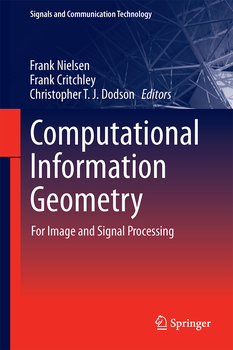
Frank NIELSEN is a Professor at École Polytechnique with expertise in information geometry, data science, and machine learning. He holds a PhD (1996) and HDR (2006) in computer science and has established himself as a leading researcher in geometric approaches to information science. His educational background includes a PhD in computer science (1996) followed by a Habilitation à Diriger des Recherches (HDR) in 2006, the highest academic qualification in France that qualifies one to supervise doctoral candidates. Dr. NIELSEN's research focuses on the Geometric Science of Information , where he develops theoretical frameworks for understanding data through geometric and information-theoretic lenses. His work bridges Computational information geometry Statistical manifold theory Bregman divergences and their applications Machine learning with geometric foundations High-dimensional data analysis He aims to address the challenge of inappropriate data representation in current Data Science by building a theory of Computational Information Geometry to enable Intrinsic Data Science with principled distances. His extensive publication record shows a clear trend toward developing geometric frameworks for understanding statistical divergences, with recent work focusing on Bregman geometry, Fisher-Rao metrics, and their applications in machine learning. His research spans theoretical developments in information geometry to practical implementations like the pyBregMan Python library, demonstrating both theoretical depth and practical relevance. Dr. NIELSEN has made significant contributions through his teaching and publications. He has taught courses at École Polytechnique including INF442, INF517, and INF591. His authored textbooks include Introduction to HPC with MPI for Data Science (2016), A Concise and Practical Introduction to Programming Algorithms in Java (2009), and Visual Computing: Geometry, Graphics, and Vision (2005). He has also edited influential volumes such as Computational Information Geometry for Image and Signal Processing (2016) and Geometric Theory of Information (2014). He actively organizes and participates in academic events, serving on program committees for major conferences including GSI (Geometric Science of Information), CVPR, and ICCV. His work has established him as a key figure in the growing field of geometric approaches to information science.
Christian B. Hansen is the Wallace W. Booth Professor of Econometrics and Statistics at the University of Chicago Booth School of Business. He serves as the academic coordinator for Booth's Sokolov Executive MBA Program and is co-editor of the Journal of Political Economy - Microeconomics. Hansen joined the Chicago Booth faculty in 2004 after completing his PhD at MIT. Education: PhD in Economics, Massachusetts Institute of Technology (2004) Bachelor's degree in Economics, Brigham Young University (2000) Professor Hansen specializes in applied and theoretical econometrics, with research focusing on high-dimensional statistical methods in economic applications, panel data models, clustered standard errors, quantile regression, and weak instruments. His most recent work explores the application of machine learning and artificial intelligence techniques to estimate causal and policy effects. Hansen teaches courses including Applied Econometrics, Machine Learning, and Statistics at Chicago Booth. Scientific Awards and Honors: Neubauer Family Faculty Fellow at Booth NSF research grant recipient National Science Foundation graduate research fellow during PhD studies Hansen has published in leading journals including the American Economic Review, Annals of Statistics, Econometrica, Journal of Business and Economic Statistics, Journal of Econometrics, Review of Economics and Statistics, and Review of Economic Studies. He is currently working on a book titled "Applied Causal Inference Powered by ML and AI" with Victor Chernozhukov, Nathan Kallus, Martin Spindler, and Vasilis Syrgkanis.
Mariano Cabezas is a researcher in medical imaging and computer vision, currently affiliated with Macquarie University and as an affiliate at the University of Sydney . His work focuses on automating brain MRI analysis for pathologies like multiple sclerosis, Alzheimer's disease, and tumors, with additional contributions to UAV image analysis. PhD in Computer Science (2013), University of Girona MSc in Automation, Computation, and Systems (2010), University of Girona BSc in Computer Science (2009), University of Girona Research Interests : Specializes in magnetic resonance imaging , lesion detection , deep learning , and image processing , with applications in multiple sclerosis , hearing loss , and UAV-derived ecological data . His recent work includes federated learning frameworks for cross-site MS lesion segmentation and pseudo-labeling techniques for longitudinal brain volume estimation. Publication Trends : Over the past five years, his research has emphasized federated learning (4 articles), lesion segmentation (9 articles), and UAV image analysis (3 articles), with a strong focus on clinical validation and cross-institutional collaboration. Labs & Collaborations : Contributed to the NIC-VICOROB group at the University of Girona and maintains affiliations with the Research Institute of the Hospital Vall d'Hebron (VHIR) in Barcelona and Macquarie University in Sydney. Actively develops open-source tools hosted on GitHub.