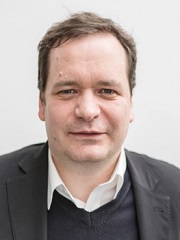
Prof. Dr. Martin Spindler is a Professor for Statistics at the Department of Statistics with Application in Business Administration, University of Hamburg Business School. His research bridges Econometrics, Statistics, and Machine Learning, focusing on high-dimensional methods, causal inference, and applications in finance, insurance, and health economics. Current position since 2016 Visiting Professor at University Mannheim (2016), Boston College (2015), and MIT (2015, 2013-2014) Senior Researcher at Max Planck Society (2012-2016) Education: PhD in Economics, University of Munich (2012) Master in Mathematics and Economics, University of Munich (2008) and Regensburg (2003) B.A. in Mathematics, University of Regensburg (2005) His methodological work includes L2Boosting for treatment effect estimation, double machine learning frameworks, and nonparametric approaches for asymmetric information. Applications span from fraud detection in claims management to pandemic shielding strategies and financial forecasting. Research Trends: Recent publications emphasize high-dimensional statistical methods, causal machine learning, and interdisciplinary applications. Key tools include double machine learning, attention networks, and transformation models. Collaborations: Active partnerships with institutions like MIT, Boston College, and Max Planck Society, alongside contributions to open-source software (e.g., DoubleML, hdm package).
Professor Rafal Bogacz is a leading academic at the University of Oxford, affiliated with St Edmund Hall and the MRC Brain Network Dynamics Unit . He teaches computational neuroscience and statistics at both undergraduate and postgraduate levels, including the MSc in Neuroscience and BSc in Biomedical Science programs. MSc: Wroclaw University of Technology PhD: University of Bristol Postdoctoral Researcher: Princeton University His research focuses on computational neuroscience , particularly modeling brain networks involved in action selection , decision making , and Parkinson's disease pathophysiology. Key themes include: Developing predictive coding models of cortical computations Understanding basal ganglia neural circuits in healthy and diseased states Designing closed-loop deep brain stimulation paradigms Recent publications highlight work in neural plasticity , dopamine signaling , and computational psychiatry , with a notable Wellcome Discovery Award supporting research on learning in neurons . The Bogacz Group maintains strong collaborations with experimental neuroscientists and shares open datasets through the MRC BNDU Data Sharing Platform . Wellcome Discovery Award (2025): For learning in neurons Europe PMC Open Access (multiple): For numerous PLoS, Nat Neurosci, and J Neural Eng publications As a computational neuroscientist, Professor Bogacz supervises D.Phil. students and leads research programs that bridge theoretical neuroscience with clinical applications . The group actively participates in MRC BNDU training initiatives and public engagement activities like Schools Open Day demonstrations.
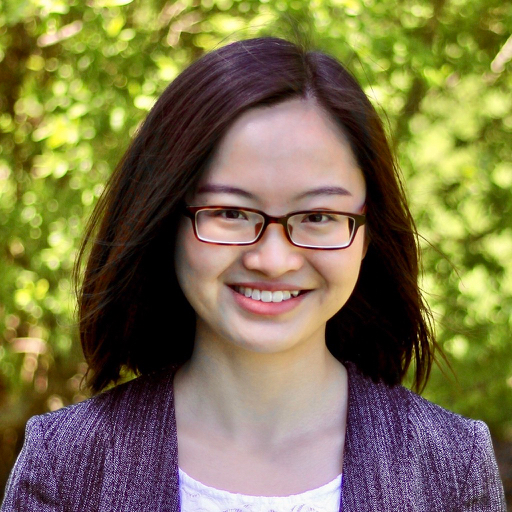
Pixu Shi is an Assistant Professor in the Department of Biostatistics and Bioinformatics at Duke University's School of Medicine. Previously, they served as a Visiting Assistant Professor in the Department of Statistics at the University of Wisconsin-Madison (2018-2020) and as a Postdoctoral Researcher in the Department of Biostatistics at the University of Wisconsin-Madison (2016-2018). Dr. Shi earned their PhD in Biostatistics from the University of Pennsylvania in 2016 under advisor Hongzhe Li. They also hold an MS in Biostatistics from the University of Pennsylvania (2015), an MS in Statistics from Rutgers University (2012), and a BS in Statistics from Peking University (2010). Dr. Shi's research focuses on developing statistical methods for Microbiome Research, Longitudinal/Temporal Omic Data analysis, Integration of Omic Data, Spatial Omics, and High-dimensional Statistical Inference. Their work bridges statistical theory with practical applications in biomedical research, particularly in microbiome studies where they've made significant contributions with the TEMPTED (TEMPoral TEnsor Decomposition) method. The article trends show a strong focus on microbiome analysis, statistical methodology development, and applications in obesity, infectious disease, and cancer research. Their most recent work (2024-2025) demonstrates expertise in tensor decomposition methods, longitudinal data analysis, and integrating microbiome data with clinical outcomes across diverse areas including adolescent obesity, viral infections, and cancer metastases. Dr. Shi has secured multiple substantial research grants from major institutions including the National Institutes of Health (NIMH, NIAID, NCI, NIDDK, NIA), totaling over a decade of continuous funding for projects related to microbiome research, HIV/AIDS, cancer biomarkers, and metabolic studies. They actively contribute to education through teaching courses such as BIOSTAT 905: Linear Models and Inference at Duke University and previously taught statistics courses at the University of Wisconsin-Madison. Dr. Shi has also organized specialized workshop series including Quantitative Methods for HIV/AIDS, Microbiome, Immunology, and Cancer Bioinformatics.
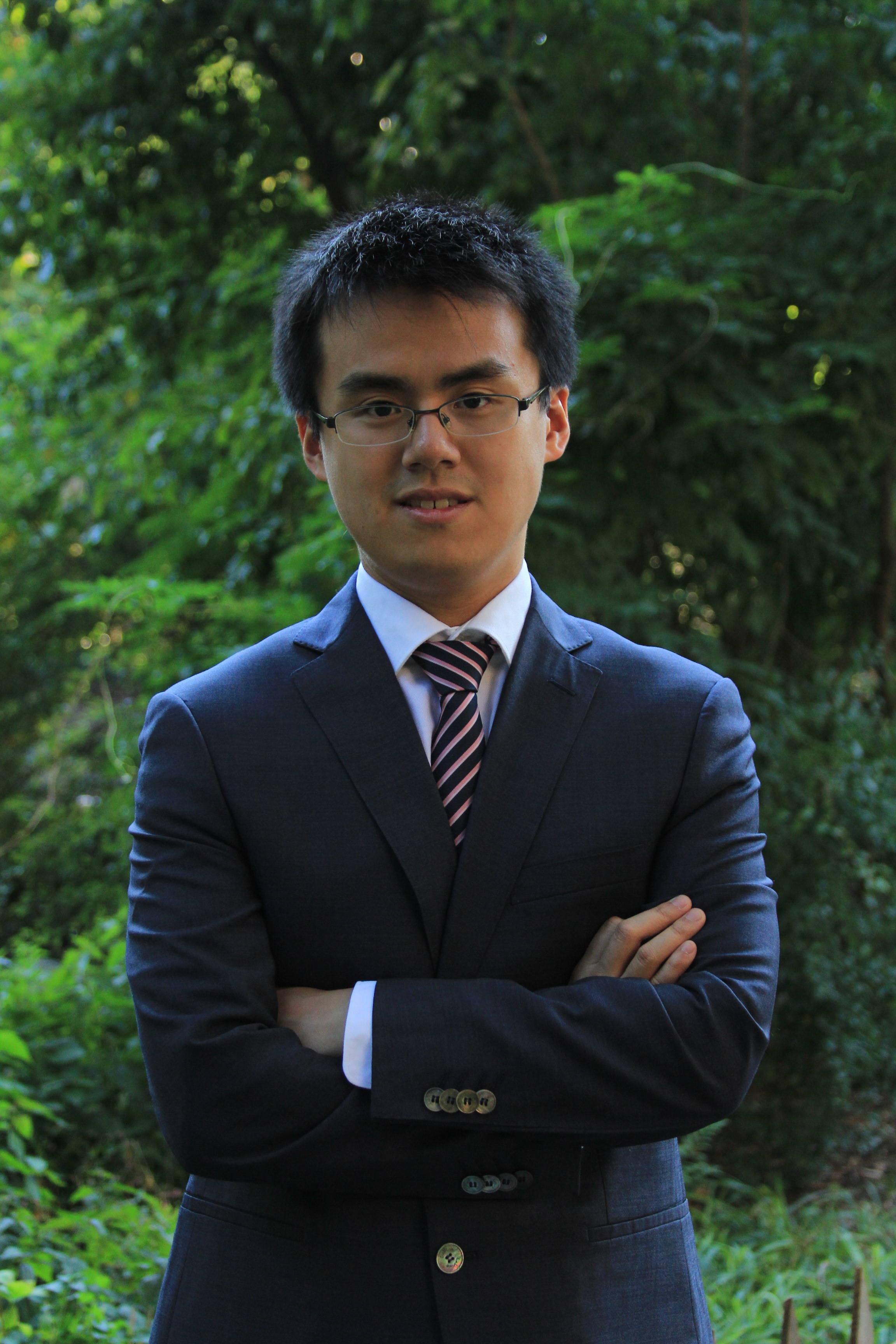
Anru Zhang is the tenured Eugene Anson Stead, Jr. M.D. Associate Professor with joint appointments in Biostatistics & Bioinformatics, Computer Science, Electrical and Computer Engineering, and Statistical Science at Duke University. He holds a Ph.D. from the University of Pennsylvania (2015, advised by T. Tony Cai) and a B.S. in Mathematics from Peking University (2010). Current roles: Associate Professor at Duke (2024–present), previously Assistant Professor at UW-Madison (2018–2021) Research focus: Tensor learning, high-dimensional statistics, EHR analysis, and healthcare applications Mentorship: Supervises active research team including postdocs (Jianbin Tan, Qiuyi Wu) and PhD students (Runshi Tang, Yinrui Sun) Research Trends : His recent publications emphasize tensor methods in biomedical data (EHR, microbiome, Alzheimer’s), Riemannian optimization for high-dimensional problems, and hybrid statistical-computational approaches. Key themes include healthcare AI, EHR analysis, and non-convex optimization. Scientific Awards : COPSS Emerging Leader Award (2024) IMS Tweedie New Researcher Award (2022) ASA Gottfried E. Noether Junior Award (2021) NSF CAREER Award (2020) AMIA Data Science Outstanding Paper Award (2023) Advising & Grants : Mentored 16+ students/postdocs, including Yuetian Luo (IMS Lawrence D. Brown Award) and Yuchen Zhou (IMS Hannan Travel Award). Current grants include NIH-funded projects on sepsis detection, mental health AI, precision genetic testing, and telehealth interventions, plus NSF CAREER funding for statistical inference in high-dimensional structures. Labs & Teams : Leads a research group at Duke focusing on tensor learning, statistical theory, and healthcare AI applications. Collaborates with Duke’s AI Health initiative and serves as Associate Editor for leading journals like Annals of Statistics and JASA.
Cynthia D. Rudin is the Gilbert, Louis, and Edward Lehrman Distinguished Professor of Computer Science at Duke University, with joint appointments in the Departments of Electrical and Computer Engineering, Statistical Science, Mathematics, and Biostatistics & Bioinformatics. She directs the Interpretable Machine Learning Lab and has held previous positions at MIT, Columbia, and NYU. Her educational background includes: Undergraduate degree from the University at Buffalo PhD from Princeton University (2004) Research Interests: Dr. Rudin's research focuses on interpretable machine learning and its applications across multiple domains. Her work emphasizes creating machine learning models whose reasoning processes people can understand, which includes algorithms for extremely sparse models, interpretable neural networks, interpretable matching methods for causal inference, and dimension reduction for data visualization. She applies these techniques to critical societal problems in healthcare, criminal justice, materials science, and other domains. Her lab has developed practical code for sparse models such as decision lists, decision trees, and additive models that provably optimize accuracy and sparsity. Dr. Rudin's recent publications (2024-2025) demonstrate a strong focus on interpretable AI applications across diverse fields including healthcare (mortality risk scores, breast cancer prediction), materials science (metamaterials design), and environmental justice (location-based health analysis). Her work consistently emphasizes practical implementations with real-world impact, particularly in high-stakes decision-making domains where model transparency is critical. Scientific Awards: Squirrel AI Award for Artificial Intelligence for the Benefit of Humanity (2022) - often described as the "Nobel Prize of AI" INFORMS Society on Data Mining Prize (2024) Guggenheim Fellowship (2022) Three-time winner of the INFORMS Innovative Applications in Analytics Award (2013, 2016, 2019) Winner of the 2023 John M. Chambers Statistical Software Award for PaCMAP Winner of the 2024 Award for Innovation in Statistical Programming and Analytics Dr. Rudin has advised numerous PhD students and postdocs who have co-authored significant publications with her. Her lab has received substantial funding for projects applying interpretable machine learning to healthcare (seizure prediction in ICU patients), criminal justice (crime series analysis), and energy infrastructure (underground electrical distribution networks). Her work on the Series Finder algorithm has been adapted by the NYPD and has been running live in NYC since 2016. She directs the Interpretable Machine Learning Lab at Duke, which includes the Almost-Matching-Exactly Lab focused on interpretable causal inference. Her team develops practical code implementations for all their research, emphasizing usability and real-world application in critical domains.
Saikat Dutta is an Assistant Professor in the Department of Computer Science at Cornell University. He is affiliated with the Software Engineering Group and focuses on the intersection of Software Engineering and Machine Learning . His work aims to enhance the reliability of ML-based systems while applying ML techniques to solve software engineering challenges. PhD in Computer Science from University of Illinois Urbana-Champaign (Summer 2023) Postdoctoral Researcher at University of Pennsylvania Bachelor's in Computer Science and Engineering from Jadavpur University Research Interests: Dr. Dutta's research spans several key areas: Automated test generation and debugging for ML/DL libraries Using AI/ML for automated software engineering tasks Improving performance of regression tests in ML libraries Static and dynamic analysis for probabilistic programming Article Trends: His recent publications emphasize: Automated testing of ML systems Security vulnerability detection using LLMs Probabilistic program analysis Neurosymbolic learning frameworks Flaky test management in stochastic environments Stochastic regression test optimization Scientific Awards: Meta AI LLM Evaluation Research Grant (2025) Mavis Future Faculty Fellowship (2022-23) Facebook PhD Fellowship (2020-22) 3M Foundation Fellowship (2019-2020) Advising & Grants: Dr. Dutta actively recruits PhD students and postdocs. He leads research projects supported by grants from Meta AI and participates in program committees for top conferences like ICSE and ISSTA. His lab focuses on neurosymbolic systems and ML-based software verification.
Dr Yvo Pokern is an Associate Professor in Statistics at University College London since 2018. His research focuses on computational statistics and machine learning, with expertise in diffusion processes and Bayesian methodology. He earned his PhD in mathematics under Andrew Stuart, a Masters at Paris XI with a dissertation at the Max-Planck-Institute in Leipzig, and was a postdoctoral researcher at Warwick University with Gareth Roberts and Wilfrid Kendall. His primary research interests include statistical inference for diffusion processes (particularly hypoelliptic diffusions and diffusions on manifolds), Bayesian methods such as Markov chain Monte Carlo, and statistical applications in spectroscopy (ENDOR). His work combines theoretical rigor with practical applications in diverse scientific domains. Analysis of his recent publications reveals a consistent theme of developing and applying advanced statistical techniques to complex real-world problems, including traffic flow, fingerprint analysis, and magnetic resonance spectroscopy. Dr Pokern has supervised numerous PhD students, several of whom have gone on to academic careers. Notable former students include Mai Ngoc Bui (now lecturer at the British University Vietnam) and Tjun Yee Hoh (now lecturer at UCL School of Management).
Valentijn M.T. de Jong is an Assistant Professor at Utrecht University, specializing in methodological advancements in biostatistics and epidemiology. His research focuses on causal inference, missing data analysis, and meta-analytical techniques in medical studies. Research Trends: Recent publications highlight his expertise in statistical methods for handling missing data (e.g., Heckman selection models), causal inference in individual-participant data meta-analyses, and enhancing prediction model discrimination in healthcare research. His work spans disciplines like epidemiology, biostatistics, and health data science.
David Steurer is an Associate Professor in the Department of Computer Science at ETH Zurich, where he leads the Institute for Theoretical Computer Science. His research bridges theoretical computer science, mathematics, and practical applications in machine learning and statistics. Steurer has made significant contributions to the understanding of sum-of-squares methods, semidefinite programming, and high-dimensional estimation problems. Steurer earned his B.Sc. & M.Sc. in Computer Science from Saarland University in 2006, followed by a Ph.D. in Computer Science from Princeton University in 2010 under the supervision of Sanjeev Arora. His doctoral dissertation, "On the Complexity of Unique Games and Graph Expansion," received an Honorable Mention for the ACM Doctoral Dissertation Award in 2011. Steurer's research focuses on algorithm design through mathematical programming relaxations, particularly semidefinite programming and the sum-of-squares method. His work addresses computational complexity of high-dimensional estimation problems including tensor decomposition, clustering, Gaussian mixture models, and stochastic block models. He also investigates algorithmic aspects of robustness and differential privacy, especially for estimation tasks. His theoretical contributions have practical implications for machine learning and data analysis in the presence of noise and adversarial conditions. Analysis of Steurer's recent publications reveals a consistent trajectory in advancing the sum-of-squares framework for high-dimensional estimation and robust statistics. His work demonstrates how sophisticated mathematical programming techniques can provide certifiable guarantees for challenging problems in machine learning. The research spans theoretical foundations while maintaining relevance to practical applications, particularly in scenarios involving corrupted or noisy data. A notable trend is the extension of sum-of-squares methods to handle increasingly complex statistical models while providing rigorous performance guarantees. ERC Consolidator Grant (2019) Michael and Sheila Held prize (2018, with Raghavendra) Invited speaker at International Congress of Mathematicians (2018) STOC Best Paper Award (2015) Alfred P. Sloan Research Fellowship (2014) NSF CAREER Award (2014) Microsoft Research Faculty Fellowship (2014) FOCS Best Paper Award (2010) Steurer has advised numerous PhD students and postdocs who have gone on to prominent positions, including Sam Hopkins (now faculty at MIT), Jonathan Shi, and Aaron Potechin. His research is supported by multiple prestigious grants, including an ERC Consolidator Grant, an NSF CAREER Award, and a Microsoft Research Faculty Fellowship. He has served on numerous program committees for top theoretical computer science conferences and has been recognized for his service to the community through roles such as internal member of the Scientific Advisory Committee of the Institute for Theoretical Studies at ETH Zurich. As head of the Institute for Theoretical Computer Science at ETH Zurich, Steurer leads a research group focused on advancing the theoretical foundations of computer science with particular emphasis on mathematical optimization methods. His team explores the boundaries of what can be efficiently computed in high-dimensional settings, with applications spanning machine learning, statistics, and data science. The group maintains strong connections with both theoretical and applied researchers across ETH and the broader academic community.
Ruohui Chen, PhD, is an Assistant Professor in the Department of Preventive Medicine (Biostatistics and Informatics) at Northwestern University's Feinberg School of Medicine, where he develops advanced biostatistical methodologies and leads collaborative research in oncology and chronic disease. His educational background includes: PhD from University of California San Diego (2023) Dr. Chen specializes in large-scale healthcare data analysis, functional/longitudinal data methods, predictive modeling, and causal inference. His collaborative work addresses cancer treatment disparities, Alzheimer's disease mechanisms, kidney disease progression, and activity pattern impacts on health outcomes through rigorous statistical frameworks. His 2025 publications demonstrate cross-disciplinary applications: analyzing socioeconomic factors in bone cancer prognosis, testing physical activity interventions for cardiovascular health in postmenopausal women, evaluating novel lymphoma immunotherapies, and optimizing aspirin dosing for colorectal cancer prevention. These studies consistently bridge methodological innovation with clinical oncology and public health challenges. No major scientific awards are documented in the current profile. Professional activities include editorial board service for Taylor & Francis (2024-present) and American Statistical Association membership (2016-present), with prior leadership as UC San Diego chapter president (2020-2023). Research grant details and student mentorship information are not provided. Dr. Chen operates within collaborative oncology research networks at Feinberg, though specific laboratory structures are not detailed in available materials.
Nikolaus Hautsch is a full Professor at the Faculty of Economics, Institute of Statistics and Operations Research. His work focuses on econometrics, finance, and high-frequency data analysis. Research Interests : Market microstructure, volatility modeling, transaction costs, systemic risk, and machine learning applications in finance. Publication Trends (2025–2018): 2025: High-dimensional portfolio optimization, dynamic systemic risk 2024: Blockchain asset arbitrage, DeFi, polarization metrics, jump detection 2023–2022: Microstructural noise, volatility forecasting, neural networks Scientific Awards : Fellow of the Society for Financial Econometrics (2014) Projects : Artificial Intelligence in Rowing (2022–2025) Vienna Graduate School of Finance (2018–2022) Risk management of CCPs
Anton Rozhkov is an Industry Assistant Professor and Director of the M.S. in Applied Urban Science and Informatics Program at the Center for Urban Science and Progress (CUSP) at New York University (NYU) Tandon School of Engineering. His work focuses on applying geospatial tools, modeling techniques, and data science to address complex challenges in urban environments, with particular emphasis on infrastructure planning and city design. Dr. Rozhkov earned his Ph.D. in Urban Planning and Policy from the University of Illinois Chicago, where his research centered on decentralized and renewable energy systems in urban contexts through a complex systems approach. Prior to his doctoral studies, he received an M.S./B.S. in Engineering in Land Cadaster from the State University of Land Use Planning in Moscow, Russia, and worked as a senior specialist in the Russian power grid sector with "Rosseti" Group of Companies. His research interests span the application of complex systems, data science, and spatial analytics to solve urban challenges, particularly focusing on how data-driven policies and new technologies can transform infrastructure planning and city design. Dr. Rozhkov employs methods including causal loop diagrams, system dynamics, and agent-based modeling to understand how decentralized energy systems interact with existing power grids and contribute to sustainable urban development. He has published extensively on urban transportation, energy systems, and census data analysis, with a notable focus on Chicago's urban landscape and Illinois state initiatives. Dr. Rozhkov has been actively involved in several significant research projects including an empirical investigation into affordable transit-oriented development in California sponsored by the California State University Transportation Consortium, the Sustainable Urban-Regional Modeling Network project funded by the Illinois Innovation Network, and the Census 2020 Map-The-Count project with the Illinois Department of Human Services which developed predictive models for census response rates and a GIS platform for reporting outreach activities. Ph.D. in Urban Planning and Policy, University of Illinois Chicago M.S./B.S. in Engineering in Land Cadaster, State University of Land Use Planning (Moscow, Russia) His teaching portfolio includes courses on geographic information systems (GIS), advanced spatial analysis, decision modeling, and machine learning for cities. Dr. Rozhkov emphasizes not just understanding urban trends but exploring the "why" behind these trends to develop sustainable solutions. His recent publications (2020-2025) demonstrate a consistent research trajectory examining the complex interrelationships between urban infrastructure systems, particularly focusing on energy, transportation, and spatial patterns through sophisticated analytical methods. Outside of his academic work, Dr. Rozhkov is passionate about urban and landscape photography, traveling, running, snowboarding, and playing guitar. He was born and raised in Balashikha, a city in the Moscow suburbs in Russia, and maintains a gallery of his photographic work from various global locations.
Roman Krems is a Professor and Distinguished University Scholar at the University of British Columbia (UBC) in the Department of Chemistry, with affiliations to the Stewart Blusson Quantum Matter Institute. His research focuses on the intersection of quantum physics, machine learning, and chemistry, particularly in quantum materials and quantum technologies such as quantum computing and sensing. Key Roles: Professor at UBC (2013–present), Distinguished University Scholar (2017–present) Education: Ph.D. from Göteborg University (2002), Postdoctoral Fellow at Harvard-MIT Center for Ultracold Atoms (2003–05) Research Interests include: Quantum machine learning (QML) for solving complex physics problems Quantum scattering theory in electromagnetic fields Applications of quantum computing to chemistry Developing machine learning algorithms for quantum dynamics Recent publications highlight advancements in extrapolating quantum observables, Gaussian process models for collision dynamics, and quantum walks in disordered systems. His work bridges theoretical physics, computational methods, and experimental applications in cold molecule research. Scientific Awards include the UBC Killam Teaching Prize (2017), election as Fellow of the American Physical Society (2015), and the Keith Laidler Award (2013). He has held editorial board positions for journals such as Machine Learning: Science & Technology and New Journal of Physics . Research Group members include graduate students and postdocs working on quantum technologies, machine learning, and molecular scattering. He also contributes to outreach through invited talks and seminars at institutions like MIT and Lawrence Berkeley National Laboratory.
Dr. Hajk-Georg Drost is a Senior Lecturer and Principal Investigator in the Division of Computational Biology at the University of Dundee's School of Life Sciences. He leads the Digital Biology Group, focusing on integrating machine learning and high-performance computing with biological research to advance healthcare innovation. Previously, he established a Computational Biology group at the Max Planck Institute for Biology Tübingen (2019-2024) and conducted postdoctoral research at the University of Cambridge's Sainsbury Laboratory. His research explores: Evolutionary transcriptomics and phylotranscriptomic patterns across species Machine learning applications in genomics and proteomics Development of bioinformatics tools (DIAMOND, myTAI) for tree-of-life scale analyses Gene regulatory networks and transposable element dynamics His publications demonstrate a consistent focus on evolutionary constraints in development, with recent work expanding into single-cell resolution analyses of developmental diseases. Awards include: Royal Society Wolfson Fellowship (2024) Fellow, Cambridge Philosophical Society Postdoctoral Affiliate, Trinity College Cambridge He currently supervises PhD students including Stefan Manolache and leads projects funded by the Royal Society and others, focusing on protein alignment infrastructure and developmental disease research. His lab develops open-source software for genomic analyses and maintains active collaborations across Europe.
Pierluigi Salvo Rossi is a Professor at the Department of Electronic Systems , Norwegian University of Science and Technology ( NTNU ), with additional roles as Deputy Head of Department (since 2021) and Deputy Manager at the Center for Green Shift in the Built Environment (since 2022). He also serves as a part-time Research Scientist at SINTEF Energy's Gas Technology department. Education: Ph.D. in Computer Engineering, University of Naples “Federico II”, Italy (2005) Dr.Eng. (cum laude) in Telecommunications Engineering, University of Naples “Federico II”, Italy (2002) Research Interests span Wireless Communications , Digital Twins , Machine Learning , and Statistical Signal Processing , focusing on applications like Industrial IoT , Fault Detection , and Energy Systems . His recent Publications highlight trends in Federated Learning , Graph Signal Processing , and Multi-Sensor Anomaly Detection across domains from Natural Gas Pipelines to Subsea Leakages . Scientific Awards include: Exemplary Senior Editor, IEEE Communications Letters (2018) Department Ambassador, NTNU (2016) IEEE Senior Member (since 2011) Professional Roles encompass editorial leadership (e.g., IEEE Sensors Journal) and conference organization (e.g., General Chair for IEEE Sensor Array and Multichannel Signal Processing Workshop, 2022). He leads major funded research projects like PREFERENCE (RCN, 2023-2027) and AUTOSHIP (RCN, 2020-2028).