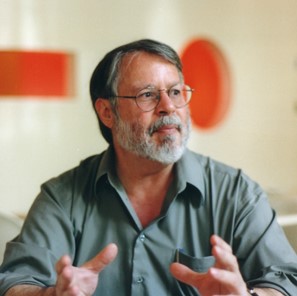
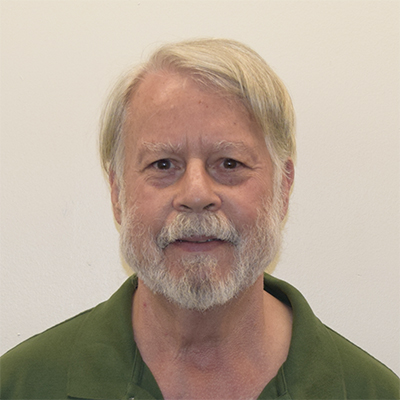
Mark Liberman is a Trustee Professor at the University of Pennsylvania , holding appointments in the Department of Linguistics and Department of Computer and Information Science . He serves as Director of the Linguistic Data Consortium and Faculty Director of Ware College House . His career spans linguistics, speech technology, and computational methods. Education: Harvard University (1965-1969), MIT (M.S. 1972, Ph.D. 1975) Professional Experience: AT&T Bell Laboratories (1975-1990), University of Pennsylvania (1990-present) His research interests include: Corpus-based Phonetics : Analyzing speech patterns via large-scale datasets. Clinical Applications : Developing speech biomarkers for neurodegenerative diseases. Tonal Phonology : Studying lexical tone and intonation in languages like Yoruba and Mandarin. Formal Annotation Models : Creating frameworks for linguistic data standardization. Recent publications highlight automated speech analysis, cross-linguistic prosody, and digital biomarkers for conditions like ALS-FTD and Alzheimer’s. His collaborations span computational linguistics , neurology , and cognitive science . Scientific awards include the IEEE James L. Flanagan Award (2017), Antonio Zampolli Prize (2010), and fellowships from the AAAS and Linguistic Society of America . He advises PhD students May Chan and Jonathan Him Nok Lee and contributes to editorial boards for journals like Cognition and Annual Review of Linguistics . His work bridges speech science , language technology , and neurocognitive research .
Nicholas Evans is a Distinguished Professor in the Department of Linguistics at the School of Culture, History & Language, Australian National University. He is an ARC Laureate Fellow and serves as Director of the ARC Centre of Excellence for the Dynamics of Language (CoEDL), reflecting his leadership in integrating typology, descriptive linguistics, and cognitive science. His work spans linguistic diversity, endangered languages, and the interplay between language and culture. His research focuses on Australian and Papuan languages, with extensive fieldwork in remote communities. Key interests include linguistic typology, historical and contact linguistics, semantics, and the cognitive underpinnings of grammar. He has published foundational grammars and dictionaries of Kayardild, Bininj Gun-wok, and Dalabon, contributing significantly to the documentation of endangered languages. His recent publications reveal a strong trend in cross-linguistic studies of social cognition (SCOPIC), syntactic typology, and phylogenetic modeling of the Yam languages. These works integrate linguistic, cognitive, and genetic data, highlighting interdisciplinary approaches to understanding language evolution and human diversity. ARC Laureate Fellow Fellow of the Australian Academy of the Humanities (FAHA) Fellow of the Academy of the Social Sciences in Australia (FASSA) Fellow of the British Academy (FBA) Evans supervises research students and leads major projects such as 'The Wellsprings of Linguistic Diversity' and CoEDL, which involve extensive collaboration across institutions and disciplines. His grants include modeling Pacific creoles and phonemic analysis of Tok Pisin. He is also involved in digital archiving initiatives like PARADISEC and the Language Data Commons of Australia, ensuring long-term preservation of linguistic data. He leads and contributes to research teams focused on Southern New Guinea languages, paradigm syncretisms (PARABANK), and cultural heritage preservation. His work emphasizes reciprocal engagement with speech communities and training the next generation of language documenters.
Mari Ostendorf serves as an Adjunct Professor in the Department of Computer Science and Engineering within the College of Engineering at the University of Washington, where she conducts research at the intersection of speech technology and computational linguistics with emphasis on spontaneous speech phenomena. Her educational foundation includes: PhD in an unspecified field, Stanford University (1985) Her research program systematically investigates: Speech Processing: Specializing in spontaneous speech characteristics and prosodic modeling Natural Language Processing: Focusing on conversational speech parsing and stance analysis Computational Linguistics: Integrating linguistic theory with machine learning approaches Prosody: Analyzing idiosyncratic speech patterns for language processing applications Stance Recognition: Developing computational methods for identifying speaker attitude and commitment Her work manifests in significant projects including the LiCORICE Project (2009-2011) as Principal Investigator and the ATAROS Project as Co-Principal Investigator, both advancing automatic spoken language processing through detailed modeling of speech prosody and stance phenomena. Analysis of her publication record reveals a consistent trajectory toward interdisciplinary integration of linguistic theory and machine learning for spoken language understanding, with particular emphasis on non-lexical cues and discourse markers in conversational contexts that bridge computational and cognitive approaches to language processing. No scientific awards were mentioned in the provided documentation. Her advising record includes PhD candidates Jeremy Kahn (2010 dissertation on conversational speech parsing) and Esther Le Grézause (2017 dissertation on stance expression). Her grant portfolio features the LiCORICE Project (2009-2011, PI with Emily M. Bender and Mark Zachry) and the ATAROS Project (Co-PI with Richard Wright and Gina Levow), demonstrating sustained research funding in speech technology. Her research operates within an interdisciplinary framework connecting computer science and linguistics, evidenced by collaborations spanning departments and contributions to dissertation defenses in the Linguistics program at the University of Washington.
Mark Y. Liberman is the Christopher H. Browne Distinguished Professor of Linguistics and Trustee Professor at the University of Pennsylvania. He holds a joint appointment in the Department of Linguistics and the Department of Computer and Information Science. His roles include Director of the Linguistic Data Consortium (LDC), Faculty Director of Ware College House, and former Director of the Institute for Research in Cognitive Science. Education: A.B. in Linguistics and Applied Mathematics from Harvard University (1965–1969), M.S. (1972) and Ph.D. (1975) in Linguistics from MIT. Research focuses on corpus-based phonetics, clinical linguistics applications, tonal phonology, formal models for linguistic annotation, and computational linguistics. He explores speech production, prosody, and interdisciplinary topics like language evolution and neurobiology of speech. Recent articles highlight advancements in speech biomarkers for neurodegenerative diseases, autism analysis, and computational linguistics. Awards include Fellowships from the AAAS and Linguistic Society of America. He advises graduate students and leads large-scale language resource initiatives like LDC, contributing to open-access linguistic datasets. Labs/Teams: Linguistic Data Consortium (LDC), Institute for Research in Cognitive Science (IRCS), and collaborations in computational linguistics and neuroscience.
Claire Bowern is Professor of Linguistics at Yale University specializing in historical linguistics, language documentation, and Australian Indigenous languages. Her research employs computational phylogenetics to study language evolution and supports language revitalization through digital archives and fieldwork methodologies. Recent publications address: Phylogenetic signal in lexical evolution across language families Digital infrastructure for endangered language documentation (FLEx software analysis) Decolonizing linguistics pedagogy and research practices Her work consistently integrates linguistic, anthropological, and computational approaches to analyze language diversity and change. She contributes to global databases including Grambank and D-PLACE, examining links between linguistic, cultural, and environmental patterns.
Justin Johnson is an Assistant Professor at the University of Michigan's College of Engineering, Department of Electrical Engineering and Computer Science, and a Research Scientist at Facebook AI Research (FAIR). His work bridges computer vision, machine learning, and deep learning, focusing on visual reasoning, vision-language tasks, image generation, and 3D reasoning using neural networks. PhD, Stanford University (advised by Fei-Fei Li) His research interests span visual reasoning , vision and language , 3D vision , and image generation , with a focus on innovative applications of deep neural networks. Recent publications highlight work on 3D consistency, self-supervised learning, and multimodal integration of vision and text. Notable contributions include PyTorch3D for 3D data processing, and foundational work in visual question answering , neural style transfer , and scene graph-based image generation . Publications span top conferences like ICCV, CVPR, and NeurIPS. He teaches courses including EECS 498/598: Deep Learning for Computer Vision and EECS 442: Computer Vision at University of Michigan, with prior involvement in Stanford's CS 231N in co-teaching roles. Software projects include open-source frameworks like fast-neural-style for real-time artistic style transfer, and PyTorch3D for efficient 3D deep learning. These tools demonstrate his commitment to practical implementations and community-driven research.
Laurel MacKenzie is an Associate Professor in the Department of Linguistics at New York University (NYU), affiliated with the Faculty of Arts and Science. She specializes in variationist sociolinguistics, dialectology, and language change, with a focus on English and French varieties. Her work integrates quantitative analysis of speech data to explore intra-speaker variation and language evolution. She co-directs the NYU Sociolinguistics Lab and leads the NSF-funded NYC Individual Differences Corpus project, alongside the Our Dialects initiative, an online atlas of British English dialects. Education: PhD in Linguistics, University of Pennsylvania (2012) BA in Linguistics and French, University of California, Berkeley (2006) Research Interests: Morphological and syntactic variation Regional dialects of English and French Linguistic pedagogy and public engagement Recent Projects: Recent work includes publications on participle leveling in English, sociolinguistic replication studies, and grammatical variation analysis. She has also collaborated on dialect mapping tools and consulted for media projects on language change and accents. Awards: No awards explicitly listed in provided texts. Labs/Teams: NYU Sociolinguistics Lab (Co-Director) Our Dialects Project (Academic Lead)
Shrikanth (Shri) Narayanan is a University Professor and holder of the Niki and Max Nikias Chair in Engineering at the University of Southern California (USC), serving as the inaugural Vice President for Presidential Initiatives. He leads the Signal Analysis and Interpretation Lab (SAIL) and holds joint appointments in Computer Science, Linguistics, Psychology, Neuroscience, Pediatrics, and Otolaryngology-Head and Neck Surgery. His research focuses on speech and audio processing, behavioral signal processing, and real-time MRI of speech production, with applications in healthcare, education, and technology. Education: B.E. in Electrical Engineering from College of Engineering, Guindy (Chennai, India, 1988); M.S., Engineer, and Ph.D. in Electrical Engineering from UCLA (1990, 1992, 1995). Research interests span computational linguistics, machine learning, and multimodal human behavior analysis. He pioneered technologies for speech biomarkers in mental health, real-time MRI of speech production, and wearable sensor systems for longitudinal health studies. His work in speech emotion recognition, forensic interviews, and clinical applications has been recognized through over 40 awards, including the IEEE Flanagan Award and ISCA Medal. He has published extensively in journals like Proceedings of the IEEE , Journal of the Acoustical Society of America , and PLOS One . Key Grants: NSF CAREER, Okawa Research, IBM Faculty, Google/Amazon awards. Labs/Teams: Signal Analysis & Interpretation Lab (SAIL), USC Information Sciences Institute (ISI), Google Visiting Faculty Researcher.
Jan Østergaard is a Full Professor in Information Theory and Signal Processing at Aalborg University's Department of Electronic Systems. He leads the AI and Sound research section and directs the CASPR center. His expertise spans AI-driven acoustic signal processing, information theory, and EEG signal analysis. Østergaard holds a M.Sc. from Aalborg University and a PhD (cum laude) from Delft University of Technology. Major awards include the Danish Young Researcher’s Award and a EURASIP Best Thesis honor. His work focuses on speech enhancement, sound zone technologies, and neural tracking of auditory attention. Recent research emphasizes low-latency speech transmission, deep learning for sound field control, and robust voice activity detection. He serves on editorial boards and national committees, advancing Denmark’s sound technology initiatives. Education: M.Sc. (Aalborg, 1999), PhD (Delft, 2007) Research interests emphasize practical AI applications in sound systems, including hearing aid improvements, data-efficient acoustic modeling, and feedback control in networked systems. Over 210 publications and 17 active projects reflect his interdisciplinary impact across academia and industry.
Sara Ng is a Visiting Assistant Professor in the Department of Linguistics at Western Washington University. She holds a PhD in Linguistics from the University of Washington (2024) and an MS in Computational Linguistics (2023), alongside a B.A. in Linguistics and B.S. in Applied Mathematics from the University of Utah (2017). Her research focuses on computational models of prosody, speech perception, and their integration with speech technologies like automatic speech recognition (ASR). She investigates how prosody conveys pragmatic meaning, influences conversational dynamics, and impacts listeners with hearing impairments. Her work bridges computational methods and linguistic theory, addressing challenges in clinical and technological applications. Education PhD in Linguistics, University of Washington, 2024 MS in Computational Linguistics, University of Washington, 2023 B.A. in Linguistics (Honors), B.S. in Applied Mathematics, University of Utah, 2017 Research Interests Ng’s research explores computational linguistics, prosody modeling, speech technology, and hearing impairment studies. She develops methods to leverage prosodic cues for tasks like punctuation prediction and investigates the impact of hearing loss on speech perception. Grants & Awards 2024: Nominated for UW Excellence in Teaching Award 2023: Excellence in Linguistic Research Graduate Fellowship 2017: University of Utah Top Scholar Award Teaching Ng teaches courses in phonetics, computational linguistics, and linguistics for honors students. She emphasizes pedagogical innovation and inclusivity, with experience as an instructor of record and teaching assistant at both Western Washington University and the University of Washington. Labs & Collaborations She collaborates with the TIAL Lab (University of Washington), Phonetics Lab, Hearing Aid Laboratory (Northwestern University), and CLILLAC-ARP (Université Paris Cité). Her work intersects with clinical and engineering domains, addressing real-world applications of speech technology.
David Bamman is an Associate Professor in the School of Information at UC Berkeley, specializing in applying Natural Language Processing (NLP) and machine learning to cultural and social science questions. He leads research in born-literary NLP, computational humanities, and cultural analytics, with affiliated roles in EECS, Linguistics, and Computational Precision Health. Bamman holds degrees from Carnegie Mellon (Ph.D., 2015), Boston University (M.A., 2006), and University of Wisconsin-Madison (B.A., 1998). His work is supported by NEH, NSF, and industry grants. Educations: Ph.D. in Computer Science (2015), Carnegie Mellon University M.A. in Applied Linguistics (2006), Boston University B.A. in Classics (1998), University of Wisconsin-Madison Research Interests: NLP for underserved domains (e.g., literature, social media), coreference resolution, cultural analytics, and computational methods for studying literature and culture. Projects include LitBank and BookNLP datasets. Grants & Awards: Hellman Fellow (2019), Amazon Research Award (2017), NSF CAREER Award, and NEH funding. Teaching: Courses include Natural Language Processing (Info 159/259), Computational Humanities (INFO 190), and Applied NLP (INFO 256). His research group explores topics like racial representation in high school literature, Hollywood diversity metrics, and the sociocultural implications of LLMs. Bamman advises multiple PhD students and collaborates on datasets like CMU Book Summaries and 11K Latin Books.
Mark Steedman is a Professor in the School of Informatics at the University of Edinburgh, where he conducts research in Artificial Intelligence, Computational Cognitive and Social Science, and Natural Language and Speech Processing. He is affiliated with the Institute for Language, Cognition and Computation (ILCC), the Centre for Speech Technology Research (CSTR), and the Human Communications Research Center (HCRC). He also holds an adjunct professorship in Computer and Information Science at the University of Pennsylvania. His research focuses on Combinatory Categorial Grammar (CCG) , computational linguistics , prosody and intonation , temporal semantics , gesture in communication , and computational music analysis . He has authored foundational books including Surface Structure and Interpretation , The Syntactic Process , and Taking Scope . The recent publications reflect a strong trend toward integrating formal grammatical frameworks like CCG with modern neural and distributional models, particularly in semantic parsing, entailment reasoning, and cognitive modeling. His work bridges symbolic and statistical approaches in NLP, often focusing on robust, wide-coverage parsing and semantic interpretation. Best Paper Award at AACL/IJCNLP 2023 for 'Smoothing Entailment Graphs with Language Models' Best Paper Award at ACL 2023 for 'Extrinsic Evaluation of Machine Translation Metrics' Influential Paper Award 2017 from IFAAMAS for 'Animated Conversation' Mark Steedman has supervised numerous PhD students and collaborated widely across institutions. He leads research in formal grammar applications to cognitive modeling, dialogue, and multimodal communication. His lab contributes to CCG software and semantic parsing tools, and he continues to be actively involved in advancing the integration of symbolic and neural AI.
Elaine Francis is a Professor of English and Linguistics at Purdue University's College of Liberal Arts, where she serves as Associate Head of the Department of English and directs the Experimental Linguistics Lab. She holds additional affiliations as an Affiliate Faculty Member in the Department of Linguistics and a Courtesy Faculty Member in the Department of Speech, Language, and Hearing Sciences. Ph.D. in Linguistics, University of Chicago (1999) B.A. in Linguistics, College of William and Mary (1993) MA in Linguistics, University of Chicago (1995) Former Assistant Professor at the University of Hong Kong (1999-2002) Professor Francis's research focuses on syntax and its interfaces with semantics, discourse information structure, and language processing in production and comprehension. She employs experimental methods to investigate syntactic, semantic, discourse-pragmatic, and cognitive factors underlying complex sentence structures. Her primary research areas include word order alternations, filler-gap dependencies, resumptive pronouns, and grammatical acceptability. She examines how various factors contribute to grammatical alternations in language use and explores how processing pressures in production and comprehension contribute to grammatical conventions. Her recent publication record shows consistent output across multiple linguistic subfields, with a strong emphasis on experimental syntax and psycholinguistics. Her 2022 book, Gradient Acceptability and Linguistic Theory , represents a significant contribution to understanding acceptability judgment tasks in relation to syntactic theory. Her work spans theoretical syntax, experimental linguistics, second language acquisition, and cross-linguistic comparison, often bridging the gap between theoretical frameworks and empirical evidence. Regularly teaches short courses at Linguistic Society of America Linguistic Institutes Member of Linguistic Society of America Ethics Committee Editorial board member of Glossa Psycholinguistics Co-editor of Polymorphous Linguistics: Jim McCawley's Legacy (2005) Co-editor of Mismatch: Form-Function Incongruity and the Architecture of Grammar (2003) Professor Francis actively supervises graduate students in linguistics, though she has indicated she will be unable to take on new graduate students for the 2025-2026 academic year. She has received research support for her experimental work, particularly for investigating syntactic phenomena through controlled experiments and corpus analysis. Her collaborative work extends across multiple institutions and disciplines, including collaborations with researchers in computational linguistics, cognitive science, and clinical linguistics. She directs the Experimental Linguistics Lab at Purdue University, which conducts research on syntactic processing using various experimental methodologies. The lab investigates how speakers produce and comprehend complex sentence structures, with particular attention to how grammatical knowledge interacts with processing constraints. Current projects include research on relative clauses, syntactic islands, and acceptability gradient phenomena across multiple languages.
Walid Magdy is a Professor at the School of Informatics, The University of Edinburgh, where he is a faculty member at the Institute for Language, Cognition and Computation (ILCC). He holds a PhD from Dublin City University's School of Computing and has been a faculty fellow at The Alan Turing Institute. With substantial industry experience, he has worked for Qatar Computing Research Institute (QCRI), Microsoft, and IBM, where he filed nine patents. His research spans computational social science and natural language processing. In computational social science, he focuses on social content analysis, political bias detection, polarization, and users' behavior analysis/prediction, with particular attention to understudied communities. His natural language processing work centers on social applications including sentiment analysis, sarcasm detection, and hate-speech identification, with specialized expertise in Arabic and its dialects as well as Persian. Professor Magdy's recent publications demonstrate a consistent focus on Arabic language processing and social media analysis, with growing attention to cultural factors in NLP systems. His work bridges computational methods with social science questions, particularly regarding misinformation, cultural differences in online behavior, and the impact of platform policies on diverse linguistic communities. He has expanded his research to include Persian language processing and continues to explore social dynamics across different cultural contexts. His significant contributions have been recognized with multiple awards: Best Demo Award for TwiXplorer at CSCW 2024 Outstanding Paper Award at ACL 2024 Best Paper Award Runner-up at SocInfo 2022 Best Paper Award at WANLP-EMNLP 2022 Best Paper Award at AIRS 2015 Best Dataset Award at ICWSM 2013 Professor Magdy serves as an editor for Springer's Social Network Analysis and Mining journal and has held leadership roles in major conferences including ACL 2023, ArabicNLP 2023, ICWSM 2022, and ASONAM 2022. He has co-organized numerous shared tasks focused on Arabic language processing and social media analysis, contributing significantly to community resources and benchmarks. He founded and directs the Social Media Analysis and Support for Humanity (SMASH) research group at the University of Edinburgh, which has organized the Summer School in Computational Social Science (SICSS-Edinburgh) in 2022, 2023, and 2025, training researchers in computational social science methodologies.
Professor Bernd Möbius is a leading academic in Phonetics and Phonology at the Department of Language Science and Technology, Saarland University. His research bridges phonetic theory with speech technology applications, focusing on text-to-speech systems, prosody modeling, and computational simulations of speech processes. Current research projects: DFG SFB 1102, C1: Information density and phonetic structure predictability DFG SFB 1102, C4: Slavic intercomprehension and surprisal theory (INCOMSLAV) Research Themes: Key areas include text-to-speech synthesis, speech prosody analysis, experimental methods in speech production/perception, information density in phonetics, and cross-linguistic studies of Slavic-Germanic languages. Scientific Contributions: Recent work explores Parkinson-induced dysarthria detection, breath noise acoustics, surprisal-driven speech behaviors, multilingual BERT models for idiomaticity, and perceptual consequences of acoustic adjustments.