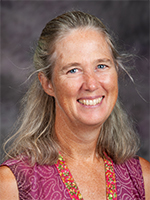
Dr. Clarissa Thompson is Professor of Psychological Sciences at Kent State University, where she directs the Cognitive Development Lab. She earned her PhD from The Ohio State University and teaches courses in cognitive psychology and experimental methods. Her research investigates numerical cognition across development, including: how children represent and estimate numbers, factors influencing math anxiety, metacognitive monitoring during problem solving, and interventions to improve rational number understanding. The lab employs behavioral methods, eye-tracking, and cognitive modeling. Recent work examines visualization techniques for health risk communication, cross-notation number processing, and longitudinal predictors of math achievement. She serves on editorial boards and mentors doctoral students in cognitive/developmental psychology.
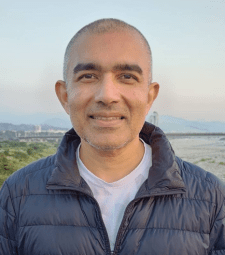
Sabarish V. Babu is a tenured full Professor in the Division of Human-Centered Computing within the School of Computing at Clemson University. He co-directs the virtual environments group where his research focuses on innovative design, implementation, and evaluation of immersive and interactive eXtended Reality (XR) systems. As a Senior Member of IEEE, Dr. Babu ranks number 1 in the US in VR research according to CSRankings.org, significantly contributing to placing Clemson University among top institutions in VR research. Dr. Babu's educational background includes: PhD in Computer Science from University of North Carolina at Charlotte (2007) MS in Information Technology from UNC-Charlotte (2002) BS in Biology with concentration in Microbiology from UNC-Charlotte (2000) Dr. Babu's research interests span the areas of XR (VR/AR/MR), Applied Perception-Action and Cognition in XR, Virtual Humans and Avatars, and 3D Human Computer Interaction. His work bridges theoretical foundations with practical applications across healthcare, education, and industrial domains. He has published over 140 peer-reviewed papers examining how humans interact with and perceive virtual environments, how virtual humans influence user behavior, and how XR technologies can solve real-world problems. His research methodology emphasizes rigorous empirical evaluation through user studies, often employing eye-tracking, behavioral analysis, and psychophysical measurements. Analysis of Dr. Babu's publication trends reveals a strong focus on perception-action coordination in virtual environments, with particular attention to how visual, auditory, and haptic cues affect user experience. His recent work has expanded into mental health applications of virtual agents, cybersickness mitigation, and the transfer of perceptual learning between virtual and real environments. The interdisciplinary nature of his research spans computer science, psychology, human factors, and healthcare applications. Dr. Babu's scientific achievements include: 8 Best Paper Awards at premier IEEE and ACM conferences (ACM Symposium on Applied Perception 2022, 2020, 2016; IEEE Virtual Reality Conference 2023, 2018; IEEE Symposium on 3D User Interfaces 2016, 2007; IEEE International Conference on Healthcare Informatics 2013) Best Presentation Awards at IEEE Virtual Reality Conference (2024) and ACM Symposium on Applied Perception (2021) Honorable Mentions for Best Paper at IEEE VR 2023 and ACM SAP 2020 Senior Member status in IEEE Ranking as #1 in VR research field in the US per CSRankings.org Dr. Babu has graduated 9 PhD students, 8 MS CS students, and several undergraduate honors students. His PhD graduates now serve as faculty members at Clemson University, University of Central Florida, UNC Wilmington, and Morehouse College, as well as in industry research positions at Meta Reality Labs, Microsoft Research, and other XR/CG/Visualization firms. His research has been supported by significant funding from the National Science Foundation, Department of Labor, and corporate foundations including Medline Inc., Prisma Health Inc., Bon Secours Inc., Adobe Inc., and BMW Inc. Dr. Babu has served in leadership roles including General Chair of the IEEE Virtual Reality Conference 2016, Program Chair of IEEE Virtual Reality Conference 2017, and upcoming ACM Symposium on Applied Perception 2025, and serves on the editorial boards of IEEE Transactions on Visualization and Computer Graphics and MDPI Virtual Worlds journals. Dr. Babu co-directs the virtual environments group at Clemson University, which maintains strong collaborations with healthcare institutions, educational organizations, and industry partners to develop practical applications of virtual reality technologies. Current research directions include healthcare education simulations, computational thinking education through VR, and advanced interaction techniques for near-field and distant object manipulation in virtual environments.
Alice Boyle is a Professor in the Division of Biology at Kansas State University. Her research investigates the evolutionary, behavioral, and physiological ecology of mobile animals, with a focus on avian movements. She studies life-history trade-offs underlying migratory strategies, organismal responses to elevational gradients, and the role of climatic variability in shaping life history and movement patterns. Her research integrates field studies with laboratory and analytical methods to address fundamental questions in wildlife ecology. Current work examines climate change implications for bird populations, with projects focusing on tropical montane forests and tallgrass prairies. She combines physiological ecology approaches with population-level studies to understand mechanisms underlying ecological patterns. Boyle's publications demonstrate strong research trends in conservation biology, climate impacts on avian ecology, and innovative conservation strategies. Her work consistently addresses both theoretical ecology and applied conservation challenges, particularly regarding grassland birds and tropical species. Awards: IEEE Region 8 (EMEA) 2023 Outstanding Women in Engineering Section Volunteer Award IEEE Region 8 (EMEA) 2019 Outstanding Women in Engineering Section Affinity Group of the Year Award The Boyle Lab maintains active research programs in Costa Rica and the central US grasslands, mentoring graduate students and postdoctoral researchers. Lab culture emphasizes diversity, equity, and critical examination of biases in academic settings.
David Ward is the Art and Margaret Herrick Endowed Professor of Plant Biology at Kent State University's Environmental Science and Design Research Institute (ESDRI). His research focuses on plant species redistributions, including invasive and encroaching species, succession ecology, and the effects of large mammal herbivory on plant populations. He emphasizes field experiments to understand vegetation pattern mechanisms. Education details are not explicitly stated, but his academic roles include teaching Plant Ecology, Climate Change Biology, and Invasion Biology at both undergraduate and graduate levels. He currently oversees a PhD project on eastern red cedar ecology and ecophysiology. His research spans global collaborations, with a focus on African savannas and semi-arid ecosystems. Notable contributions include studies on woody encroachment dynamics, soil carbon changes due to vegetation shifts, and African elephant foraging behaviors. Ward advocates for long-term vegetation monitoring through permanent plots, emphasizing their critical role in ecological science. Teaching responsibilities include undergraduate courses like Plant Ecology and graduate-directed readings in Evolutionary Biology. He also leads field courses to South Africa, integrating practical fieldwork with ecological theory.
Brian Healy is an Associate Professor and Department Chair of Theatre and Dance at California Polytechnic State University (Cal Poly) in San Luis Obispo, CA. He holds an MFA in Theatrical Design from the University of Washington and a B.A. in Theatre from Truman State University. With 23 years of teaching experience, he specializes in lighting design, scenic design, stagecraft, and dramatic theory. Education: MFA in Theatrical Design, University of Washington (Seattle), 200X B.A. in Theatre, Truman State University, 199X Research/Design Interests: Brian's work focuses on innovative lighting design, scenic storytelling, and technical production. His designs emphasize emotional impact and visual spectacle, as seen in productions like Tuck Everlasting (2018) and Joseph and the Amazing Technicolor Dreamcoat (2017), praised for their immersive lighting and technical excellence. He prioritizes collaboration across disciplines, from costume to sound design. Key Achievements: Recipient of the National Outstanding Production Award (Kennedy Center) for Vincent In Brixton (2013) Design work featured at major institutions: Sundance Resort, Hale Centre Theatre, Seattle Repertory Theatre, and Book-It Repertory Theatre Course developer at Cal Poly: Technical Theatre Production and Technology in Theatrical Design Advising & Grants: Brian’s academic leadership includes mentoring students in technical theatre and scenic design. His grants and institutional support enable innovative productions, such as Hale Centre Theatre’s technologically advanced lighting systems. Labs/Teams: He collaborates with academic and professional theatres, including University College Dublin, Western Washington University, and Chicago’s Shattered Globe Theatre. His work bridges academic and professional theatre through immersive design practices.
Kevin Monteith is Professor of Natural Resource Science at the University of Wyoming's Haub School of Environment and Natural Resources with joint appointment in Zoology and Physiology. He holds PhD in Biological Sciences from Idaho State University and MS/BS from South Dakota State University. Monteith directs research at the Wyoming Cooperative Fish and Wildlife Research Unit. His integrative research program examines: Nutritional mechanisms driving population dynamics in large mammals Risk-sensitive resource allocation strategies Climate change impacts on ungulate life histories Sustainable habitat-based management frameworks Predation effects mediated through nutritional pathways Monteith employs longitudinal monitoring of individual animals to understand nutritional constraints and behavioral adaptations. His work has established protocols for sustainable ungulate management across western ecosystems, with recent focus on climate vulnerability and disease ecology. Publication themes demonstrate consistent investigation of state-dependent behaviors, migration plasticity, and conservation genomics. Research Approach: Field-intensive studies combine physiological monitoring, GPS telemetry, demographic tracking, and nutritional analysis to reveal mechanisms linking individual fitness to population performance. Current projects investigate bighorn sheep recovery dynamics, pronghorn management paradigms, and thermal impacts on mating systems.
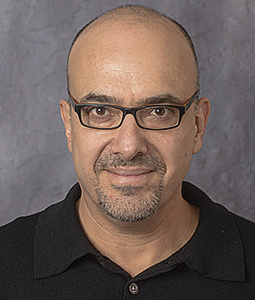
Keith Maddox is Professor of Psychology at Tufts University and Director of the Tufts University Social Cognition (TUSC) Lab. He earned his PhD from University of California, Santa Barbara, and holds fellowships in APS, SPSP, and SPSSI. His research examines cognitive aspects of stereotyping and prejudice. Key research areas include: Skin tone-based racial bias and stereotyping Perceptions of discrimination claims Stereotype threat mechanisms Social categories in spatial representation Recent publications investigate implicit dehumanization patterns, phenotypicality bias pathways, and stigma's impact on face processing. His work consistently addresses diversity challenges in increasingly multicultural societies. Honors include Tufts' Teaching and Mentoring Award, SPSSI's Jenessa Shapiro Award, and multiple NSF grants. He currently supervises doctoral students researching intersectional discrimination, interracial humor, and developmental bias formation. As co-director of Diversity and Inclusion Leadership programs, he promotes equitable practices in academic and scientific communities.
Matthew Longo is Professor of Cognitive Neuroscience at Birkbeck, University of London, within the School of Psychological Sciences. He directs the Body Representation Laboratory, investigating psychological and neural mechanisms of bodily experience using perceptual psychophysics and cognitive neuroscience. His research focuses on somatosensation, touch, space perception, and body image, exploring how mental representations of the body shape perception. Education includes a PhD in Psychology from University of Chicago (2006) and BA from Colorado College. His research employs experimental paradigms to study tactile perception, body representation distortions, and multisensory integration in healthy cognition. Honors include: Fellow of APS (2017), EPS Prize (2014), APA Early Career Contribution Award (2013), and NSF Graduate Research Fellowship (2002). Current doctoral students include Denise Cadete and Olga Golubova, with alumni Kelda Manser-Smith and Klaudia Ambroziak.
Gabriella Tait is a Research Associate at Oregon State University's College of Agricultural & Life Sciences, specializing in the Department of Horticulture. Her work focuses on integrated pest management strategies for invasive species affecting small and stone fruits, particularly the Spotted-wing Drosophila ( Drosophila suzukii ). As an active member of the Oregon State University Extension Service, she collaborates with regional agricultural stakeholders to develop sustainable pest control techniques. Research Focus: Invasive pest ecology and management Collaborations: University of Oregon, Trentino institutions, and regional agricultural teams Expertise: Drosophila suzukii biology, insecticide application strategies, behavioral disruption techniques Her research examines how environmental factors (temperature, nutrition) influence pest fitness and how novel approaches like food-grade gums and micro-sprinkler systems can mitigate crop damage. Recent publications demonstrate her commitment to advancing precision pest management through multidisciplinary approaches combining behavioral ecology, chemical control, and population modeling. Scientific Awards: JEE Reader's Choice Award, Entomological Society of America (2022) ECE 2018 Award (2018) In addition to peer-reviewed publications in journals like Environmental Entomology and Journal of Pest Science , Tait contributes extensively to extension publications that translate research findings into practical guidelines for Oregon hazelnut and berry producers. Her work bridges fundamental entomology research with on-the-ground agricultural solutions.
Marina Haan is an Associate Professor at the Department of Business and Administration Management (GEA) within Paul Sabatier University (Toulouse III). Her research focuses on emotional dynamics in language learning, particularly in English as a foreign language (LVE), and explores how emotional skills and interaction forces influence language acquisition. She holds a PhD from Moscow University (2000) on bimodal information sources in foreign language learning. Her work bridges cognitive linguistics with didactic methodologies, emphasizing art-based learning and technology integration. Education: PhD in Foreign Language Didactics, Moscow University (2000) Research Interests: Her studies investigate emotional co-emergence in language teaching, spontaneous discourse development, and the role of visual and nonverbal cues in learning. She also examines psychological barriers and cognitive processes underlying grammar acquisition. Publications: Her recent work includes a 2025 book on dynamic systems in language learning and a 2020 article on observational learning strategies. Her research spans over two decades, with contributions to journals like Études en didactique des langues and Austrian Journal of Humanities and Social Science. Affiliations & Activities: Member of the LANSAD Inter-University Research Laboratory Organizer of international conferences (e.g., 2016 Electronic Communication Conference) Reviewer for EDL journal and CSI committee member Labs/Teams: Active in Lairdil Laboratory, focusing on language didactics and intercultural communication.
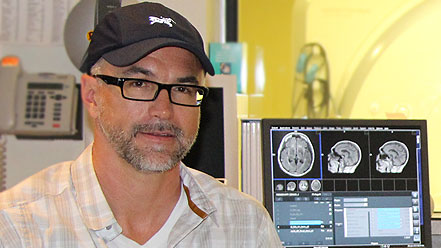
Dr. Ron Borowsky is a Professor of Cognitive Neuroscience at the University of Saskatchewan's Department of Psychology and Health Studies, affiliated with the College of Arts and Science. He serves as the University NSERC Leader in the Office of the Vice-President Research and holds an associate membership in Neurosurgery at the College of Medicine. His research focuses on neuroimaging (fMRI), linking brain activity to cognitive processes like language, attention, memory, and visual processing. Key interests include reading models, semantic-motor interactions, and neural reorganization post-brain injury. Academic Background: Borowsky earned a B.A. (Hons.) in Psychology from the University of Saskatchewan, followed by an M.A. and Ph.D. from the University of Waterloo. He completed a NSERC Post-doctoral Fellowship at the University of Victoria. His career includes roles as Assistant Professor (1995-1999), Associate Professor (1999-2006), and Professor (2006-present) at the University of Saskatchewan. Research Highlights: Borowsky's lab investigates the neural basis of reading, attention, and language through fMRI and DTI. He explores modular and shared neural networks for lexical vs. sublexical processing and applies findings to clinical contexts like pre-surgical brain mapping. Collaborations with neurology and medical imaging departments enhance translational research, including stroke recovery studies and epilepsy language mapping. Grants & Leadership: He secured NSERC grants (2013-2025) and previously led SSHRC projects. His editorial roles include Cortex and the Journal of Neurolinguistics. Media attention includes features in Star Phoenix and Canadian Geographic for literacy research and neuroimaging innovations. Labs & Teams: The Cognitive Neuroscience Lab engages in interdisciplinary projects with the College of Medicine, Royal University Hospital, and international collaborators. Training programs include the BSc Honours in Psychology and advanced seminars in cognitive neuroscience.
Jesper Kjeldskov is a Professor at the Department of Computer Science, Aalborg University, Denmark. His research focuses on Human-Computer Interaction (HCI), Interaction Design, and Ubiquitous Computing with a particular emphasis on domestic and healthcare contexts. He leads projects like ISOBEL (Interactive Sound Zones for Better Living), exploring technologies to enhance acoustic comfort in shared environments. His work integrates field studies, user-centered design, and interdisciplinary collaboration, addressing topics such as sound zone systems, human-AI interaction, and smart home technologies. Key projects include the ISOBEL initiative funded by Innovation Fund Denmark (2019–2023), investigating sound management in homes and hospitals. He also contributed to studies on mobile device usability and business travel practices. His research output spans 227 publications, emphasizing longitudinal studies, eco-interaction, and sustainable smart home design. Kjeldskov collaborates internationally on topics like digital assistants, shape-changing displays, and healthcare technologies, with media coverage highlighting innovations in personal audio spaces and sound zone barriers. His research philosophy emphasizes contextual, socio-technical approaches, blending technical innovation with user experience and societal impact. Current interests include domestic sound zones, AI interaction paradigms, and eco-friendly HCI solutions.
James Baumeister is a Lecturer in Software Development and Design at the University of South Australia (UniSA) under the UniSA STEM school. His research focuses on Augmented Reality (AR), Virtual Reality (VR), and Human-Computer Interaction, with a strong emphasis on applications in immersive analytics, cognitive load measurement, and collaborative task optimization. He has contributed to studies evaluating AR annotations’ impact on decision-making in time-critical scenarios and exploring visual perception in VR environments. Key collaborations include work with the Australian Research Centre for Interactive and Virtual Environments (ARCVIRE) and defense organizations. His research spans interdisciplinary areas such as neuroscience (e.g., EEG analysis of cognitive load) and engineering (e.g., depth perception in AR systems). Teaching responsibilities include courses related to software development and design, with a focus on practical applications of emerging technologies like AR/VR. He actively supervises research degree students and has presented at major conferences such as IEEE International Symposium on Mixed and Augmented Reality (ISMAR). His work addresses challenges in improving user performance through AR/VR interfaces, with applications in defense, healthcare, and education sectors. Ongoing projects explore optimal AR annotation designs and the neural correlates of visuomotor performance.
Amit Almor is Associate Professor in Psychology and Director of the Experimental Psychology Program at the University of South Carolina. His research examines language processing using neuroimaging, with focus on discourse reference, aging, and dementia. Key investigations include neural mechanisms of pronoun/anaphor processing, spatial language cognition, and conversational interference effects. Clinical work explores linguistic markers in Alzheimer's and Huntington's disease. Funded by NSF and NIH grants including 'The neural basis of processing discourse reference'. Teaches graduate seminars in Cognitive Neuroscience, Psycholinguistics, and Bayesian Modeling. Recipient of multiple teaching commendations.
Filipe Cristino is a Senior Lecturer in Psychology at the School of Social Sciences, Nottingham Trent University. He holds a PhD in Vision and has held academic roles at Bangor University and Bristol University before joining NTU in 2017. His research focuses on understanding gaze behavior and task interactions using eye-tracking, modeling, and psychophysics. Key areas include visual foraging, facial comparison in forensic contexts, and body shape perception under situational cues. **Career Overview:** Senior Lecturer at NTU (2017–present) Lecturer at Bangor University (2016–2017) Postdoctoral research at Bristol and Bangor Universities **Research Interests:** His work integrates experimental psychology with computational models to explore how visual attention and gaze patterns influence behavioral tasks. Recent studies examine the role of display segmentation in visual search efficiency, the impact of mortality threats on body image preferences, and the neural correlates of 3D shape recognition. He also investigates forensic facial analysis and gambling-related eye-tracking behaviors. **Grants & Advising:** Dr. Cristino supervises undergraduate and postgraduate research projects. His grants and collaborations focus on cognitive methodologies, though specific funding details are not listed here. **Labs/Teams:** Affiliated with NTU's Psychology department research groups specializing in vision science and cognitive processes.