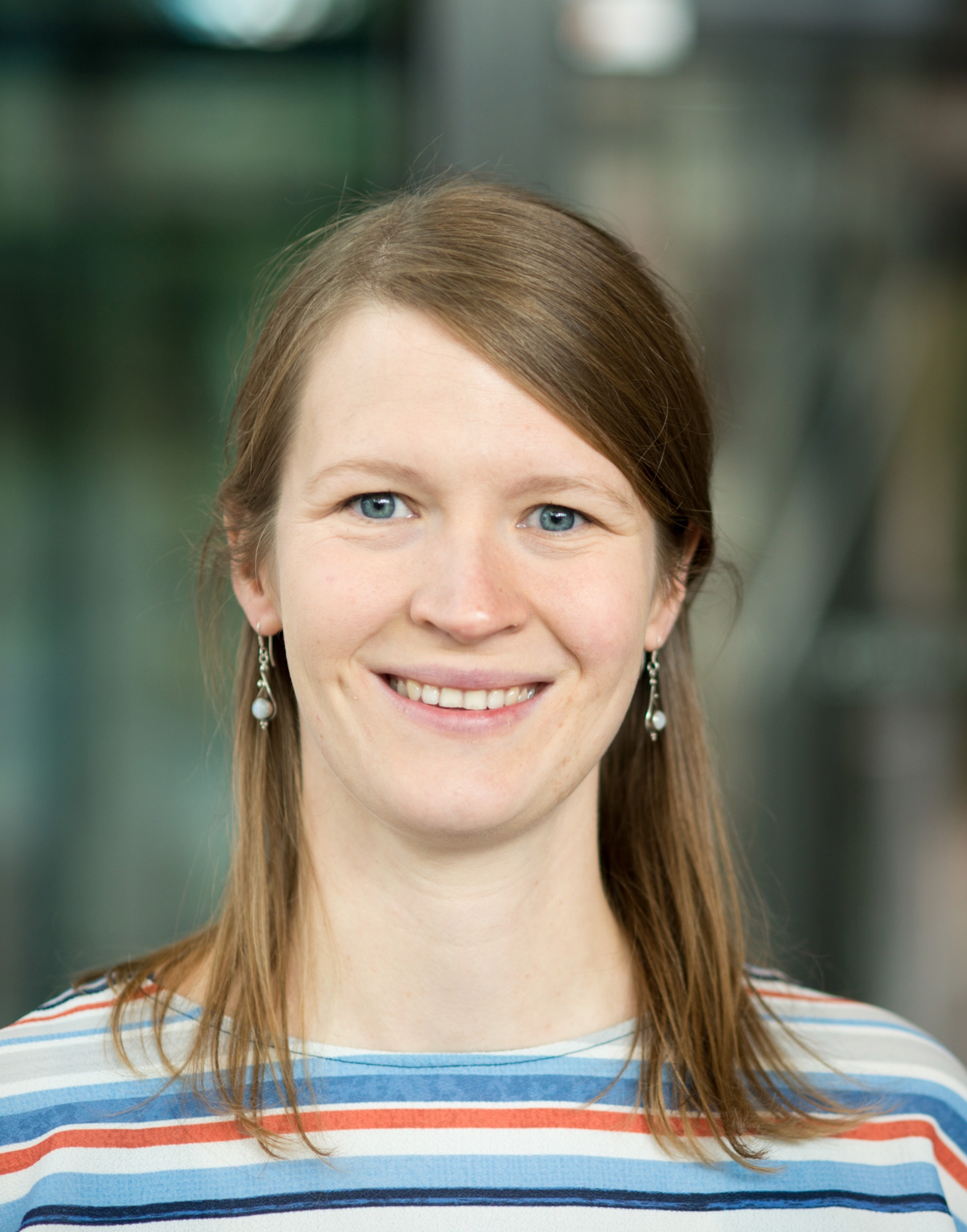
Ning Ai is an Associate Professor at the University of Illinois Chicago (UIC), holding a joint appointment in the Department of Urban Planning and Policy and the Institute for Environmental Science and Policy. Her expertise lies in urban sustainability, material/waste management, and urban metabolism. She joined UIC in 2011 with a Ph.D. from Georgia Tech, an MIT Master's, and dual bachelor's degrees from Tsinghua University and Renmin University of China. Her research integrates life cycle perspectives and data-driven approaches to environmental planning, emphasizing sustainable transportation and waste management. Notable projects include studies on food recovery programs, electric vehicle battery recycling, and neighborhood-level traffic impact analysis in Chicago. She has served on the ACSP Committee on Diversity and led the Air & Waste Management Association’s Sustainability Division (2020-2022). Teaching spans courses like Environmental Planning and Policy, Urban Economics, and System Methods for Environmental Policy. Her work bridges academia and practice, collaborating with entities like the World Bank and Georgia’s Department of Natural Resources. She leads a team advancing eco-friendly product adoption through projects like PFAS-free food service initiatives. Publications focus on sustainable urban systems, waste management frameworks, and policy design. Her research addresses both broad sustainability challenges and localized solutions, emphasizing interdisciplinary collaboration and community engagement.
Dar Roberts is a Professor in the Department of Geography at the University of California, Santa Barbara, where he directs the Visualization & Image Processing for Environmental Research (VIPER) Lab. His research focuses on advanced remote sensing applications including: Imaging spectrometry for ecosystem analysis Wildfire fuel mapping and fire emissions modeling Drought impact assessment on vegetation Land use/land cover change detection Integration of remote sensing with climate modeling Roberts leads the Southern California Wildfire Hazard Center and has pioneered techniques for mapping wildfire fuels using remote sensing technologies. His work combines field measurements with satellite, airborne, and drone-based sensors to monitor environmental changes.
Mimi Yiengpruksawan is a Professor of History of Art at Yale University, affiliated with the Department of East Asian Languages and Literatures, the Council on East Asian Studies, the Council on Southeast Asian Studies, and the Program in Medieval Studies. She holds a Ph.D. from UCLA (1988) and joined Yale in 1990, achieving tenure in 1998. Her research focuses on Buddhist art in nonmodern Japan and Eurasian cultural exchanges, emphasizing cross-regional and interdisciplinary approaches to study contact-driven cultural formation. Her academic work includes two major manuscripts: Michinaga’s Peacocks: A Heian World in Transition (examining exogenous influences on Kyoto’s art) and Kyoto in the Twilight of the Dharma (focusing on eschatological patronage). She also explores early modern Japanese global interactions, analyzing visual production during the 'Nanban' period. Recent research bridges environmental history with art, linking the 1006 supernova and Buddhist prophecies to artistic developments. Key publications include analyses of Buddhist iconography, transnational art networks, and transcultural architecture. She is a leading figure in rethinking Heian Japan’s cultural interconnectedness, challenging isolationist narratives through material evidence and primary sources.
Professor Annie Mahtani is a Professor of Electroacoustic Composition and Practice at the University of Birmingham's Department of Music. She holds a BMus (Hons), MA, MPhil, and PhD from the University of Birmingham and Birmingham City University. Her work focuses on electroacoustic music, acousmatic composition, multichannel audio, spatialisation, and field recordings, with significant contributions to site-specific installations and cross-disciplinary collaborations. She co-directs the SOUNDkitchen collective and serves on key boards such as the British ElectroAcoustic Network (BEAN) and the British Section of ISCM. Her research explores the sonic identity of environmental sounds, large-scale multichannel composition, and ambisonic audio techniques. As a performer with BEAST (Birmingham Electroacoustic Sound Theatre), she develops live acousmatic performances and soundwalks. Recent projects include Becoming Tree (an immersive audio retelling of a literary work) and Minimum Monument , performed at Birmingham Hippodrome. She actively collaborates with dance and theatre companies like Rosie Kay Dance Company. Professor Mahtani teaches undergraduate and postgraduate modules in electroacoustic composition and is involved in admissions and curriculum leadership. Her works have been performed globally in festivals like Klang! Électroacoustique and Sound + Environment, showcasing her innovative contributions to contemporary music and sound art.
Dr Sonia Wilson is a Senior Lecturer in French and Francophone Studies and Director of International Comparative Literature and Translation Studies at the University of Sydney's School of Languages and Cultures. She holds a PhD from the University of Queensland (after MA/McGill University and DEA/Paris III). Her research focuses on women's diary writing in French contexts, exploring intersections of temporal practices, material culture, and colonial histories. Education: PhD (Queensland), DEA (Paris III), MA (McGill), BA (Adelaide) Affiliations: University of Sydney since 2015; previously University of Melbourne Research interests include diary studies, gendered temporalities, multilingual archives, and photographic self-representation. Current projects examine discarded diaries' ethical implications (Finders, Keepers?) and Australia's non-English language historical records (ARC DP 2021-2025). Teaching spans French literature, comparative life writing, and cultural studies. Supervision areas include 19th-century women's writing, diary-photography interactions, and Francophone visual practices. Grants: $11,322 in recent research funding (2013-2015) Leadership: Chief Investigator for French-language materials in ARC DP project Labs/Teams: Central role in multilingual archive initiatives; collaborates with international scholars in life writing studies.
Professor Christian F. Doeller is a leading cognitive neuroscientist serving as Director of the Department of Psychology at the Max Planck Institute for Human Cognitive and Brain Sciences (MPI CBS) in Leipzig and Vice President of the Max Planck Society (since 2023). His roles include honorary professorships at the University of Leipzig (2019) and TU Dresden (Cognitive Neuroscience of Learning and Memory). He holds a PhD in Psychology from Saarland University (2005) and has held positions at institutions such as UCL (London), Radboud University (Nijmegen), and NTNU (Trondheim). His research focuses on spatial navigation, memory systems, and cognitive mapping in the human brain, leveraging neuroimaging (fMRI, EEG) and computational modeling. Key areas include hippocampal/entorhinal cortical function, grid cells, and the neural basis of spatial and conceptual representations. Recent work explores non-Euclidean spatial cognition, value-based decision making using grid-like maps, and hormonal influences on navigation. His lab combines experimental psychology, neuroimaging, and theoretical neuroscience to understand how brains build predictive models of environments and concepts. Publications emphasize cognitive maps, neural representations of space/value, and memory formation mechanisms. Over 100 journal articles span high-impact journals like Nature Neuroscience , Neuron , and Current Biology . His work bridges basic research and translational applications in neurodegenerative disorders and spatial cognition deficits.
Sijia Yao is an Assistant Professor of Chinese Language and Culture at Soka University of America. She holds a Ph.D. in Comparative Literature from Purdue University. Her research focuses on comparative and Sinophone literature/media studies, love/affect studies, critical theory, and post-socialism. Yao teaches courses such as CHI 401 (Cultural History of China) and Learning Cluster 200 (Sinophone Cinema). Her scholarship includes the book *Cosmopolitan Love: Utopian Vision in D.H. Lawrence and Eileen Chang* (2023) and peer-reviewed articles analyzing Chinese literature, film, and cultural phenomena. Yao has received grants for Chinese language education research and teaching excellence awards at the University of Nebraska-Lincoln. She has reviewed works in Sinophone studies, including Lily Wong’s *Transpacific Attachments*.
Abhinav Shrivastava is an Associate Professor in the Department of Computer Science at University of Maryland, College Park, with a joint appointment in the Institute of Advanced Computer Studies (UMIACS). Previously, he served as an Assistant Professor at the same institution from August 2018 to June 2024, and spent one year as a Visiting Research Scientist at Google Research from September 2017 to August 2018. His educational background includes: PhD in Robotics and Artificial Intelligence from Carnegie Mellon University (2017), advised by Abhinav Gupta, with thesis titled 'Discovering and Leveraging Visual Structure for Large-scale Recognition' MS in Artificial Intelligence from Carnegie Mellon University (2011), supervised by Alyosha Efros and Martial Hebert BTech in Computer Science and Engineering from Jaypee Institute of Information Technology (2010) Professor Shrivastava's research focuses on computer vision and machine learning, with particular expertise in object detection, image recognition, and neural representations. His work bridges theoretical advances with practical applications, exploring how visual systems can discover and leverage structure in large-scale recognition problems. He has made significant contributions to understanding the role of supervision in vision transformers, developing novel approaches for object-state composition recognition, and creating efficient neural representations for videos and 3D scenes. His research often addresses fundamental challenges in visual recognition, including handling novelty in open-world environments and improving the efficiency of visual systems. An analysis of his recent publications reveals a strong emphasis on neural representations, particularly for dynamic content like videos and 3D scenes. His work demonstrates increasing sophistication in handling open-world vision problems, with research spanning object discovery, localization, and representation learning. The publications show a clear progression toward more efficient and scalable models, with recent work focusing on model compression, sparse representations, and addressing the challenges of working with limited annotations. His scientific contributions have been recognized with several prestigious awards: Best Paper Award (Applications) at IEEE Winter Conference on Applications of Computer Vision (2020) Microsoft Research PhD Fellowship (2014-2016) Best Student Paper Award at IEEE Winter Conference on Applications of Computer Vision (2014) Outstanding Reviewer Award at IEEE CVPR (2015) Professor Shrivastava has successfully mentored numerous graduate students, many of whom have become prominent researchers in computer vision. His Amazon Research Awards (2020 and 2023) have supported innovative projects including 'The pursuit of knowledge: discovering and localizing new concepts using dual memory' and 'Audio-conditioned Diffusion Models for Generating Lip-synchronized Videos.' He has served as Area Chair for major conferences including ICCV, CVPR, and AAAI, demonstrating his leadership in the computer vision community. His research has attracted significant funding from both academic and industry sources, supporting his exploration of fundamental questions in visual recognition and representation learning.
Prof. Dr. Anette Eva Fasang is a Full Professor of Microsociology at Humboldt University of Berlin, where she also serves as Director of the Department of Social Sciences and Academic Director of the Berlin Graduate School of Social Sciences (BGSS). She leads major research initiatives on life course stratification, social demography, and inequality, and has held leadership roles at the WZB Berlin Social Science Center. Her work bridges sociology, demography, and quantitative methodology, with a strong focus on comparative welfare state analysis. Ph.D. in Sociology, Jacobs University Bremen (2005–2009) B.A. and M.A. in Sociology, Ludwig-Maximilians-University Munich (1999–2004) Her research centers on life course dynamics, particularly how family formation, employment, and welfare regimes interact to shape social inequality across the lifespan. She employs advanced quantitative methods, especially sequence analysis, to study intergenerational transmission, gender disparities, and the long-term consequences of early-life trajectories. Her work spans comparative European and U.S. contexts and increasingly includes global perspectives, such as in Egypt and Senegal. The recent publications reflect a consistent focus on life course trajectories, social stratification, and methodological innovation. Key themes include the intersection of work and family, wealth and earnings accumulation, gender and racial inequality, and the impact of structural factors like welfare regimes and labor markets. Methodologically, her work advances sequence analysis and decomposition techniques for longitudinal data. Scientific Awards: Elected Fellow of the European Academy of Sociology (2024) Rosabeth Moss Kanter Award for Excellence in Work-Family Research (2023) Honorary Doctorate from the University of Turku (2022) Rosabeth Moss Kanter Award (2018) Prof. Fasang has supervised numerous doctoral students, many of whom have won top dissertation prizes. She leads significant research grants from the German Research Foundation (DFG), including the Cluster of Excellence SCRIPTS and the DYNAMICS research training group. Her advisory roles include the German Family Demographic Panel (FReDA) and scientific boards in Germany and Finland. She is actively involved in research teams and collaborative projects, such as the KOMPAKK study on household risks during the pandemic and the EQUALLIVES project on young adult life courses. Her work is deeply embedded in interdisciplinary networks across Europe and North America.
Erick Guerra is a Professor and Associate Dean for Research at the Stuart Weitzman School of Design , University of Pennsylvania, specializing in transportation planning and urban development. He teaches courses on transportation planning, multimodal systems, and studio projects focused on transit-housing integration in Latin America. Education: Ph.D. in City and Regional Planning, University of California Berkeley Master of Urban Planning, Harvard University B.A. from University of Pennsylvania Guerra’s research examines the interconnections between transportation systems, land use patterns, and travel behavior, particularly in developing cities. His work addresses transportation equity, technology adoption, and public health impacts in urban environments. Recent publications analyze highway expansion economics ( Overbuilt: The High Costs and Low Rewards of US Highway Building , 2025), automated vehicle impacts on pedestrian behavior, speed camera effectiveness, and comparative studies of low-income commuting patterns in the U.S. and Mexico. Research trends highlight his focus on sustainable mobility, policy evaluation, and cross-cultural urban dynamics.
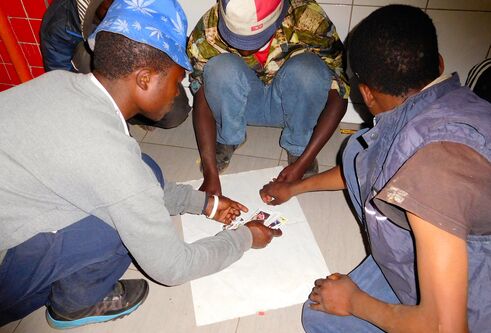
Lorraine van Blerk is a Professor of Human Geography at the University of Dundee's School of Humanities, Social Sciences and Law. She serves as Chair of Human Geography and leads the Research Centre for Transformative Change: Educational & Life Transitions (TCELT) in Education and Society. Her work focuses on street children/youth, refugees, and global inequalities. Academy of Social Sciences Fellow (2021) Stephen Fry Awards - Public Engagement Project of the Year (2017) Market Research Society President’s Medal (2015) Research interests include: Street youth resilience mapping Intergenerational partnerships Transitions to adulthood in crises Policy development for marginalized groups Coastal socio-ecological systems Cultural geographies of homelessness Recent publications address global street youth resilience frameworks (2REST project) and cinema's role for Harare street youth. Key collaborations include universities in Pretoria, Cape Town, Makerere, and Ryerson University. Scientific contributions recognized through: 6 major research prizes 16 funded projects 149+ research outputs International visiting appointments (Toronto Metropolitan University, National University of Singapore)
Olga Fernández López is an Associate Professor at the Department of History and Theory of Art, Universidad Autónoma de Madrid, and holds a PhD in Geography and History (History of Art) from Universidad Complutense de Madrid (UCM). She collaborates with institutions including Intermediae (Matadero Madrid), CA2M Madrid, and Andalusian Center for Contemporary Art Seville. PhD Curating Contemporary Art, Royal College of Art (2017) PhD in History of Art, UCM Master’s in Cultural Management, Fundación Ortega y Gasset Her research focuses on: History of exhibition models and curatorial practice Contemporary art in Spain and Latin America Visual culture and political philosophy Museum decolonization Recent publications explore: Urban curatorial practices (2016-2021) Postwar European visual culture (2019) Decolonial exhibition strategies (2020) Scientific awards include: Salvador de Madariaga grant (2020) for research at Columbia University Key projects: PUBLISHERS: Publics of Contemporary Art (2019-2021) European Forum for Advanced Practices (2019-2022) Decentralized Modernities: Cold War Art (2018-2020)
Dr Ruth Craggs is a Professor of Political and Historical Geography at King's College London's Department of Geography, School of Global Affairs. Her work bridges critical historical, political, and development geographies with a focus on North-South relations and decolonisation processes. Reader in Political and Historical Geography since 2013 Previous appointments at University of Hull and St Mary's University College Research spans postcolonial geopolitics, disciplinary histories of geography, urban planning legacies, and Commonwealth networks. She leads the Training Diplomats of Postcolonial African States project (2021-2024) funded by the Leverhulme Trust and contributes to the Empires and Decolonizations Research Hub at King's. Her work intersects with UN Sustainable Development Goals through decolonial lenses. Recent publications examine diplomatic training as anticolonial practice (2025), postcolonial pedagogies (2024), and disciplinary histories (2023). She supervises research on geographies of empire, urban policy mobility, and geopolitical performance at Commonwealth conferences. Scientific Awards Leverhulme Trust Research Grant (2021) Supervision Principal supervisors: Dimitris Venizelos, Nirali Joshi, Jacob Fairless-Nicholson Secondary supervisors: Peter Waring, Lee Butcher
Lana Salman is an Assistant Professor in the Department of Political Science at the University of Toronto . A scholar of international development and urban politics, her research focuses on everyday statecraft, social reproduction, and urbanism in the Middle East and North Africa. PhD, University of California, Berkeley (City and Regional Planning, Global Metropolitan Studies) MUPP, American University of Beirut Her research explores how urban populations negotiate citizenship and state formation through: Land access and infrastructure development Microfinance institution operations Post-revolutionary governance practices Transdisciplinary north-south comparative analysis Current projects include: Tunisia State-Making: Ethnographic study of urban poor communities' role in statecraft Brussels-Beirut Comparison: Analysis of social workers' roles in refugee resettlement and urban displacement
Jule Thober is a Scientific Manager at the Helmholtz Centre for Environmental Research - UFZ , leading Topic 5 "Landscapes of the Future" in the Helmholtz Program and managing the Integration Platform "Robust Pictures of the Future". She contributes to cross-disciplinary research in Smart Models / Monitoring and Computational Hydrosystems , focusing on agent-based models, sustainable land management, and climate risk analysis. Roles : Scientific Manager (2022–), Postdoc (2017–2021), PhD Student (2013–2016) Projects : Copernicus Contract Ulysses 2, LandYOUs Game Development Research Interests center on socio-environmental systems, integrating agent-based models with ecological economics. Her work explores decision-making under climate uncertainty, land use policy, and resilience of pastoral systems through computational methods. Publication Trends (15 most recent) span ecological complexity, environmental informatics, and computational hydrosystems. Key themes include agent-based land use models , climate risk mitigation , and participatory decision support tools . Collaborations involve UFZ departments, international institutions, and interdisciplinary teams in Germany and abroad. She contributes to Helmholtz POF IV programs and EU-funded initiatives like 4DHydro.