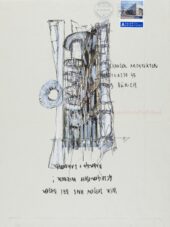
Roger Boltshauser is a Full Professor and Deputy Head at the Department of Architecture, ETH Zurich. His practice and academic work emphasize tectonic building culture, proportion, and material experimentation, diverging from mainstream German-Swiss architectural trends. He combines teaching with active architectural practice, influencing younger generations at ETH and TU Wien. Key themes: Tectonic structures, grid-based order, social responsibility in architecture, critique of modernist canons Notable projects: Hochhaus H1 Zwhatt-Areal (2025), Masterplan Zoo Basel (2025), Centre for Dental Medicine Zurich (2025) His buildings prioritize mass and permanence , evident in projects like the Kopfholz School and Rauch House . Recent works at the EPFL Solar Biennale (2025) and Architecture of Memory exhibition (2025) explore sustainable design and cultural narratives. Boltshauser’s studio on Dubsstrasse exemplifies research into load-bearing structures and urban spatial relationships.
Babak Falsafi is a Full Professor at the School of Computer and Communication Sciences (IC) at EPFL, leading the Parallel Systems Architecture Laboratory (PARSA). He is a renowned expert in computer architecture, datacenter systems, and cloud-native server design. His research focuses on post-Moore era computing, emphasizing heterogeneous architectures, energy efficiency, and scalable IT infrastructure. Falsafi is the founder of EcoCloud, an EC-sponsored industrial-academic consortium investigating sustainable information technology. He holds ACM and IEEE fellowships, a Sloan Research Fellowship, and has contributed to major projects like Optimus Prime (data transformation acceleration), AstriFlash (flash-based online service systems), and Midgard (virtual memory re-design). His work spans hardware-software co-design, memory systems, and security. Falsafi advises numerous PhD students and collaborates with industry partners such as Google and Cavium. Key achievements include pioneering scalable multiprocessor architectures, snoop filters in IBM BlueGene, and spatial memory streaming in ARM cores. His lab develops open-source tools like QFlex for server simulation. He frequently presents at top conferences (HPCA, ISCA, MICRO) and chairs workshops on post-Moore infrastructure. Teaching roles include leading courses in computer architecture and parallel systems across multiple EPFL departments (SIN, EDIC, SSC, SMA). His work addresses datacenter challenges like the 'data tax' and mitigating latency through specialized accelerators.
Dima Damen is a Professor of Computer Vision at the School of Computer Science, University of Bristol, where she leads the Machine Learning and Computer Vision Group. She also serves as a Senior Research Scientist at Google DeepMind. As an EPSRC Early Career Fellow (2020-2025) and a Fellow of ELLIS for Europe, her research focuses on advancing computer vision, particularly in egocentric (first-person) vision, video understanding, and action recognition. Her educational background and professional journey have positioned her as a leader in the field of computer vision, with a particular emphasis on understanding human activities from wearable cameras. She has received numerous awards including Best Paper at ACCV 2024 and Outstanding Paper at ICASSP 2021. Professor Damen's research interests span multiple areas of computer vision and machine learning. She specializes in egocentric vision, where she has made significant contributions to understanding human activities from first-person perspectives. Her work explores video understanding, action recognition, hand-object interactions, and the development of vision-language models that can interpret and generate instructions from visual data. She has pioneered approaches to unique video captioning, long video understanding through active memory representations, and spatial reasoning from egocentric videos. Her research often bridges the gap between theoretical computer vision and practical applications in human-centered AI. Her recent publications demonstrate a strong focus on egocentric vision, with papers like "AMEGO: Active Memory from long EGOcentric videos" (ECCV 2024) and "HOI-Ref: Hand-Object Interaction Referral in Egocentric Vision" (2024) advancing the state of the art in understanding long-form first-person videos. She has also contributed to vision-language models with works like "ShowHowTo: Generating Scene-Conditioned Step-by-Step Visual Instructions" (CVPR 2025) and "It's Just Another Day: Unique Video Captioning by Discriminitave Prompting" (ACCV 2024, Best Paper). Her research shows a consistent trajectory toward building systems that can understand human activities in natural environments with human-like capabilities. Professor Damen has received significant recognition for her work, including: EPSRC Early Career Fellow (2020-2025) ELLIS Fellow for Europe (Nov 2024) Best Paper at ACCV 2024 Outstanding Paper at ICASSP 2021 (awarded to only 3 out of 1700 papers) Outstanding Reviewer for CVPR 2020 and 2021 Program Chair for ICCV 2021 She has successfully advised numerous PhD students and postdoctoral researchers, many of whom have gone on to prestigious positions in academia and industry. Her group has secured significant research funding including the EPSRC Programme Grant Visual AI and the EPSRC UMPIRE grant. She actively collaborates with industry partners including Google DeepMind, Adobe, and Meta, ensuring her research has practical impact. Professor Damen leads the Machine Learning and Computer Vision Group at the University of Bristol, which focuses on egocentric vision, video understanding, and the development of vision-language models. The group has created influential datasets like EPIC-KITCHENS, which has become a standard benchmark in egocentric vision research. Her team regularly participates in and organizes workshops at major computer vision conferences including CVPR, ICCV, and ECCV.
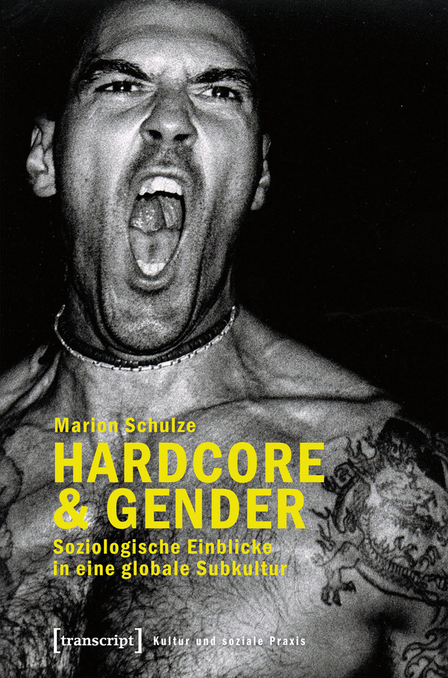
Marion Schulze is an Assistant Professor of Gender Studies and Cultural Anthropology at the University of Basel, serving as Co-Chair of the Center for Gender Studies. Her academic journey includes a joint professorship with Prof. Alain Müller and prior roles as Senior Lecturer at the University of Neuchâtel and doctoral researcher at the University of Basel. She holds a PhD in Sociology from Basel and a degree in Arts and English from the University of Osnabrück, Germany. Her research intersects feminist epistemology, sociology of social worlds, and knowledge materialities. Key projects include studying verbs-as-concepts in feminist theory (earning an SNSF Spark Grant), analyzing hardcore-punk's gender knowledge systems, and investigating digital infrastructures through K-Drama viewer studies. She also explores analog design practices and non-human entities in social world ecologies. Notable achievements include founding a EU-COFUND graduate school at the Swiss School of Public Health, authoring the monograph Hardcore & Gender , and curating an 1980s hardcore graphic design blog series. Her work bridges theory and practice through participatory ethnography and innovative archival methods. Key Research Themes: Feminist material theory, social world ecologies, hyphenation in feminist texts, multi-reality frameworks Methodological Innovations: Figure-ground archiving, organo-graphic approaches, translocal ethnography Prior professional milestones include building interdisciplinary academic programs and advancing queer methodologies in subcultural studies. Her current projects explore the intersection of plants and social worlds through material feminist frameworks.
Prof. Dr. Mike Martin is a leading researcher at the University of Zurich's Center for Gerontology . His work spans cognitive aging, social development in old age, and life-span developmental psychology, with a focus on ecological validity in aging research. Professor, University of Zurich Director, Zurich Longitudinal Study on Cognitive Ageing Co-editor, Journals of Gerontology series Key research areas include: Healthy aging and quality of life Cognitive-emotional interactions in aging Dyadic adaptation in dementia caregiving Mobile sensing of aging-related behaviors Participatory research methodologies Language use as a biomarker of aging His recent publications analyze: GPS mobility and cognitive function Machine learning in reminiscence detection Prospective memory trajectories Emotion regulation in couples Digital interventions for cognitive health Neuroimaging correlates of aging
Dr. Olga Vysotska is a Researcher affiliated with the Professorship for Robotic Systems at ETH Zurich's Department of Mechanical and Process Engineering. Her work focuses on advancing robotic systems through research in sensor-based navigation, SLAM (Simultaneous Localization and Mapping), and autonomous systems. She holds a doctoral degree and is based in Zurich, Switzerland. Her email is olga.vysotska@inf.ethz.ch. Research Interests: Olga's research spans robotics, computer vision, and autonomous navigation. She specializes in LiDAR-based place recognition, SLAM algorithms, and cross-modal localization using 3D scene graphs. Her work addresses challenges such as environmental changes, sensor fusion, and data association in dynamic environments like agriculture and underground exploration. Key themes include robust localization, loop closure detection, and adaptive algorithms for real-world robotic applications. Publications Overview: Olga's recent work emphasizes diffusion-based LiDAR place recognition (2025), 4D spatial-temporal mapping for agricultural robots (2023), and SceneGraphLoc for cross-modal localization (2024). Her research trends highlight innovation in sensor integration, algorithmic robustness, and practical applications in challenging environments. Earlier contributions include exploration of catacombs with mobile robots (2013) and SLAM enhancements using public map data (2017). Grants & Advising: While specific grants or student advisement details are not listed, her active publication record suggests involvement in funded research projects. Her work often collaborates with industry and academic partners to advance robotic autonomy in complex scenarios. Labs/Teams: As part of the Robotic Systems Professorship, she likely contributes to ETH Zurich's robotics labs focused on SLAM, sensor systems, and autonomous navigation. Her projects may intersect with the Department's broader initiatives in mechanical and process engineering.
Ueli Grossniklaus is an Ordinary Professor at the University of Zurich within the Faculty of Mathematical and Natural Sciences , affiliated with the Department of Plant and Microbiology . His work focuses on plant developmental biology, particularly epigenetic and genetic mechanisms governing reproduction and adaptation. Key Courses: Epigenetics, Plant Biology Workshop, Group Seminars on Current Research Laboratory Techniques: Advanced methods in plant cell mechanics, transcriptomics, and genome editing Research Interests span plant epigenetics, reproductive biology, and the interplay between environmental stress and genetic regulation. He investigates: Mechanistic control of gametogenesis and fertilization Epigenetic contributions to plant adaptation Evolutionary implications of asexual reproduction Biophysical forces in plant cell growth Publication Trends (2025–2018) reveal expertise in: Arabidopsis and fern model systems Epigenetic regulation (DNA methylation, histone dynamics) Apomixis and hybrid seed failure mechanisms Biomechanics of pollen tubes and carnivorous plants Genome editing tools (CRISPR) and long-read sequencing Scientific Collaborations include interdisciplinary projects on: Microfluidic devices for plant cell analysis Gene drive ecology and ethics 3D imaging of plant reproductive structures Advising and Grants focus on mentoring through research internships in developmental biology, genetics, and systems biology. His lab engages in: Epigenetic response to environmental stress Cell wall mechanics in reproduction Computational modeling of plant growth Laboratory Teams integrate plant biologists, bioengineers, and computational scientists to study: Mechanistic gene regulation Evolutionary developmental biology Microrobotics for cellular force measurement
Patricia Spyer is a Professor of Anthropology & Sociology at The Graduate Institute Geneva since 2016. She holds affiliate positions at the Albert Hirschman Centre on Democracy. Her expertise spans cultural anthropology of Indonesia, visual media studies, and material culture. She has held prestigious roles including Chair of Cultural Anthropology at Leiden University (2001–2015) and Global Distinguished Professor at NYU (2009–2012). Her research focuses on violence, visuality, religion, and urban-rural dynamics in Southeast Asia. Education: PhD in Anthropology from the University of Chicago. Earlier positions included Visiting Fellowships at ANU (2014), NYU Shanghai (2017), and Cambridge University (2020). Research interests include: Visual anthropology and media representations Conflict dynamics and post-war societies Religion-politics intersections Urban and rural sociocultural landscapes Her publications include Orphaned Landscapes: Violence, Visuality, and Appearance in Indonesia (2021), The Memory of Trade (2000), and co-edited volumes like Images That Move (2013) and Handbook of Material Culture (2013). Editorial roles: Vice-chair of the Prince Claus Fund, member of Wenner-Gren Foundation Advisory Council, and editorial boards for Annual Review of Anthropology and Positions: Asia Critique . Her work bridges academic research with public engagement through museum collaborations and policy advisory roles.
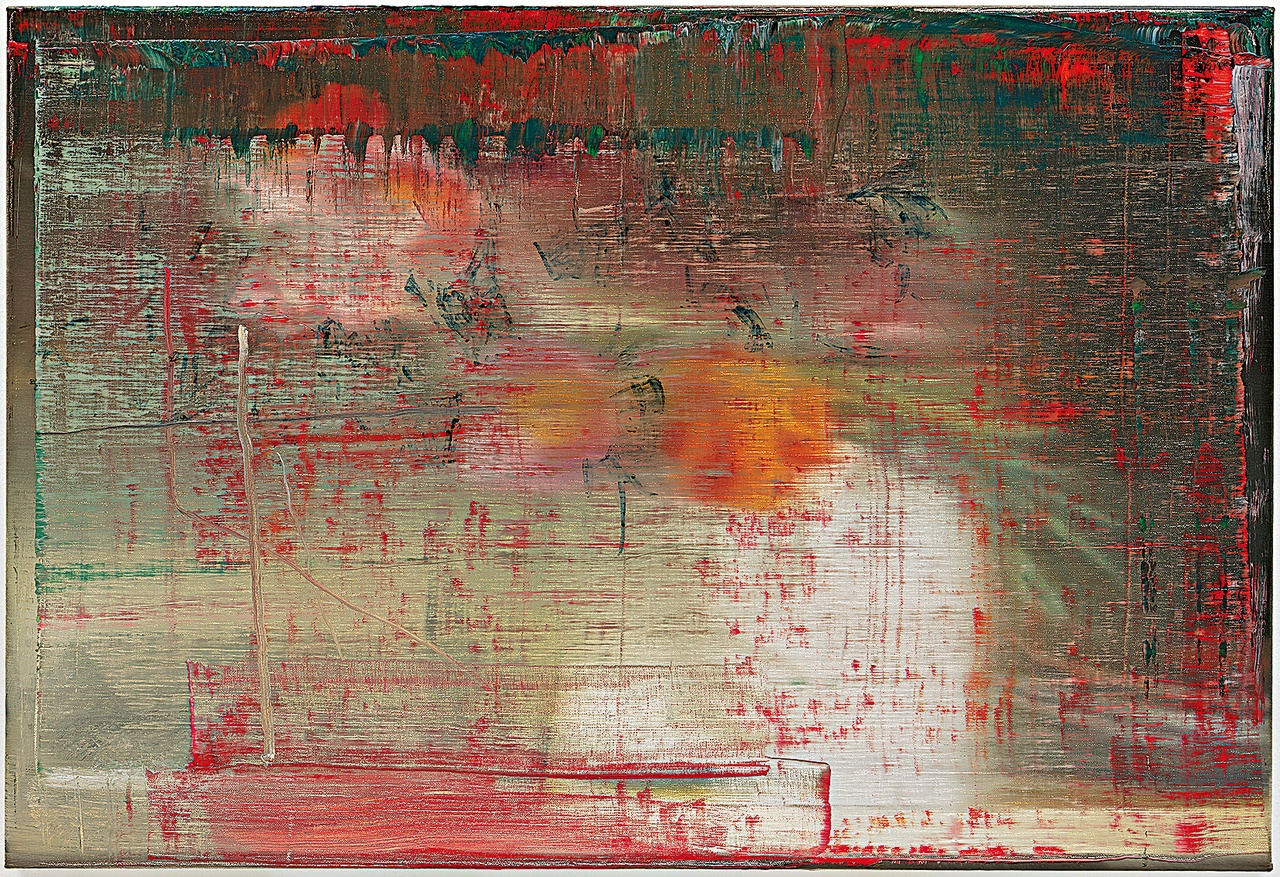
Julia Gelshorn is a full professor of modern and contemporary art history at the University of Fribourg , Switzerland, since 2013. She specializes in strategies of appropriation, repetition, and translation in art, with a focus on 21st-century practices and 18th-century French art theory. Her research explores artistic subjectivity, realism, and the intersection of art, politics, and economy. Education: Art History, Theater Science, and Italian Literature at the Universities of Cologne and Bern. Key Roles: Post-doctoral fellow at the German Center for Art History (2006-2008); visiting professor at HfG Karlsruhe (2008-2010); professor at Universities of Vienna (2010-2011) and Hamburg (2011-2013). Research Interests center on: (1) artistic appropriation as a critical and affective tool; (2) realisms across historical contexts; (3) artist interviews as legible texts; (4) art’s engagement with political and economic systems; (5) theoretical frameworks for visual culture. Her current Real Abstractions project (2023-2027) rethinks realism through social abstractions like financialization and digital networks. Scientific Contributions include the Lazarus Prize from the University of Bern’s Faculty of Humanities (2003) for her dissertation on Richter and Polke. Her publications span books like Aneignung und Wiederholung (2012) and edited volumes on artists such as Jean Tinguely (2016), while her recent articles address Martin Kippenberger, Rosemarie Trockel, and Benjamin Buchloh’s historiography. Notable Projects include the completed SNSF-funded Cinema in Art and Literature (2016) and the ongoing Real Abstractions initiative, which also involves a traveling exhibition and interdisciplinary workshops.
Prof. Dr. Kenny R. Cupers is Professor of Architectural History and Urban Studies at the University of Basel , affiliated with the Department of Social Sciences in the Faculty of Humanities and Social Sciences . He co-founded and leads the Urban Studies division, focusing on the intersections of architecture, urbanism, colonialism, and planetary design in African and European contexts. PhD, Harvard University (2010) M.Sc. and B.Sc. in Architecture, Catholic University of Leuven Studies in Visual Culture and Urban Theory, Goldsmiths College, London His research centers on architectural modernism, housing, infrastructure, and decolonization . Key themes include the planetary politics of design, coloniality of infrastructure, and the role of architecture in state transformation. He is currently working on two book projects in Kenya: one on unmaking the plantation system through arts and architecture, and another on post-independence Nairobi’s urban history. Recent publications include The Earth that Modernism Built: Empire and the Rise of Planetary Design (2024) and The Social Project: Housing Postwar France (2014). He leads the Sinergia project Governing through Design (2020–2025) and previously directed the SNF-funded How Infrastructure Shaped Territory in Africa (2018–2022). His work appears in journals such as e-flux Architecture , Antipode , and Architectural Theory Review . Scientific Awards: No specific awards listed in the provided text. As an educator, Cupers promotes engaged pedagogy and collaborative research, co-editing What is Critical Urbanism: Urban Research as Pedagogy (2022). His public research projects include Swiss Corporate Coloniality and Lamu Futures . He has advised multiple PhD and Master’s students, though specific names are not listed. He is part of a vibrant research team including Dr. Ernest Sewordor, Dr. Laura Nkula-Wenz, and Dr. Prita Meier. Laboratories and Research Teams: Urban Studies, University of Basel Critical Urbanisms Program Sinergia Project: Governing through Design How Infrastructure Shaped Territory in Africa (completed) Infrastructure Space and the Future of Migration Management (completed)
Rachid Guerraoui is a Full Professor at the École polytechnique fédérale de Lausanne (EPFL) where he leads the Distributed Computing Laboratory (DCL) within the School of Computer and Communication Sciences. He holds appointments in multiple departments including IC-SSC and IC-SIN for teaching, and serves on the IC Academic Evaluation Committee. A Moroccan/Swiss/French researcher, Guerraoui has previously been affiliated with Commissariat à l'Energie Atomique in Saclay, Hewlett-Packard Labs in Palo Alto, the Massachusetts Institute of Technology in Boston, and Collège de France in Paris. Guerraoui's research focuses on distributed and concurrent computing across various scales, from multiprocessors to wide-area networks. His work spans Byzantine fault tolerance, distributed machine learning, blockchain technologies, transactional memory, and consensus algorithms. His recent publications reveal a strong emphasis on Byzantine-resistant machine learning, decentralized learning systems, and the theoretical foundations of distributed consensus. The research demonstrates significant contributions to making distributed systems more robust, efficient, and secure against adversarial conditions. Guerraoui has received numerous prestigious awards including ACM Fellow (2012), Professor at College de France (2018), Nygaard-Dahl Award (2024), and Barroso Award (2025). His work has earned multiple best paper awards at top conferences including DISC, ICDCS, IPDPS, and ACM Middleware. He serves as Associate Editor of the Journal of the ACM (2010-2025) and has chaired program committees for major conferences such as PODC, DISC, and Middleware. As an educator, Guerraoui supervises numerous doctoral students and has mentored many successful researchers who now work at leading institutions and companies including Meta, Oracle Labs, Chainlink Labs, and Protocol Labs. He teaches courses on Distributed Algorithms and Concurrent Algorithms at EPFL, emphasizing both theoretical foundations and practical implementations. His educational initiatives include Wandida, a library of scientific e-synopses, and Zettabytes, projects aimed at making computer science accessible to broader audiences.
David Manuel Bozzini is a Full Professor at the University of Fribourg , affiliated with the Faculty of Letters and Human Sciences within the Department of Social Sciences . He also serves as a Lecturer in the Department of Computer Science (Faculty of Science and Medicine), indicating interdisciplinary expertise. Joined University: 2017 Research Focus: Bozzini's work examines state surveillance mechanisms in militarized contexts, particularly in Eritrea and its diaspora. His research spans political anthropology, digital security, and cryptography, analyzing how insecurity is socially constructed and resisted through both traditional and technological means. Publications: His recent works explore: Ethnographic analysis of surveillance practices Digital repression in authoritarian regimes Political mobilization among exiles Technological resistance strategies Contact: Email: david.bozzini@unifr.ch Phone: +41 26 300 7840
Prof. Dr. Anna Pawlak is a Full Professor of Modern Art History at the University of Zurich since September 2025. She previously held a W3 Professorship in Early Modern Art at the Institute of Art History, Eberhard Karls University of Tübingen (2020–2025) and was First Deputy Spokesperson of the Collaborative Research Center 1391 "Other Aesthetics" (2022–2025). Her research focuses on intermediality, visual rhetoric, and cultural hybridity in early modern Dutch art, canon formation, and the epistemic potential of printed works. University of Zurich (2025–present) Eberhard Karls University of Tübingen (2014–2025) Her projects, such as SFB 1391 Subproject C4 "Intermedialität und Repräsentation," explore Latin epigrams and Dutch prints as sites of aesthetic and political negotiation. She has published extensively on topics like Hendrick Goltzius' engravings, Juan de Valdés Leal's hieroglyphs, and the cultural dynamics of Antwerp's festivals. Recent awards include the 2012 Offermann-Hergarten Prize for her dissertation on Pieter Bruegel the Elder. Co-editor of "Plurale Autorschaft" (2023) Co-editor of "Andere Ästhetik meets Andere Ästhetik" (2024) Her articles analyze the intersection of Latin texts and visual art, emphasizing how intermediality shaped European cultural memory. She collaborates with institutions like the University of Zurich, Tübingen's Graphische Sammlung, and the Bibliotheca Hertziana, Rome. Active in organizing workshops and exhibitions, including "Heemskerck & Co. Welt/Bewegend" (2022), she continues to bridge art history with interdisciplinary aesthetics.
Dr. Matteo Fadel is a Researcher in the Department of Physics at the University of Basel, working in the Quantum Optics Lab led by Prof. Philipp Treutlein. He completed his PhD (2014-2018) and Postdoc (2018-2021) in the same group, focusing on quantum many-body systems, entanglement, and quantum metrology. His research explores foundational aspects of quantum physics using ultracold atoms and hybrid atom-optomechanical systems, with applications in quantum technologies like quantum memories and sensors. Education: B.Sc. Physics, University of Padua (2008-2011) M.Sc. Physics, ETH Zurich (2011-2013) Key Research Interests: Entanglement in macroscopic systems (e.g., Bose-Einstein condensates) Einstein-Podolsky-Rosen steering and quantum nonlocality Quantum memories and optical storage in atomic vapor cells Hybrid quantum systems (e.g., atom-mechanical oscillator coupling) Publications Highlight: Recent work includes observing the EPR paradox in two Bose-Einstein condensates (2023), developing microfabricated quantum memories (2024), and studying spin squeezing in helium-3 (2021). These contributions bridge fundamental quantum physics with technological applications. Awards: Prix Schläfli 2019 (Swiss Academy of Sciences) Contributor to Paul Ehrenfest Best Paper Award 2017 Teaching: Fadel has contributed to courses such as Physik IV, Quantum Optics I, and Introductory Computational Quantum Mechanics at the University of Basel.
Prof. Bruce FUDGE is a Full Professor at the University of Geneva within the Department of Mediterranean, Slavic and Oriental Languages and Literatures . His academic work bridges Qur'anic studies and Arabic literature , with a particular focus on the Arabian Nights tradition. He has made significant contributions to understanding scriptural hermeneutics, Islamic identity formation, and cultural symbolism through works like Qur'anic Hermeneutics: al-Tabrisi and the Craft of Commentary (2011) and A Hundred and One Nights (2016). Research Focus : Qur'anic exegesis, medieval Islamic storytelling, and sociocultural symbolism in Middle Eastern traditions Key Publications : The Turban and the Hat (2022) Non Sola Scriptura: Essays on the Qur'an and Islam (2022) Barbe et barbus (2019) His 2025 BSOAS article critiques Stephen J. Shoemaker's historical-critical approach to Quranic origins, while his 2022 Routledge publication explores mimetic representation theories. FUDGE's analysis of beard symbolism (2019) connects ancient Mesopotamian practices to modern ISIS propaganda. He has extensively reviewed works on Islamic civilization, including Robert Irwin's Ibn Khaldun biography (2018) and Shahab Ahmed's Before Orthodoxy (2017). Recent 2023 MLA publication examines teaching methodologies for the Thousand and One Nights , and his 2018 Die Welt des Islams article compares Qur'anic theocentrism with Western tragic traditions. FUDGE's 2008 Brill publication deconstructs al-Rummānī's taḍmīn concept, influencing modern Arabic literary theory.