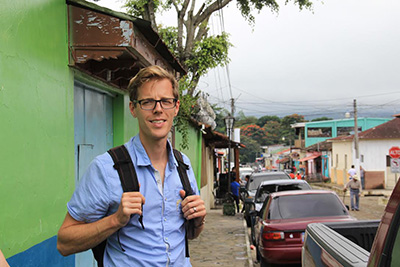
Juan Alcacer is the James J. Hill Professor of Business Administration at Harvard Business School. He holds a PhD in International Business and Strategy from the University of Michigan, an M.A. in Economics, an MBA in Finance, and a Computer Engineering degree. His research focuses on international strategies, location decisions, and agglomeration economies. PhD - University of Michigan (Ross School of Business) MA - Economics, University of Michigan MBA - IESA Computer Engineering - Universidad Simon Bolivar Alcacer’s work examines how firms build competitive advantage through geographic choices, supply chain dynamics, and knowledge transfer. Recent projects analyze Brexit’s impact on investment and the role of internal/external agglomeration economies. His publications span top journals like Strategic Management Journal , Management Science , and Journal of International Business . Awards include the 2024 HBS Student Association Faculty Teaching Award and the 2016 Michigan Ross Distinguished PhD Alumni Award. 2024 HBS Student Association Faculty Teaching Award 2019 Greenhill Award for Field Global Immersion program 2016 Michigan Ross Distinguished PhD Alumni Award 2013 Meritorious Service Award from Management Science At HBS, he teaches required MBA strategy courses, Executive Education programs, and PhD seminars. His consulting spans global corporations on competitive advantage and location strategy.
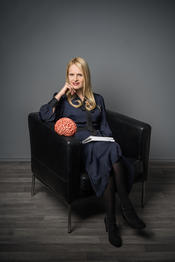
Univ.-Prof. Dr. Michaela Sambanis is a Professor of English Didactics at the Institute of English Philology within the Department of Philosophy and Humanities at Freie Universität Berlin. She has held this position since 2011 and previously served as the managing director of the Institute from Winter semester 2017/2018 to October 2019. Her academic journey includes research work at the Transfer Center for Neuroscience and Learning at the University of Ulm (2008-2011), completion of her habilitation in 2006, and her promotion in 2001. Professor Sambanis's research centers on the innovative intersection of educational neuroscience and language teaching methodology. Her work pioneers the field of Positive Foreign Language Didactics, connecting positive psychology with language education. She investigates embodied cognition approaches, particularly movement-based learning, and explores theater methods and arts integration in language instruction. Her research also addresses teacher well-being and health, multilingualism in educational settings, and the application of neuroscience findings to practical classroom situations. The k2teach project represents her current focus on teaching-learning labs in English teacher education. Her scholarly output demonstrates a consistent trajectory toward integrating neuroscience with language pedagogy, with recent publications increasingly addressing mental health, digital transformation in education, and positive psychology applications. The evolution of her work shows a progression from practical teaching methods to increasingly sophisticated neurodidactic frameworks that bridge scientific evidence with classroom practice. Professor Sambanis serves on multiple scientific advisory boards including the Goethe Institut in Munich, the Transfer Center for Neuroscience and Learning at the University of Ulm, and the Schlözer Program for Teacher Education. She is also the founding chair of the cross-state E&M Berlin-Brandenburg section and a member of the German Society for Foreign Language Research (DGFF). Her editorial work includes the SELT book series on English Language Teaching. Her teaching responsibilities include supervising master's theses in English teaching, and she has developed numerous teaching-learning laboratories that connect theoretical knowledge with practical application in teacher education. Her work demonstrates a strong commitment to evidence-based foreign language didactics that incorporates insights from neuroscience, psychology, and educational research.
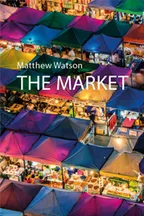
Matthew Watson is a Professor of Political Economy at the University of Warwick's Department of Politics and International Studies, and an ESRC Professorial Fellow (2013-2019). His work explores the intersection of political economy and the history of economic thought, focusing on how markets are ideologically framed as naturalized institutions and the political implications of such framing. He leads the 'Rethinking the Market' project and serves as Department REF Lead and Director of Academic Staff Development. PhD from University of Birmingham Joined Warwick in 2007 Watson's research investigates the cultural and political evolution of market ideology, tracing its roots in economic theory and its pervasive influence on public discourse. He challenges the dominance of mathematical market models across social sciences, critiques the historical underpinnings of comparative advantage theory, and examines the role of narratives like Robinson Crusoe in shaping economic subjectivity. His work also extends to analyzing austerity policies post-financial crisis and the politicization of economic expertise. His recent publications include False Prophets of Economics Imperialism (2024), which critiques the ontological separation between abstract economic models and empirical realities, and The Market (2018), which unpacks the ideological construction of market forces. Articles span topics such as epistemic injustice in budgetary politics, financialization's impact on state action, and the raced market frames in economics education. ESRC Professorial Fellow (2013-2019) Over 20 years of academic leadership Watson supervises PhD and postdoctoral researchers in political economy and history of thought, emphasizing alignment with his 'Rethinking the Market' project. He has mentored 20 postdoctoral fellows and 38 PhD students to completion, with six current supervisees. His insights are disseminated through academic presentations, blog posts, and podcasts.
Marta Severo is a Lecturer at University of Paris Nanterre in the Department of Information, Communication, Digital Media within the Faculty of Humanities and Social Sciences. She also maintains significant research affiliations with University of Lille where she has directed multiple projects including the PEPS Digital Routes Project (2015-2016). Her academic profile is characterized by interdisciplinary research at the intersection of digital technologies and cultural heritage. Her research focuses on digital representations of cultural heritage, particularly intangible cultural heritage (ICH) and cultural itineraries like the Via Francigena. She investigates how digital methods can be used to study, represent, and safeguard cultural heritage through social media analysis, network mapping, and participatory platforms. Her work examines the relationship between amateurs and institutions in knowledge production, with special attention to Wikipedia as a citizen science tool. Her publication portfolio demonstrates consistent scholarly output with significant contributions to understanding digital representations of cultural routes, stakeholder networks along heritage paths, and participatory approaches to cultural heritage management. Her research shows a clear trajectory from methodological development in digital humanities to applied studies of specific heritage contexts. Humboldt Research Fellowship for Experienced Researchers (2023-2025) for project on ethics of digital participation IUF project funding for 'Data in action' research on research trajectories of implication NEST project (Marie Skłodowska-Curie RISE Action Programme) visiting fellowship at UC Berkeley (2022) As a research leader, Marta Severo has directed multiple significant projects including the ANR COLLABORA project (construction of an observatory of cultural contributory devices), the Wikipatrimoine project (exploring collaborative management of cultural heritage), and the ICH Observatory project (mapping digital networks of ICH stakeholders in France). Her work demonstrates strong commitment to interdisciplinary collaboration across computer science, social sciences, and heritage management. She frequently partners with European institutions including the European Association of Via Francigena Routes and has presented at numerous international conferences on cultural heritage and digital methods.
Roger Flage is a Professor of Risk Management at the University of Stavanger, affiliated with the Faculty of Science and Technology and the Department of Security, Economics and Planning. His research focuses on foundational and applied aspects of risk analysis, uncertainty quantification, and decision-making under uncertainty, with applications in critical infrastructure, environmental systems, and offshore energy. Roger Flage's research interests lie at the intersection of risk science, safety engineering, and decision theory. He investigates how uncertainty—especially epistemic uncertainty and assumptions—affects risk assessments, and advocates for more transparent and robust frameworks. His work spans theoretical advances, such as the treatment of 'black swan' events and the concept of 'real risk', as well as practical applications in offshore safety, power systems, and geohazards. He emphasizes the integration of data-driven methods, AI, and digital twins while critically assessing their limitations and associated security risks. His recent publications show a strong trend toward integrating dynamic, data-rich, and interdisciplinary approaches to risk analysis. Themes include the role of time in risk, AI applications, infrastructure interdependencies, and environmental risk in the oil and gas sector. He frequently publishes in top-tier journals like Risk Analysis , Reliability Engineering & System Safety , and Safety Science , often in collaboration with leading scholars such as Terje Aven and Seth Guikema. No scientific awards are mentioned in the provided text. Roger Flage has supervised or collaborated with several researchers, though no formal list of advisees is provided. His work is supported through academic collaborations and institutional affiliations rather than explicit grant mentions. He is actively involved in advancing risk science methodology, particularly in the treatment of assumptions and uncertainty, and contributes to both theoretical foundations and real-world applications in safety-critical domains. He is associated with research groups and collaborative networks at the University of Stavanger, particularly within the Department of Security, Economics and Planning. His work often involves interdisciplinary teams focusing on risk in complex engineered systems, including energy, transportation, and environmental systems.
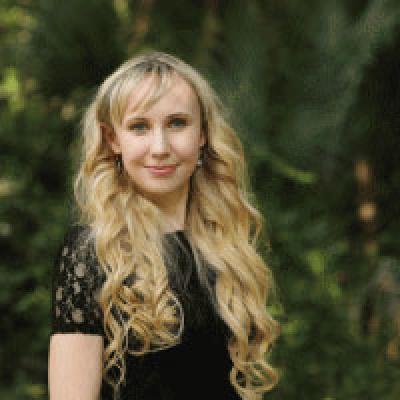
Sylwia J. Piatkowska is an Associate Professor at the College of Criminology and Criminal Justice , Florida State University. Her research focuses on crime and deviance, comparative and international criminology, and advanced quantitative methods. She holds a Ph.D. in Sociology from SUNY Albany (2016) and a B.A./M.A. from Opole University (2006). Her work has been recognized with top honors from the Academy of Criminal Justice Sciences for her impactful research on criminology. Key research interests include hate crimes, fiscal criminology, immigration policy impacts, and sentencing disparities. She has authored/co-authored influential studies such as “The New Fiscal Criminology” (2022) and “Suspended Licenses, Suspended Lives” (2020). Her recent work examines temporal trends in bias-motivated violence and the intersection of mental health, race, and gender in sentencing. Recent Awards: Top Honors from the Academy of Criminal Justice Sciences for her book. Professional Roles: Member of the National Policing Institute’s Board of Directors and editor of leading criminology journals. Her research bridges macro-level structural factors with micro-level criminal behavior, emphasizing cross-national comparisons and policy implications. She is affiliated with Florida State University’s criminology research programs and actively contributes to academic discourse through peer-reviewed publications and institutional leadership.
Mark Hebblewhite is a Professor in Ungulate Ecology at the Wildlife Biology Program, University of Montana. His research integrates ecological theory with applied wildlife management, focusing on species like elk, wolves, and grizzly bears. Institution: University of Montana Academic Rank: Professor Research Interests span: Wildlife-habitat interactions Predator-prey dynamics Conservation of endangered species Remote sensing for forest and wildlife monitoring Climate change impacts on ecosystems Recent Publications emphasize: Multi-scale movement ecology Remote sensing integration for forest inventory Anthropogenic effects on wildlife behavior Fire ecology and post-disturbance recovery LiDAR and satellite-based vegetation mapping Collaborations include researchers from the University of Alberta, University of British Columbia, Colorado State University, and the Wildlife Conservation Society.
Christian Messier is a Professor at the University of Quebec in Outaouais (UQO) in the Department of Natural Sciences and at the University of Quebec in Montreal (UQAM) in the Department of Biological Sciences. He serves as Scientific Director of the Institute of Temperate Forest Sciences (ISFORT) and holds two prestigious research chairs: the Canada Research Chair on Tree Resilience to Global Changes and the NSERC/Hydro-Québec Chair on Tree Growth Control. His academic career spans over three decades since completing his Ph.D. in forest sciences from the University of British Columbia in 1991. Dr. Messier's research focuses on two primary areas: the complex functioning of managed natural forest systems to develop management approaches that promote resilience in the face of global changes, and the study of trees and urban forests to reconcile the needs of minimizing negative impacts of trees on human infrastructure while maximizing ecosystem services. His work integrates field studies, simulation modeling, and network theory to address pressing challenges in forest ecology and management. His recent publications demonstrate a strong emphasis on urban forest resilience, functional diversity in forest ecosystems, and nature-based solutions for climate adaptation. The research shows a clear trajectory toward more applied, solution-oriented approaches that bridge fundamental ecological understanding with practical forest management applications across diverse spatial scales from individual trees to entire landscapes. Francqui Foundation Chair (Belgium) - 2020 Member of The Royal Society of Canada - 2019 Personality of the Year 'Radio-Canada/Le Droit' - 2017 Humboldt Research Award - 2016 Prix Acfas – Michel-Jurdant - 2010 Canadian Forestry Scientific Achievement Award - 2006 Dr. Messier has supervised over 40 graduate students throughout his career and currently leads multiple major research projects including the Canada Research Chair on Forest Resilience, the NSERC/Hydro-Québec Chair on Tree Growth Control, and the SylvCIT project for urban forest immunization against global change. His research has been supported by significant grants from NSERC, Canada Research Chairs program, Hydro-Québec, and other major funding agencies. He directs the Messier lab with research assistants Kim Bannon and Fanny Maure, and collaborates with numerous researchers across Canada and internationally. His team studies diverse aspects of forest ecology including soil dynamics, functional composition of tree communities, nature-based solutions for climate adaptation, and ecophysiology of maple water flow. The lab maintains strong connections with the International Diversity Experiment Network with Trees (IDENT) and other major forest research initiatives.
Dr. Thomas Goebel is an Assistant Professor at the Center for Earthquake Research and Information (CERI), University of Memphis. He holds a PhD from the University of Southern California (2013). His research focuses on induced seismicity, fault structure, and earthquake source processes, integrating rock mechanics, seismology, and hydrogeology. Key projects include studies on fault roughness effects, aftershock clustering, and induced seismicity mitigation. He leads the Earthquake Physics Group (EPG), comprising 1 PostDoc and 5 graduate students, and collaborates internationally on volcano monitoring and geothermal energy projects. Dr. Goebel has received the 2023 Tigers Ascending to Excellence Award. Education: PhD in Earth Sciences, University of Southern California, 2013. Research interests emphasize interdisciplinary approaches to understanding stress storage/release in the crust, earthquake size prediction, and fault responses to fluid perturbations. His work bridges laboratory experiments, numerical modeling, and statistical analyses to address fundamental seismological questions. Recent publications highlight contributions to induced seismicity spatial footprints, laboratory-based aftershock dynamics, and volcano-seismic network development. He actively mentors students, with recent accolades including NSF internships and travel awards. Labs/Teams: Earthquake Physics Group (EPG) at CERI, collaborating with institutions in France, El Salvador, and the U.S. on projects like volcanic seismic networks and fault hydrology studies.
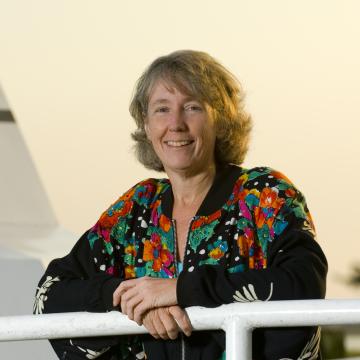
Cindy Lee Van Dover is a deep-sea biologist and the Harvey W Smith Distinguished Professor of Biological Oceanography at Duke University. She serves as Chair of Duke's Division of Marine Science and Conservation and Director of the Duke University Marine Laboratory in Beaufort, N.C. Her research focuses on chemosynthetic ecosystems, biodiversity, and deep-sea policy frameworks. Ph.D. in Biological Oceanography, MIT/Woods Hole Oceanographic Institution (1989) M.A. in Ecology, UCLA (1985) B.S. in Biological Oceanography, Rutgers University (1977) Van Dover's work spans deep-sea ecology, hydrothermal vent biodiversity, and environmental policy. She investigates gene flow in vent invertebrates, ecological impacts of deep-sea mining, and conservation strategies for chemosynthetic ecosystems. Her research integrates field programs using submersibles and telepresence technologies to study vent connectivity and microbial roles in extreme environments. Her scientific leadership includes 80+ peer-reviewed publications and roles as Chief Scientist in NSF- and NOAA-sponsored expeditions. She pioneered studies on geothermal light at vents and deep-sea symbiosis, with recent work on dual symbiotic relationships in vent snails and methane seep ecology. Virginia Outstanding Scientist (2006) Fulbright Scholar (France 2004) Fellow, American Association for the Advancement of Science Mines Medal for Leadership and Innovation NSF Career Awardee Van Dover's grants include NSF EAGER funding for deep-submergence science leadership and Pew Charitable Trusts' support for deep-sea mining impact assessments. She leads interdisciplinary initiatives like Science and Art at the Moment of Discovery , integrating artists into marine research expeditions. Her outreach includes authoring two books: Deep-Ocean Journeys for public audiences and The Ecology of Deep-Sea Hydrothermal Vents as the first textbook in the field. Her work has been featured in Science News , Discover Magazine , and National Public Radio .
Marina Pucci is an Associate Professor of Near Eastern Archaeology at the University of Florence's Department of History, Archaeology, Geography, Arts and Entertainment (SAGAS). She specializes in the Late Bronze Age and Iron Age periods in Syria and Anatolia, with particular expertise in ceramic analysis, spatial studies, and cultural contact during these historical periods. Her extensive fieldwork includes directing excavations at key sites such as Kınık Höyük in Turkey and participating in major projects at Alalakh, Zincirli, and Tell Shech Hamad. Her academic background includes a PhD summa cum laude from Freie Universität Berlin and a Master's degree from the University of Pisa. She has held numerous academic positions including Fixed-term Researcher under the Rita Levi Montalcini program and currently serves as an Associate Professor at the University of Florence. Pucci's research focuses on material culture of the Late Bronze Age and Iron Age in Anatolia, the Levant, Central Syria, and Northern Mesopotamia. She examines group identity, migration theories, center-periphery relationships in the Neo-Assyrian and Hittite Empires, functional analysis of pottery, social archaeology, architectural space, and Syrian archaeology. Her work often explores cultural encounters, technological transfers, and the impact of political changes on material culture across the ancient Near East. Her recent publications demonstrate a consistent focus on the Amuq region, ceramic analysis, and Iron Age material culture. Her work increasingly incorporates digital documentation methods and addresses cultural heritage preservation in conflict zones. She examines transitions between historical periods, particularly the Late Bronze to Iron Age transition, analyzing how material culture reflects social, political, and economic changes. Her research connects specific archaeological findings to broader historical narratives about cultural contacts and transformations in the ancient Near East. As an academic advisor, Professor Pucci supervises undergraduate, master's, and doctoral students, guiding thesis work on Near Eastern archaeology. She has secured significant research funding including MAECI grants, OrMe Foundation support, Prin projects, and Rita Levi Montalcini funding. Her international collaborations span institutions in Turkey, Syria, Iran, Israel, Germany, and the United States. Professor Pucci leads archaeological field teams at Kınık Höyük in Niğde, Turkey, directing a group of 6-7 students and postdocs from the University of Florence. She coordinates international collaborations with the Oriental Institute at Chicago, Freie Universität Berlin, and various Turkish and Syrian universities on excavation and preservation projects. Her work has significant implications for understanding cultural heritage in conflict areas and developing preservation strategies for endangered archaeological sites.
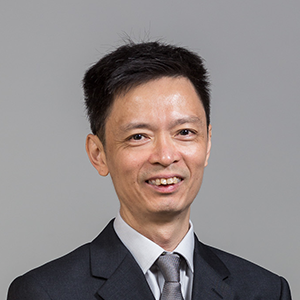
CHAN Chee Yong is an Associate Professor in the Department of Computer Science at the School of Computing, National University of Singapore (NUS) . He earned his Ph.D. in Computer Science from the University of Wisconsin-Madison and holds B.Sc. and M.Sc. degrees in Computer Science from NUS. Education : Ph.D., Computer Science, University of Wisconsin-Madison M.Sc., Computer Science, NUS B.Sc., Computer Science (1st Class Honours), NUS His research focuses on database systems , emphasizing query processing and optimization , transaction management , and database usability . He has contributed extensively to XML data dissemination, skyline computation, and multicore database performance optimization, with publications in venues like ACM SIGMOD, VLDB, and IEEE ICDE. Recent publications show increasing emphasis on join optimization , transaction healing , and spatial-keyword queries , reflecting trends in multicore systems, complex query processing, and XML data management. His work combines theoretical rigor with practical applications in distributed databases and data engineering. Notable professional roles include Associate Editor for the VLDB Journal , ACM SIGMOD Record , and IEEE Transactions on Knowledge and Data Engineering . He has served on program committees for major conferences like SIGMOD, ICDE, and VLDB across 2003-2026. Dr. Chan has supervised 9 PhD students and 10 M.Sc./M.Comp. students , including WANG TaiNing (2021), LI Meiying (2020), and TRAN Quoc Trung (2011). His advisees have been placed in institutions like the Institute for Infocomm Research and Huawei Shannon Lab.
Mikko Joronen is an Associate Professor of Regional Studies at Tampere University, affiliated with the Faculty of Management and Business and the Department of Environmental Policy and Regional Studies. His research focuses on political geography, particularly examining everyday violence, coloniality, and materiality in Palestine and the Middle East. He holds a doctoral degree from the University of Turku (2011) and has held prestigious fellowships including the Academy of Finland Research Fellowship (2017–2022) and the Tampere Institute for Advanced Study Senior Fellowship (2022–2024). Joronen leads the Geographies of Coloniality and Everyday Violence Research Group (GOCEP) and co-leads the Palestine Research Group with Newcastle University. His research explores themes such as atmospheric violence, politics of vulnerability, and temporalities of colonialism. Notable projects include the ERC-funded 'Dwelling with Crisis: Home at Spaces of Chronic Violence' (2023–2028) and the Academy of Finland-funded 'Present-Futures in/of Palestine' (2019–2023). He has published extensively on topics like weaponized breathing, olfactory durations, and decolonial geographies in Palestine. Educations: PhD in Human Geography (University of Turku, 2011) Grants: ERC Consolidator Grant (2023–2028), RELATE Center of Excellence (2014–2019) Joronen’s work bridges theory and practice, analyzing the intersections of ontology, politics, and space. His recent publications emphasize atmospheric materialities and colonial rhythms in Palestinian territories, reflecting his commitment to critical spatial analysis and decolonial thought. Awards: Docent in Political Geography (2017) Academy of Finland Research Fellowship (2017–2022) ERC Consolidator Grant (2023–2028) Research Groups: Leads GOCEP and co-leads the Palestine Research Group. Previously part of SPARG (Space and Political Agency Research Group) and RELATE Center of Excellence.
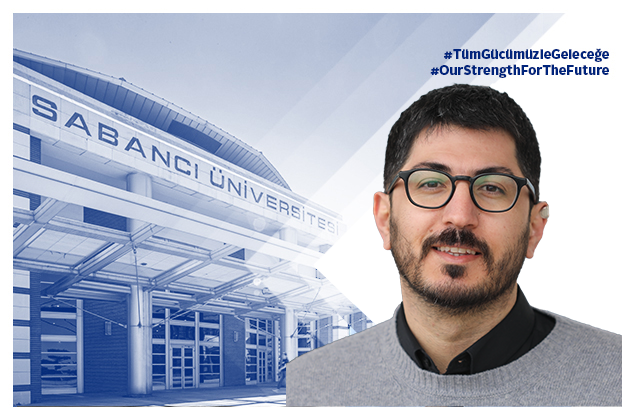
Dr. Morteza Ghorbani is a researcher and faculty member at Sabancı University's Faculty of Engineering and Natural Sciences (FENS), specializing in fluid mechanics and environmental engineering. He leads the AquaCav project, a collaborative effort with Oxford Brookes University, focused on developing sustainable water treatment solutions using hydrodynamic and acoustic cavitation. His research addresses global challenges such as PFAS pollution and wastewater management, with applications in biomedical devices and energy-efficient technologies. Key collaborations include projects funded by the International Science Partnership Fund (ISPF), leveraging his expertise in microfluidic systems and cavitation dynamics. Dr. Ghorbani's work combines experimental and numerical methods to optimize cavitation-based processes for environmental and biomedical applications. His contributions span from fundamental fluid dynamics studies to applied technologies like flexible cystoscopes and clot-on-a-chip platforms. Scientific achievements include the ISPF Research Collaboration Grant (2024) and advancements in PFAS removal, graphene exfoliation, and microalgae cultivation. His research group at Sabancı University explores interdisciplinary solutions at the intersection of engineering, nanotechnology, and sustainability.
Dr. Pieter van Oel is an Associate Professor in the Water Resources Management group at Wageningen University & Research, focusing on sociohydrology and addressing water crises in South America and Africa. His expertise spans civil/hydraulic engineering, environmental management, hydrology, irrigation systems, and drought diagnosis. He teaches courses like Design in Land and Water Management and supervises PhD students such as Louise Cavalcante and Daniel Wiegant. His research emphasizes societal dimensions of water challenges, including drought impacts, agent-based modeling, and serious gaming for community engagement. Projects include analyzing drought policies in Brazil, improving water governance in Kenya, and evaluating groundwater vulnerability in Ethiopia. He collaborates on initiatives like the Diagnosing Drought project and Socio-hydrological Simulation tool development. Key contributions include critiques of drought monitoring systems' alignment with local realities and frameworks for sustainable agroforestry management. His work bridges science and policy, advocating for interdisciplinary solutions to water scarcity and climate resilience.