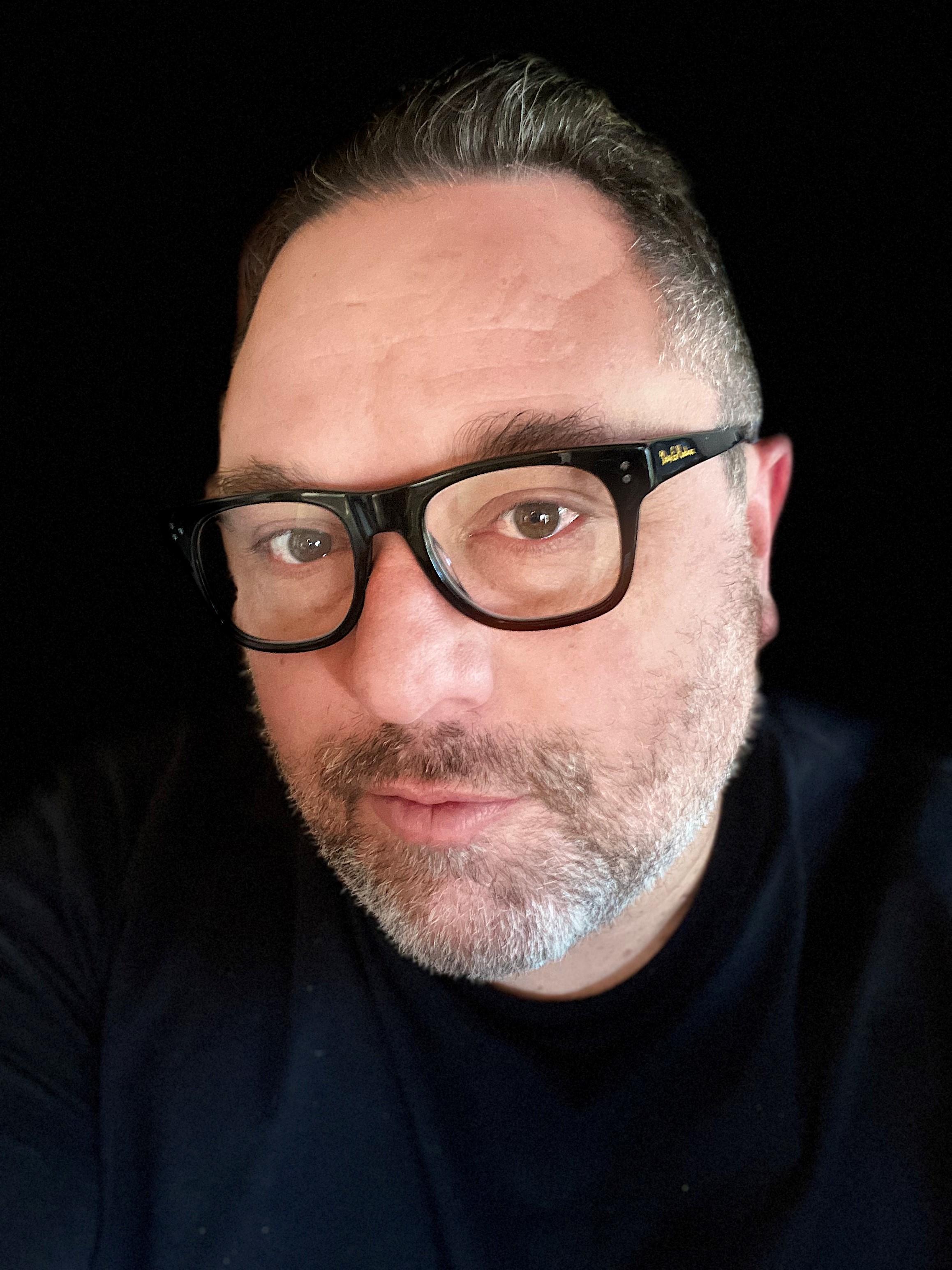
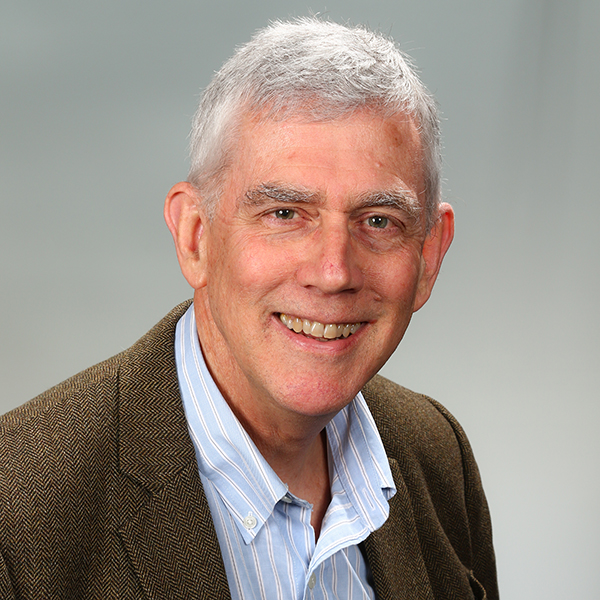
Dr. Guy C. Hembroff is an Associate Professor in the College of Computing at Michigan Technological University, serving as the founding director of the MS in Health Informatics Program and director of the Computational Science & Engineering PhD Program. He leads the Biomedical Data Science (BDS) Lab, focusing on healthcare innovation through AI, cybersecurity, and data science. His expertise spans machine learning, medical image analysis, and healthcare interoperability. Education: PhD in Computational Science & Engineering (Michigan Tech), MPA in Public Administration (Northern Michigan University), BS in Finance and Economics (Michigan Tech). Research interests include human health-focused AI/ML models, cybersecurity in healthcare, medical image segmentation, and public health surveillance. His work emphasizes collaboration with medical institutions like Henry Ford Hospital to develop clinical decision support systems and improve disease surveillance. Recent projects include AI-driven fracture risk prediction from knee radiographs and enhancing mental health intervention efficacy through multi-source data integration. Advising includes four doctoral students in areas like medical image analysis, blockchain for patient data security, and cost-effective mental health modeling. His software projects include FHIR-enabled health information exchange systems and Tick-Talk, a crowdsourced tick disease monitoring platform. Labs/Teams: The BDS Lab integrates expertise in medicine, AI, and cybersecurity to tackle healthcare challenges, emphasizing real-world impact through industry and academic partnerships.
Kuuipo Walsh is the GIScience Program Director and Senior Lecturer I at Oregon State University's College of Earth, Ocean, and Atmospheric Sciences (CEOAS). She oversees the GIScience certificate program, advising over 200 students annually on course selection, career paths, and academic plans. Her research focuses on GIS, metadata standards, digital libraries, and coastal atlases. She teaches advanced undergraduate and graduate courses in GIScience via Ecampus, including GIScience I-III and Geospatial Perspectives on Intelligence. Education: B.S. in Computer Science (California Polytechnic State University, 1993) and M.S. in Marine Resource Management (Oregon State University, 2002). Her publications emphasize spatial data infrastructure, coastal data networks, and usability in geospatial tools, with notable contributions to the Oregon Spatial Data Library and Virtual Oregon projects. She has no listed scientific awards but maintains active engagement in geospatial education and professional advising. Lab/Team Affiliation: Directs the GIScience certificate program and collaborates on geospatial initiatives within CEOAS.
Denis Lalanne is a full Professor in the Department of Informatics at the University of Fribourg, leading the 'human-building interaction' group at the Smart Living Lab and directing the Human-IST institute . He specializes in Human-Computer Interaction (HCI), focusing on multimodal interaction, visual analytics, and Human-Building Interaction (HBI). His work bridges computer science with architecture and urban design to improve building occupants' comfort and accessibility. His research spans topics such as assistive technologies for visually impaired individuals, energy-efficient lighting systems, and predictive models for indoor environmental quality. He has led projects like the Human-IST Lab and SWICE (Sustainable Well-being in Energy Transition), emphasizing interdisciplinary collaboration between academia, industry, and public institutions. Key contributions include the development of frameworks for human-centric lighting, wearable sensors for urban comfort analysis, and empathic systems to enhance HCI. His work is published in top venues like ACM Transactions on Accessible Computing , IEEE , and CHI . Education and career highlights include a PhD from EPFL (Swiss Federal Institute of Technology), postdoctoral research at IBM’s USER Group, and prior teaching roles at the University of Avignon. He is a Swiss representative at IFIP TC13 and has organized major conferences like IHM 2016.
Assoc. Prof. David Ahlström is an Associate Professor at the Department of Informatics Systems, Alpen-Adria-Universität Klagenfurt. He also teaches within the Department of Media and Communications, focusing on human-computer interaction and interface design. His research spans multiple areas in human-computer interaction (HCI), including graphical user interfaces, usability engineering, and interactive mobile systems. Department of Informatics Systems (main affiliation) Department of Media and Communications (teaching) David Ahlström's research explores both theoretical and practical aspects of interaction design: Human-computer interaction (HCI) Graphical user interfaces (GUIs) Usability engineering Mobile computing interfaces Information design Interactive systems His publications demonstrate a consistent focus on interface innovation across different device categories. Early work investigated fundamental menu interaction models and mobile screen usability (2002-2007), while recent research (2015-2025) explores advanced spatial interfaces, vibration-based input methods, and multimodal UAV control systems. Common themes include: Evaluating new interaction techniques Optimizing spatial navigation Developing intuitive gesture systems Exploring wearable interface possibilities Advancing smartphone interaction paradigms Improving visual search performance As a member of the Equal Opportunities Working Group, he contributes to institutional initiatives beyond his technical research. His work often addresses practical challenges in mobile device usability across various contexts including education, emergency response, and domestic smart home systems.
Professor Bradley Evans is a distinguished Earth observation and remote sensing specialist at the University of New England, where he holds a position in the Faculty of Science, Agriculture, Business and Law within the School of Environmental and Rural Science. His expertise spans environmental science, biodiversity conservation, and the application of hyperspectral imaging spectroscopy to solve real-world environmental challenges. Previously, he has held significant positions including Director of Australia's Terrestrial Ecosystem Research Network and Director of Sydney Informatics Hub at The University of Sydney. PhD in Environmental Science, Murdoch University, Western Australia, 2013 Bachelor of Science with Honours in Environmental Science, Murdoch University, Western Australia, 2009 Bachelor of Science in Energy Studies, Murdoch University, Western Australia, 2009 Advanced Diploma in Marketing Management, TAFE NSW, Bradfield College, 1999 CASA RPAS sub 25kg (Multirotor Drone) certification Professor Evans's research focuses on applying advanced remote sensing techniques to environmental monitoring and conservation. His work integrates hyperspectral imaging with ecological modeling to address critical issues such as koala habitat mapping, forest health assessment, and water quality monitoring. He has pioneered approaches using plant fluorescence to model growth patterns and has contributed significantly to NASA's OCO2 mission. His recent work emphasizes the development of open-source tools for hyperspectral imaging, making advanced remote sensing more accessible to researchers worldwide. Analysis of Professor Evans's recent publications reveals a strong trend toward practical applications of hyperspectral imaging across diverse environmental contexts. His work spans from precision agriculture applications for cotton farming to koala habitat conservation, demonstrating the versatility of remote sensing technologies. The research shows increasing integration of machine learning techniques with hyperspectral data, enhancing the accuracy and efficiency of environmental monitoring systems. There's also a notable emphasis on open-source solutions, reflecting his commitment to democratizing access to advanced remote sensing technologies. 2016 – Terrestrial Ecosystem Research Network NSW – NSW Chief Scientist Award Multiple travel scholarships from NCCARF, EUFAR, and Australian Research Council 2010 Centre of Excellence for Climate Change PhD top-up Scholarship 2008 Master class Scholarship from Wentworth Group of Concerned Scientists Professor Evans has successfully supervised numerous PhD and Master's students across multiple institutions, demonstrating strong mentorship capabilities. His research is supported by substantial grants including the $198K NSW Department of Environment Koala's in the Landscape project (2023), the University of Sydney's Koala's in the Air project ($70K), and significant funding for the OpenHSI initiative. He has been a Chief Investigator for the Australian Research Council Training Centre on CubeSats, UAVs and Their Applications, securing funding for innovative remote sensing projects. His work with NASA JPL's Surface Biology and Geology Study and collaborations with international space agencies demonstrates the global impact of his research. At the University of New England since 2023, Professor Evans has established the Earth Observation Laboratory with a special focus on water and wildlife habitat (particularly koalas) and riverine water quality. He serves as Vice President of Earth Observation Australia and participates in the AquaWatch Steering Committee for the Commonwealth Department of Defence. His laboratory actively collaborates with industry partners like HyVista Corporation and academic institutions including The University of Sydney. The lab emphasizes open-source approaches to remote sensing technology, exemplified by the OpenHSI project, which has created accessible hyperspectral imaging solutions for researchers worldwide.
Stephen Voida is an Assistant Professor and Founding Faculty member in the Department of Information Science at the University of Colorado Boulder, part of the College of Communication, Media, Design, and Information. He holds a PhD in Computer Science and an MS in Human-Computer Interaction from Georgia Institute of Technology. His research focuses on mental health informatics, personal informatics, and HCI, particularly exploring how technology influences mental health and supports individuals in managing conditions like bipolar disorder and diabetes. His work has been recognized with best paper awards and funded by NSF and Google Research. Voida's research spans designing tools for personal data reflection, studying multitasking and interruptions, and developing interventions for mental health challenges. He has held academic positions at institutions including Indiana University, Cornell, and the University of Calgary, alongside industry roles at Microsoft and Boeing. His current projects include technology for bipolar disorder management and infrastructure for diabetes self-care. Key awards include a CRA Computing Innovation Fellowship and a Best Paper Honorable Mention at CHI 2024. His teaching includes courses on programming, ubiquitous computing, and research methods. He remains active in HCI communities, advocating for technology that balances innovation with human well-being.
Norman Johnson is a Bauer Professor of Business Analytics and Chair of the Decision and Information Sciences Department at the University of Houston's C. T. Bauer College of Business. He holds a joint appointment as a Professor in the Hobby School of Public Affairs. His research focuses on decision-making processes, psychometric analysis, data mining, and predictive analytics, with applications in computer-mediated negotiations, virtual worlds, and healthcare information systems. He has over two decades of academic experience, including prior roles as an Assistant Actuary and current advisory roles in corporate data analytics. Johnson earned his Ph.D. from the City University of New York. His research appears in top-tier journals such as MIS Quarterly, Journal of Management Information Systems, and European Journal of Information Systems. Key themes include the impact of communication media on negotiation dynamics, affective computing in virtual environments, and the integration of structured/unstructured data analytics in public and private sectors. His applied work bridges academia and industry, with projects on predictive modeling for pension funds, healthcare IT adoption, and user engagement in virtual worlds. While no formal awards are listed, his prolific publication record reflects sustained scholarly impact. Johnson advises students in the Bauer Ph.D. programs and collaborates across disciplines, including the Hobby School of Public Affairs. His current research emphasizes big data applications in governance and healthcare, reflecting his dual role in business analytics and public policy.
Elena Simperl is a Professor at King's College London, UK, with former affiliations at the University of Southampton and Karlsruhe Institute of Technology. Her work focuses on knowledge graphs, semantic web technologies, and AI-driven data management. She leads research in collaborative knowledge engineering, dataset search, and AI ethics, contributing to projects like the TheyBuyForYou platform for public procurement transparency. Her research interests span knowledge representation, crowdsourcing, and human-AI collaboration. Notable contributions include advancing methods for knowledge graph construction, improving data quality via crowdsourced and automated approaches, and exploring the societal impact of AI systems. She has co-edited major conferences such as ISWC and ESWC, and her work bridges technical innovation with practical applications in public policy and information systems. Key projects include developing frameworks for dataset usability, AI-ready data infrastructure, and systems for fact-checking visual content. Her collaborations span academia and industry, addressing challenges in data governance, misinformation detection, and ethical AI deployment.
Russ Cucina, MD, MS, is a Professor of Medicine in the Division of Hospital Medicine at the University of California, San Francisco (UCSF). He holds dual roles as Vice President and Chief Health Information Officer for UCSF Health System, overseeing analytics, software infrastructure, and genetic/genomic services. His academic and professional focus integrates clinical informatics, healthcare technology, and genomic medicine to advance patient care and institutional missions. Dr. Cucina's education includes an MD from UC Davis, an MS in Biomedical Informatics from Stanford, and a BA in Molecular and Cell Biology from UC Berkeley. He is board-certified in Internal Medicine. His research interests span electronic health record (EHR) interventions, clinical decision support systems, pharmacogenomics implementation, and healthcare operations optimization. Notable achievements include the 2010 Distinguished Paper Award from the American Medical Informatics Association and the AMDIS Award for clinical informatics excellence. His work emphasizes translating data-driven solutions into actionable clinical practices, such as reducing telemetry overuse and improving discharge processes. Dr. Cucina leads UCSF's genetics/genomics laboratories and strategic partnerships in health IT. He is a vocal advocate for leveraging technology to enhance healthcare quality and accessibility, with a focus on personalized medicine and system-wide informatics advancements.
Florian Windhager is a Senior Researcher at the Center for Cultures and Technologies of Collecting at the University for Continuing Education Krems. His work focuses on Information Visualization , Mental Models , and Cultural Heritage Data , with a strong emphasis on Digital Humanities . He leads projects such as Bibliotheca Eugeniana Digital and Zukunft Kulturpool Visuell , funded by institutions like the Austrian Academy of Sciences (ÖAW). Research interests include: Visual reasoning for cultural and historical data Uncertainty-aware visualization techniques Narrative visualization of biographies and objects Design of scalable visualization frameworks Key projects include: Developing tools for analyzing Prince Eugene of Savoy’s library ( Bibliotheca Eugeniana Digital ) Exploring visual methods for digital cultural preservation Fostering interdisciplinary approaches to cultural data analysis Teaching areas include Information Visualization, Philosophy of Science, and Qualitative Methods. He actively contributes to organizations like the Alliance of Digital Humanities Organizations (ADHO) and the International Big History Association (IBHA) .
Clinton J. Andrews is a Distinguished Professor, Associate Dean for Research, and Director of the Center for Urban Policy Research at the Edward J. Bloustein School of Planning and Public Policy, Rutgers University. He holds a Ph.D. in Regional Planning from MIT and has expertise in urban planning, public informatics, and climate policy. Education : Sc.B. with Honors in Engineering, Brown University S.M. in Technology and Policy, MIT Ph.D. in Regional Planning, MIT Research : Focuses on climate change adaptation/mitigation, urban heat stress, energy transition, and indoor environmental quality. His work bridges technological innovation with equitable urban development. Recent projects include coastal hazard fiscal impacts and low-income seniors' resilience to heat stress. Publications : Recent work addresses solar panel adoption, urban mobility safety, and GenAI governance, reflecting his interdisciplinary approach to urban challenges. Awards : Fellow of AAAS IEEE 3rd Millennium Medal Leadership : Editor of the Journal of Planning Education and Research, and editorial board member of the Journal of Industrial Ecology. Directs the Center for Urban Policy Research, fostering applied research on urban sustainability.
Yang Li is an Assistant Professor of Computer Science at Iowa State University, specializing in computer architecture, machine learning, and their intersection. He holds a Ph.D. and M.S. from Carnegie Mellon University (2020), an M.S.E. from the University of Texas at Austin (2013), and a B.E. from Tsinghua University (2011). Prior to academia, he worked as a Senior Research Scientist at Meta, a Research Scientist at Meta, and a Researcher at Microsoft. His research focuses on large language models (LLM) acceleration, on-device AI, cloud infrastructure optimization, and spatiotemporal forecasting. He has contributed to over 20 peer-reviewed publications at top venues like ASPLOS, EMNLP, and ICASSP. Research Interests: Algorithmic and systems-level acceleration of LLMs On-device AI co-design and privacy Cloud memory/power management Graph-based spatiotemporal forecasting Teaching: Taught COMS 6730 (Advanced Topics in ML), COM S 321 (Computer Architecture), and guest-lectured on graph signal processing. Recent teaching scores include 4.75/5.0 (Fall 2024) and 4.67/5.0 (Spring 2025). Awards: IBM Patent Application Award (2021) and multiple patents on power management systems for data centers. Service: Program committee member for DAC 2024, NeurIPS 2024, and ICLR 2025. Reviewer for ACM TACO, IEEE TPAMI, TPDS, and others.
Dr. Robb Lindgren is a Professor of Educational Psychology and Curriculum & Instruction at the University of Illinois, Urbana-Champaign , with affiliate appointments at the Beckman Institute, National Center for Supercomputing Applications, iSchool Informatics, Center for Social & Behavioral Science, and Grainger College of Engineering. His research focuses on interactive and immersive digital technologies for learning, particularly in STEM education . PhD in Learning Sciences and Technology Design from Stanford University MA in Psychology from Stanford University BS in Computer Science from Northwestern University Dr. Lindgren explores how body-based interactions with technologies like virtual reality and augmented reality enhance understanding of abstract concepts. His work combines embodied cognition with digital learning environments , examining how physical engagement shapes multimodal learning and collaborative problem-solving . Recent projects include haptic feedback systems and gesture-augmented simulations for molecular visualization and climate change education. His publications analyze trends in XR (Extended Reality) applications, emphasizing gestural agency , collaborative discourse , and multisensory learning . Key findings show how embodied interactions improve conceptual retention in physics and explanatory modeling in thermal conduction, alongside innovative assessment methods using attention tracking and behavioral analytics. 2017 - Jan Hawkins Award for Early Career Contributions Multiple NSF-funded projects on technology-enhanced learning As Director of the Technology Innovations in Educational Research and Design (TIER-ED) initiative, Dr. Lindgren fosters cross-campus collaboration to address educational challenges through emerging technologies. He teaches courses on digital learning environments , educational game design , and embodied learning theories , while developing prototypes for STEM education in partnership with schools and museums.
Dr. Tracy Ewen is a Professor in the Department of Computer Science at ETH Zürich. Her research spans computational geometry, algorithms, and interdisciplinary applications in climate informatics and environmental modeling. She leads initiatives in computational education, designing innovative courses like the Water in Switzerland online program and collaborating on citizen science projects such as CrowdWater. Dr. Ewen emphasizes fostering interdisciplinary dialogue through academic events and workshops, addressing climate change adaptation and decision-making under uncertainty. Her work integrates hydrological field studies, policy analysis, and educational innovation to advance sustainable practices and public engagement. Key focuses include: Climate modeling and Earth system dynamics Hydrological processes in alpine environments Game-based learning for resource management Public participation in environmental monitoring Recent publications explore: Climate change education methodologies Uncertainty in decision-support systems Interdisciplinary academic event design Geophysical data analysis techniques Dr. Ewen's work bridges computer science with environmental science, contributing to both theoretical advancements and practical solutions for global challenges.
Qi Tang is a Research Fellow in the Department of Environmental Science at the University of Basel and concurrently serves as Coordinator of the Swiss Water Earth Systems PhD School at the University of Neuchâtel. His expertise spans hydrogeology, data assimilation, and Earth system modeling. He holds a PhD in Hydrogeology from RWTH Aachen University (2017) and has held postdoctoral positions at institutions including the Alfred Wegener Institute (Germany), the University of Basel, and the Chinese Academy of Sciences. Education: PhD in Hydrogeology, RWTH Aachen University, Germany (2012–2017) MSc in Hydrology and Water Resources, Beijing Normal University (2009–2012) BSc in Applied Mathematics, China Agriculture University (2005–2009) Research Interests: Qi Tang focuses on advancing coupled Earth system models through data assimilation techniques. His work integrates hydrological, oceanographic, and climatic processes to improve predictive accuracy. Key areas include river-aquifer interaction dynamics, satellite data integration in ocean-atmosphere models, and cloud computing for real-time water resource management. His research bridges theoretical modeling with practical applications in environmental monitoring and climate prediction. Publications: His articles emphasize data-driven approaches to environmental systems. Recent work highlights coupled model improvements using satellite data (e.g., ocean-atmosphere interactions), ensemble Kalman filtering for flood simulations, and Bayesian networks for precipitation modeling. These studies underscore his expertise in both computational methods and field applications. Advising & Grants: While no formal advisees are listed, his postdoctoral roles suggest involvement in mentoring junior researchers. No specific grants are mentioned in the provided texts. Labs/Teams: Affiliated with the Hydrogeological Processes group at the Center for Hydrogeology and Geothermal Energy (CHYN), University of Neuchâtel. This group specializes in geothermal energy, hydrochemistry, and stochastic hydrogeology.