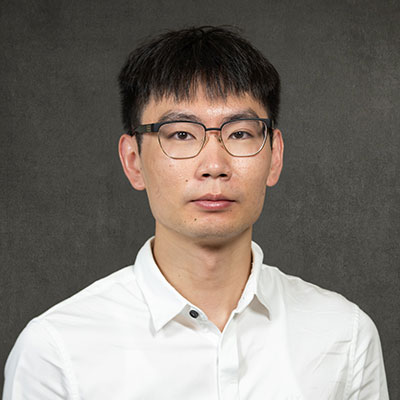
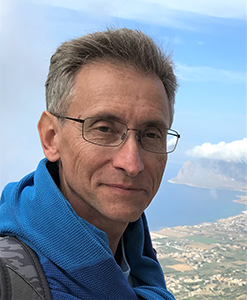
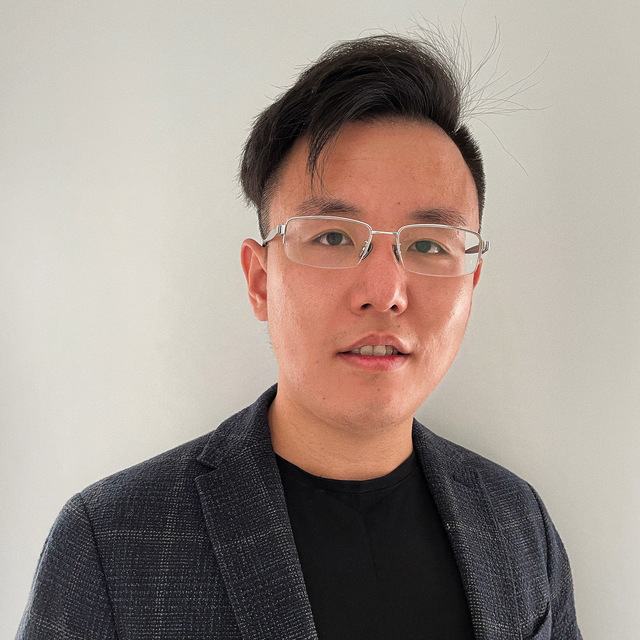
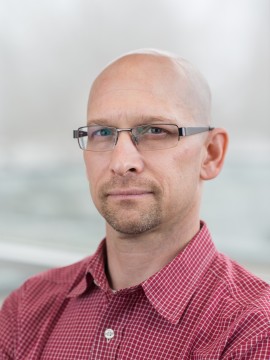
Dr. Emily Burchfield is an Assistant Professor in the Department of Environmental Sciences at Emory University, where she leads the FACES (Food, Agriculture, Climate, Environment, and Sustainability) Lab. Her research integrates social and environmental data to study agricultural sustainability, with projects focused on land use change, climate adaptation, and rural livelihoods. She holds a PhD in Environmental Engineering from Vanderbilt University and MA in Economics from the University of Louvain. Her work examines how agricultural systems adapt to climate change, the characteristics of productive and resilient farming, and drivers of cultivation and conservation behavior. Dr. Burchfield's research combines geospatial analysis with qualitative methods to understand agricultural transitions at multiple scales. Recent publications explore crop diversification, agricultural data practices, and rural livelihoods. Her group develops computational tools for agricultural analysis and collaborates with farming communities to support sustainable transitions.
Dr. Chao Fan is an Assistant Professor in Civil Engineering and Environmental Engineering and Earth Sciences at Clemson University, affiliated with the Glenn Department of Civil Engineering. His research focuses on climate change adaptation, socio-environmental systems dynamics, and urban resilience, leveraging AI and data science. He holds a Ph.D. from Texas A&M University (2020), an M.S. from UC Davis (2017), and a B.S. from China University of Mining and Technology (2016). Dr. Fan's work integrates interdisciplinary approaches to address challenges in disaster management, smart cities, and environmental justice. Key interests include social sensing for infrastructure disruptions, equity in urban mobility networks, and leveraging digital twins for resilience planning. His recent publications explore topics like wildfire impacts, PM2.5 exposure inequity, and carbon market mechanisms for infrastructure adaptation. Professional memberships include ASCE, ACM SIGKDD, AGU, and AAAS. His lab (fanchaolab.com) develops innovative solutions for climate adaptation and equitable urban systems, emphasizing fairness in AI-driven models and network analysis.
Piotr Jankowski is a Professor of Geography and Director of the Joint Doctoral Program in Geography between San Diego State University (SDSU) and the University of California, Santa Barbara. He holds a Ph.D. from the University of Washington and has held faculty positions at institutions in the U.S., Germany, and Poland. His research focuses on spatial decision support systems, participatory GIS, and sensitivity analysis in spatial models. He has authored/co-authored over 100 peer-reviewed publications and two books on GIS applications in urban planning and decision-making. Education: Ph.D. (1989, University of Washington), M.S. (1979, Poznań University of Economics and Business). Positions include Professor at SDSU since 2003, Director of the Joint Doctoral Program since 2019, and Coordinator of the GIS Certificate Program. He has led international collaborations in Austria, Brazil, Germany, Ireland, Italy, New Zealand, and Poland. Research interests span spatial decision support systems, participatory GIS methodologies, and sensitivity analysis in spatial models. His work emphasizes bridging GIS technology with urban planning and environmental decision-making. Recent publications explore AI-enabled participatory planning, uncertainty in spatial models, and geodiversity assessment. Awards: 2018/19 SDSU Alumni Distinguished Faculty Award. Grants and advising involve spatial optimization, urban sustainability, and environmental modeling. He leads the Center for Earth Systems Analysis Research and has pioneered tools like the Geo-questionnaire for public participation in planning.
Dr. Raquel Farmer-Hinton is a Professor and Director of the Alternative Education Certificate Program at the University of Wisconsin-Milwaukee (UWM) in the Department of Educational Policy and Community Studies. Her work focuses on urban education equity, racialized policies, and systemic barriers faced by Black and Brown students. She employs both qualitative and quantitative methods to examine college access, social capital, and policy impacts. Education: She holds a BS in Psychology and MS/PhD in Educational Policy Studies from the University of Illinois at Urbana-Champaign. Prior roles include postdoctoral fellowships at the University of Chicago and Educational Testing Service (ETS). Research Interests: Dr. Farmer-Hinton’s scholarship challenges entrenched educational inequities through frameworks like Yosso’s Community Cultural Wealth. Key areas include college-going cultures in urban schools, promise scholarship efficacy, and counter-narratives of success in marginalized communities. Her work often critiques historical and contemporary policies that perpetuate stratification. Grants & Awards: She has secured funding from AERA, ETS, UWM, and the UW Institute on Race and Ethnicity. Her grants focus on policy evaluation and community-engaged research. Service: She coordinated UWM’s Alternative Education Program, served on the UChicago Consortium Steering Committee (including Co-Chair), and joined the UW OPID Advisory Council (2025-2027). Teaching spans graduate/undergraduate courses in education sociology, research methods, and cultural foundations. Labs/Teams: Her work is collaborative, often involving interdisciplinary teams like the East St. Louis Scholars collective (Patton, Rivers, Lewis) producing critical re-examinations of educational inequity literature.
Anandamayee Majumdar is an Assistant Professor in the Department of Mathematics at San Francisco State University (SFSU), part of the College of Science & Engineering. She holds a Ph.D. and M.S. in Statistics from the University of Connecticut and Michigan State University, respectively, and earlier degrees from the Indian Statistical Institute (I.S.I.). Her research focuses on spatial and spatio-temporal processes, Bayesian computation, and their applications in biology, health, environmental sustainability, ecology, economics, finance, and industry. She has developed robust statistical models for handling missing data, multivariate processes, and expert-informed modeling, particularly in contexts like tuna catch estimation during the pandemic and financial risk analysis. She is currently exploring expert-integrated spatio-temporal models and public health trends. Professional experience includes roles as Senior Statistician at the Inter-American Tropical Tuna Commission (2021–2023), Professorial positions at universities in Bangladesh and China, and visiting research at UC Davis. She serves as Associate Editor for Applied Stochastic Modeling in Business and Industry and reviews for journals like Computational Statistics and Data Analysis and Biostatistics . Majumdar has contributed to interdisciplinary collaborations, including soil property modeling in urban ecosystems, and has held leadership roles in academic committees, such as the Interdisciplinary M.S./Ph.D. programs at Arizona State University. She actively mentors students and seeks to involve undergraduates and graduates in research projects.
Dr Paul Widdop is a Professor in Sport Business at Manchester Metropolitan University's Business School. He holds a PhD from the University of Manchester and is a core member of Edinburgh University's Academy of Sport. His research focuses on the economic networks and geopolitical dimensions of sport, employing social network analysis to explore relational dynamics in consumption and production. Widdop has authored 11 books including 'The Business of the FIFA World Cup' and 'Handbook of Football Business and Management', alongside over 40 peer-reviewed articles. Education: PhD in Social Change & Statistics (University of Manchester), MSc in Social Research Methods & Statistics (University of Manchester). Research Interests: Geopolitical economy of sport, social network analysis methodologies, sport policy, fan culture, and global sport networks. He examines intersections between economics, politics, and sociology in sport contexts. Professional Affiliations: Reviews Editor for the Journal of Consumer Culture, Mitchell Centre member (University of Manchester), co-founder/Chair of the Football Collective research community. He actively engages in policy briefs addressing sport's societal impact, including responses to the pandemic's effects on grassroots football. Awards: None explicitly listed, though his editorial roles and research contributions highlight professional recognition. Advising/Grants: No specific grants listed, but his prolific publications and policy engagement indicate active research collaboration. Advises through academic mentorship in sport business and management. Labs/Teams: Leads the Football Collective, a vibrant academic network studying football's socio-economic impacts. Collaborates with institutions like the Mitchell Centre for Social Network Analysis.
Di Zhu is an Assistant Professor of Geographic Information Science at the University of Minnesota's Department of Geography, Environment and Society. He directs the Geospatial Data Intelligence (GeoDI) Lab, focusing on GeoAI and social sensing to analyze human-environment interactions in urban systems, public health, and socioeconomic dynamics. His educational background includes a PhD in Cartology and GIScience from Peking University, complemented by a BSc in GIS and a BA in Economics from the same institution. Key research interests include spatial regression models, human mobility patterns, and GeoAI applications. He has collaborated on projects funded by NIH, NSF, and other agencies, exploring topics like spatiotemporal data imputation, urban flow analysis, and pandemic spatial dynamics. His work bridges traditional GIScience with modern machine learning techniques, emphasizing actionable insights from big geospatial data. Teaching focuses on advanced GIS, numerical spatial analysis, and urban sensing. He actively mentors students through the University of Minnesota's Master of GIS program and serves on academic boards including CPGIS. Current projects include analyzing Twin Cities mobility networks and developing intelligent spatial prediction frameworks.
Yushu Zhu is an Associate Professor at the School of Public Policy at Simon Fraser University. Her research focuses on housing stratification , urbanization , and social equity , with a particular emphasis on immigrant communities , low-income populations , and ethnic minorities . She teaches courses on housing policy, urban transformation, and research methods. PhD in Architecture from University of Illinois at Urbana-Champaign M.Sc. and B.Sc. (Hons) in Geography from Sun Yat-sen University, China Former roles at Asia Pacific Foundation of Canada, UBC, and Brown University Research Interests include urban sociology , community housing , and public policy . Recent work analyzes housing inequality in Canada (1981–2016), state-embedded gentrification in China, and neighborhood participation dynamics. Her publications appear in top journals like Urban Studies and Environment and Behavior . Scientific Awards include multiple SSHRC grants (Partnership, Insight, Partnership Engage) and a Lincoln Institute of Land Policy fellowship. She has contributed to policy reports and participated in expert panels on urban housing, pandemic impacts, and social integration.
Christos Nicolaides is an Assistant Professor at the Department of Business and Public Administration within the School of Economics and Management at the University of Cyprus (UCY), holding a secondary appointment as a Digital Fellow at MIT's Initiative on the Digital Economy. Previously, he spent three years as a James McDonnell Foundation-funded Postdoctoral Fellow at MIT Sloan School of Management. His educational background includes a PhD in Engineering from Massachusetts Institute of Technology (2014), SM from MIT (2011), MSc in Applied Mathematics from Imperial College London (2009), and BSc in Physics from University of Thessaloniki (2008). Nicolaides' research applies mathematical, statistical, and computational tools to large-scale empirical questions in social influence mediated by digital technologies. His work spans Data Science , Machine Learning , Social Networks , and Computational Social Science , with significant contributions to understanding human mobility patterns, disease transmission dynamics, and social contagion effects. His research has established novel methodologies for analyzing complex network structures in mobility data and social interactions. Analysis of his 15 most recent publications reveals a consistent focus on applying network science to real-world problems, particularly in pandemic response (12 publications), human mobility analytics (9 publications), and social contagion dynamics (7 publications). His work demonstrates increasing interdisciplinary integration, combining computer science, epidemiology, and organizational behavior since 2020. Marie S. Curie Fellow Two Highly Cited Papers by Web of Science (2017, 2020) Best Paper Award by Risk Analysis Society (2019) Professor of The Week by Poets & Quants (2020) As principal institutional investigator, Nicolaides has secured over €1 million in research funding from the European Commission, industry partners, Cyprus Innovation and Research Foundation, and Cyprus Ministry of Health. His current teaching includes Social Networks and Entrepreneurship, Introduction to Operations Management, and Quantitative Methods in Management. Media coverage of his work spans major outlets including The New York Times, CNN, Nature, and Science, with significant impact on public health policy discussions during the COVID-19 pandemic.
Abi Gilmore is a Professor of Arts Management, Politics, and Cultural Practices at the University of Manchester's School of Arts, Languages and Cultures (ICP). She holds a part-time secondment as UKRI Policy Fellow at the Department for Culture, Media & Sport. Her work focuses on cultural policy, creative industries, and the role of public spaces like parks in local governance. Gilmore has led interdisciplinary projects such as the AHRC Connected Communities initiative and the UKRI-funded study on pandemic impacts on cultural sectors. She contributes to policy networks including Policy@Manchester and the Manchester Urban Institute, and advises organizations like Creative Addo. Her academic leadership includes founding the MA Arts Management program and co-developing the PhD by Professional Practice in Arts and Cultural Management. Educated at the University of Leicester (BSc Sociology, 1995; DSc Cultural Policy, 2000), Gilmore has held roles in both academia and cultural sector governance, including directing the Northwest Culture Observatory. Her research emphasizes participatory methods, policy evaluation, and the foundational role of cultural infrastructure. She serves on boards for arts organizations such as Brighter Sound and Macclesfield Barnaby Festival, and has extensive international collaborations with institutions in Melbourne and Toronto. Key research outputs include monographs on public parks as cultural policy sites (2024) and edited volumes analyzing pandemic impacts (2022). Her work intersects with UN SDGs related to education, sustainable cities, and responsible consumption. Recent projects explore cultural recovery post-pandemic, devolved governance models, and the political economy of creative ecosystems.
Christopher Kam is a Professor of Political Science at the University of British Columbia, Faculty of Arts. He serves as the Data & Models Certificate Coordinator, overseeing academic and training initiatives in quantitative methods. His research focuses on comparative political institutions, legislative and judicial politics, and the application of quantitative methods to historical and institutional analysis. Kam holds a Ph.D. from the University of Rochester (2002). His research spans comparative politics, electoral systems, and historical political economy. Notable themes include legislative behavior, party formation, and the economic roots of political institutions. He has extensively studied 19th-century British and European political systems, analyzing electoral competition, vote-buying dynamics, and the impact of institutional reforms. Recent work explores polarization in multiparty systems, electoral accountability mechanisms, and the interplay between economic conditions and political party development. His publications demonstrate a strong methodological rigor, combining quantitative analysis with historical case studies. Kam’s academic contributions are reflected in over 40 peer-reviewed articles, with a focus on institutional analysis and comparative governance. He maintains an active research website at https://sites.google.com/site/kamchristopherj/home , hosting datasets and replication materials.
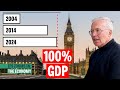
David Miles is a Professor of Financial Economics at Imperial College Business School, affiliated with the Department of Finance. He serves on the Budget Responsibility Committee of the Office for Budget Responsibility and the Commission of the Irish Central Bank. Previously, he was a member of the Bank of England's Monetary Policy Committee (2009–2015). His research focuses on fiscal sustainability, financial stability, monetary policy, and demographic change. He has also contributed to analyses of housing markets, mortgage dynamics, and the impact of remote work on urban economies. Education & Professional Background: Academic roles at Birkbeck College, London and Oxford University Industry experience with Morgan Stanley and Merrill Lynch Research Interests: Fiscal policy challenges and long-term sustainability Monetary policy design and implementation Demographic shifts and their macroeconomic implications Pension system reform and risk management Housing market dynamics and mortgage market innovation Key Publications Trends (2021–2024): Recent work emphasizes pension fund sustainability (e.g., USS pension scheme analysis), post-pandemic economic recovery strategies, and the macroeconomic impacts of demographic changes. He explores policy trade-offs between health safety and economic activity during the pandemic, as well as long-term structural issues in financial systems. Awards: CBE (2016 Queen's New Year’s Honours) Advisory & Grants: Active in policy advisory roles across UK and EU institutions. His work often bridges academic research with practical policymaking, particularly in fiscal and monetary domains. Labs/Teams: Collaborates with cross-disciplinary teams at Imperial College and external institutions on topics like pension systems, macroeconomic modeling, and public health policy.
Thomas Soehl is an Associate Professor and Canada Research Chair in International Migration at McGill University's Department of Sociology (Faculty of Arts). His research focuses on migrant families' intergenerational processes, political attachments of migrants, and cross-border connections. He employs quantitative methods such as multilevel modeling and Bayesian approaches. Education : - PhD in Sociology, University of California Los Angeles (2014) - MA in Political Science, CUNY Graduate Center - MPA in Public Administration, Harvard Kennedy School - Urban Planning degree, University of Kassel Research Interests : Explores how migration impacts political/social identities, family dynamics in transnational contexts, and the role of geopolitical trauma in nationalism. His work bridges migration studies, family sociology, and political sociology. Awards : - 2013 Reuben Hill Award for Inheriting the Homeland? Intergenerational Transmission of Cross-Border Ties in Migrant Families Teaching & Engagement : Teaches courses on migration, social stratification, and quantitative methods. Previously worked as a policy analyst in New York City Council, influencing his applied research focus. Key Contributions : - Pioneered methodologies for studying global migrant populations via social media - Advanced theories on transnational political engagement among refugees - Analyzed legacy effects of historical trauma on contemporary nationalism
Robert (Rob) J. Franzese, Jr. is a Professor and Associate Chair in the Department of Political Science at the University of Michigan. He also serves as the Edie N. Goldenberg Director of the Michigan in Washington Program and Research Professor at the Center for Political Studies (CPS), Institute for Social Research. His research focuses on comparative and international political economy (C&IPE) of developed democracies, emphasizing the interplay between political and economic institutions, structures, and events on macroeconomic policymaking. Franzese is renowned for his work on spatial-econometric models of interdependence and empirical methodologies in political science. Education: PhD in Government from Harvard University (1996), A.M. in Economics and Government from Harvard (1995 and 1992), and B.A. in Economics and Government from Cornell University (1990, Phi Beta Kappa). He teaches courses on quantitative methods, comparative politics, and political economy. Key affiliations include the ICPSR Summer Program in Quantitative Methods and the Center for Political Studies. His research spans topics such as central bank independence, wage bargaining institutions, and spatial econometrics. He has authored/co-authored numerous books and articles on empirical methodology, policy analysis, and interdependence modeling. His methodological contributions include spatial econometric models, multilevel analysis, and model-based estimation for social science theory (EITM). He has advised on policy issues related to globalization, fiscal policy, and labor markets, with a focus on developed democracies. Fransese has directed the ICPSR Summer Program, which trains researchers in advanced quantitative methods. His work bridges political science and economics, emphasizing interdisciplinary approaches to understanding policymaking dynamics and spatial interdependencies.
Dr. Patrick Filippi is a Lecturer in Precision Crop Management at the School of Life and Environmental Sciences, University of Sydney. He is affiliated with the Precision Agriculture Laboratory and the Sydney Institute of Agriculture. His work focuses on integrating remote sensing, machine learning, and geostatistics to address challenges in precision agriculture, particularly in crop yield modeling, soil mapping, and environmental monitoring. Research interests include precision agriculture technologies, soil science applications, data-driven crop management, and the use of satellite and proximal sensing for agricultural decision-making. He has contributed to projects funded by the Grains Research and Development Corporation (GRDC) and the University of Sydney, focusing on spatial variability in crop production, soil constraints, and machine learning interpretability. Key achievements include developing the LimeSoDa dataset for soil mapping and winning the 2016 CSIRO AgData Challenge Hackathon. His grants span topics like nitrogen fixation mapping in legumes and frost/heat management analytics. Filippi collaborates closely with industry to translate research into practical tools for farmers. Awards: 2nd Place CSIRO AgData Challenge Hackathon (2016) Labs: Precision Agriculture Laboratory (https://precision-agriculture.sydney.edu.au/) Grants: Includes Strategic Partnership Seeding Grants (2024), GRDC-funded projects (2022–2024), and Start-Up Research Funding (2024).