Dr Shu-Ling Lu is an Associate Professor at the University of Reading , serving as Director of the MSc Project Management Programme and a Member of Senate . Her research spans Innovation Management , Quality Control , and Net Zero Transitions in construction, alongside Heritage Building Integration and Gender Dynamics in built environment sectors. Her academic journey includes a PhD , MSc in Construction Engineering , and a Diploma in Architectural Engineering , all from institutions in Taiwan and the UK, complemented by a Postgraduate Certificate in Higher Education Practice from the University of Salford. Research Interests : Innovation in construction, quality management, heritage conservation, net-zero transitions, gender equity, and system dynamics applications. Article Trends : Focus on defects analysis , heritage integration , gender dynamics , system dynamics , and net-zero strategies across 15 recent publications. Scientific Awards : Fellow of the Chartered Institute of Building (FCIOB) Fellow of Higher Education Academy (FHEA) Full member, Association for Project Management (MAPM) BSI Committee Participation (Quality Management Standards) Supervision & Grants : Mentored 7 PhD students and led/co-led projects funded by Natural Environment Research Council (NERC) , EPSRC , and COST , with total grants exceeding £500,000.
Shashi Shekhar is a Professor at the University of Minnesota, holding the distinguished titles of McKnight Distinguished University Professor and Distinguished University Teaching Professor. He serves as the ADC/CSE Chair and Director of the AI-LEAF Institute within the Department of Computer Science at the College of Science and Engineering. His research interests span multiple areas of spatial computing including spatial data science, spatial data mining, spatial databases, Geo-AI, and Geographic Information Systems (GIS). His work has focused on developing scalable algorithms for eco-routing, evacuation route planning, and spatial pattern mining. He has made significant contributions to the field through his Spatial Databases textbook, the Encyclopedia of GIS which has seen over 192,918 downloads in 2017, and a spatial computing book for professionals. His research group has produced numerous PhD graduates dating back to 1993 through 2023. Analysis of his recent publications reveals a strong focus on applying spatial computing to critical societal challenges including climate change mitigation through the AI-LEAF Institute, pandemic response through mobility data analysis, and sustainable transportation through eco-routing algorithms. His work bridges theoretical advances in spatial data science with practical applications in urban planning, emergency management, and environmental sustainability. Distinguished McKnight University Professor Distinguished University Teaching Professor UCGIS Education Award (2015) Graduate Education Award (2015) President of University Consortium for GIS (2017-2018) Computing Research Association Board Member (2016-2019) Professor Shekhar has advised over 30 PhD students since 1993, with his most recent graduate in 2023. He has secured significant research funding including a $20 million AI Institute grant focused on climate-smart agriculture and forestry. His Spatial Computing Research Group maintains active collaborations with government agencies and industry partners. The group has developed practical applications featured in media outlets including FoxTV coverage of evacuation route planning algorithms. Current research directions include applying AI techniques to address climate challenges through the AI-LEAF Institute and advancing spatial data science for polar regions through NSF-funded initiatives.
Prof Nigel Mehdi is the Director of the DPhil in Sustainable Urban Development at the University of Oxford's Department for Continuing Education, where he also serves as a Departmental Lecturer. He is a Fellow of Kellogg College, Oxford, and holds an Honorary Professorship in the School of Computer Science at the University of Birmingham. Additionally, he serves as Programme Director for the UAE National Artificial Intelligence Programme. Education: PhD in Real Estate Economics from London School of Economics Postgraduate qualifications in Software Engineering, Politics, Development and Democratic Education, Sustainable Development, Digital Education, and Professional Education and Training Research Interests: Prof Mehdi's research sits at the intersection of urban economics , digital technologies , and sustainable development . His work focuses on applying advanced technologies like AI and big data analytics to urban challenges. Key areas include: Real estate sustainability and economics Smart cities and intelligent buildings Spatial big data applications in urban planning Digital education for sustainability Urban resilience and governance Property technology (PropTech) innovations Research Trends: His recent publications demonstrate a clear focus on future-oriented urban governance , with multiple 'Executive Outlook' reports examining privacy, governance, money, ESG, and work in 2030+ scenarios. These works bridge academic research with practical policy implications for urban development. His earlier works focus on technological applications in surveying and urban development, showing an evolution from technical implementation to strategic foresight. Awards and Recognition: OUSU Outstanding Tutor (2017) Fellow of the Royal Institution of Chartered Surveyors Fellow of the British Computer Society Fellow of the Higher Education Academy Teaching and Supervision: Prof Mehdi leads the DPhil in Sustainable Urban Development programme and teaches on the Master's in Sustainable Urban Development. He welcomes doctoral applications in areas including: Real estate sustainability Spatial big data and smart cities Digital economies and urban analytics AI applications in urban contexts Urban resilience and governance Professional Roles: He serves as Chair of the UK Education Standards Board for the Royal Institution of Chartered Surveyors and as an Accreditation Team member for the Institution of Engineering and Technology. His consultancy work spans public and private sectors, including governments, NGOs, and global corporations.
Carole Voulgaris is an Associate Professor of Urban Planning at Harvard University’s Graduate School of Design (GSD), where she teaches courses on transportation economics, urban analytics, and planning methods. She holds a PhD in Urban Planning from UCLA, an MBA from the University of Notre Dame, and Civil Engineering degrees from Brigham Young University. Her research focuses on travel behavior decision-making, transportation policy, and quantitative metrics for urban environments. She leads the Laboratory for Design Technologies at GSD and has professional experience in transportation planning, including roles at Utah Transit Authority and Transpo Group. Education: PhD in Urban Planning, UCLA MBA, University of Notre Dame Bachelor's and Master's in Civil Engineering, Brigham Young University Research Interests: Dr. Voulgaris explores how urban design influences travel choices and how transportation institutions use data to shape policy. Her work emphasizes equity in mobility access, sustainable infrastructure, and the accuracy of ridership forecasts for transit projects. She has pioneered methods to measure built environment impacts on travel behavior, including studies on school travel patterns and edge-lane road safety. Key Contributions: Her research has been recognized with prestigious awards, including the 2017 Barclay Gibbs Jones Dissertation Prize and the 2019 TRB Fred Burggraf Award. Her recent work examines pandemic-era transit equity, cycling safety disparities, and innovative approaches to urban satisfaction metrics. Teaching & Grants: She instructs core urban planning studios and advanced courses like Transportation Economics and Travel Behavior Forecasting. Her projects include the Highlands’ Harvest studio (Spring 2020) and collaborations with the Laboratory for Design Technologies. She has secured research funding from federal transportation agencies and the GSD. Labs/Teams: Affiliated with the Laboratory for Design Technologies, focusing on integrating technology into urban planning practices.
Nick Haddad is a Professor of Integrative Biology at Michigan State University and serves as the Director of the Long-Term Ecological Research (LTER) site at Kellogg Biological Station. His research focuses on ecological experimentation, particularly examining how habitat loss and fragmentation impact biodiversity and ecosystem functioning. He specializes in reversing these negative effects through landscape connectivity strategies and diversified working landscapes, with a strong emphasis on insect conservation, including critically endangered butterfly species. Role: Professor, Integrative Biology Directorship: KBS LTER Site Location: 322 Kellogg Biological Station Email: haddadn3@msu.edu Haddad's research spans habitat fragmentation, biodiversity conservation, climate change impacts, and agricultural sustainability. His lab conducts large-scale experiments like the Corridor Project and studies rare butterflies (e.g., St. Francis’ satyr, Miami blue) to understand extinction risks and recovery strategies. Recent work explores pesticide effects, prairie restoration, and long-term ecological trends. The 15 most recent publications highlight habitat fragmentation's ecological impacts, climate-driven phenological shifts, and innovative conservation approaches. Key themes include biodiversity monitoring, pesticide-driven declines, prairie restoration for pollinators, and climate adaptation strategies. His work leverages long-term datasets (e.g., 40-year LTER) and integrates theory with applied conservation. Lab activities include mentoring undergraduate and graduate students at KBS, leading the Haddad Lab, and collaborating on projects like the KBS-LTER and SRS Corridor initiatives. Research spans both terrestrial and agroecosystems, emphasizing actionable solutions for conservation and sustainable land use.
Dr. Samuel Cheng is an Associate Professor at the Gallogly College of Engineering , University of Oklahoma , specializing in Electrical and Computer Engineering . He holds a Ph.D. in Electrical Engineering from Texas A&M University (2004), preceded by M.S. and M.Phil. degrees from the University of Hawaii and Hong Kong University of Science and Technology. Education: B.S. (University of Hong Kong, 1995), M.Phil. (HKUST, 1997), M.S. (University of Hawaii, 2000), Ph.D. (Texas A&M, 2004) Professional Experience: Senior Research Engineer at Advanced Digital Imaging Research (2004-2005), prior internships at Microsoft Asia and Panasonic Technologies His research focuses on Information Theory , Signal and Image Processing , and Pattern Recognition , with applications in remote sensing, urbanization analysis, and disaster monitoring. His publications span topics including urban impervious surface mapping , nighttime light analysis , and machine learning for environmental data . His work often integrates multi-source datasets (e.g., Landsat, LiDAR, social media) for spatiotemporal modeling. Technical Expertise: Spectral unmixing, machine learning, thermal remote sensing, GIS integration Key Applications: Power outage detection, vegetation-crime correlation, PM2.5 estimation, smart meter data fusion Dr. Cheng holds three US patents in digital watermarking and is affiliated with IEEE, Sigma Xi, and AAAS. His recent articles demonstrate a trend toward leveraging AI for remote sensing challenges and analyzing urbanization impacts on ecosystems.
Prof. Dr. Øyvind Eide is a Professor in Digital Humanities at the University of Cologne, affiliated with the Department of Digital Humanities under the Faculty of Arts and Humanities. He holds a PhD in Digital Humanities from King’s College London (2013). His research focuses on transformative digital intermedial studies, critical spatial formalization of cultural heritage information, and the relationship between texts and maps as media. He previously served as Chair of the European Association for Digital Humanities (EADH) from 2016–2019 and is actively involved in ICOM’s CIDOC committee. Eide’s work bridges theoretical and practical dimensions of digital humanities, emphasizing spatial analysis, ontology modeling, and interdisciplinary methodologies. His academic contributions include seminal works on network visualization in humanities, cultural heritage ontologies, and the application of critical formalization in media studies. Current research explores the interplay between verbal and spatial expressions of geography in historical narratives. Eide teaches courses such as 'Modelling and Digital Maps' and 'Digital Cultural Heritage,' reflecting his commitment to both research and education. Notable projects include the Ibsen Manuscripts digitization initiative, the GeoModelText tool for spatial narrative analysis, and contributions to archaeological document interconnection through the CIDOC CRM framework. He is Vice Director of the Scholarly Platform: Reflecting and Shaping the Digital Age at the University of Cologne.
Prof. Torsten Wolfgang Kuhlen serves as a Universitätsprofessor at RWTH Aachen University, leading the Teaching and Research Area for Virtual Reality and Immersive Visualization within the Department of Computer Science. He is affiliated with Chair of Computer Science 12 (High Performance Computing), the Visual Computing Institute, and remains an integral part of the RWTH IT Center where his research group operates one of the world's largest Virtual Reality laboratories including the 30 sqm aixCAVE visualization chamber. The group maintains strong connections with Computational Science & Engineering Division, National High Performance Computing Center for Computational Engineering Science (NHR4CES), and VR in Science and Industry Network NRW e.V. Prof. Kuhlen's research spans virtual reality, immersive visualization, and multimodal 3D user interfaces with applications across simulation science, production technology, neuroscience, and medicine. His work combines basic research on advanced methods and algorithms with interdisciplinary collaborations involving RWTH Aachen institutes, Forschungszentrum Jülich, and industry partners. Recent publications demonstrate strong focus on audiovisual perception, immersive analytics, collaborative virtual environments, and practical VR applications in education and manufacturing. His research group has produced significant work on listening effort in virtual environments, immersive authoring techniques, and VR applications for scientific visualization. Notable projects include VRScenarioBuilder for automated vehicle testing and applications in monitoring additive manufacturing processes. The group actively participates in major conferences including IEEE VIS and EuroVis, with several award-winning contributions. Prof. Kuhlen has advised PhD students including Martin Bellgardt who recently completed his doctoral degree on "Increasing Immersion in Machine Learning Pipelines for Mechanical Engineering". The research group maintains state-of-the-art VR infrastructure including the aixCAVE facility which is open to all RWTH research groups.
Eetu Mäkelä is a Professor of Digital Humanities at the University of Helsinki, leading the research group at the Helsinki Centre for Digital Humanities. He focuses on computational methods in humanities and social sciences, including datafication and interdisciplinary collaboration. He serves as Technical Director of DARIAH-FI and a Research Programme Director at the Helsinki Institute for Social Sciences and Humanities. Currently, he heads the preparatory group for the Helsinki Liberal Arts and Sciences Bachelor’s Programme. His research emphasizes technological and theoretical foundations of computational research, with notable contributions to linked open data, sociolinguistic analysis, and historical text mining. He has developed widely used tools like Recon, Palladio, and Octavo, which are employed in academic and public sectors. His work has garnered over 20 awards, including best paper and open science recognitions. Key areas of expertise include digital humanities methodologies, data integration, and open science practices. He actively contributes to teaching, designing courses such as 'Methods for Digital Humanities' and demonstrating innovative pedagogical approaches. His recent projects involve analyzing 18th-century philosophical texts and sociolinguistic change using computational methods. Awards: Multiple best paper awards, open data awards, and open science awards. Grants/Advising: Leads research initiatives funded by the Academy of Finland and other bodies. Mentors interdisciplinary research teams but no specific student names listed. He maintains active roles in academic infrastructure, including the DARIAH-FI initiative and the Helsinki Institute’s datafication program. His work bridges technical innovation with humanities scholarship, emphasizing practical, enduring systems for academic and public use.
Catherine Polling is an NIHR Clinical Lecturer in General Psychiatry at King’s College London (KCL), affiliated with the Institute of Psychiatry, Psychology & Neuroscience (IoPPN) and the Health Inequalities Research Group . Her work focuses on mental health inequities, self-harm epidemiology, and mixed-methods research, particularly in urban and marginalized communities. Education: MBBS from University College London, MSc in Epidemiology from the London School of Hygiene and Tropical Medicine, PhD from KCL's Department of Psychological Medicine Research Interests: Catherine investigates health disparities in mental health services using advanced statistical methods (multi-level modeling, Bayesian disease mapping) and GIS-based data visualization. Her clinical work with the South London and Maudsley NHS Foundation Trust complements her academic focus on systemic racism and mental health outcomes. Teaching & Engagement: She lectures on urban mental health for KCL’s Urban Informatics MSc and co-leads training on racism in mental health services. She also facilitates reflective practice groups accredited by the Balint Society and contributes to curriculum reform via the Maudsley Cultural Psychiatry Group. Scientific Awards: NIHR Clinical Lecturer Fellowship Wellcome Training Fellowship Research Trends: Her publications emphasize self-harm risk factors, pandemic impacts on healthcare workers, ethnic disparities in mental health services, and the intersection of urban environments with mental health outcomes. She integrates large-scale clinical datasets, qualitative interviews, and spatial analysis to address systemic inequities.
Maizie Zhou is an Assistant Professor in Biomedical Engineering and Computer Science at Vanderbilt University’s School of Engineering. She holds dual PhDs in Computer Science (Stanford University) and Neuroscience (Wake Forest School of Medicine), with additional degrees from Wake Forest University and Huazhong University of Science and Technology. Her research focuses on computational genomics, bioinformatics, and machine learning applied to problems in cancer genomics, single-cell and spatial transcriptomics, and computational neuroscience. She leads the Zhou Lab, which develops algorithms for structural variant detection, neural circuit analysis, and integrative omics approaches. Recent work includes tools like VolcanoSV and stDyer, and she has received grants from NIH, Vanderbilt Brain Institute, and industry partnerships. Key achievements include VUSE Best Paper Awards, Global Engagement Travel Grants, and mentoring students in prestigious programs like the Provost’s Pathbreaking Discovery Award. Her lab also explores the neural underpinnings of cognitive maturation in primates, combining computational and experimental neuroscience. Education: PhDs in Computer Science (Stanford) and Neuroscience (Wake Forest), MS (Computer Science, Wake Forest), BS (Biotechnology, Huazhong). Research interests span computational genomics (e.g., structural variant detection, haplotype phasing), spatial transcriptomics (clustering, integration), and computational neuroscience (neural circuit dynamics, prefrontal cortex plasticity). Her lab’s tools address challenges in precision medicine, cancer genomics, and understanding adolescent brain development. Recent projects include NIH-funded work on spatial transcriptomics and collaborations with Dr. Meltzer’s lab on cancer genomics. Publications highlight advancements in bioinformatics tools and neural mechanisms, with trends toward multi-omics integration and algorithmic innovation in genomics. Awards include the Global Engagement Travel Grant and CCSB Accelerator Fund. Students under her mentorship have excelled in qualifying exams and travel grants, reflecting her impactful training program.
Norman Sadeh is a Professor in the School of Computer Science at Carnegie Mellon University (CMU), where he has made significant contributions to cybersecurity, privacy, and AI research. He has co-founded and co-directed several groundbreaking graduate programs at CMU, including the Privacy Engineering Program (2012-present), the Ph.D. Program in Societal Computing (2003-2013), and the MBA track in Technology Strategy and Product Management (2005-2017). Carnegie Mellon University, School of Computer Science Software and Societal Systems Department CyLab Security and Privacy Institute Manufacturing Futures Institute Dr. Sadeh received his Ph.D. in Computer Science at CMU with a major in Artificial Intelligence and a minor in Operations Research. He holds an M.Sc. in computer science from the University of Southern California and a BS/MS degree in electrical engineering and applied physics from the Free University of Brussels (Belgium) as 'Ingénieur Civil Physicien.' Professor Sadeh's research spans cybersecurity, online privacy, Human-AI Interaction, AI governance, mobile computing, the Internet of Things, user-oriented machine learning, and language technologies. He is particularly known for his pioneering work on AI-based privacy enhancing technologies, including privacy assistants, automated privacy compliance tools, and NLP-based privacy solutions. His work has influenced the design of privacy features at major technology companies including Apple, Google, and Facebook/Meta, as well as privacy policies at regulatory agencies like the Federal Trade Commission and the California Office of the Attorney General. Analysis of his recent publications shows a strong focus on practical privacy solutions, particularly in mobile and IoT contexts, with an emphasis on making privacy more usable and understandable for end users. His work bridges technical innovation with policy implications, addressing both the technological and human aspects of privacy protection. 2018 Outstanding Entrepreneur of the Year award from the Pittsburgh Venture Capital Association Test of time award by the AAAI Conference on Web and Social Media (ICWSM) Gartner Group's Magic Quadrant leader in Security Awareness Computer-Based Training for 4 consecutive years Deloitte's Technology Fast 500 recognition for 3 consecutive years Professor Sadeh has advised numerous students, including PhD candidates like Aerin (Shikhun) Zhang, whose dissertation focused on understanding diverse privacy attitudes. His research has been funded through various grants, including NSF SaTC projects, and has resulted in technologies that protect tens of millions of users worldwide. He also founded Wombat Security Technologies, which was acquired by Proofpoint in 2018 and whose technologies are used by over 75% of Fortune 100 companies. Professor Sadeh leads several research initiatives including the Privacy Engineering Program, the Usable Privacy Policy Project, the Personalized Privacy Assistant Project, and CMU's Privacy Infrastructure for the Internet of Things. His Mobile Commerce Lab and E-Supply Chain Management Lab have produced influential research that has been commercialized by major organizations including IBM, Raytheon, Boeing, and the U.S. Army.
Dr. Jeremy Knox is an Associate Professor of Digital Education at the University of Oxford's Department of Education (since 2023). Previously, he served as Senior Lecturer at the University of Edinburgh and co-directed its Centre for Research in Digital Education. His research critically examines interactions between education, data-driven technologies, and societal structures, with ESRC- and British Council-funded projects exploring AI ethics, digital inequality, and global educational policies. He co-convenes the Society for Research in Higher Education's Digital University network and teaches on the MSc in Education's Digital and Social Change pathway. Education: PhD and MSc from University of Edinburgh; PGCE from University of Reading (awarded ESRC scholarship for PhD). Key Works: Authored influential books including AI and Education in China (2023), Data Justice and the Right to the City (2022), and Artificial Intelligence and Inclusive Education (2019). Awards: ESRC PhD Scholarship (2014). Research interests focus on postdigital theory, AI ethics, data justice, and global educational technology dynamics. His work critiques algorithmic governance in education and advocates for participatory data practices. Recent projects analyze China's AI education policies and the socio-technical implications of datafied learning environments. Publications span topics like MOOCs, learning analytics, and the political economy of EdTech, emphasizing critical perspectives on technological determinism. His writing bridges philosophy, sociology, and education policy to address systemic inequities exacerbated by digital tools.
Jordi Perelló Muntan is an Associate Professor in the Department of Computer Architecture at the Universitat Politècnica de Catalunya (UPC), Barcelona, Spain, where he is also affiliated with the Escola Tècnica Superior d'Enginyeria de Telecomunicació de Barcelona (ETSETB). He is a member of the Broadband Communications Systems and Architectures (CBA) and IDEAI-UPC research groups, focusing on advanced optical and future internet networking technologies. Research Interests: His research spans telecommunications networks, optical fiber and optical networking, resource optimization, network architectures, and the Future Internet. He investigates performance optimization in 5G transport networks, Spatial Division Multiplexing (SDM), Recursive Inter-Network Architecture (RINA), elastic optical networks, and cognitive networking. His work integrates SDN, network virtualization, and green networking principles for scalable and efficient infrastructures. Publication Trends: His recent publications focus on probabilistic constellation shaping in multicore fiber networks, cognitive strategies for optical margin reduction, RINA-based QoS assurance, and migration planning toward spectrally-spatially flexible optical networks. These reflect a strong trend toward intelligent, adaptive, and energy-efficient network design for future communication systems. Scientific Awards: Co-recipient of the 2020 Fabio Neri Best Paper Award Runner-up (Elsevier Journal of Optical Switching and Networking) Co-recipient of the ONDM 2021 Best Paper Award Co-recipient of the 2019 IEEE Communications Society Charles Kao Award Co-recipient of the ONDM 2012 Best Student Paper Award Advising and Grants: He has advised multiple PhD students on topics including RINA, optical network planning, and virtual provisioning. He has led or participated in major European (H2020, FP7) and national (PID, TEC) research projects such as SLICENET, PRISTINE, TRAINER, and ALLIANCE, focusing on 5G, RINA, and sustainable network infrastructures. Labs and Teams: He is an active member of the CBA research group at UPC, contributing to experimental and theoretical advancements in optical and programmable networks. His team collaborates internationally on testbed development and standardization efforts in next-generation networking.
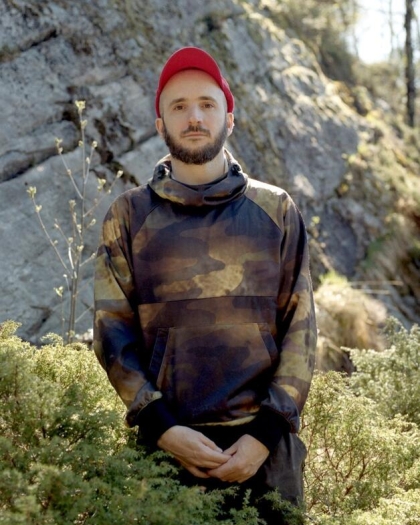
Gabriele de Seta is a researcher at the University of Bergen's Department of Linguistic, Literary and Aesthetic Studies, leading the ALGOFOLK project funded by the Trond Mohn Foundation (2024-2028). A sociologist by training with a PhD from Hong Kong Polytechnic University, he previously served as postdoctoral fellow at Academia Sinica (Taipei) and on the ERC-funded Machine Vision in Everyday Life project. Department of Ethnology, Academia Sinica (postdoctoral fellow) Department of Linguistic, Literary and Aesthetic Studies, University of Bergen (researcher) His research focuses on algorithmic folklore, synthetic ethnography, and Chinese digital culture. He examines how digital technologies and creative practices mutually shape each other, particularly in China's sociotechnical landscape. Key areas include platform governance, machine vision, algorithmic accountability, and digital vernaculars. Recent publications analyze TikTok/Douyin's infrastructural role, deepfakes, QR codes as globalized gateways, and Chinese internet vulgarity. His work combines theoretical frameworks from STS, media studies, and digital anthropology with fieldwork on Chinese digital practices. Trond Mohn Foundation Starting Grant ERC-funded research As educator, he designed the Machine Vision module for Bergen's Critical Approaches to Technology and Society course and taught Key Theories in Digital Culture. He supervises multiple MA/PhD students including co-supervision of Hanna Lauvli. Through his blog and podcast, he promotes public engagement with digital research.