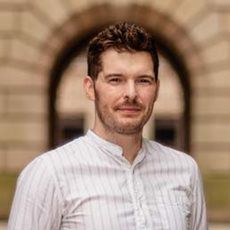
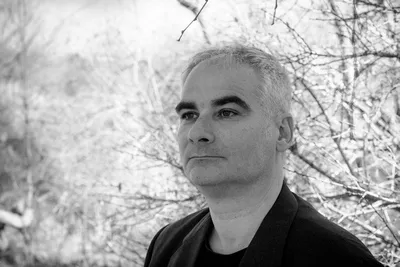
Ryan Latimer is an Associate Professor in Music at the University of Birmingham, specializing in composition and interdisciplinary collaboration. His work spans orchestral, choral, and chamber music, with notable collaborations in dance and theater. He holds a BMus from Birmingham Conservatoire, an MMus from the Royal Academy of Music, and a PhD in Composition funded by the AHRC. His research focuses on playful compositional techniques, blending classical and popular influences. Key works include *Moby Dick* (2014), *Three Tall Tales of Doctor Monsieur Façade* (2015), and recent orchestral pieces like *Bellwether* (2023). He has been affiliated with leading ensembles such as the London Symphony Orchestra and BBC Symphony Orchestra. Latimer has received awards including the Musicians’ Union ‘Bill Warman’ Award and PRS Foundation grants. He teaches composition modules and supervises postgraduate students. His work is published by Composers Edition and featured on NMC Recordings.
Univ.-Prof. Dr.-Ing. Janina Fels is a full Professor and head of the Institut für Hörtechnik und Akustik at RWTH Aachen University since November 2020. Previously, she served as Professor of Medical Acoustics (W1, then W2) at the same institution from October 2012 to November 2020. Her research focuses on creating realistic acoustic scenes using virtual reality, developing audio systems, and advancing hearing aid technologies. RWTH Aachen University (since 2020) Deutsche Gesellschaft für Akustik (DEGA) Vice President (2025-2031 designee) DFG Fachkollegium member (2020-2028) Education: Dipl.-Ing. in Electrical Engineering (2002), RWTH Aachen Dr.-Ing. in Technical Acoustics (2008), RWTH Aachen Research Interests: Her work combines acoustics, psychology, and biomedical engineering to study auditory cognition in virtual environments. Key areas include binaural technology, classroom acoustics, spatial audio, and noise research. She leads the interdisciplinary DFG priority program AUDICTIVE and develops individualized hearing models. Recent Article Trends: Her publications emphasize virtual reality-based auditory experiments, classroom noise analysis, and spatial audio processing. They bridge technical acoustics with cognitive science, focusing on how humans process speech in complex environments and how VR can replicate real-world acoustic conditions. Scientific Awards & Memberships: Lothar-Cremer-Preis (2013) Borchers-Plakette (2009) Siemens-Preis (2008) Acoustical Society of America (ASA) Deutsche Gesellschaft für Audiologie (DGA) Deutsche Gesellschaft für Akustik (DEGA) Vice President (2025-2028)
Karin Loh is a researcher at the Institute of Hearing Technology and Acoustics (IHTA), RWTH Aachen University, where she recently completed her PhD in early 2025. Her doctoral work focused on noise exposure in pre- and primary schools and its effects on young children. She is affiliated with the Faculty of Electrical Engineering and Information Technology and conducts research in the Department of Hearing Technology and Acoustics. RWTH Aachen University, Institute of Hearing Technology and Acoustics Scientific Staff Member, Chair of Hearing Technology and Acoustics PhD in Acoustics (completed January 2025) Her research interests center on psychoacoustics, noise in educational environments, listening effort, and auditory selective attention in children. She specializes in developing child-appropriate experimental paradigms using dual-task methods and virtual reality to study how noise affects cognitive load and attention in young learners. Her work bridges acoustical measurement and human perception, particularly in classroom settings. The recent publications reflect a strong trend toward understanding how children perceive and respond to noise differently from adults. Her research integrates binaural technology, virtual acoustics, and physiological measures to assess listening effort and attentional control. She contributes to open science through datasets like ChildASA and EduRA, supporting reproducibility in child-focused acoustics research. Karin Loh has not received any scientific awards mentioned in the text. She has not been noted as supervising any students, nor is there information about external grants. She is involved in collaborative research projects within IHTA, particularly those involving virtual reality and real-life listening experiments. Her team includes researchers like Janina Fels, Julia Seitz, and Michael Vorländer, working on advancing child-centered acoustic assessment methods.
Daniele Salvati is an Associate Professor in the Department of Mathematics, Computer Science and Physics at the University of Udine, Italy. He is actively involved in research, teaching, and editorial roles in leading signal processing journals. Associate Professor, University of Udine Ph.D. in Acoustic Source Localization, University of Udine (2012) Senior Member, IEEE Associate Editor, IEEE/ACM Transactions on Audio, Speech, and Language Processing Handling Editor, Signal Processing His research focuses on audio and acoustic signal processing , particularly in the areas of source localization, speaker identification, and computer audition. He integrates traditional signal processing with modern machine learning and deep learning techniques to develop robust systems for real-world environments. His recent publications demonstrate a strong trend toward end-to-end deep learning models using raw waveforms, beamforming optimization (especially diagonal unloading), and applications on mobile and drone-based platforms . His work spans both journal and conference venues, with a focus on IEEE and ISCA publications. Scientific recognition includes: National Scientific Qualification as Full Professor (IINF-05/A) Senior Member of IEEE Editorial board roles in top journals He mentors doctoral students as part of the Ph.D. program in Computer Science and Artificial Intelligence and collaborates widely with researchers such as Carlo Drioli and Gian Luca Foresti. His research is supported by publications in high-impact journals and participation in international conferences. He leads work in the G.L. Foresti's Lab, focusing on intelligent systems and signal processing. His work includes developing microphone array-based interfaces for music and human-computer interaction, acoustic scene analysis, and automated sensor configuration. Future directions likely involve further integration of AI with physical sensor systems, especially in autonomous and mobile contexts.
Juan Carlos Niebles is an Adjunct Professor in the Department of Computer Science at Stanford University, School of Engineering. His research focuses on artificial intelligence, computer vision, and multimodal learning with applications in robotics, healthcare, and human activity analysis. He leads projects on video-language models, action recognition, and privacy-preserving optics for human pose estimation. Recently, his work has explored diffusion transformers, cooperative-contrastive learning, and systems for large action models. Education: Ph.D. in Computer Science (Stanford University, 2010) His research interests include designing AI systems that understand complex spatiotemporal data, with breakthroughs in video question answering, multimodal alignment, and agent-based learning. He has pioneered frameworks like ActionStudio and Apigen-MT, advancing data generation for autonomous agents. Publications span foundational topics like causal layering, Parkinson’s disease motor severity estimation from video, and tools like the AI Index Report. His work bridges theory and practice, addressing challenges in model robustness, scalability, and real-world deployment. No scientific awards explicitly mentioned in text.
Omid Abbasi is a Researcher at the Department of Geoinformatics (Z_GIS) within the Faculty of Digital and Analytical Sciences at the University of Salzburg. His work focuses on integrating natural language processing (NLP) with geospatial data to enhance place-based analysis and recommendation systems. Key areas include semantic similarity measures in GIS, spatiotemporal modeling, and extracting spatial information from textual descriptions. His research emphasizes bridging textual and geospatial data, particularly in applications like location-based services, urban mobility analysis, and citizen satisfaction evaluation. Recent studies address topics such as LLMs' geographical representation reliability, pandemic impacts on urban environments, and tourist behavior modeling using geotagged photos. Abbasi has contributed to over 20 peer-reviewed articles since 2015, with notable work on conceptual spaces, spatial interaction models, and agent-based approaches in geo-social networks. He collaborates with the Z_GIS team on projects involving machine learning, human-centric GIS interfaces, and mobility prediction using social media data.
Professor Katharine Crawford serves as an Honorary Associate in the Department of Media and Communications at the Faculty of Arts and Social Sciences, University of Sydney. Her academic profile bridges critical technology studies, cultural analysis, and generational sociology, with significant contributions to understanding artificial intelligence's societal implications and digital media ecosystems. Crawford's research interrogates the political economy of technology through multiple lenses: the planetary costs of AI infrastructure, governance challenges in networked media, and cultural narratives surrounding adulthood transitions. Her scholarship reveals consistent patterns in how power operates within digital systems, from early analyses of peer-to-peer networks to contemporary critiques of algorithmic governance. Methodologically, she combines rigorous academic frameworks with accessible public discourse, making complex technological issues comprehensible to broader audiences. Analysis of her publication trajectory shows evolving engagement with technology's societal dimensions—from foundational work on digital copyright and generational worker mythology to groundbreaking examinations of AI's environmental footprint. Her research demonstrates increasing focus on systemic power structures within technological development, particularly in her seminal work The Atlas of AI which reframes AI as a material, political, and ecological phenomenon rather than purely computational. Crawford has secured competitive research funding including an Australian Research Council Discovery Project (2007) titled 'Young, Mobile, Networked: Mobile Media & Youth Culture in Australia' (co-investigator with Gerard Goggin). Her collaborative approach extends to media engagement through regular contributions to major publications like The Sydney Morning Herald , Financial Review , and The Age , where she provides expert commentary on technology policy and cultural shifts.
Christophoros Nikou is a Professor in the Department of Computer Science and Engineering at the University of Ioannina, Greece. He holds a Ph.D. in Image Processing and Computer Vision from Université Louis Pasteur - Strasbourg I, France (1999), a DEA in Photonics and Image Processing from the same institution (1995), and a Diploma in Electrical Engineering from Aristotle University of Thessaloniki, Greece (1994). His research interests include: Image Processing Computer Vision Pattern Recognition Biomedical Image Analysis Medical Imaging Machine Learning His recent publications (2022–2024) reflect a strong trend toward deep learning, generative models, and multimodal analysis, particularly in document image analysis, super-resolution, and biomedical applications. He has made significant contributions to visual tracking, segmentation, and image registration, with recent work extending into virtual reality, hypercomplex neural networks, and model compression. Scientific awards include: Best paper award, IAPR/IEEE International Conference on Biometrics (ICB’16), 2016 Best paper award, Bayesian and Graphical Models for Biomedical Imaging (BAMBI’16), 2016 He has supervised numerous students, many of whom have co-authored publications with him, and his research has been supported by collaborations across multiple institutions. He has also co-edited a book on biomedical image processing and contributed to several book chapters. His work spans both theoretical and applied domains, with consistent publication in top-tier IEEE and Springer venues.
Dr. Xiao Zhang is an Assistant Professor in the Department of Computer and Information Science at the University of Michigan-Dearborn's College of Engineering and Computer Science. He leads the Trustworthy AIoT Lab (TAI Lab) and advises the Immersive Computing Club. Previously, he was a Postdoctoral Associate at Duke University and holds a Ph.D. from Michigan State University, M.S. from Northwestern Polytechnical University, and B.E. from Taiyuan University of Technology. Education: Ph.D. in Computer Science and Engineering - Michigan State University M.S. - Northwestern Polytechnical University B.E. with Honors - Taiyuan University of Technology Dr. Zhang's research focuses on next-generation wireless systems with emphasis on mobile computing, AIoT, cyber-physical systems, and AI-assisted sensing/localization. His work explores spatial-temporal diversities in Optical Wireless Communication (OWC) to enable secure, location-aware communication for IoT and human-centered computing. Applications include LiFi, V2X networks, underwater navigation, digital health, smart cities, HCI, and AR/VR. Recent publications demonstrate a strong focus on optical communication systems (OWC, LiFi), drone technology, IoT security, and AI-assisted sensing. Trends include innovations in 3D optical connections, adversarial defense for audio systems, radar-based point cloud generation, and federated learning solutions for heterogeneous IoT environments. Awards & Grants: 2025: IHP Research Engagement, OE Review/Creation Grants, Creative Teaching Fund 2024: NSF I-Corps, RAG Grant 2023: Dissertation Fellowship (MSU) 2022: Travel Fellowship (MSU) 2019-2023: Multiple Graduate Fellowships 2016-2018: Postgraduate Scholarships 2013-2015: National/University Scholarships Dr. Zhang advises 10+ students across multiple levels including PhD candidate Deniz Acikbas, MS students Ashwin Sarvadey, Jaskirat Sudan, Rohit Raval, and Nishaant Madhankumar, and undergraduate researchers including NSF STEM Scholars Christian Nwobu, Fatima Qasem, and Fatima Mohammed. His TAI Lab focuses on trustworthy AI-driven IoT systems.
Dr Ken McAnally is an Affiliate of the Centre for Sensorimotor Performance at the University of Queensland 's School of Human Movement and Nutrition Sciences. His research spans auditory perception, cognitive neuroscience, and virtual reality applications in human movement studies. Key research themes include: Visuomotor integration in real and virtual environments Auditory processing in dyslexia and schizophrenia Metacognition and change detection mechanisms Sensory integration in cognitive disorders Recent publications (2024-2025) demonstrate expertise in: VR-induced vergence-accommodation conflict resolution Automation transparency in human-computer interaction Perceptual span in schizotypal populations His work appears in journals like Neuroscience , Human Factors , and Psychological Research . Contact: kenneth.mcanally@uq.edu.au
Patrick Blättermann is a Researcher at Hochschule Düsseldorf (University of Applied Sciences) within the Faculty of Media . His work spans academic supervision, software development, and scientific investigations in signal processing and machine learning. Research Interests : Machine Learning, Digital Signal Processing, Data Analysis, Deep Learning, and Signalverarbeitung (Signal Processing). Teaching : He supports lectures, supervises bachelor's and master's theses, and manages practical projects. Collaborative Work : He acts as a second examiner (Zweitprüfer) for numerous theses across Media Engineering , Audio and Video , and Media Informatics , focusing on AI integration in creative industries, audio analysis, and immersive technologies. Technical Expertise : His contributions include developing software for audio feature extraction, designing low-latency filters for in-ear monitoring systems, and creating tools for spatial audio analysis. His work bridges theoretical research with practical applications in media technology.
Almut Glinin is a contemporary visual artist and lecturer at the University of Applied Sciences for Economics and Environment Nürtingen-Geislingen, where she teaches art within the School of Art Therapy. She has maintained a dual career as both an active exhibiting artist and educator since the 1980s, transitioning from the HKT Nürtingen to HfWU in 2016. Her educational background includes studies at the Free Art School Stuttgart (1974-1978) and the State Academy of Fine Arts Stuttgart (1978-1984), where she focused on painting as a categorical question of perception and developed a visual language connecting different levels of reality, form, and meaning. Her artistic practice since 1985 has centered on spatial reference, creating cross-media image installations and interventions that incorporate painting, photography, objects, and video. Glinin's artistic research explores the relationship between image, space, and perception through temporal and light-dependent installations. Her recent work (2011-2022) demonstrates consistent exploration of light projections, spatial interventions, and the transformation of architectural environments. She frequently creates site-specific works that respond to historical buildings, religious spaces, and urban contexts, often incorporating collaborative elements with other artists, particularly in sound installations. Selected Awards: Federal GEDOK Art Prize 'Dr. Theobald Simon Prize' (2008) Working scholarship from GEDOK Schleswig-Holstein, Lübeck (1995) Cité Internationale des Arts Paris scholarship (1989) Working scholarship from Baden-Württemberg Art Foundation (1985) As an educator, Glinin has maintained a teaching position since 1995, first at HKT Nürtingen and subsequently at HfWU Nürtingen-Geislingen from 2016. She previously taught at the Free Art Academy Nürtingen (1996-2008) and has organized KUNSTTERMIN, a self-organized forum for dialogues about artistic practices, since 2008. Her professional affiliations include membership in GEDOK Stuttgart since 1995. Glinin's artistic practice is characterized by interventions in existing spatial structures, creating what she terms 'image distillates' through the interplay of light, reflection, and architectural elements. Her work appears in numerous public collections including the Bonn Art Museum, Graphothek Stuttgart City Library, Würth Art Museum, and various regional collections in Baden-Württemberg.
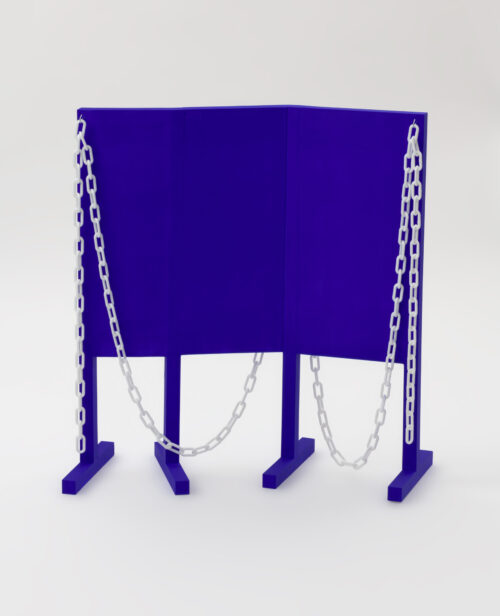
David Schafer is an Adjunct Professor in the Department of Fine Art at Art Center College of Design, where he has taught since 1998 and founded the Sound Lab in 2015. He has also previously taught at Otis College of Design, CalArts, USC, Rutgers, Parsons, SVA, Cooper Union, and Cornell University, reflecting a broad academic engagement across major art institutions. His research and artistic practice span sculpture, sound, digital media, and conceptual art , with a focus on the ideological structures of the built environment, collective memory, and the impact of data and AI on identity. He investigates how capitalism, patriarchy, and consumerism shape cultural amnesia and social behavior through installations that merge industrial materials with sonic and digital elements. Recent works like Displayer and Binary Complex critically examine AI-generated identity, surveillance, and data commodification, often using fabricated steel structures, signage, and algorithmic content. His sound works, such as Tonal Duet and Four Letters to Mahler , translate historical and textual material into immersive audio experiences, performed in galleries and curated events internationally. David Schafer has received significant recognition including the NEA Award in Sculpture and the Pollock-Krasner Foundation Award . His work has been featured in major publications such as ArtForum, Art in America, NY Times, and The New Yorker. He has advised numerous students through studio courses and lab development, though no specific advisees are listed. He has secured public art commissions such as the One Percent for the Arts project at Huntington Hospital, and his work has been exhibited nationally and internationally, including performances at Human Resources, Roulette, and Studio10. The Sound Lab he founded serves as a hub for experimental sound research, workshops, and collaborative events. His work has been included in curated radio programs in Lisbon, Paris, and Berlin, and he continues to produce new works up to 2025, such as DEI Training Series and Reflected Terrain , indicating active and ongoing creative and academic engagement.
Eva Cheng is an Associate Professor at the University of Technology Sydney, currently serving as Head of the School of Professional Practice and Leadership. Her work spans technical research in Multimedia Signal Processing and Computer Vision , alongside transformative efforts in Engineering Education , Humanitarian Engineering , and Gender Equity in STEM . She actively collaborates with organizations like the IEEE and Engineers Without Borders Australia. Key research trends include innovations in Light Field Imaging , Acoustic Systems , and Inclusive Pedagogy . Her funded projects address topics such as Trustworthy Digital Societies , Edge Computing for Industrial Acoustics , and Equitable Work Integrated Learning . Recently, she has focused on technologies for Aquatic Eco-Neurotoxicology and Primary School STEM Outreach . As a Senior Tutor in the Centre for Audio, Acoustics and Vibration and member of the Perceptual Imaging Lab (PiLab), Eva bridges technical and educational domains. She mentors through Engineers Without Borders, advocates for disability inclusion in work placements, and integrates Aboriginal design epistemologies into engineering curricula.
Louena Shtrepi is an Associate Professor at the Polytechnic University of Turin, Italy, affiliated with the Department of Energy 'Galileo Ferraris' and the Future Urban Legacy Lab (FULL). She holds architecture degrees from Politecnico di Torino and Politecnico di Milano, an Alta Scuola Politecnica diploma (2010), and a PhD in Metrology (2015). Research Focus: Applied acoustics, particularly room and building acoustics, acoustic materials, simulation techniques, and measurement uncertainties. Her work emphasizes human-centric methodologies, sustainable design, and immersive audio-visual systems for perceptual testing. Teaching: Instructs graduate courses on Engineering of Sound Systems (Cinema & Media Engineering) and Exhibit Design: Light, Sound, Climate (Design & Visual Communication), with a focus on integrating acoustic solutions into early architectural design. Publications: Over 120 co-authored works, including studies on metamaterials, BIM-integrated acoustic analysis, virtual reality validation for speech intelligibility, and sustainable building envelope systems. Awards: Newman Medal (Acoustical Society of America), EEA Best Paper Award (2012), Premio Amedeo Giacomini (2012), Young Scientist Grant (Inter-Noise 2012), Premio Barducci (2013), ISRA Best Papers Award (2013). Collaborations: Member of AIA, EAA Technical Committee, and ASA; involved in EU-funded and national research projects like SILENCE (acoustic metamaterials for MRI noise cancellation) and SUPERIMPOSITION.