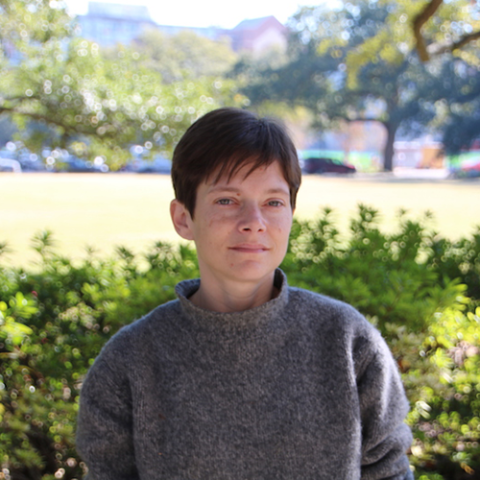
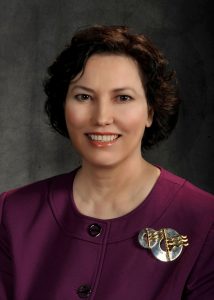
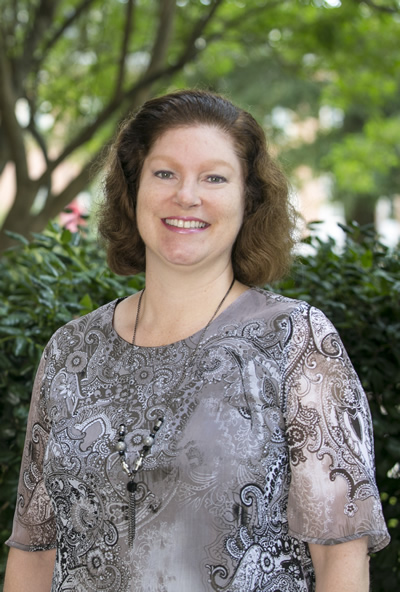
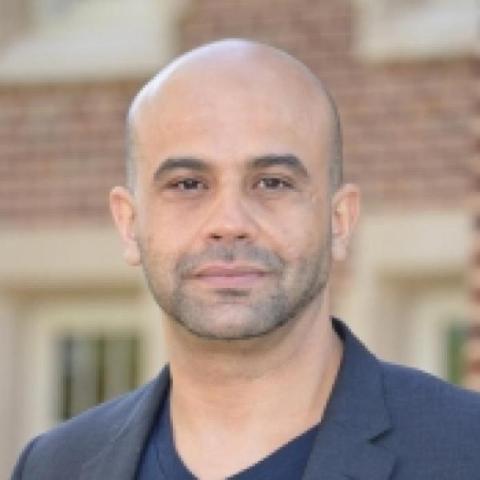
Roland Greene is the Mark Pigott KBE Professor and Anthony P. Meier Family Professor of the Humanities at Stanford University, holding dual appointments in the Department of English and the Department of Comparative Literature. He serves as Director of the Stanford Humanities Center and co-chair of the Renaissances and Poetics Workshop research groups. Educated at Brown University (A.B., 1979) and Princeton University (Ph.D., 1985), his academic career includes prior roles at Harvard and Oregon universities. His research focuses on Renaissance literatures of England, Latin Europe, and the transatlantic world, with expertise in poetry and poetics from the Renaissance to the present. Major works include Five Words: Critical Semantics in the Age of Shakespeare and Cervantes (2013) and editing the Princeton Encyclopedia of Poetry and Poetics (2012). Recent lectures address topics like Juan Caramuel’s Metametrica , Baroque aesthetics, and digital humanities challenges. Greene has advised over 50 Ph.D. students, many of whom hold academic positions globally. Awards include American Academy of Arts and Sciences membership and leadership roles like MLA President (2015–2016). His work engages with interdisciplinary themes such as colonial baroque, digital humanities, and global literary history.
Ruben Gallo is the Walter S. Carpenter, Jr., Professor in Language, Literature, and Civilization of Spain at Princeton University. He serves as Professor in the Department of Spanish and Portuguese Languages and Cultures and has directed the Program in Latin American Studies since 2008. His academic credentials include a B.A. in English from Yale University and a Ph.D. in Comparative Literature from Columbia University. Professor Gallo specializes in Latin American Studies with interdisciplinary research spanning: Twentieth-century cultural movements Avant-garde literature and art Psychoanalytic theory (particularly Freudian studies) Transatlantic intellectual history His endowed professorship recognizes significant contributions to Hispanic studies. Current institutional roles include program leadership and teaching graduate/undergraduate courses on modern cultural theory.
Dale Shuger is a Professor of Spanish & Portuguese in the School of Liberal Arts at Tulane University. His academic career includes roles as Visiting Assistant Professor (2012-2013), Assistant Professor (2013-2023), and Associate Professor (2018-2023) before his current position since 2023. He holds a Ph.D. from New York University (2008) and a B.A. from Harvard University (2001). Shuger’s research focuses on early modern Spanish literature, heterodox religions, and popular culture in Spain and colonial Latin America. His work bridges literary analysis with cultural history, exploring topics such as mysticism, the Inquisition, and symbolic practices in early modern texts. His publications include God Made Word: An Archaeology of Mystic Discourse in Early Modern Spain (2021) and articles on Cervantes, puppetry, and religious symbolism. His research has been supported by grants like the COR International Travel Fund and the Lurcy Award. Shuger has led Tulane’s Program in Medieval and Early Modern Studies (2014-2017) and currently serves on the School of Liberal Arts Curriculum Committee. He advises Spanish majors and has supervised one thesis in the past five years.
Claudia Giannini serves as a Lecturer in the Department of Spanish & Portuguese at Macalester College, teaching language and linguistics courses with offices in Humanities Building Room 222. She previously held teaching positions at Universidad Central de Venezuela, St. Olaf College, and the University of Minnesota. Her academic credentials include: Modern Languages degree from Universidad Central de Venezuela Hispanic and Luso-Brazilian Literatures and Linguistics degree from University of Minnesota Research focuses on cognitive linguistics, pragmatics, and machine translation challenges, informed by 20+ years as a professional translator working with five languages. Her work examines language-thought connections and intersubjectivity in communication, bridging theoretical linguistics with real-world translation applications. Professional engagement centers on applied linguistics pedagogy and cross-cultural communication, with current investigations into AI translation systems' philosophical implications. She utilizes she/her/hers pronouns and maintains direct departmental contact through Macalester College.
University of North Carolina at Chapel HillUnited States
Lucia Binotti is a Professor of Spanish and Digital Humanities at the University of North Carolina at Chapel Hill (UNC-CH), with dual affiliations in the Department of Romance Studies and interdisciplinary Digital Humanities initiatives. She serves as Graduate Advisor for Hispanic Linguistics and Director of the Honors Study Abroad Program in Rome. Her work bridges traditional philology with cutting-edge digital scholarship, emphasizing immersive learning experiences through virtual reality (VR) and augmented reality (AR) technologies. Binotti holds a Ph.D. from UC Santa Barbara (1990), an MA (1985), and a BA (1984) in Romance Philology from the Università degli Studi di Pisa. Her research focuses on linguistic identity, cultural heritage preservation, and innovative educational platforms like Amirabilia—the world’s first experiential learning platform. Notable projects include nXimena (healthcare training for Latinx abuse survivors) and Entiendelo (a linguistic/cultural navigation app for Latinx communities). Her scholarly interests span Early Modern Spanish literature, digital humanities applications, and the intersection of technology with social justice. She has directed grants totaling over $500K for projects involving AR/VR integration in education, including collaborations with the UNC Health Science Library and NCSU’s DELTA initiative. Recent awards include the John K. Walsh Award (2010) and Digital Innovation Fellow status (2014). Grants & Leadership: CFE-Lenovo Technology Grants (2018–2019) for AR/VR expansion iLRN 2020 International Co-Chair XR Faculty Learning Community Leader (UNC) Teaching: Courses span from introductory Hispanic literature to advanced topics like medieval intellectual history and digital humanities methodologies. Binotti’s work emphasizes ‘place, presence, and perspective’ in Cyber-Humanities education, particularly addressing marginalized communities through technology-driven solutions.
Ana Celia Zentella is a distinguished Professor in the Department of Ethnic Studies at the University of California, San Diego, renowned for pioneering "anthro-political linguistics" that examines language through sociopolitical and justice-oriented frameworks. Her work centers on U.S. Latin@ language communities, challenging linguistic discrimination and advocating for language rights. Education: Ph.D. in Educational Linguistics, University of Pennsylvania M.A. in Romance Languages and Literatures, Pennsylvania State University B.A. in Spanish, Hunter College (Bronx) Zentella's research critically analyzes U.S. Latin@ varieties of Spanish and English, Spanglish, and language socialization in families, with particular focus on Puerto Rican communities. She exposes how English-only laws and anti-bilingual education policies facilitate linguistic profiling that marginalizes communities. Her scholarship consistently bridges academic rigor and community advocacy, emphasizing "el habla del pueblo" (the people's speech) as resistance against top-down language classifications. Her publications reveal enduring themes: language as a site of political struggle (2018-2023), border linguistics examining Tijuana-San Diego dynamics (2013-2016), and historical analyses of Nuyorican language (2004). She challenges harmful frameworks like the U.S. Census Bureau's "linguistically isolated" category while documenting language revitalization efforts in multilingual urban centers. Scientific Awards: British Association of Applied Linguistics Book Prize (1997) Association of Latina and Latino Anthropologists Book Award (1997) Manhattan's "Doctor Ana Celia Zentella Day" declaration (1997) LASA Public Intellectual of the Year (2014) Society for Linguistic Anthropology Public Outreach Award (2016) American Academy of Arts and Sciences induction (2023) Choice Outstanding Academic Title (2018) Zentella actively mentors through community-engaged scholarship, co-authoring Multilingual San Diego (2008) and Multilingual Philadelphia (2010) with undergraduates. Her public outreach includes challenging linguistic erasure and advising policymakers on language-inclusive practices, demonstrating consistent commitment to translating academic work into tangible community impact.
University of North Carolina at Chapel HillUnited States
Marsha S. Collins is a Professor of Comparative Literature and Department Chair at the University of North Carolina at Chapel Hill. She specializes in Early Modern European literature, particularly Spanish literature within its broader European context. Her research focuses on romance forms, literature-visual arts intersections, early modern lyric poetry, and court culture. Education includes a PhD in Romance Languages (Spanish) from Princeton University, an MA in Spanish from the University of Wisconsin-Madison, and an AB in Comparative Literature from Smith College. Her research interests span Comparative Literature, Early Modern Studies, Genre Theory, Poetry and Poetics, and Visual Culture. She is currently writing a book titled 'Novel Friendships: Amity and Community in Cervantes’s Don Quijote.' Awarded the John L. Sanders Teaching Award (2000) and prestigious fellowships, her work bridges literary analysis with interdisciplinary approaches. She teaches courses like 'Global Cervantes' and 'Literature of Pilgrimage.'
Nancy Mock is an Associate Professor in the Department of Global Health Systems and Development at Tulane University's School of Public Health & Tropical Medicine. She holds affiliated faculty status at the Stone Center for Latin American Studies. Her academic journey includes a B.S. in Biology from Yale University (1976), an M.P.H. in International Health from Tulane (1979), and a Dr.P.H. in International Health from Tulane (1985). Dr. Mock's research focuses on global health systems, evaluation methodologies, complex emergencies, and health systems in Latin America and Africa. Notable areas include Haiti's public health challenges and Rwanda's educational health programs. She has directed key institutions like the Center for International Resource Development and contributed to the Famine Early Warning System (FEWS). Her work is supported by major grants, including the Robert Wood Johnson Foundation Grant (2007), USAID's Regional Public Health Leadership Initiative (2006-2007), and Rwanda-focused projects (2000-2004). She has consulted for organizations such as the World Food Program, UNICEF, and the Pan American Health Organization. Fluent in French and Spanish, her overseas experience spans Honduras and extensive fieldwork in Africa and Asia.
University of North Carolina at Chapel HillUnited States
Professor Jeanne Moskal holds a faculty position in the Department of English and Comparative Literature at the University of North Carolina at Chapel Hill. She specializes in 18th- and 19th-century British literature, critical theory, and the intersection of literature with religion, medicine, and science fiction. Her research includes seminal works on Mary Shelley, including editing Shelley’s travel writings for the definitive edition of her works, and co-editing Teaching British Women Writers, 1750-1900 . Education: 1984 PhD English, University of Washington, Seattle 1982 MA English, University of Washington, Seattle 1978 BA English, Santa Clara University Her current research project, Secularization & Jane Eyre, 1930-2000 , explores how adaptations of Charlotte Brontë’s novel reflect 20th-century secularization debates. She has curated notable exhibitions, including the 2018 Reconstructing Frankenstein’s Monster at UNC’s Wilson Library. Teaching and Mentoring: A屡获殊荣的导师,她指导了13名博士生,其中9人获得终身教职或终身教职轨道职位。 Her teaching portfolio includes courses on Jane Austen, science fiction, Romanticism, and post-secularism theory. Research Grants: 2005/06 NEH Fellowship for University Teachers 2007 ACLS Course Development Grant 2014 Mellon Foundation Book Manuscript Workshop Awards: 2016 UNC最高教学奖终身成就奖 2013 Carolina Women’s Leadership Council研究生指导奖
Heather A. West serves as Associate Professor of French in the Department of World Languages and Cultures at Samford University's Howard College of Arts and Sciences, where she directs the Critical Languages Program and sponsors the French Club and Delta Upsilon chapter of Dobro Slovo (National Slavic Honor Society). Education: BA in French, Birmingham-Southern College BA in Spanish, Samford University MA in French, Mississippi State University MAEd, University of Alabama at Birmingham PhD in Romance Languages, University of Alabama at Tuscaloosa Research Interests: Dr. West specializes in contemporary Quebec literature and culture, with significant contributions to Caribbean literary studies across French, Spanish, and English traditions, particularly focusing on Haitian diaspora narratives within broader Romance language frameworks. Her interdisciplinary approach bridges Francophone, Hispanophone, and Anglophone cultural studies through postcolonial and diaspora lenses. Scientific Awards: Chevalier de l’ordre des Palmes académiques (Knight of the Order of Academic Palms) from the French government (2015) Advising and Grants: As campus representative for major international programs, Dr. West administers the David L. Boren Awards, Critical Languages Scholarship, College Language Association's Carroll Mills Young Scholarship, and American Society of French Academic Palms Summer Scholarship. She also serves as non-certifying advisor for the Benjamin Gilman International Scholarship Program, facilitating extensive student study abroad opportunities. Professional Leadership: Dr. West acts as Alabama state administrator for the National French Contest (Le Grand Concours) and serves as secretary of the National Association of Self-Instructional Language Programs, demonstrating institutional commitment to language education advancement.
Nizar F. Hermes serves as Associate Professor and Department Chair in the Department of Middle Eastern and South Asian Studies at the University of Virginia, concurrently holding the position of Director of Graduate Studies. His office is located in 141 New Cabell Hall, with Spring 2025 office hours held Tuesdays from 12:00-3:00 PM. He maintains dual professional email contacts through the university system. His academic foundation includes: PhD in Comparative Literature, University of Toronto Dr. Hermes' research program centers on North African and Mediterranean literary traditions, with deep specialization in premodern Arabic-Islamic cultural production. His work investigates poetic representations of urban spaces, cross-cultural encounters between the Islamic world and Europe, and the transmission of literary heritage across the Mediterranean. Particular attention is given to Maghribī poetic imagination, elegiac traditions, and the intersection of literature with food history and refugee experiences. His methodological approach combines close textual analysis with historical contextualization to reveal continuities in Arab literary consciousness. Analysis of his recent publications (2014-2025) reveals three dominant scholarly trajectories: 1) The literary reconstruction of North African cities through poetic elegies, 2) Cross-cultural encounters documented in Arabic travel literature and folk poetry, and 3) The representation of European 'others' in medieval Arabic texts. His 2024 monograph 'Of Lost Cities' synthesizes these threads while his edited volume 'The City in Arabic Literature' (2018) establishes foundational frameworks for urban studies in Arabic literary criticism. No scientific awards or fellowships were documented in the source materials. While his role as Director of Graduate Studies indicates active mentorship responsibilities, specific student advisees and grant funding details were not provided in the available documentation. His scholarly output demonstrates sustained engagement with graduate education through publications on teaching methodologies for Arabic humanistic literature. No dedicated research laboratories or formal collaborative teams were referenced, though his co-edited volumes and multi-author publications suggest active participation in scholarly communities focused on Mediterranean studies and comparative literature.
Dr. Michele Shaul serves as Professor of Spanish and Chair of the World Languages Department at Queens University of Charlotte, where she also directs the Center for Latino Studies. A dedicated scholar and educator, she co-founded the e-journal Label Me Latina/o and leads community-focused initiatives bridging academia and social outreach. Her academic credentials include: Ph.D. in Spanish-American Literature from the University of North Carolina, Chapel Hill M.A. in Spanish from the University of Florida, Gainesville B.A. with honors in Spanish from the University of Florida, Gainesville Dr. Shaul's research interrogates Latinx identity through literary criticism, translation, and creative writing, emphasizing intersectional experiences of race, gender, and disability within U.S. institutions. Her work actively challenges monolithic narratives while centering marginalized voices in both scholarly and artistic contexts. Analysis of her recent publications (2016-2023) reveals a cohesive trajectory exploring bilingual expression, cultural memory, and systemic inequity. Edited volumes on Latinx literature in Spanish and theater demonstrate scholarly rigor, while creative works like poetry and short stories employ personal narrative to examine reincarnation, hybrid identity, and border-crossing experiences. Her contributions have earned significant recognition: Queens’ 2016 Hunter-Hamilton Love of Teaching Award for pedagogical excellence 2023 Con A de Arte Award from the Latin American Coalition for cultural leadership Through the student/faculty Latino Studies Project, Dr. Shaul mentors researchers documenting Charlotte's Latino community history while collaborating with artists on tolerance-focused initiatives. Her editorial work with international scholars demonstrates sustained commitment to amplifying underrepresented voices across academic and creative domains. Dr. Shaul co-leads the e-journal Label Me Latina/o and directs the Latino Studies Project, fostering collaborative research between students, faculty, and Charlotte's Latino community. Her social outreach partnerships integrate art installations and performance to address diversity through experiential learning and public engagement.
University of California, Los AngelesUnited States
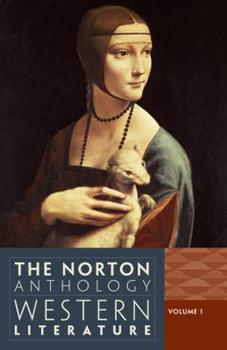
Barbara Fuchs is a Professor in the Department of English at the University of California, Los Angeles, specializing in early modern European literature across Spanish, English, French, and Italian traditions from the 15th to 17th centuries. Her work emphasizes transnational contexts, theater and performance studies, and cultural production within imperial frameworks, with significant contributions to Mediterranean and transatlantic studies. Education Ph.D. in Comparative Literature, Stanford University (1997) B.A./M.A. in Comparative Literature (English, French, Spanish), summa cum laude, Yale University (1992) Research Interests Professor Fuchs' scholarship centers on transnationalism in early modern literature, examining how theater and performance negotiated imperial identities across Mediterranean and transatlantic contexts. Her work critically engages with race and religion in the early modern world, picaresque traditions, and Cervantes studies, revealing how cultural encounters shaped literary production. She bridges historical analysis with contemporary relevance through public humanities initiatives focused on classical Hispanic theater. Publication Trends Her recent publications demonstrate interdisciplinary innovation, merging literary analysis with performance studies and material culture. Recurring themes include transnational exchange mechanisms, racial formation processes, and textual materiality, while recent work addresses pandemic-era digital performance and modern adaptations of classical works. This trajectory highlights her commitment to connecting historical scholarship with current social and artistic practices. Scientific Awards Premio Ñ from the Instituto Cervantes (inaugural award) for promotion of Spanish language and culture Advising and Leadership Professor Fuchs mentors undergraduate and graduate students in early modern studies, translation, and performance. She leads the UCLA "Diversifying the Classics" initiative and LA Escena festival, securing institutional support for these collaborative projects. Her editorial leadership includes serving as articles editor for Renaissance Quarterly and co-editing the Norton Anthology of World Literature , demonstrating field-wide influence. Projects and Teams She directs the "Diversifying the Classics" initiative, which collaborates with theater professionals to adapt Hispanic classical works for contemporary Los Angeles audiences, and founded LA Escena—the biennial festival of Hispanic classical theater. These projects unite scholars, artists, and communities to explore historical texts through modern performance lenses, emphasizing accessibility and cultural relevance.
Claudia Arteaga serves as Associate Professor of Spanish, Latin American, and Caribbean Literatures and Cultures and Chair of the Department of Spanish, Latin American and Caribbean Literatures and Cultures at Scripps College. Her academic profile centers on indigenous representation in Latin America through cinematic and literary analysis, with particular emphasis on Andean societies. Her educational background includes: Ph.D. and M.A. in Spanish from Rutgers University B.A. in Linguistics and Literature from Pontificia Universidad Católica del Perú Arteaga's research critically examines indigenous self-representation in Peru, Bolivia, and Guatemala, investigating race-gender intersections , popular environmentalism , and epistemological translation in post-colonial contexts. Her work bridges Decolonial Theory , Indigenous Film Studies , and Andean Cultural Analysis , with significant contributions to understanding how communitarian filmmaking challenges dominant narratives. She actively connects academic research with social movements through interdisciplinary approaches. Her publication trajectory reveals consistent focus on indigenous media as decolonial praxis , with recent works analyzing Mayan documentaries, Quechua poetry, and Amazonian film schools. The research demonstrates evolving methodology from textual analysis toward community-engaged film studies, particularly examining how film festivals and grassroots cinema reshape environmental and identity politics across Latin America. Notable recognitions include: Mary W. Johnson Faculty Achievement Award in Teaching (Scripps College, 2018-2019) Sabbatical Research Fellowship (Scripps College, 2018-2019) Rutgers Teacher-Scholar Fellowship (2013-2014) Adolfo Snaidas Best Graduate Student Essay Award (2009) Arteaga has secured significant research funding from CLAS and GAIA for faculty-student collaborations and academic events, including the initiative 'Sumak Kawsay & Bolivarianism Today.' Her teaching portfolio spans advanced literature courses and specialized seminars on indigenous women's struggles, reflecting her commitment to integrating research with pedagogy. She maintains active engagement with the Latin American Studies Interdisciplinary Group, fostering connections between academic work and community activism. Her current projects extend into contemporary indigenous media production, with ongoing analysis of how digital platforms transform testimonial practices and environmental advocacy among Quechua and Mayan communities.
Gustavo Verdesio serves as an Associate Professor of Spanish within the Department of Romance Languages & Literatures at the University of Michigan. He maintains significant interdisciplinary affiliations as a faculty member of the Program in Native American Studies and as a Faculty Associate for Latina/o Studies. His academic credentials include: Ph.D. in Hispanic Studies or Latin American Studies from Northwestern University (1992) Verdesio's research critically engages with Colonial Studies, Native American Studies, and Material Culture, focusing on Indigenous materialities in Uruguayan history. His current project examines the re-emergence of Indigenous groups previously declared extinct in Uruguay and non-Indigenous responses to Indigenous bodies within settler colonial structures. He investigates objects, agricultural practices, monumentality, and the political implications of Indigenous bodily recognition. Analysis of his 2018-2021 publications reveals consistent thematic focus on settler colonialism in Latin America, Indigenous rights frameworks, and decolonial approaches to archaeology and historical knowledge, with concentrated attention on Southern Cone nations including Uruguay and Argentina. Scientific Awards: No awards, fellowships, or medals were documented in available materials No information regarding graduate student advising, dissertation supervision, or specific research grants was provided in the source documentation. His academic activities appear centered on independent research and interdisciplinary collaboration rather than directed mentorship or externally funded projects as described. The available texts contain no references to laboratories, research centers, or formal collaborative teams associated with Professor Verdesio's work.