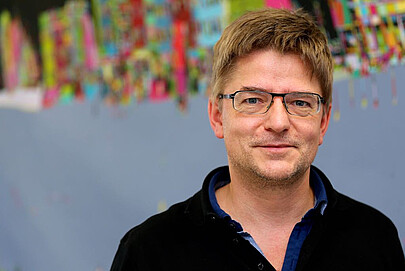
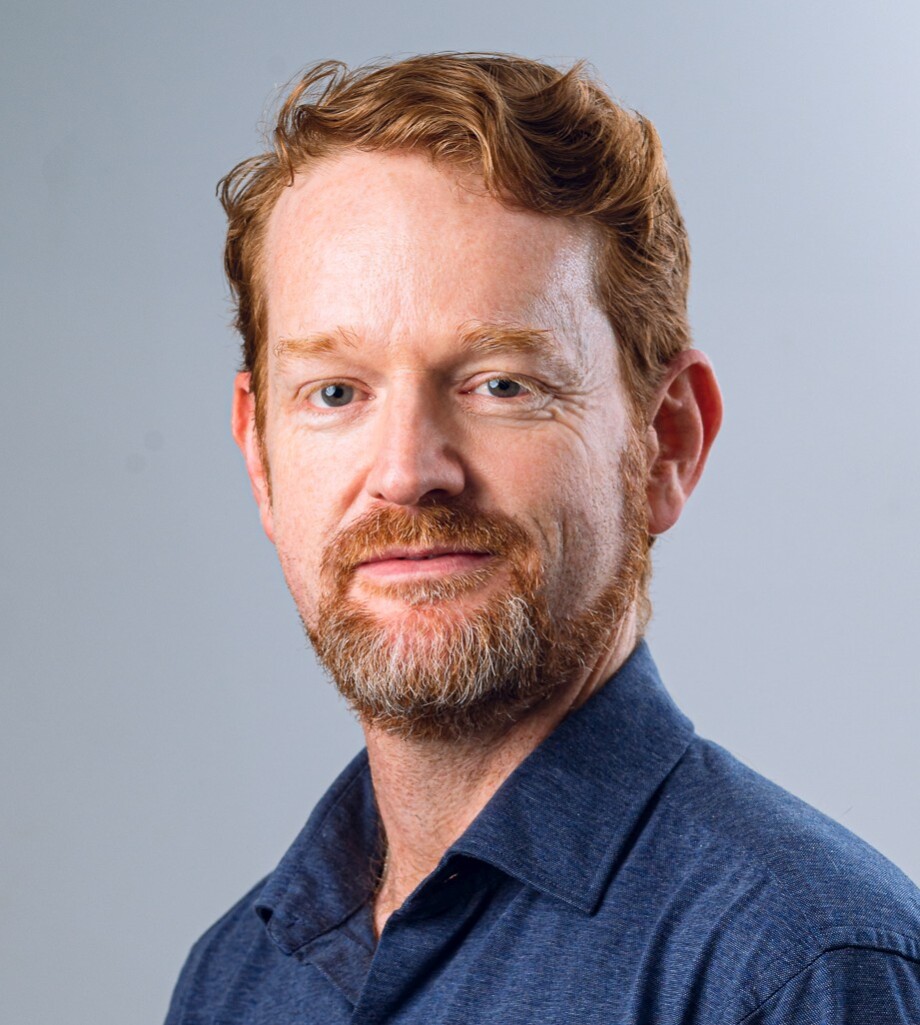
Associate Professor Martin O'Connor is a Grant-Funded Researcher (D) in the School of Physics, Chemistry and Earth Sciences at the University of Adelaide. He serves as the Defence Technologies Theme Leader at the Institute of Photonics and Advanced Sensing (IPAS). With 25 years of R&D experience across academia, government, and industry, his expertise spans lasers, optics, and nonlinear optics. Previously, he held roles at the Defence Science and Technology Organisation, the Optoelectronic Research Centre (UK), and BAE Systems Australia as Team Leader of Electro-optic Engineering. His current research focuses on ultra-stable frequency references ('The Sapphire Clock'), RF photonics links, optical sensors for small satellites, infrared imaging systems leveraging deep learning, and quantum-enhanced imaging technologies. Key Projects: Commercialization of the Cryogenic Sapphire Oscillator, development of optical sensors for space applications, and advanced infrared laser systems. Leadership: Technical leadership in designing laser systems for naval/air platforms and thermal imaging systems. Research interests include power scaling of ultrashort fibre lasers, quasi-phase matched nonlinear processes, and infrared laser systems. He holds the George Murray Research Fellowship and has contributed to patents in optical technologies.
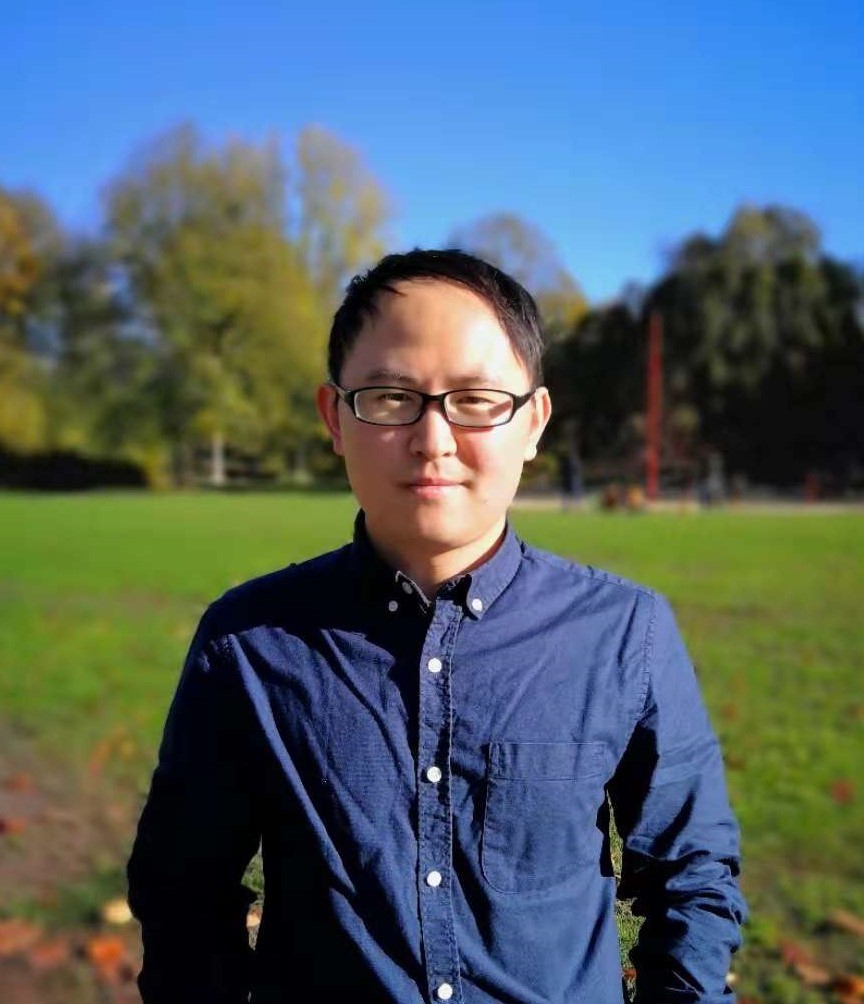
Yu Yang is a Researcher at KTH Royal Institute of Technology's Division of Electronics and Embedded Systems. He has been affiliated with KTH since at least 2020 and currently holds a postdoc position. His research focuses on neuromorphic computing, FPGA/ASIC implementation, approximate computing, and embedded systems design. He also explores ergonomic applications using wearable sensors to address workplace safety and musculoskeletal disorders. Yang has taught courses like Digital Design and Embedded Hardware Design in ASIC and FPGA , demonstrating expertise in both theoretical and applied electronics. His work bridges hardware acceleration (e.g., memristor-based neural networks) with practical applications like surgeon workload analysis and posture correction systems. Notable projects include the eBrainII ASIC implementation of a human-scale cortical model and developing smart workwear systems for real-time vibrotactile feedback. Publications span IEEE conferences (DATE, FDL, ASP-DAC) and journals like Frontiers in Neuroscience and Journal of Signal Processing Systems . His research often emphasizes low-power, high-performance computing while addressing ergonomic challenges in manufacturing and healthcare sectors.
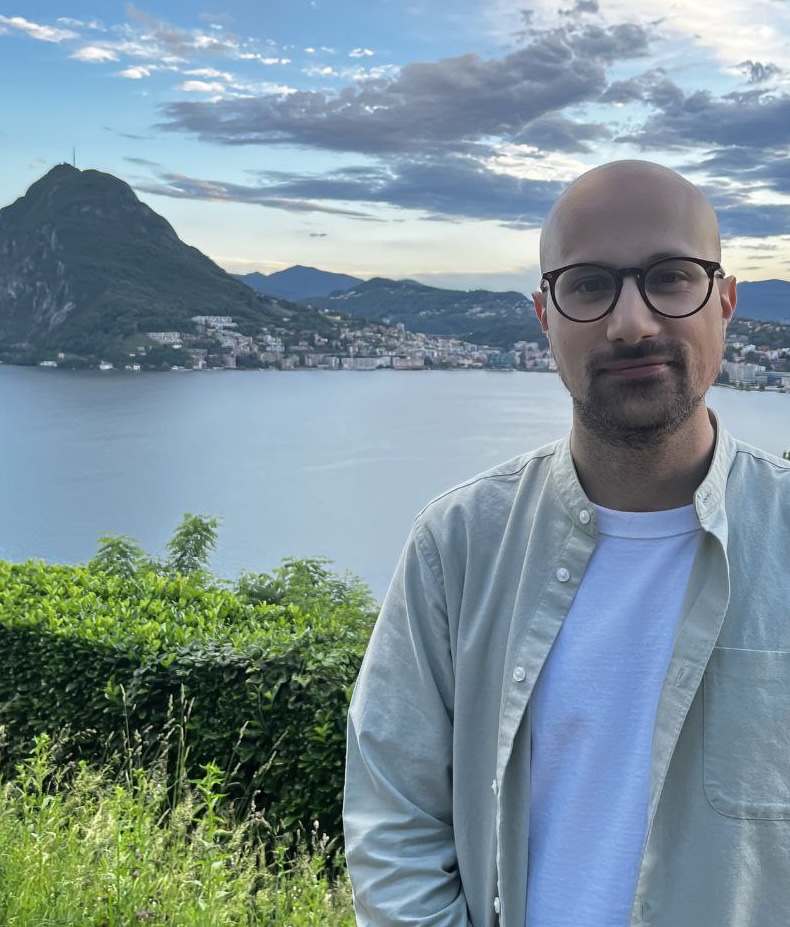
Andrea Cini is a postdoc researcher affiliated with the Graph Machine Learning Group and the Dalle Molle Institute for Artificial Intelligence (IDSIA USI-SUPSI) at the University of Lugano (USI). He also holds a position as a SNSF postdoc fellow at the University of Oxford under Prof. Michael Bronstein, focusing on machine learning for time series forecasting and graph processing. His research integrates graph deep learning methodologies with spatiotemporal dynamics, emphasizing applications in healthcare, energy systems, and intelligent systems. Education: PhD in Computer Science and Engineering (USI, 2020), supervised by Prof. Cesare Alippi MSc and BSc in Computer Science and Engineering (Politecnico di Milano) Visiting researcher at Imperial College London (Prof. Danilo Mandic) Research interests span graph neural networks , time series forecasting , and spatiotemporal data processing . His work has introduced influential methods such as the Torch Spatiotemporal library, and has been recognized with a best paper award. Recent publications emphasize applications in relational conformal prediction, hierarchical forecasting, and energy grid optimization. Awards include the Best Paper Award for contributions to graph-based forecasting methodologies. Current projects are funded by the Swiss National Science Foundation, exploring graph-based reinforcement learning and spatiotemporal modeling at the University of Oxford. Collaborations include affiliations with the Northernmost Graph Machine Learning group at UiT the Arctic University of Norway. His research bridges theoretical advancements and industrial applications in fields like healthcare dynamics prediction and smart grid optimization.
Li Yi is a Professor in the Department of Computer Science at Tsinghua University's School of Information Science and Technology, where they lead cutting-edge research at the intersection of computer vision, 3D graphics, and robotics. Their work focuses on advancing neural rendering, point cloud processing, and embodied AI with applications in human-object interaction and robotic manipulation. Research interests span Computer Vision , 3D Graphics , Robotics , Point Cloud Processing , Neural Rendering , and Human-Object Interaction . Recent work explores language-grounded spatial reasoning, dexterous manipulation, and 4D dynamic content generation, with publications appearing in top venues like CVPR, ICCV, and NeurIPS. Their research bridges theoretical advances with practical applications in embodied AI systems. The publication trends reveal a strong focus on neural rendering techniques (particularly NeRF variants), embodied AI for robotic manipulation , and multimodal understanding integrating vision, language, and action. Recent work increasingly incorporates large language models and focuses on generalizable approaches that transfer from simulation to real-world settings. As an advisor, Professor Li has mentored numerous students including Yunze Liu, Xueyi Liu, Zekun Qi, and Runpei Dong, who frequently appear as first authors on collaborative publications. Their research has been supported by significant grants enabling work on human-robot interaction, 3D scene understanding, and embodied AI systems. Professor Li leads a research group focused on developing comprehensive frameworks for spatial reasoning, object manipulation, and dynamic scene understanding. The team works on creating benchmarks like TACO for tool-action-object understanding and developing systems like MobileH2R for human-robot handover tasks. Current work emphasizes real-world applicability with a focus on generalizable solutions that work across diverse settings.
Xiaodong Cheng is an Assistant Professor at the Mathematical and Statistical Methods (Biometris) group in the Department of Plant Science at Wageningen University & Research. His research focuses on control systems, optimization, and machine learning, with applications in agricultural and energy systems. He holds a Ph.D. (cum laude) from the University of Groningen, under Prof. Jacquelien Scherpen, and prior roles include Research Associate at the University of Cambridge and Postdoctoral Researcher at Eindhoven University of Technology. Education: B.S. and M.E. from Northwestern Polytechnical University, China (2011, 2014) Ph.D. (cum laude) in Engineering from the University of Groningen, Netherlands (2018) Research Interests: Data-driven modeling, dimensionality reduction, learning-based control, system identification, and applications in agriculture and energy. He emphasizes practical implementations through tools like SYSDYNET and Bayesian neural ODEs for greenhouse systems. Key Contributions: His work spans model reduction for network systems, fault-tolerant control, and stochastic MPC for greenhouse production. Recent trends in his publications highlight advancements in resilient microgrid control, precision agriculture via drone-based sensing, and Bayesian methods for dynamic systems. Awards: Automatica Paper Prize Award (2017–2019) IEEE Transactions on Control Systems Technology Outstanding Paper Award (2020) Labs/Teams: Leads the Biometris group's efforts in integrating control theory and machine learning for sustainable systems. His work often collaborates with agricultural and energy sector stakeholders for real-world impact.
Peter Wetz is a researcher affiliated with the Institute of Software Technology and Interactive Systems at TU Wien. His work focuses on semantic data processing, environmental data systems, and interactive data exploration. He has contributed to frameworks like YABench for RDF stream processing and StatSpace for statistical data integration. His research integrates Linked Data, real-time environmental monitoring, and user-friendly data visualization tools. Notable projects include Linked Widgets and Open Mashup Platform, aiming to lower barriers for data exploration. He has authored over 20 publications between 2013–2017, emphasizing interdisciplinary approaches to data management and semantic technologies. Key Areas: Semantic Web, Environmental Data, Stream Processing Tools Developed: YABench, StatSpace, Linked Widgets Platform
apl. Prof. Dr.-Ing. Claus Brenner is an Adjunct Professor at the Institute of Cartography and Geoinformatics within the Faculty of Civil Engineering and Geodetic Science at Leibniz University Hannover. His research focuses on LiDAR mapping, point cloud processing, and robust estimation, with applications in autonomous systems, urban mapping, and disaster risk assessment. He leads the Graduiertenkolleg 2159 research group on integrity and collaboration in dynamic sensor networks. Key research areas include 3D reconstruction, SLAM (Simultaneous Localization and Mapping), semantic segmentation of mobile mapping data, and cooperative perception systems. His work integrates advanced machine learning techniques with geospatial data analysis, addressing challenges in sensor fusion, uncertainty modeling, and real-time localization. Recent publications span topics like voxel-based point cloud localization for smart spaces, flood risk mapping using LiDAR, and adversarial shape completion. Brenner has contributed to benchmark datasets such as LuCoop and LUMPI, advancing research in cooperative perception and urban navigation. His methods emphasize robustness and scalability, often leveraging generative models and statistical frameworks for urban environment analysis. Notable projects include the development of high-definition mapping using LiDAR, trajectory-based road network reconstruction, and semantic annotation from user trajectories. His work bridges theoretical advancements in computer vision with practical applications in autonomous systems and smart infrastructure.
Foad Brakhasi is a Research Fellow in the Department of Civil & Environmental Engineering at Monash University. His work focuses on advancing remote sensing techniques for environmental monitoring, particularly in soil moisture estimation and vegetation analysis using satellite data. He specializes in integrating machine learning algorithms with multi-sensor observations (e.g., SAR, optical, L/P-band radiometry) to address challenges in hydrology, agriculture, and climate science. His research contributes to UN Sustainable Development Goals related to climate action and sustainable agriculture. Key collaborations involve international teams from institutions such as the University of Melbourne and international space agencies. His recent publications (2022–2025) emphasize innovations in radar remote sensing and soil-vegetation interaction modeling. No scientific awards are explicitly mentioned, but his work has gained attention with citations in peer-reviewed journals like Advances in Space Research and Remote Sensing of Environment .
Li Shao is a Professor at the University of Reading, affiliated with the School of Construction Management and Engineering. His research focuses on building energy efficiency, indoor environmental quality, and sustainable technologies. He actively contributes to advancing smart building systems, occupancy modeling, and urban climate resilience. His research interests include building energy efficiency, indoor environmental quality, occupancy modeling, smart ventilation, urban climate, building-integrated photovoltaics (BIPV), and sustainable building technologies. His work integrates data-driven approaches with building physics to improve energy performance and occupant well-being. The recent publications show a strong trend toward data-informed building control, with emphasis on occupancy detection using Wi-Fi and thermal imaging, smart ventilation for infection control (especially post-COVID), and radiative performance of urban vegetation. His work bridges engineering, environmental science, and urban sustainability. Sustainability indicators of a naturally ventilated photovoltaic façade system (2020) A key review of building integrated photovoltaic (BIPV) systems (2017) Ranking of interventions to reduce dwelling overheating during heatwaves (2012) Li Shao has advised multiple researchers including X. Lyu, B. Alfalah, and Q. Wang, and has been involved in projects related to energy behavior monitoring, BIPV systems, and urban tree cooling. While specific grants are not listed, his sustained publication record indicates active research funding. He leads a research group focused on sustainable building technologies and urban environmental performance. He is involved in a research group at the University of Reading that investigates building energy systems, urban climate interactions, and smart control strategies. This team employs field measurements, modeling, and data analytics to develop practical solutions for sustainable built environments.
Simone Cardarelli is a Research Fellow in the Department of Electro-Optical Communication at Eindhoven University of Technology (TU/e), affiliated with the School of Electrical Engineering. His research focuses on advanced photonics and integrated optical systems. Research interests include: Waveguide physics and electro-optical beam steering Design of photonic integrated circuits for communication Optical switch engineering and multimode systems Applications in optical wireless networks and fiber alignment technologies His publications primarily explore optical device innovation, spanning topics from printed sensing surfaces to InP-based electro-optic systems. Recent work shows emphasis on energy-efficient optical components and high-precision manufacturing techniques. Cardarelli contributes to major projects: METRO : Developing 5G-aware optical networks (2017–2020) AUTOALIGN : Creating electronically aligned optical-fiber arrays (2015–2019) He is involved with the TU/e spinoff MicroAlign and has been featured in media for advancements in photonics.
Paul Salama is a Professor of Electrical and Computer Engineering at the Elmore Family School of Electrical and Computer Engineering, Purdue University, Indianapolis. He holds a Ph.D. in Electrical Engineering from Purdue University (1999), an M.S. from the same institution (1993), and a B.S. from the University of Khartoum (1991). His research focuses on Medical Image Analysis, Statistical Signal Processing, Machine Learning, and Biomedical Data, with a particular emphasis on applications in neuroscience, neurodegenerative diseases, and medical diagnostics. Key research interests include imaging security, sensor fusion, and pattern recognition, with cross-disciplinary work in communications and networking. Recent publications highlight advancements in Alzheimer’s disease diagnosis, generative models for medical imaging, and distributed image analysis systems. Salama’s work often integrates multi-omic data and deep learning techniques to address complex biomedical challenges. His contributions span algorithm development for image segmentation, 3D microscopy analysis, and systems biology, with applications in precision medicine and disease biomarker discovery.
Rosemary Willatt is a Lecturer in Experimental Ice and Rock Physics for the Environment at the University College London (UCL) Department of Earth Sciences. Her research focuses on sea ice dynamics in polar regions, combining laboratory experiments with fieldwork and remote sensing techniques. She leads projects involving satellite radar altimetry for monitoring snow and ice thickness, with a particular emphasis on advancing Earth Observation missions through the Polarimetric Synthetic Aperture Radar Altimeter (PoSARA) concept. She has been awarded the inaugural Konrad Steffen Award by ESA for her innovative work on snow depth estimation techniques. Willatt’s work integrates field campaigns (e.g., in the Arctic and Antarctic) with analysis of airborne, satellite, and ground-based radar data. She collaborates with space agencies to optimize satellite mission design and has pioneered novel methods for quantifying snow properties and their impacts on cryosphere processes. Her contributions include advancements in understanding brine migration in snow, L-band microwave scattering, and wind-driven snow redistribution effects on radar signatures. As Principal Investigator for the ESA-funded PoSARA project and Sea Ice Earth Observation at the Centre for Polar Observation and Modelling (CPOM), she bridges experimental physics with large-scale climate monitoring. Her research also emphasizes education, diversity, and sustainability initiatives within the scientific community.
Henric Krawczynski is Professor and Wilfred R. and Ann Lee Konneker Distinguished Professor of Physics at Washington University in St. Louis. He directs experimental and theoretical research on black holes using cutting-edge X-ray and gamma-ray technologies. His research combines: Balloon-borne X-ray polarimetry (XL-Calibur mission) Quantum sensor development for dark matter detection General relativistic modeling of accretion physics Cryogenic detector innovation As principal investigator of NASA's XL-Calibur telescope, he leads international collaborations studying cosmic particle accelerators. Recent advances include record-sensitivity terahertz detection systems and MHz-rate spectroscopy techniques. Publications demonstrate expertise in translating fundamental physics into space instrumentation, with applications in astrophysics and quantum communication. Krawczynski co-founded Washington University's Center for Quantum Leaps and serves in the McDonnell Center for Space Sciences. He received the DOE Outstanding Junior Investigator Award and mentors students in advanced device physics.
Benjamin Weiss is the Chair of the Program in Planetary Science and Robert R. Shrock Professor of Earth and Planetary Sciences at the Massachusetts Institute of Technology (MIT). He leads research in planetary magnetism and serves as Deputy Principal Investigator on NASA's Psyche mission, while also contributing as a Co-Investigator on the Mars Perseverance rover and Europa Clipper missions. Department of Earth, Atmospheric and Planetary Sciences MIT Planetary Magnetism Laboratory Director NASA Psyche Mission Deputy Principal Investigator Mars Perseverance Rover Co-Investigator Europa Clipper Mission Co-Investigator Weiss earned his bachelor's degree in physics from Amherst College before pursuing graduate studies in planetary science and geology at the California Institute of Technology, where he received his master's degree in 2001 and PhD in 2003. His doctoral dissertation on Martian meteorite ALH 84001 provided groundbreaking insights into ancient Martian climate and magnetic fields, demonstrating how meteorites could transfer materials from Mars to Earth without heat sterilization. As a specialist in magnetometry, Professor Weiss investigates the formation and evolution of planetary bodies through laboratory analysis, spacecraft observations, and fieldwork. His research spans nebular magnetic fields in the early solar system , planetesimal structures and dynamos , lunar magnetism and the early lunar dynamo , Hadean Earth and the origins of Earth's magnetic field , the Martian dynamo and changes in Mars' paleoclimate , and innovations in magnetic microscopy . The MIT Planetary Magnetism Laboratory, which he directs, develops high-sensitivity techniques to image magnetic fields in rock samples from meteorites, the lunar surface, and terrestrial sites. Analysis of Weiss's recent publications reveals a strong focus on Mars exploration through the Perseverance rover mission, lunar magnetism studies, and research on asteroid Psyche. His work increasingly integrates data from multiple NASA missions while advancing paleomagnetic techniques to understand planetary evolution and habitability throughout the solar system. Professor Weiss has received numerous prestigious honors including the James B. Macelwane Medal from the American Geophysical Union (2009), election as an AGU Fellow (2009), the Visiting Miller Professor Award from UC Berkeley (2014), and having Asteroid (8069) named 'Benweiss' by the International Astronomical Union (2012). Most recently, he was elected to the National Academy of Sciences (April 29, 2025). James B. Macelwane Medal, American Geophysical Union (2009) Fellow, American Geophysical Union (2009) Visiting Miller Professor Award, UC Berkeley (2014) Asteroid (8069) Benweiss named by IAU (2012) Elected to National Academy of Sciences (2025) As an academic leader, Weiss chairs MIT's Program in Planetary Science and mentors numerous graduate students in the Planetary Magnetism Laboratory. His research is supported by multiple NASA grants related to the Psyche mission, Mars exploration, and lunar science investigations. Weiss also contributes to international collaborations including missions with JAXA (Hayabusa 2), ESA (Rosetta), and SpaceIL (Beresheet). The MIT Planetary Magnetism Laboratory under Weiss's direction develops cutting-edge instrumentation for magnetic analysis, including the Quantum Diamond Microscope. His research team collaborates with scientists across multiple institutions and space agencies to analyze samples from meteorites, lunar missions, and Mars rovers, advancing our understanding of planetary formation and evolution.
Professor Jonathan Paxman is a faculty member in the School of Civil and Mechanical Engineering at Curtin University, affiliated with the Faculty of Science and Engineering and the Office of the Provost. He holds a PhD (Cantab.) and is a Fellow of the Institute of Engineers Australia (FIEAust) and the Society for Higher Education in Australia (SFHEA). His research focuses on space systems engineering, meteor detection, planetary crater analysis, assistive technologies, and autonomous robotics control. Education: PhD in Engineering from the University of Cambridge (Cantab.), MPhil, and professional certifications in engineering and higher education. Teaching: Courses include Microcontroller Project and Linear Systems and Control . His research innovations include the Desert Fireball Network (DFN), a continental-scale meteor tracking system, and the Fireballs in the Sky citizen science app. He has pioneered automatic crater detection algorithms for Mars surface dating and developed control systems for autonomous spacecraft and robots. Key awards include the 2021 Research Team of the Year (Binar Space Program), 2016 Eureka Prize for Innovation in Citizen Science, and multiple teaching excellence citations. His work bridges academia and industry through projects like the Binar lunar mission series and assistive technologies for disability support. Grants and collaborations: Extensive funding for space exploration and planetary science projects. His team’s work has led to meteorite recoveries (e.g., Murrili) and contributed to Mars surface age mapping. Active in STEM outreach and curriculum innovation, including transforming pedagogy in science and engineering education. Labs/Teams: Leads the Desert Fireball Network and collaborates with NASA, ESA, and industry partners on space systems and planetary research initiatives.