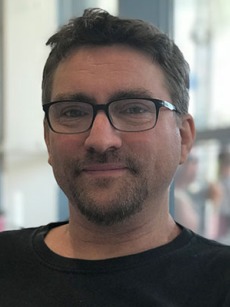
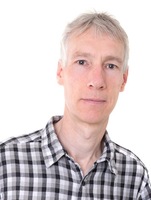
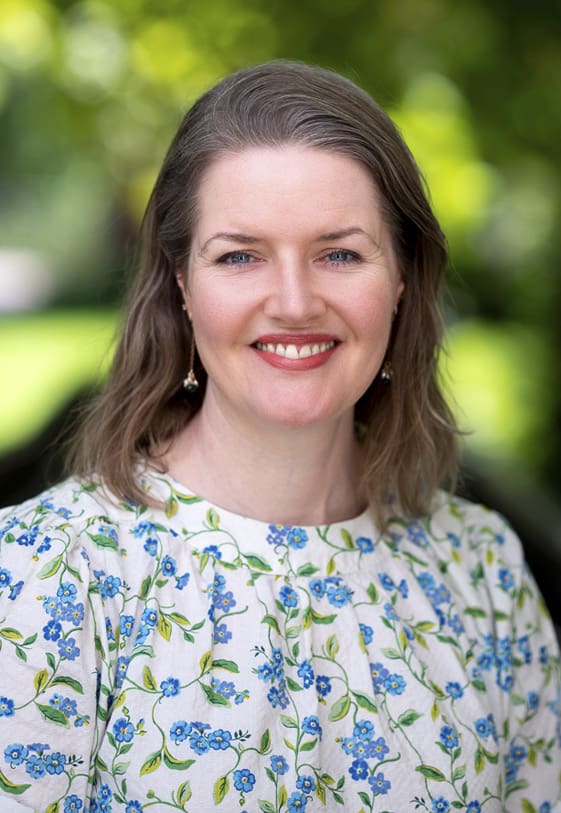
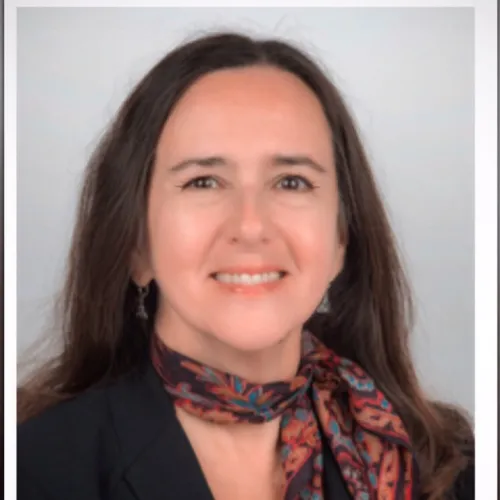
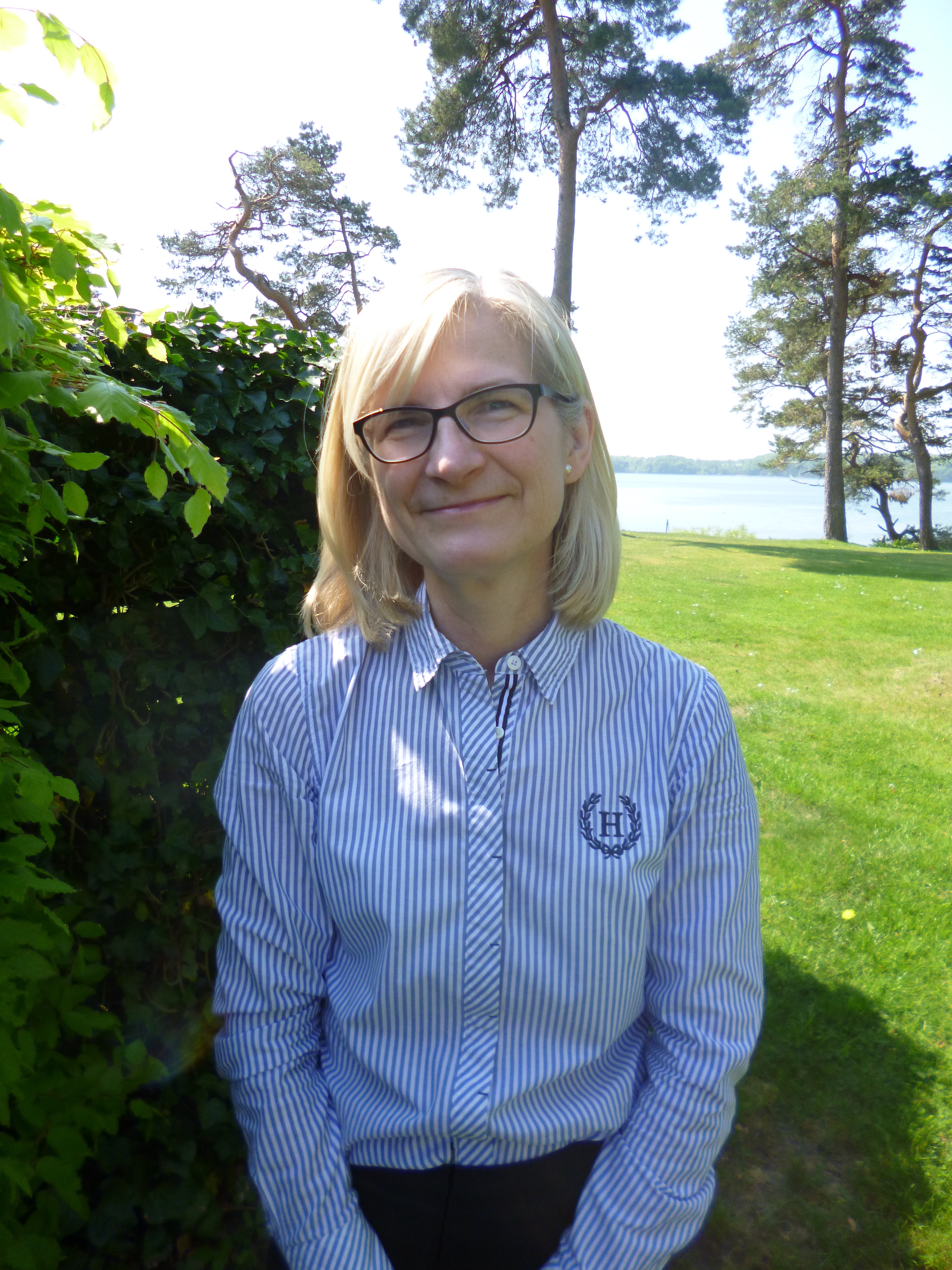
James Newman, PhD, is a Research Professor in Media and University Teaching Fellow at Bath Spa University. He specializes in videogame studies, game sound/music, and media histories. As Senior Curator at the National Videogame Museum and co-founder of the Videogame Heritage Society, he focuses on preservation and digital heritage. His work spans academic research, public engagement, and creative practice. Education: Holds a PhD in Media Studies. Research: Explores game spectatorship, early game sound, and ludomusicology. Grants: Supported by ESRC, Wellcome Trust, AHRC, and others. Awards: Includes fellowships from Stanford University and ICHEG. Contributions: Co-authored White Papers, directed the All Your Bass festival, and collaborates with institutions like the British Library on the Game Sound Archive. Public Engagement: Regular media contributor (BBC, The Guardian) and international adviser on game studies. Creative Work: Composes electronic music using obsolete synthesis systems and game hardware.
Ian Horrocks is a Professor of Computer Science at the University of Oxford and a Fellow of Oriel College. His research focuses on knowledge representation, description logics, automated reasoning, and semantic web technologies. He has held academic positions at the University of Manchester (2003–2007) and served as Chief Scientist at Cerebra Inc. (2001–2006). Horrocks earned his BSc (1st class), MSc, and PhD in Computer Science from the University of Manchester (1981–1997). His work includes foundational contributions to ontology languages (e.g., OWL) and reasoning systems such as HermiT and ELK. He has supervised over twenty doctoral students and postdoctoral researchers. His honors include Fellowships from the Royal Society (2011), ECCAI (2009), and the British Computer Society (2005). He serves as Editor-in-Chief of the Transactions on Graph Data and Knowledge and leads initiatives in semantic web standards and knowledge graph applications. Key Roles: Editor-in-Chief (Journal of Web Semantics), Co-Chair (W3C OWL Working Group) Grants: EPSRC Senior Research Fellowship (2005), numerous international collaborations Labs: Oxford Semantic Technologies, involvement in projects like RDFox and PAGOdA
Dr. Andrew Hines is a Researcher at the School of Computer Science, University College Dublin, specializing in machine learning applications for signal processing in speech, audio, and video domains. His work focuses on Quality of Experience (QoE) modeling, speech quality assessment, and immersive media analysis. He has held leadership roles in European COST Actions like Qualinet and CryptoAction, and previously worked in industry as a Director of Engineering. University: University College Dublin Role: Director of Research, Innovation and Impact Key Collaborations: IEEE (Senior Member), Audio Engineering Society (Ireland) Research interests center on machine learning for QoE optimization, audio-visual integration, and healthcare applications like heart sound classification and stroke rehabilitation. His recent publications explore self-supervised learning, neural speech codecs, and contextual factors in speech/audio quality assessment. Scientific contributions include awards like IEEE Senior Membership, and his work spans both academic research and industrial engineering in finance and aviation sectors. He leads the QxLab research team at UCD and develops open-source platforms such as WARP-Q and AQP for quality metrics.
Alexander Summers is an Associate Professor at the Department of Computer Science , University of British Columbia . He joined UBC in March 2020 after serving as a Senior Researcher (Oberassistent) at ETH Zurich from 2014-2020. His research bridges Programming Languages , Formal Methods , and Software Engineering , with a focus on automated verification tools for heap-based and concurrent programs. MSc Joint Mathematics and Computer Science, Imperial College London (2004) PhD Computer Science, Imperial College London (2009) Postdoc, ETH Zurich (2009-2014) Summers leads the Prusti Project , developing deductive verification tools for Rust, and contributes to the Viper Project for intermediate verification languages. His work addresses challenges in: Memory safety and concurrency verification Ownership models and aliasing control Automated reasoning with SMT solvers Resource-oriented programming specifications Debugging verification condition quantifiers Formal validation of verification infrastructure His research has been recognized with a Amazon Research Award and ACM SIGPLAN Distinguished Paper Awards . He teaches courses like Advanced Software Engineering and Program Verifiers and Program Verification , and supervises graduate students in formal verification and Rust-related research.
Steven Swanson is a Professor in the Department of Computer Science and Engineering at the University of California, San Diego, within the Jacobs School of Engineering. He is the Director of the Non-Volatile Systems Laboratory (NVSL), where he leads cutting-edge research in non-volatile memory, storage systems, and hardware-software co-design. His work bridges computer architecture, systems, and software to develop efficient, reliable, and secure computing platforms. Ph.D., University of Washington, 2006 B.S., University of Puget Sound, 1999 Dr. Swanson's research centers on non-volatile and persistent memory systems , exploring how next-generation storage technologies can transform computing. His lab develops full-stack solutions including file systems like NOVA and Orion , programming models such as NV-Heaps , and hardware prototypes like Moneta and Onyx . The team also works on low-power co-processors (e.g., GreenDroid ) and tools for debugging and verifying persistent memory programs. Research spans system reliability, security, energy efficiency, and performance optimization. His recent publications reveal a strong focus on persistent memory safety , zero-copy I/O , RDMA-based distributed file systems , and real-world characterization of Intel Optane . These works appear in top venues including ASPLOS, FAST, MICRO, and USENIX ATC, demonstrating sustained innovation in storage and systems research. Scientific honors include: NSF CAREER Award Google Faculty Award Facebook Faculty Award NetApp Faculty Fellow Dr. Swanson has advised 15 PhD students and 4 postdocs , many now faculty or senior engineers at Google, Microsoft, Intel, and other leading tech firms. He has secured significant research funding and leads major community initiatives such as the annual Non-Volatile Memories Workshop and Persistent Programming In Real Life (PIRL) . His educational efforts include innovative courses on robotic system design, quadcopter building, and modern storage systems, emphasizing hands-on learning and real-world implementation. The Non-Volatile Systems Laboratory (NVSL) under his leadership fosters a collaborative, international research environment, hosting visitors and postdocs from around the world. The lab is recognized globally as a pioneer in storage systems research and a key contributor to the adoption of persistent memory technologies in industry.
Dr. rer. nat. Thomas Hermann is a faculty member at Bielefeld University's Faculty of Engineering, leading the Ambient Intelligence Group and coordinating the Computer Science program. He specializes in sonification, auditory data science, and smart environments. Head of Ambient Intelligence Working Group Computer Science Program Coordinator Member of multiple academic advisory boards His research focuses on interactive sonification for biomedical applications, quantum systems, and smart environments. Key projects include ECG sonification for cardiac diagnosis, real-time auditory feedback in swimming, and sonic interfaces for AR cooperation. Recent publications span 2025 with Python-based sonification tools ( pya AGen ), quantum system sonification, and ST-elevation myocardial infarction monitoring. He contributes to open-access supplementary materials and interdisciplinary workshops. As a researcher , Hermann develops practical sonification frameworks like Panson for facial behavior analysis, CardioScope for portable ECG monitoring, and Base Cube One for smart environments. His work bridges academic research with industry applications.
Prof. Vesa Välimäki is an Audio Signal Processing Professor at Aalto University's School of Electrical Engineering, leading the Audio Signal Processing Research Group within the Aalto Acoustics Lab. He also serves as Vice Dean for Research and Head of the Doctoral Programme at the university. His research focuses on digital signal processing, machine learning, and their applications in audio, acoustics, and music technology, particularly in artificial reverberation, audio filter design, and virtual analog modeling. He has pioneered techniques like velvet noise for reverberation synthesis and contributed to open-source tools like FLAMO. His academic accolades include IEEE, AES, and AAIA Fellowships, along with multiple best paper awards at venues like DAFx and ICASSP. He has advised numerous students, including recipients of prestigious awards like the Huawei Master's Thesis Award. Prof. Välimäki has held editorial roles at the Journal of the Audio Engineering Society and organized major conferences such as SMC-17. His work extends to applied projects like acoustic optimization for early childhood education facilities and immersive audio in virtual reality (e.g., the 'Space Walk' project). Key Projects: NordicSMC (Nordic University Hub for Sound and Music Computing), Aalto Acoustics Lab, FLAMO library Grants: NordForsk funding (2018–2023), Foundation for Aalto University Science and Technology His research spans both theoretical advancements (e.g., diffusion models for audio restoration) and practical implementations (e.g., real-time equalizers, headphone compensation systems). He collaborates internationally, contributing to acoustic measurement techniques and noise reduction strategies for diverse environments.
Margaret E. L. Renwick serves as Associate Research Professor and Director of Undergraduate Studies in the Department of Cognitive Science at Johns Hopkins University's Krieger School of Arts and Sciences. Previously holding a tenured position in Linguistics at the University of Georgia, she brings extensive expertise in speech variation and phonological systems to her current role. Her academic journey includes affiliation with the Phonetics Laboratory at the University of Oxford. Dr. Renwick's research focuses on sociophonetics and laboratory phonology, examining how speakers manipulate phonetic detail in patterned ways while listeners extract linguistic and social meaning from speech. Her work investigates phonological contrast, regional accents of US English (particularly Southern accents), and linguistic change across generations. A significant portion of her research explores African American vowel systems in Georgia and Italian mid-vowel systems, bridging theoretical linguistics with empirical acoustic analysis. Analysis of her recent publications reveals a strong trend toward computational approaches in phonetics, with increasing use of machine learning techniques like the Phonet library for vowel variation analysis. Her work consistently bridges theoretical phonology with empirical acoustic data, showing particular strength in regional variation studies across multiple language systems including English and Romance languages. Dr. Renwick actively mentors students through the Renwick Lab, welcoming advisees at all levels including PhD and MA candidates in Cognitive Science at JHU. Her teaching portfolio includes courses in Acoustic Phonetics, Sociophonetics, and her First-Year Seminar 'Who Has an Accent?' examines sociolinguistic perceptions of speech variation. The Renwick Lab functions as a comprehensive research environment focused on spoken language analysis, providing resources for phonetic research including tools for IPA transcription, acoustic analysis with Praat, and computational approaches to speech data. The lab supports both theoretical investigations of phonological systems and practical applications of speech technology.
Jason Smith is a Postdoctoral Scholar at Northwestern University , affiliated with the Interactive Audio Lab . He earned his PhD in Music Technology from the Georgia Institute of Technology . Research Focus Human-AI collaboration in creative domains Interactive music systems AI-driven accessibility solutions Creative autonomy and neural audio generation Recommender systems for music libraries Publication Trends His work spans 2019–2025, emphasizing AI applications in music education, accessibility (especially for blind/visually impaired users), and immersive environments like AI holodecks. Key methodologies include co-design, hybrid recommendation algorithms, and automated creativity assessment. Lab Affiliation He contributes to the Interactive Audio Lab, exploring intersections of sound, code, and AI.
R. Luke DuBois is an Associate Professor and Co-Chair of the Technology, Culture and Society Department at the NYU Tandon School of Engineering, where he also directs the Integrated Design & Media program and the Brooklyn Experimental Media Center. He holds a DMA in music composition from Columbia University and is a renowned artist, composer, and performer whose work explores intersections between technology, sound, and visual media. His research focuses on digital media, human-computer interaction, and emerging technologies applied to artistic expression and accessibility. Key roles include directing the SONYC initiative (addressing urban noise pollution via AI) and leading the NYU Ability Project (advancing disability studies through technology). He has collaborated with institutions like the Smithsonian and artists such as Maya Lin, and his work has been exhibited globally, including at the Sundance Film Festival and the Aspen Institute. DuBois co-developed the Jitter software suite for real-time data manipulation and performs in avant-garde groups like Bioluminescence and Fair Use. His artistic practice combines time-lapse phonography, interactive installations, and interdisciplinary projects that critique cultural ephemera while advancing accessibility in STEM and the arts. Recent contributions include browser-based tools for accessible music notation (SoundCells) and sonification techniques for calculus education. He serves on the Board of the ISSUE Project Room and has been featured in major publications like the New York Times and TED Conference talks.
Dominique Devriese is a professor at the Department of Computer Science, KU Leuven, and a member of the DistriNet research group. His work bridges computer security, programming languages, and formal verification. Research interests: Functional Programming, Object Capabilities, Secure Compilation, Dependently-typed Programming, Modal Type Theory Teaching: Formal Systems, Object-Oriented Programming, CyberSecurity, Secure Software His research focuses on rigorous software systems security through capability machines and secure compilation techniques. He actively contributes to formal verification using Agda and Haskell, with recent work on multimode type theory and effect parametricity. Key publication trends include: multimode/presheaf type theory, capability-based security models, formal verification of hardware/software abstractions, and parametricity applications in programming languages. Contact: Email: dominique.devriese@kuleuven.be ORCID: 0000-0002-3862-6856
Justin Thaler is an Associate Professor in the Department of Computer Science at Georgetown University, researching algorithms and computational complexity with focus on probabilistic proof systems, verifiable computation, and streaming algorithms. Education: PhD Computer Science, Harvard University BS Computer Science and Mathematics, Yale University Research Interests: Develops protocols for verifying computations (including zero-knowledge proofs), analyzes the power of low-degree polynomials, and designs efficient streaming/sketching algorithms for large datasets. Publications: Research advances theoretical foundations of proof systems, with recent work on SNARKs, lookup arguments, and Fiat-Shamir security. Authored the monograph 'Proofs, Arguments, and Zero-Knowledge'. Advising & Labs: Advises PhD students in theoretical computer science. Contributes to open-source projects including DataSketches library of streaming algorithms. Currently on leave at a16z crypto research.
Sarah Cunningham is a Lecturer at the Graduate School of Information at The University of Texas at Austin and the Audiovisual Archivist at the LBJ Presidential Library branch of the National Archives. She has taught introductory and advanced classes in Audio Preservation since 2003 and serves on the National Recording Preservation Board representing the National Archives. B.A. in Anthropology (1978), The University of Texas at Austin M.S. in Information Studies (2003), The University of Texas at Austin Certificate in Preservation Administration in Libraries and Archives, The University of Texas at Austin Her research focuses on digital and analog preservation , including media archeology, digital audio forensics, and the storage and delivery of audiovisual recordings in archival collections. She specializes in the preservation of unstable analog media through digitization and system upgrades. The article The Preservation of Analog Oral History Collections through Digitization (2012) highlights her expertise in digitizing analog materials for historical preservation. Her work spans Digital Preservation , Audiovisual Archiving , and Media Archeology , with sub-fields such as digital migration techniques and forensic analysis of deteriorating media. Her recent classes include INF 392L: Introduction to Audio Preservation and Reformatting (2022–2024). She has presented at conferences such as the Organization of American Historians (2022), the International Association of Sound and Audiovisual Archives (2019), and the Society of American Archivists (2013), addressing topics like presidential recordings and audio diary preservation. Key affiliations include the LBJ Presidential Library (National Archives) and the National Recording Preservation Board . Her work bridges analog and digital archival practices, emphasizing tools for media continuity and researcher accessibility.
Anne Elisabeth Haxthausen is an Associate Professor at the Software Systems Engineering section within DTU Compute , Technical University of Denmark . Her work focuses on formal methods, railway control systems, and safety-critical software engineering. Founder and leader of the DTU Railway Verification Group Member of European Technical Working Group on Formal Methods in Railway Control Editorial board member for Springer Formal Aspects of Computing Journal Active in the Overture Language Board Her research emphasizes formal verification of railway interlocking systems, particularly through compositional approaches and automated tools. She has contributed to projects like RobustRailS, Overture, and RAISE, focusing on model-based development and verification. She serves as a tutor for bachelor students and contributes to the advisory committee for DTU's Computer Science and Engineering MSc program. Her recent publications explore challenges in verifying autonomous and AI-driven railway technologies.
Paula Schneider serves as Teacher for Special Tasks at the University of Art and Design Offenbach am Main , heading their book and paper workshop since 2020. She studied Book Art at Burg Giebichenstein Halle (2013-2019) and previously taught at Bezalel Academy (2017-2020). Her work bridges bookbinding , literary experimentation , and archival research through installations, artist books, and public interventions. Education : 2019: Diploma in Book Art, Burg Giebichenstein University of Halle Teaching : 2020–present: Lecturer for special tasks at HfG Offenbach 2017–2020: Annual courses at Bezalel Academy for Arts and Design, Jerusalem Screen printing tutor during studies Her artistic research explores narrative structures , time perception , and memory systems through works like Inner Monologue (2018) and Mio Mnemotop (2021). Recent projects include Night Frost (2024) examining textual accumulation and Cloudburst Working on the Textberg (2024) using mining metaphors for textual analysis. She examines book formats (e.g., leporello, monotypes, screen printing) to interrogate knowledge preservation (Rabaraababaraba, 2015) and urban observation (Praise of the Gate, 2023). Notable exhibitions include Because We Are Young (2021) analyzing GDR industrial history and Between (2019) at Halle/Leipzig Airport, which required mobile audience engagement with audio pieces about airport soundscapes. Her works have been featured in Text3 and Spin n errei tours. Contact: schneider@hfg-offenbach.de | Workshop: +49 69.80059-245 | Office: +49 69.80059-106