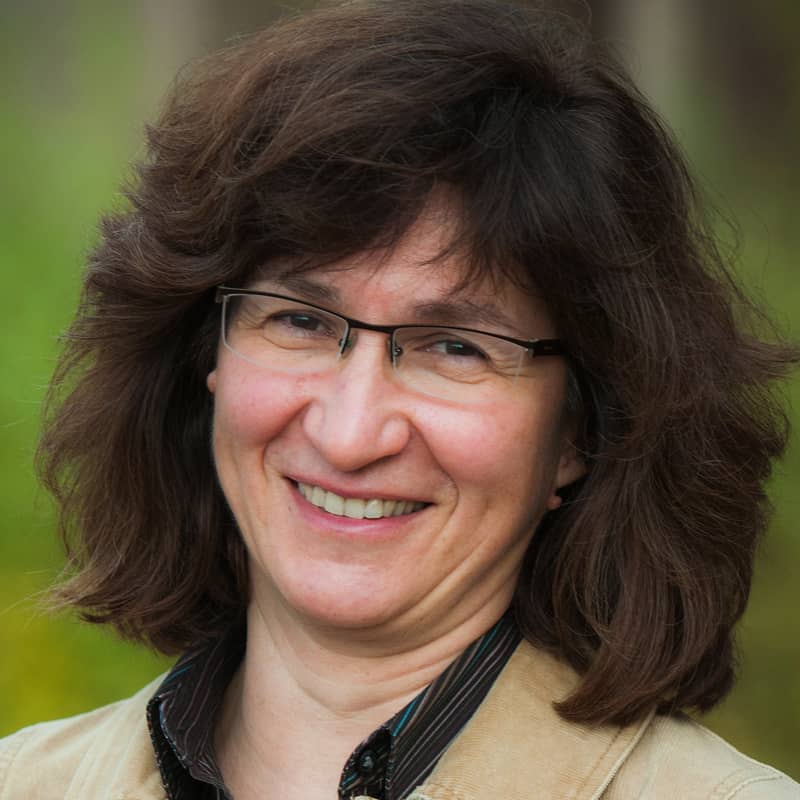
Sriram Neelamegham is the UB Distinguished Professor of Chemical & Biological Engineering, Biomedical Engineering, and Medicine at the University at Buffalo, SUNY. His research focuses on applying engineering principles to study molecular mechanisms of blood cell interactions in diseases such as inflammation, thrombosis, and cancer. He leads the Bioengineering Laboratory within the School of Engineering and Applied Sciences. Education: PhD in Chemical/Biomedical Engineering, Rice University, 1996 B.Tech in Chemical Engineering, Indian Institute of Technology Delhi, 1991 Research Interests: Systems Glycobiology: Investigating glycan biosynthesis and its role in disease Leukocyte and Platelet Adhesion Dynamics under Fluid Flow Von Willebrand Factor (VWF) Structure-Function Relationships Engineering Glycoengineered Therapeutics and Diagnostic Tools Key Contributions: Developed computational models and experimental tools for glycosylation pathway analysis Discovered mechanisms of VWF conformational changes under shear stress Pioneered glycoengineering strategies for stem cell targeting Awards & Recognition: NIH Independent Scientist Award (2015) SUNY Chancellor's Award for Excellence (2015) AIMBE Fellow (2012) and BMES Fellow (2019) 2018 Schoellkopf Medal (ACS) Lab Activities: Recruitment of postdocs, full-time, and part-time research technicians Development of glycan-engineered technologies for drug delivery and diagnostics Collaborations with biomedical industries and academic institutions
Mitchel Langford is a Professor and Co-Director of the Wales Institute of Socio-Economic Research and Data (WISERD). He holds an academic position within the Faculty of Computing, Engineering and Science, focusing on spatial analysis, geoinformatics, and computational geography. His research spans over 35 years, emphasizing geographical accessibility, dasymetric mapping, and software engineering solutions for spatial problems. Langford earned his first degree in Physical Geography and Geology, followed by a PhD in software development for palynology using FORTRAN. He has extensive teaching experience in software engineering (C#, SQL, Python) and geoinformatics (PostgreSQL/PostGIS, web mapping). His key research contributions include pioneering work in dasymetric areal interpolation and multi-modal accessibility modeling, notably the Enhanced Two-Step Floating Catchment Area (E2SFCA) method. He has published over 119 peer-reviewed articles and consulted for international organizations like CIAT. Notable awards include the 2019 Impact Awards for contributions to spatial accessibility research. Current projects include investigating accessibility to public services (transport, healthcare, childcare) using GIS and multi-modal transport networks. Langford is also involved in policy-oriented research, contributing to Welsh Senedd inquiries on banking and healthcare access. His software engineering skills enable bespoke solutions for spatial analysis, emphasizing modern languages like Python and JavaScript.
Simone Ferlin is an Adjunct Senior Lecturer at Karlstad University working with 5G and Internet evolution. She completed her PhD in computer science in 2017 at the Simula Research Lab and Universitetet i Oslo under the supervision of Dr. Ozgu Alay and Prof. Michael Welzl. Her PhD dissertation focused on increasing robustness in multipath transport with MPTCP. Dr. Ferlin's educational background includes a PhD in Computer Science from the Simula Research Lab and Universitetet i Oslo (2017). Her doctoral research centered on enhancing robustness in multipath transport protocols, specifically focusing on MPTCP (Multipath TCP). She also completed undergraduate work that contributed to a book project with Prof. Friedrich Oehme on electronics and circuit technology. Dr. Ferlin's research spans multiple domains at the intersection of networking, systems, and performance engineering. Her primary interests include network and system measurements, performance analysis, security, and congestion control. She investigates how networks like the Internet evolve, examining technology development, adoption patterns, and their impacts on various entities. Additionally, she explores ways to harmonize security and privacy while making them more usable and assessable. Her work particularly focuses on transport layer and multipath transport protocols, examining their performance and security aspects. She also investigates application and transport layer performance, automation, and monitoring. Her research extends to network programming in both Linux kernel and user space, mobile broadband networks from 2G to 5G, and their intersection with the Internet. She is deeply engaged in observability, distributed and system performance monitoring, and automation. Analysis of Dr. Ferlin's recent publications reveals a strong focus on next-generation networking technologies. Her work spans multiple domains including 5G/6G networks, transport protocols (particularly QUIC and MPTCP), network virtualization, container orchestration, and the application of machine learning to networking problems. She has increasingly incorporated large language models into network configuration and automation research. Her publications demonstrate a consistent emphasis on performance measurement, optimization, and security across diverse networking environments from the edge to the cloud. Dr. Ferlin has received notable recognition for her research contributions: Best paper award at IEEE ICIN'21 for 'Learning-based Incast Performance Inference in Software-Defined Data Centers' Applied Networking Research Prize (ANRP)'25 winner for 'NetConfEval: Can LLMs Facilitate Network Configuration?' Dr. Ferlin is actively involved in mentoring the next generation of networking researchers. She has co-supervised numerous Master's and PhD students across multiple institutions including Karlstad University, KTH, TU Berlin, University of Oslo, and universities in Brazil. Her students have worked on diverse topics including NAT64 performance comparison, system tracing visualization, network observability, ML applications to multipath transport, FEC integration with QUIC, high-performance networking for 5G, congestion control, shared bottleneck detection, multipath IoT applications, and container runtime performance. She is also involved in several significant research projects including Vinnova's SEMLA (Securing Enterprises via Machine-Learning-based Automation), Horizon Europe's CODECO (Cognitive Decentralised Edge Cloud Orchestration), and the Knowledge Foundation of Sweden's DRIVE (Data-driven Latency-Sensitive Mobile Services for a Digitized Society). Dr. Ferlin serves as Workshop Chair for ACM SIGCOMM '25, is a member of the ACM/IRTF Applied Networking Research Workshop (ANRW) steering committee, and co-chairs the Internet Congestion Control Research Group (ICCRG) at the IRTF. She previously served as Associate Technical Editor for IEEE Communications Magazine and has been active on numerous program committees for major networking conferences including SIGCOMM, CoNEXT, IMC, and PAM.
Dr. Yao Liu is an Assistant Professor in the Department of Electrical and Computer Engineering at Rutgers University, New Brunswick, since Fall 2021. Previously, she held an Associate Professor (tenured) position at Binghamton University, SUNY. Her research focuses on immersive streaming technologies, including 360-degree and volumetric video delivery, edge/cloud computing, and distributed systems. She has led projects such as SGSS for 6-DoF navigation in 3DGS scenes and EVASR for edge-based video enhancement. Her work has been recognized with awards like the NSF CAREER Award and Best Paper Awards at MMSys (2017, 2020). Research interests include immersive video streaming, virtual/augmented reality, mobile systems, and network optimization. Notable contributions include the 👁️NavGS dataset for VR navigation and the Dynamic 6-DoF Volumetric Video toolkit. She advises PhD students like Mufeng Zhu and Na Li, with past advisees receiving accolades such as the Binghamton Distinguished Dissertation Award. Publications span conferences like ACM Multimedia Systems (MMSys), IEEE ICME, and AAAI. Her work emphasizes practical solutions for bandwidth efficiency, real-time streaming, and energy optimization in immersive media. Grants include NSF CAREER funding for immersive streaming research. Labs and collaborations involve open-source projects hosted on GitHub (e.g., symmru repositories), emphasizing reproducibility and accessibility.
Anthony Clark is an Assistant Professor of Computer Science at Pomona College, where he has been teaching since 2020. Previously, he served as an Assistant Professor at Missouri State University from 2016 to 2020. He directs the ARCS (Autonomous Robotics and Complex Systems) Lab, which focuses on improving the robustness and adaptability of autonomous robots, particularly small-scale systems that can navigate unpredictable terrain and adapt to potential damage. Clark earned his Ph.D. in Computer Science from Michigan State University in 2016, where he worked under Dr. Philip K. McKinley, and his B.S. in Computer Engineering from Kansas State University, graduating magna cum laude. His research centers on making autonomous robots more robust and adaptive through optimization algorithms and multimodal systems. He specializes in evolutionary robotics, computer vision, neural networks, and simulation methods for developing control systems that leverage multiple locomotion mechanisms. His recent work demonstrates strong trends across several domains: developing hybrid locomotion systems (wheel/leg transformations), applying deep learning to terrain classification and pathfinding, using simulation environments for training, and exploring pretraining techniques for evolutionary robotics. His research shows a consistent focus on bridging simulation and real-world applications while addressing challenges in robot adaptability and robustness. Faculty Excellence in Teaching, Missouri State University (2018) Best Paper Award, Workshop on Evolutionary and Reinforcement Learning (2013) Best Paper Award, ALIFE Conference, Behavior and Intelligence Track (2012) Outstanding Reviewer, Elsevier (2018) Master Advisor Certification, Missouri State University (2017) Clark has advised numerous undergraduate and graduate students through the ARCS Lab, with current research involving projects like the Adabot (a robot with multiple locomotion mechanisms) and thermal semantic segmentation for aerial field robots. His teaching portfolio includes courses on data structures, algorithms, neural networks, computer systems, and mobile robotics. He has also served as a Visiting Associate at Caltech's ARC Lab from 2023-2024, working with Dr. Soon-Jo Chung. The ARCS Lab develops simulation environments, optimizes control systems, and fabricates physical robots. Current projects include the Adabot with its geared coaxial shaft mechanism for hybrid locomotion, thermal semantic segmentation using satellite data, and creating dynamic simulation environments with Unreal Engine 5. The lab emphasizes practical applications of theoretical research while training students in both hardware and software aspects of robotics.
Dr. Sam S. Ramanujan is Professor of Computer Information Systems and Analytics at the University of Central Missouri , affiliated with the Harmon College of Business and Professional Studies . He teaches advanced object-oriented programming and software engineering courses, combining over two decades of academic expertise with substantial industry experience in complex system deployment. Doctor of Philosophy in Information Systems (University of Houston, 1995) MBA in CIS and Quantitative Analysis (University of Arkansas, 1989) PGDM in Information Systems (XLRI Institute of Management Studies, 1987) Bachelor of Arts (Hons) in Economics (University of Delhi, 1985) His research spans big data architecture , visual analytics , healthcare IT , and legal aspects of technology . He has published extensively on topics including software maintenance, e-commerce trust models, and cloud-based healthcare systems, with a focus on bridging technical and legal challenges in digital environments. Dr. Ramanujan's academic work shows a consistent focus on software engineering (1995–2017), healthcare IT (2004–2017), and legal-compliance frameworks (2000–2017). His publications demonstrate interdisciplinary expertise in merging technical systems with regulatory requirements . Best Paper Award , Journal of American Academy of Business, Cambridge (2006) He has contributed to pedagogical advancements in distributed computing curricula and collaborates with scholars like S. Kesh and S. Nerur. His industry experience informs real-world applications of his research in software maintenance and offshore operations.
Dr. George Fitzmaurice is a Research Fellow at Autodesk, leading the Human Computer Interaction and Visualization Research group. With over 120 publications and 95 patents, his work spans 25 years of innovation in interactive systems, focusing on technology-assisted learning , 3D visualization , and novel input techniques . His notable contributions include the Maya 1.0 UI and SketchBook Pro design, as well as pioneering Graspable UIs and Spatially-Aware Displays . Education : MIT (B.Sc. Math/CS), Brown (M.Sc. CS), Toronto (Ph.D. CS) His research explores immersive visualization and generative AI applications in design workflows, with recent work focusing on VR/AR tools like TimeTunnel for motion editing and WhatIF for AI-assisted narrative design. Current projects examine the intersection of large language models , 3D design systems , and collaborative environments . Key article themes include: Generative AI integration (3DALL-E, WorldSmith) Immersive motion analysis (AvatAR, VideoPoseVR) Creative workflow optimization (MoodCubes, Immersive Sampling) Privacy-aware VR systems (Vice VRsa) Scientific Recognition: 2019 - Inducted into ACM CHI Academy 2024 - Awarded ACM Fellow for computing contributions He has developed foundational interaction techniques like ViewCube™ and SteeringWheels™ , and his work continues to shape modern 3D UI paradigms and spatial computing approaches through projects like DreamSketch and Tesseract.
Koushik Sen is a Professor in the Department of Electrical Engineering and Computer Sciences at the University of California, Berkeley. His research focuses on developing software tools and methodologies to enhance programmer productivity and software quality, with expertise in Software Engineering, Programming Languages, and Formal Methods. Education: B.Tech from Indian Institute of Technology, Kanpur M.S. and Ph.D. in Computer Science from University of Illinois at Urbana-Champaign Research Focus: Professor Sen pioneers automated testing techniques including concolic testing and DART (Directed Automated Random Testing). His work bridges formal methods with practical software development, emphasizing bug detection, program synthesis, and AI-driven software analysis tools. Recent innovations include machine learning approaches for code recommendation and fuzzing. Publication Trends: His recent publications (2019-2023) demonstrate strong emphasis on fuzzing techniques, program synthesis, and AI/ML applications in software engineering. Notable domains include smart contract security, automated testing, and developer tooling, with frequent collaborations in top-tier conferences. Awards and Honors: NSF CAREER Award (2008) Sloan Foundation Fellowship (2011) IFIP TC2 Manfred Paul Award (2010) Okawa Foundation Research Grant (2015) Multiple ACM SIGSOFT Distinguished Paper Awards UIUC Distinguished Alumni Educator Award (2014) Leadership: Active program committee member for premier conferences (PLDI, ICSE, ISSTA) and keynote speaker. His research is supported by NSF, Okawa Foundation, and Sloan Foundation.
Yoseph Barash is an Associate Professor at the University of Pennsylvania, jointly appointed in the Perelman School of Medicine's Department of Genetics and the School of Engineering and Applied Science's Department of Computer and Information Science. He leads the BioCiphers Lab, integrating machine learning with experimental biology to decode RNA biogenesis and splicing regulation in human disease. Education: B.Sc. in Physics and Computer Science, Hebrew University Ph.D. in Machine Learning, Hebrew University (2006) His research spans Machine Learning , Computational Biology , and Bioinformatics , focusing on predictive models for RNA splicing and its role in diseases like cancer and neurological disorders. He pioneered the splicing code (Barash et al., Nature 2010) and extended it to genetic variations (Xiong et al., Science 2015). Recent publications emphasize RNA splicing variations in cancer, tool development (e.g., MAJIQ V3, MAJIQ-CLIN), and machine learning for drug discovery (e.g., trametinib sensitivity in AML). His work bridges computational innovation with wet-lab validation, enabling novel high-throughput assays. Scientific Awards: Lap-Chee Tsui Publication Award (2010) NSERC EWR Steacie Fellowship Canadian Institute for Advanced Research Fellowship He advises companies in RNA therapeutics and has licensed splicing quantification tools to Pfizer, GSK, and Biogen. His lab collaborates extensively, training students and postdocs in interdisciplinary approaches to RNA biology.
Prof. Sabine Brunswicker is a Full Professor at Purdue University's Polytechnic Institute, Founder and Director of the interdisciplinary center for Artificial Intelligence for Digital, Autonomous and Augmented Aviation, and Director of the Research Center for Open Digital Innovation (RCODI). Previously, she served as Visiting Professor at Northwestern Institute for Complex Systems (2022) and ESADE Business School (until 2016), and Head of Open Innovation at Fraunhofer Institute for Industrial Engineering. Education: PhD in Engineering Sciences (with highest honor), University of Stuttgart, Germany (2011) MSc in Engineering & Management Sciences, University of Technology, Darmstadt, Germany (2005) MCom in Marketing & Consumer Behavior, University of New South Wales, Australia (2005) BSc in Engineering & Management Sciences, University of Technology, Darmstadt, Germany (2001) Research Focus: Brunswicker's work bridges computing, engineering, and behavioral sciences with emphasis on human-AI collaboration. She investigates human-autonomy teaming in drone operations, emotional intelligence in conversational AI for healthcare/legal domains, and organizational systems for open innovation using network science and reinforcement learning. Her research integrates digital transformation frameworks with practical applications in autonomous systems and self-organizing platforms. Scientific Awards: No specific awards were documented in the provided materials. Advising and Collaborations: As a user-inspired researcher, Brunswicker co-founded IMP³rove (innovation capability assessment platform) and launched Purdue IronHacks (data science platform for societal challenges). She maintains active industry partnerships and policy engagement, though specific student advisees and grant portfolios weren't detailed in the source text. Her work emphasizes real-world problem solving through machine learning and data visualization. Labs and Teams: She leads RCODI and the AI Aviation Center, fostering interdisciplinary collaboration across computing, engineering, and behavioral sciences to advance human-AI teaming in complex operational environments.
Dr. Maja Krzic is a Professor at the Department of Forest and Conservation Sciences within UBC's Faculty of Land and Food Systems. Her research bridges soil science with sustainability education through community engagement and digital innovation, focusing on human impacts on soil properties across agricultural, grassland, and forest ecosystems. She develops cutting-edge teaching tools like the Digging into Canadian Soils open textbook and SOILx interactive platform. PhD (University of British Columbia, 1997) MSc (University of Belgrade, 1990) BSc (University of Belgrade, 1986) Her publications (2010-2025) explore greenhouse gas dynamics in agricultural systems, soil carbon sequestration in elevation gradients, and innovative educational approaches including problem-based learning and augmented reality. Recent work addresses climate-resilient soil management in coastal British Columbia and gender parity in soil science academia. Major awards include: 3M National Teaching Fellow (2016) UBC Killam Teaching Prize (2006) Fellow, Soil Science Society of America (2023) Platinum AVA Digital Award for SOILx (2015) She has mentored 28 graduate students and postdocs, including Amy Wells (2024), Clara Roa-Garcia (PhD, 2018), and Preston Cumming (Postdoc, 2015). Current projects focus on climate change adaptation in Delta farmland and regenerative agricultural practices.
Andrew R. Jamieson is an Assistant Professor in the Lyda Hill Department of Bioinformatics at UT Southwestern Medical Center, where he leads a research team focused on developing advanced AI systems for medical education and clinical performance assessment. He was appointed in 2019 and serves as Principal Investigator of the Jamieson Group. Institution: UT Southwestern Medical Center School: School of Health Professions Department: Lyda Hill Department of Bioinformatics Academic Rank: Assistant Professor Dr. Jamieson earned his B.A. in Physics with honors (2006) and Ph.D. in Medical Physics (2012) from the University of Chicago. His early work in computer-aided diagnosis laid the foundation for his career in AI and machine learning. Education: University of Chicago (B.A., Ph.D.) Prior Experience: GE Healthcare, Big Data Analytics Startup (First Data Scientist) Dr. Jamieson's research lies at the intersection of artificial intelligence, medical education, and bioinformatics. His team leverages multimodal data—including video, audio, and text—from the UTSW Simulation Center to train frontier AI models for automated assessment of medical student performance. His work in computational image analysis spans label-free live-cell imaging, spatial biology, and highly multiplexed immunofluorescence, with applications in cancer biology and diagnostics. He has also made significant contributions to public health through the development of the UTSW COVID-19 forecast model. The most recent publications reflect a strong trend toward AI-driven medical education tools, particularly using large language models and multimodal AI for OSCE assessment. Earlier works focus on deep learning in medical imaging, dimensionality reduction, and computer-aided diagnosis in mammography. The research consistently emphasizes interpretability, automation, and clinical translation. Scientific recognition includes being featured on the cover of Cell Systems (July 2021) for work on melanoma cell analysis. His team's development of the first automatic AI grading system for medical student OSCE notes in 2023 marks a major innovation in educational assessment. Featured on cover of Cell Systems (2021) Developed UTSW COVID-19 forecast model Pioneered AI grading system for OSCE notes (2023) Dr. Jamieson is actively involved in mentoring and graduate education. He serves as Course Director for the Master’s in Health Informatics program and contributes to nanocourses at the Clinical Informatics Center. His team includes multiple advisees and collaborators working on NLP, LLMs, and AI/ML in healthcare. He is expanding his group and seeking researchers in AI, data science, and software development. His leadership in the Bioinformatics Core Facility (2018–2021) and ongoing collaborations with pathologists and radiation oncologists demonstrate strong interdisciplinary grant and project engagement. Course Director: Master’s in Health Informatics Mentor to multiple graduate students and researchers Collaborations: Pathology, Radiation Oncology, Surgery, Clinical Informatics The Jamieson Group is a dynamic, interdisciplinary research team at the forefront of applying cutting-edge AI to medical education and clinical data analysis. The lab focuses on natural language processing, multimodal learning, and computer vision, with strong ties to the UTSW Simulation Center and Clinical Informatics Center. The team develops custom pipelines for spatial biology and imaging data and is actively expanding to meet growing research demands.
Dave Armstrong is a Professor and Director of Placement at the University of Western Ontario, holding the Canada Research Chair (CRC). He leads the Centre for Computational and Quantitative Social Science (CCQSS) and earned his PhD from the University of Maryland. His work focuses on statistics, data mining, and political conflict analysis. PhD, University of Maryland Director, Centre for Computational and Quantitative Social Science (CCQSS) His research explores: Non-linearity in statistical models and its impact on effect sizes The Costs of Contention project analyzing political conflict consequences Visualization techniques for pairwise statistical comparisons using Shiny and D3.js Recent publications span urban-rural divides, municipal governance, and statistical methodology. Awards include a five-year Norwegian Social Science Research Council grant (2016), editorial board membership at the American Journal of Political Science (2013), and undergraduate research stipends (2010).
Sebastian Gottschalk is a researcher at Paderborn University, Germany, specializing in business model development within software ecosystems, virtual reality applications, and model-driven software engineering. His research focuses on creating situation-specific approaches to business model development, with particular emphasis on tool support, method composition, and knowledge provision. His research interests span business model innovation, virtual reality applications for education and collaboration, model-driven development, and end-user programming. He has made significant contributions to understanding how business models can be developed in context-aware ways within software ecosystems, with practical applications in tool development and method engineering. His publication record shows a clear progression from foundational work on business model development to innovative applications in virtual reality and gamification. Recent work demonstrates increasing focus on practical implementations, particularly in educational contexts using VR technology to teach UML and software modeling concepts. Gottschalk has collaborated extensively with Gregor Engels (27 publications together), Enes Yigitbas (20 publications), and Alexander Nowosad (7 publications), indicating strong research partnerships that have driven much of his recent work in business model development and virtual reality applications.
Marsha Chechik is a Professor in the Department of Computer Science at the Faculty of Arts and Science, University of Toronto. She previously served as Department Chair from 2019-2022 and as Acting Dean in the Faculty of Information from July-December 2022. Her academic career spans numerous research contributions and leadership roles within the software engineering community. Professor Chechik's primary research interests focus on software engineering with emphasis on formal methods to enhance software quality. Her work encompasses scalable automated verification techniques including model-checking and theorem-proving, formal specification languages, verification of protocols, non-classical logics, and reasoning under inconsistency. She has made significant contributions to model management, software product lines, safety and security assurance, and automotive safety systems. Her research bridges theoretical foundations with practical applications, particularly in managing uncertainty in software models and developing techniques for automotive safety verification. Her recent publications demonstrate a strong focus on model management and transformations, software product lines and variability analysis, safety and security assurance cases, and semantic analysis of software evolution. The integration of formal methods with practical software engineering challenges, especially in safety-critical domains like automotive systems, represents a consistent theme throughout her work. Professor Chechik has been recognized with multiple prestigious awards including a Best Paper Award at RE'12, a SIGSOFT Distinguished Paper Award at ICSE'12, a Best Student Paper Award at CASCON'07, and a Distinguished Paper Award at ICSE'07, highlighting the impact and quality of her research contributions. She actively supervises graduate students and has successfully guided numerous Ph.D. candidates to completion. Her group has produced graduates who predominantly pursue research careers in both academic institutions and industrial research labs. She currently leads several funded projects including the Automotive Safety project (in collaboration with General Motors) and the Software Evolution project, focusing on practical applications of her research interests. Professor Chechik leads the Software Engineering Lab at the University of Toronto, where innovative projects like Matchmakers (a serious game for software engineering) are developed. Her collaborative network extends across institutions, with notable partnerships including Julia Rubin at the University of British Columbia, demonstrating her commitment to interdisciplinary research and academic collaboration.